Within fantasy-driven anime, forbidden magic acts as both a lure and a burden. Whether it’s the resurrection of the dead or unholy pacts with ancient entities, characters frequently look into this dark territory when pushed by desperation. In these moments, ethical boundaries blur, and the pursuit of justice or safety spirals into obsession.
Such themes raise crucial questions about control and consequence. Characters who begin with noble goals—saving loved ones or surviving chaos—soon confront the cost of their choices. Their powers often come with irreversible tolls: loss of humanity, growing isolation, or physical decay. Yet, these sacrifices can be agonizingly voluntary.
Even in the thick of corruption, some characters strive to maintain fragments of themselves. While their actions grow darker, glimpses of internal struggle surface—reminders of who they were before power rewrote their path. This friction between morality and necessity deepens the story, offering more than just spectacle.
Redemption is rare, but not impossible. In a few cases, these characters claw their way back, guided by empathy or reminders of their former selves. Others vanish into darkness completely, transformed into cautionary tales. Forbidden magic becomes less about sorcery and more about the dangerous hunger for control, love, and survival.
10. Slayers
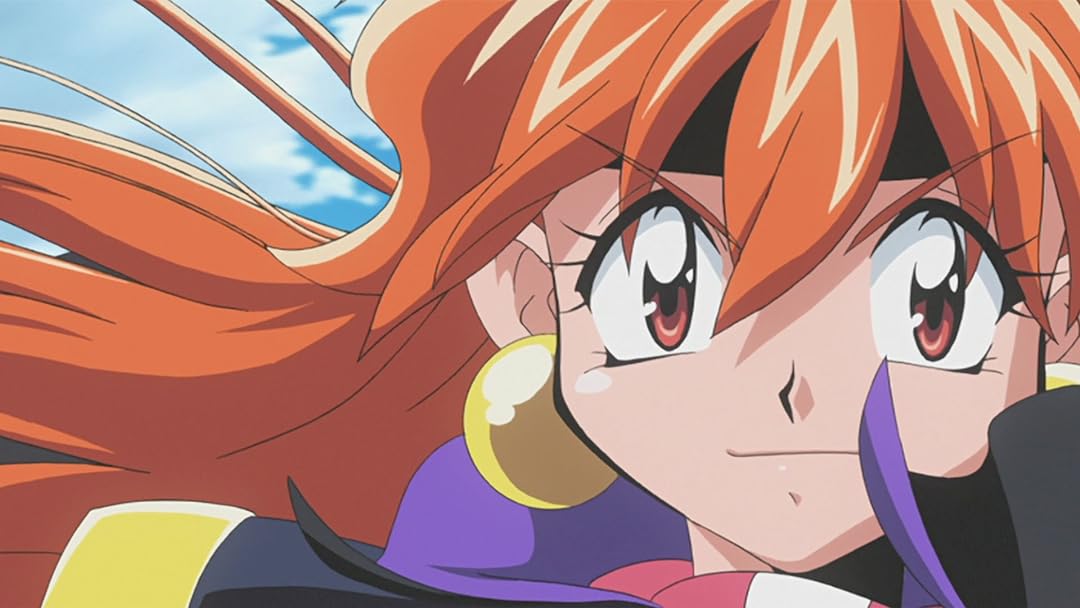
Slayers (Credits: Prime Video)
Lina Inverse stands as an icon among Dark Magic users in the annals of anime history, her legendary exploits etched into the lore of the sword and sorcery genre. Yet, beneath the surface of her formidable power lies a perilous truth unknown even to her.
Unbeknownst to Lina, the magic she wields harbors a darkness far more profound than she could have fathomed. With each invocation of her signature Dragon Slave (Dragon Slayer) spell, she unwittingly taps into the boundless power of the Lord of Nightmares, a being of unparalleled danger lurking within the depths of the universe.
Blinded by her thirst for power, Lina heedlessly abuses this magic until the consequences become irreversible. Only then does she come to realize the true nature of her actions, confronted with the terrifying revelation that her very essence is entwined with the most perilous force in existence?
Slayers is a classic anime series that gained popularity in the 1990s and continues to have a dedicated fanbase. Created by Hajime Kanzaka, it’s set in a fantasy world where magic and monsters are commonplace.
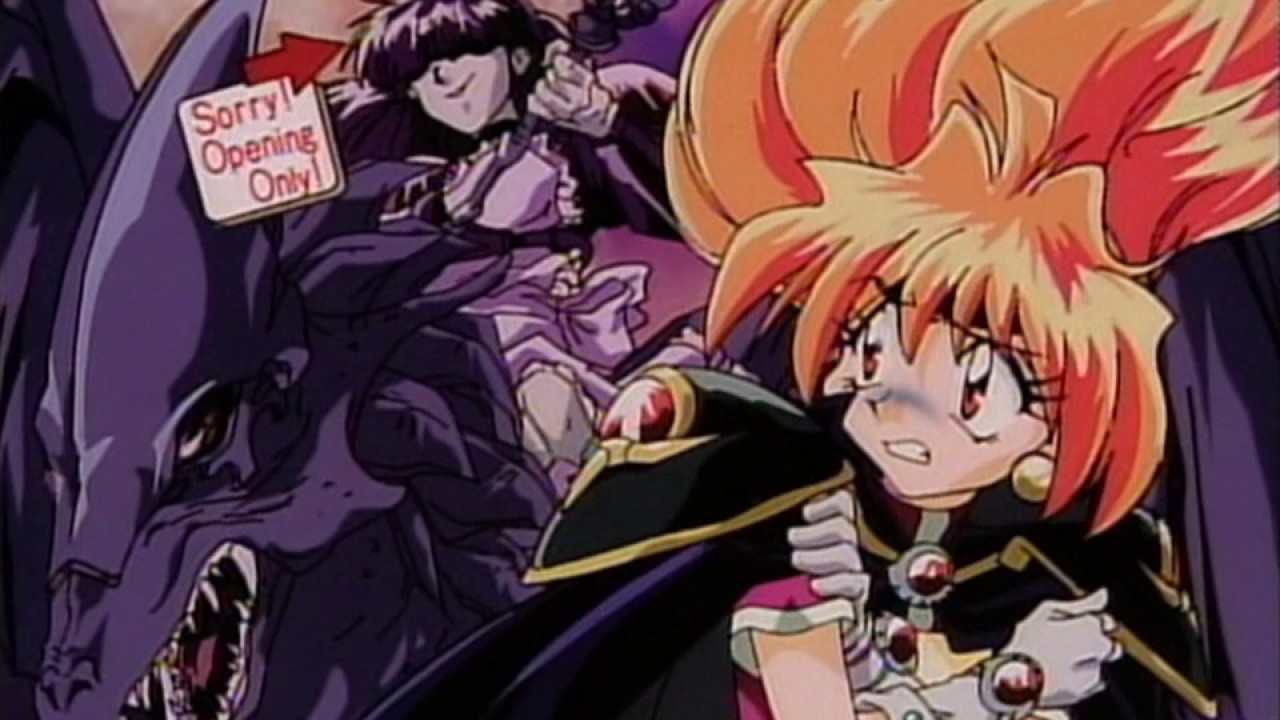
Slayers (Credits: Prime Video)
The story follows Lina Inverse, a young and powerful sorceress, and her companions as they get on adventures, battling evil forces, uncovering ancient mysteries, and occasionally causing chaos wherever they go.
The series is known for its mix of action, comedy, and fantasy elements, as well as its vibrant characters. Lina Inverse herself is a memorable protagonist, known for her fiery personality, immense magical abilities, and insatiable appetite.
Alongside her are companions like the swordsman Gourry Gabriev, the shapeshifting chimera Zelgadis Greywords, and the pacifist priestess Amelia Wil Tesla Seyruun.
Slayers has spawned multiple seasons of anime, as well as movies, OVAs (original video animations), and light novels. Its enduring popularity is a testament to its entertaining storytelling and memorable characters. If you’re a fan of fantasy adventure with a healthy dose of humor, “Slayers” is definitely worth checking out!
9. The Irregular At Magic High School
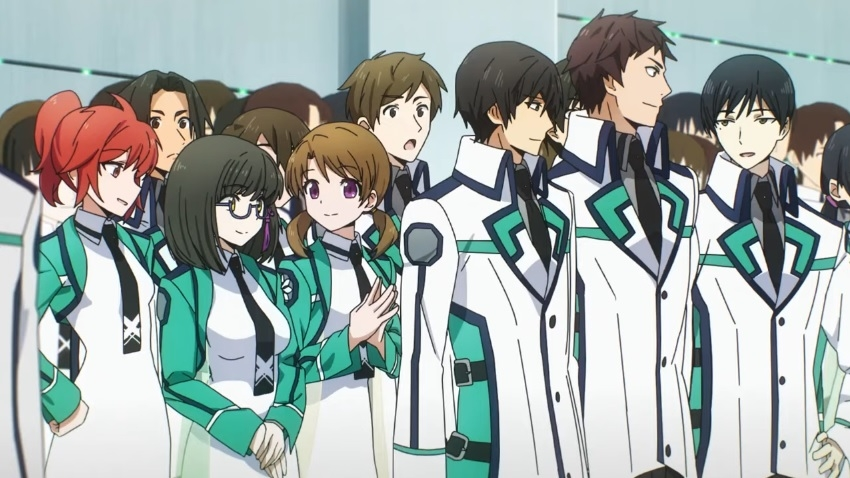
The Irregular At Magic High School (Credits: Crunchyroll)
Beneath his unassuming exterior lies a protagonist of formidable power. Tatsuya possesses Psionic abilities and magical prowess that far exceed those of his peers. Among his arsenal are extraordinary skills such as Decomposition, Elemental Sight, and Regrowth—forms of magic deemed lost or forbidden in his world.
Set in a world where magic is a recognized technology, the story follows siblings Tatsuya and Miyuki Shiba as they enroll in First High School, an institution for training magicians.
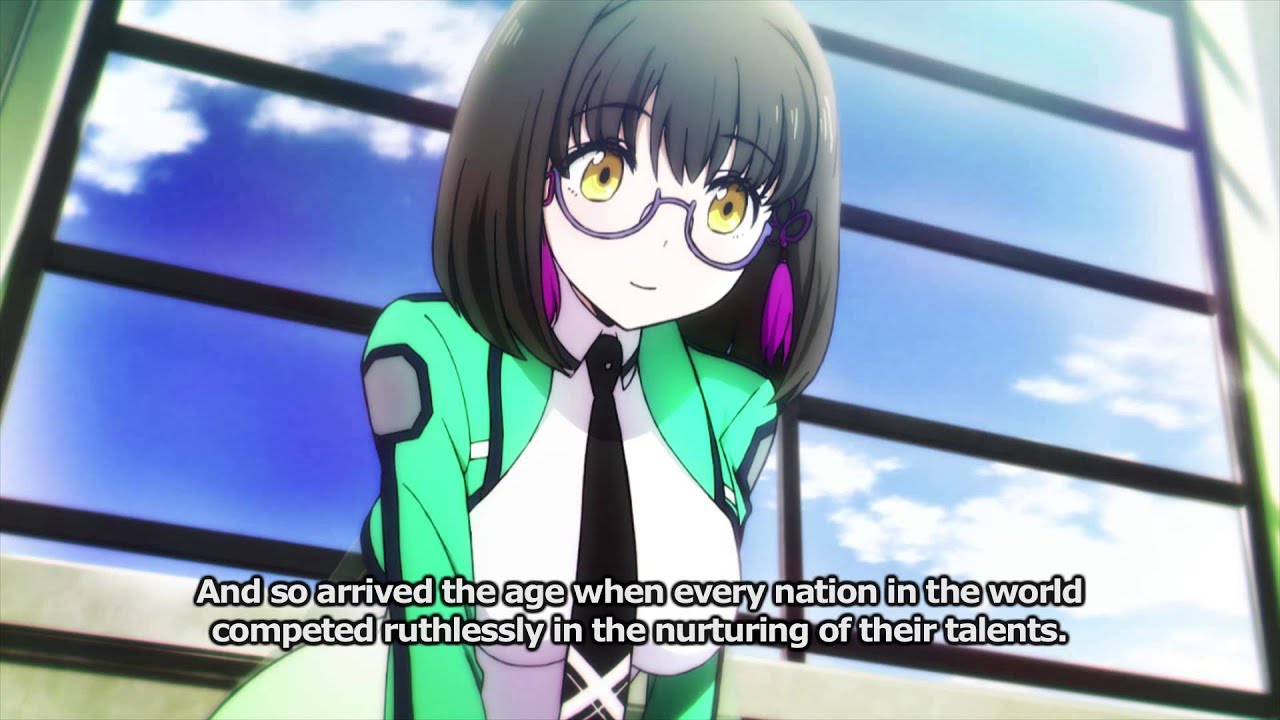
The Irregular At Magic High School (Credits: Crunchyroll)
Tatsuya is a skilled but seemingly unremarkable magician, while Miyuki is considered a prodigy with exceptional magical abilities. Despite his perceived shortcomings, Tatsuya possesses unique skills and knowledge that make him a formidable force in combat magic.
The series finds themes of discrimination, social hierarchy, and political intrigue within a futuristic society where magic plays a central role. Tatsuya and Miyuki find through the challenges of school life while becoming embroiled in various conflicts and conspiracies, ultimately revealing Tatsuya’s true potential and the secrets surrounding his past.
The anime adaptation of “The Irregular at Magic High School” gained popularity for its action-packed scenes, intricate magic system, and complex political dynamics. Fans of magic-themed stories with elements of science fiction and action often find this series engaging and compelling.
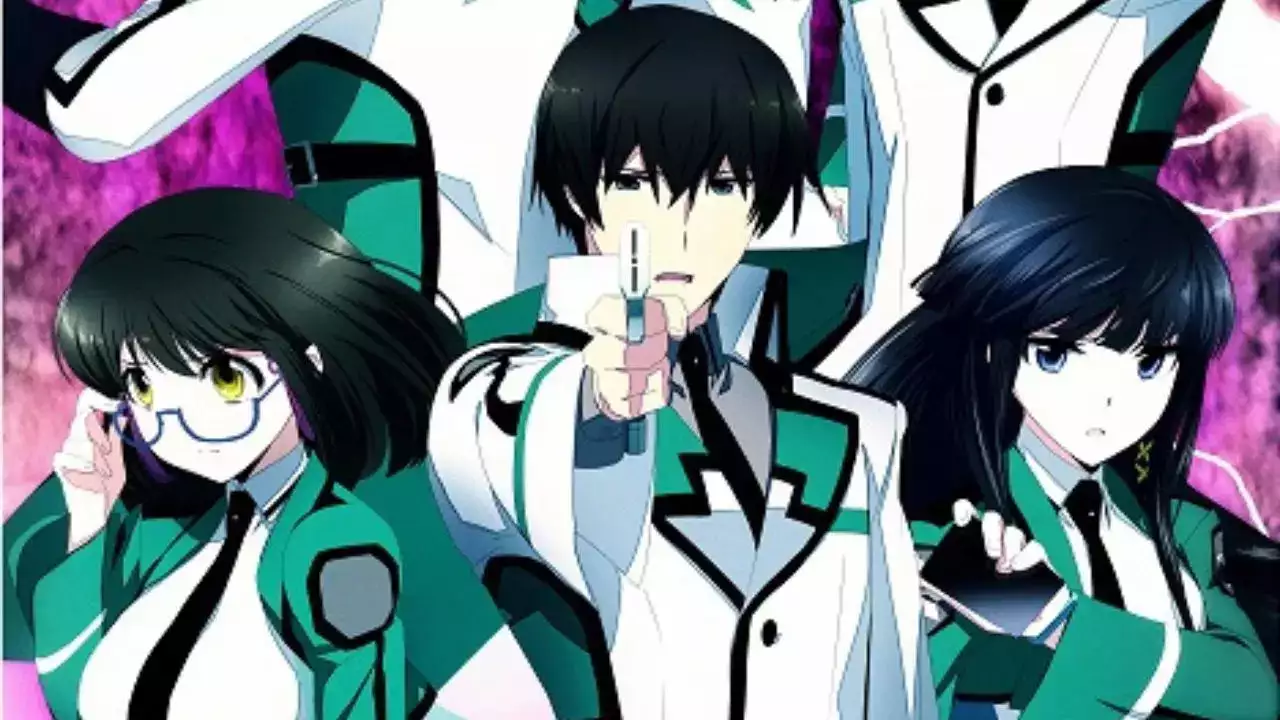
The Irregular At Magic High School
The anime begins with a split between brilliance and perceived failure. At First High School, students are ranked into Blooms and Weeds. Tatsuya, though incredibly skilled, lands among the latter. This label drives much of the tension. He is misjudged by faculty and peers alike, yet his capabilities consistently reshape expectations.
Tatsuya’s character resists common shounen prototypes. He is composed, even distant, yet never indifferent. His precision in combat, analytical mind, and devotion to Miyuki anchor his quiet resolve. Instead of impulsiveness, he relies on control and calculation. That calm becomes his strength, often disarming opponents long before spells are cast.
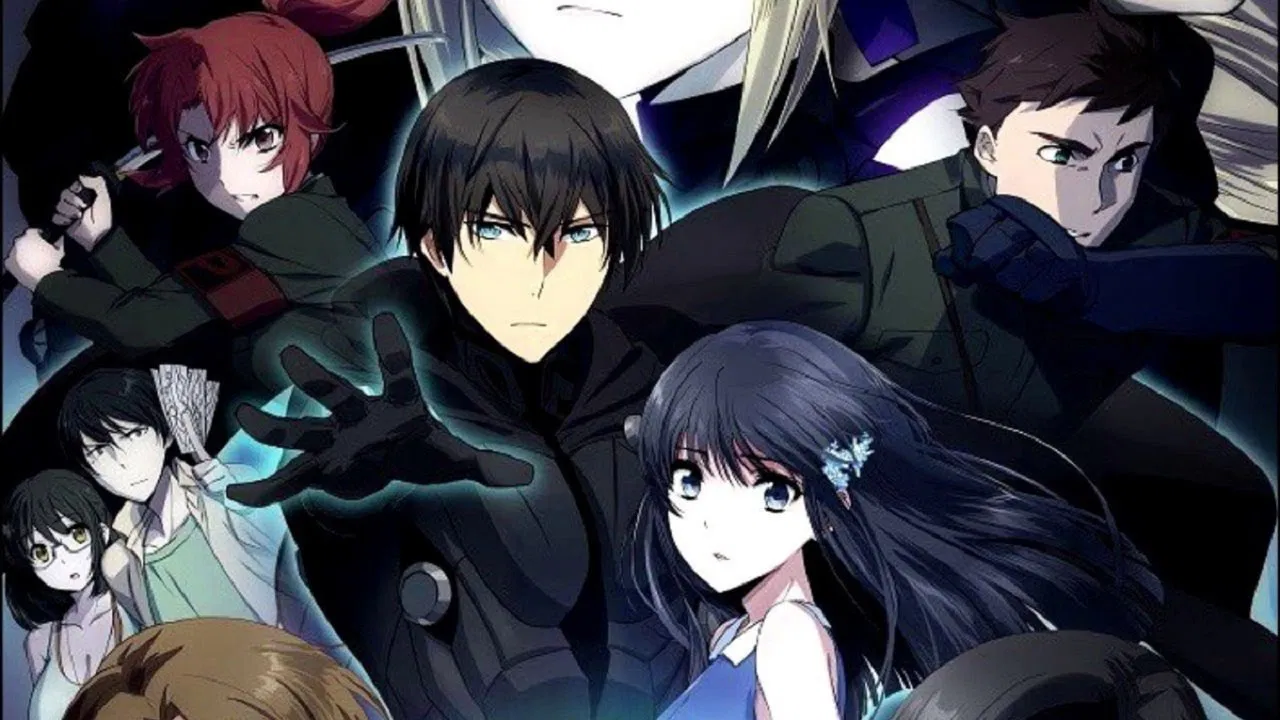
The Irregular At Magic High School
Miyuki, his sister, plays a more conventional role. Beautiful, gifted, and placed among the elite, she balances grace and emotional expression. Her loyalty to Tatsuya is intense—sometimes uncomfortably so—but her sincerity remains steady. She represents societal approval, while Tatsuya’s genius remains concealed beneath the surface. Their relationship adds complexity.
Magic in this universe feels like advanced science. Spells are structured like code. Instead of simple chants or artifacts, the system involves CADs—Casting Assistance Devices—that channel specific sequences. This approach grounds the fantasy in logic, appealing to viewers who appreciate structured systems rather than pure spectacle.
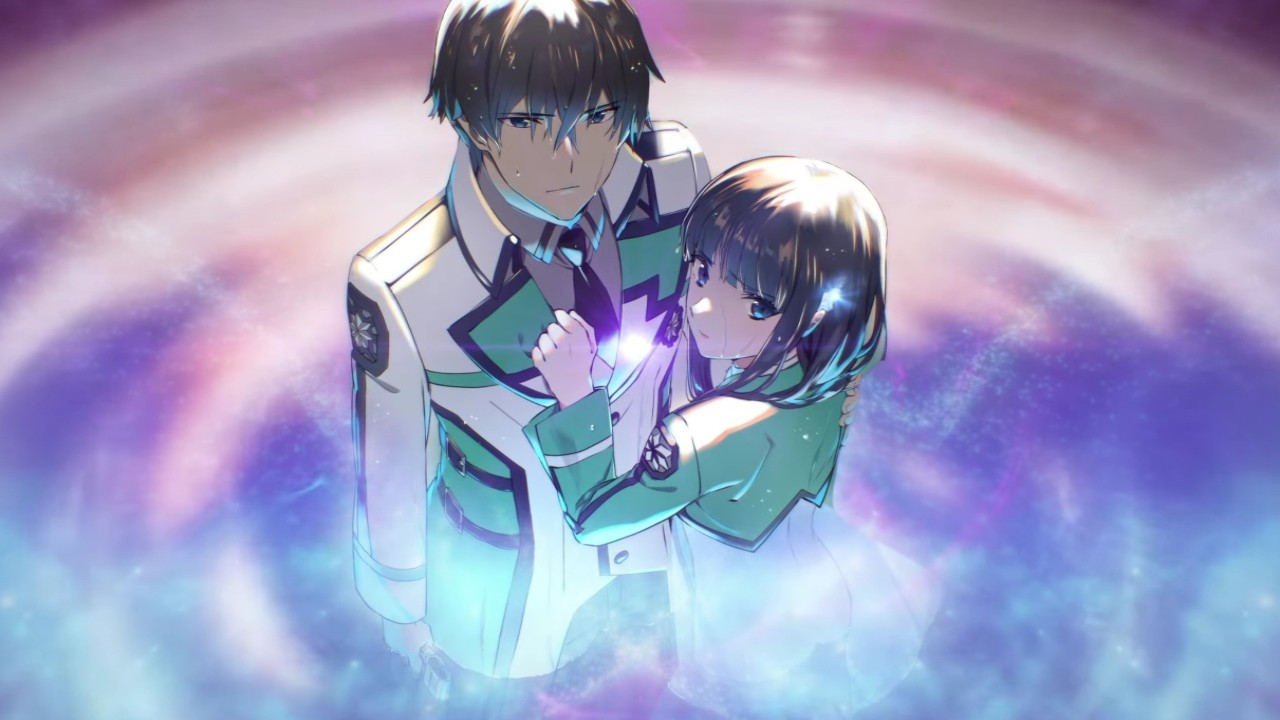
The Irregular At Magic High School
The political setting reaches beyond the classroom. Tatsuya’s role in the military and his position as a hidden weapon introduce moral ambiguity. He’s used by institutions that dismiss his individuality while relying on his overwhelming strength. That contradiction sharpens the ethical layers of the show. It’s not just about magic—it’s about agency.
Themes of discrimination remain central. The school’s caste system reflects larger social divides. Weeds, though equally dedicated, receive limited resources and respect. Tatsuya’s constant defiance of this prejudice becomes an act of quiet resistance. His success isn’t loud—it’s precise, undeniable, and often humiliates those who underestimated him.
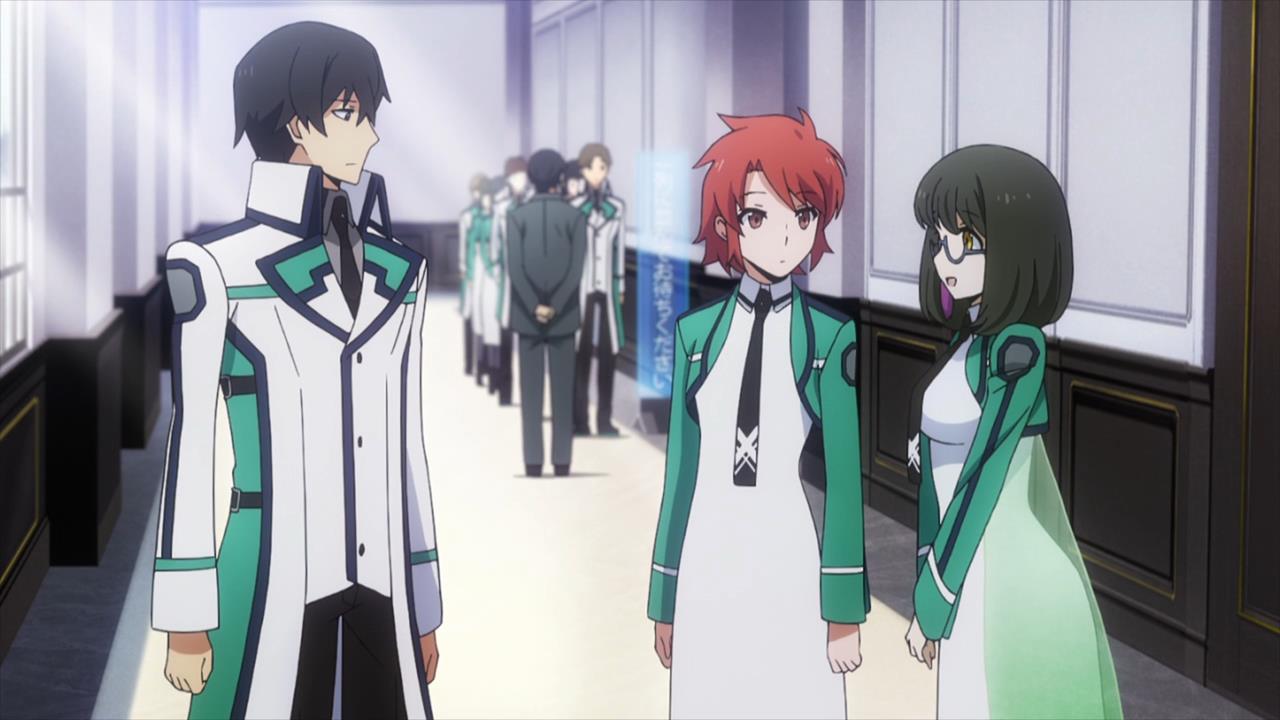
The Irregular At Magic High School
Episodes build tension through tactical confrontations. Tatsuya rarely shows emotion in battle, yet his moves are decisive. From the Nine Schools Competition to unexpected ambushes, each event reveals more of his capabilities. Rather than one climactic showdown, strength accumulates over time, as layers of his identity are gradually exposed.
While action is important, personal struggle stays close. Tatsuya’s trauma following his mother’s manipulation of his emotions becomes critical to understanding him. He doesn’t feel as others do—not because he chooses to be cold, but because part of him was stripped away. That psychological aspect deepens his distance from others.
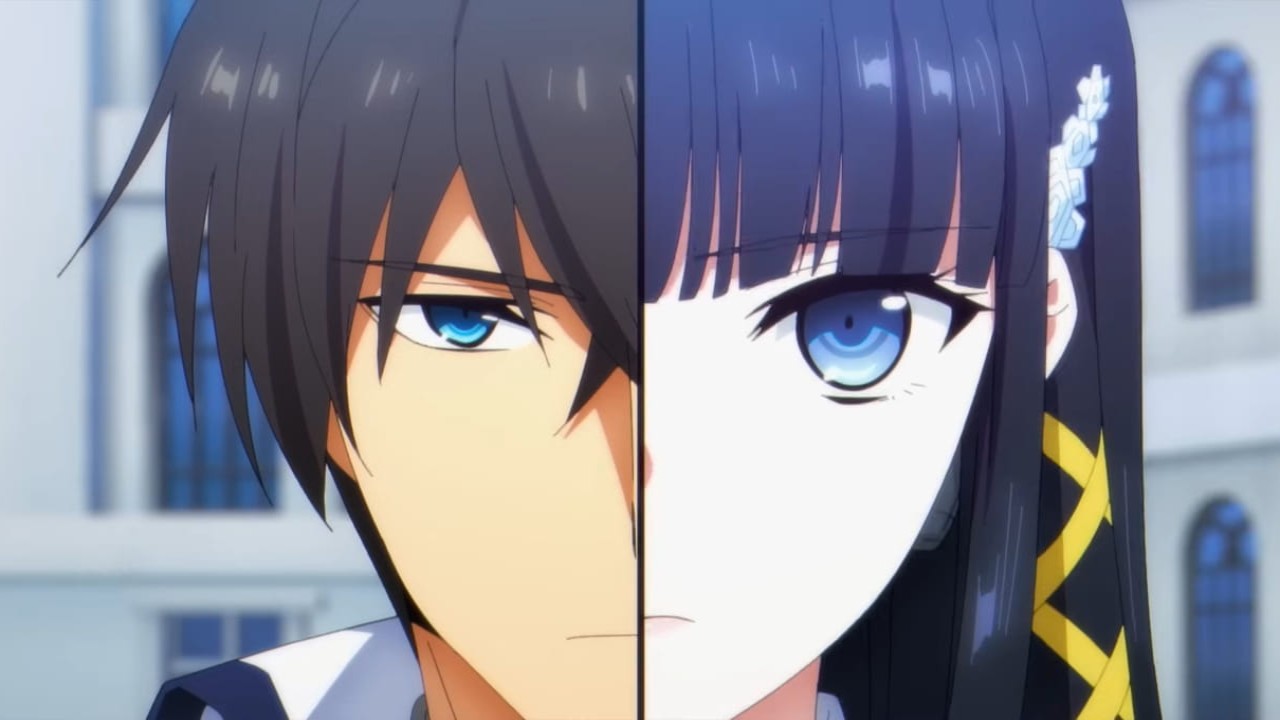
The Irregular At Magic High School
The Yotsuba family, one of the ten master clans, exerts shadowy control over Tatsuya and Miyuki. Their influence adds another layer of pressure. Family loyalty collides with individual will. Tatsuya, bound by blood and function, still seeks independence. Miyuki, aware of their roles, tries to protect her brother’s humanity.
Despite these layered elements, the anime isn’t without flaws. Dialogue can grow dense with exposition. Some arcs drag, focusing too much on technical detail at the expense of pacing. Relationships, especially romantic ones, often feel underdeveloped or strained, with the brother-sister bond drawing mixed reactions from viewers.
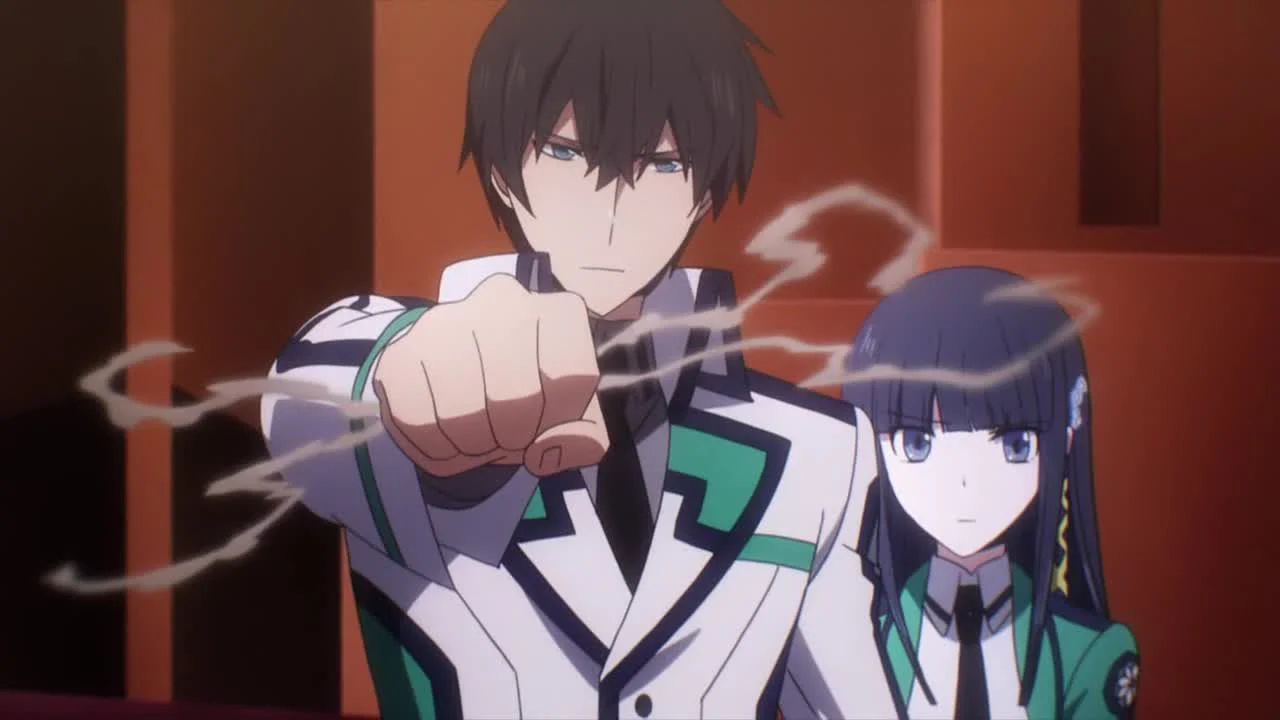
The Irregular At Magic High School
Still, moments of warmth emerge. Tatsuya’s rare smiles, Miyuki’s small acts of rebellion, or Erika’s sharp honesty bring human touches. Characters like Leo, Honoka, and Mizuki offer grounding perspectives. They aren’t as powerful, but they bring necessary balance to a world obsessed with magical hierarchy and precision.
The soundtrack elevates major scenes with electronic tones and ambient intensity. Visuals stay consistent, though not always outstanding. Animation focuses on clarity rather than flash. Effects during battles look sharp, especially when spells break natural laws. What stands out is not animation flair but the logic embedded in every fight.
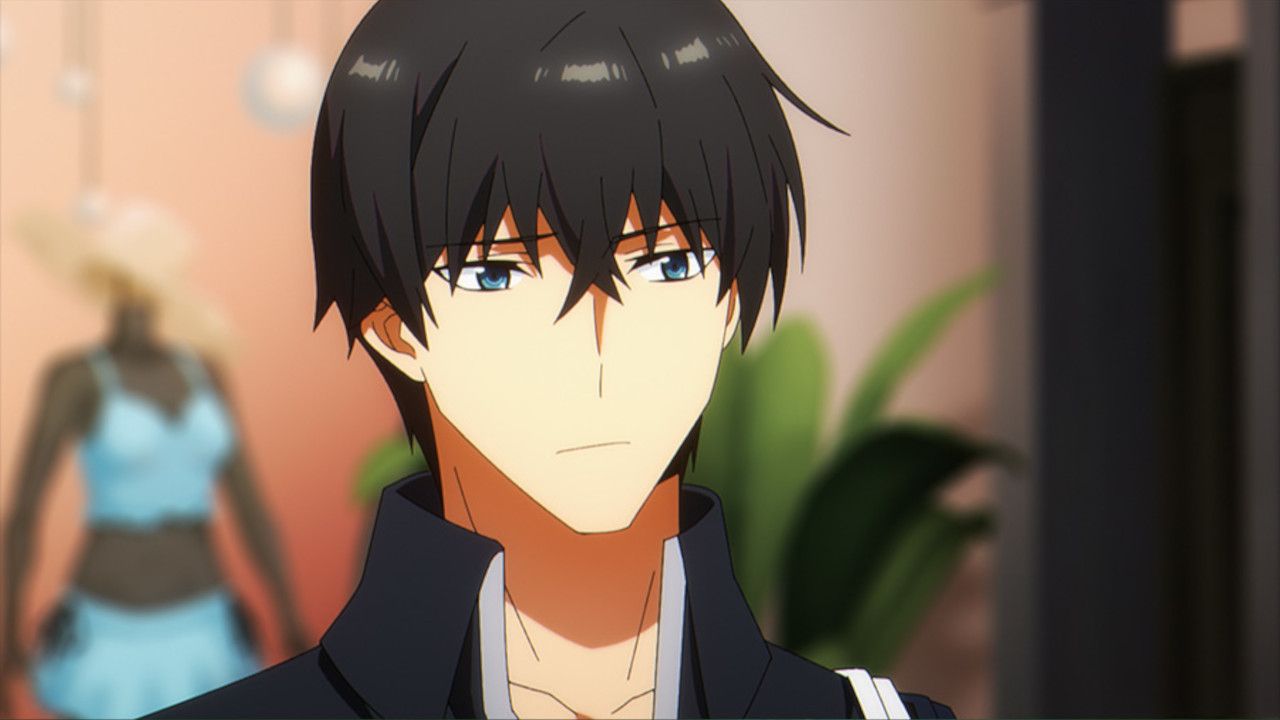
The Irregular At Magic High School
The show doesn’t chase fast gratification. Its tension builds from control, withheld emotion, and strategic release. Watching Tatsuya’s foes realize their mistake—moments too late—is part of the show’s rhythm. That delayed gratification defines its storytelling style: cold on the surface, but burning with quiet resistance underneath.
Later arcs expand the geopolitical reach. Tatsuya becomes involved in international conflicts, cyber warfare, and hidden threats. These plots shift focus from the school setting to broader implications. While ambitious, this expansion sometimes stretches the anime’s emotional core, distancing characters from earlier grounded interactions.
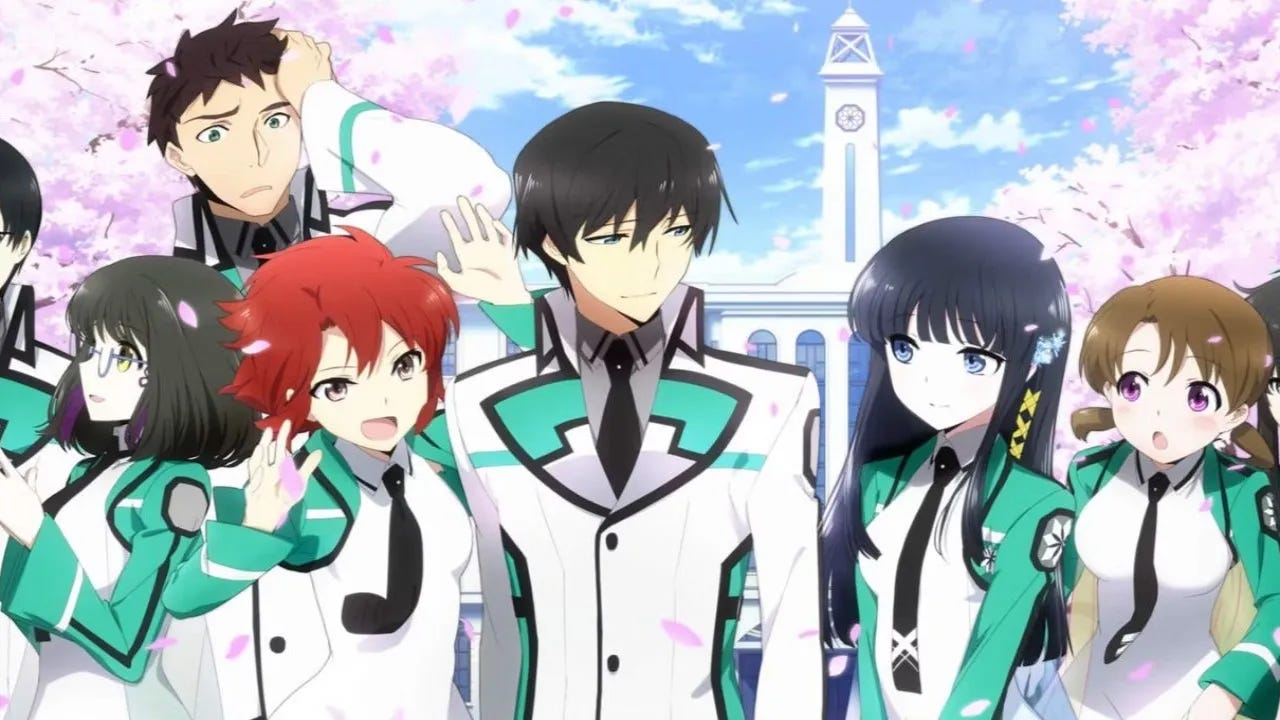
The Irregular At Magic High School
Still, Tatsuya’s central arc remains intact. He is not simply a genius or weapon. He is someone stitched together by trauma, raised under surveillance, and fighting for a sense of freedom without ever saying so. That conflict fuels his story more than any magic circuit or title.
The contrast between perception and reality defines most relationships in the anime. Those who see Tatsuya as weak misunderstand everything he is. Those who respect him often do so for his strength, not his sacrifice. Only a few recognize the cost behind his brilliance. That gap creates lasting emotional tension.
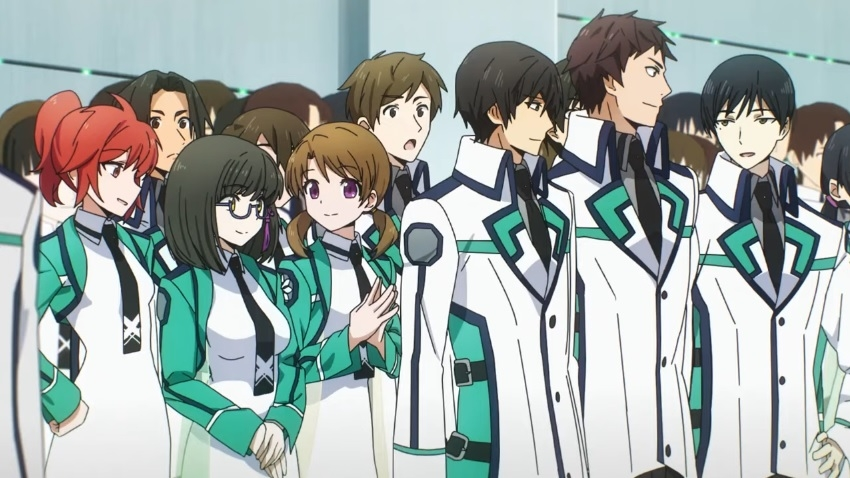
The Irregular at Magic High School Season 3 (Credits: Eight Bit Studio)
Each season adds layers, not just in power levels but in identity. Tatsuya doesn’t evolve through personality shifts—he grows through deeper exposure. The more we see, the more his controlled exterior starts to make sense. His silence becomes a language of its own. His actions speak where his voice does not.
The anime’s core message doesn’t shout. It questions systems that classify people by one measure. It observes how societies ignore potential when it doesn’t appear in familiar forms. And it quietly asks what happens to people like Tatsuya—used, underestimated, and eventually feared—when they decide to take control of their own story.
8. Wise Man’s Grandchild
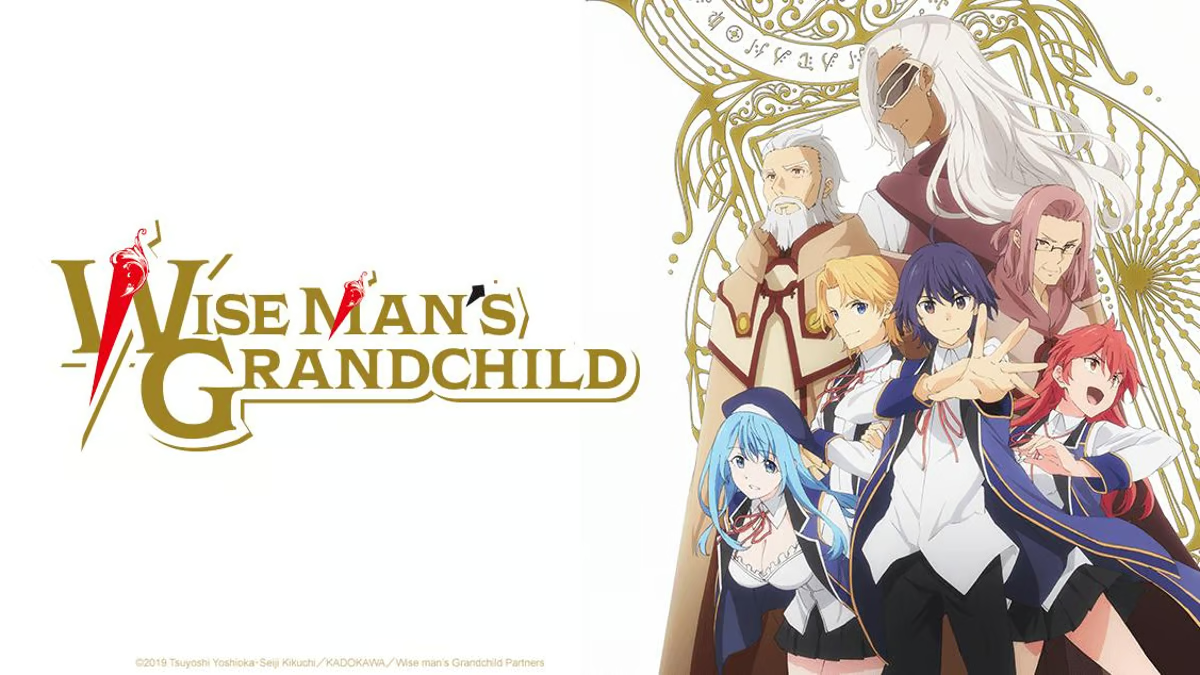
Wise Man’s Grandchild (Credits: Crunchyroll)
Shin Walford, nurtured by a pair of Wise Mages from a young age, received a thorough education in the art of magic, shaping him into a formidable spellcaster.
Despite retaining fragments of his previous life’s memories, Shin shed the confines of conventional wisdom upon reincarnating into a new world. Driven by an insatiable curiosity, he gets on a journey of spellcraft experimentation.
Through the fusion of his scientific acumen and magical prowess, Shin achieved a remarkable feat: the creation of a spell of unprecedented power and devastation.
However, the magnitude of its destructive force proved too perilous to wield. The spell’s potency was such that its usage resulted in the obliteration of the surroundings. Consequently, Shin found himself prohibited from ever employing it again, a testament to the perilous nature of his magical innovation.

Wise Man’s Grandchild (Credits: Crunchyroll)
The story follows Shin Wolford, a young man who is reincarnated into a fantasy world after dying in a traffic accident in his previous life.
In this new world, he is adopted by the legendary swordsman Merlin Wolford and raised as his grandson. Renamed Shin, he grows up in isolation, unaware of his incredible magical potential and the ways of the world.
Despite his sheltered upbringing, Shin possesses extraordinary magical abilities and combat skills that far surpass those of ordinary people. As he enters the Magic Academy to learn about magic and the world around him, he quickly becomes renowned for his unmatched talent and strength.
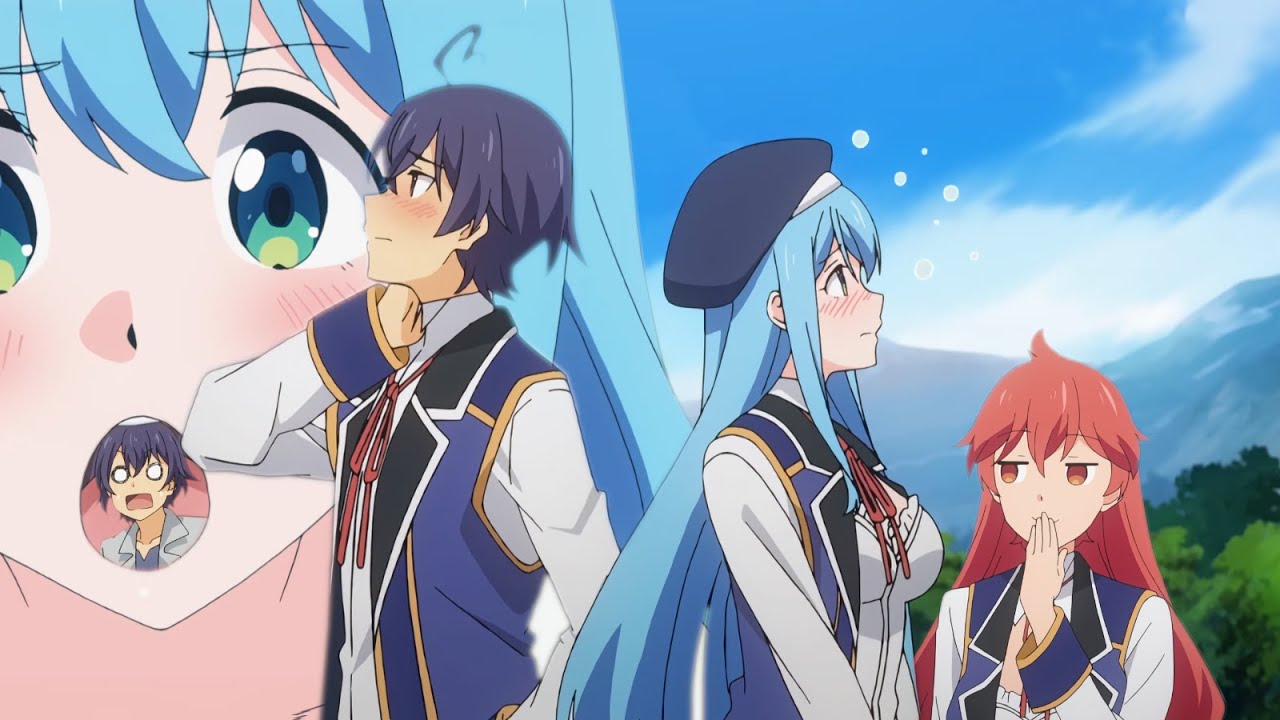
Wise Man’s Grandchild (Credits: Crunchyroll)
“Wise Man’s Grandchild” combines elements of fantasy, magic, adventure, and humor. The series follows Shin as he forms friendships, faces various challenges, and confronts powerful enemies who threaten the peace of the kingdom. The anime adaptation received praise for its entertaining action scenes, lovable characters, and comedic moments.
Fans of fantasy anime with overpowered protagonists and a lighthearted tone often enjoy “Wise Man’s Grandchild” for its enjoyable blend of magic and adventure.
7. Konosuba
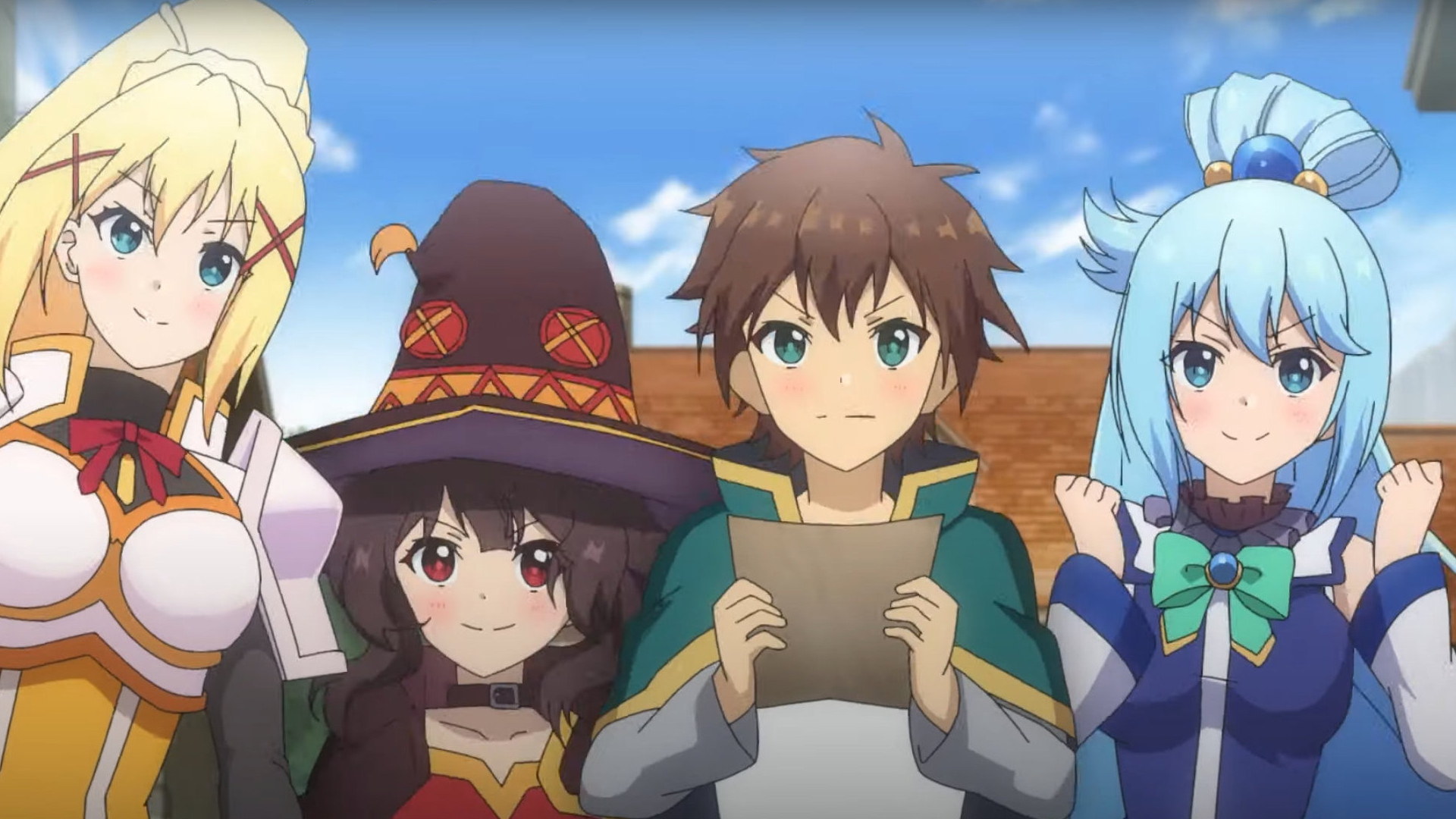
Konosuba (Credits: Crunchyroll)
Kazuma Satō found himself whisked away to another world in the most underwhelming manner, a far cry from the ideal existence he had envisioned.
Frustrated by the stark disparity between his dreams and reality, Kazuma often finds himself engulfed in despondency, frequently venting his discontent by resisting his companions’ aspirations for adventure.
Yet, Kazuma’s disillusionment extends beyond mere moodiness, as he indulges in various acts of mischief. Notably, he gets into the forbidden arts, mastering a Dark Magic known as “Drain Touch.”
Unfettered by remorse, Kazuma employs this sinister magic on multiple occasions, even resorting to using it to antagonize his own companions. His willingness to embrace such forbidden powers underscores his complex nature, blurring the lines between mischief and malevolence in his pursuit of fulfillment in his newfound world.
The story follows Kazuma Satou, a shut-in teenager who dies in a rather embarrassing and comical way. After his death, he meets the goddess Aqua, who gives him the chance to be reincarnated in a fantasy world. Kazuma accepts the offer but soon realizes that life in this new world is far from what he expected.
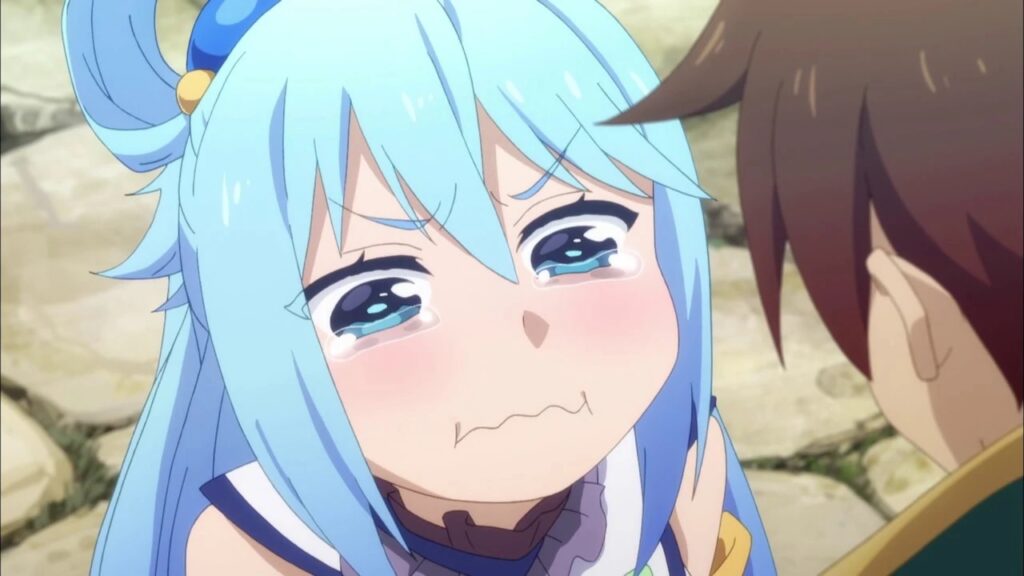
Aqua (Credits: Crunchyroll)
Accompanied by Aqua and joined by other quirky companions he meets along the way, including the explosion-loving mage Megumin and the masochistic crusader Darkness, Kazuma gets on hilarious and often absurd adventures.
“Konosuba” is known for its comedic and satirical take on the isekai (another world) genre, often subverting common tropes and expectations. The series features a blend of fantasy, comedy, and occasional moments of heartfelt sincerity as the characters find their way through various challenges and encounters.
The anime adaptation of “Konosuba” received widespread acclaim for its humor, memorable characters, and witty dialogue. It has garnered a dedicated fanbase and multiple seasons, as well as spin-off material.
Fans of comedy and fantasy anime, especially those looking for a light-hearted and entertaining take on the isekai genre, often find “Konosuba” to be a delightful and enjoyable series.
Kazuma Satou’s journey starts not with honor but embarrassment. After dying in a humiliating way, he’s offered a second life in a magical realm. His only request? To bring a powerful item with him. In a moment of pettiness, he chooses the goddess Aqua. From that instant, chaos follows him everywhere, setting the tone for KonoSuba’s outlandish storytelling.
This isn’t a typical isekai filled with noble warriors and serious quests. Instead, KonoSuba flips the genre, turning heroic tales into farces. Kazuma isn’t brave or noble. He’s sarcastic, lazy, and frequently selfish. Yet those flaws make him oddly relatable. He approaches fantasy life the way most people might—with skepticism, opportunism, and low expectations.
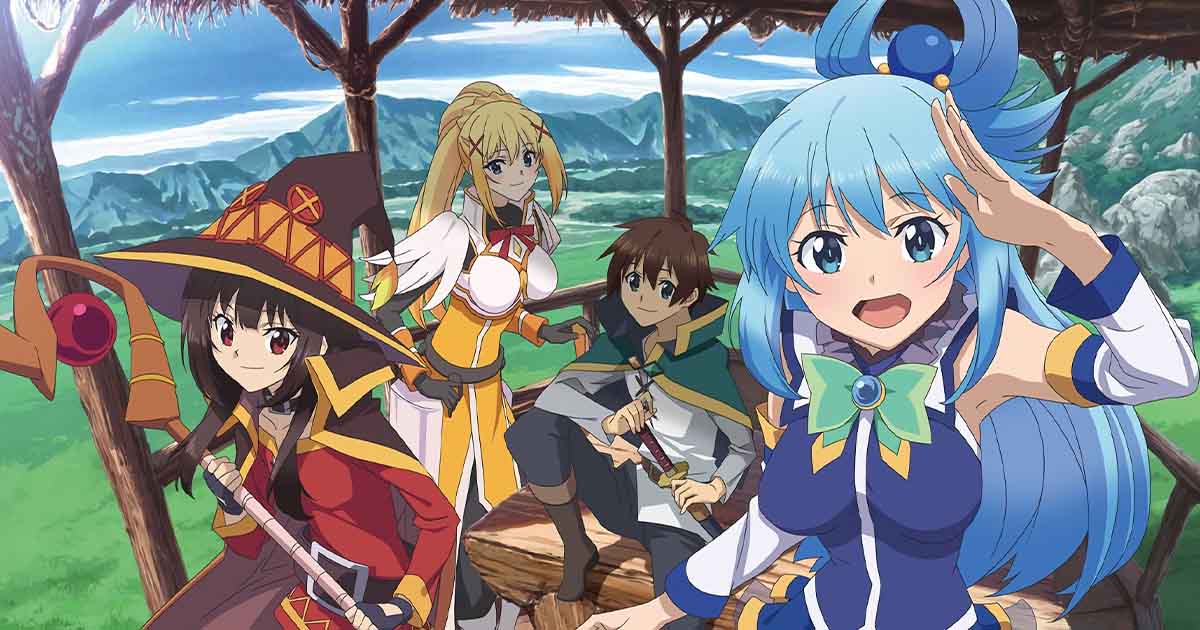
Konosuba (Credits: Crunchyroll)
Aqua, the goddess-turned-party-member, proves herself hilariously useless in practical combat. Despite divine origins, she spends more time crying and whining than actually helping. Her flawed nature, combined with overwhelming pride, turns every dungeon run into an unpredictable disaster. Yet her commitment to vanity and loud denial of her failures bring relentless comedy to every scene.
Megumin, the self-proclaimed archwizard, insists on using only explosion magic—even though it knocks her unconscious after each spell. Her devotion to explosions becomes a running gag that somehow never loses charm. Her dramatic flair, obsession with destruction, and awkward crush on Kazuma blend into a character that’s both eccentric and endearing.
Darkness, the masochistic crusader, completes the dysfunctional squad. Her noble background contrasts with her disturbing desire to be humiliated in battle. She can’t land a single blow on enemies but willingly throws herself into the thick of danger. Her bizarre fantasies and lack of shame constantly push situations from silly to completely unhinged.
These characters thrive not because they grow stronger or wiser, but because they survive one blunder after another. Quests fall apart, plans backfire, and monsters become bizarre punchlines. The world itself plays along—townsfolk are ungrateful, nobles are petty, and nothing unfolds like a grand fantasy should. That’s what makes KonoSuba unique.
The writing leans heavily into sarcasm, deadpan delivery, and banter. Conversations feel less like scripted exchanges and more like friends mocking each other out of frustration. Kazuma’s commentary on the absurdity around him serves as the audience’s voice, constantly breaking the illusion of grandeur the genre usually maintains. It’s sharp, witty, and surprisingly grounded.

Konosuba (Credits: Studio Deen)
Visually, KonoSuba’s animation isn’t always polished, but the style adds to its charm. Exaggerated expressions, sloppy movements, and over-the-top reactions work in favor of its comedic tone. Studio Deen embraces rough edges rather than hiding them, matching the chaotic mood of the story. The lack of elegance mirrors the flawed cast and their slapstick adventures.
Musical direction enhances this madness. The upbeat opening theme contrasts with Kazuma’s pessimism, while quirky background tracks highlight the absurdity of each scene. The soundtrack knows when to play up the drama ironically and when to lean into genuine emotional moments. The lighthearted tones keep everything buoyant even during more serious stretches.
Despite its comedic structure, KonoSuba sometimes reveals more heartfelt truths. Beneath Aqua’s incompetence, Megumin’s dramatics, and Darkness’s strange preferences are characters longing for acceptance. They may fail constantly, but they still show up, support each other, and form bonds. Their friendship, messy as it is, becomes the emotional backbone of the series.
Kazuma himself undergoes subtle shifts. While still snarky and manipulative, he occasionally acts with selflessness, especially when his companions face real danger. His moments of bravery aren’t grand but honest. Whether it’s standing up to corrupt nobility or risking his life for his party, he shows there’s more beneath the sarcasm.
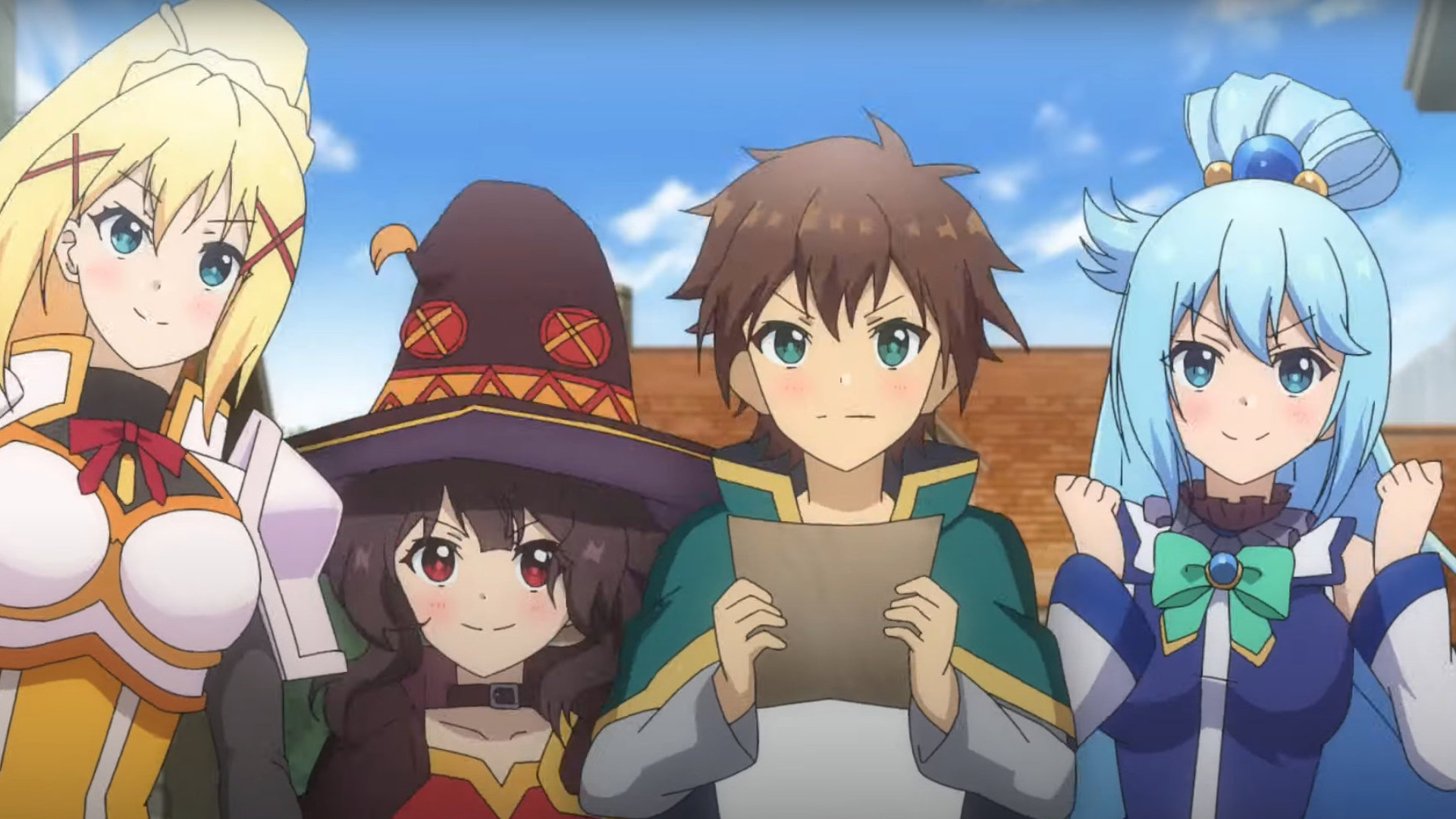
Konosuba (Credits: Studio Deen)
KonoSuba also critiques the idea of “chosen one” narratives. Kazuma isn’t destined for greatness—he’s unlucky, average, and constantly outclassed. Yet he endures. The show mocks overpowered protagonists by presenting a hero who wins through trickery, bargaining, and dumb luck. His achievements are often messy, but they reflect the reality of dealing with unpredictable chaos.
Side characters and townspeople also add to the atmosphere. From the eccentric Wiz to the intimidating but misunderstood Vanir, the world feels vibrant in its own bizarre way. Even minor roles leave lasting impressions due to their odd behavior, unique quirks, or outrageous logic. The entire setting feels like a carnival where everyone’s playing a slightly broken role.
What makes KonoSuba work long-term is consistency. Each episode builds upon the last disaster without trying to reset or redeem its characters completely. It allows its cast to remain flawed, to fail often, and to grow slowly, if at all. That steady rhythm keeps the humor alive and the world believable within its twisted logic.
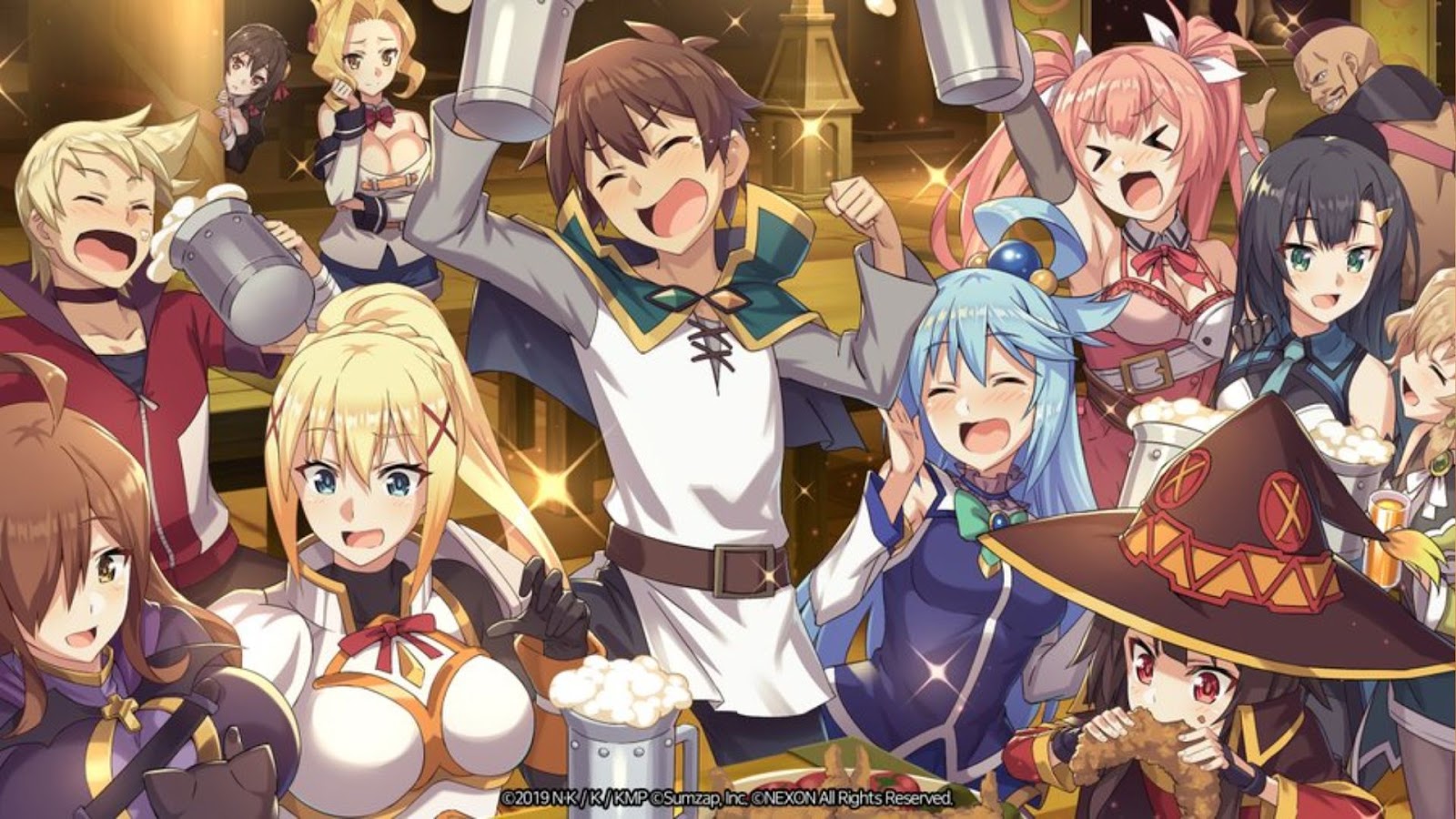
Konosuba (Credits: Studio Deen)
Romantic tension exists, especially between Kazuma and Megumin, but it’s never rushed. The show doesn’t rely on sudden love confessions or melodrama. Instead, it allows attraction and trust to develop awkwardly over time. These moments don’t overshadow the comedy—they gently support it, showing the bonds are more than surface-level.
By avoiding traditional isekai formulas, KonoSuba builds its own lane. It’s not a journey toward greatness, but a chaotic ride with moments of clarity. Watching Kazuma and his team fumble through life is strangely satisfying. Their collective messiness makes victories feel genuine, no matter how small or ridiculous they might be.
The humor never comes from malice—it comes from honesty. KonoSuba looks at fantasy and says, “What if people stayed who they were?” It keeps its stakes low but meaningful. The dungeons, monsters, and spells never overshadow the real story: four weird people trying to find some sense of meaning in a world that makes no sense.
KonoSuba continues to gain fans because it refuses to pretend. It doesn’t polish its characters, world, or narrative. Instead, it shows imperfection with pride, letting failures be funny, annoying, and sometimes moving. That rare blend of farce and sincerity is what sets it apart from the dozens of isekai surrounding it.
6. Delicious In Dungeon
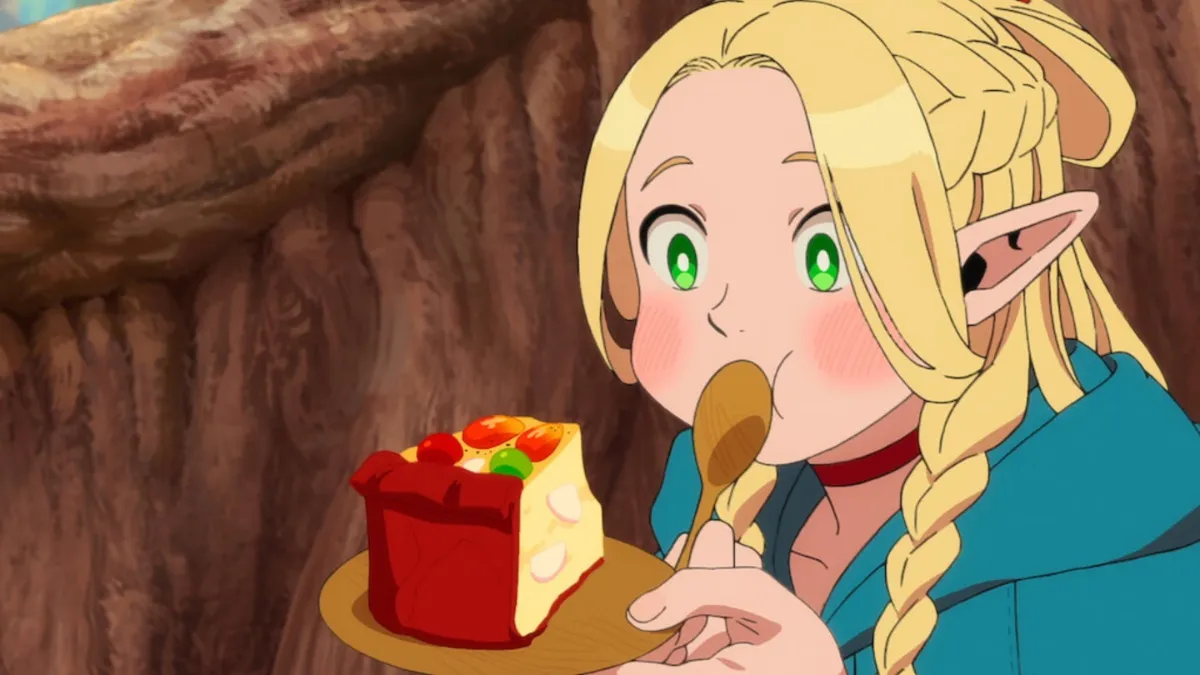
Delicious In Dungeon (Credits: Crunchyroll)
Beneath the seemingly benign surface of the fantasy realm of Delicious in Dungeon lies a hidden and ominous truth, concealed within the depths of the labyrinthine Dungeon where Laios, Marcille, Senshi, and Chilchuck get on their quest to rescue Falin.
Marcille reveals the enigma, believing that the ancient magic imbued within the Dungeon’s very stones holds forgotten knowledge once wielded by her ancestors, now shrouded in superstition and ignorance.
For enthusiasts of Delicious in Dungeon, these series intertwine elements of fantasy, culinary delights, and gripping action, crafting recipes for thrilling adventures.
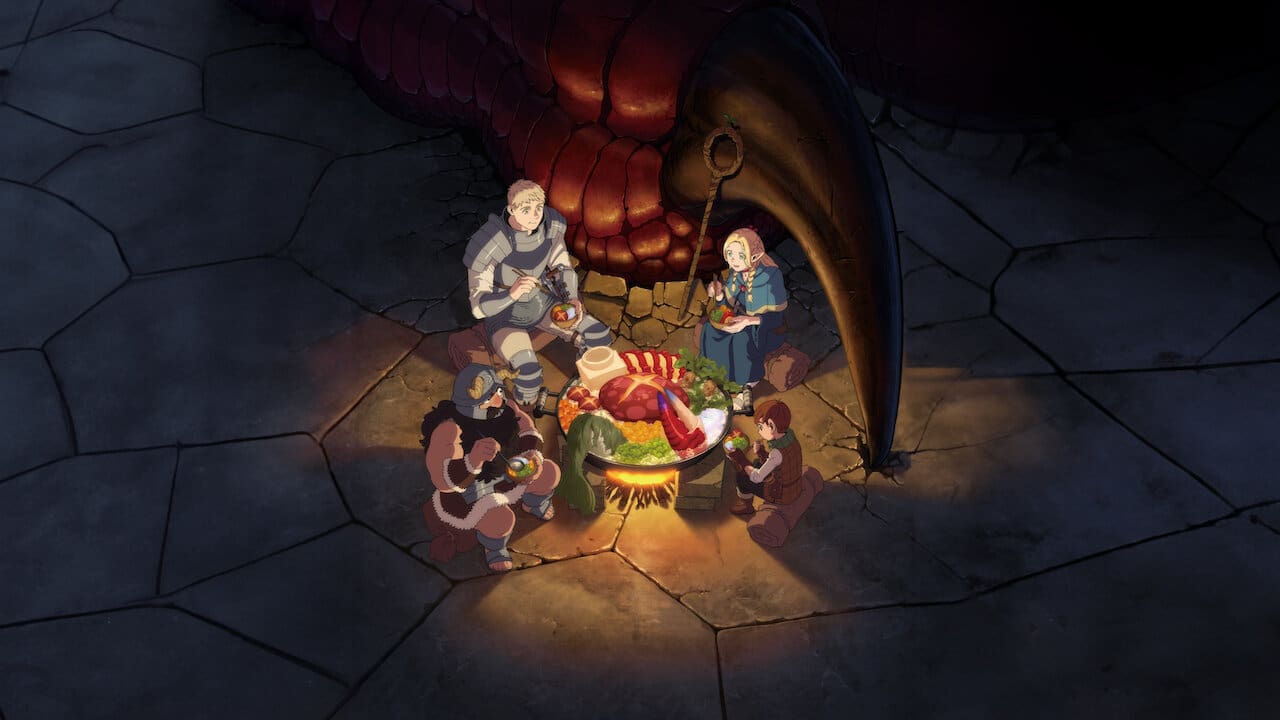
Delicious In Dungeon (Credits: Crunchyroll)
When the pivotal moment to resurrect Falin arrives, Marcille hesitates not to employ the ancient magic, viewing it as the key to saving her companion. However, Chilchuck vehemently opposes this risky endeavor, acutely aware of the dire consequences that may accompany such recklessness.
“Delicious in Dungeon,” known as “Dungeon Meshi” in Japanese, is a manga series written and illustrated by Ryoko Kui. It has gained popularity for its unique blend of fantasy adventure, cooking, and humor.
The story follows a group of adventurers who go on a quest to find a vast and dangerous dungeon in search of treasure and to rescue one of their party members who has been eaten by a dragon.
However, they quickly run into trouble and find themselves low on supplies. To survive, they decide to cook and eat the monsters they encounter in the dungeon.
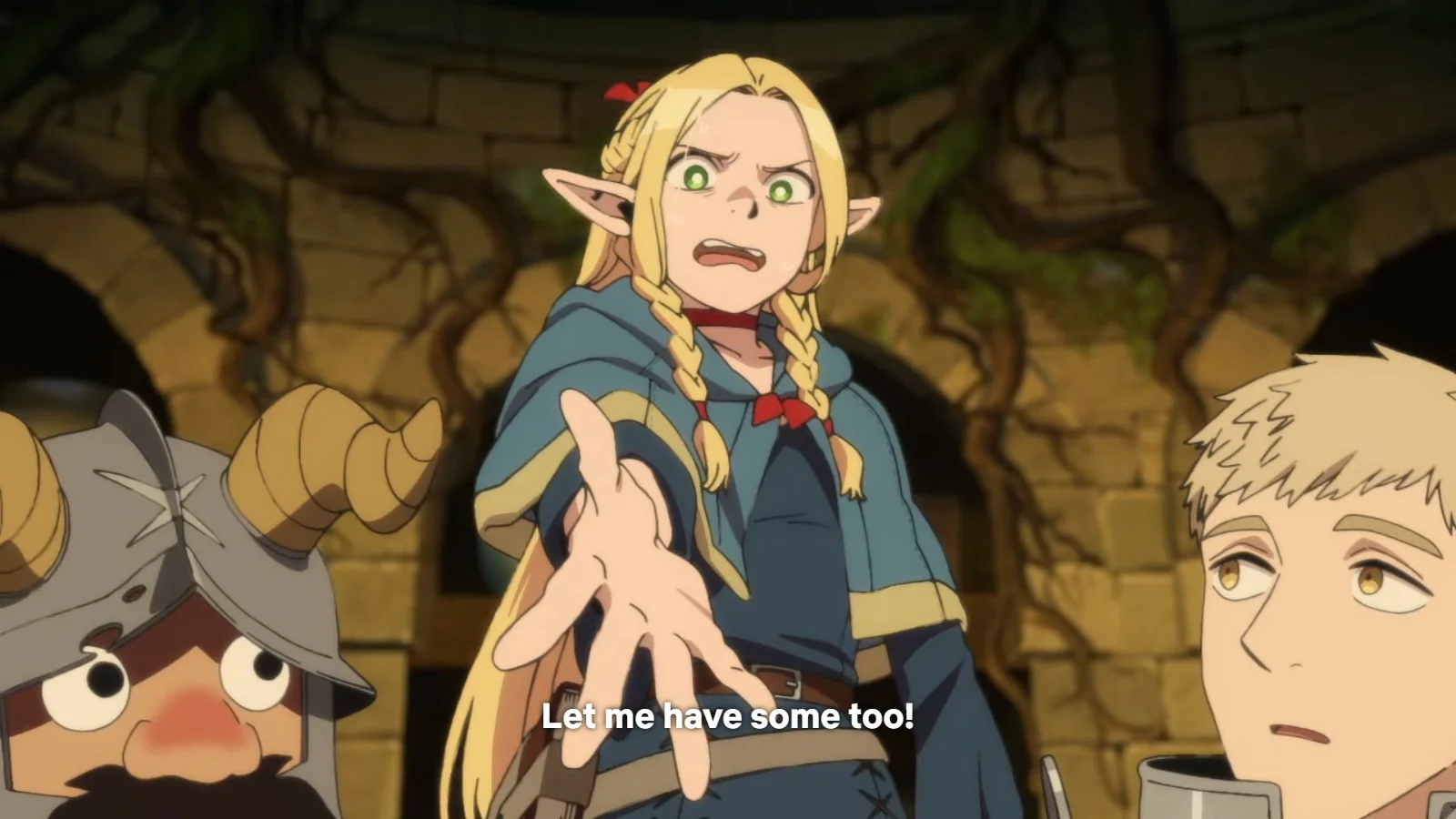
Delicious In Dungeon (Credits: Crunchyroll)
What sets “Delicious in Dungeon” apart is its focus on food and cooking within a fantasy setting. The manga features detailed recipes and cooking techniques for preparing various fantasy creatures, from giant frogs to golems, all with a comedic twist.
As the adventurers get deeper into the dungeon, they encounter new ingredients and cooking challenges, all while developing their culinary skills.
The series combines elements of fantasy adventure, comedy, and cooking, creating a unique and engaging reading experience. Fans of fantasy manga with a quirky and light-hearted tone, as well as those interested in cooking and culinary culture, often find “Delicious in Dungeon” to be a refreshing and enjoyable series.
5. High School DxD
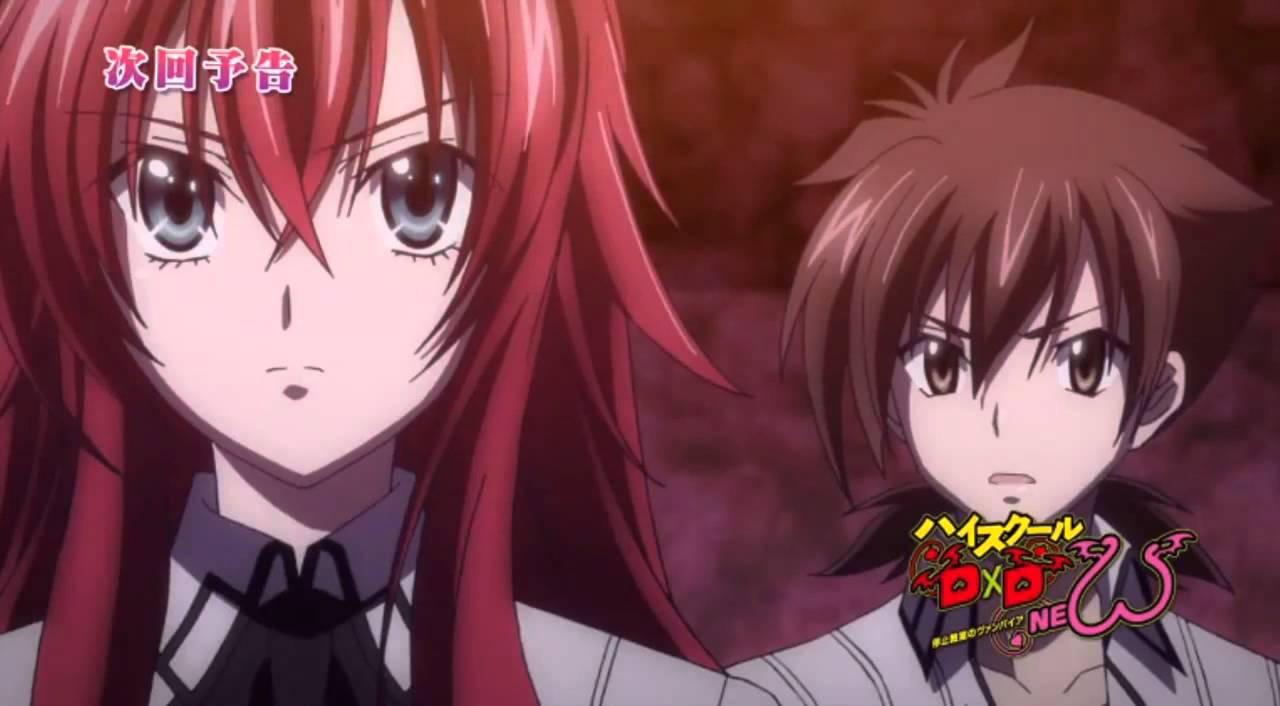
High School DxD (Credits: Prime Video)
Issei Hyoudou may stand as a formidable force in High School DxD, but the mantle of the most potent magic wielder belongs to Rias Gremory. Renowned for her mastery of the arcane arts, Rias gets into the realms of Dark Magic, particularly the ominous Discipline of Destruction.
This forbidden art, a treasured legacy within the Gremory lineage, wields such terrifying might that even the divine tremble at its potential. However, Rias exercises judicious restraint in its utilization, cognizant of the cataclysmic consequences it could unleash.
She reserves Destruction magic as a measure of last resort, fully aware of the unfathomable devastation it could wreak upon the world should it spiral out of control.
Rias’s sagacity and prudence serve as bulwarks against the unrestrained power she commands, ensuring that her mastery remains a force for safeguarding rather than annihilation.
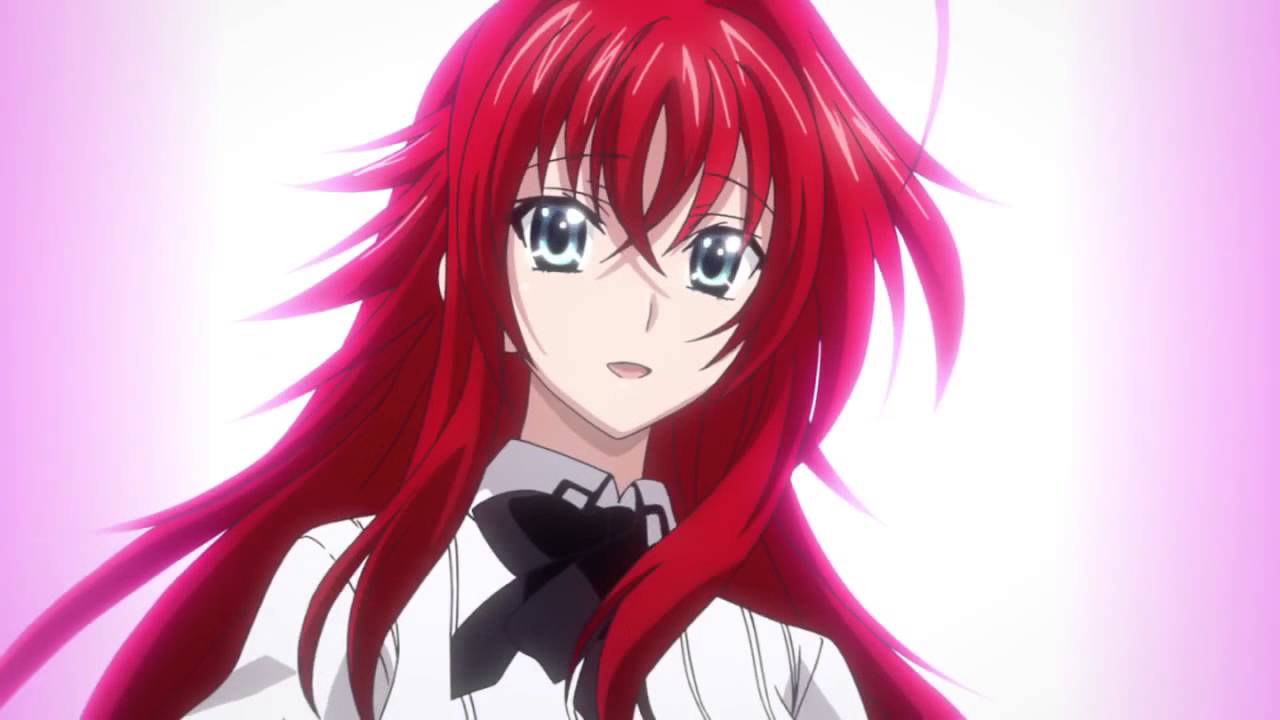
Rias (Credits: Prime Video)
The story centers around Issei Hyoudou, a high school student who is killed by a fallen angel on his first date. However, he is revived by Rias Gremory, a top-class devil, as her servant. As a member of the occult research club at Kuoh Academy, Issei becomes involved in various supernatural conflicts between angels, fallen angels, and demons.
“High School DxD” is known for its blend of action, supernatural elements, and ecchi (erotic) content. The series features intense battles between powerful beings, often interspersed with comedic and risqué moments.
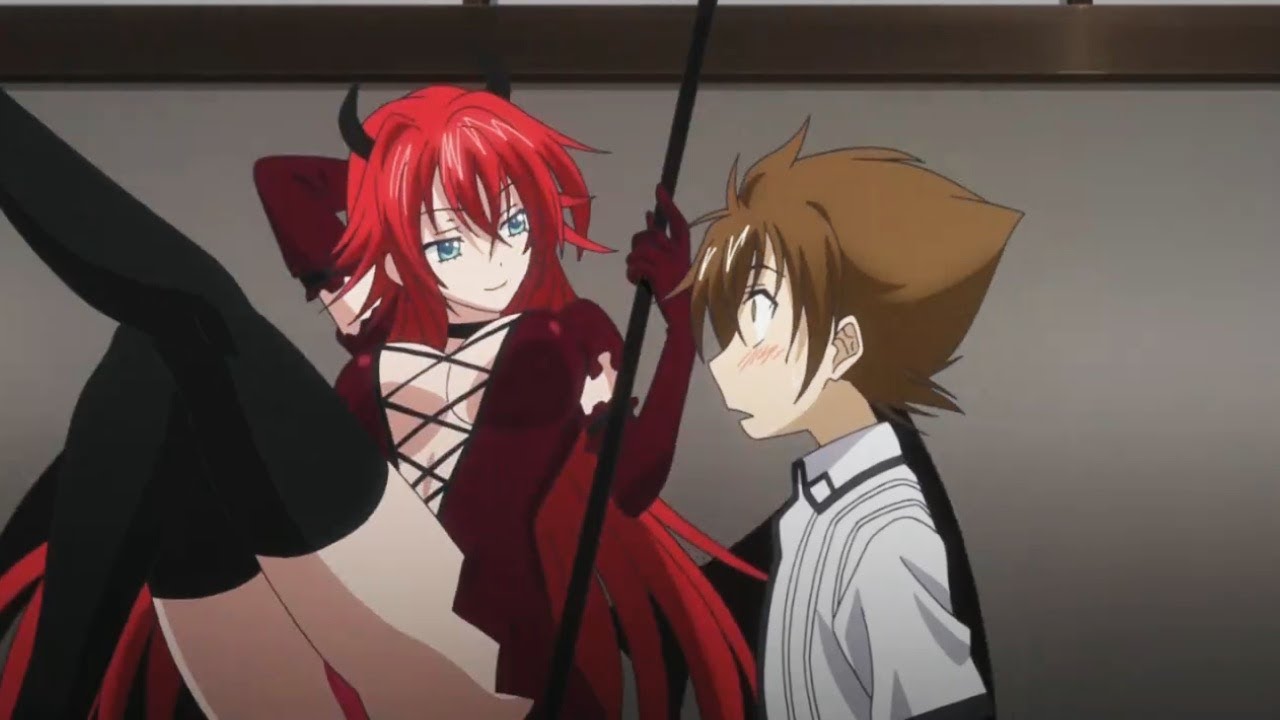
High School DxD (Credits: Prime Video)
As Issei finds the world of devils and angels, he forms bonds with his fellow club members, including Rias Gremory, Akeno Himejima, and Asia Argento, while also facing off against dangerous enemies and uncovering the secrets of his own heritage.
The anime adaptation of “High School DxD” received attention for its action-packed scenes, colorful characters, and fan service elements. It has garnered a dedicated fanbase and multiple seasons, as well as OVAs (original video animations) and spin-off material.
Fans of supernatural action anime with elements of comedy and ecchi content often enjoy “High School DxD” for its entertaining blend of genres and its focus on intense battles and character relationships.
4. Fairy Tail
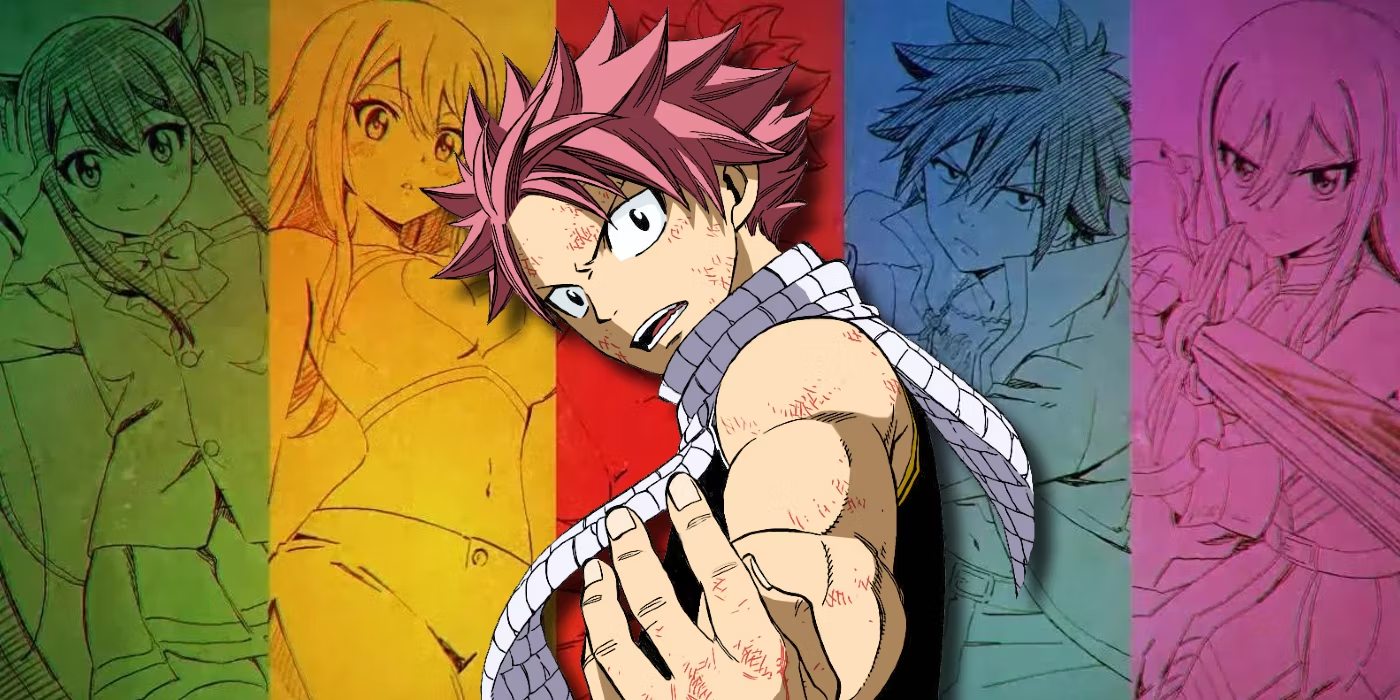
Fairy Tail 100 Years Quest
Gray Fullbuster possessed an exceptional talent for Ice-Make magic from a young age, establishing him as one of the most formidable elemental mages in the anime. However, his already impressive power surged to new heights upon inheriting his father’s legacy: Ice Devil Slayer Magic.
This formidable and shadowy magic is regarded as taboo by some, wielding immense power at the cost of grave consequences. When activated, Ice Devil Slayer Magic empowers Gray, enabling him to consume all Ice-type magic in his vicinity, akin to Natsu’s manipulation of flames.
Yet, the use of this potent magic takes a toll. With each invocation, Gray risks losing control, potentially succumbing to the very demonic forces he seeks to vanquish.
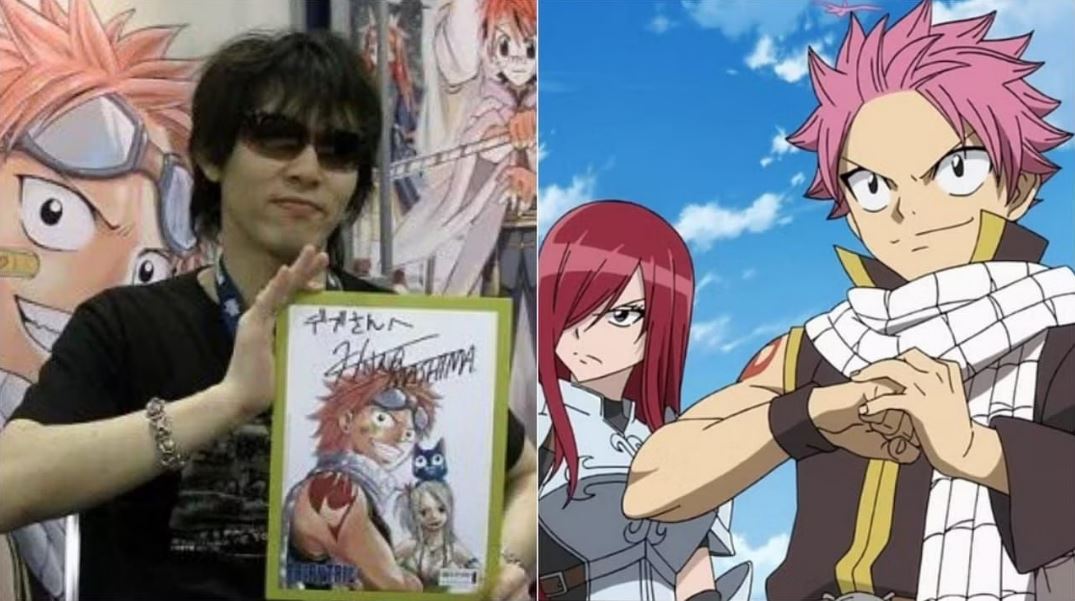
Hiro Mashima
“Fairy Tail” is a popular Japanese manga series written and illustrated by Hiro Mashima. It has also been adapted into an anime series, several films, OVAs (original video animations), and spin-off manga.
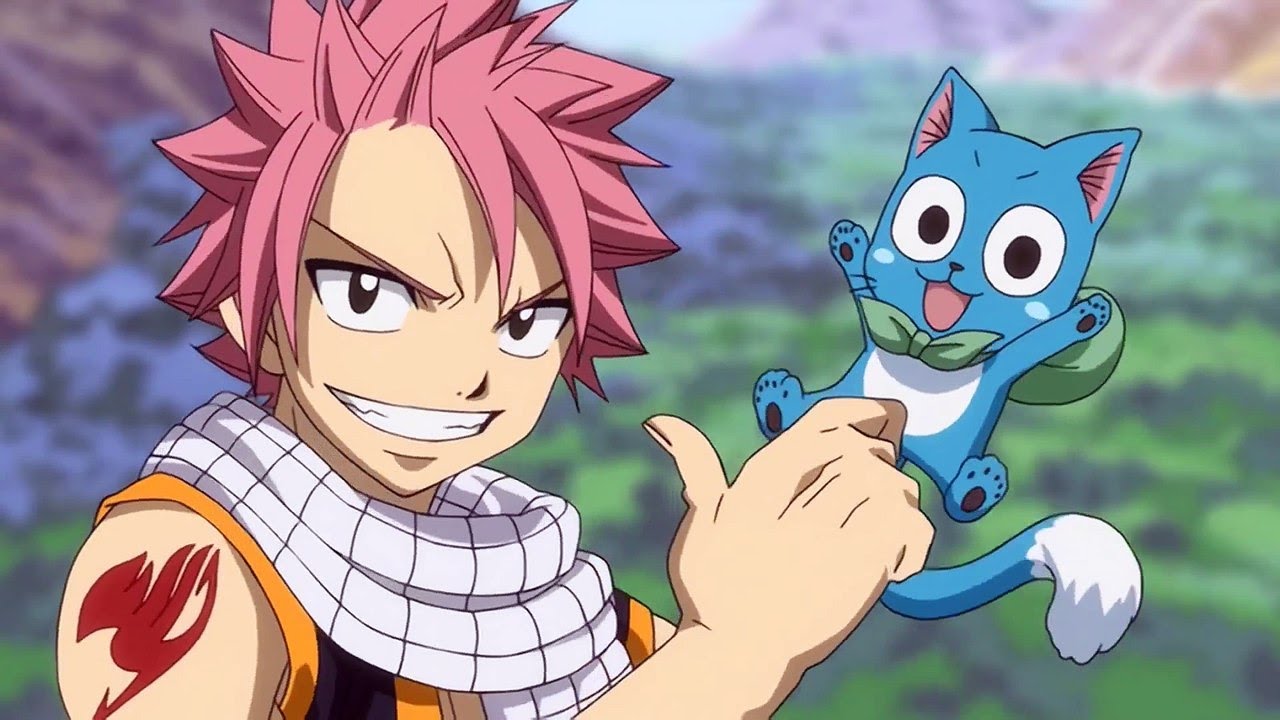
The story is set in the fictional world of Earthland, where magic is a common part of everyday life and various guilds of mages exist. The series follows the adventures of the Fairy Tail guild, particularly focusing on the adventures of its core members: Lucy Heartfilia, Natsu Dragneel, Gray Fullbuster, Erza Scarlet, and Happy the cat.
Natsu Dragneel, a dragon slayer wizard with the ability to harness fire magic, is on a quest to find his foster parent, a dragon named Igneel. Alongside his friends, he takes on various missions, battles powerful foes, and reveals mysteries while forging strong bonds of friendship and camaraderie.
“Fairy Tail” is known for its action-packed battles, colorful cast of characters, and themes of friendship, loyalty, and perseverance. The series finds the personal growth and development of its characters as they face numerous challenges and overcome adversity together.
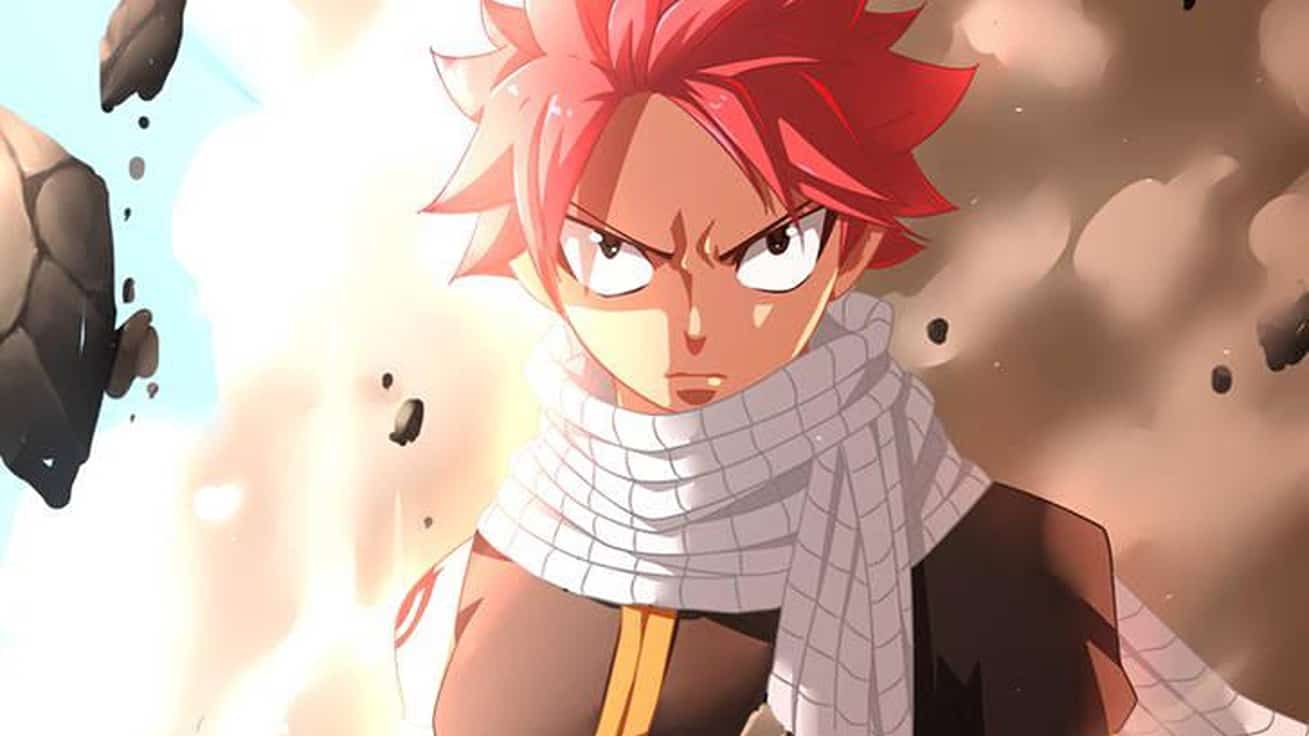
Natsu | Fairy Tail: 100 Years Quest (Credits: Kodansha)
The anime adaptation of “Fairy Tail” received widespread popularity for its vibrant animation, memorable soundtrack, and faithful adaptation of the manga’s storyline. It has garnered a large and dedicated fanbase worldwide, becoming one of the most iconic and beloved anime and manga series in the fantasy genre.
Fans of action-packed adventure anime with elements of magic and friendship often find “Fairy Tail” to be an engaging and enjoyable series with its blend of exciting battles, emotional moments, and comedic interludes.
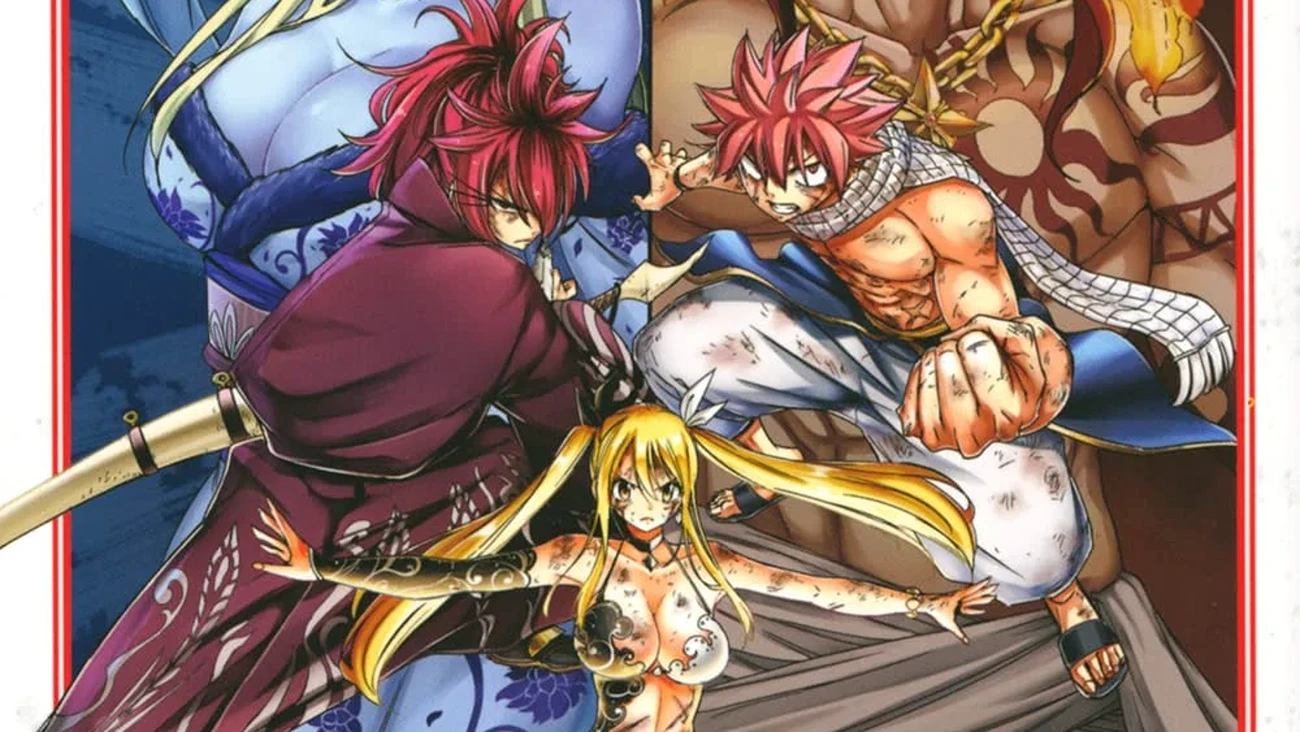
Fairy Tail: 100 Years Quest | Manga Cover (Credits: Kodansha)
Fairy Tail thrives on emotions. From the first moment Natsu charges into action to defend his friends, it’s clear this isn’t just about battles—it’s about the fire inside each character. That inner drive turns fights into something more than spectacle. They’re moments of connection, grief, pride, and forgiveness.
Natsu Dragneel stands at the center of this energy. Loud, impulsive, and fiercely loyal, he’s the kind of fighter who doesn’t think twice before jumping in. His bond with Lucy Heartfilia becomes the heart of the story—not romantic, but deep, trusting, and full of respect. Their journey builds much of the emotional core.
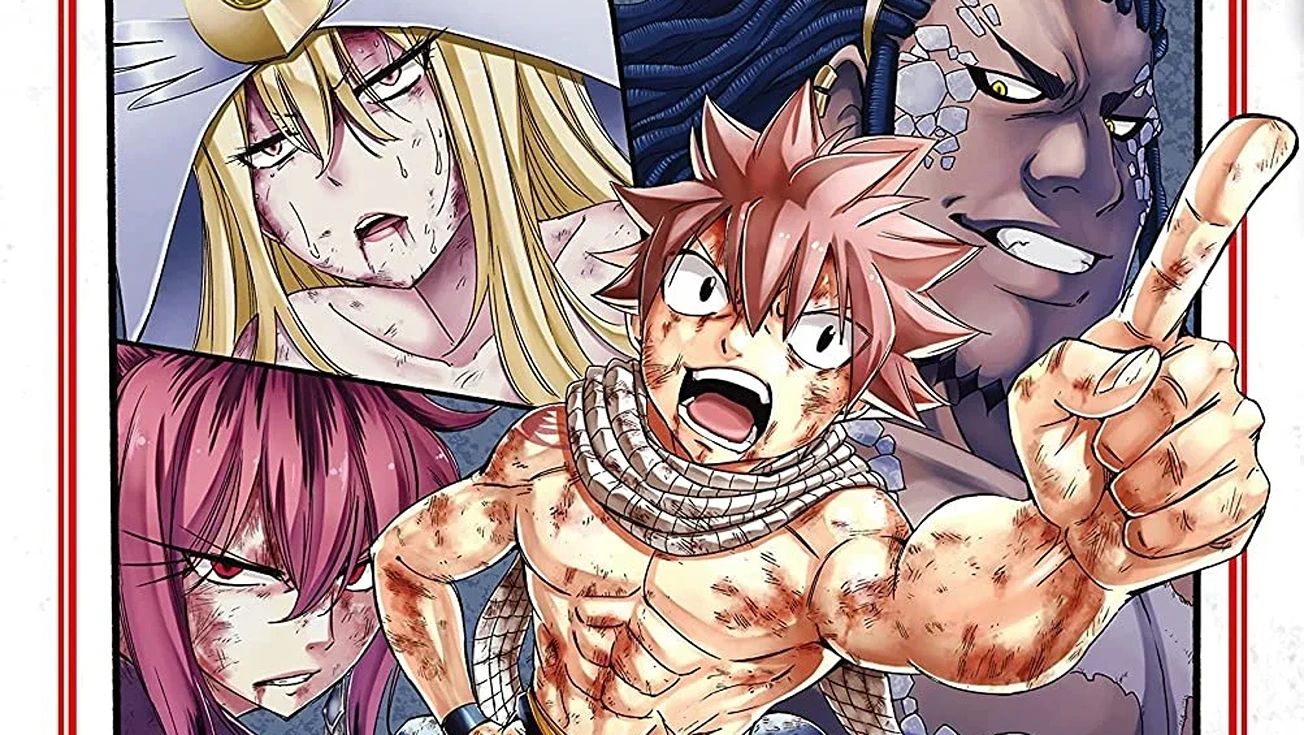
Fairy Tail: 100 Years Quest | Manga Cover (Credits: Kodansha)
Lucy enters the guild unsure of herself. Her growth feels personal and steady. She isn’t the strongest mage, but she improves through grit and support. Her Celestial Spirits are more than tools—they’re companions. Her bond with them reflects her own need for closeness and the emotional distance she faced growing up in a wealthy, lonely household.
Other core members like Gray, Erza, and Wendy each add something meaningful. Gray’s icy exterior hides deep trauma, especially related to loss and revenge. His rivalry with Natsu offers both humor and tension. Erza, stoic and disciplined, carries the burden of childhood pain but becomes the pillar of strength. Wendy’s kindness balances their firepower with quiet courage.
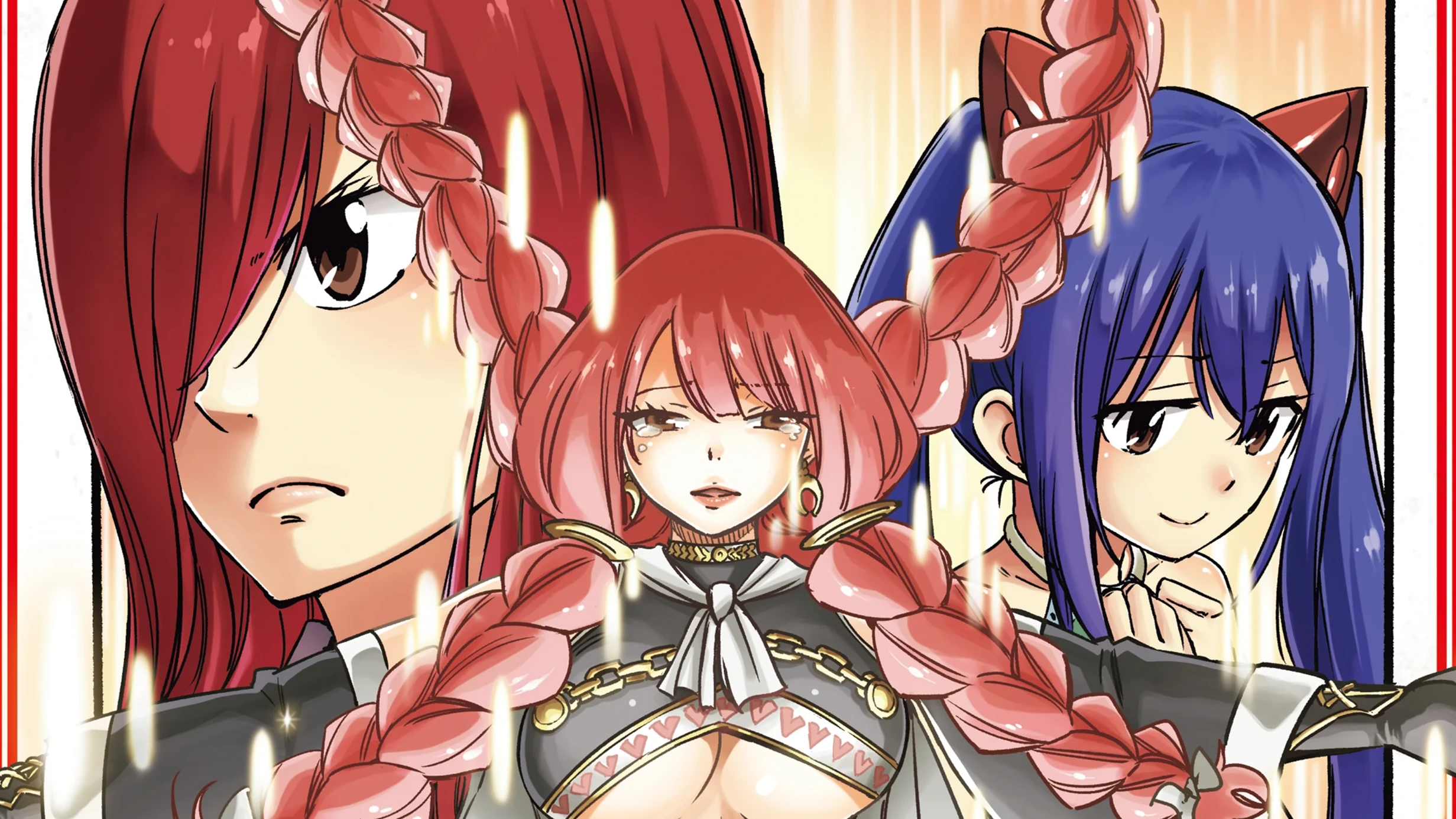
Fairy Tail: 100 Years Quest | Manga Cover (Credits: Kodansha)
The world of Fiore feels vivid with its magic guilds, missions, and vast terrains. Fairy Tail doesn’t build its universe through rules—it does it through relationships. Each arc introduces new guilds, dark forces, or ancient spells, but at its core, it’s always about the ties between people. The setting supports those emotional clashes more than any grand system.
The animation remains vibrant, especially during action sequences. When Natsu’s flames roar or Erza switches armor mid-battle, everything heightens. Music swells with Celtic energy, adding weight to magical scenes. Even slower episodes carry emotional resonance through these visual and sound cues. It never forgets its tone: fiery, proud, and heartfelt.
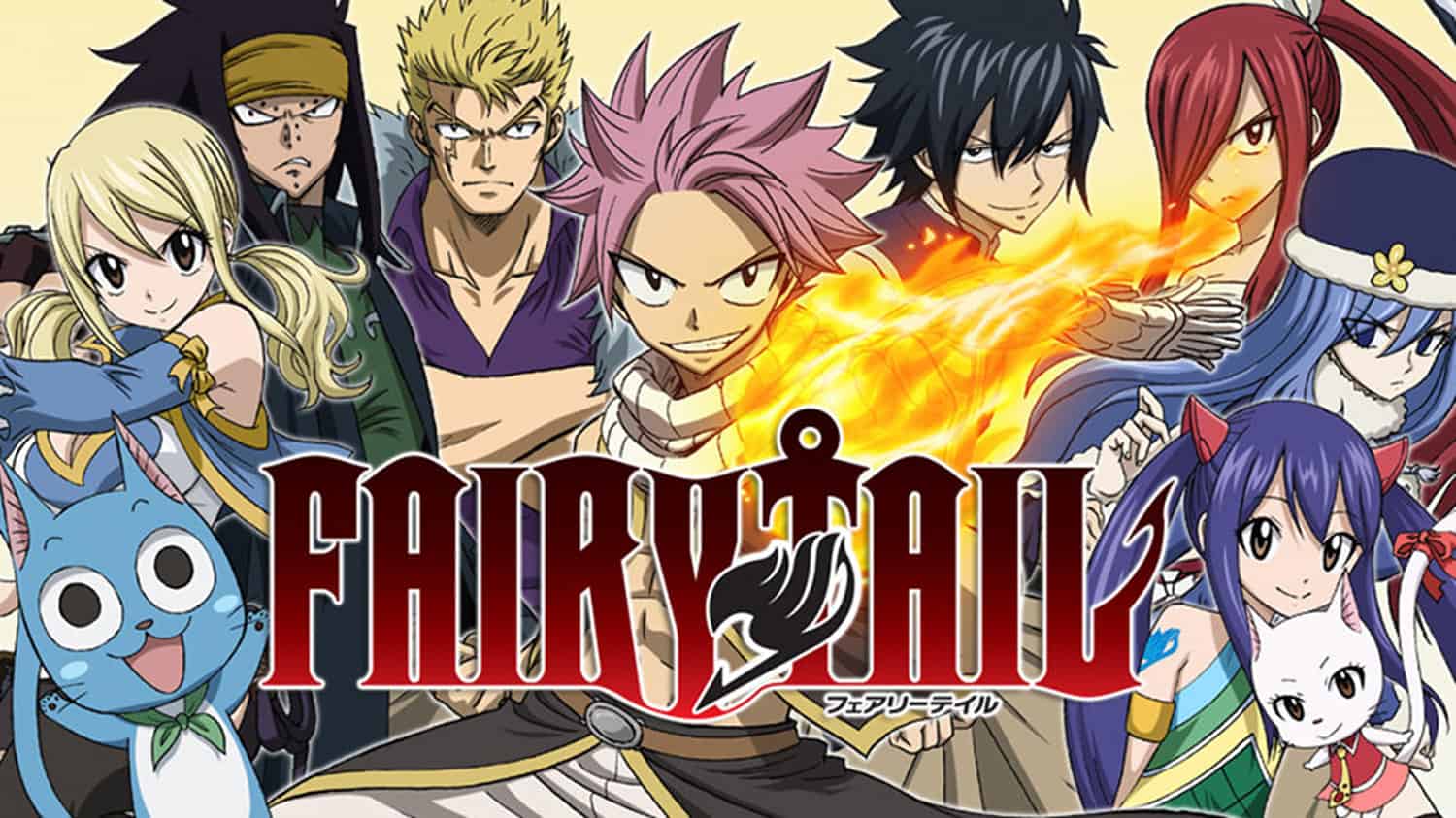
Fairy Tail: 100 Years Quest (Credits: Kodansha)
Themes of family and chosen bonds repeat often. Fairy Tail itself becomes a home for characters who were cast out, abandoned, or isolated. Even former enemies like Laxus and Gajeel eventually find their place within the guild. Forgiveness doesn’t come easily—but when it does, it sticks. The series believes deeply in second chances.
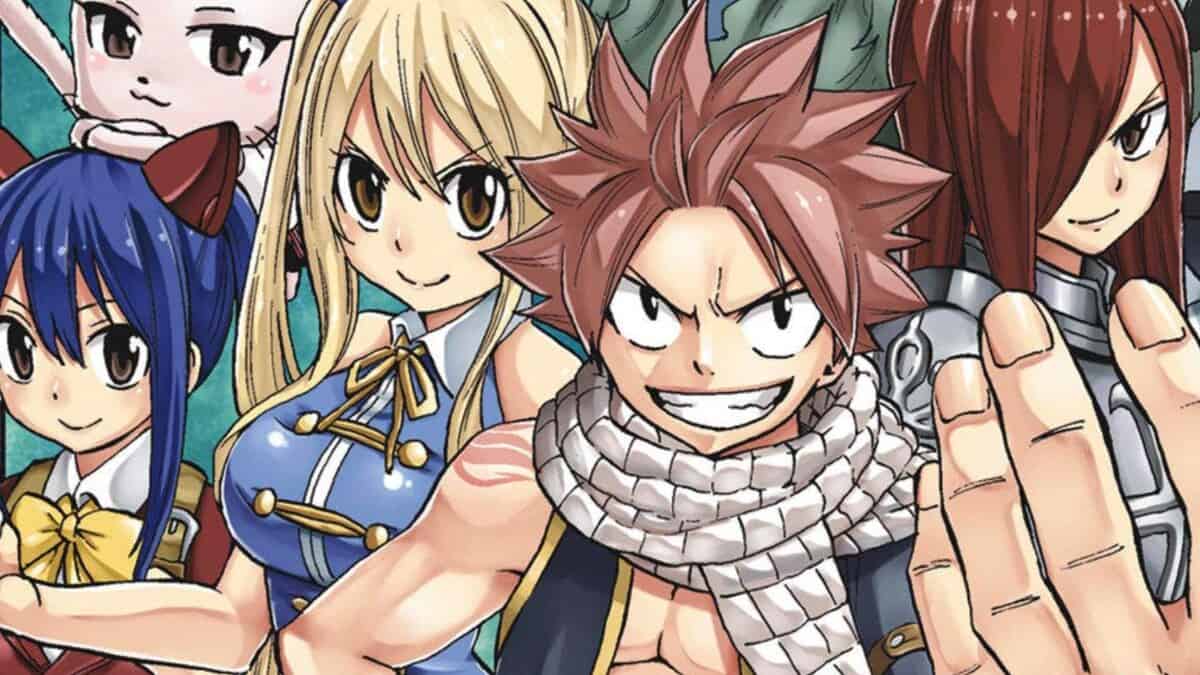
Fairy Tail 100 Years Quest (cc: Kodansha)
Some arcs leave strong impressions. The Phantom Lord conflict raises the stakes, as Lucy’s family becomes a target. The Tower of Heaven reveals Erza’s harrowing past, showing how even the strongest break. Tenrou Island tests everyone, ending with shocking consequences. The Grand Magic Games arc delivers grand spectacle and solid character growth.
Yet, the anime isn’t flawless. Power-ups arrive abruptly, often fueled by emotional speeches. Repetition builds across arcs—characters beaten down rise again through sheer will or memories of their friends. While these moments can inspire, they sometimes reduce tension. Viewers expecting strategic combat might grow impatient with emotional triggers replacing clever plans.
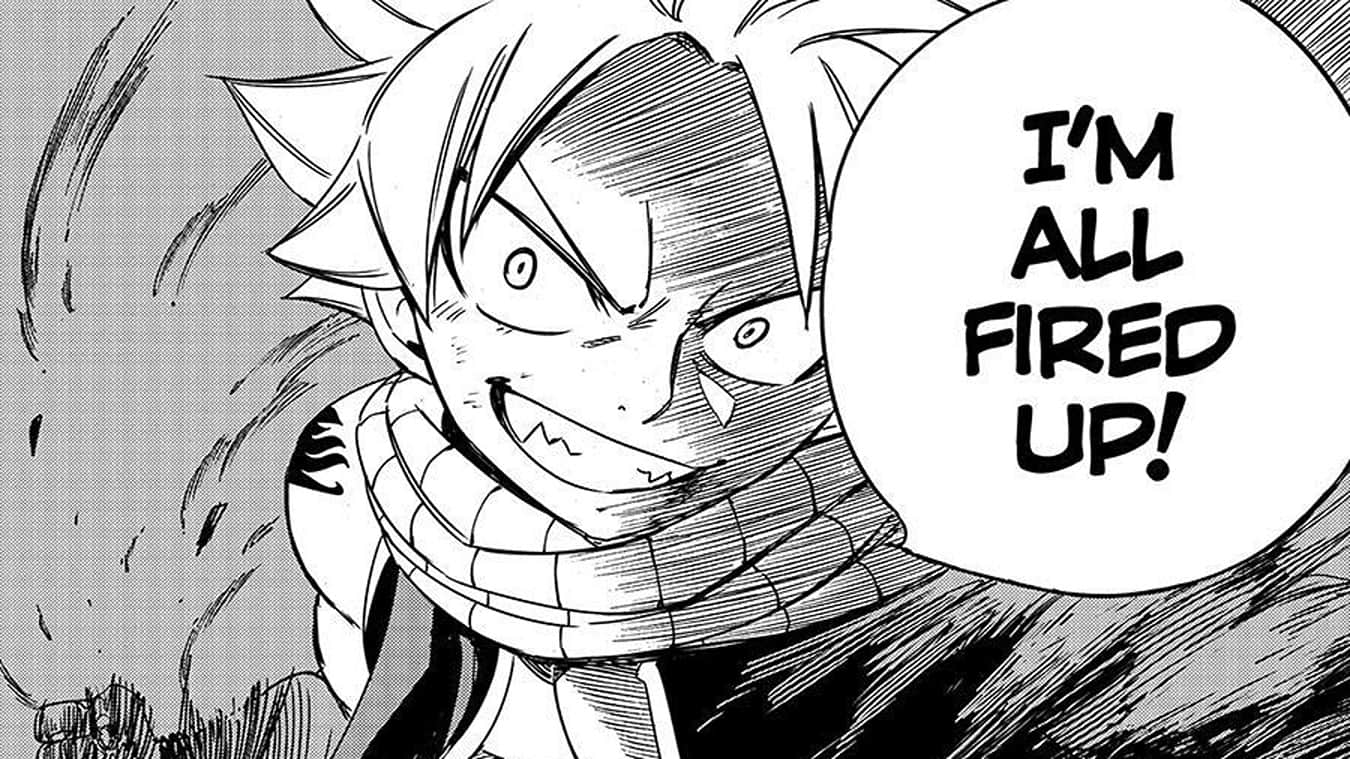
Natsu | Fairy Tail: 100 Years Quest Chapter 139 (Credits: Kodansha)
Pacing also wavers. Some arcs stretch too long. Filler episodes sometimes break momentum. The anime’s determination to keep everyone involved leads to overcrowded scenes. Still, it rarely loses focus on the emotional reason behind the fight. Whether personal trauma or protecting friends, the goal remains consistent: protect what matters.
Despite its faults, Fairy Tail has a lasting charm. It makes viewers care. Fans stay not only for explosions or magic but because they believe in this guild. They’ve watched these characters cry, laugh, and grow. That connection keeps the anime meaningful even after dozens of episodes and repeated themes.
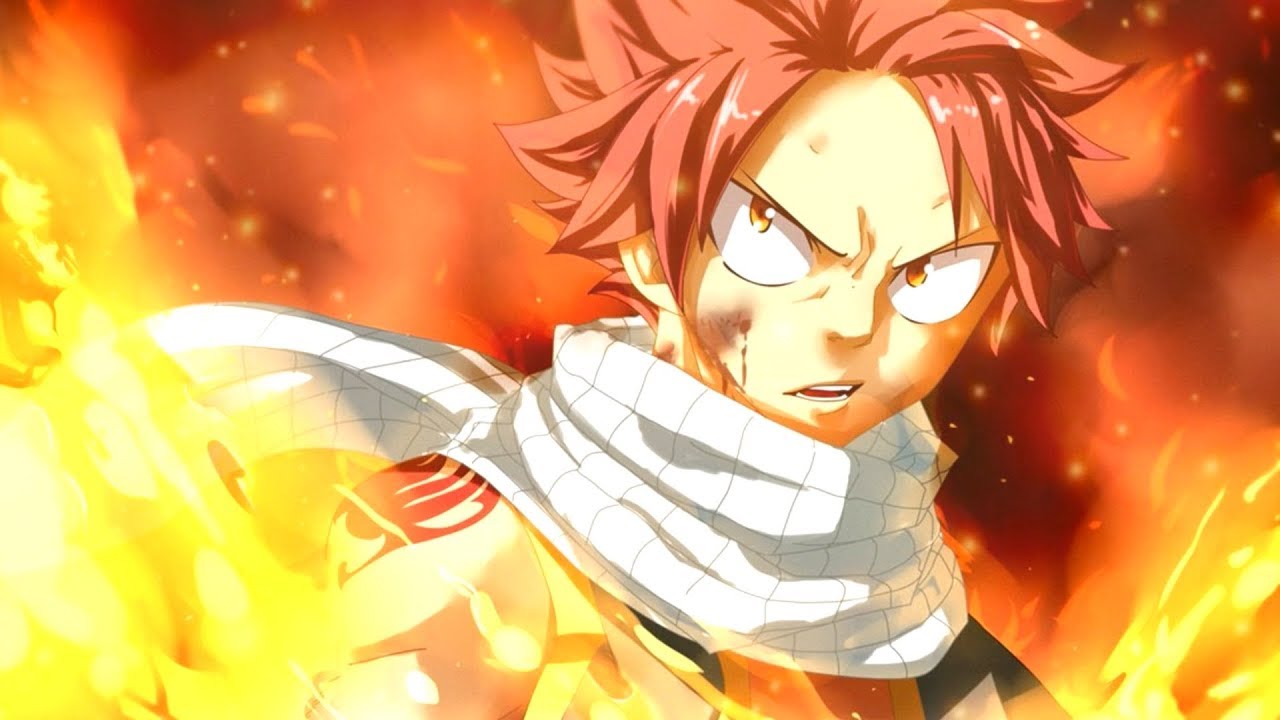
Fairy Tail (Credits: Netflix)
Romantic tension stays light, though present. Juvia’s obsession with Gray becomes comedic but slowly earns sincerity. Lucy and Natsu’s bond stays platonic yet intimate. Gajeel and Levy’s relationship builds quietly and feels natural. The series resists romantic conclusions, focusing instead on team growth and emotional connection over labels.
Magic in Fairy Tail isn’t only for battles—it reflects identity. Natsu’s flames come from the dragon who raised him. Erza’s armor mirrors her need for control. Lucy’s contracts represent her personal ties. Magic becomes more than strength; it’s memory, struggle, and hope made visible. That detail gives the action emotional weight.
As arcs unfold, the pain and joy of each member deepen the guild’s meaning. Makarov, the guild master, often reminds them of their shared path. His speeches, though grand, stem from care. His grief when Fairy Tail suffers adds age and wisdom to a group often powered by youthful chaos and pride.
Fairy Tail (Credits: Netflix)
By the time later arcs arrive, the emotional weight carries over. Even minor characters matter. Cana’s longing for her father, Laxus’s battle for redemption, or Mira’s hidden strength—every backstory adds something vital. No one feels like filler. Everyone stands for something, whether sorrow, laughter, or bravery.
What keeps Fairy Tail relevant is its sincerity. It doesn’t chase trends or rely on shock value. It returns to the same themes—friendship, perseverance, forgiveness—but finds new ways to express them. It’s a story that asks: What are you willing to risk for the people you call home?
When the final battles come, they feel earned. Not because of stronger spells, but because of emotional history. Fans remember the struggles that shaped those victories. Tears feel real, cheers feel deserved, and even if resolutions arrive quickly, they never lack feeling. The payoff comes from the long journey shared.
3. The Eminence In Shadow
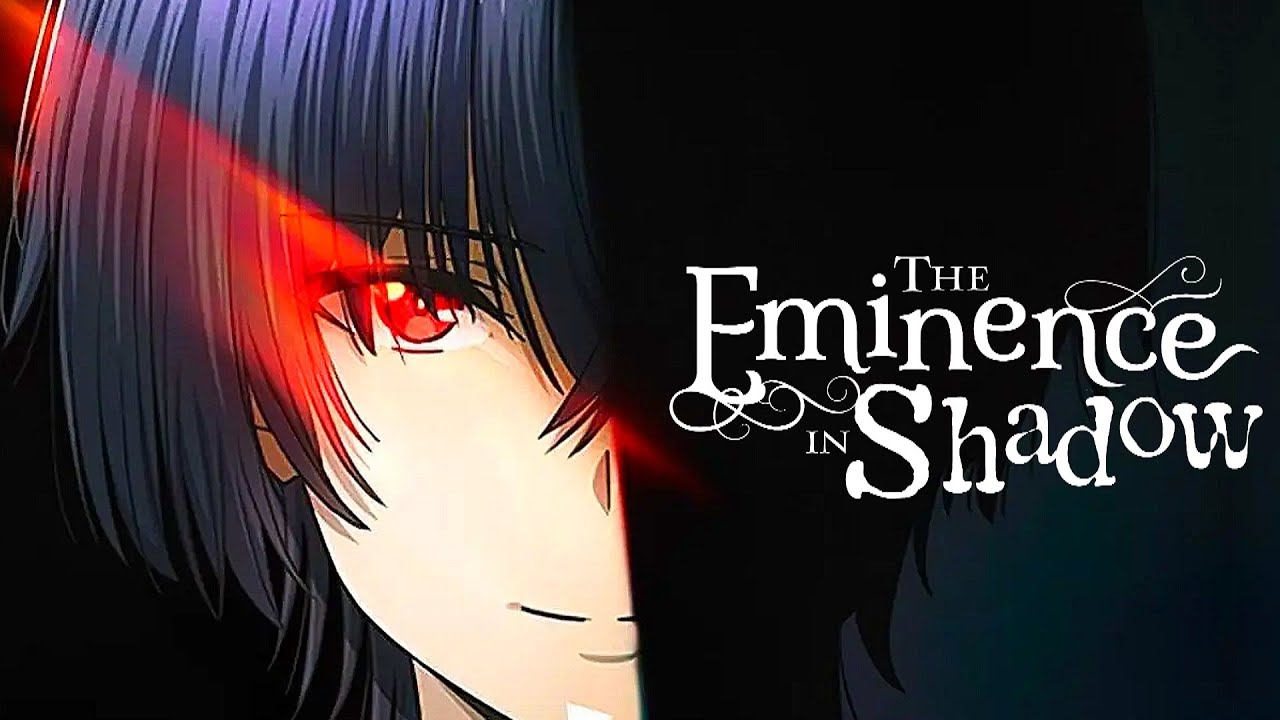
The Eminence In Shadow (Credits: Crunchyroll)
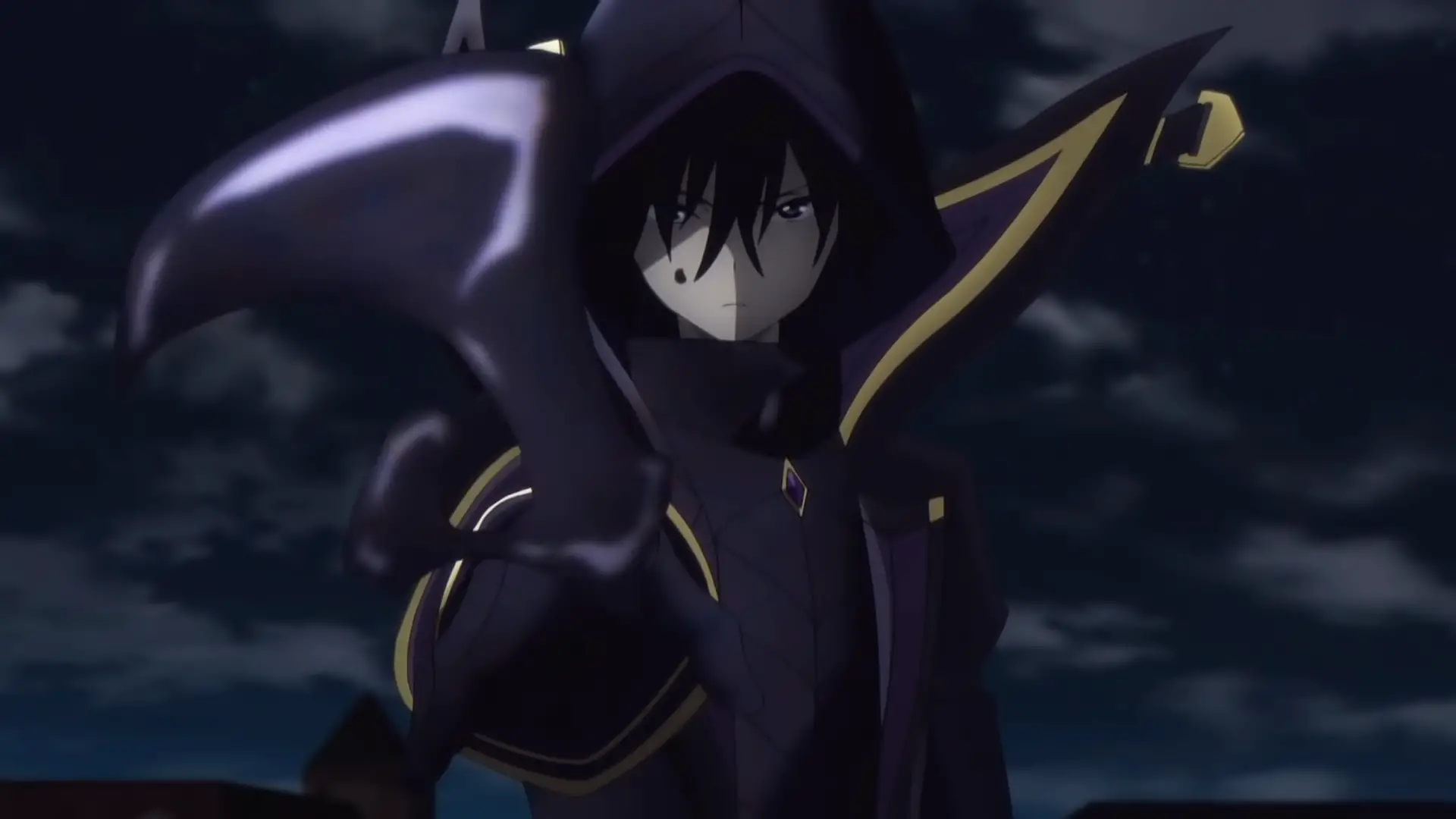
Cid Kagenou, also known as Shadow, possesses a formidable and singular brand of magic, granting him the ability to effortlessly lay waste to entire cities with a mere thought. This unparalleled power, dubbed “I Am Atomic,” serves as Shadow’s signature move, leaving devastation in its wake.
Driven by inscrutable motives, Shadow harbors a propensity for drawing the ire of all who dare to cross his path. His enigmatic persona often culminates in the activation of this forbidden and catastrophic magic, resulting in the annihilation of entire cities before he fades into obscurity once more.
What sets Shadow apart is his unnerving ease in invoking this perilous magic, treating its casting with a nonchalance that belies its profound destructive potential.
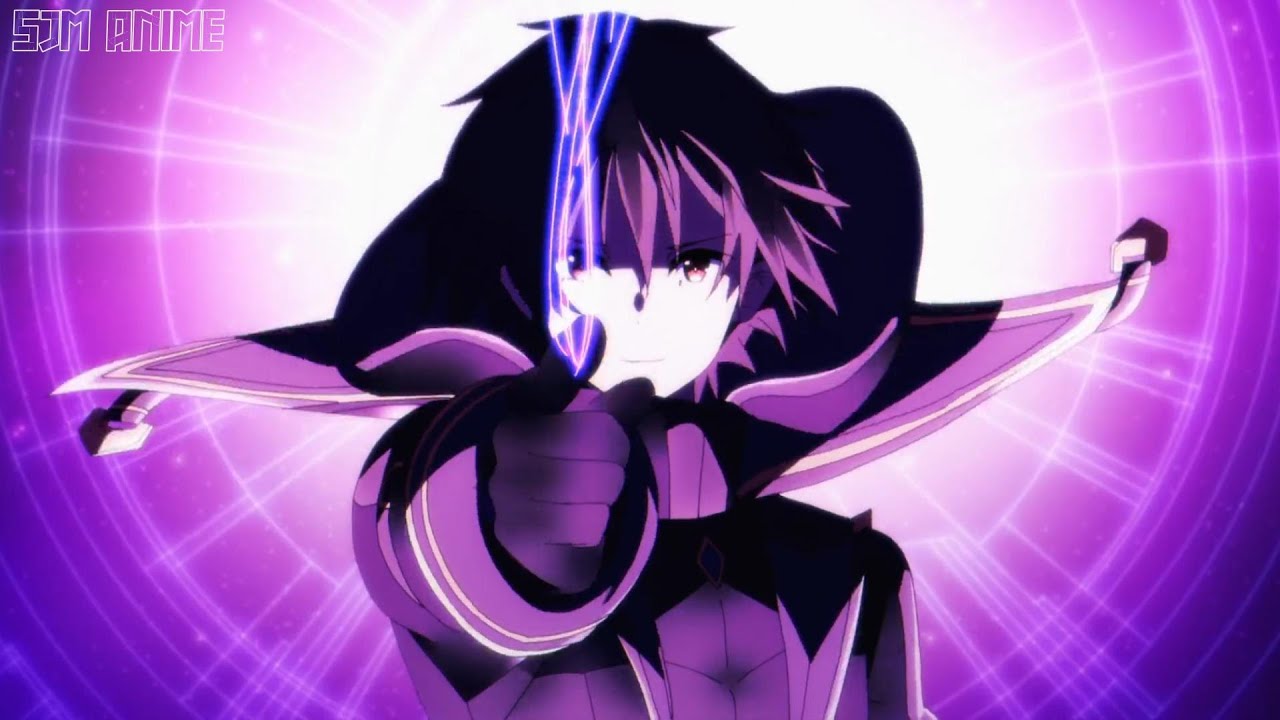
Cid (Credits: Crunchyroll)
The story follows Cid Kagenou, a young boy who is obsessed with the idea of becoming a shadowy mastermind, orchestrating events behind the scenes like the protagonists in his favorite novels, manga, and games. Despite lacking any remarkable abilities or resources, Cid is determined to fulfill his dream and become the ultimate shadow ruler.
After a series of unexpected events, Cid finds himself in possession of a mysterious power known as “The Eminence in Shadow,” which allows him to control shadows and manipulate reality. With his newfound abilities, Cid sets out to gather followers and establish his own secret organization, aiming to become the shadowy mastermind he has always idolized.
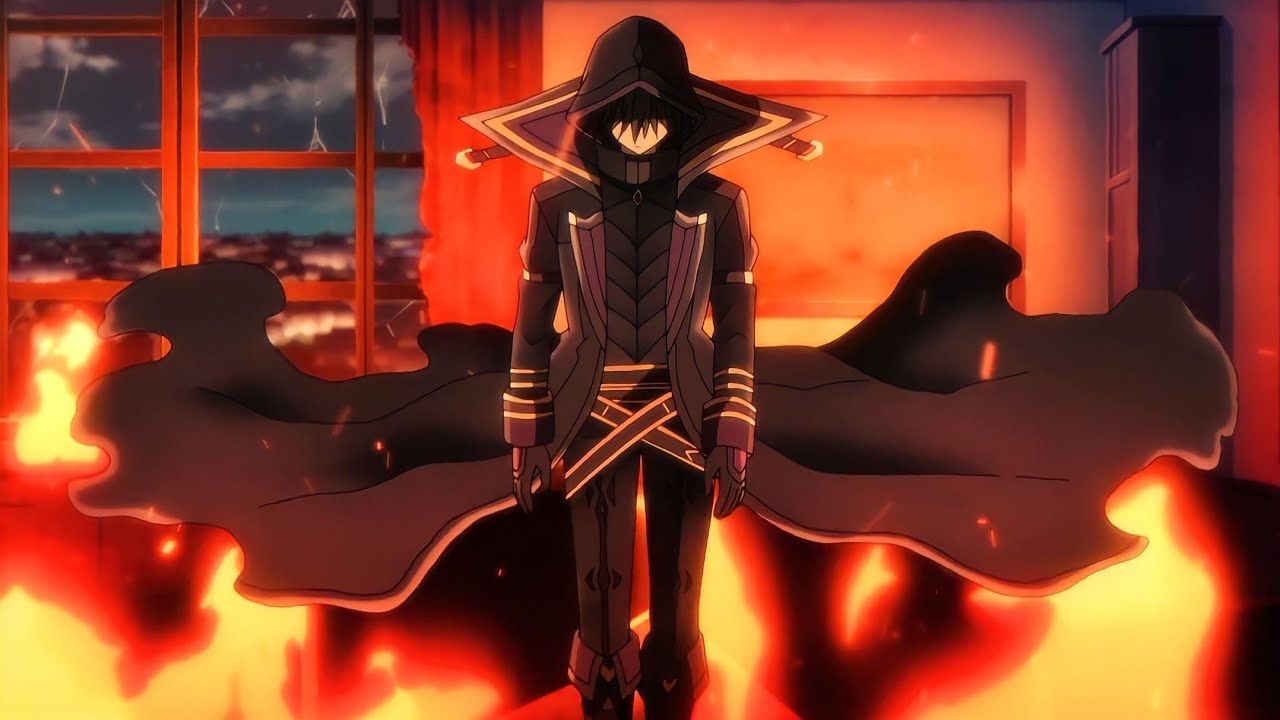
The Eminence In Shadow (Credits: Crunchyroll)
“The Eminence in Shadow” is known for its comedic take on the isekai (another world) genre, as well as its parody of typical fantasy and light novel tropes. The series features humorous situations, exaggerated characters, and absurd scenarios as Cid finds his way through his quest for supremacy from the shadows.
Fans of comedy and fantasy light novels with a satirical twist often find “The Eminence in Shadow” to be a refreshing and entertaining read, particularly if they enjoy stories that poke fun at clichés and conventions of the genre.
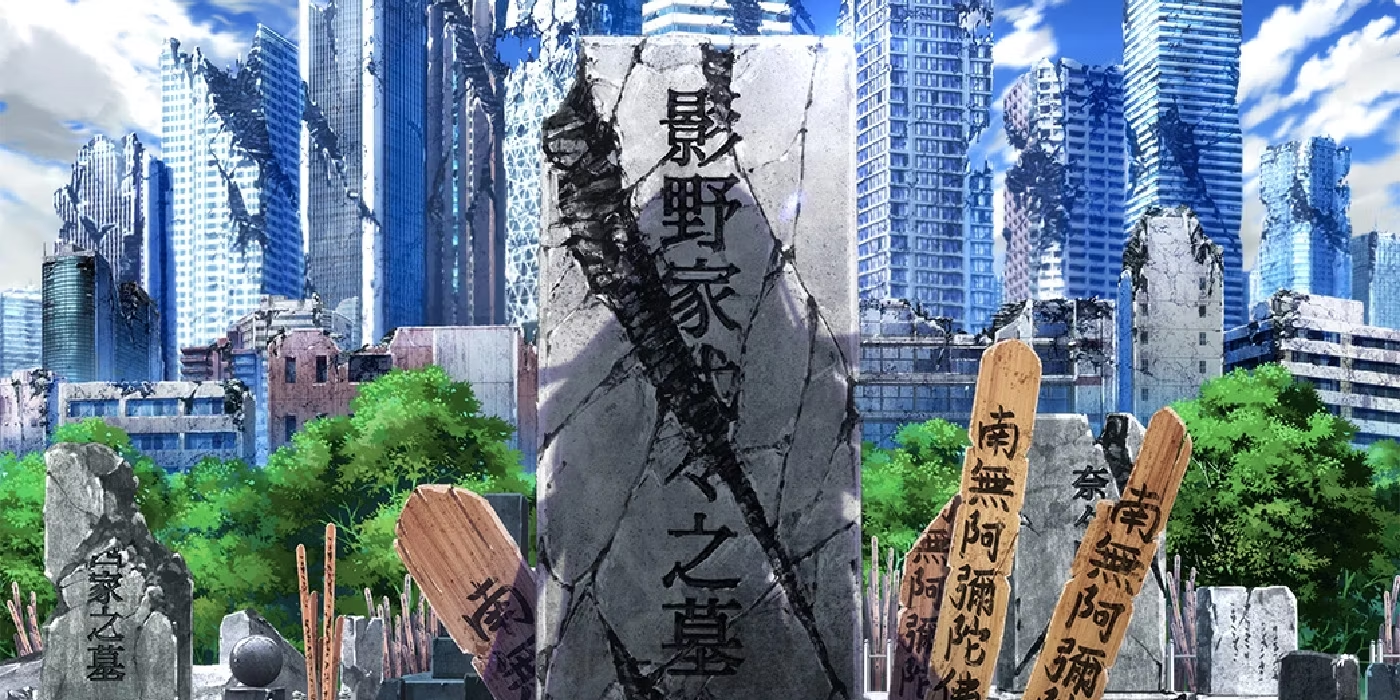
Cid Kagenou isn’t your average isekai protagonist. He doesn’t seek fame or fortune. His only goal is to become a background puppet master—someone who shapes events without recognition. He trains obsessively, not to protect or avenge, but to match a character role he invented. This self-awareness becomes the heart of The Eminence in Shadow’s unique tone.
Cid’s outlook is pure role-play. After being reborn in a magical world, he forms a secret organization, Shadow Garden, to fight a cult he made up. The twist? That cult actually exists. His fiction turns into reality without his knowledge, but he continues behaving like it’s all a performance. This ironic gap drives much of the series’ charm.
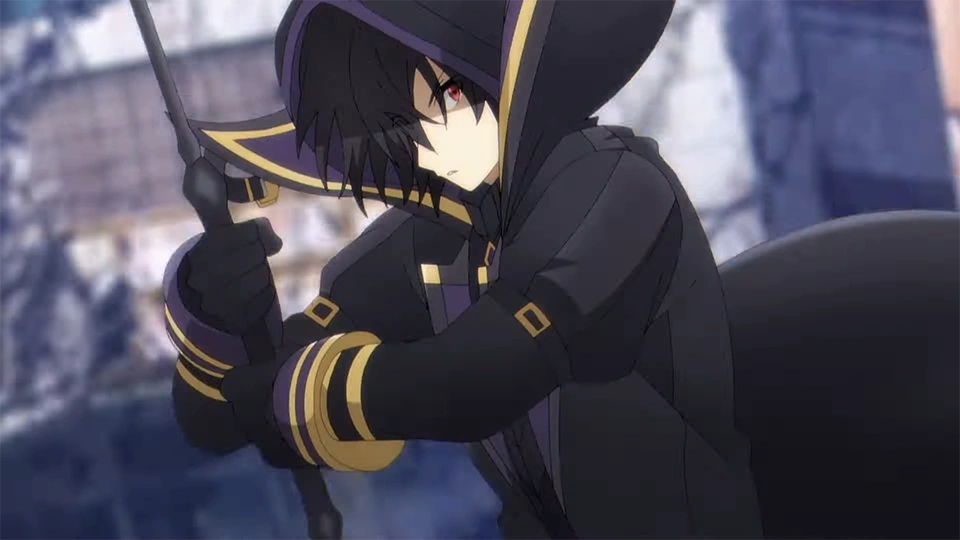
Eminence in Shadow
While many isekai heroes try to navigate their worlds with logic or morality, Cid thrives on delusion. His choices come from what sounds cool, not what makes sense. When he dramatically claims he’s “just an average mob character,” he fully believes it—even when slaughtering enemies in flashy fashion. That contradiction is both absurd and fascinating.
The world around Cid doesn’t question his antics. Instead, it responds as if he’s always correct. Shadow Garden follows him with absolute loyalty, interpreting his nonsense as wisdom. The cult of Diablos, which he imagined, becomes frighteningly real. The show constantly blurs whether Cid is lucky, prophetic, or accidentally brilliant. It’s that uncertainty that keeps things lively.
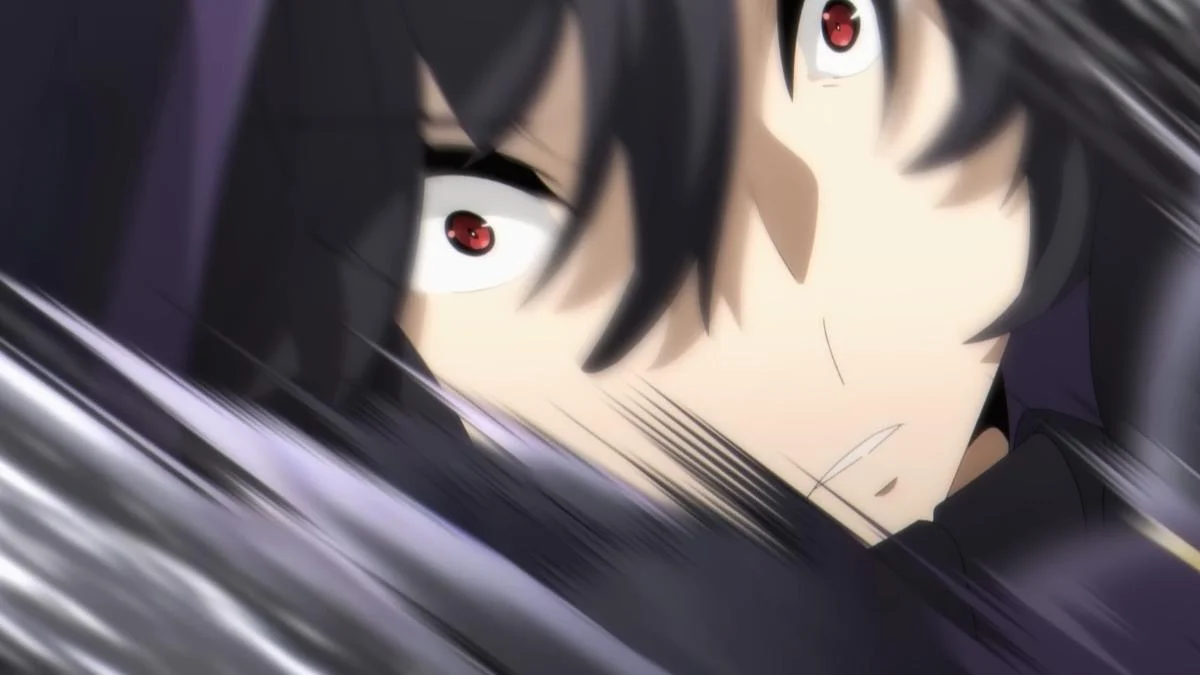
Visually, the series balances moody shadows with bursts of vibrant action. Cid’s attacks explode with energy, especially when he fights under his alter ego, Shadow. The animation by Nexus captures both elegant swordplay and comedic overreactions. Whether slicing through hordes or standing still with menacing flair, Cid’s presence is exaggerated for maximum theatrical impact.
Side characters add different textures to the story. Alpha, Beta, Delta, and the other numbered members of Shadow Garden are distinct in looks and personalities, yet share blind loyalty. Their belief in Cid’s every word leads to unintentional victories and intense devotion. While their stories occasionally touch on tragedy or hope, the show keeps them within its strange rhythm.
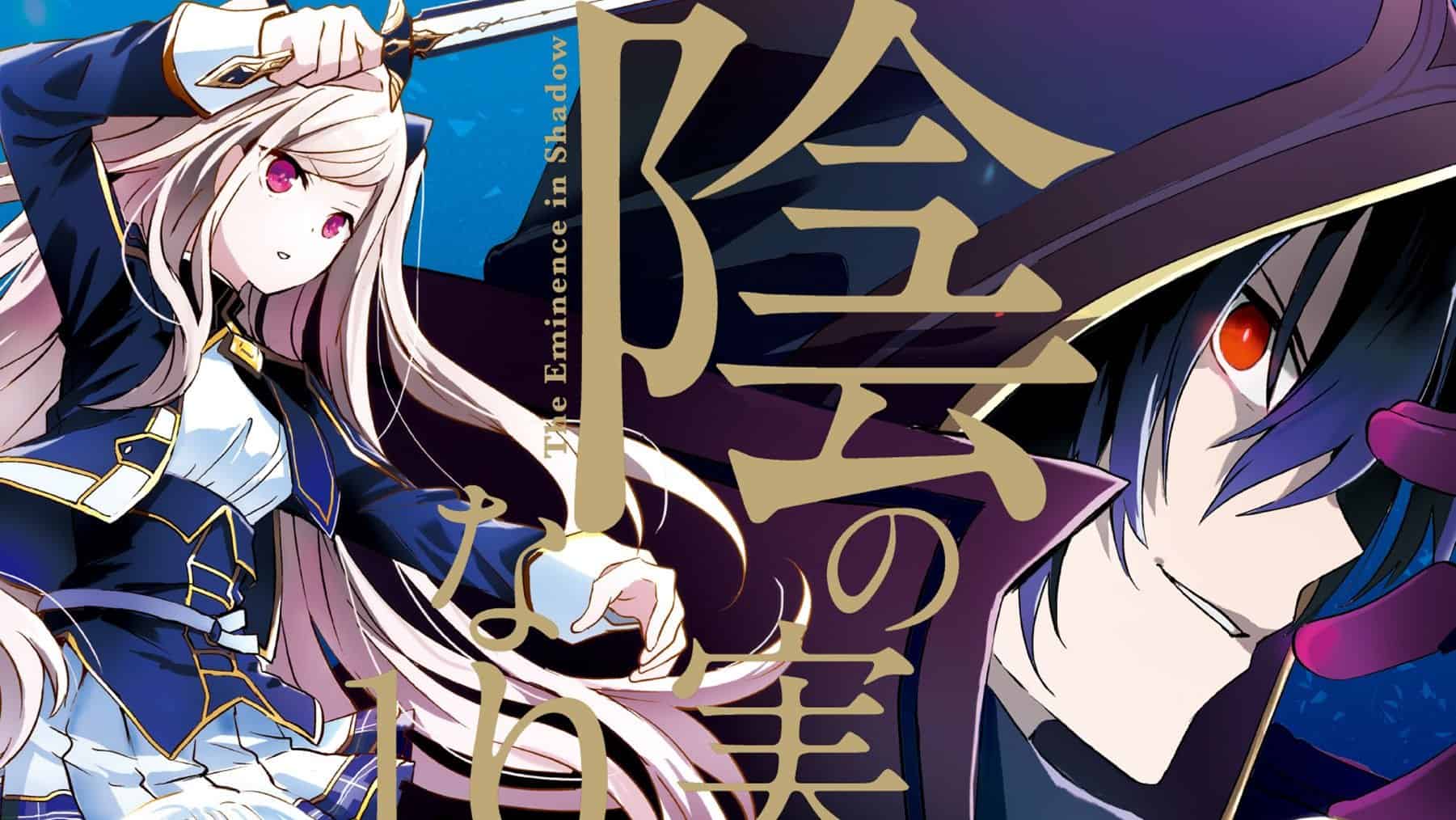
The Eminence in Shadow (Credits: Comp Ace)
Outside the organization, characters like Princess Alexia and Rose Oriana give glimpses of political intrigue and emotional tension. Alexia’s cold attitude hides loneliness, while Rose faces expectations and personal confusion. These side arcs build a world with emotional depth, contrasting with the sheer nonsense Cid brings into it. It’s a surreal but balanced contrast.
Dialogue throughout the anime ranges from dramatic monologues to unexpected punchlines. Cid treats every encounter like a stage play. He tosses in phrases like “I am Atomic” with complete seriousness, turning phrases into punchlines through sheer overacting. Meanwhile, the reactions from those around him remain sincere. This dynamic never feels tiring—it fuels the show’s comedy.
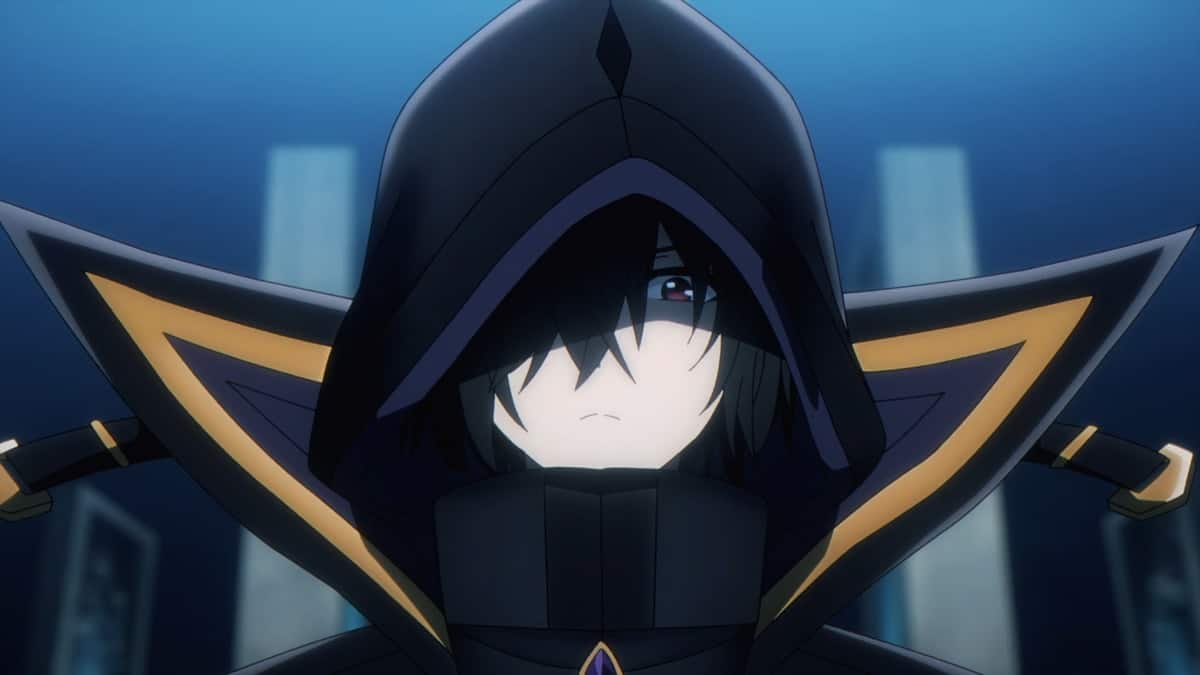
Cid Kagenou | The Eminence in Shadow (Credits: Nexus)
The Eminence in Shadow plays with genre expectations without mocking them. Unlike straightforward parodies, it doesn’t try to undermine heroic tropes. Instead, it uses them to let its lead indulge in extreme behavior while still delivering powerful moments. When Shadow fights, the stakes feel real—even if the reason behind the conflict started as a joke.
Underneath the absurdity, themes of control, escapism, and identity emerge. Cid’s desire to script his own life mirrors real struggles with purpose and confidence. He doesn’t want to change the world—he wants to escape into a version of it where he’s always in charge, even if it means ignoring reality. That idea carries more weight than expected.
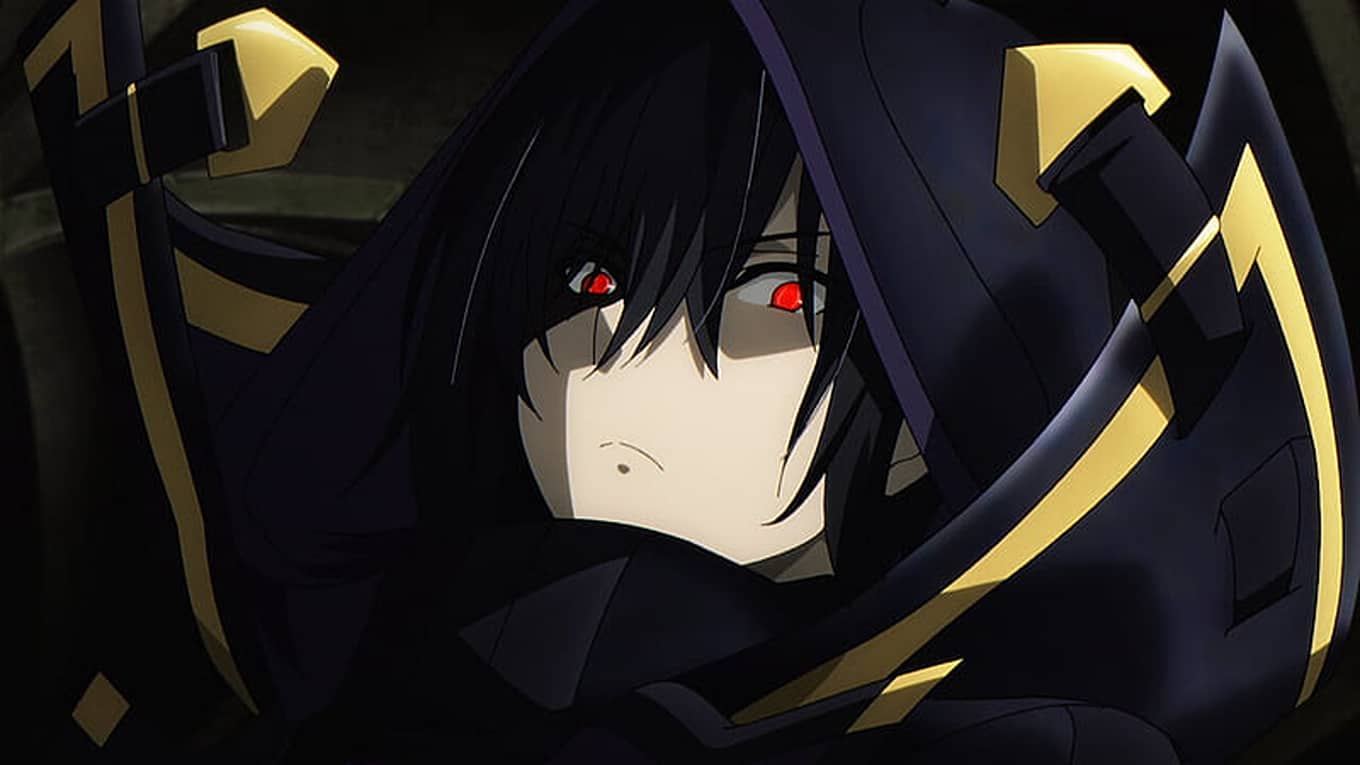
Cid Kagenou | The Eminence in Shadow (Credits: Nexus)
This need for control affects every interaction. Cid resists real relationships. He avoids genuine affection. His jokes distance him from others, and when someone tries to get close, he usually deflects. Behind the comedy lies a boy who fears losing his role. His detachment isn’t just humor—it’s a method of survival.
Action scenes escalate quickly, often serving both spectacle and commentary. Whether he’s blowing up buildings or effortlessly dodging attacks, Cid treats violence like another stage cue. He doesn’t seek glory, but the show presents him with it anyway. It’s a smart reflection on how stories reward power, even when used for silly or selfish reasons.
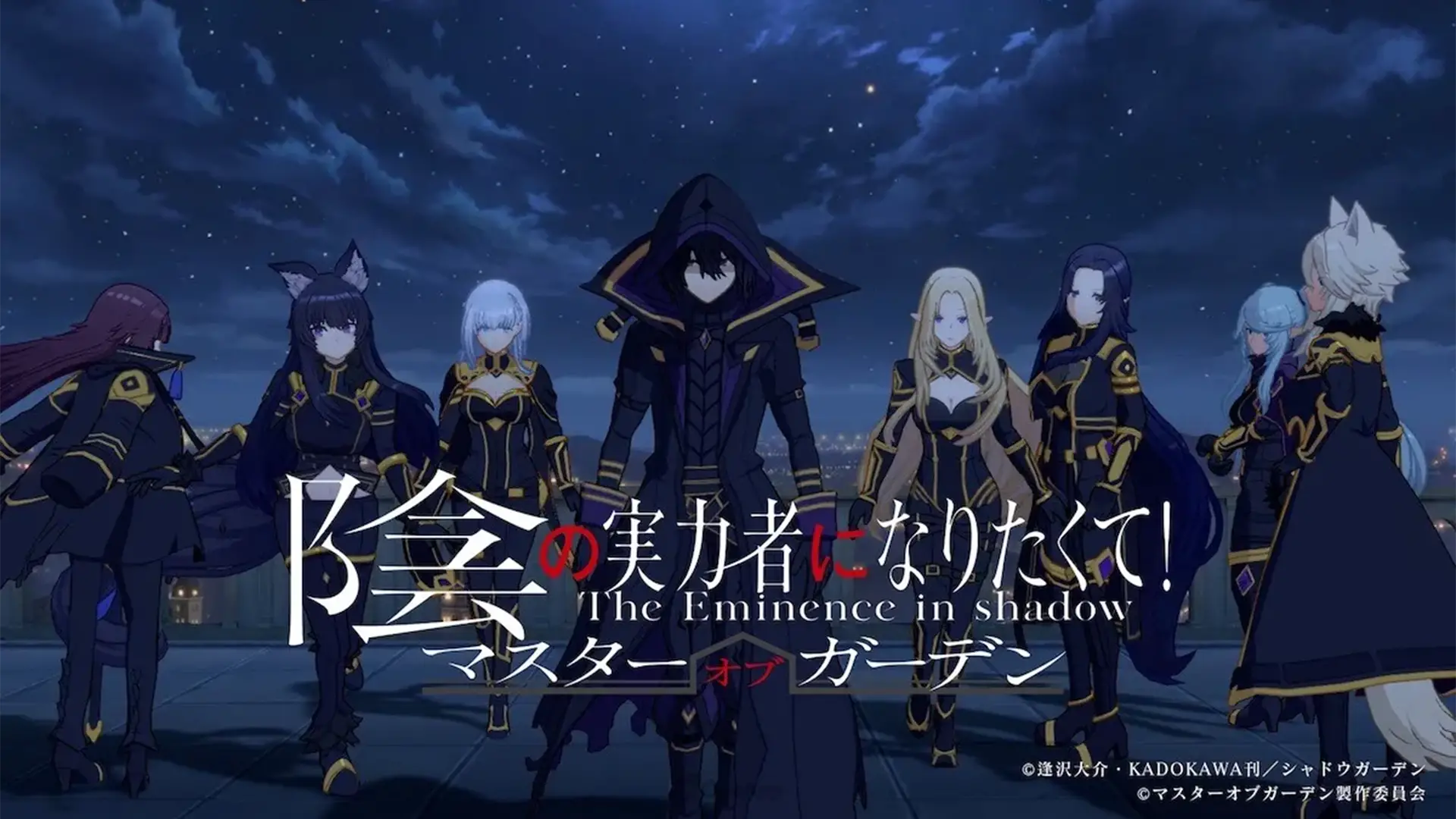
Shadow Garden | The Eminence in Shadow (Credits: Nexus)
Musical choices enhance this contradiction. The background tracks swing between tense orchestral arrangements and chaotic energy. The opening and ending themes embrace both grandeur and playfulness, helping set the unpredictable mood. Sound isn’t used just to decorate—it’s an active part of the world’s drama and absurdity.
One of the anime’s strongest achievements is consistency. While the premise is wild, it never drifts into confusion. Cid stays true to his bizarre ideals, the cult continues to grow darker, and Shadow Garden becomes stronger. The series doesn’t lose focus—it deepens its commitment to the bit, making each episode sharper and more entertaining.
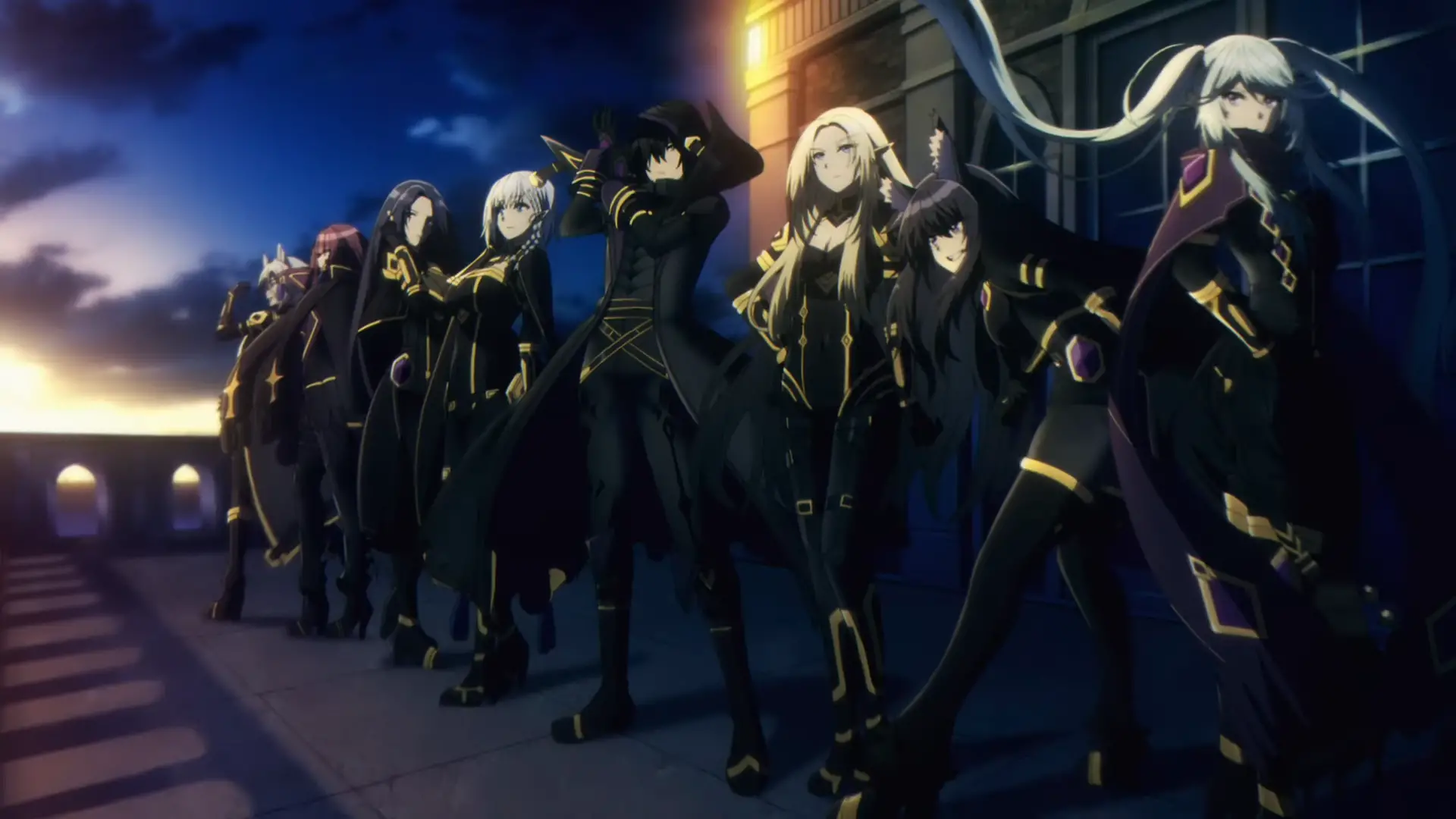
The Eminence in Shadow (Credits: Nexus)
Romance occasionally surfaces, though it rarely takes center stage. Characters like Alexia and Sherry show interest in Cid, but the relationships never feel forced. Instead, they reflect how detached he is from others. The show resists easy affection, opting to highlight loneliness and misunderstanding rather than deliver neat conclusions or romantic clichés.
The supporting cast helps ground the story. Each member of Shadow Garden believes they were saved for a reason. Their reverence for Cid borders on religious, yet it’s not mocked. Their actions, strategies, and loyalty give the anime weight, turning what could’ve been a joke into a functioning narrative system. They believe in Shadow, even when he doesn’t.
Cid Kagenou | The Eminence in Shadow (Credits: Nexus)
By the end of its first season, The Eminence in Shadow proves that it’s not just parody—it’s a new kind of power fantasy. It doesn’t reject the genre’s tropes but transforms them into tools for something stranger. It manages to be dramatic, ridiculous, and oddly touching, often all at once.
The brilliance of the anime lies in how seriously it takes its own nonsense. It creates a lead who doesn’t want to save the world but still changes it. It builds tension not from goals, but from misunderstandings. It thrives not on truth, but on theatrics. And somehow, it all works.
2. Solo Leveling
Jinwoo vs Igris (Credits: A-1 Production)
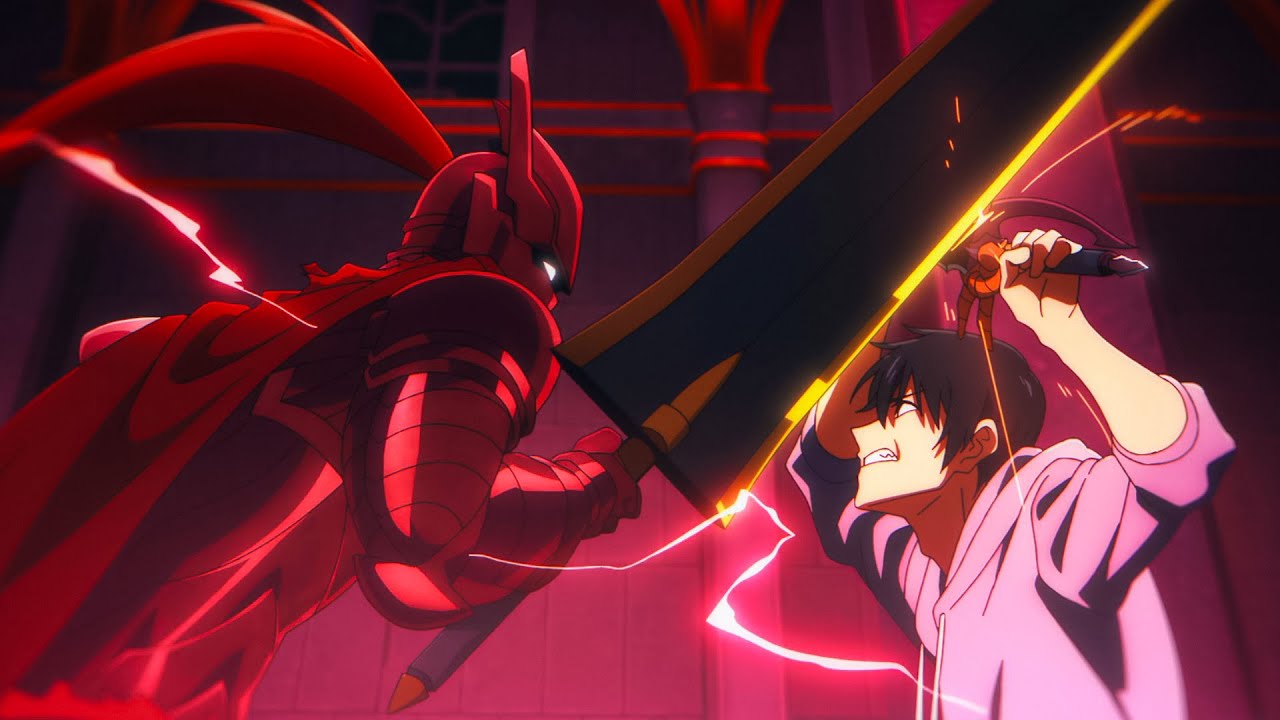
Following Sung Jinwoo’s brush with mortality, a remarkable power awakens within him, offering a glimmer of hope to save his ailing mother by ascending in rank and amassing funds for her medical care.
However, the true essence of his Second Awakening reveals itself as the sinister art of Necromancy—a forbidden magic granting him dominion over the realm of the dead. With this dark power at his disposal, Sung Jinwoo gains the ability to resurrect departed souls as shadowy entities, imbued with the same skills and strengths they possessed in life.
Driven by desperation and determination, Sung Jinwoo harnesses his newfound abilities to ascend to the ranks of a formidable Hunter. Yet, as his mastery over Necromancy deepens, he grapples with the staggering toll it exacts, a cost far weightier than he could have anticipated.
Jinwoo (Credits: A-1 Production)
The story is set in a world where portals have opened, allowing monsters to enter the human realm. In this world, some individuals possess the ability to level up and become stronger, known as “hunters.”
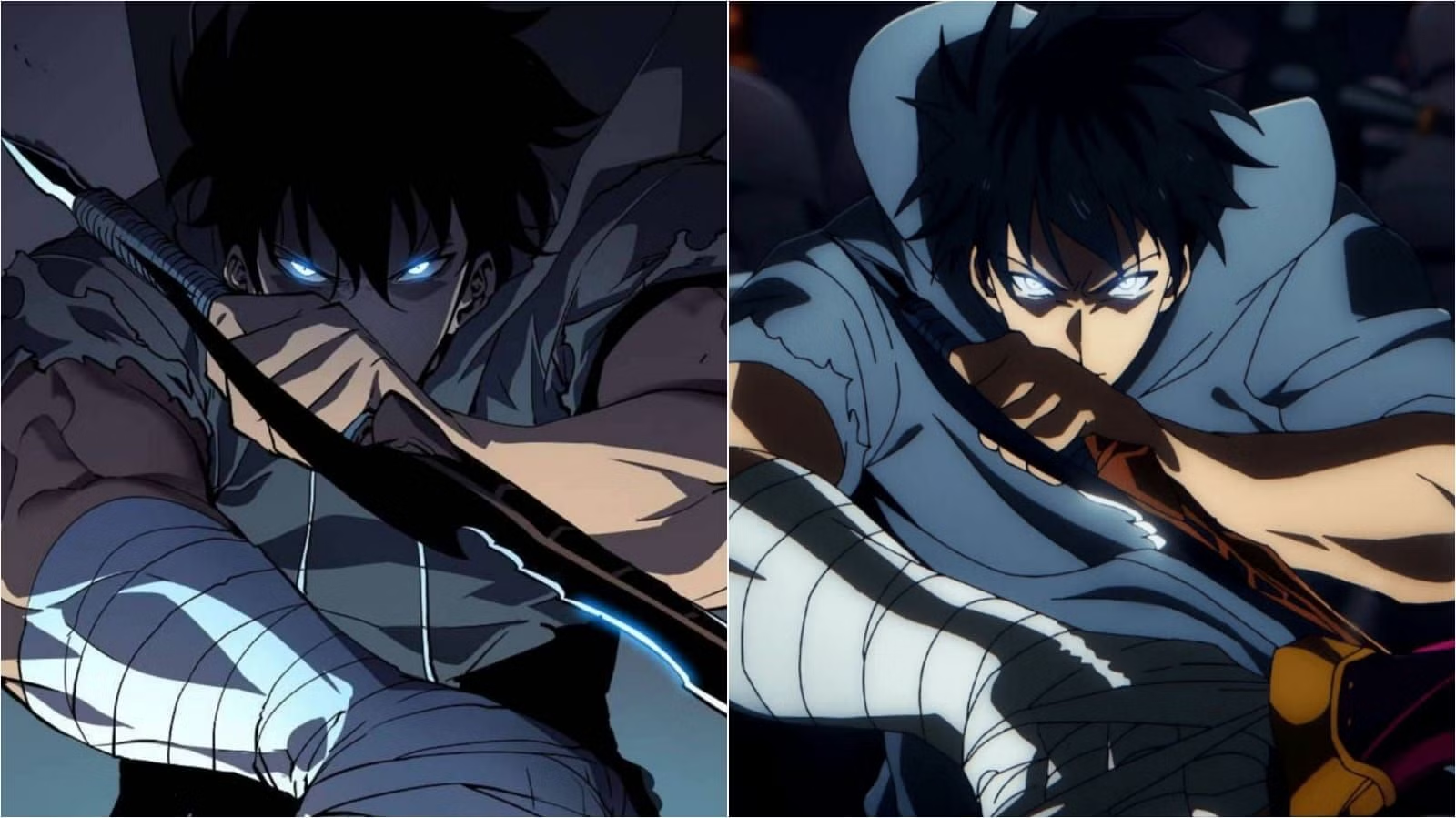
The protagonist, Sung Jin-Woo, is an E-rank hunter, widely considered to be the weakest among them. However, after a life-threatening incident in a dungeon, he discovers the ability to “level up” as a “player.”
Sung Jinwoo (Credits: A-1 Production)
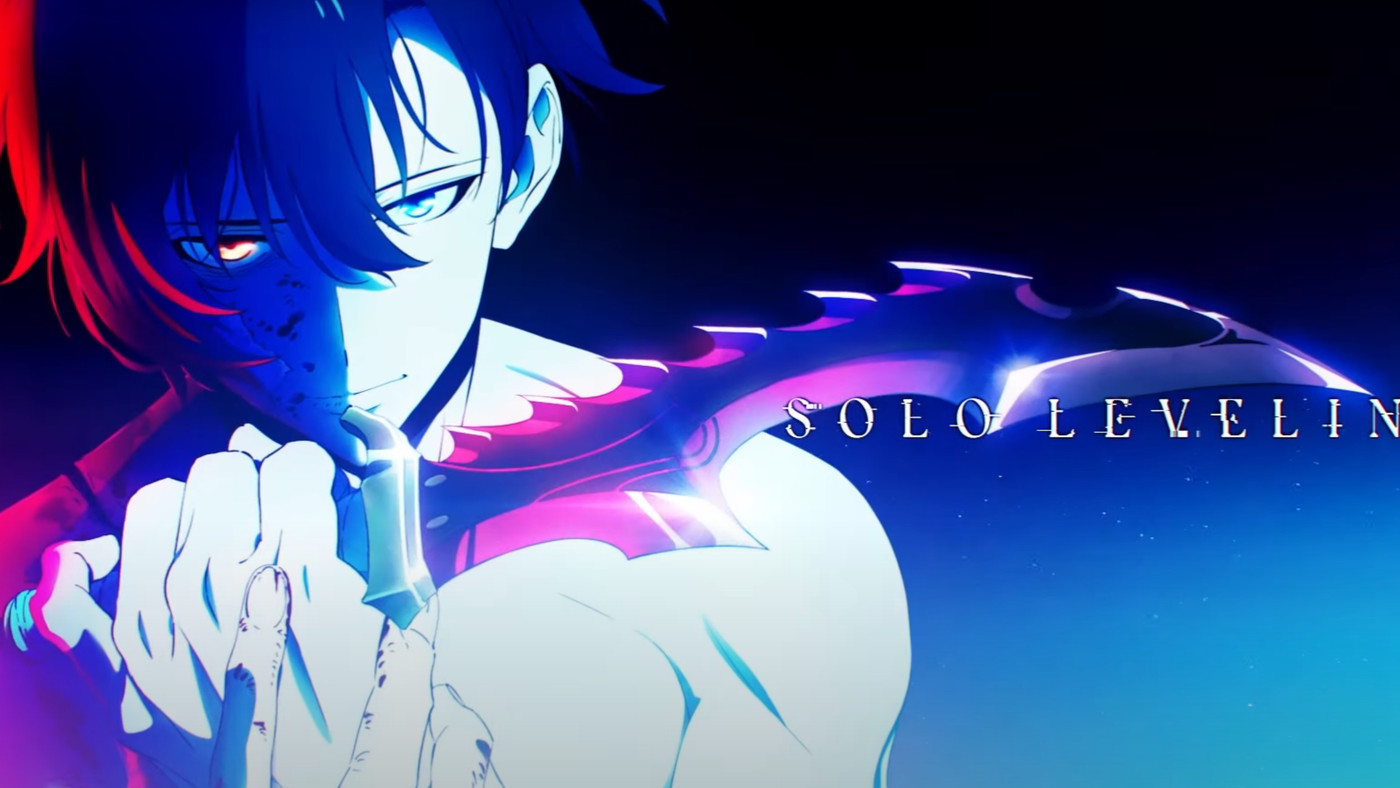
With his newfound powers, Sung Jin-Woo gets on a journey of growth and self-discovery. He delves into dungeons, battles powerful monsters, and uncovers the secrets of his past. As he becomes stronger, he gradually rises through the ranks, transforming from a lowly hunter into a formidable force to be reckoned with.
Solo Leveling is known for its amazing story, intense action scenes, and dynamic character development. The webtoon adaptation is particularly praised for its stunning artwork and fluid action sequences. Fans of action-packed fantasy stories with elements of RPG (role-playing game) mechanics often find “Solo Leveling” to be a thrilling and addictive read.
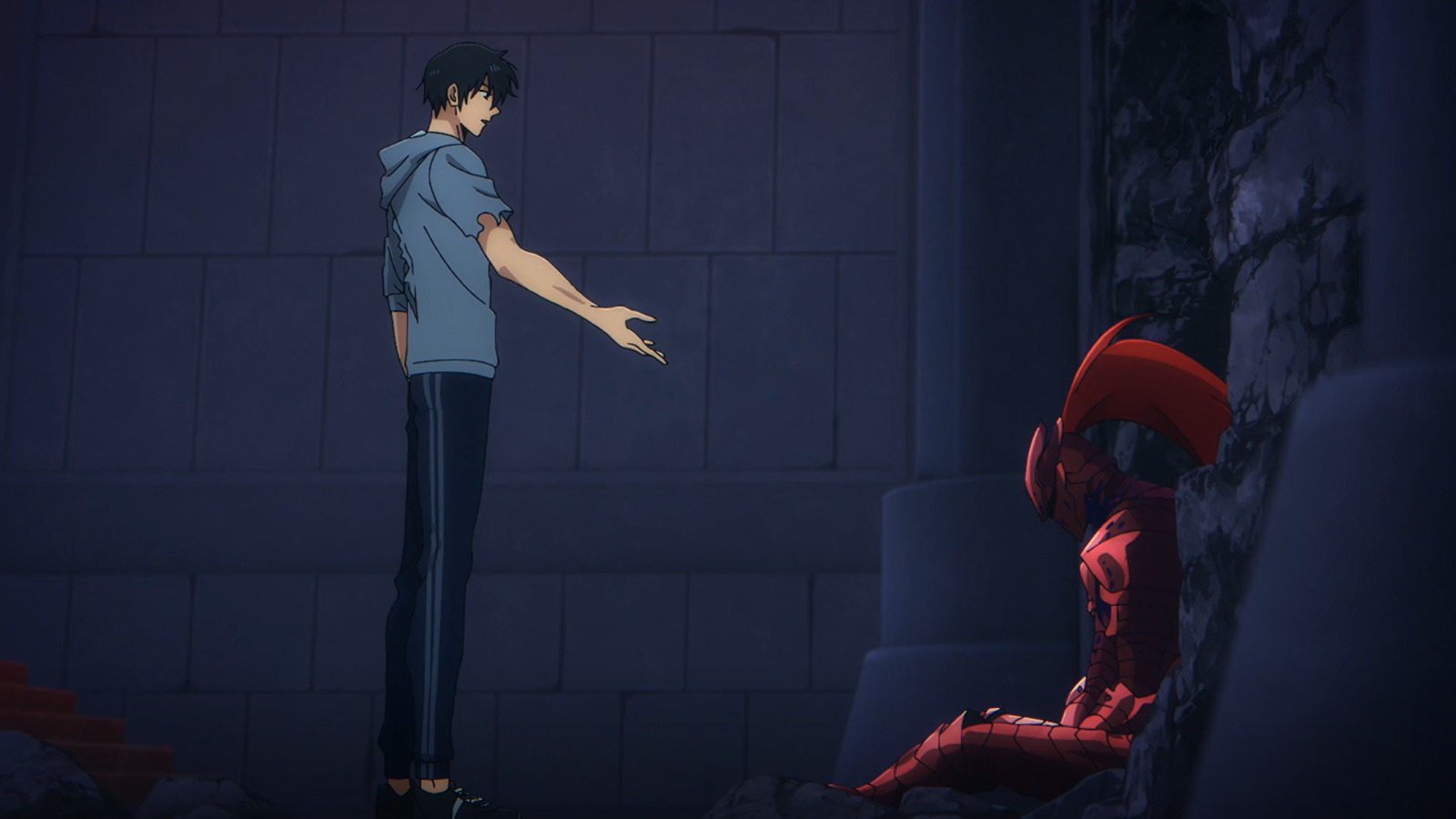
Sung Jin-Woo lives in a version of South Korea where monstrous gates appear at random, spawning dungeons filled with creatures. Hunters risk their lives entering these dungeons to keep society safe and earn income. Jin-Woo starts off as an E-rank hunter—the lowest possible. He’s used to injury, humiliation, and being called dead weight by others in his guild.
But that changes after a dungeon raid turns out to be far more dangerous than anticipated. Jin-Woo is left behind to sacrifice himself while the others flee. Instead of dying, he’s chosen by a mysterious system that lets him level up like a game character. For the first time, he gains the ability to grow stronger and change his fate.
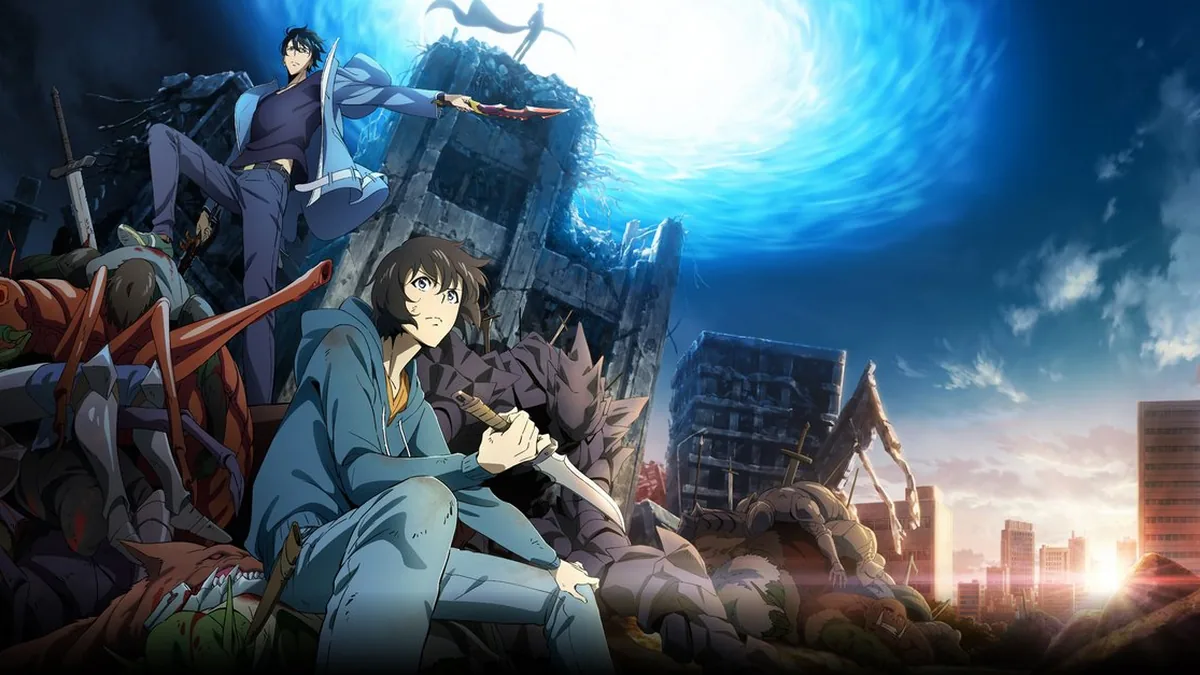
Solo Leveling (Credits: A-1 Pictures)
This setup isn’t just a gateway for action. The story questions how power alters a person. As Jin-Woo rises in strength, he also becomes more isolated. Former allies either fear him or try to use him. What started as a desperate grab for survival becomes a lonely pursuit filled with moral choices and political tensions. Power doesn’t come clean—it always leaves blood behind.
Visually, the anime adapts the stylish webtoon with a high-budget shine. Studio A-1 Pictures handles the animation, with precise action direction, glowing magical effects, and fluid movement that gives fights real weight. Every strike, dodge, and spell feels satisfying to watch. Combined with Hiroyuki Sawano’s intense score, each battle builds tension and emotional resonance.
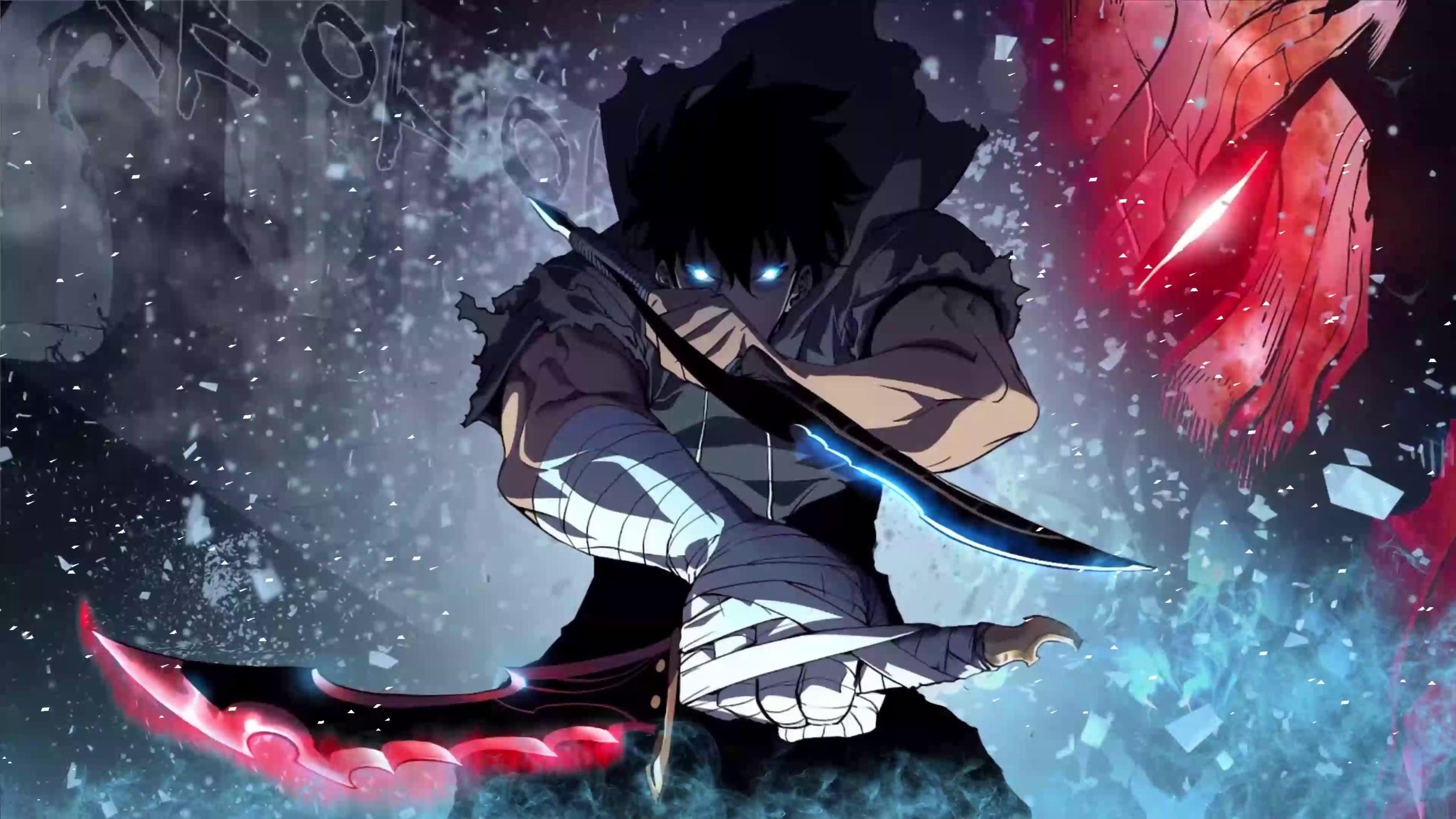
Sung Jinwoo from Solo Leveling (Credits: A-1 Pictures)
The music is a standout feature. From pulse-pounding electronic tracks during boss fights to haunting melodies after character deaths, the soundtrack helps shape the emotional mood. Sawano’s signature layering and pacing echo the protagonist’s own inner evolution—sometimes hopeful, sometimes oppressive. His work adds depth even during quiet scenes or character reflection.
The progression system itself is both a narrative hook and a psychological metaphor. Jin-Woo doesn’t just become stronger physically—he must decide what kind of man he wants to be. The system demands constant battle. Killing monsters increases his stats, but it also changes his outlook. The question becomes: is he still fighting for his loved ones, or for the thrill of dominance?
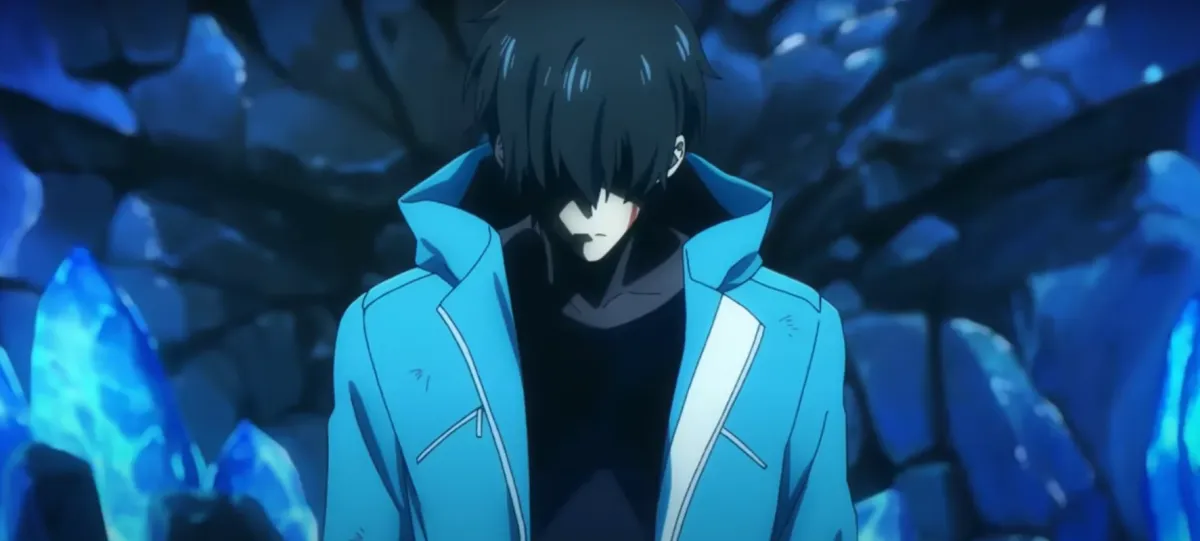
Sung Jinwoo from Solo Leveling (Credits: A-1 Pictures)
Supporting characters like Jin-Woo’s sister Jin-Ah and guild members like Yoo Jin-Ho provide contrast to his increasingly dark persona. They ground him, keeping a piece of his humanity alive. Jin-Ho especially represents loyalty and warmth, offering friendship without asking for anything in return. These relationships highlight how rare true connection becomes as one climbs the power ladder.
The anime avoids the trap of simple good versus evil. While there are clearly antagonistic forces—monsters, rival guilds, even gods—the story often paints conflict in grey. The high-ranking hunters and government officials all have motives, many of which clash with Jin-Woo’s goals. It’s a world where survival and ambition rule, and idealism fades quickly.
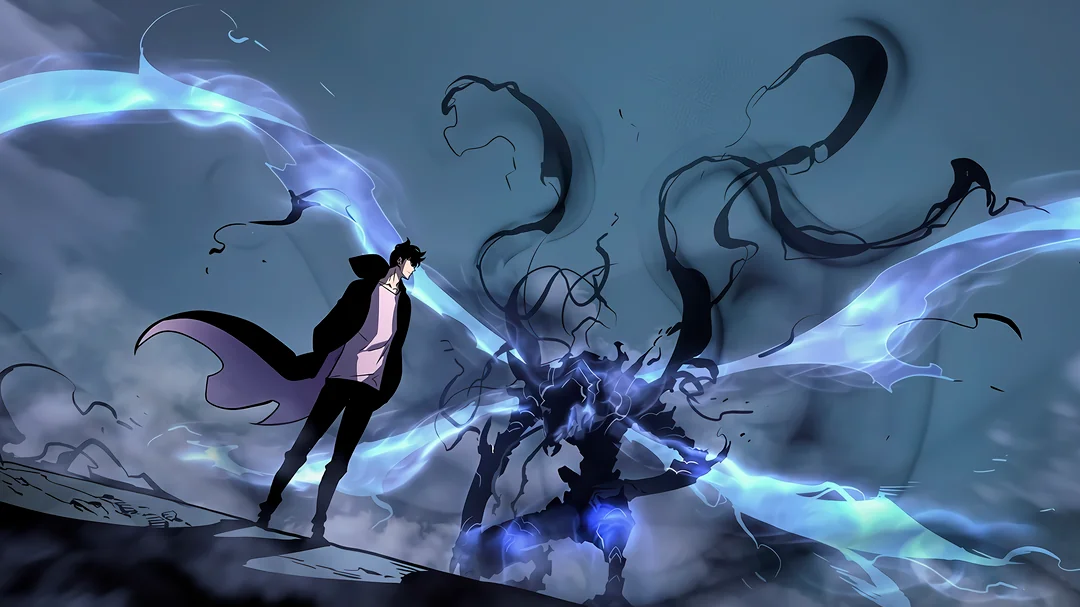
Sung Jinwoo and Beru (Credits: Kakao Page)
Shadow Summoning, Jin-Woo’s primary ability, feels inventive in both style and strategy. He commands the dead as living shadows, building an army out of defeated enemies. It’s a fitting reflection of the path he walks—always surrounded by death, always alone despite the crowd. His bond with key shadows like Igris and Beru adds an unexpected emotional element to this otherwise violent power.
The series builds tension not only through combat but also through its expanding lore. As Jin-Woo uncovers the truth behind the gates, the monsters, and his own transformation, the story widens its scope. What begins in one city grows into an international crisis with cosmic consequences. This escalation keeps the pace fast while giving weight to Jin-Woo’s decisions.
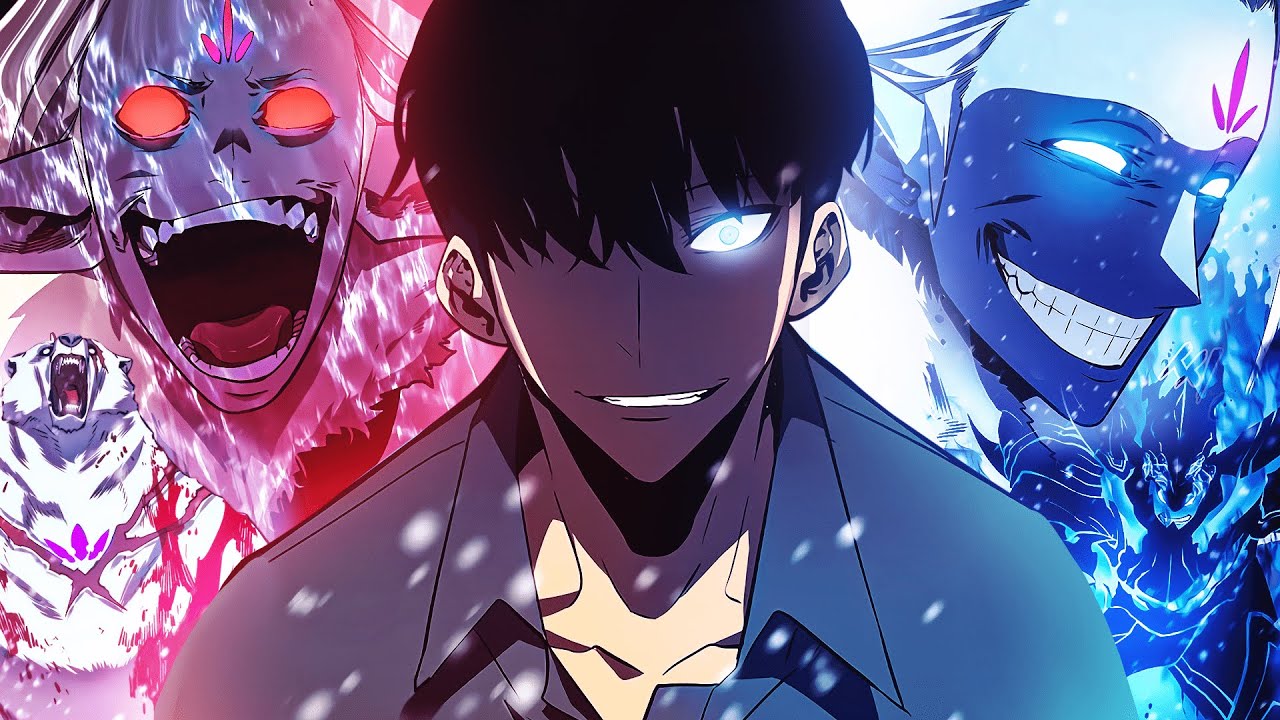
Sung Jinwoo (Credits: Kakao Page)
Voice acting also elevates the experience. Taito Ban (Jin-Woo’s Japanese voice actor) balances detached coolness with hidden vulnerability, especially during inner monologues. His delivery captures Jin-Woo’s duality—calculated and distant on the surface, driven and scarred within. Emotional scenes never feel forced. They come through in the quiet breaks between intense fights.
Solo Leveling’s commentary on class and status rings clearly. Jin-Woo’s early struggles parallel real-world issues—those born with less must fight harder, sacrifice more, and endure deeper wounds to achieve recognition. His power-up fantasy hides a pointed message: people want agency over their lives. The system may reward strength, but it rarely cares about compassion.
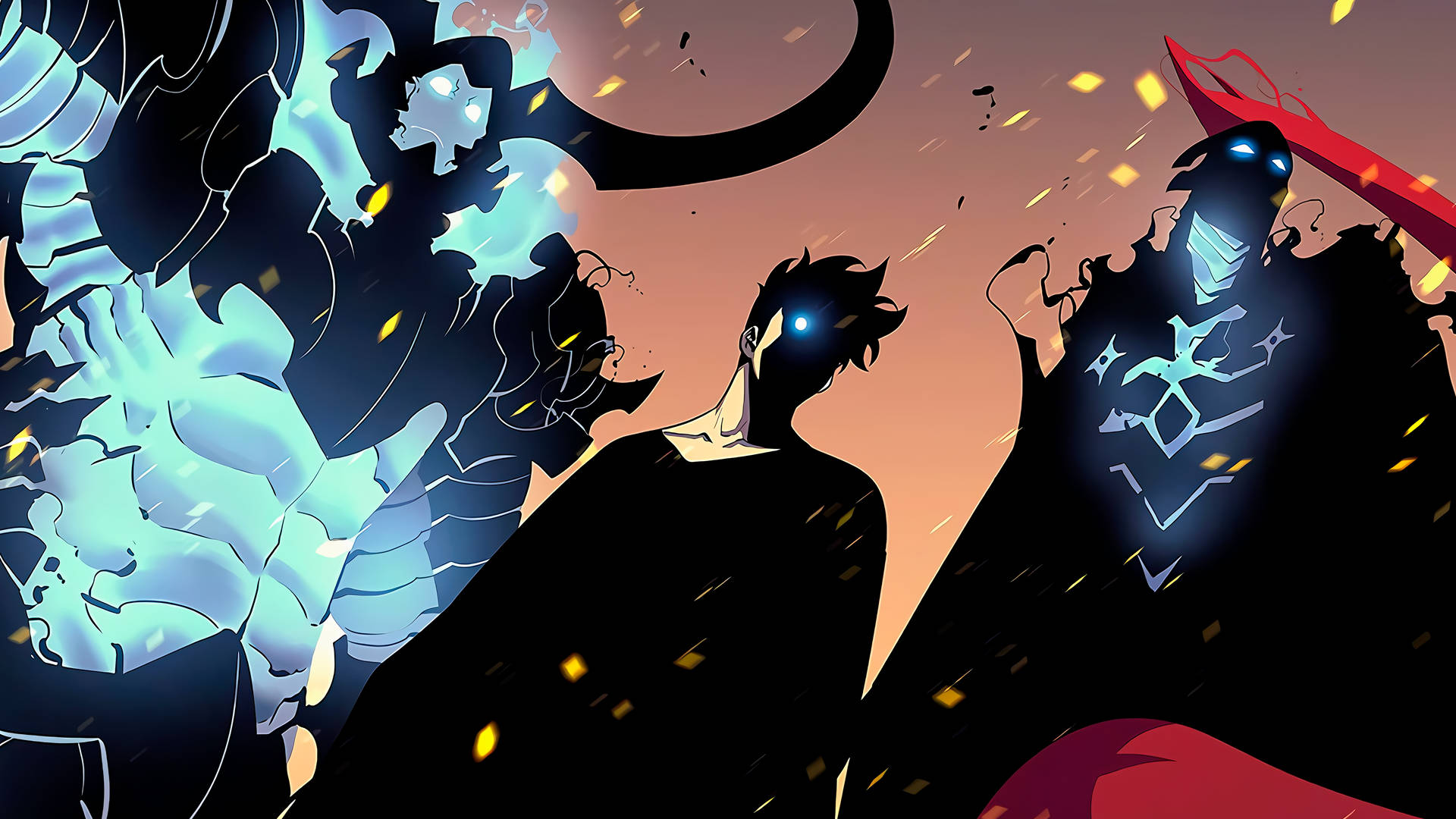
Sung Jinwoo with Igris and Tank (Credits: Kakao Page)
The animation adapts key set pieces with flair, including dungeon boss battles, stealth missions, and full-scale war sequences. Rather than rely solely on fast cuts or flashy effects, scenes often slow down to emphasize pain, exhaustion, or fear. These details make victories feel earned and losses sting. It’s not just spectacle—it’s tension released at the right moment.
Even with its fast pace, Solo Leveling gives room for pauses. Scenes where Jin-Woo visits his mother in the hospital or eats quietly after battle show that he hasn’t completely lost touch. These glimpses remind viewers of what’s at stake. He didn’t ask to be a hero. He was pushed by necessity, and each step forward requires a piece of his soul.
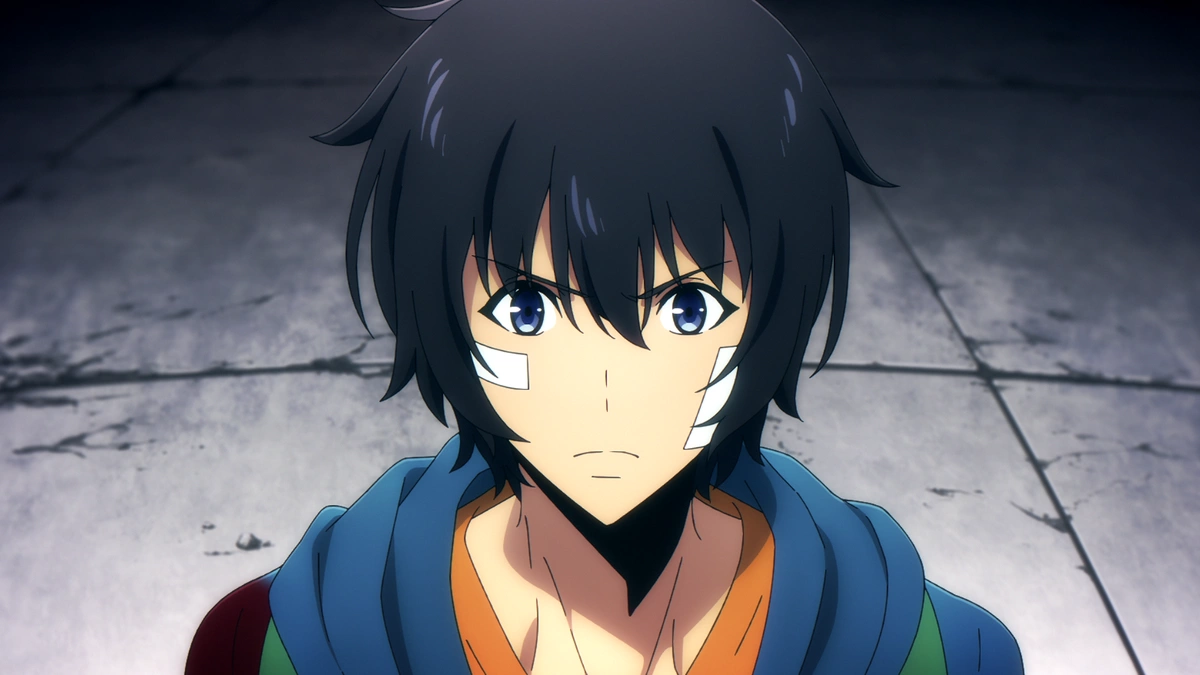
Sung Jinwoo (Credits: A-1 Pictures)
There’s a noticeable difference between Jin-Woo’s expressions before and after gaining power. Early episodes show hesitation, anxiety, and kindness. Later episodes reveal a colder, more calculating demeanor. The visual storytelling—his narrowed eyes, stiff posture, rare smiles—shows change better than dialogue ever could. These choices emphasize his gradual transformation into something more than human.
The anime succeeds because it never loses focus. At its core, Solo Leveling tells a human story within a world full of monsters. It balances worldbuilding, emotional stakes, and explosive action without losing sight of Jin-Woo’s personal journey. While fans of the manhwa may notice condensed arcs, the anime holds its ground with strong direction and faithful tone.
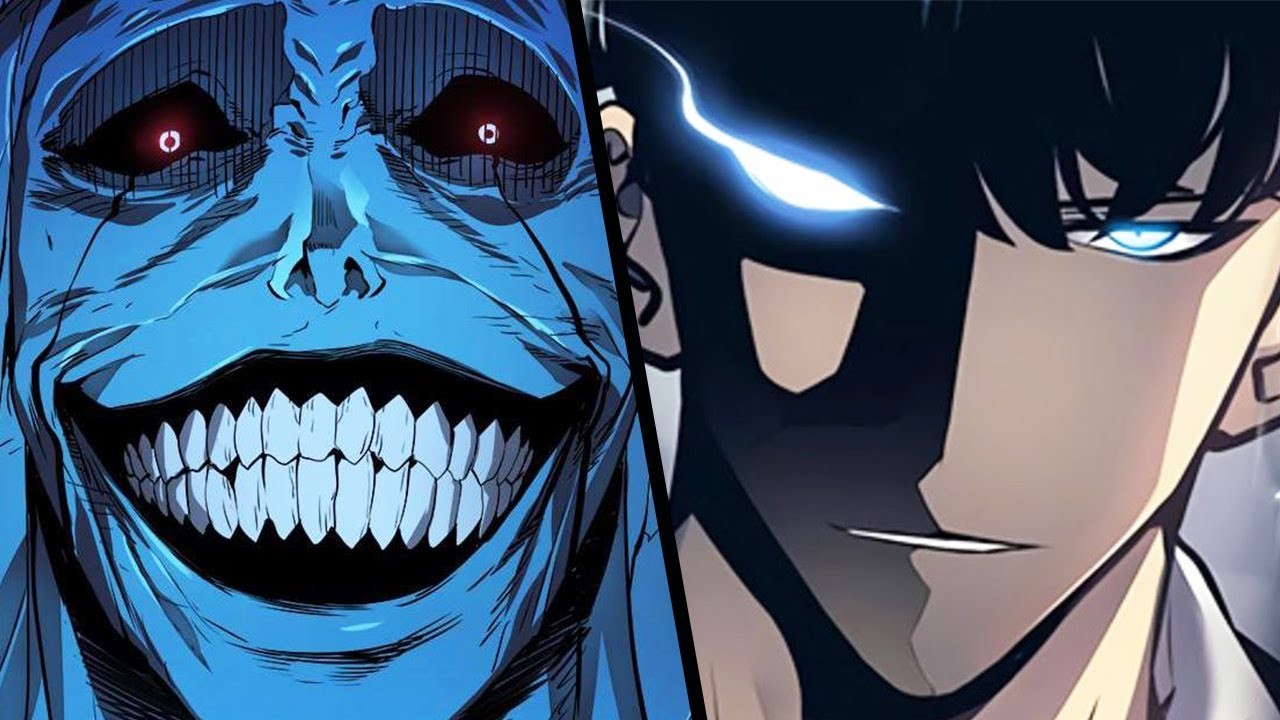
Solo Leveling (Credits: A-1 Pictures)
As the series continues, anticipation grows over how far Jin-Woo’s story will be taken. Will the anime reach the final showdown with the Rulers and Monarchs? Can it fully explore the themes of loss, duty, and selfhood that make the original work so memorable? So far, the adaptation promises not just spectacle but substance.
Solo Leveling doesn’t just offer thrilling combat or stylish visuals. It poses an enduring question: when the world finally gives you power, what do you become?
1. Fullmetal Alchemist: Brotherhood
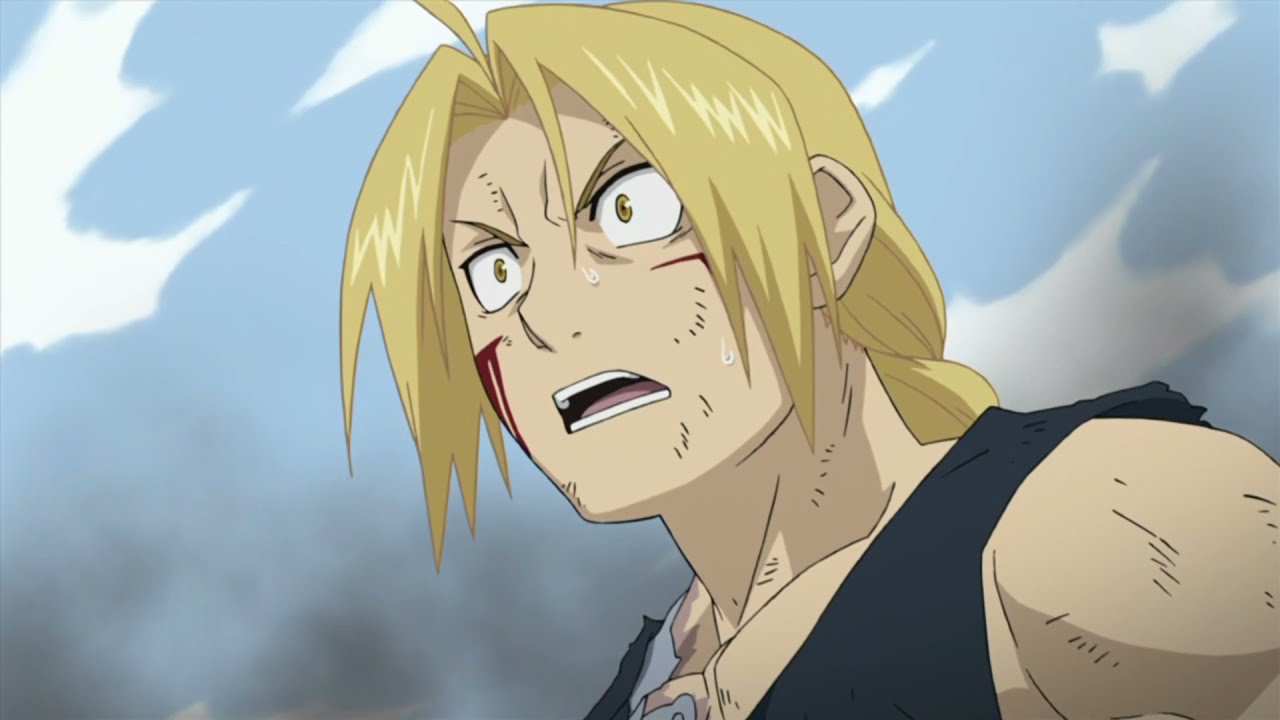
Edward (Credits: Netflix)
Edward Elric and his younger brother, Alphonse, experienced the heartbreaking loss of their mother during their formative years. In the depths of their grief, Edward conceived a desperate plan—to employ the forbidden art of Human Transmutation Alchemy in an attempt to resurrect their beloved Trisha Elric.
Tragically, their pursuit of this forbidden magic led to dire consequences. Both brothers suffered the loss of vital parts of their bodies, with Alphonse bearing the brunt of the toll. However, Edward, through his resourcefulness, managed to bind Alphonse’s soul to a suit of armor, thus preserving his essence.
Though their decision plunged them into a maelstrom of suffering, the brothers found solace and resilience in their unwavering bond.
United in their shared anguish, they confronted the trials that beset them, emerging stronger and more resilient than before. Their journey stands as a testament to the enduring power of brotherhood in the face of adversity.
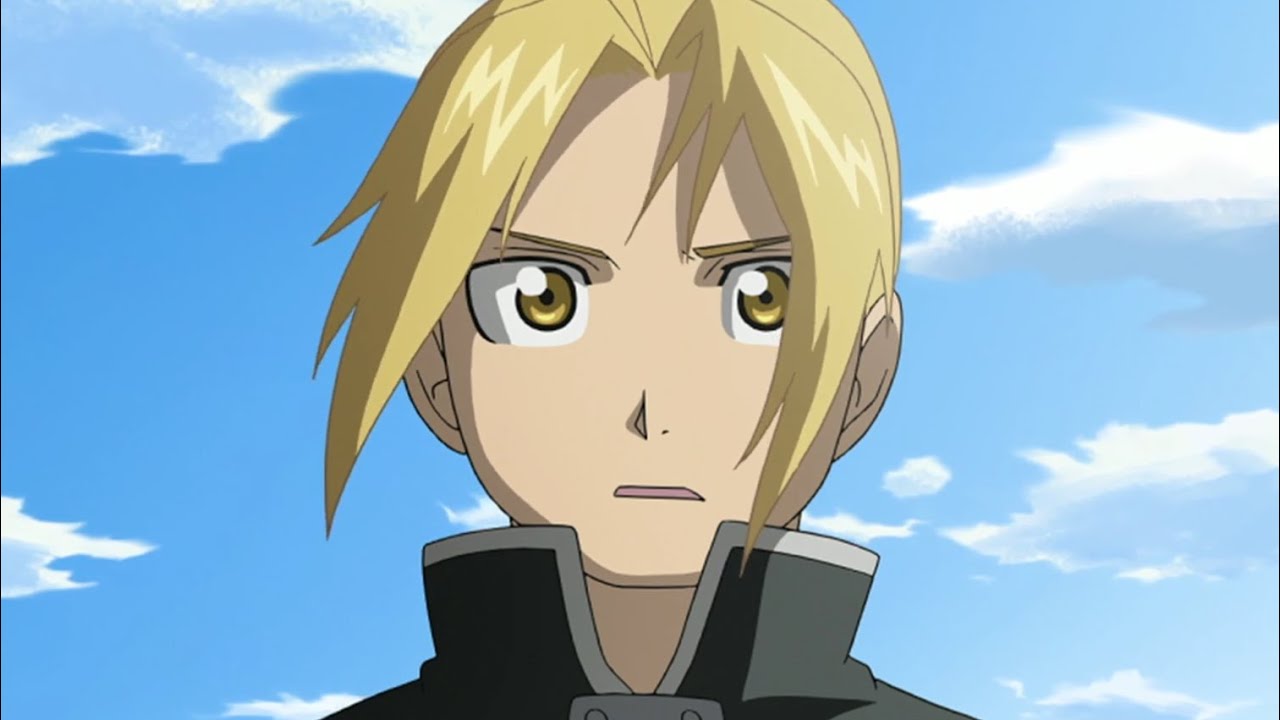
Edward (Credits: Netflix)
Fullmetal Alchemist: Brotherhood is an anime series based on the manga “Fullmetal Alchemist” written and illustrated by Hiromu Arakawa. It was produced by Bones Studio and aired in 2009. The series is a faithful adaptation of the manga and is often regarded as one of the greatest anime of all time.
The story follows two brothers, Edward and Alphonse Elric, who use alchemy in a world where it is a practiced science. In an attempt to bring their deceased mother back to life using alchemy, they commit the taboo of human transmutation.
This results in Edward losing his left leg and Alphonse losing his entire body. In a desperate move, Edward sacrifices his right arm to bind Alphonse’s soul to a suit of armor.
Determined to restore their bodies, the brothers get on a journey to find the Philosopher’s Stone, a legendary alchemical artifact said to amplify the abilities of alchemists. Along the way, they uncover a deep conspiracy involving the government, the military, and dark forces that threaten the entire nation of Amestris.
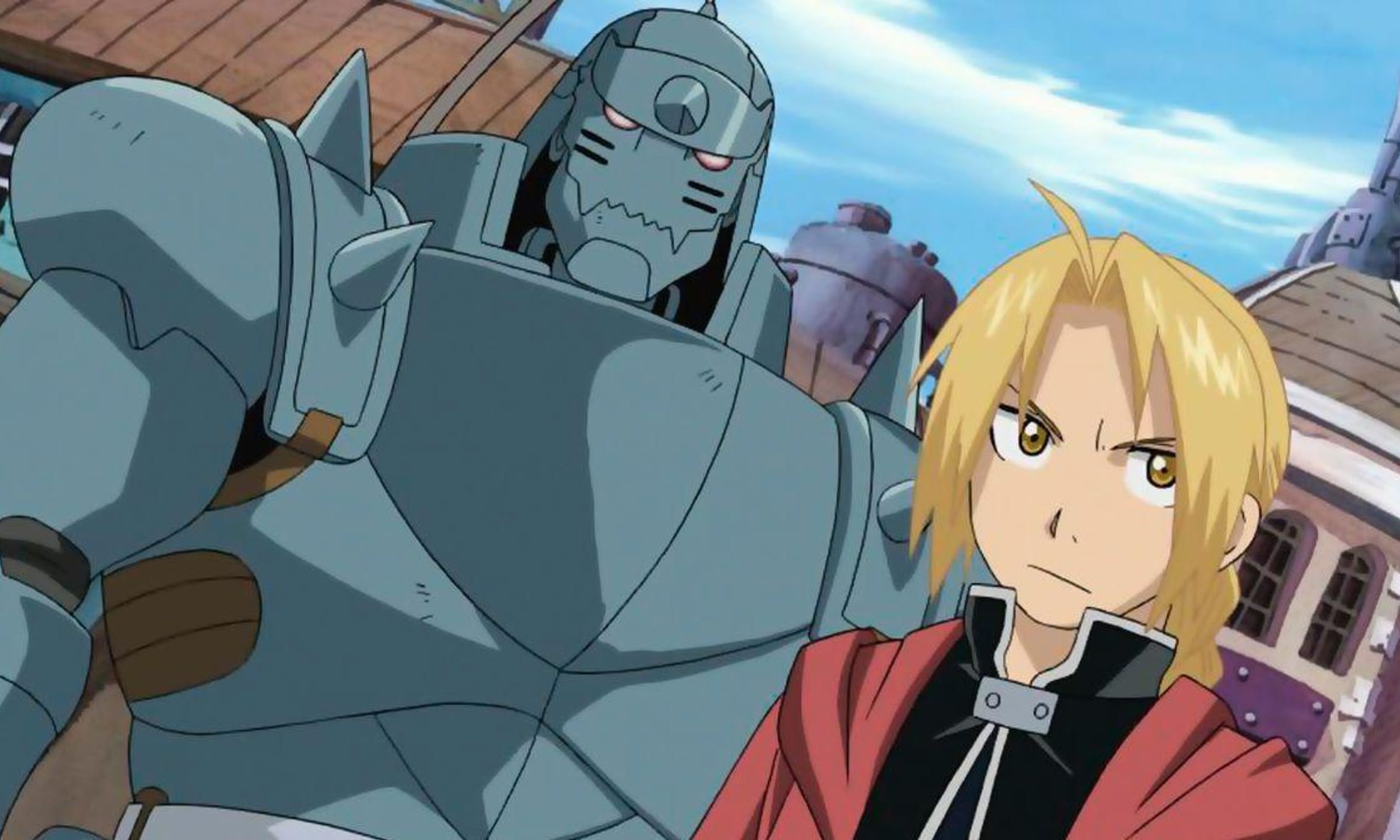
Fullmetal Alchemist: Brotherhood (Credits: Netflix)
Fullmetal Alchemist: Brotherhood is praised for its compelling story, well-developed characters, intricate world-building, and themes of sacrifice, redemption, and the consequences of war.
It also features stunning animation, memorable music, and intense action sequences. The series finds complex moral and ethical dilemmas while maintaining a perfect balance of drama, humor, and heart.
Fans of “Fullmetal Alchemist: Brotherhood” often appreciate its deep narrative, rich symbolism, and exploration of human nature. It’s a must-watch for anyone interested in immersive storytelling and thought-provoking themes.
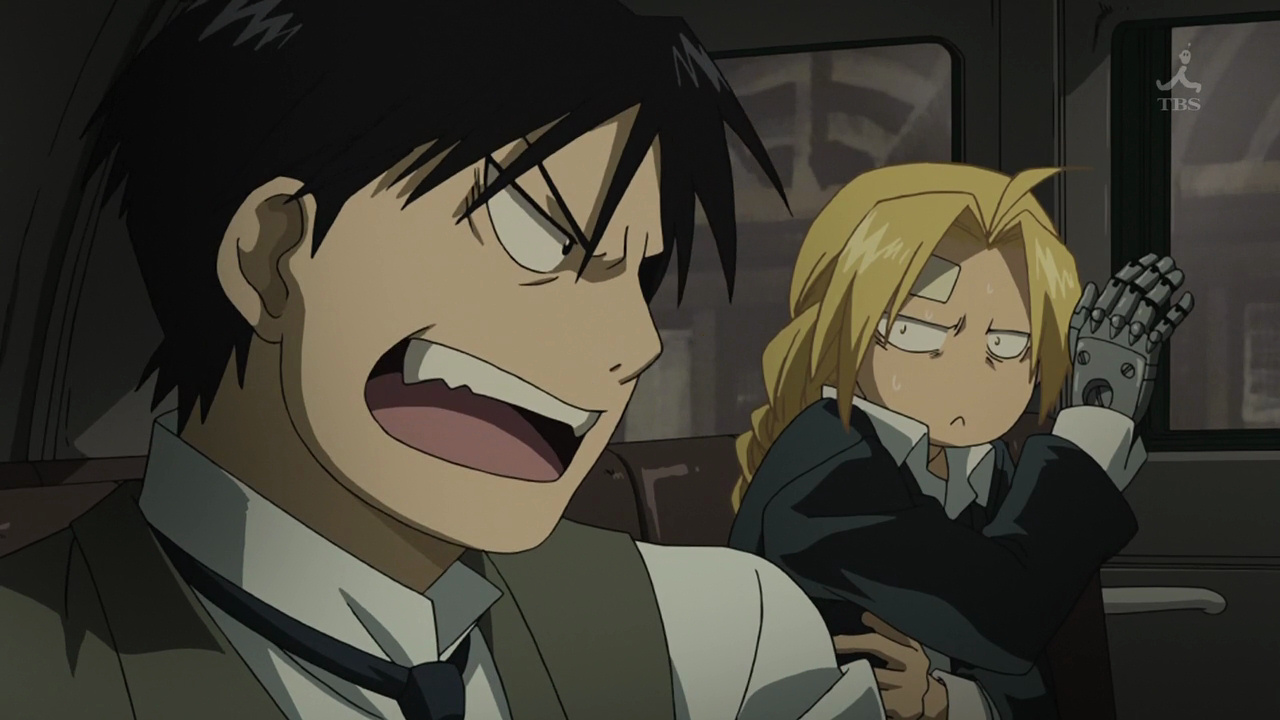
Fullmetal Alchemist: Brotherhood
Edward and Alphonse Elric are two brothers whose pain is stitched into every moment of the story. Their mistake—the loss of their mother and their own bodies—sets a painful yet meaningful foundation. Their search for the Philosopher’s Stone reflects a hunger for hope, but the path ahead remains steeped in sacrifice and truth.
Alchemy is central, not only in combat or science but in the rules of life. The Law of Equivalent Exchange becomes a chilling metaphor for the cost of wanting too much. That law echoes in their pain: Ed trades his arm and leg, Al his entire body. They’re never just looking for recovery—they’re confronting the cost of desire.
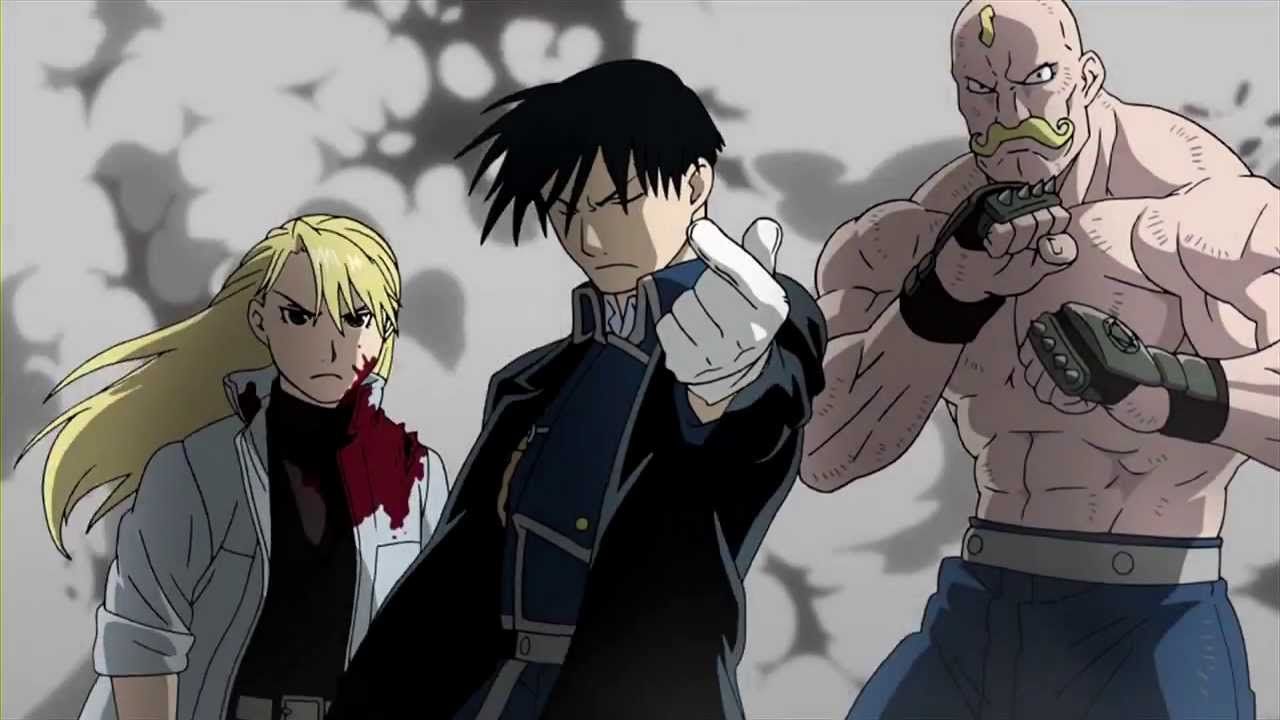
Fullmetal Alchemist: Brotherhood
Ed’s struggle as a teenager forced into adulthood carries weight. He hides guilt behind arrogance and stubbornness. Yet his resolve isn’t built from heroism. It’s desperation layered in accountability. Al, meanwhile, is a soul without a body, yet his empathy and emotional insight often ground them both.
Their relationship builds the heart of the show. Their dialogue carries warmth, frustration, and tension. Despite their shared trauma, they react to loss differently. Ed pushes forward. Al reflects inward. Their contrast brings balance, allowing the audience to move with them emotionally while questioning moral certainty.
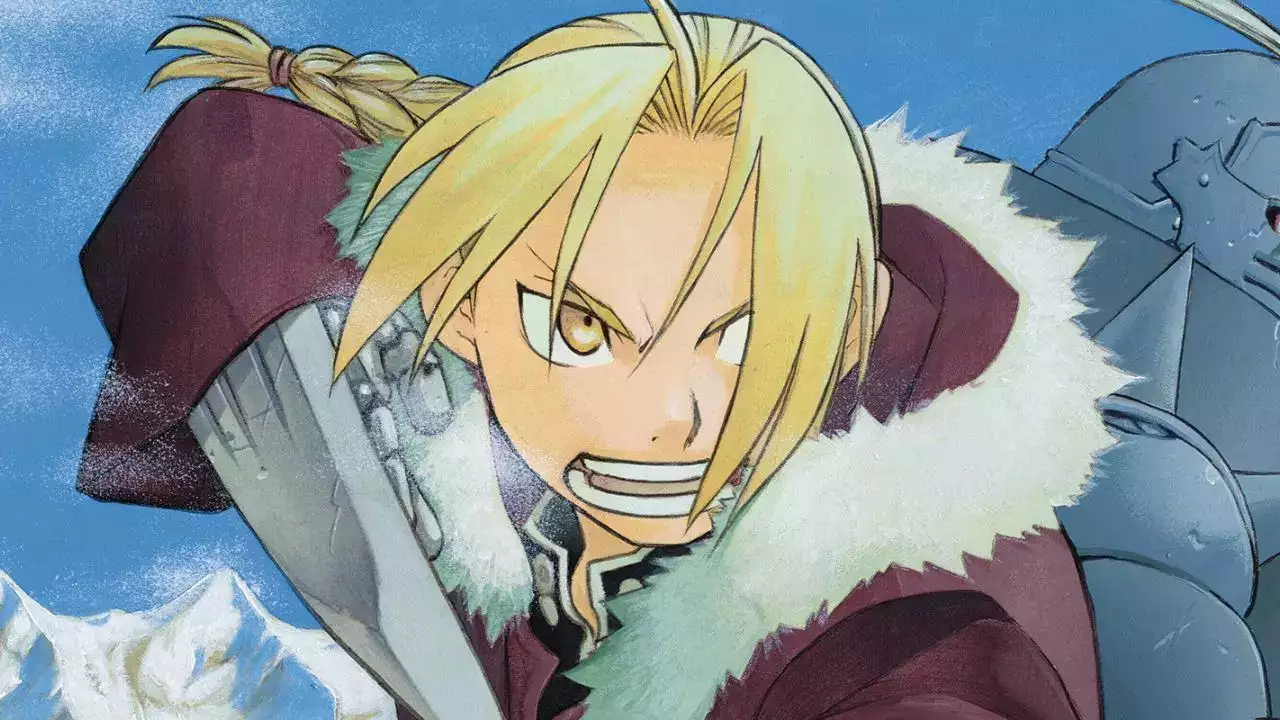
Fullmetal Alchemist: Brotherhood
The world they occupy is harsh. Amestris, structured like a military state, becomes more than background. Its politics, corruption, and brutality become integral. It isn’t a neutral world—it pushes back. The military exploits alchemists. The truth behind the Philosopher’s Stone—human lives—forces characters to face harsh realities.
Characters like Mustang, Hawkeye, Scar, and Ling add dimension to this mosaic. Mustang, seeking justice for Ishval’s genocide, shows what ambition shaped by guilt can resemble. Scar, initially driven by vengeance, slowly reforms through painful introspection. Each side character represents a facet of grief, belief, and transformation.
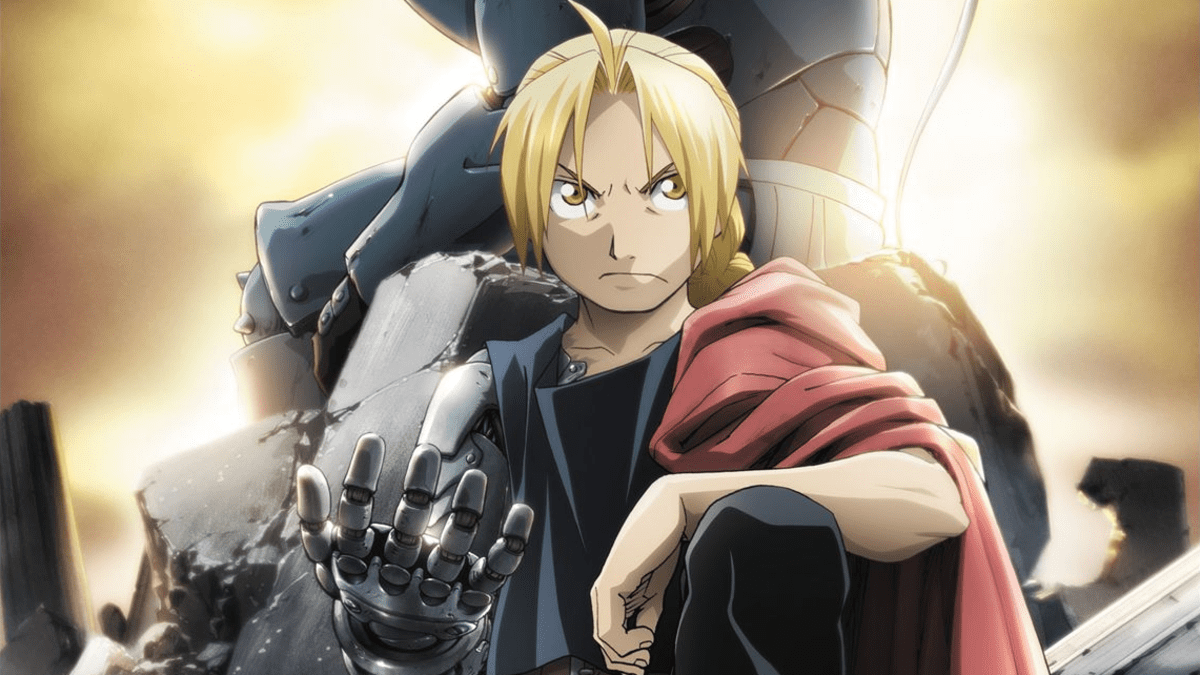
Fullmetal Alchemist: Brotherhood
No antagonist remains flat. Father, the god-like central enemy, began as a slave seeking freedom. His hunger to surpass human limits turns chilling. But even in his manipulation, he reflects a distorted version of the Elric brothers’ dreams. His calm, cold presence casts a long shadow across every decision.
The Homunculi—named after the seven deadly sins—don’t just oppose the heroes. They reflect humanity’s excesses. Lust seeks power, Envy resents humanity, Greed craves identity. They represent the darker instincts within every character. Their unraveling reveals how emotional fracture feeds destruction, even when disguised in supernatural form.
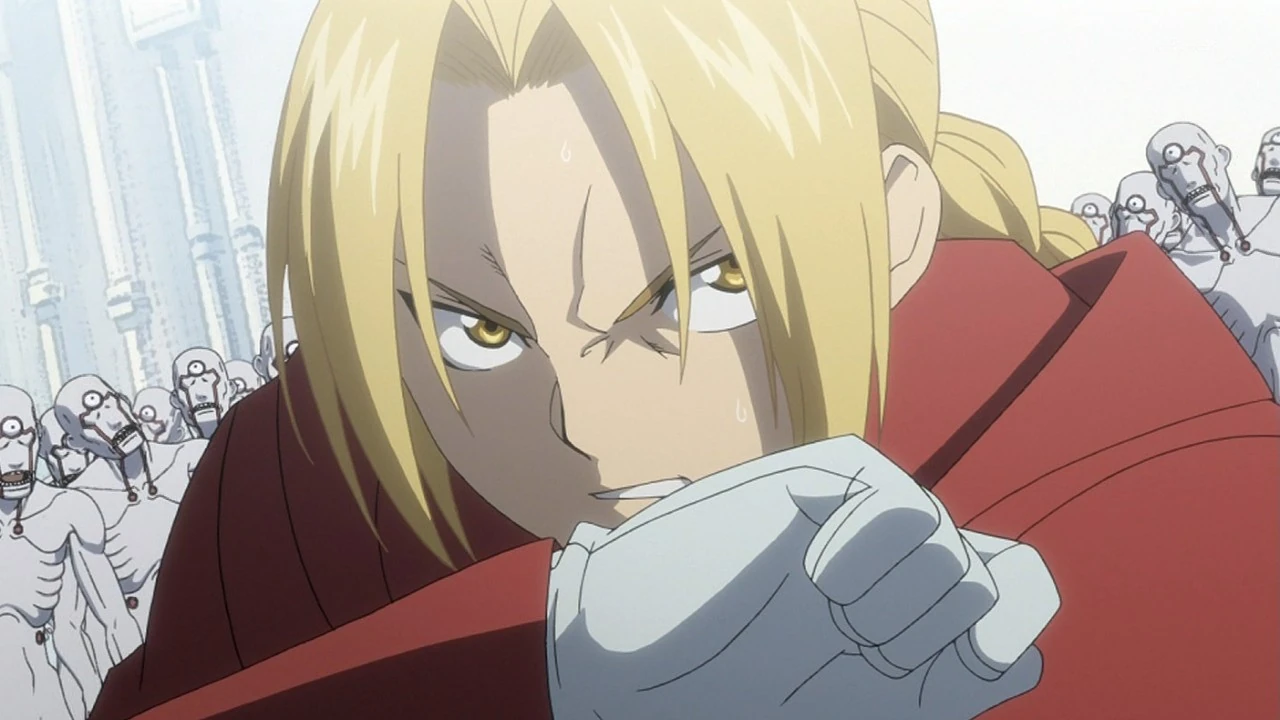
Fullmetal Alchemist: Brotherhood
One strength of Brotherhood lies in its pacing and structure. Each arc builds with calculated tension. Whether it’s the mystery of the Fifth Laboratory or the siege on Central, the tension feels earned. The show doesn’t stretch for shock—it builds consequence, drawing strength from choices made early on.
The animation from Studio Bones remains fluid and expressive. Fight scenes like Mustang vs Envy or Ed’s battles blend precise choreography with emotional context. Every punch or transmutation feels necessary—not spectacle, but a continuation of character. These sequences never exist in isolation—they’re part of something human.

Fullmetal Alchemist: Brotherhood
Sound design deserves attention. The soundtrack, especially tracks like “Bratja” or “Battle Scherzo,” enhances every pivotal moment. The use of silence also holds power. Scenes where words fail often carry greater weight than confrontation. These moments help solidify emotional gravity without the need for constant exposition.
What Brotherhood does especially well is reflect on ethics. What does it mean to bring someone back? Is the price of knowledge ever too steep? Can violence serve justice? These questions don’t get easy answers. Instead, the show encourages discomfort and self-reflection through its rich philosophical texture.
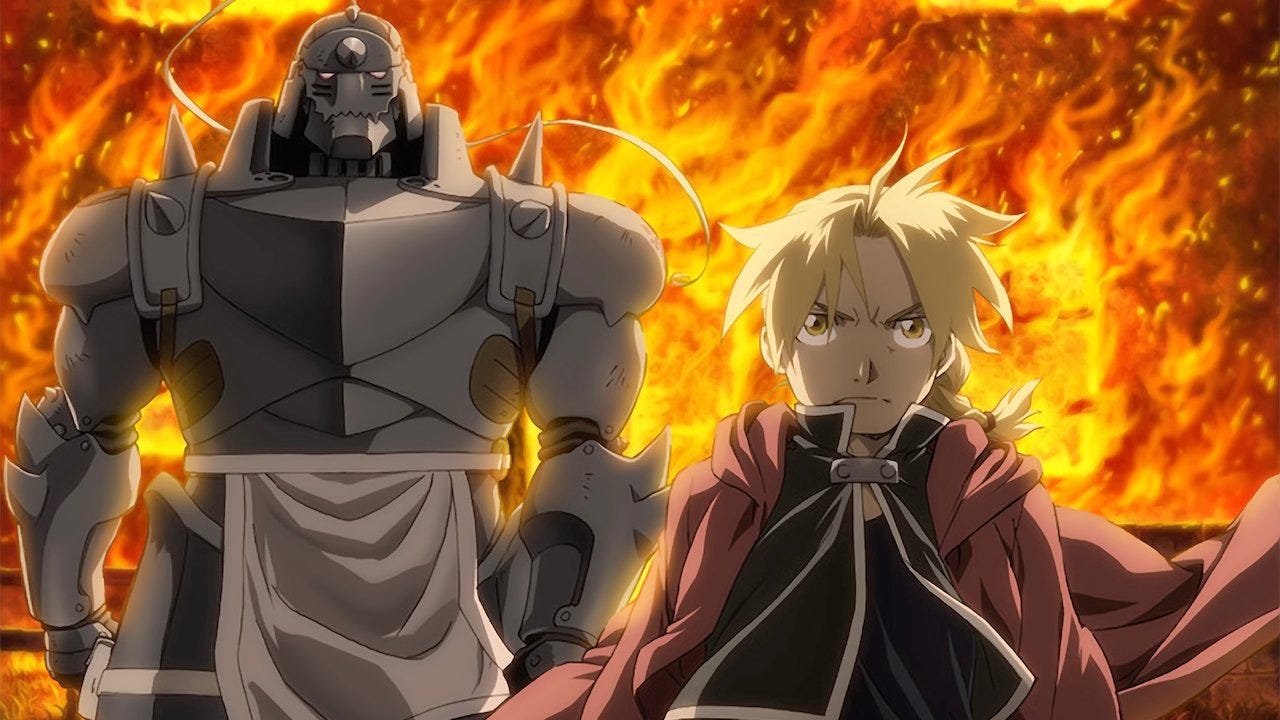
Fullmetal Alchemist: Brotherhood
This isn’t a story that romanticizes suffering. It investigates it. It pushes characters to reconcile pain with responsibility. No one walks away untouched. Some gain redemption; others crumble. The emotional realism grounds the fantasy, forcing viewers to confront their own values within the show’s harsh moral framework.
Even minor characters like Hughes leave a mark. His death isn’t dramatic—it’s deeply personal. It shifts the tone of the story and sparks moral crisis in the characters. It isn’t just tragedy; it’s a reminder that even kindness can’t shield from consequence in a world governed by power.
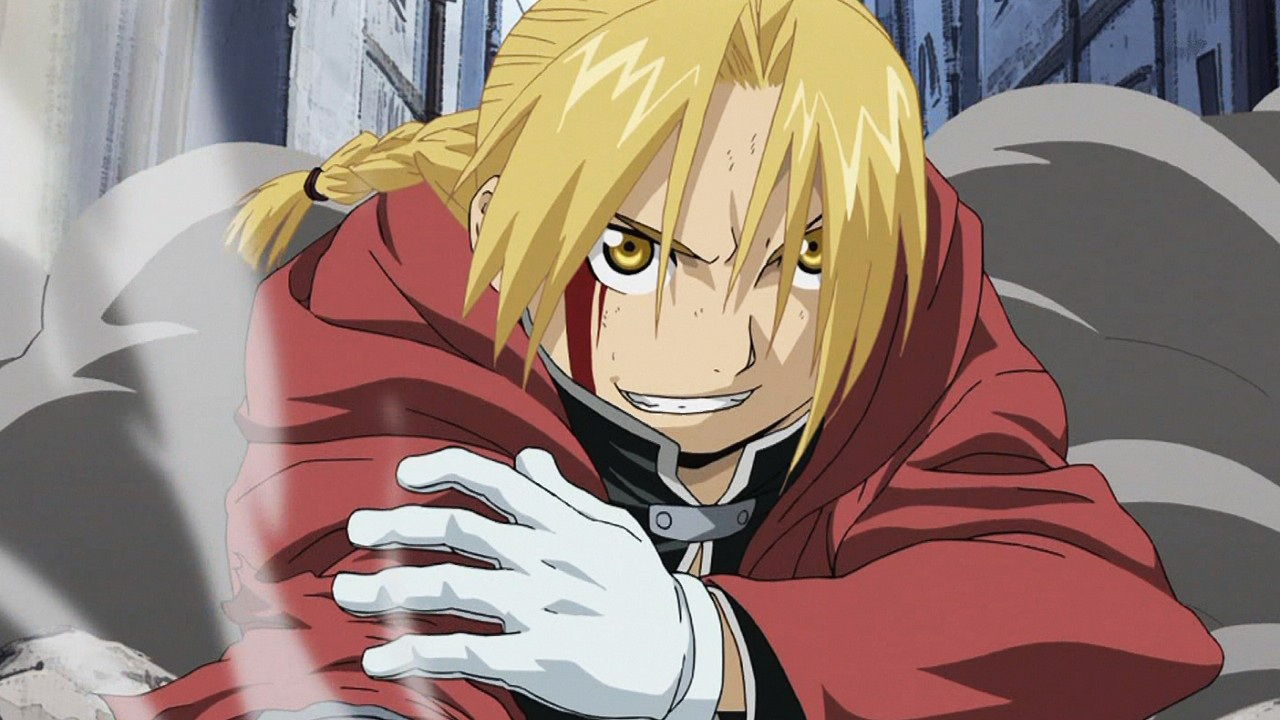
Fullmetal Alchemist: Brotherhood
The Truth—the white void that confronts each alchemist—is more than symbolism. It embodies personal consequence. It doesn’t punish arbitrarily; it reflects what characters seek and what they’ve lost. When Ed gives up his alchemy to regain Al, it isn’t sacrifice—it’s clarity. He chooses people over power.
Few anime achieve this balance of emotional weight and narrative complexity. The story doesn’t collapse under its ambition. Instead, it stays grounded through character consistency. It trusts the audience to carry each piece of knowledge without oversimplification, allowing slow realizations to replace obvious explanation.
By its end, Fullmetal Alchemist: Brotherhood becomes less about alchemy and more about restoration. Restoration of identity, family, justice, and purpose. The Elrics’ story is not clean or complete, but it moves toward healing. They do not get everything they want, but they reclaim their agency—and their brotherhood.
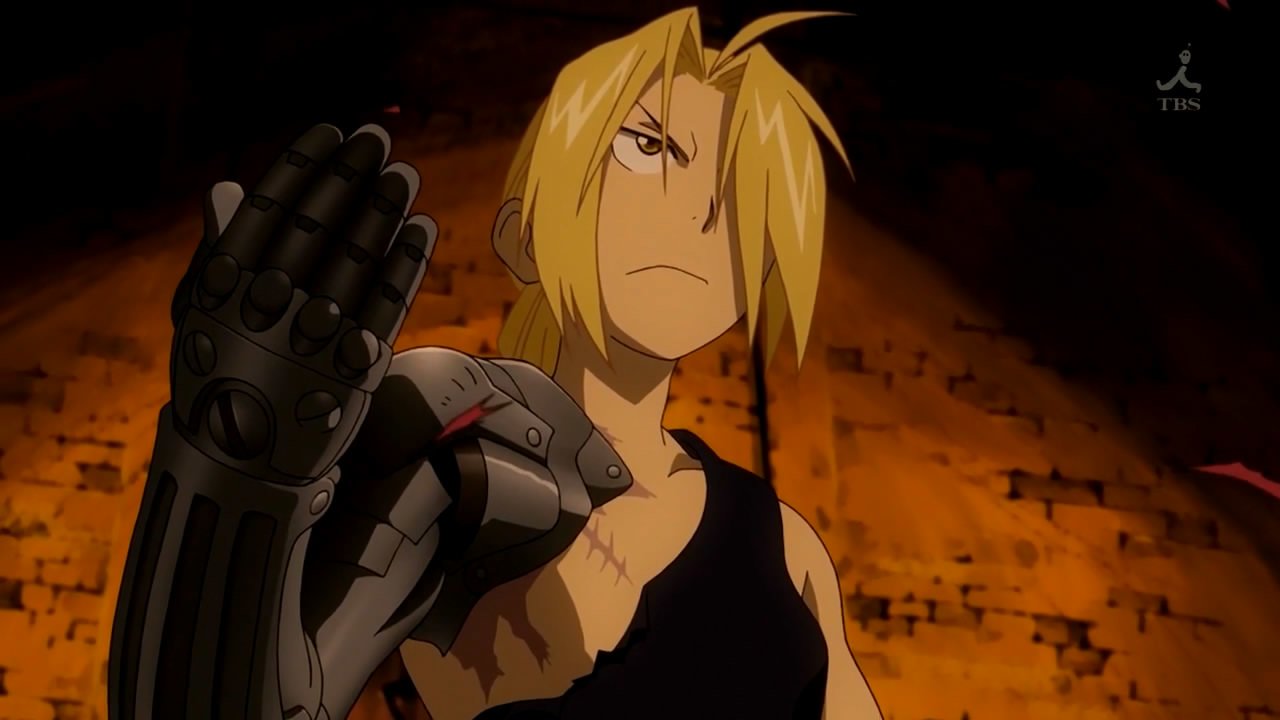
Fullmetal Alchemist: Brotherhood
Even the ending avoids neatness. Ed doesn’t regain his powers. Scar’s survival remains ethically complex. The world doesn’t reset—it changes. Some wrongs remain unresolved, and that’s deliberate. The show respects that certain wounds, like those of war or loss, don’t disappear—they linger, influencing every future step.
The anime’s impact extends far beyond its genre. It questions scientific advancement without humanity. It dissects military obedience. It honors resilience without glorifying trauma. Whether viewers come for action, emotion, or insight, Brotherhood offers an honest examination of what it means to bear the consequences of one’s will.
This is why Fullmetal Alchemist: Brotherhood continues to resonate. Its themes grow with the viewer. What feels like a shounen action story becomes a layered study in ethics, grief, and perseverance. It reminds us that the greatest power isn’t transmutation—it’s facing reality, and choosing to keep moving forward.
Sauce and Memes On Next Page – Honorable Mentions
Kobeni-chan ga Inkei no
Hachinan tte, Sore wa Nai Deshou
Names
#OreGairu 2. #ShikimoriSan 3. #KomiCantCommunicate 4. #UzakiChan
#Torokase 6. #AneWaYanmama 7. #GakiNiModotte 8. #SaiminSeishidou

Boku ni Sefure ga Dekita Riyuu
Under the Radar
S–tudy Group
Mazome Soap de Aimashou!

Pixiv 124488534
How to search? Go to Pixiv and enter the code or add the code at the end of this URL
https://www.pixiv.net/en/artworks/
Party ni Yatotta Mahoutsukai ni Musekinin Tanetsuke Suru Hanashi &
MIMK-104
Is This The Way You Do It manhwa

All Sauces

Chijo Monogatari Bakunyuu

fdpdablizz998 going to america

Sakura Miyajima – Saimin Seishidou

Succubus Yondara Gibo ga Kita!?

Bungo Stray Dogs has built a strong reputation as one of the most striking supernatural anime series today. It follows Atsushi Nakajima, a troubled orphan who’s pulled into an unusual detective agency. The twist? Every member has an ability that sets them apart, offering unique strengths that help solve bizarre and dangerous cases.
The story blends action with mystery, creating a world where personal trauma and superhuman powers collide. What makes it stand out is how it handles relationships. Atsushi’s bond with his new companions, each scarred in their own way, makes for more than just visual spectacle—it becomes a moving story of healing and discovery.
The mix of emotional storytelling and kinetic combat is what draws so many to Bungo Stray Dogs. Fans often find themselves wanting more of the same—shows with teams, secrets, and characters balancing light and shadow. The energy it carries is contagious, and once you’re pulled into its rhythm, it’s tough to leave.
That’s why we’ve pulled together 10 anime that tap into similar energy. These selections aren’t just about powers; they’re about connection and resilience life when you’re not quite ordinary. If you’re craving more high-stakes action with a meaningful touch, these are your next watches.
10. Durarara
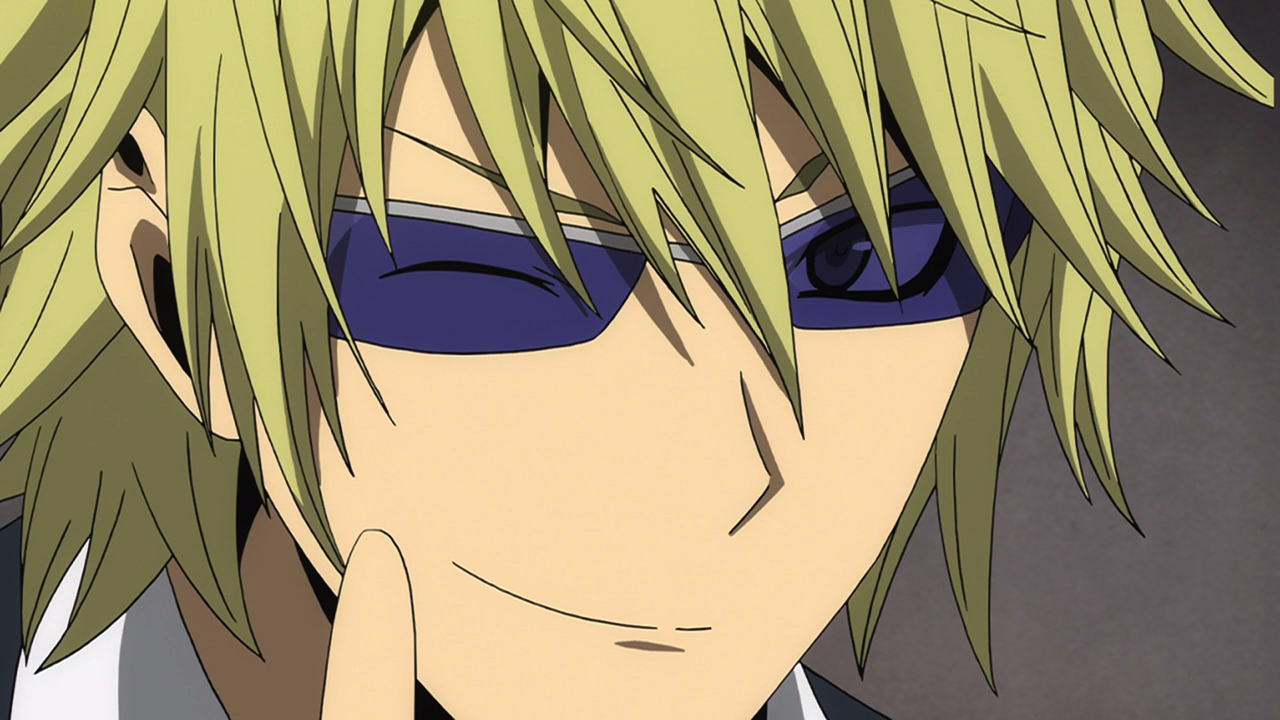
Durarara!
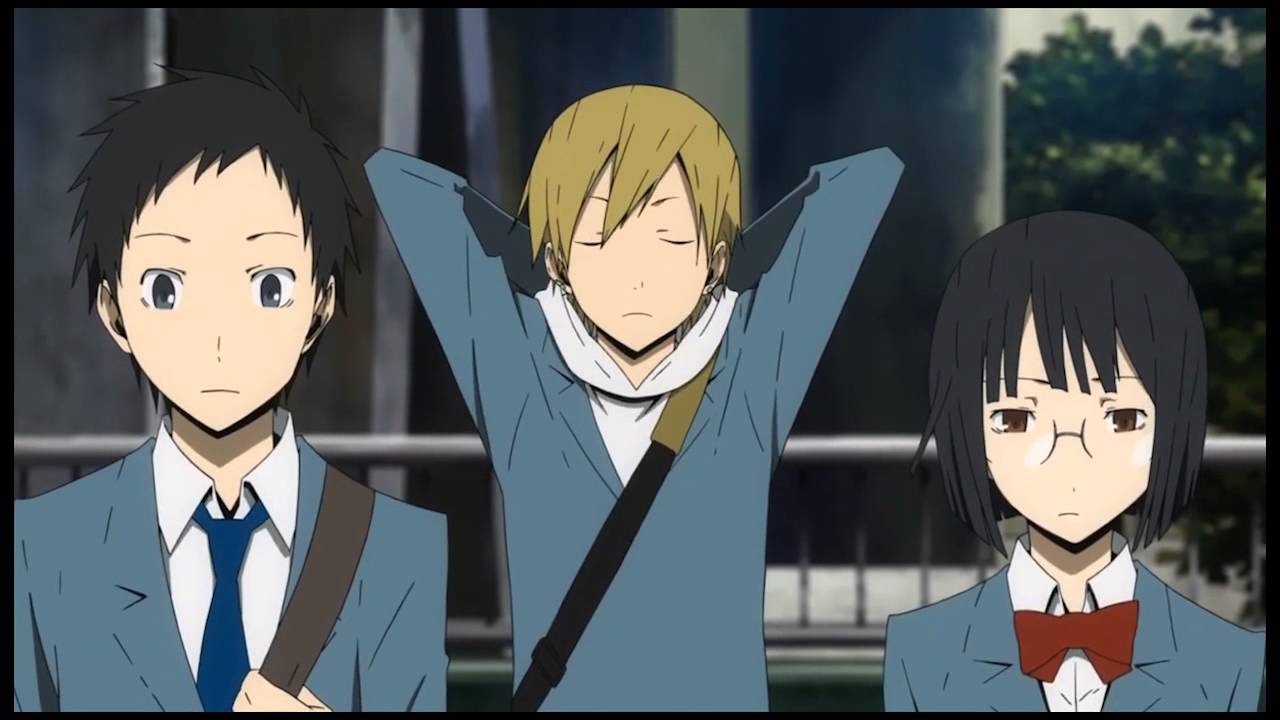
“Durarara!!” unfolds within the lively urban surface of Ikebukuro, Tokyo, serving as the primary backdrop for its narrative. The story revolves around a diverse ensemble of characters, among them Mikado Ryuugamine, who relocates to Ikebukuro and swiftly becomes ensnared in the city’s shadowy realm of colorful gangs and urban myths. His close friend Masaomi Kida, a local, adeptly maneuvers through these perilous circumstances.
Adding to its allure, the series incorporates a compelling supernatural dimension with characters possessing unique abilities.
The intricately woven plotlines driven by these characters, coupled with exceptional world-building, offer a nice blend of action, mystery, thriller, supernatural elements, and comedy—a mix that will undoubtedly resonate with fans of “Bungo Stray Dogs.”
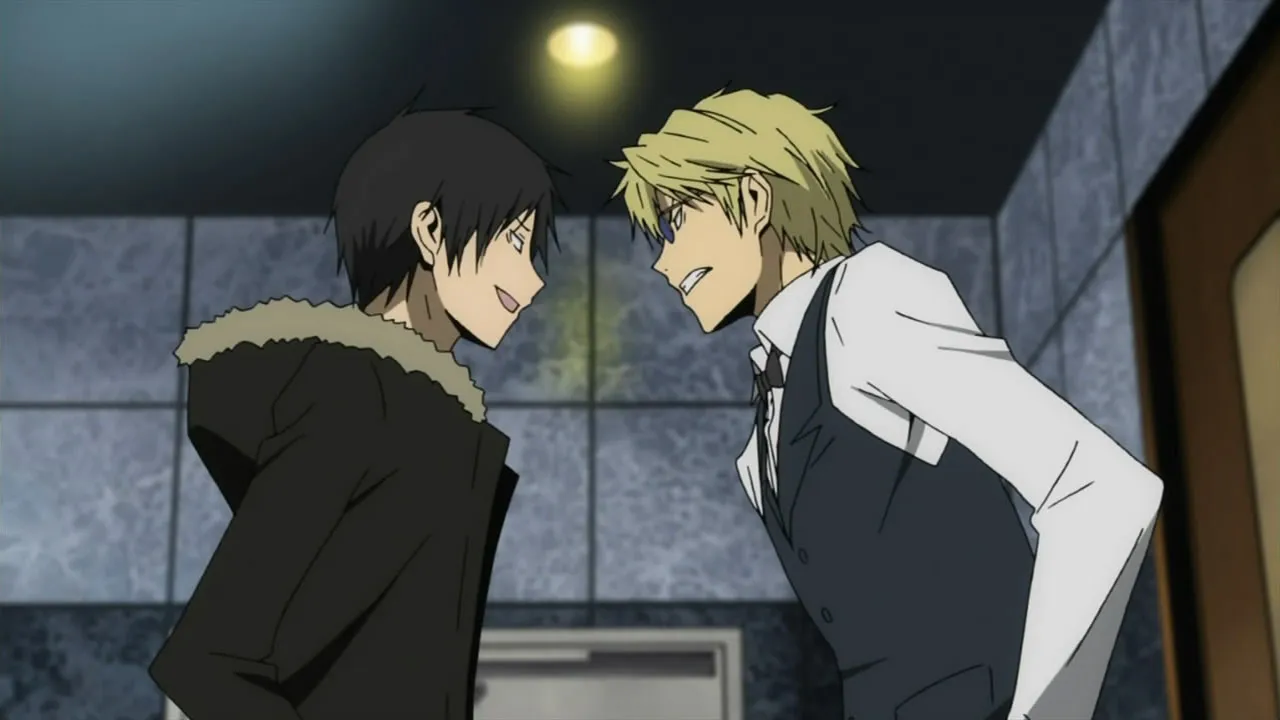
The story centers on Mikado Ryuugamine, a newcomer to the city, and features characters like Celty Sturluson, a headless rider, and Izaya Orihara, a manipulative information broker. Adapted into anime, “Durarara!!” is praised for its complex storytelling, compelling characters, and exploration of urban life’s darker aspects within Narita’s interconnected universe.
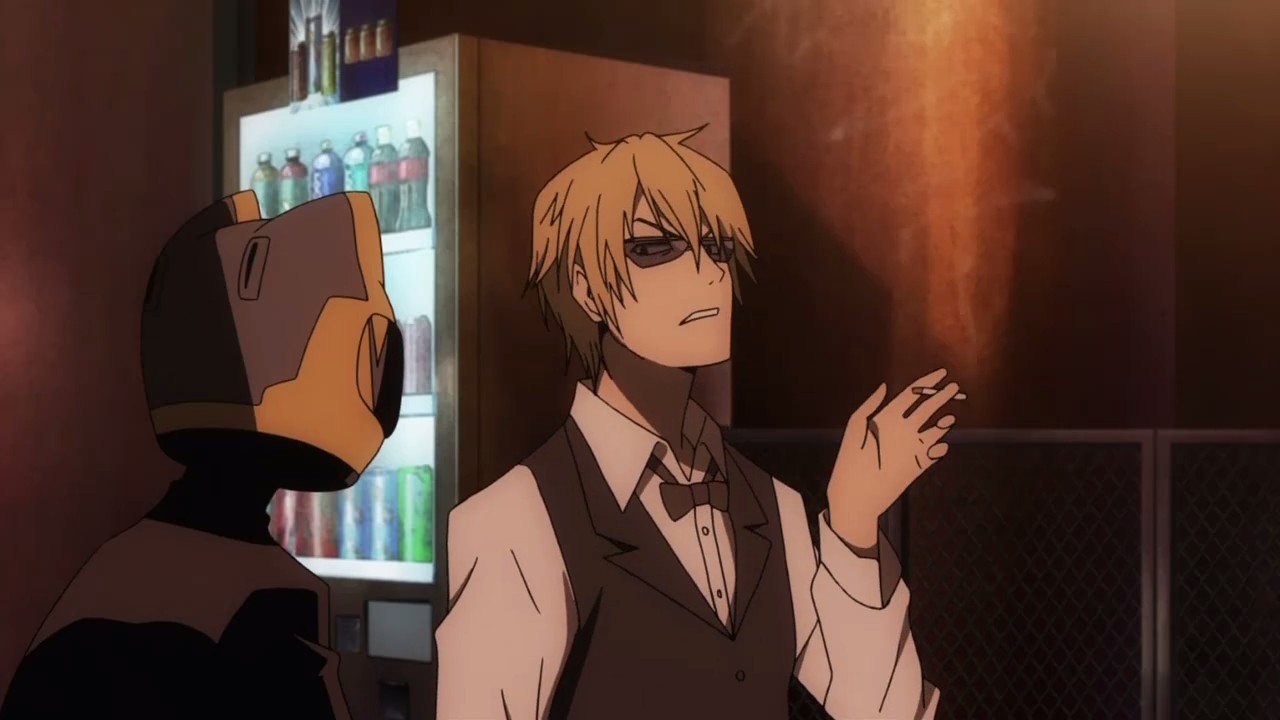
Durarara!
Durarara!! unfolds in the crowded streets of Ikebukuro, where rumors bleed into reality and truth hides behind masks. It thrives on disorder, not through battle alone, but through conflicting ideals, shifting alliances, and characters tangled in a mosaic of half-truths and myth. Every connection reveals more about the city and those who try to survive it.
Mikado Ryuugamine begins as an ordinary student yearning for something extraordinary. His move to Ikebukuro is more than a change of scenery—it’s a rejection of passivity. The irony is that, in chasing chaos, he becomes one of its architects. His gradual transformation from a curious newcomer to a manipulator is disturbing but believable.
His desire to create the Dollars, a colorless gang built on anonymity, reflects modern disillusionment. It’s a group without rules, boundaries, or ideologies—an internet-age phenomenon. Yet as it grows, Mikado realizes that influence, even nameless, carries responsibility. His idealism curdles into desperation, and he clings to control under the guise of purpose.
Anri Sonohara, quiet and withdrawn, holds the cursed sword Saika—an object that feeds on love by infecting others. Anri’s power contradicts her passivity. Her emotional detachment masks deep trauma, but her ability to command Saika represents the tension between isolation and longing. She doesn’t want to dominate—she just wants connection without pain.
Masaomi Kida, the third in their triangle, hides a darker past. As a former leader of the Yellow Scarves, he’s haunted by guilt and torn between nostalgia and fear. His cheerful facade cracks as he’s pulled back into gang violence. He represents a yearning for innocence in a world that no longer allows it.
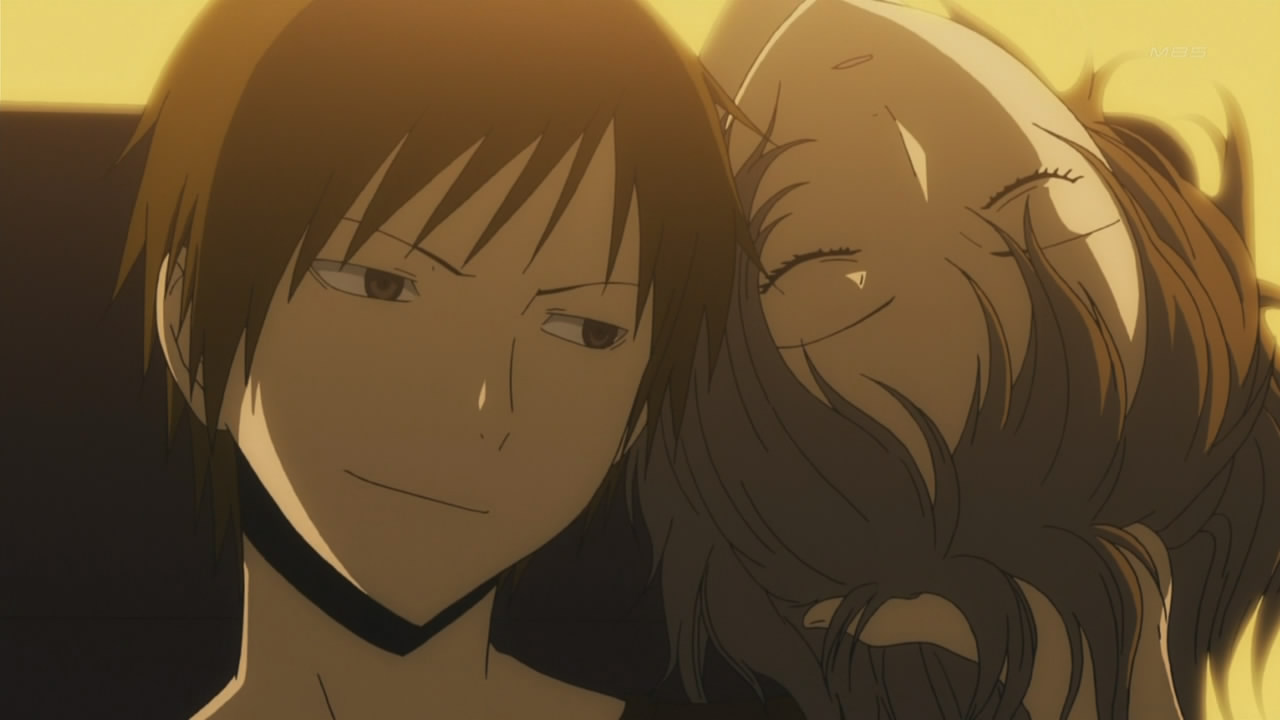
Durarara!
The three friends—Mikado, Anri, and Kida—mirror different responses to chaos. Mikado seeks control, Anri withdraws, and Kida clings to the past. Their arcs intersect and collide, fueled by love, fear, and secrets. They lie to protect each other, but their lies often cause more damage than truth ever could.
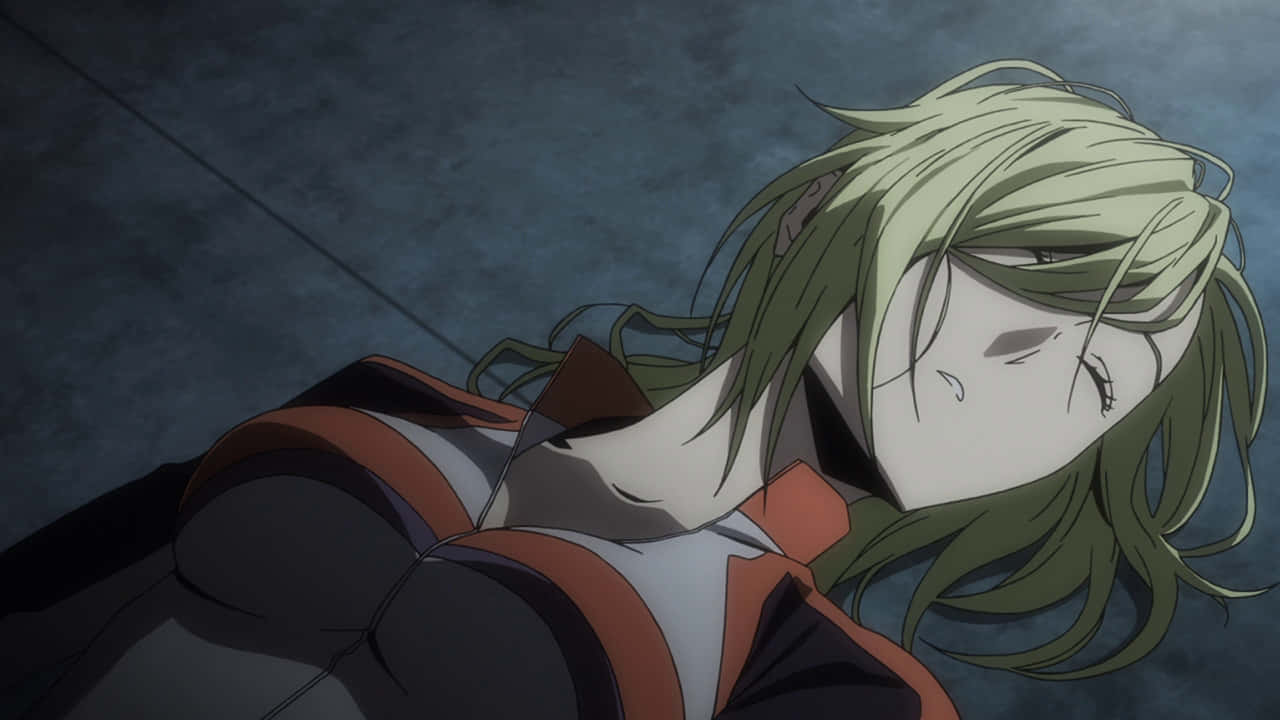
At the heart of Ikebukuro is Celty Sturluson, the Dullahan without a head. A supernatural figure from Irish folklore, she becomes a courier in the city’s underbelly. Despite her appearance, she’s perhaps the most grounded character—yearning not to reclaim her head, but to understand her own identity and place in the world.
Her relationship with Shinra Kishitani, the eccentric underground doctor, is both strange and endearing. Shinra loves Celty fully, even obsessively, accepting her as she is. Celty’s growth lies in learning to trust, to love, and to embrace a new form of self. Her presence humanizes the supernatural and adds warmth to the chaos.
Izaya Orihara thrives on conflict. A manipulator who claims to love humanity while pushing them into despair, he sees people as pieces in his own social experiment. He creates chaos to observe reactions, not out of cruelty, but from a warped curiosity. His battles are mental, emotional, and insidious.
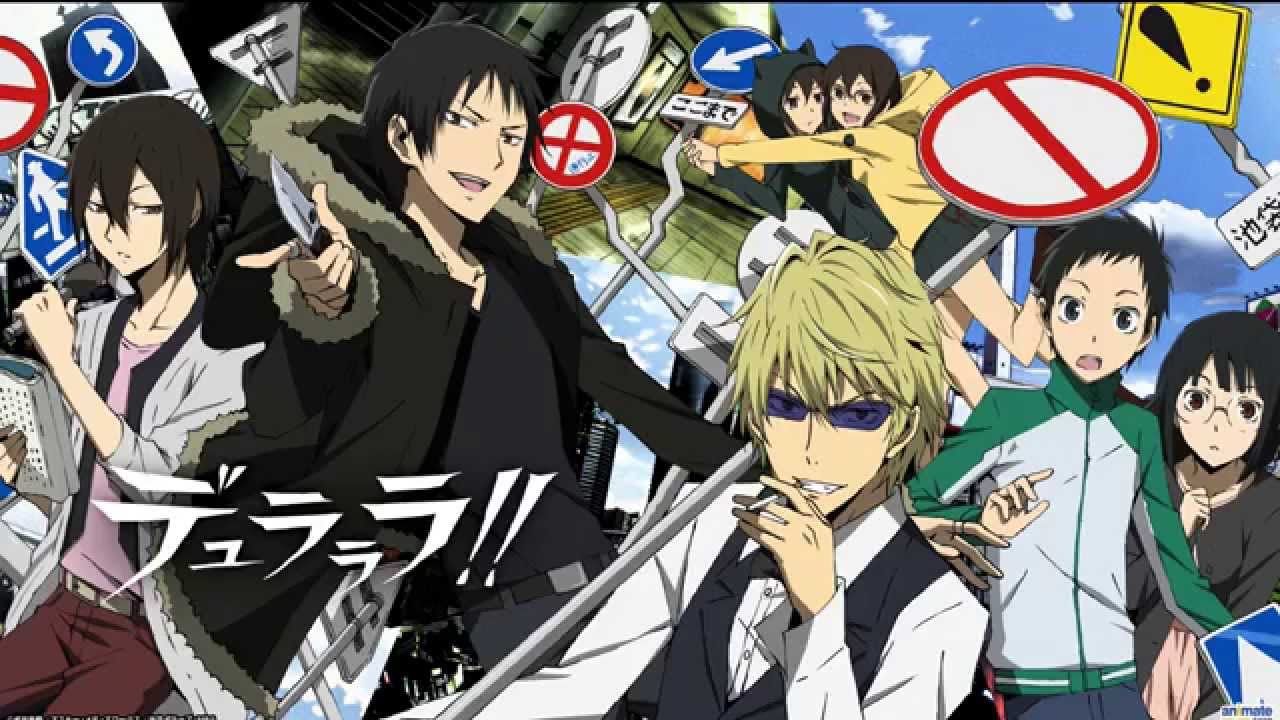
Durarara!
Izaya’s rivalry with Shizuo Heiwajima drives some of the show’s most iconic scenes. Shizuo, unable to control his superhuman strength, embodies raw emotion. He hates violence but is consumed by it. Where Izaya schemes, Shizuo reacts. One is mind, the other muscle, yet both are equally isolated by what makes them different.
The Dollars, Yellow Scarves, and Blue Squares aren’t just color-coded gangs—they’re extensions of how people search for identity and belonging. Each gang reflects a different way people cling to structure in a city that offers none. The conflicts between them aren’t just about territory—they’re about fear, loss, and betrayal.
Durarara!! plays with perspective constantly. Events are often repeated from different viewpoints, revealing new truths and contradictions. A conversation seen through one character’s eyes may carry entirely different meaning when replayed through another’s. This technique adds texture and reinforces how perception shapes reality in Ikebukuro.
The supernatural blends seamlessly into the everyday. Celty rides her shadow bike beside taxi drivers. A cursed sword influences gang wars. Rumors of headless riders and monsters move across the city as easily as text messages. The unreal isn’t hidden—it’s normalized, woven into the city’s rhythm like gossip and graffiti.
Durarara!
Narratively, the show rarely follows a single protagonist. Instead, it jumps from thread to thread—sometimes jarringly. But this fragmentation mirrors Ikebukuro’s nature. The city doesn’t wait for anyone to finish their story. Life, love, and violence happen simultaneously, and understanding only comes by stepping back and looking at the larger composition.
The music underscores this chaos with subtle tension. The jazzy, syncopated score highlights moments of mystery, mischief, and momentum. The opening themes change frequently, reflecting the show’s evolving tone and focus. Visual motifs—cell phones, alleyways, fragmented shots—reinforce the sense of watching a story constantly shift shape.
Durarara!! rarely offers closure. Characters evolve, disappear, return changed. Alliances shift. Betrayals accumulate. The show’s refusal to wrap things neatly reflects its respect for complexity. Life in Ikebukuro doesn’t resolve—it keeps pulsing, wild and unpredictable. Answers exist, but they’re scattered, contradictory, and often drowned in noise.
Durarara!
Its commentary on identity resonates deeply. Nearly every character uses a mask—literal or metaphorical. Whether it’s Mikado hiding behind a screen name, Celty behind her helmet, or Izaya behind endless aliases, Durarara!! asks if anyone is ever truly known. It questions whether identity is chosen or imposed.
Even the side characters shine. Erika and Walker, obsessed with otaku culture, blend humor with unsettling detachment. Kadota acts as a moral center despite his criminal ties. Namie Yagiri clings to her obsession with her brother. Each individual, no matter how minor, adds a shade to the city’s colorful madness.
Durarara (Credits Brain’s Base)
Durarara!! examines modern disconnection. Characters text more than they speak. The city buzzes with updates, gossip, misinformation. The internet becomes both bridge and barrier. It connects strangers, enables deceit, and shapes narratives. The online world of the Dollars becomes as real and volatile as the streets they walk.
Durarara!! is a story about stories. It challenges the idea of a single narrative. It shows that truth bends depending on who tells it, that no one is entirely good or bad, and that everyone carries secrets. It embraces contradiction, and in doing so, builds something uniquely alive.
In Ikebukuro, the city breathes with rumor, pulses with danger, and dazzles with potential. Durarara!! captures that energy—not through grand finales, but through fragments of lives colliding. It’s messy, layered, and mesmerizing—less about resolution and more about the electric moment where chaos meets identity, and everything changes.
9. Toilet-bound Hanako-kun
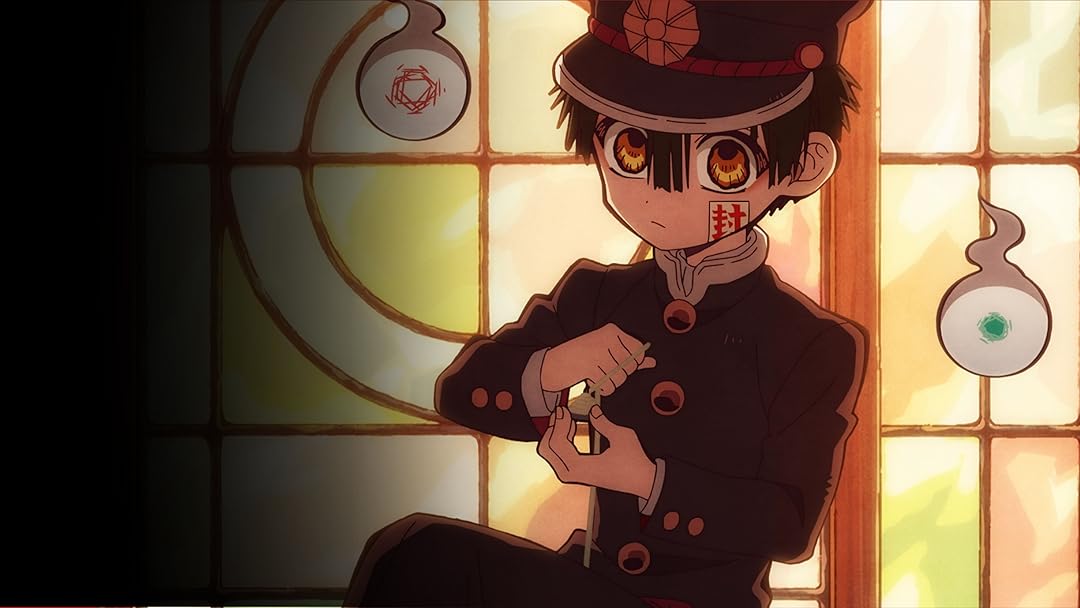
Toilet-Bound Hanako-Kun
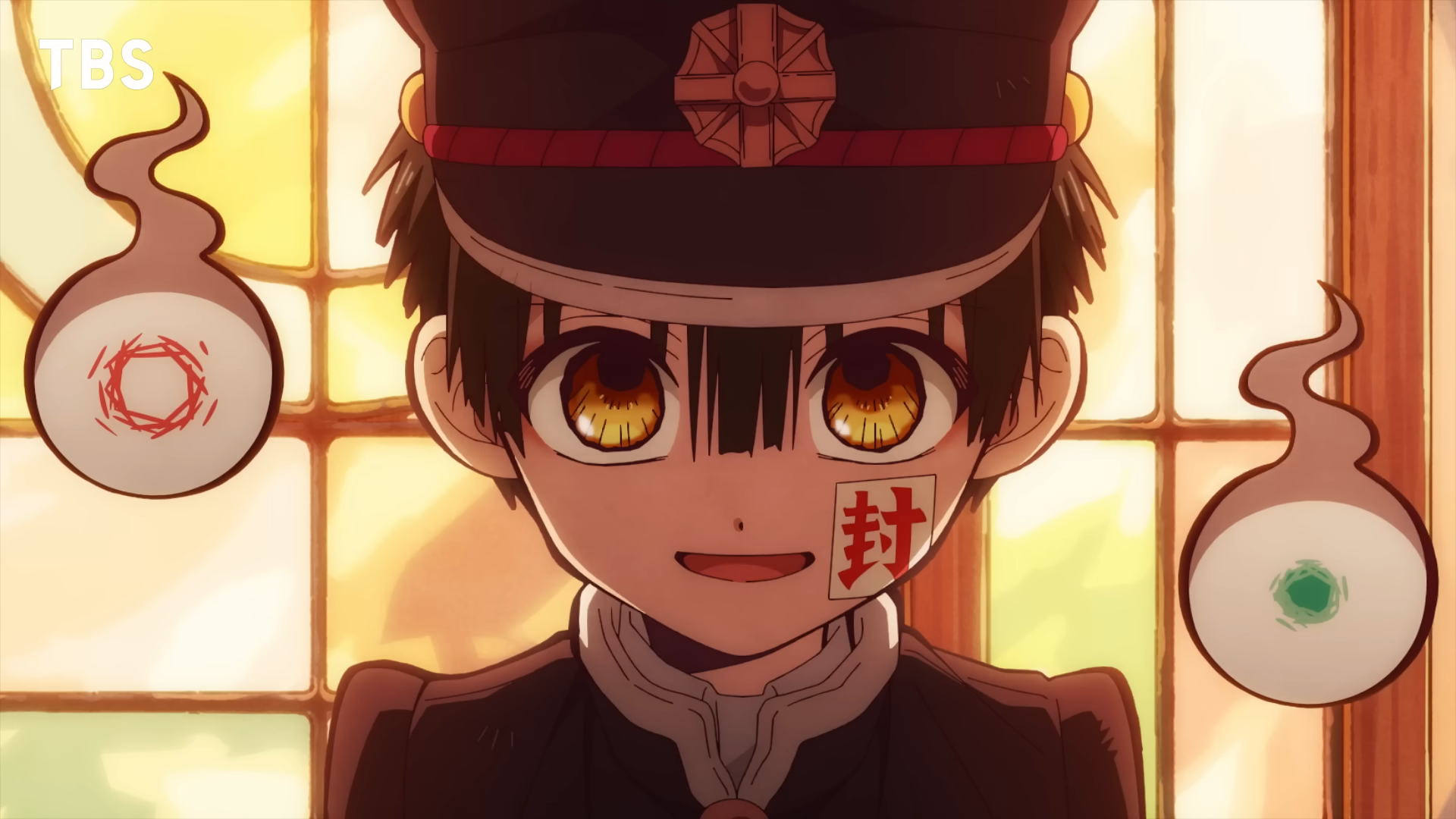
“For fans seeking a lighter supernatural anime experience to balance out the intensity of “Bungo Stray Dogs,” “Toilet-bound Hanako-kun” proves to be an excellent choice. The series follows the whimsical adventures of Hanako, the mischievous ghost of a young boy bound to a school toilet, and Nene Yashiro, a spirited girl who becomes his assistant.
Similar to the lighter moments in “Bungo Stray Dogs,” “Toilet-bound Hanako-kun” offers a charming blend of endearing characters, Japanese folklore creatures, and mystery plotlines. Viewers will find themselves enchanted by the quirky dynamics between Hanako and Nene as they find supernatural occurrences within their school.
The anime strikes a delightful balance between comedy and drama, infusing each episode with moments of humor and heartfelt emotion. From whimsical hijinks to touching character interactions, “Toilet-bound Hanako-kun” delivers a feel-good experience that is sure to leave a smile on viewers’ faces.
Toilet-Bound Hanako-Kun
“Toilet-bound Hanako-kun” (or “Jibaku Shounen Hanako-kun” in Japanese) is a popular manga series written and illustrated by AidaIro. The story falls under the genres of supernatural, mystery, and comedy. It’s known for its unique premise and engaging characters.
The series revolves around Hanako-kun, who is the seventh mystery of the Kamome Academy—a ghost rumored to haunt the third-floor girls’ bathroom. Nene Yashiro, a high school girl, seeks Hanako’s help to fulfill a wish, and in return, she becomes involved in the supernatural world of the school mysteries.
The artwork of “Toilet-bound Hanako-kun” is distinctive, characterized by intricate linework and charming character designs. The story goes in themes of friendship, fate, and the consequences of meddling with the supernatural.
The series has gained a dedicated fanbase for its intriguing plot, lovable characters, and the balance between humor and darker supernatural elements. If you enjoy supernatural mysteries with a touch of comedy and strong character development, “Toilet-bound Hanako-kun” is definitely worth checking out!
8. Devilman Crybaby
Devilman Crybaby
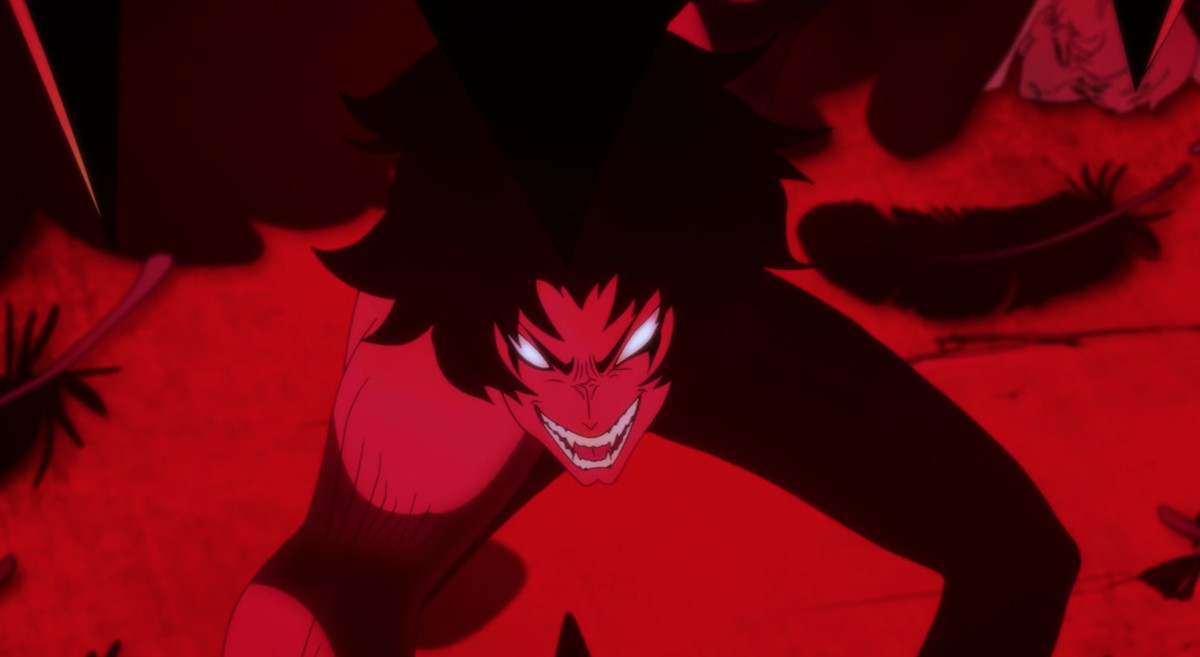
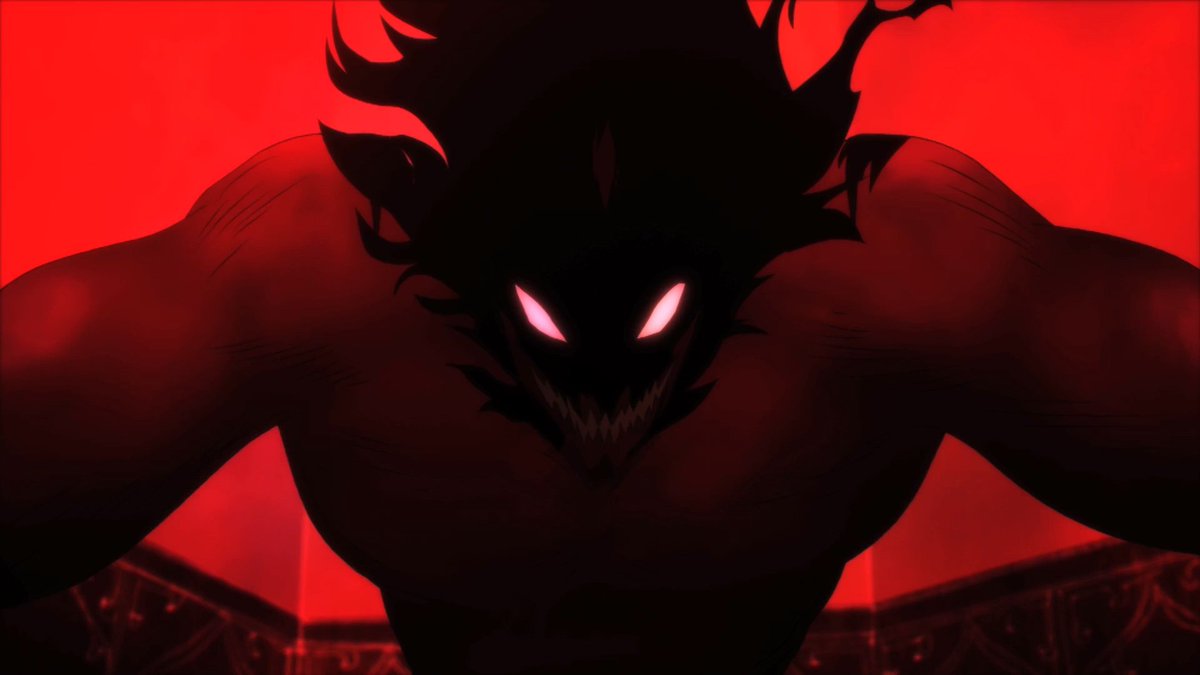
Devilman Crybaby emerges as a compelling recommendation for fans of Bungo Stray Dogs, offering a dark and thought-provoking exploration of supernatural themes and complex characters. The series follows high school student Akira, who merges with the demon Amon to become Devilman—a powerful entity tasked with battling demons that threaten to invade Earth.
Much like Bungo Stray Dogs, Devilman Crybaby goes into dark and supernatural premises and guides the blurred lines between good and evil in a thought-provoking manner. The anime presents a gritty and visceral depiction of its world, immersing viewers in a narrative filled with moral ambiguity and existential questions.
Devilman Crybaby is a provocative and intense anime series based on Go Nagai’s classic manga “Devilman.” Released on Netflix in 2018, it was directed by Masaaki Yuasa and produced by Science Saru. This adaptation is known for its bold artistic style, mature themes, and impactful storytelling.
Devilman Crybaby
The story follows Akira Fudo, a compassionate and kind-hearted teenager who becomes intertwined in a demonic conflict after his childhood friend, Ryo Asuka, reveals the existence of demons among humans. Ryo’s quest to uncover and eradicate demons leads Akira to merge with a devil named Amon, transforming him into Devilman. With newfound demonic powers, Akira battles against other demons while struggling to retain his humanity.
Devilman Crybaby follows complex themes such as identity, human nature, and the consequences of fear and prejudice. The series is renowned for its striking animation, which combines fluid, stylized visuals with intense and often explicit scenes. The art direction, music, and voice acting contribute to an immersive and emotionally charged viewing experience.

Devilman Crybaby
However, Devilman Crybaby is not for the faint of heart due to its graphic content and mature themes, including violence, sexuality, and existential dilemmas. The series received critical acclaim for its bold storytelling and thought-provoking narrative, resonating with audiences who appreciate dark, introspective anime.
Devilman Crybaby stands out as a visually stunning and thematically rich anime that pushes boundaries and challenges viewers to confront complex moral and philosophical questions within a supernatural setting.
7. My Hero Academia
Shoto Todoroki as seen in My Hero Academia Season 7 trailer (Credits: Studio Bones)
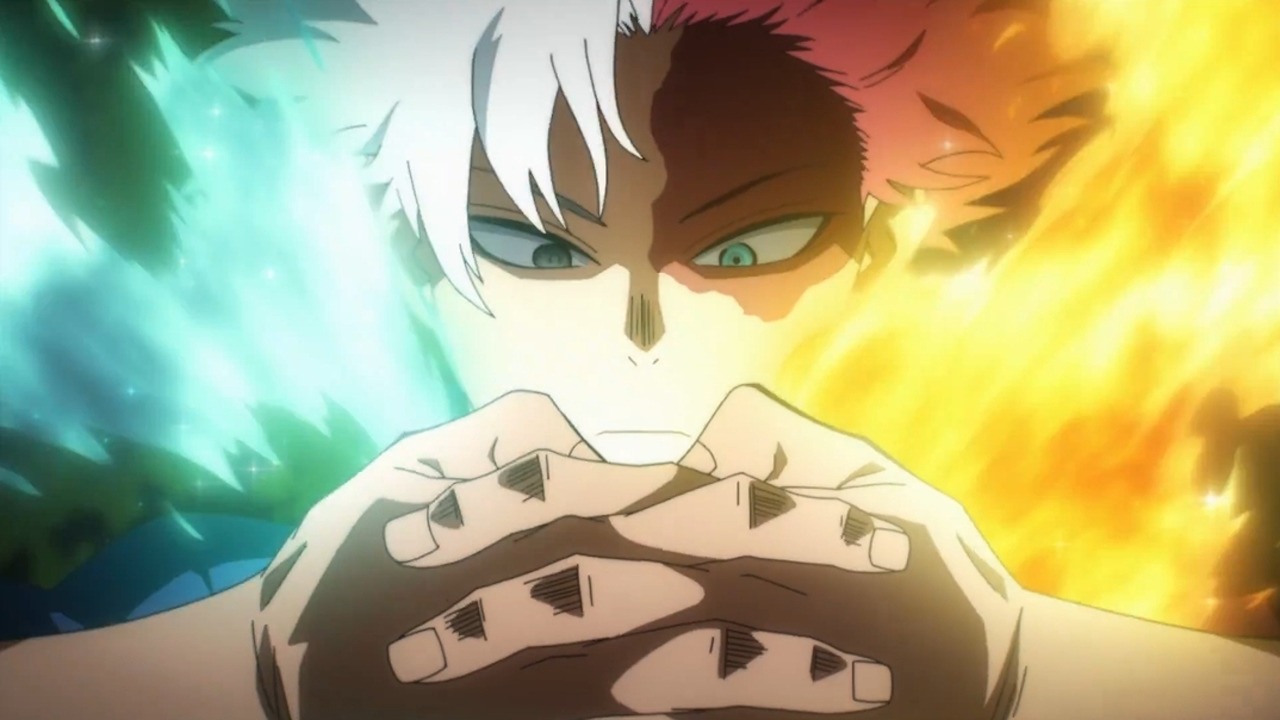
My Hero Academia is set in a world where 80% of the population possesses superpowers known as “Quirks.” The anime centers around Izuku Midoriya, a young boy born without a Quirk but with an unyielding dream of becoming a hero. His life takes a dramatic turn when he inherits the abilities of the world’s greatest hero, All Might, leading him on a journey of self-discovery and growth.
The series goes into Izuku’s challenges and triumphs as he finds the competitive world of heroism, facing formidable foes and forging friendships along the way. With its creative array of superpowers, complex hero-villain dynamics, and a compelling coming-of-age storyline, “My Hero Academia” offers a viewing experience.
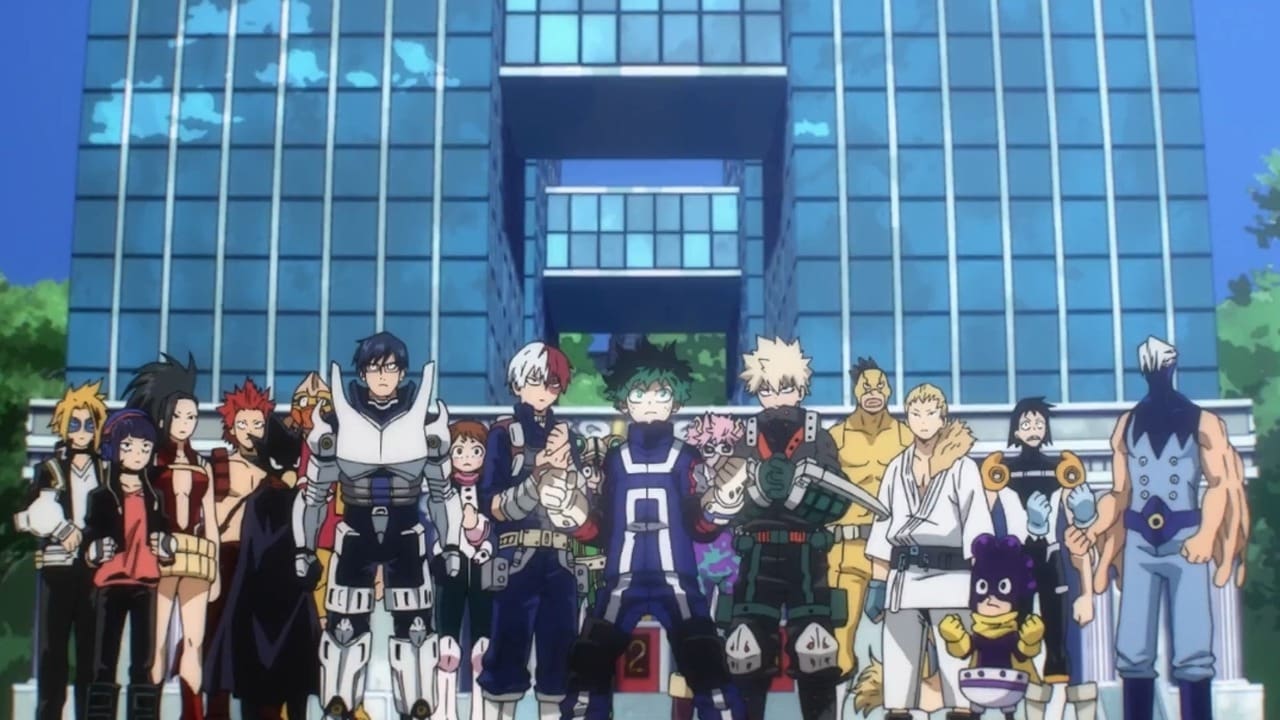
UA 1-A Students as seen in My Hero Academia Season 7 trailer (Credits: Studio Bones)
Fans of “Bungo Stray Dogs” will find much to love in “My Hero Academia,” from its imaginative Quirks to its richly developed characters and their diverse backgrounds.
The series excels in crafting unique personalities with compelling backstories, allowing viewers to connect deeply with each character. Additionally, the action sequences are expertly choreographed, delivering adrenaline-pumping thrills that keep audiences on the edge of their seats.
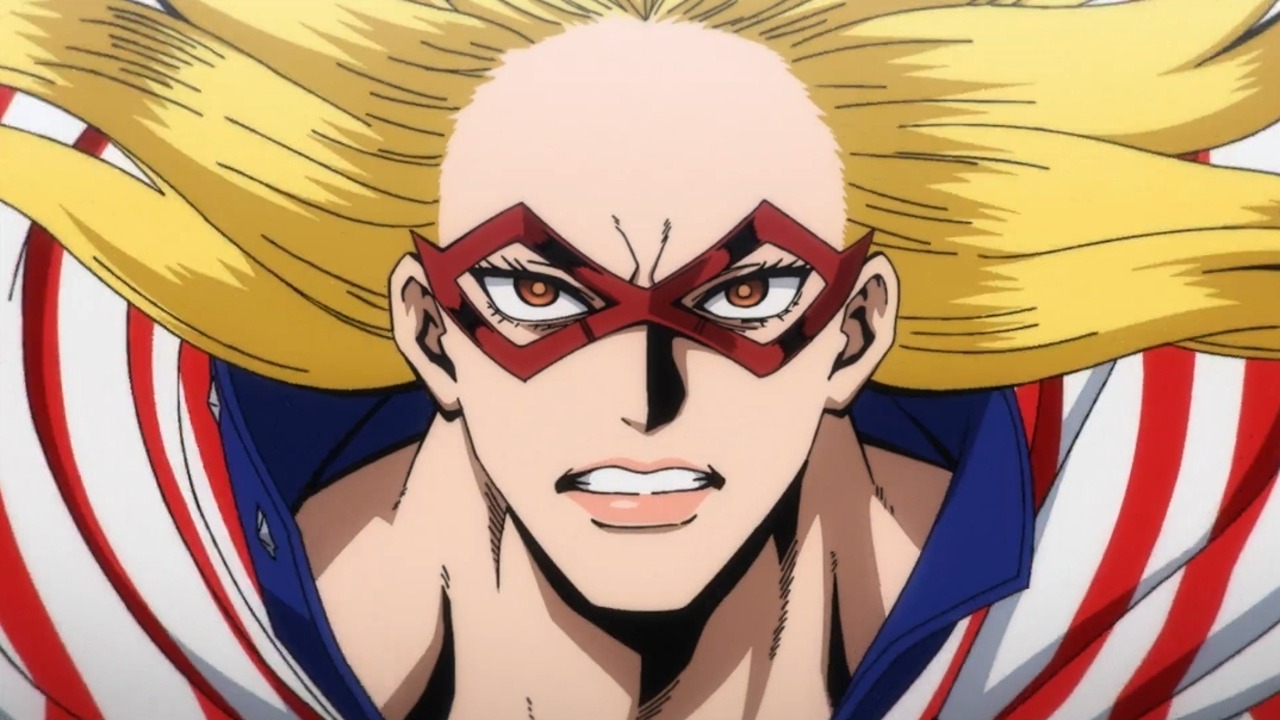
Star and Stripe as seen in My Hero Academia Season 7 trailer (Credits: Studio Bones)
“My Hero Academia” (Boku no Hero Academia) is a hugely popular manga and anime series created by Kohei Horikoshi. It is set in a world where individuals with superpowers, known as “Quirks,” are commonplace. The story centers around Izuku Midoriya, a Quirkless boy who dreams of becoming a hero like his idol, All Might, the greatest hero of all.
The series begins with Izuku encountering All Might and inheriting his Quirk, “One For All,” which grants him superhuman abilities.
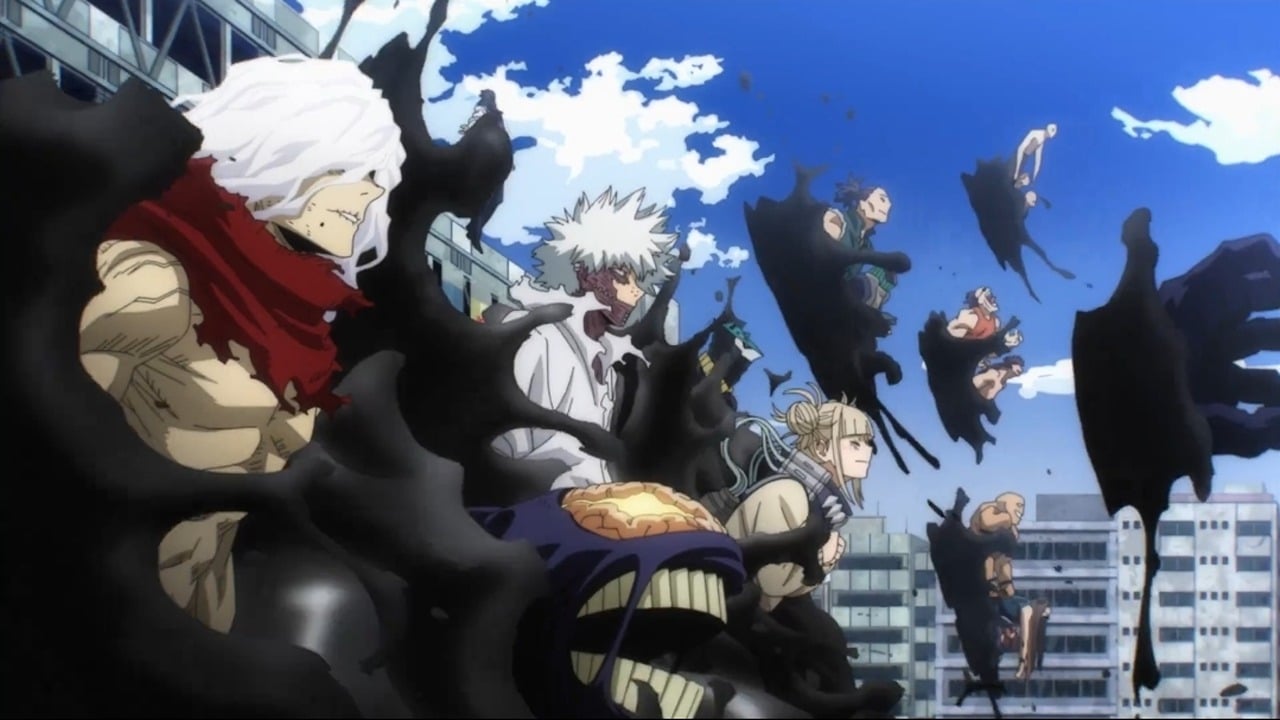
League of Villains as seen in My Hero Academia Season 7 trailer (Credits: Studio Bones)
With his newfound powers, Izuku enrolls in U.A. High School, a prestigious academy for aspiring heroes. Alongside his classmates, including the hot-headed Katsuki Bakugo and the intelligent Ochaco Uraraka, Izuku undergoes rigorous training to become a professional hero.
My Hero Academia is celebrated for its compelling characters, thrilling action sequences, and exploration of themes such as heroism, friendship, and perseverance. The series features a diverse cast of characters, each with their own unique Quirks and motivations. As the story progresses, Izuku and his classmates face formidable villains and challenges that test their resolve and abilities.
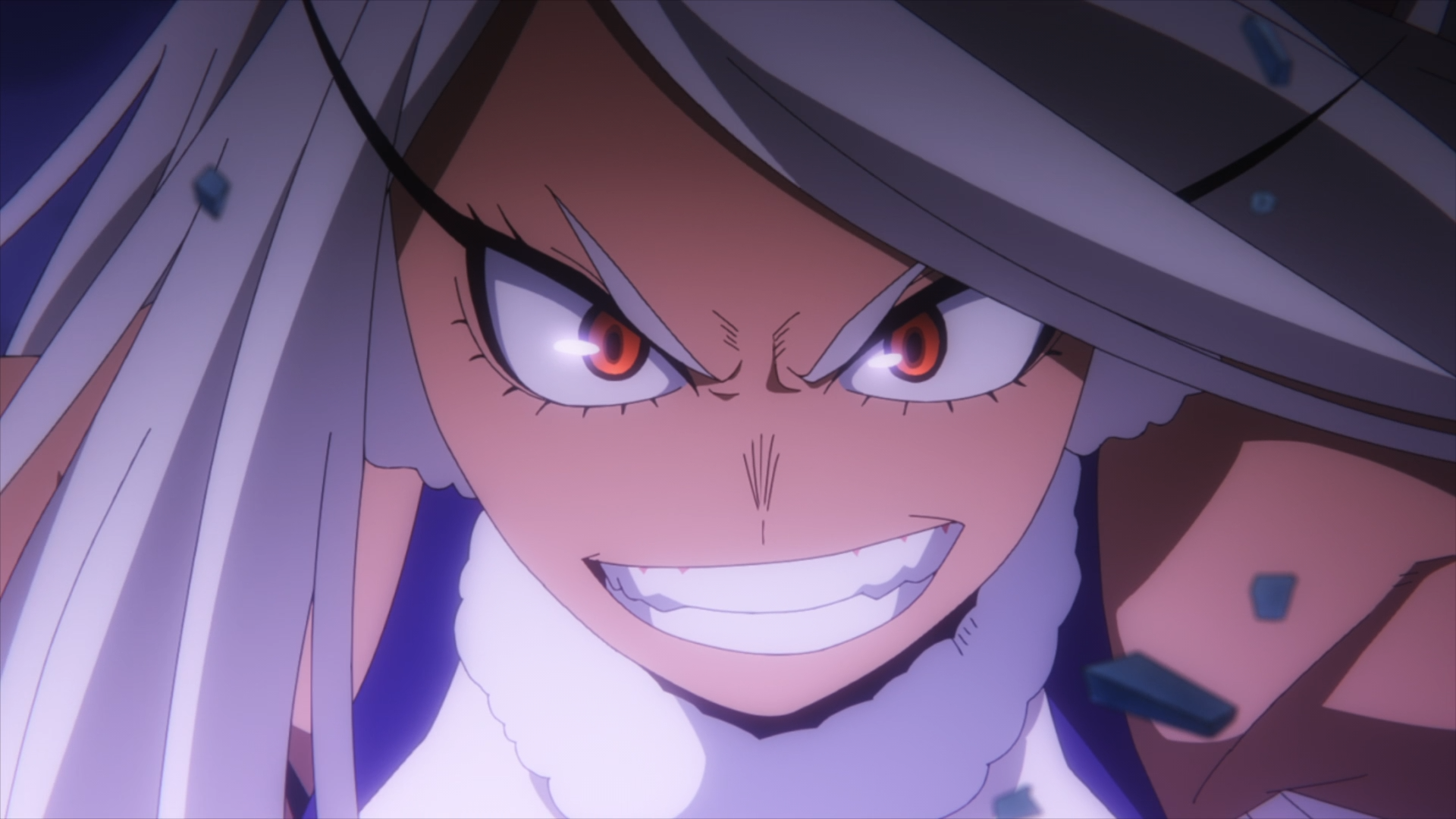
Mirko in My Hero Academia
The anime adaptation of “My Hero Academia” has received widespread acclaim for its dynamic animation, exciting fight scenes, and emotional storytelling. The series has resonated with audiences of all ages, grabbing fans with its blend of superhero action and heartfelt character development.
With its engaging plot, likable characters, and inspiring message, “My Hero Academia” has become a cultural phenomenon, spawning numerous manga volumes, anime seasons, movies, and merchandise. It continues to attract a dedicated fanbase worldwide and remains a prominent fixture in contemporary anime and manga culture.
Izuku Midoriya was born without powers in a world where nearly everyone has one. My Hero Academia begins with a familiar setup but carves out a space of its own, where ideals clash with reality, and where becoming a hero requires more than just ability—it demands sacrifice, spirit, and resolve.
Mirko in My Hero Academia
Midoriya’s admiration for heroes, especially All Might, defines his early years. Despite being Quirkless, he never stops observing, recording, and learning. This obsession may seem obsessive or naïve, but it underlines something deeper: he believes heroism is about action, not ego. When he’s gifted the Quirk “One For All,” it’s not luck—it’s earned.
His body isn’t ready to handle the power at first. Watching him struggle physically and emotionally sets him apart from typical shounen protagonists. Every injury, scar, and failure builds toward a greater sense of endurance. Midoriya’s growth is slow, honest, and filled with pain. His strength doesn’t feel granted—it feels paid for.
Class 1-A becomes the heart of the series. These students are all driven, but none are identical. Katsuki Bakugo, for instance, isn’t just Midoriya’s rival—he represents explosive pride and bottled insecurity. His path toward humility is one of the show’s strongest subplots, built through resentment, misunderstanding, and reluctant respect.
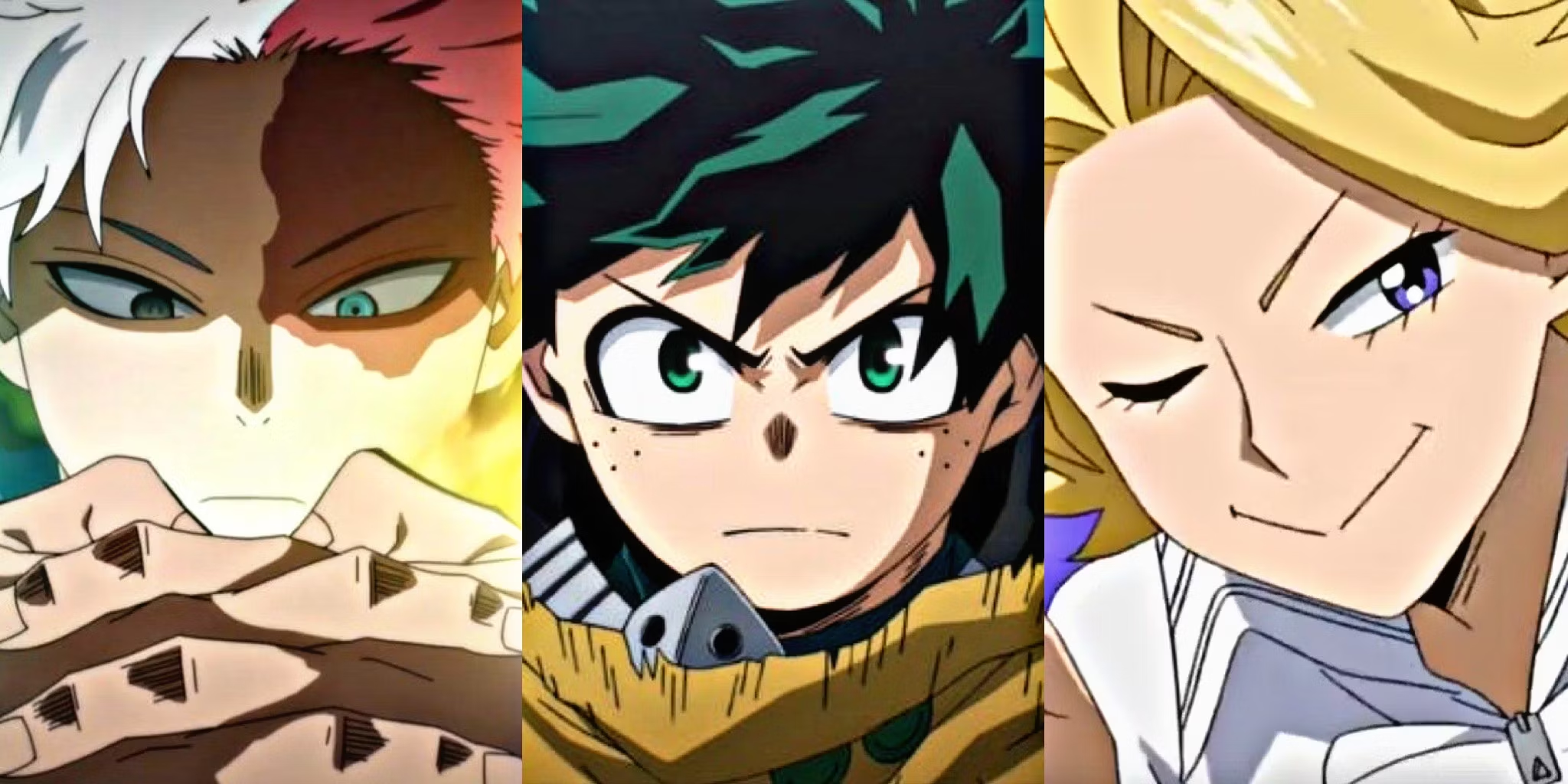
My Hero Academia
Ochaco Uraraka starts with simple motivations—help her family, be a hero. But she’s not reduced to a love interest. Her determination, physical ability, and emotional intelligence give her agency. Her quiet support of Midoriya is never forced. Their bond, subtle and restrained, grows from mutual admiration rather than romantic tropes.
Tenya Iida’s arc during the Hero Killer Stain incident provides another angle. His desire for justice turns vengeful after his brother is attacked. The shift from rule-follower to impulsive avenger adds depth to his character. This incident also shows how easily righteous intentions can become twisted by personal pain.
The pro heroes, especially All Might, add emotional complexity. He’s not a symbol of hope because of strength alone—his frailty and fear make his image more powerful. His deteriorating health humanizes him, while his mentorship of Midoriya reflects the cost of upholding ideals in a society obsessed with appearance and rank.
Midoriya as seen in My Hero Academia Season 7 (Credits: Studio Bones)
All Might’s fight against All For One is monumental not just in scale, but in symbolism. It marks the end of one era and the beginning of uncertainty. His final pose, hand raised and smile forced, is haunting. He’s still a symbol, but behind that symbol is a broken man, now powerless.
Shoto Todoroki’s story weaves family trauma into the mix. His ice and fire powers symbolize the divide between his abusive father Endeavor and the mother who tried to shield him. Shoto’s rejection of his fire side and eventual acceptance reflect his struggle to own power without inheriting cruelty.
The League of Villains challenges the hero society’s flaws. Tomura Shigaraki, with his cracked skin and decaying hands, isn’t just a monster—he’s the product of a broken system. His evolution from pawn to leader shows how ideology, grief, and neglect can birth destruction. His rage is chaotic but never without cause.
Deku and All for One (Credits: Kohei Horikoshi)
Hero society itself is deeply flawed. The ranking system breeds arrogance. Agencies turn heroism into performance. Characters like Endeavor represent toxic ambition—his quest to surpass All Might led him to destroy his own family. When he becomes the new number one, his struggle with redemption is raw and unfiltered.
The internship arc pushes students beyond their comfort zone. Watching Midoriya work with Sir Nighteye reveals both his resourcefulness and his recklessness. The battle with Overhaul shows how the stakes have escalated. The violence becomes more visceral. The rescue of Eri isn’t just physical—it’s emotional, liberating her from years of torment.
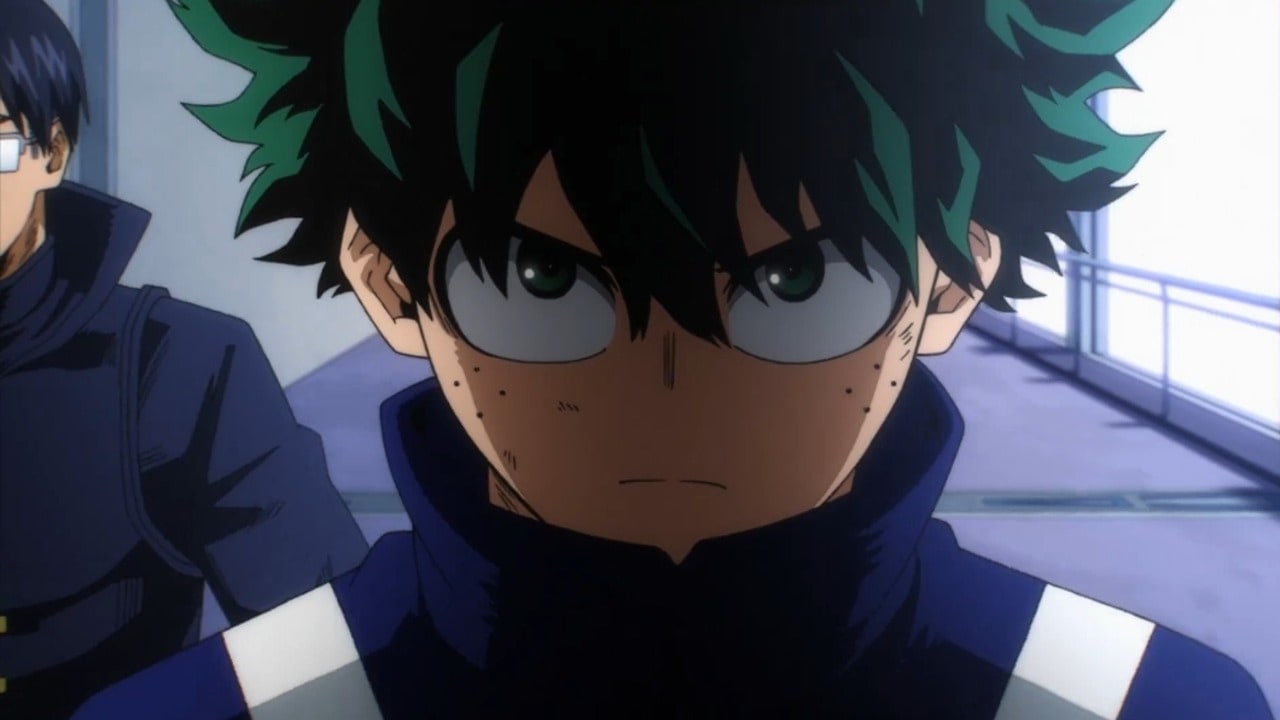
Midoriya as seen in My Hero Academia Season 7 trailer (Credits: Studio Bones)
Eri herself becomes a symbol of pain passed down. Her Quirk, which rewinds time, is used as a weapon by others. Midoriya’s resolve to save her isn’t just about stopping a villain—it’s about giving a child hope. Her smile, when it finally appears, becomes one of the most moving moments.
The cultural festival arc offers brief respite, yet doesn’t abandon emotional stakes. Midoriya’s duel with Gentle Criminal carries unexpected weight. Gentle isn’t malicious—he’s a man who failed to become a hero, now desperate to be remembered. This humanizes the concept of villainy and shows how easy it is to fall.
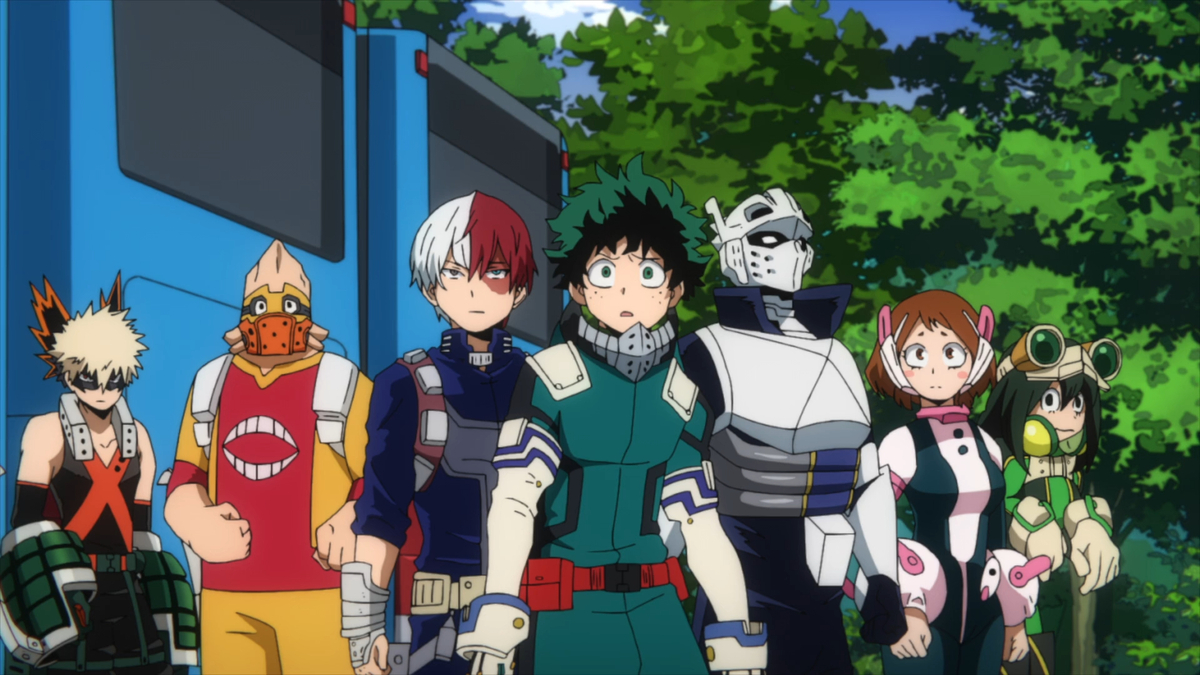
UA-! (Credits: Bones)
Endeavor’s path to redemption remains one of the show’s most complex arcs. His attempts to atone aren’t clean or easily accepted. His struggle to earn his family’s forgiveness isn’t framed as noble—it’s shown as messy, filled with resistance. That honesty adds weight to his attempts to change.
Later arcs intensify the moral grayness. Hawks, the undercover hero, embodies compromise. His loyalty to the League is a mask, but his actions raise questions about justice. Can sacrificing one life save many? What does it mean to be a hero in a system that forces such choices?
The Paranormal Liberation War changes everything. Heroes die. Trust shatters. Society begins to unravel. Midoriya inherits the weight of One For All fully and becomes a symbol in crisis. His isolation afterward, when he leaves UA and becomes a rogue protector, shows his growing burden—and his refusal to let others suffer.
This rogue Deku arc is visually darker and emotionally draining. Covered in scars, eyes sunken, he pushes himself past breaking. It’s not cool—it’s tragic. When his classmates confront him, they aren’t just pulling him back—they’re reminding him that saving others doesn’t mean losing himself. It’s a turning point.
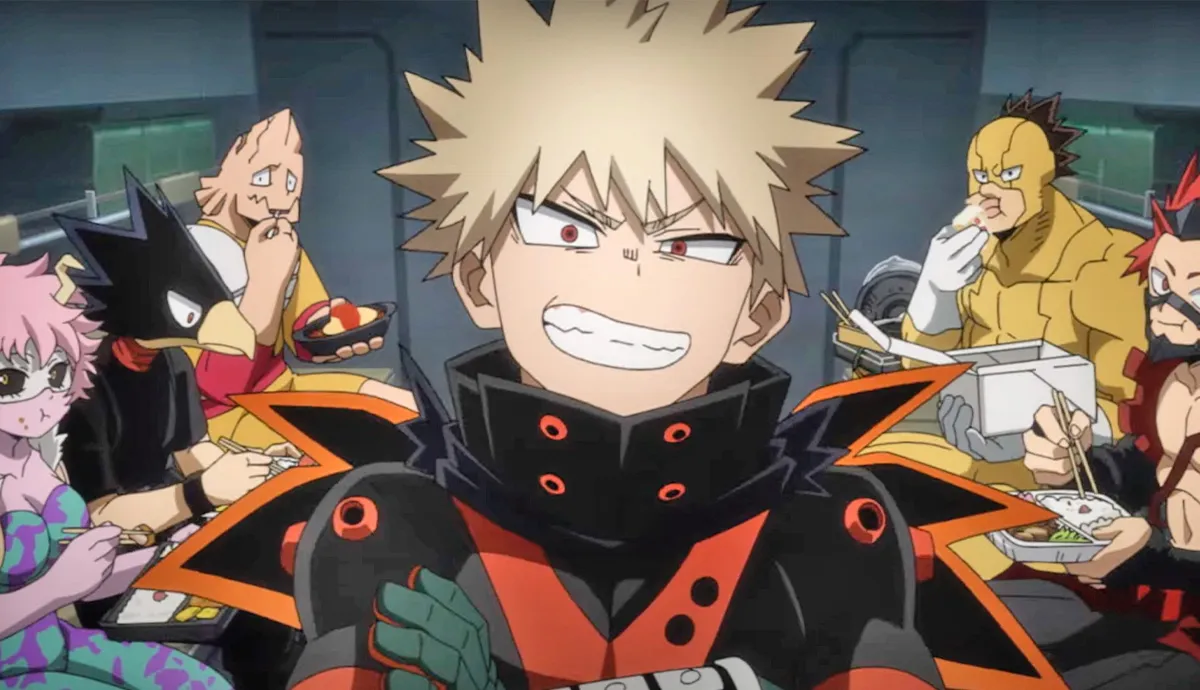
Bakugo (Credits: Studio Bones)
My Hero Academia continues to expand its world with nuance. Each new arc raises harder questions. Is society worth saving? Can the ideals of heroism survive under scrutiny? Midoriya’s journey answers not with speeches but with actions—ones that hurt, ones that heal, and ones that show his evolution.
The series thrives not just on its animation or battles, but on its emotional intelligence. It understands that strength isn’t just about power—it’s about purpose. That being a hero isn’t about being the strongest, but being the one who keeps standing when everything falls apart. Midoriya lives that message every day.
In a world obsessed with power, My Hero Academia argues for heart. It shows that being born weak doesn’t make you worthless. That real strength is learning to rise, again and again, even when you’re afraid, even when you’re alone, simply because you refuse to give up on what’s right.
6. Mob Psycho 100
Mob Psycho 100 (Credits: Crunchyroll)
“Mob Psycho 100” shines as another excellent option for fans of “Bungo Stray Dogs,” offering a blend of supernatural prowess and compelling storytelling. The series centers around Shigeo “Mob” Kageyama, a young boy with extraordinary psychic abilities reminiscent of the gifted characters in “Bungo Stray Dogs.”
Much like its counterpart, “Mob Psycho 100” treats viewers to brilliant action sequences as Mob confronts malevolent spirits with his immense psychic powers. The vibrant animation style brings these encounters to life, immersing audiences in the exhilarating battles between supernatural forces.
However, what sets “Mob Psycho 100” apart is its seamless integration of comedy elements, which add levity to the otherwise serious supernatural storylines. The humor serves as a delightful counterbalance to the intense action, ensuring a well-rounded viewing experience that keeps audiences thoroughly entertained.
“Mob Psycho 100” is a nice manga and anime series created by ONE, the same talented artist behind “One Punch Man.” The story follows Shigeo Kageyama, better known as “Mob,” a seemingly ordinary middle school student with extraordinary psychic abilities.
Despite possessing immense psychic powers, Mob chooses to keep a low profile and suppress his emotions to avoid losing control. He works as an assistant to Reigen Arataka, a self-proclaimed psychic and con artist who helps Mob find his abilities while exploiting them for profit.
The series goes into Mob’s personal growth and struggles as he grapples with his identity, desires, and relationships with others. Mob’s journey is marked by his encounters with other psychic individuals, both allies and adversaries, who challenge him in various ways.
What makes “Mob Psycho 100” stand out is its unique blend of humor, action, and introspection. The animation style, particularly during psychic battles, is visually stunning and creatively executed. The series also follows deeper themes such as self-acceptance, the pursuit of personal fulfillment, and the meaning of true strength.
As Mob finds through conflicts and challenges, he gradually learns to embrace his emotions and develop a more nuanced understanding of power and responsibility. The character development and growth throughout the series are incredibly satisfying, making “Mob Psycho 100” a compelling and memorable journey.
The anime adaptation of “Mob Psycho 100,” produced by Bones studio, received critical acclaim for its stellar animation, dynamic fight scenes, and emotional depth. It successfully captures the spirit of ONE’s original work while adding its own unique visual flair.
Mob Psycho 100 is a must-watch for fans of supernatural action and character-driven storytelling. Its engaging plot, well-crafted characters, and thematic richness make it a standout series in contemporary anime.
5. Kakegurui
Kakegurui (Credits: Crunchyroll)
“Kakegurui” presents a gripping and intense anime experience that offers a unique twist on psychological tension, making it a compelling choice for fans seeking a thrilling ride similar to “Bungo Stray Dogs.” Set in a prestigious academy where gambling reigns supreme, the series centers around Yumeko Jabami, a gambling prodigy who thrives on high-stakes challenges and psychological mind games.
While “Kakegurui” may lack the detective or supernatural elements found in “Bungo Stray Dogs,” it more than makes up for it with its intense focus on psychological manipulation and the eccentric characters that populate its world. Viewers will find themselves drawn into a web of deceit and strategy as Yumeko finds the treacherous world of high-stakes gambling.
The anime excels in delivering thrilling moments of tension and insanity, with over-the-top gambling sequences that keep audiences on the edge of their seats. Whether it’s a game of poker or a game of life and death, the stakes are always high, and the consequences are dire.
“Kakegurui” is a thrilling and intense anime and manga series centered around the high-stakes world of gambling and psychological manipulation. The story is set at Hyakkaou Private Academy, an elite school where social status is determined by one’s gambling prowess rather than academic achievements.
The protagonist, Yumeko Jabami, is a transfer student with a seemingly innocent demeanor but harbors a deep love for the thrill of gambling. She quickly becomes embroiled in the school’s intricate gambling hierarchy, challenging and outwitting her opponents with her unconventional and fearless approach.
What sets “Kakegurui” apart is its focus on psychological gamesmanship and the darker aspects of human nature. The series follows themes of obsession, addiction, and power dynamics as characters engage in increasingly risky and outrageous gambling matches. Each game is meticulously crafted to expose the players’ hidden desires and vulnerabilities.
The art style of “Kakegurui” is vibrant and exaggerated, perfectly complementing the heightened emotions and tension of the gambling scenes. Yumeko’s character, in particular, exudes a mix of innocence and danger, making her a nice and unpredictable protagonist.
Throughout the series, Yumeko finds a web of deceit and manipulation orchestrated by her peers, including the cunning student council president, Kirari Momobami. The confrontations between characters are gripping and often escalate to jaw-dropping levels of intensity.
“Kakegurui” has garnered a dedicated fanbase for its unique premise, compelling characters, and electrifying storytelling. It offers a refreshing take on the gambling genre, blending psychological drama with stylish visuals and thrilling plot twists.
If you enjoy suspenseful narratives and intricate mind games, “Kakegurui” is sure to keep you on the edge of your seat. Just be prepared for the series’ dark and sometimes provocative themes as it finds the addictive allure of high-stakes gambling.
4. Blue Exorcist
Blue Exorcist Season 4 episode 2 still (Credits: Kazue Kato)
“Blue Exorcist” emerges as another thrilling option for fans of “Bungo Stray Dogs,” delivering a blend of action, fantasy, and heartfelt storytelling. At its core, the anime follows Rin Okumura, a teenager who discovers he is the son of Satan and is thrust into the world of exorcism at True Cross Academy.
Much like “Bungo Stray Dogs,” “Blue Exorcist” weaves together paranormal elements, intense fight scenes, and themes of friendship and found family. Viewers will find themselves drawn into a world where supernatural forces clash and unlikely bonds are forged in the crucible of battle.
The characters in “Blue Exorcist” are indeed engaging, each possessing unique personalities and wielding cool supernatural techniques that add depth and excitement to the narrative. From Rin’s fiery determination to his classmates’ unwavering support, the ensemble cast brings a dynamic energy to every scene.
“Blue Exorcist” (Ao no Exorcist) is an exciting manga and anime series created by Kazue Kato. The story follows Rin Okumura, a teenager who discovers that he is the son of Satan, the ruler of the demon world. Despite this revelation, Rin possesses a strong desire to become an exorcist and fight against the forces of darkness.
The series begins with Rin’s foster father, the powerful exorcist Shiro Fujimoto, sacrificing himself to protect Rin from demons. After learning about his demonic heritage, Rin decides to enroll in True Cross Academy, a prestigious school for exorcists, to hone his abilities and eventually defeat Satan.
Throughout “Blue Exorcist,” Rin finds the challenges of being a half-demon in a world filled with humans and demons. He forms deep bonds with his classmates and fellow exorcists, including his stern but caring brother Yukio Okumura, who is also an exorcist and Rin’s primary mentor.
The series blends action, supernatural elements, and emotional drama as Rin and his friends confront powerful demons and unravel the mysteries surrounding their world. Each character has their own motivations and struggles, contributing to the rich narrative of “Blue Exorcist.”
One of the highlights of the series is its intricate world-building and mythology, which draws inspiration from various religious and folklore traditions. The demon designs are diverse and imaginative, showcasing a wide range of unique abilities and characteristics.
Blue Exorcist Season 4 episode 2 still (Credits: Kazue Kato)
The anime adaptation of “Blue Exorcist” faithfully adapts the manga’s story arcs, capturing the essence of its characters and themes. The animation is crisp and dynamic during action sequences, bringing the intense battles to life.
Blue Exorcist is a compelling blend of supernatural adventure, coming-of-age storytelling, and themes of redemption and family. It has garnered a dedicated fanbase for its well-developed characters, gripping plot twists, and imaginative supernatural elements. Whether you’re a fan of action-packed anime or enjoy stories with complex characters, “Blue Exorcist” offers an engaging and thrilling journey into a world of exorcism and demons.
Rin Okumura’s world shifts when he learns he’s the son of Satan. Blue Exorcist is more than a supernatural action series—it’s a story of rebellion, belonging, and confronting one’s origin. Rin’s fight isn’t just with demons, but with stigma, legacy, and the fear of becoming what he hates most.
Raised by Father Fujimoto, an exorcist, Rin never knew his true heritage until Satan attempts to possess him. This revelation fractures his sense of self. Suddenly, his strength and temper aren’t just personality quirks—they’re warnings of the demon blood within. His transformation starts with confusion, followed by guilt and rejection.
His twin brother, Yukio, contrasts him sharply. Yukio is studious, composed, and already an exorcist. Their relationship fractures under the weight of secrets. Yukio has always known Rin’s origin and kept it hidden. This betrayal deepens the emotional gulf between them. Their bond is tested repeatedly as they navigate their shared bloodline.
At True Cross Academy, Rin trains to become an exorcist while hiding his identity. The irony of Satan’s son learning to fight demons adds tension. His classmates—each with their own trauma and motivations—become both allies and mirrors. Their gradual acceptance of Rin reveals their growth and his humanity.
Blue Exorcist (Credits: Kazue Kato)
Shiemi Moriyama stands out among them. Kind and somewhat naïve, she represents the compassion Rin longs for. Her journey from sheltered girl to brave summoner parallels Rin’s struggle to define himself. Her belief in Rin, even after discovering his origin, grounds him when others waver. Their bond remains tender, filled with quiet trust.
The series draws heavily from Catholic and mythological symbols. Crosses, rituals, and biblical references saturate the setting. This spiritual aesthetic creates a layered stage where morality isn’t black and white. Exorcists, despite their role, can be corrupt. Demons, too, show emotion and loyalty. This duality keeps the narrative complex.
Mephisto Pheles embodies this ambiguity. He’s powerful, whimsical, and manipulative, but never outright cruel. As a demon supporting exorcists, his intentions are unclear. His guidance of Rin seems helpful yet always self-serving. He represents the gray area between salvation and temptation—a figure you can’t fully trust, yet can’t ignore.
The action is bold and emotionally charged. Rin’s flame-wielding battles are wild and chaotic, reflecting his inner turmoil. His sword, Kurikara, seals his demon form. Every unsheathing is a gamble: power at the cost of control. These fights are more than just clashes—they’re reflections of his psychological battle.
Yukio’s growing resentment becomes central. Despite appearing calm, he carries deep insecurity about Rin’s power. He envies Rin’s strength and fears his own weakness. This tension builds until Yukio begins to question his place in the world—whether he’s truly human, or something darker. His unraveling is slow, painful, and compelling.
Father Fujimoto’s death remains a core trauma. As both a parent and mentor, his loss creates a vacuum. Rin carries guilt for triggering the possession, and Yukio carries regret for not protecting him. This shared sorrow shapes both brothers, tying them even in conflict. His memory remains a guiding force.
Blue Exorcist (Credits: Kazue Kato)
Blue Exorcist’s strongest arcs lie in its examinations of family—both chosen and blood-related. Rin’s acceptance into the exorcist community is never guaranteed. His classmates, like Bon, Konekomaru, and Shima, each grapple with loss and loyalty. Their paths intersect with Rin’s in complex ways, forming bonds forged through battle and forgiveness.
The Kyoto Impure King arc is a turning point. Here, Rin’s secret is exposed, and his friendships are tested. This arc examines sacrifice, honor, and what it means to fight for others. The animation intensifies during these episodes, with fiery clashes, somber moments, and acts of redemption laced throughout.
The emotional aftermath of this arc strengthens the cast. Bon begins to understand Rin’s burden. Konekomaru, once terrified of Rin’s nature, learns to separate fear from prejudice. These shifts are subtle but powerful, making the exorcist group more cohesive and layered. Trust becomes earned, not assumed.
Musically, the series uses orchestral themes laced with tension and melancholy. Openings like “Core Pride” and “In My World” energize with intensity, reflecting Rin’s internal fire and external battle. The soundtrack supports both the adrenaline of combat and the quiet moments of doubt, grief, and reflection.
Visually, the blue flames remain a haunting symbol. They’re both beautiful and terrifying—burning with power Rin didn’t ask for. They appear when he’s cornered, angry, or desperate, often accompanied by guilt. Over time, Rin learns not just to wield them, but to own them, transforming shame into strength.
Season two builds on unresolved threads. Yukio’s suspicions about his own origin deepen. The Vatican’s rigid structures and their fear of Rin complicate matters. Political undercurrents begin to surface, hinting that the real enemy may not be demons, but those too rigid to see nuance.
Blue Exorcist Season 4 episode 2 still (Credits: Kazue Kato)
Despite these developments, some fans note uneven pacing between seasons. The anime’s deviation from manga canon in season one led to confusion, especially when season two re-aligned with the original plot. However, the emotional continuity and thematic focus remained steady, allowing for a cohesive narrative if watched carefully.
Rin’s character arc doesn’t promise perfection—it promises persistence. He stumbles, lashes out, and isolates himself. But he keeps reaching out, keeps fighting, even when others doubt him. This perseverance, not his powers, defines his strength. His journey reflects the reality of forging identity in the shadow of legacy.
Blue Exorcist questions what it means to be good. Is it blood that defines you? Or the choices you make despite it? Rin’s fight against Satan is also a fight to reclaim his own story—to shape his future instead of letting origin dictate it. That tension keeps the series emotionally resonant.
Through sibling rivalry, friendship, betrayal, and loyalty, Blue Exorcist paints a world where demons and humans are not opposites but intertwined. The true struggle lies in facing yourself, forgiving your past, and building a life worth living—not despite your demons, but with the strength to rise above them.
3. Twin Star Exorcists
Twin Star Exorcists
“Twin Star Exorcists” offers a premise that is sure to resonate with fans of shows like “Bungo Stray Dogs,” blending supernatural elements, compelling characters, and thrilling action into an unforgettable anime experience. The series revolves around the concept that two exorcists—a male and a female—must marry and conceive a child to vanquish all evil forces.
Similar to “Bungo Stray Dogs,” “Twin Star Exorcists” features a rich of supernatural elements, including exorcists, curses, and magical powers, which add depth and intrigue to the narrative. Viewers will find themselves drawn into a world filled with supernatural wonders and epic battles between good and evil.
“Twin Star Exorcists” (Sousei no Onmyouji) is a nice manga and anime series written and illustrated by Yoshiaki Sukeno. The story revolves around two exorcists destined to be the “Twin Stars,” who are prophesied to conceive the ultimate spiritual warrior capable of defeating powerful demons known as “Kegare.”
Twin Star Exorcists
The protagonists are Rokuro Enmadou and Benio Adashino, both talented exorcists with traumatic pasts. Rokuro, initially reluctant to embrace his exorcist destiny after a tragic incident, meets Benio, a determined and focused exorcist driven by revenge. Together, they are thrust into a partnership as the Twin Stars, tasked with fulfilling their destiny and protecting the world from demonic threats.
The series combines elements of action, supernatural battles, and character-driven drama. Rokuro and Benio undergo significant character development as they confront their inner demons, forge alliances, and strengthen their bond as partners. Their interactions are filled with humor, tension, and mutual growth.
The concept of “Twin Star Exorcists” is enriched by its well-developed supporting characters, including fellow exorcists and spiritual guardians, who contribute to the narrative’s depth and complexity. The series also finds themes of fate, sacrifice, and the power of human connection in the face of adversity.
Twin Star Exorcists
Visually, “Twin Star Exorcists” features dynamic and fluid animation during action sequences, showcasing the characters’ diverse abilities and combat styles. The art style complements the supernatural themes, depicting eerie and fantastical environments inhabited by malevolent spirits and formidable demons.
The anime adaptation of “Twin Star Exorcists” received a positive reception for its engaging storyline, compelling characters, and imaginative world-building. While the manga serves as the primary source material, the anime adaptation captures the essence of the series and brings the characters to life through expressive voice acting and vibrant animation.
Twin Star Exorcists offers a thrilling and emotionally resonant journey filled with supernatural intrigue, character dynamics, and epic battles. Whether you’re a fan of supernatural action or character-driven storytelling, this series provides a nice and immersive experience.
Twin Star Exorcists
Rokuro and Benio are chosen to save the world, but neither asked for the burden. Twin Star Exorcists blends spiritual warfare with themes of trauma, healing, and resistance against fate. It balances high-stakes battles and personal growth, with a dynamic at its center that pulls between destruction and renewal.
Rokuro begins the series unwilling to fight. His past scars him—he once caused a tragedy that cost many lives. This memory haunts his every step, making him a reluctant hero. When he meets Benio, a driven and talented exorcist, their clash sparks a journey neither expected but both needed. Their personalities grind against each other, yet form the basis of eventual trust.
Benio, raised to value strength and self-discipline, masks her grief with resolve. Her parents were killed by Kegare, and vengeance fuels her. She pushes herself hard, trying to meet impossible standards. Her meeting with Rokuro challenges her rigid worldview. Their connection doesn’t grow smoothly—it’s filled with friction, doubt, and slow trust.
Twin Star Exorcists
The prophecy calling them the “Twin Stars” demands they marry and produce a child to save humanity. It’s an intrusive destiny, and both teens push against it. Rather than simply accepting the roles forced upon them, they question, resist, and slowly redefine their futures. Their eventual connection is earned, not dictated.
The Kegare, twisted manifestations of spiritual impurity, are not just monsters. They symbolize the lingering remnants of despair, guilt, and hatred. Basara, evolved Kegare with human emotions, mirror the protagonists’ pain and offer moral complexity. Some fight with honor or purpose, making the conflict more layered than good versus evil.
Among the Basara, Kamui stands out. His obsession with Benio stems from their mirrored loneliness. Though monstrous, he sees her as a kindred soul, which intensifies their encounters. His cruelty isn’t without reason—he’s shaped by abandonment and seeks connection in warped ways. These character dynamics deepen the enemy’s role in the story.
Twin Star Exorcists
Yuto, Benio’s twin brother and the series’ antagonist, presents a chilling contrast. Where Benio seeks healing, he chooses destruction. His descent into cruelty isn’t sudden; it’s born from twisted ideals of strength and despair over their parents’ death. His influence over Rokuro’s past tragedy gives him a terrifying grip on both protagonists.
The action is intense and emotionally charged. Studio Pierrot animates fights with flair, especially during scenes where spiritual weapons manifest or when the pair synchronize powers. But these battles are more than spectacle—they reflect emotional tension, trauma, and the will to protect or destroy.
Rokuro’s transformation into something beyond human—the result of forbidden power—questions what must be sacrificed to defeat evil. His inner struggle with this darker side adds weight to each decision. The fear of becoming what he fights is constant, and Benio’s support becomes a critical anchor.
Benio’s own arc is powerful. After losing her legs in battle, she must relearn her worth beyond combat. Her journey from fierce warrior to vulnerable survivor and back again highlights resilience. She rejects helplessness and chooses to fight in her own way, without relying solely on fate or others’ expectations.
The anime balances humor and light-hearted moments with its darker themes. Scenes where Rokuro and Benio awkwardly navigate their supposed engagement bring levity. Their domestic moments feel genuine, showing how relationships can evolve from friction into warmth. These breaks in intensity give the story emotional rhythm.
Twin Star Exorcists
Mentors like Seigen and Subaru also play vital roles. Seigen’s past failure and Subaru’s mentorship reflect how previous generations shape the next. Their presence reminds the main characters that healing and redemption aren’t limited to youth. They too carry guilt and lessons from earlier battles.
The Miko—a prophesied child born of the Twin Stars—is treated with reverence, but also unease. The idea that a child is expected to carry the fate of the world adds tension. Rokuro and Benio’s growing affection for each other complicates this prophecy, making it feel less like duty and more like a possible future.
The Hidden Star Island arc brings in a training element, but also introspection. It’s here that Rokuro and Benio both confront inner demons and test their bond. This arc, while slower, deepens their emotional foundation and prepares them for the final confrontations.
Aesthetically, the series uses vibrant spiritual effects and sharp contrasts between light and dark to reinforce themes. The purity of exorcist techniques stands out against the corrupted chaos of Kegare. Character designs, especially for Basara, evoke a sense of ancient power twisted by pain.
The soundtrack enhances the atmosphere. Openings like “Valkyrie – Ikusa Otome” by Wagakki Band capture the intensity and spiritual elements. Background scores shift fluidly between suspense, action, and calm, giving emotional weight to otherwise silent moments of reflection or grief.
Twin Star Exorcists
Romance, while not the main focus, develops steadily. It’s not a sudden realization but a build-up of shared pain, laughter, and protection. Their growing care for each other is shown in actions—protecting, listening, and sacrificing—rather than grand declarations. Their bond becomes the emotional spine of the story.
What sets Twin Star Exorcists apart is its treatment of trauma. Both Rokuro and Benio are broken, and their healing isn’t instant. They stumble, hurt each other, and question their worth. But they keep choosing to move forward, together. That choice—over fate or prophecy—is what defines their strength.
The anime does deviate from the manga later, especially with original arcs. While some purists may dislike this, the themes remain consistent. These anime-only developments focus on building the partnership and heightening the spiritual stakes. Though not perfectly paced, they still contribute emotional substance.
Twin Star Exorcists speaks to anyone who has carried guilt, faced expectations, or feared becoming someone they despise. Its supernatural battles provide spectacle, but its emotional conflicts resonate deeper. Redemption here isn’t gifted—it’s fought for, step by step, with scars and courage.
At its heart, the anime believes in the power of connection—not just romantic, but spiritual and emotional. Rokuro and Benio start as opposites, forged by loss and pressure. But through each trial, they carve their own meaning from destiny, proving that being chosen is not enough. Choosing each other is what gives their journey purpose.
2. Noragami
Noragami (Credits: Studio Bones)
For those who crave supernatural intrigue, “Noragami” is a fantastic choice. The series revolves around Yato, a self-proclaimed “Delivery God” who dreams of attaining widespread worship despite lacking a shrine. Despite his low status as a minor deity, Yato embarks on adventures in the human world and encounters spirits and gods alike.
Much like “Bungo Stray Dogs,” “Noragami” boasts a charming ensemble cast, blending comedic moments with high-stakes action and supernatural themes. Viewers will find themselves drawn to the endearing characters and their dynamic interactions, reminiscent of the camaraderie found in “Bungo Stray Dogs.”
The anime dazzles with brilliantly animated fight scenes that showcase the characters’ unique weapons and abilities, adding an extra layer of excitement to the narrative. Whether it’s Yato’s unorthodox methods or the enigmatic powers of his companions, “Noragami” delivers a thrilling spectacle that keeps audiences eagerly engaged.
“Noragami” is an intriguing manga and anime series created by Adachitoka. The story revolves around Yato, a minor god who dreams of becoming a widely recognized deity with a shrine and numerous worshippers. However, Yato’s current status is far from prestigious—he operates as a “Delivery God,” offering services to humans for a meager fee, all while trying to save up for his own shrine.
The series takes a turn when a human girl named Hiyori Iki saves Yato from an oncoming bus but ends up inadvertently becoming a “half-phantom” herself. Hiyori’s accidental transformation complicates her life and ties her fate to Yato’s. Together with Yukine, a troubled and cynical spirit Yato uses as his Regalia (a weapon and companion), they get on supernatural adventures and face various challenges.
“Noragami” masterfully blends action, comedy, and drama while finding themes of friendship, redemption, and the consequences of one’s actions. Yato’s complex character evolves throughout the series—from a seemingly carefree and whimsical deity to a deeply conflicted and compassionate god.
The dynamic between the characters, particularly Yato and Yukine, is a central focus of the series. Yukine struggles with his past sins and emotional turmoil, providing a poignant exploration of human nature and redemption. Meanwhile, Hiyori serves as the emotional anchor, connecting the human and spiritual worlds in unexpected ways.
Visually, “Noragami” features stylish and fluid animation, especially during intense battle scenes against malevolent spirits known as “phantoms.” The character designs are distinct and expressive, enhancing the emotional impact of key moments in the story.
Noragami | Volume Cover (Credits: Pocket Shonen Magazine)
The anime adaptation of “Noragami” received praise for its faithful adaptation of the manga, capturing the essence of its characters and themes. The voice acting and soundtrack complement the narrative, creating an intense and immersive viewing experience.
Noragami offers a nice blend of supernatural fantasy, character-driven storytelling, and heartfelt themes. Its unique premise and well-developed characters have garnered a dedicated fanbase, making it a standout series of contemporary supernatural anime.
Whether you’re drawn to action-packed adventures or nuanced character dynamics, “Noragami” promises an engaging and memorable journey into the world of gods and spirits.
Yato is not your average god. He dreams of building a shrine, but spends his days taking odd jobs for five-yen offerings. This premise may sound lighthearted, but Noragami carries a heavy emotional core. It combines humor, action, and sorrow in a way that examines loneliness, purpose, and human connection.
Yato’s journey isn’t a straightforward one. He isn’t worshipped or revered. He’s a wandering god who clings to hope while hiding a violent past. What begins as quirky errands for humans slowly reveals deeper questions about identity and redemption. Through Hiyori and Yukine, we witness his growth and the fragile ties that keep him grounded.
Hiyori Iki adds warmth and tension to the story. After saving Yato from a car accident, her soul starts slipping from her body. This gives her access to the world of spirits and danger. Instead of retreating, she becomes a bridge between the human and divine, challenging Yato’s self-image and urging him toward change.
Yukine, Yato’s Regalia, is a ghost turned weapon. His arc is especially layered. At first rebellious and bitter, his pain causes harm to Yato. Their bond is tested by secrets, resentment, and guilt. The purification ritual where Yato nearly dies marks a turning point, showing how spiritual bonds demand vulnerability and honesty.
Noragami doesn’t rush its emotional beats. Each character struggles with their pasts and fears, allowing their relationships to breathe and evolve. Even side characters like Bishamon and Kazuma are given depth. Bishamon’s grudge against Yato stems from a tragedy that reshaped both their lives, adding tension that later blossoms into mutual respect.
The show blends humor with weightier themes. Yato’s antics—offering divine help for five yen, or playing with a smartphone like a novelty—mask deeper sorrow. His cheerful facade cracks often, exposing a god desperate to be needed. It’s in these quiet moments that Noragami becomes truly affecting.
Noragami | Volume Cover (Credits: Pocket Shonen Magazine)
Hiyori’s development is subtle but vital. While she doesn’t wield weapons or cast spells, her emotional resilience drives the story. She refuses to forget Yato, even as her condition puts her life at risk. Her desire to hold onto their connection underscores the series’ focus on memory, relationships, and purpose.
The animation by Studio Bones balances fluid fight sequences with atmospheric details. The combat is dynamic, often reflecting internal struggles rather than flashy choreography alone. Yato’s fights aren’t just battles—they’re expressions of buried emotions and unspoken regrets, especially during his confrontations with other gods or spirits.
The music adds emotional resonance. The opening, “Goya no Machiawase” by Hello Sleepwalkers, captures Noragami’s tone perfectly—playful, mysterious, slightly melancholic. The background score complements quiet scenes as much as action, grounding the supernatural elements with emotional familiarity.
Season two, Noragami Aragoto , deepens the series. It shifts focus to Bishamon and unveils more of Yato’s hidden past. The tone becomes darker, exploring the consequences of violence, loyalty, and guilt. Bishamon’s inner conflict with her Regalias and her old grudge against Yato are handled with nuance.
Yato’s father, revealed late in the series, casts a new shadow. His manipulation shows how gods, like humans, can be controlled by those they once trusted. Yato’s inner turmoil grows, especially when forced to confront the part of himself that once obeyed darker instincts.
Noragami’s strength lies in its emotional authenticity. Even gods here are shaped by loneliness and fear. The divine hierarchy feels oppressive rather than empowering. Gods vanish if forgotten. Regalias can suffer or corrupt their masters. Nothing is static or sacred—everything changes with emotion and memory.
Kazuma’s devotion to Bishamon brings loyalty into focus. His actions, though sometimes questionable, stem from care and regret. Their relationship explores duty, forgiveness, and how even gods struggle to make peace with the past. Kazuma’s quiet strength balances Bishamon’s fierce exterior.
Noragami | Volume Cover (Credits: Pocket Shonen Magazine)
The series asks what it means to be needed. Yato’s desperation isn’t for worship, but connection. His desire to help others—even if trivial—stems from a fear of vanishing. This fear echoes in Yukine, who worries he’ll be forgotten, and in Hiyori, who fights to remember.
Friendship isn’t presented as a cure, but as something fragile and worth fighting for. Every relationship in Noragami faces betrayal, silence, or doubt. Yet those who stay and choose to understand each other forge something stronger. These bonds are what give Noragami its staying power.
Visually, the spirit world and real world often blend. Scenes switch between dim spiritual hues and vivid real-world colors. Hiyori’s floating form visually represents her liminality. Yato’s old shrine and run-down look contrast with the polished appearance of more popular gods, mirroring their social status.
The anime’s pacing can be inconsistent. Some episodes focus heavily on humor, which might distract from more serious developments. However, these lighter moments build familiarity. They make the emotional hits sharper, the confessions weightier, and the sacrifices more meaningful when they arrive.
Although not all arcs are complete—especially with Yato’s father storyline left unfinished—the adaptation still delivers emotional payoff. It may leave viewers wanting more, but it doesn’t feel hollow. The relationships formed carry weight, even without final resolution.
Noragami doesn’t rely on romance to move its story. Affection exists, especially between Hiyori and Yato, but it’s subtle and unspoken. Their bond feels spiritual and emotional, rooted in shared experience rather than declarations. This ambiguity enhances the story’s emotional realism.
Noragami | Volume Cover (Credits: Pocket Shonen Magazine)
Yukine’s progression from resentment to trust mirrors adolescence. He lashes out, tests boundaries, and hurts those closest. But his willingness to change, and Yato’s unwavering commitment to him, show how guidance and patience can heal even deep wounds.
The series touches on death, grief, and rebirth without being overly sentimental. Spirits linger due to regrets. Gods exist because of belief. Regalias are souls that can’t move on. Noragami gives these ideas a weight that feels human rather than abstract, rooted in emotional truth.
Noragami manages to be both supernatural and deeply personal. It doesn’t preach, but reflects. Whether it’s Yato seeking purpose, Hiyori holding onto memory, or Yukine finding self-worth, the characters remain grounded in emotional reality. Their struggles, though framed in fantasy, echo real feelings.
Though incomplete, Noragami offers something rare—an anime that embraces its characters’ flaws without rushing their resolutions. It studies connection without idealizing it, faith without sanctifying it, and identity without simplifying it. Its charm lies in those small, unguarded moments between laughter and tears.
Even gods, it seems, are searching for meaning. And that makes them feel incredibly human.
1. Jujutsu Kaisen
Sukuna (Credits: Mappa)
“Jujutsu Kaisen” follows the journey of Yuji Itadori, a high school student whose life takes a dangerous turn after ingesting a cursed object: the finger of the fearsome King of Curses, Ryomen Sukuna. This act transforms Yuji into Sukuna’s unwilling host, thrusting him into a world of supernatural peril.
Determined to confront this newfound threat head-on, Yuji enrolls in the Tokyo Jujutsu Technical High School, where he learns to harness his newfound powers and combat Cursed Spirits effectively.
Sukuna from Jujutsu Kaisen Season 2 Episode 17 (Credits: Mappa)
Renowned for its stunning animation, adrenaline-pumping action sequences, and a cast of characters wielding unique supernatural abilities, “Jujutsu Kaisen” is sure to look like fans of “Bungo Stray Dogs” and similar series.
Beyond its visual splendor, the series boasts compelling dynamics between its main characters, drawing viewers into their struggles and triumphs as they guide the perilous world of curses and sorcery. Whether you’re a newcomer to the genre or a seasoned fan, “Jujutsu Kaisen” promises an exhilarating and immersive experience from start to finish.
“Jujutsu Kaisen” is a popular manga and anime series written and illustrated by Gege Akutami. It follows the story of Yuji Itadori, a high school student with impressive physical abilities. Yuji’s life takes a drastic turn when he encounters a cursed object—a rotting finger belonging to a powerful demon known as Ryomen Sukuna. In an attempt to protect his friends from supernatural threats, Yuji inadvertently swallows the cursed finger, thus becoming a vessel for Sukuna’s malevolent power.
Sukuna from Jujutsu Kaisen Season 2 Episode 16 (Credits: Mappa)
To control this dangerous situation, Yuji decides to join Tokyo Metropolitan Magic Technical College, where he trains to become a Jujutsu Sorcerer—an exorcist who fights cursed spirits using special techniques. Alongside his mentor, Satoru Gojo, and his fellow Jujutsu Sorcerer classmates, Yuji embarks on perilous missions to eliminate curses and prevent disaster.
“Jujutsu Kaisen” is celebrated for its amazing storyline, dynamic characters, and intense action sequences. The series combines elements of supernatural horror, martial arts, and compelling character development. Yuji’s journey as a Jujutsu Sorcerer is marked by moral dilemmas, personal growth, and alliances formed in the face of overwhelming adversity.
The characters in “Jujutsu Kaisen” are diverse and multifaceted, each with their own motivations and backstories. Notable characters include Megumi Fushiguro, a skilled sorcerer with a mysterious past, and Nobara Kugisaki, a feisty and determined exorcist who joins Yuji in battling cursed spirits.
Sukuna from Jujutsu Kaisen Season 2 Episode 17 (Credits: Mappa)
Visually, “Jujutsu Kaisen” stands out for its fluid animation and dynamic fight choreography. The battles against cursed spirits are intense and visually striking, showcasing the character’s unique abilities and combat styles. The series also researches themes of sacrifice, redemption, and the ethical complexities of combating supernatural threats.
The anime adaptation of “Jujutsu Kaisen,” produced by MAPPA studio, received widespread acclaim for its faithful adaptation of the manga, stunning animation, and gripping storytelling. The voice acting and soundtrack further enhance the immersive experience, making “Jujutsu Kaisen” a must-watch for fans of action-packed supernatural anime.
Jujutsu Kaisen Season 2 (Credits; Mappa)
Jujutsu Kaisen has grabbed audiences with its thrilling narrative, well-developed characters, and imaginative world-building. Whether you’re a fan of shonen anime or enjoy supernatural action with a darker edge, “Jujutsu Kaisen” offers an exhilarating and immersive journey into a world of curses, sorcery, and heroic battles.
Jujutsu Kaisen opens with blood, burden, and a school of sorcery that feels anything but safe. It thrusts its characters into cursed battles where death is common and peace is a fantasy. Rather than embracing comfort, the story forces each character to confront their own limits and redefine the meaning of strength.
Yuji Itadori begins as a boy caught between obligation and fear. His decision to swallow Sukuna’s cursed finger is not heroic—it’s desperate. From this moment, Yuji is no longer just a high school student. He becomes the vessel of a centuries-old demon and walks a path that promises little reward and certain agony.
Jujutsu Kaisen Season 2 (Credits: Mappa)
The show doesn’t glorify his choice. Instead, it presents Yuji’s survival as tragic. He’s spared, not saved, and Gojo’s smile barely masks the manipulation at work. It’s in this uneasy relationship between power and morality that Jujutsu Kaisen finds its tension—nobody escapes clean.
Satoru Gojo, while outwardly confident and dazzling, is not a savior. His strength isolates him. Beneath his humor, there’s a man frustrated by the system he operates within. He protects Yuji not out of kindness, but because he sees potential. His belief in change drives him, even if it means bending the rules.
Megumi Fushiguro offers contrast. Stoic and measured, he avoids reckless risk. Yet, his ideology centers on saving people he deems worthy. This conditional kindness forces viewers to question who deserves protection. His growth lies in learning that saving others shouldn’t be a matter of judgment, but instinct.
Gojo and Geto (Credits: Studio Mappa)
Nobara Kugisaki refuses to fit into any mold. She’s brash and stylish, wielding a hammer with elegance and brutality. Her confidence isn’t performative—it’s earned. Her value isn’t measured by sacrifice, but by her insistence on fighting as her full self. She refuses to dull her edges to suit anyone else’s expectations.
The tone of the anime is unapologetically grim. Death is not symbolic—it is permanent. Characters like Junpei are introduced with care and swiftly eliminated, reinforcing the show’s message: there are no guarantees. Every battle carries consequence, every choice has weight, and sentiment rarely provides safety.
The cursed spirits themselves embody twisted fragments of human fear. Mahito, born from hatred and suffering, represents the worst of humanity. His cruelty isn’t cartoonish—it’s reflective of unchecked power. His manipulation of Junpei and his clash with Yuji bring the philosophical core of the series into focus.
Geto Suguru (Credits: Studio Mappa)
Yuji’s pain after Junpei’s death is raw. He screams not out of weakness, but because he cannot save everyone. He questions the worth of his strength if it always arrives too late. These doubts do not vanish—they linger, shaping his future battles and deepening his moral conflicts.
Combat in Jujutsu Kaisen isn’t just spectacle. It functions as emotional dialogue. Domain Expansions become metaphors for personal truth—manifestations of a sorcerer’s psyche. When Gojo activates his Infinite Void, it’s more than overwhelming power—it’s isolation given form, a space where silence feels suffocating.
The visual style reinforces this intensity. The fight choreography is sharp and visceral, each motion precise. Fluid animation captures the chaos and clarity of combat. Studio MAPPA doesn’t rely on static action—it pushes kinetic energy that reflects internal states. Pain is seen, heard, and felt.
Nanami | Jujutsu Kaisen Season 2 Episode 18 (Credits: Mappa)
The soundtrack blends eerie strings with violent percussion. Emotional scenes are underscored with restraint, while battles surge with urgency. Sound design rarely tries to steer emotion—it sits underneath it, giving room for viewers to feel the weight without manipulation.
Pacing remains tight throughout the first season. Flashbacks are brief and serve character insight rather than nostalgia. The story keeps moving, even when reflecting on sorrow. It trusts the audience to keep up, to absorb and interpret without explanation or emotional shortcuts.
Nanami | Jujutsu Kaisen Season 2 Episode 18 (Credits: Mappa)
Among the most compelling arcs is the Kyoto Goodwill Event. It places the Tokyo and Kyoto students in a contest that quickly turns lethal. The underlying tension is ideological—some view Yuji as a threat due to Sukuna. Others, like Toge and Panda, form bonds that sidestep fear in favor of shared experience.
These characters extend the series’ themes. Toge, who speaks only in cursed ingredients, demonstrates the burden of restraint. Panda, though comical, reflects on identity and purpose. Maki Zenin’s rejection of her clan’s cruelty underscores the emotional cost of legacy and expectation.
Toji from Jujutsu Kaisen Season 2 (Credits: Mappa)
The show rarely offers clear villains. Even Sukuna, while sadistic, follows his own logic. His interactions with Yuji are unsettling, yet layered. He isn’t just evil—he’s ancient, with motives that challenge easy labeling. This ambiguity keeps tension high and motivations unpredictable.
Jujutsu Kaisen examines sorrow not as weakness, but as evidence of connection. Characters aren’t punished for caring—they’re challenged by it. When Nanami reflects on the burden of adulthood, it isn’t preachy. It’s tired. He works because someone must, and he fights because resignation would be crueler.
Toji, Gojo, and Sukuna (Credits: Mappa)
Every character endures, not out of optimism, but necessity. The show doesn’t grant victory without cost. It makes room for grief, for hesitation, for moments where resolve falters. That honesty gives Jujutsu Kaisen its strength. It doesn’t need characters to be invincible—it needs them to feel real.
As the series progresses, the weight of Sukuna’s influence grows. Yuji’s identity begins to fray. He is no longer just himself, but a battleground. His inner conflict becomes the series’ emotional center. It’s no longer just about defeating curses—it’s about retaining humanity in their presence.
Gojo Satoru (Credits: Gege Akutami)
The final episodes of the first season set the stage for escalation. Alliances form, grudges deepen, and silence grows between friends. Power is no longer the goal—understanding becomes essential. The more curses they fight, the more blurred the line between sorcerer and monster becomes.
Jujutsu Kaisen stands as a series about choice, cost, and the ache of survival. It moves beyond action to examine what drives someone to fight and what they lose each time they do. It refuses easy answers and embraces emotional complexity without losing its thrilling momentum.
Gojo (Credits: Mappa)
Within this world of pain and power, Jujutsu Kaisen refuses to flinch. It presents death without spectacle, strength without ego, and friendship without sentimentality. Every bond is forged under pressure, every moment counts, and every life carries weight—even if it’s taken too soon.
By focusing on grief, sacrifice, and moral uncertainty, the anime transcends genre tropes. It becomes more than a curse-fighting story—it becomes an investigation of what people are willing to protect and how much of themselves they are willing to give in return. That’s what makes it unforgettable.
