Had one too many beers? Before you drunkenly queue up another raunchy comedy special, might I suggest some wholesome anime therapy for your tipsy viewing pleasure?
When you’re feeling a bit buzzed, lose yourself in these chill storylines guaranteed to give you all the feels.
If you’re craving cosmic vibes after a few IPAs, saddle up with Space Dandy. This intergalactic adventure will transport you across the stars with its funky retro stylings and trippy alien worlds.
Or, for musical magic, vibe out to Your Lie in April. The moving melodies and emotional drama will have you shedding drunken tears into your wine glass.
In the mood for laughs? Wotakoi’s quirky otaku hijinks pair perfectly with a side of sake. Just try not to spit-take every time Narumi’s nerdy fantasies kick in.
And for surreal absurdity, Pop Team Epic’s rapid-fire skits hit the spot. You’ll barely process the nonsense through your drunken haze!
At the end of the night, lay back with an icy beer in hand and let the chill atmosphere of Mushishi soak in. The tranquil fantasy tales are ideal for floating into a drunken stupor.
Just don’t pass out and faceplant onto the remote. So next time you’re tipsy and scrolling for entertainment, queue up these anime gems perfectly primed for your intoxicated viewing pleasure.
1. Detroit Metal City
Detroit Metal City is a popular 12-episode anime from 2008 that has built up a devoted cult following thanks to its outrageous humor, brutal send-up of death metal culture, and exploration of the clash between private and public identities.
Based on the manga by Kiminori Wakasugi, Detroit Metal City takes an absurd premise and mines it for surprisingly insightful commentary on contradictions within us all.
The story follows Soichi Negishi, a sweet and gentle young man who moves from the countryside to Tokyo in order to pursue his dream career as a pop musician.
Soichi idolizes Swedish pop groups and wants nothing more than to write cute, bubbly songs. But for now, he has to pay the bills somehow. So he took a job playing death metal music under the stage name “Krauser II” in the band Detroit Metal City.
On stage, Soichi transforms into the vulgar and demonic Krauser, wearing ghoulish makeup and dishing out intense, profanity-laced metal songs with provocative titles like “Satsugai” (Murder) and “Namahage” (Japanese folk monster). The rabid fans of DMC love Krauser, and soon, the band gains notoriety through their deafening concerts and rumors of dark rituals.
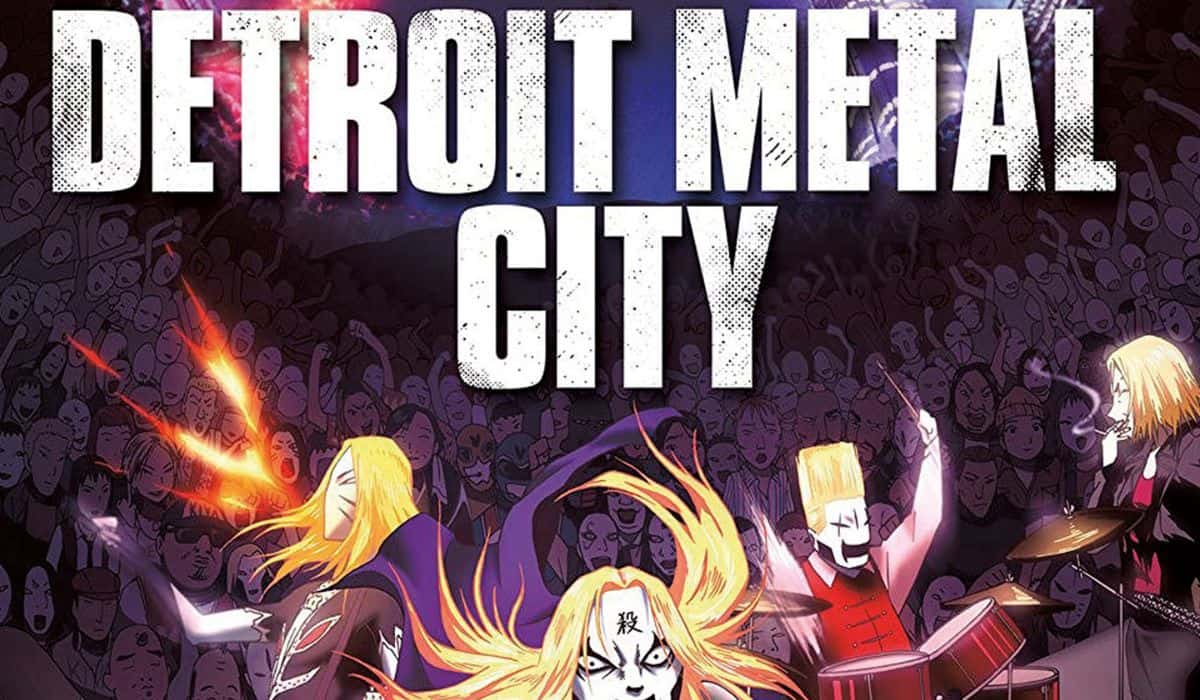
Detroit Metal City(Credit: Toei Animation)
Yet this stands in complete contrast to Soichi’s real personality. In his daily life outside of the band, he remains gentle and polite, pining after his crush, Yuri, and writing innocent pop songs in secret.
The split between Soichi’s two identities becomes the main source of humor and conflict in the series. He frequently ends up in awkward situations where his Krauser persona starts to emerge at inappropriate times, like when a young fan asks him for an autograph while he’s on a date with Yuri.
Soichi often breaks the fourth wall and talks directly to the viewer, wishing he could ditch his demonic alter ego and focus on his true passion – lighthearted pop music. But the more Detroit Metal City’s star rises, the harder it is for Soichi to escape the clutches of his vulgar, id-driven metal persona.
Detroit Metal City satirizes the stereotypes and controversy surrounding death metal music in over-the-top fashion. The band members dress in absurd, graphically violent costumes, destroy props and sets during shows, and stir up public anger with their lyrical content. Yet the more they intentionally offend, the more popular they become.
2. No Game No Life
No Game No Life burst onto the anime scene in 2014, capturing fans with its dynamic visual flair, playful humor, and creative reimagining of the conventions of isekai anime.
Adapted from a light novel series by Yū Kamiya, No Game No Life became one of the most buzzed-about titles of the spring 2014 season. Its vivid color palette, kinetic energy, and likable characters earned it a passionate fanbase eager to dive back into the world of gaming prodigies Sora and Shiro.
No Game No Life centers around genius gamer siblings Sora and Shiro, who together form the unbeatable gaming identity “Blank.” Real life feels empty and fake to them, so they retreat into games as an escape.
After mysteriously getting transported into a fantasy world where all conflicts, from petty arguments to national border disputes, are settled by high-stakes games, Sora and Shiro feel right at home.
In this gaming-obsessed world of Disboard, the god Tet has banned violence and enforced the Ten Pledges, requiring all issues to be settled by games, bets, and contracts.
Sora and Shiro’s unparalleled skills make them ideally suited to navigate this competitive new reality. They set out to ultimately challenge Tet himself and take over as gods of this world where life is one big game.
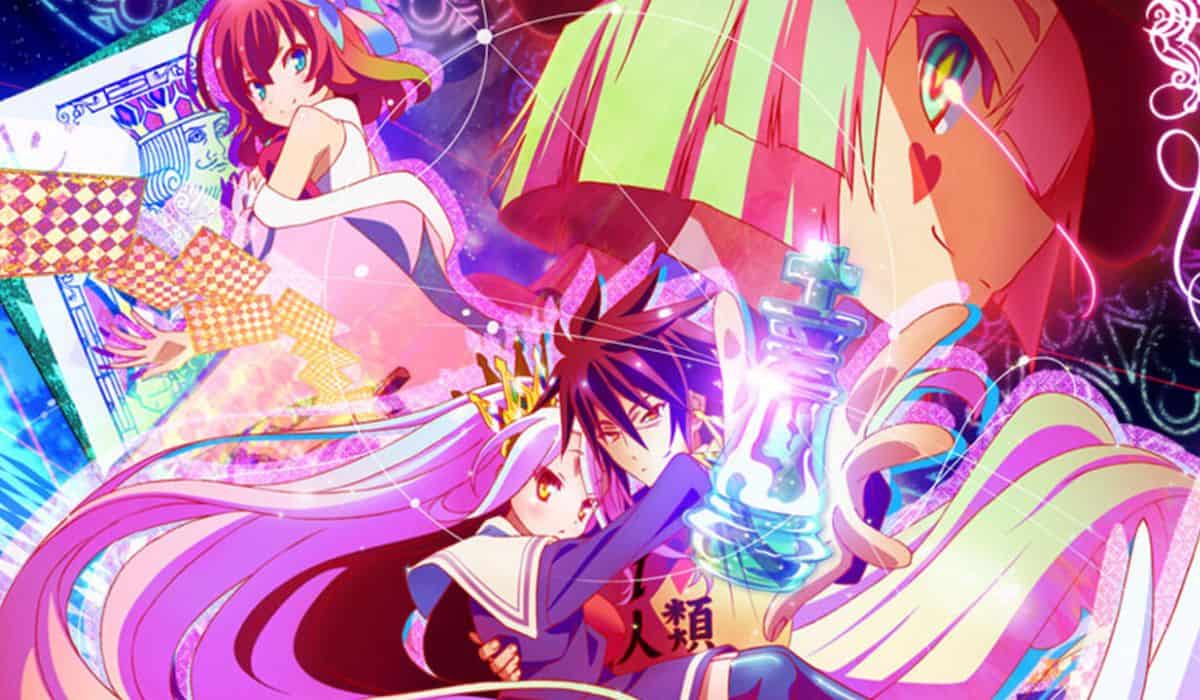
No Game No Life(Credit: Toei Animation)
No Game No Life cleverly integrates game mechanics and terminology directly into its fantasy universe and plots. Things like character stats screens, power levels, cheat skills, and quick save points will feel intimately familiar to gamers, brought to life through vivid animation and witty dialog.
It creates a captivating framework premised on the idea of a planet that evolved around gaming rather than violence. The show pairs Sora’s cunning and manipulative strategies with Shiro’s genius-level intellect to make them an unstoppable duo.
Their perfect coordination reflects their unbreakable bond as siblings. While Shiro’s addiction to games makes her unable to function in normal society, Sora’s love helps her thrive in Disboard.
Their sibling relationship, while not without some questionable undertones, remains a grounding emotional center for the over-the-top story. No Game No Life differentiates itself through its stunning visual aesthetics as well.
Thick outlines, bright colors, dynamic movements, and stylized backgrounds create a distinctive look that pops off the screen.
It employs color theming for each race in Disboard – for example, the animal-like Werebeasts have red and black motifs, while the magical Flügel race uses blue and white. This creates instantly recognizable associations between characters and colors.
3. Tengen Toppa Gurren Lagann (Gurren Lagann)
In 2007, the animated series Tengen Toppa Gurren Lagann (Gurren Lagann for short) took the mecha anime genre to stratospheric new heights of over-the-top action, frenetic battle sequences, and hyper-emotional storytelling.
With its tale of two hot-blooded friends rising up to battle beastmen oppressors with their powerful battle mech, Gurren Lagann electrified audiences and became a modern anime classic thanks to its exhilarating sense of escalating scale and nonstop hype.
Gurren Lagann comes from the respected animation studio Gainax, who wanted to create an enthusiastic love letter to mecha anime and pay homage to classic genre series.
The show centers on Simon, a timid young digger who lives underground with his fellow humans, oppressed by beastmen who force them to live in isolated subterranean villages.
After discovering a miniature mech called Lagann, Simon joins forces with the cocky, fiery Kamina. Together in their combined battle mech, Gurren Lagann, they eventually rise up to bring down the beastman regime and explore the world above ground.
As Simon discovers greater courage and Kamina’s unbridled passion fuels a growing resistance, Gurren Lagann expands in scale until they battle enemies dwarfing galaxies.
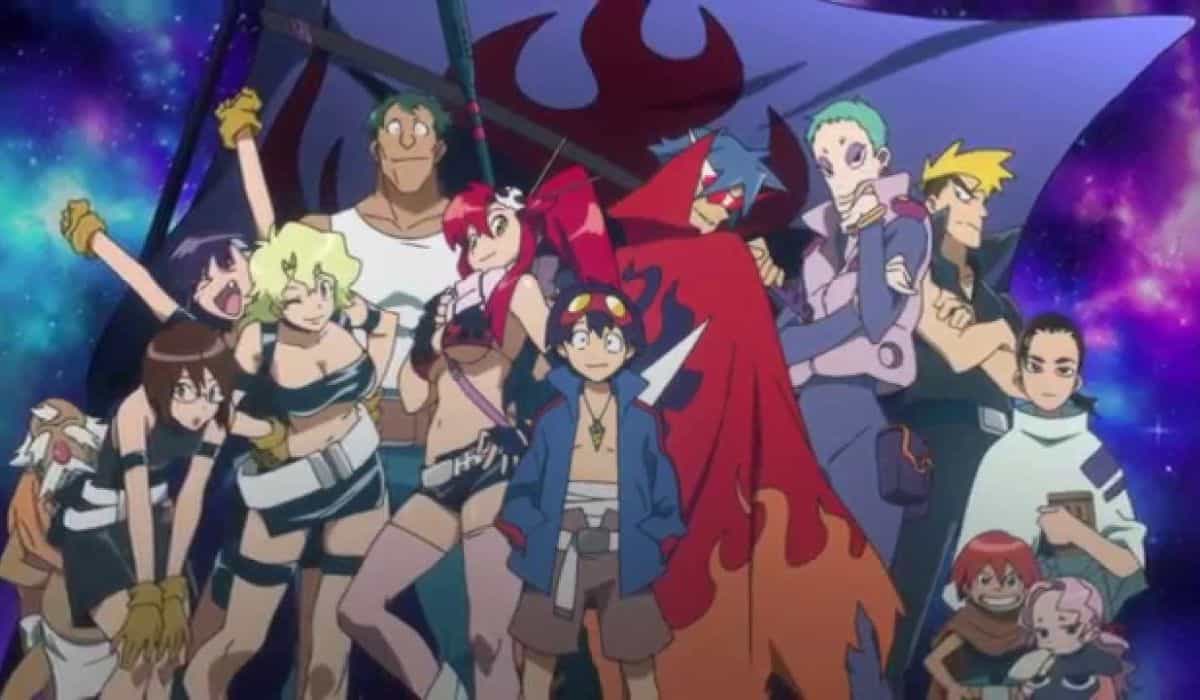
Tengen Toppa Gurren Lagann(Credit: Toei Animation)
Gurren Lagann takes inspiration from mecha classics ranging from Mazinger Z to Neon Genesis Evangelion but filters it all through a high-energy style completely on its own.
The show sempre escalation in true over-the-top fashion. As Simon, Kamina, and their allies gain followers, their mech gets bigger and bigger. It goes from the small Lagann to the huge galaxy-tossing Tengen Toppa.
This exponential growth symbolizes the show’s central theme that one’s potential is limitless. The series’ structure fits this ever-rising spiral, with escalating battles and increasingly huge foes. After defeating the beastman general Viral early on, Simon and Kamina go up against the merciless Spiral King Lordgenome.
Even bigger challenges await in the second half as the Anti-Spirals emerge as a god-like threat to the universe. The animation keeps pace with this exponential growth through eye-popping combat sequences.
Gurren Lagann’s zany style exemplifies the unbounded enthusiasm and energy that permeate the show. The imagery of DNA strands and spiral motifs represent the theme of infinite expansion.
The story rockets along without restraint. Kamina’s mantra, “Go beyond the impossible and kick logic to the curb!” could serve as Gurren Lagann’s mission statement. It tells a story of boundless potential unlocked through self-belief.
4. FLCL
Few 6 episode anime unleash as much dizzying imagination and frenetic energy as the burst of chaos that is FLCL.
Pronounced “fooly cooly”, this surreal coming-of-age miniseries from legendary studio Gainax bombarded viewers’ senses back in 2000, becoming an instant cult classic. Two decades later, FLCL’s lunatic antics and layers of meaning still leave a crater-sized impression.
FLCL follows disaffected 12-year-old Naota Nandaba, whose life revolves around feigning maturity while pining for his brother’s ex-girlfriend.
This mundane existence gets shredded when the eccentric Haruko Haruhara crashes into town – quite literally – smashing Naota in the head with her Vespa and igniting pandemonium.
As bizarre events multiply, Haruko claims she’s hunting for the legendary “Pirate King” Atomsk, whose power to create entire solar systems makes him god-like.
Her investigation of Naota’s head injury suggests he may hold clues to reaching Atomsk. Thus begins a series of deranged misadventures as Haruko hangs around Naota while pursuing this cosmic mystery.
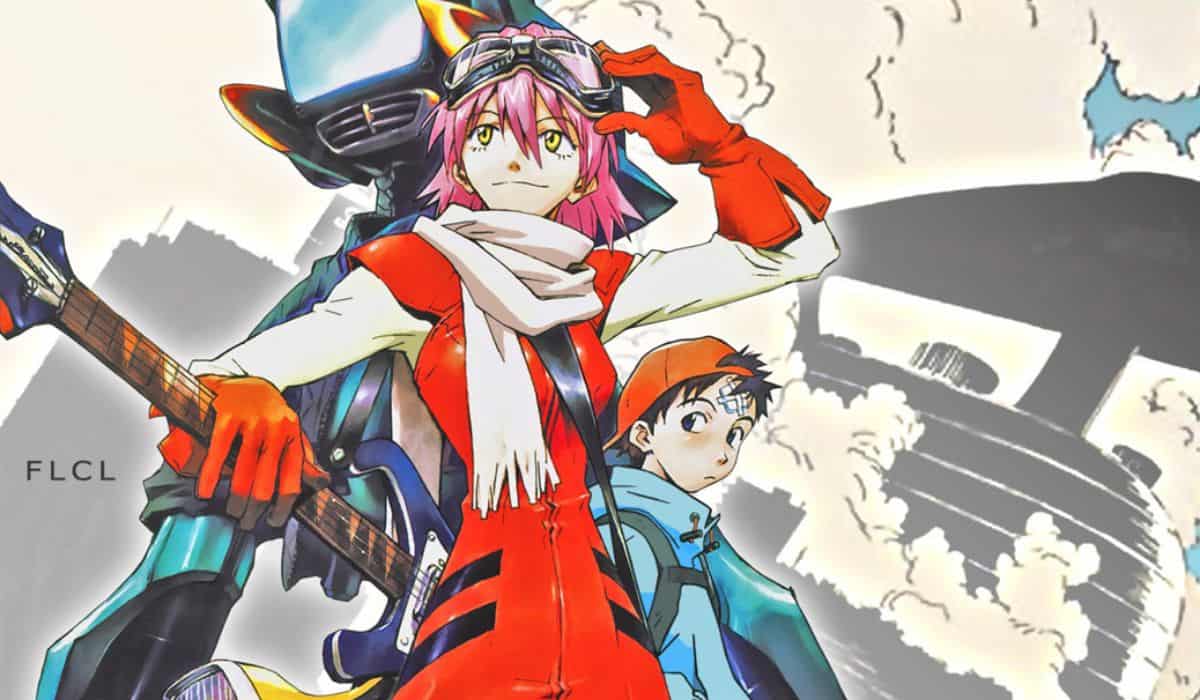
FLCL(Credit: Toei Animation)
To describe FLCL’s narrative as a mere “plot” undersells its surrealism. It’s a sensory assault mixing giant battling robots, interdimensional portals, spaceship jazz fusion bands, and a soda-powered universe.
Yet even amidst the chaos, poignant themes shine through – adolescent confusion, the pain of growing up, universal human struggles told via sci-fi metaphor.
Gainax pulls no punches in unleashing eye-popping animation spectacle. Frenzied action sequences erupt out of mundane life, parodying anime tropes while dynamically expanding the medium’s visual vocabulary.
The Pillows’ frenetic score punctuates the insanity, at once complementing and grounding FLCL’s madness.
For all its absurdity, FLCL taps into the timeless confusion of becoming an adult. Naota is consumed by doubts about his identity and future while unable to voice tender feelings for Mamimi, his brother’s ex.
Their clumsy fumblings highlight adolescence’s inherent awkwardness. Haruko’s extraterrestrial antics become a metaphor for growing up’s turbulence and uncertainty.
Her shaking up Naota’s world forces him to expand his horizons and confront scary transitions. Their bond reflects how we sometimes need an outside force to push us out of the ruts.
5. Shinreigari: Ghost Hound
Shinreigari: Ghost Hound is a unique psychological sci-fi anime that explores the fascinating intersection between the spiritual world and modern science.
Directed by Ryūtarō Nakamura and produced by Production I.G, this 22-episode series aired in 2007 and 2008. It stands out for its somber tone and methodical pacing as it unravels a thought-provoking mystery.
The story follows three teenage boys—Tarō, Makoto, and Masayuki—who each have the ability to project their spirits into the immersive spirit world.
In this out-of-body dream state, the laws of physics differ, and spirits roam free. The boys are all connected by a traumatic incident from their youth that left them with this power.
Tarō Komori is the main protagonist who joins forces with Makoto to investigate the mysterious kidnapping of a computer programmer named Shinichiro Ougi. The police have no leads, but Tarō believes answers can be found in the dreamlike spirit world that parallels the physical world.
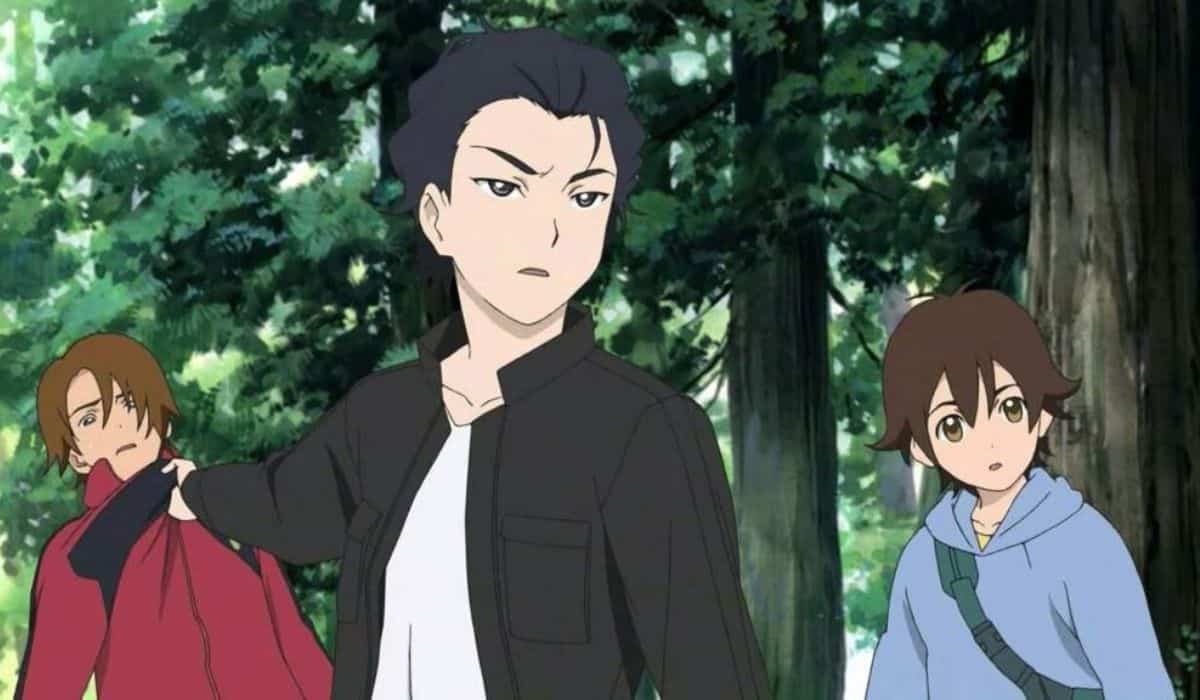
Shinreigari Ghost Hound(Credit: Toei Animation)
By projecting into this realm, Tarō hopes to retrace Shinichiro’s steps and uncover why he was taken. But tampering in the spirit world proves dangerous, especially with Makoto’s stability already compromised from witnessing his sister’s murder as a child.
As the boys explore both the psychological spirit realm and real-world science labs, the story blends supernatural phenomena with neuroscience, psychiatry, and quantum physics. Researchers at the lab try harnessing the spirit world technologically through experiments on captured spirits.
The line between ghosts and hallucinations blurs as the show plays with challenging themes like trauma, grief, and the fragile nature of the human psyche. The slowly-revealing mystery keeps viewers engaged across a very methodical, meditative pace with minimal action or music.
Visually, Ghost Hound features the subdued palette and realistic designs expected from Production I.G. The spirit world contrasts eerie, muted colors with the vibrancy of the physical world. Traditional supernatural elements get a modern twist through the lens of neuroscience.
6. Ceres, Celestial Legend
The show takes place in modern-day Japan and follows a teenage girl named Aya Mikage. On her 16th birthday, Aya begins exhibiting strange abilities and learns she is the reincarnation of the celestial maiden Ceres, an ancient and powerful being. Ceres grants Aya magical powers but also overtakes her mind against Aya’s will.
Aya discovers she comes from a lineage of reincarnated Mikos (shrine maidens) who serve Ceres. Each generation must fight to contain the vengeful celestial entity currently inhabiting Aya.
Her family views Ceres as a threat who could destroy the world. But Aya bonds with Ceres and vows to help her take revenge on the Mikage clan for past sins.
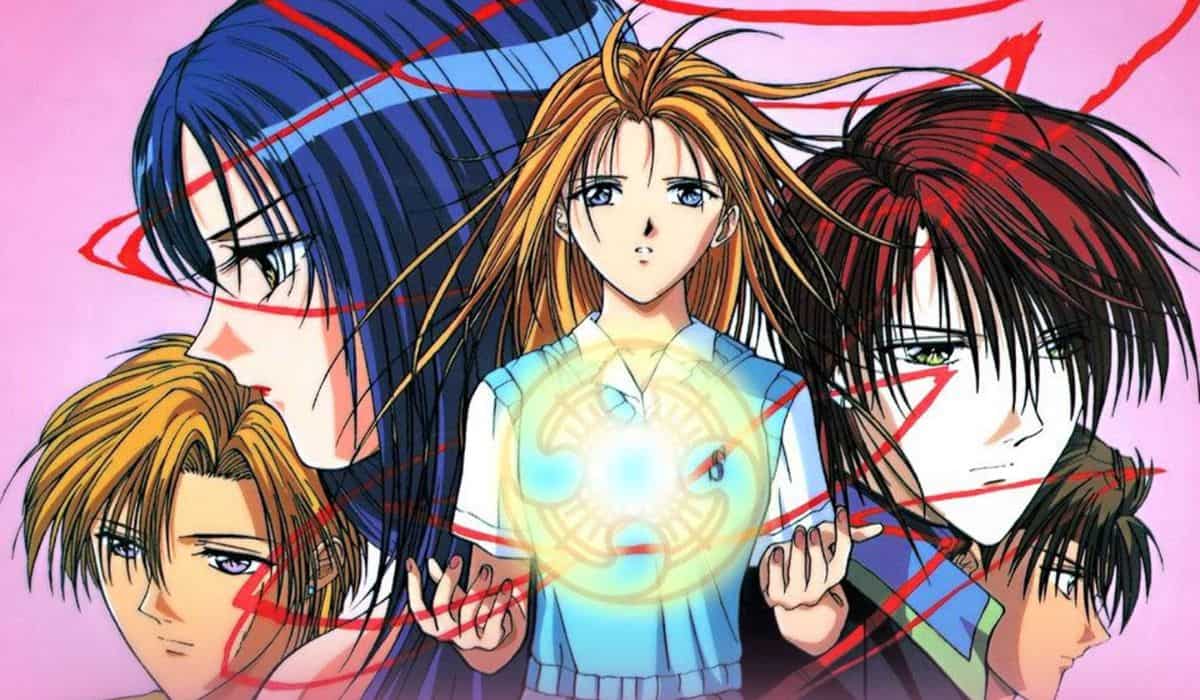
Ceres, Celestial Legend(Credit: Toei Animation)
This sets Aya at odds with her family as she fights to protect Ceres rather than destroy her. Amid this conflict, Aya contends with her budding feelings for Toya, a distant cousin who is sworn to kill Ceres but develops an affinity for Aya.
Their star-crossed romance provides emotional weight throughout the drama. Ceres herself is the axis on which the story spins. The celestial maiden is a powerful non-human entity that can grant magical abilities and destruction.
But she is also a tragic figure wronged in the past, now consumed by rage. Through her bond with Aya, Ceres begins regaining her lost humanity.
The Mikage family employs high-tech means like genetic engineering to try to suppress Ceres. This mixes ancient mysticism with modern science fiction elements that were novel when the manga debuted in 1996. The anime adaption brings Watase’s vision vividly to life through fluid animation and an atmospheric musical score.
Aya’s journey pulls viewers into a tale of eternal reincarnation, feuding bloodlines, mystical pacts, and ancient vendettas.
Each episode deepens the lore around Ceres’ origin and the Miko’s duty. But the story remains grounded thanks to relatable struggles of identity, family, and romance.
7. Azucat the third
In the vast ocean of anime fandom, Azucat_the_third stands out as one of the most hilarious and unique comedic series. Centered around the misadventures of eponymous protagonist Azucat, a snarky female cat, this bizarre show subverts expectations and provokes laugh-out-loud moments at every turn.
Though only consisting of 13 episodes released online in 2016, Azucat_the_third demonstrates masterful comedy writing and lovable characters that explain its status as an underground anime cult classic.
Azucat_the_third is set in a surreal world inhabited by anthropomorphic animal creatures and the “humanbeans” they live alongside. Protagonist Azucat is a perpetually bored and cynical cat who spends her time philosophizing about the meaningless of existence and randomly insulting those around her.
Her friends, like overly- cheerful lamb Lammy and paranoid conspiracy theorist Mouse Mousey, endure her verbal barbs, recognizing Azucat’s inner sensitivity.
Each short episode follows the trio’s absurd misadventures wandering their eccentric city as Azucat complains about modern trends, satirizes politics, and cracks nihilistic jokes.
The show’s humor stems fromAzucat’s endearingly brash persona, casting biting sarcasm and shade on the trivial behavior of those around her. Her creative insults like “you wandering cabbage” and “you overcooked piece of broccoli” make demeaning others an art form.
Despite her curmudgeonly attitude, Azucat occasionally shows she cares for her friends in subtle ways, lending heartwarming nuance. Creator BlueFoxVaporu’s sharp writing infuses each episode with hilarious dialogues and effective running gags involving Azucat’s hatred of clothing, technology, and society.
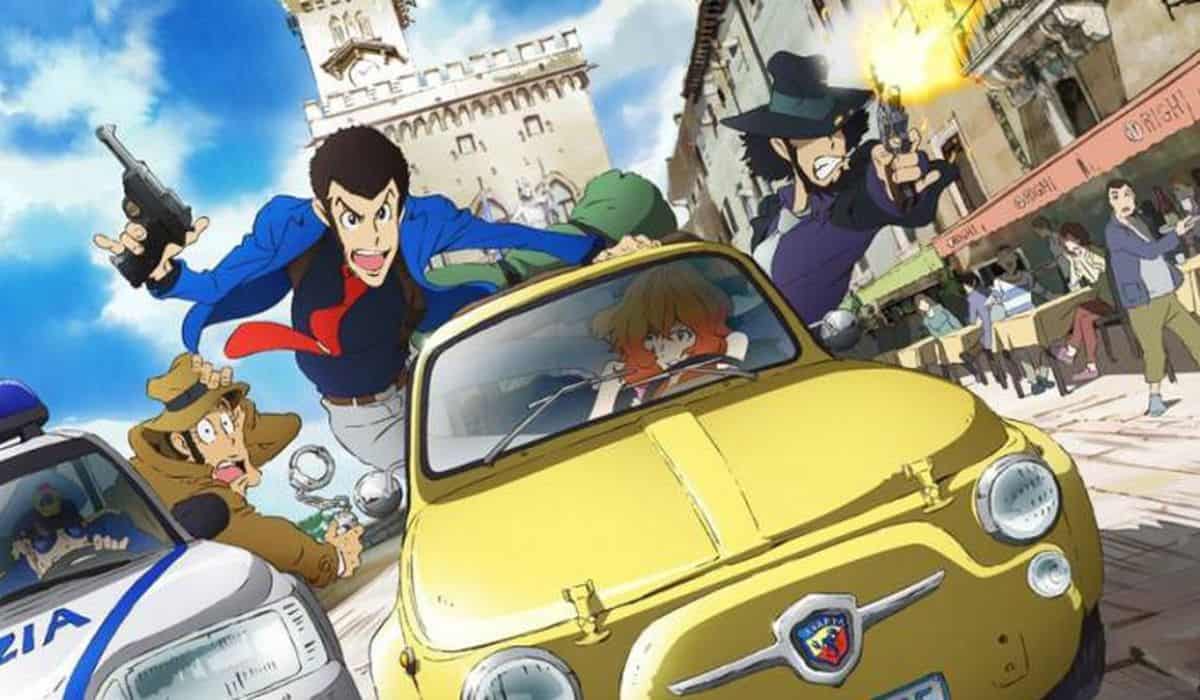
Azucat the third(Credit: Toei Animation)
Azucat’s uniquely dismissive worldview allows the show to satirize various aspects of modern life through her bemused eyes. Lammy’s Instagram obsession, humans’ herd mentality, and even abstract concepts like time are all fodder for Azucat’s existential ridicule.
By using Azucat’s feline perspective to highlight the absurdity ingrained in everyday experiences, Azucat_the_third offers insightful cultural criticism wrapped in hilarity.
Of course, the show’s bizarre animation style also amplifies the comedy. Characters are impressionistic watercolor paintings moving through surreal landscapes filled with giraffe umpires, flying bananas, and more.
Random non-sequiturs happen frequently, like Azucat pulling a pumpkin over her friend’s head or sitting on a giant reversing crab.
The addition of punchy sound effects and dynamic timing in comedic scenes elevates the absurdist visual humor. Mistakes like inconsistent backgrounds and obvious looping animations only add to the show’s slapdashed appeal.
8. Wotakoi
In a society where hobbies like gaming and anime still face stigmas, the 2018 anime ‘Wotakoi: Love is Hard for Otaku’ provided a refreshing take on modern romance among self-proclaimed nerds. Adapted from a popular webcomic, Wotakoi explores the workplace relationships between four otaku coworkers at an office in Tokyo.
Blending humor, romance, and relatable characters, this 11-episode series struck a chord with viewers through its compassionate portrayal of so-called “freaks and geeks” finding acceptance and love.
Wotakoi centers around protagonists Narumi and Hirotaka; childhood friends reunited at work who harbor secret hobbies – Narumi loves video games while Hirotaka enjoys anime and manga. Though they hide their “otaku” interests, fearing judgment, discovering they both have this passion brings them closer.
Supporting characters Hanako and Taro are a bold otaku couple who proudly flaunt their love of cosplay and model figures. As the pairs navigate romance and work, they gain the confidence to embrace their true selves.
A major reason Wotakoi succeeds is how it subverts expectations of the usual tropes in romantic anime. Our four otaku leads defy the typical mold of ultra-cute, perfect protagonists. They possess genuine flaws, insecurities, and quirks that make them feel real.
Watching Narumi fumble awkwardly or Hirotaka obsess over details resonates with viewers’ own lived experiences. Imperfections become endearing rather than limitations. Wotakoi sends the heartwarming message that everyone deserves love, no matter their interests.
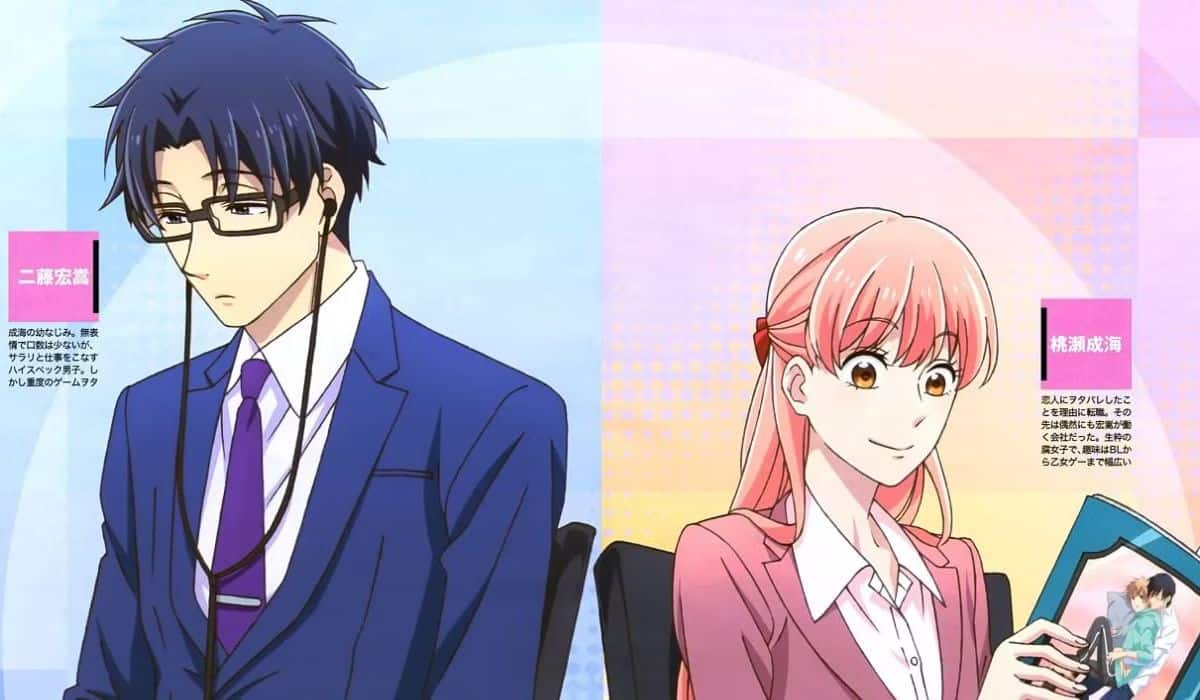
Wotakoi(Credit: Toei Animation)
This authentic representation extends into how Wotakoi portrays the nuances of adult relationships. Romance isn’t depicted as a fairytale but something that requires effort and communication to nurture. Conflicts arise in the couples over jealousy and work-life balance.
Yet they ultimately compromise and support each other’s passions. The depiction of relationships grounded in mutual understanding provides a refreshing change from dramatic fictional love stories.
Wotakoi also blends comedy and slice-of-life drama masterfully through its script. Hilarious otaku-related puns, exaggerated reactions, and pop culture references fuel the humor. The relatable struggles of work, friendships, and dating balance these laughs with genuine emotion.
Sincere character moments, like Narumi comforting Hirotaka’s insecurities, make their blossoming relationship compelling.
Strong voice acting performances truly embody each character’s personality quirks and grounded reactions. This fusion of laughs and drama forms an entertaining yet poignant series.
9. Grand Blue Dreaming
When it premiered in 2018, the anime adaptation of the comedy manga ‘Grand Blue Dreaming’ introduced viewers to a hilarious story of college misadventures centered around diving. Set in the college town of Izu, the 12-episode series follows protagonist Iori Kitahara as he moves to town to attend college and pledges to the eccentric Grand Blue dive club.
What unfolds is a raucous comedy filled with absurd situations, irreverent humor, and an endearing cast that makes ‘Grand Blue Dreaming’ a standout slice-of-life anime.
Right from the start, ‘Grand Blue Dreaming’ pulls audiences into its chaotic comedic orbit with its eccentric characters and absurd humor. The Grand Blue dive club that Iori joins is less about diving and more an excuse for its wacky members to host wild parties and prank each other mercilessly.
Standouts include bossy upperclassman Kotobuki, who constantly strips naked, and the bumbling immaturity of club seniors Nanaka and Chisa. Much humor stems from the club members’ drunken shenanigans and Iori’s stunned reactions to their raunchy antics.
Super-deformed art shifts and comic visual metaphors like speed lines and slashes heighten the absurdity of reactions for comedic effect. Outrageous diversions like the guys debating proper conversational etiquette while drunk demonstrate the anime’s knack for absurd, free-wheeling humor.
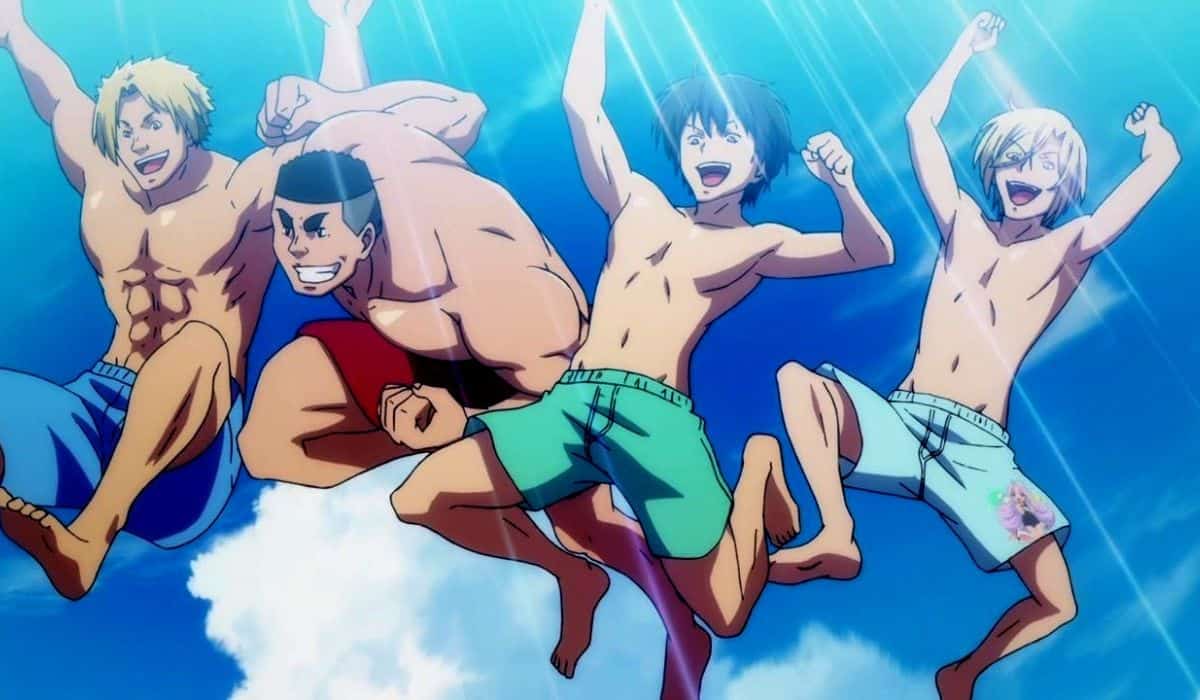
Grand Blue Dreaming(Credit: Toei Animation)
While on the surface, ‘Grand Blue Dreaming’ appears focused on low-brow frat house gags, the show balances raunchy jokes with slice-of-life character moments. Underneath their quirks, the club members genuinely care for each other, almost like family.
Iori’s roommate Nanaka may be shameless when drunk but shows concern for Iori making other friends. Kotobuki’s bossiness comes from his passion for diving rather than malice. The series takes time to develop the heartfelt bonds between characters that make their relationships endearing.
The show’s visual presentation heightens its ridiculous comedy by vividly animating the club’s insane antics. Character models are highly expressive, shifting wildly to depict shock and embarrassment. Mediterranean-style backgrounds and ocean vistas lend an idyllic look to Izu.
Animated sequences like Nanaka drunkenly pole dancing bombastically capture the absurdity. Matching the quirky characters, the eclectic soundtrack mixes cheerful piano, upbeat rock, and bizarre insert songs. Every production element coalesces to create lively, dynamic comedy.
10. Horimiya
Anime has no shortage of high school romance stories – but Horimiya stands out with its grounded take on teen relationships.
Adapted from Daisuke Hagiwara’s manga, this slice-of-life series dissects the facades we wear at school versus our true selves. Buoyed by naturalistic writing and characterization, Horimiya charmingly captures the awkwardness of first love.
The story follows students Kyoko Hori and Izumi Miyamura, who on the surface seem like archetypes – Hori, the popular but stern class president, and Miyamura, a nerdy, bespectacled introvert.
Few realize they hide secret sides of themselves, even from close friends. Outside school, Hori leads a hectic double life caring for her younger brother while their parents work. This leaves her little time for friends, so she cultivates a cold, distant persona.
Miyamura hides his multiple ear piercings and tattoos under a slovenly faćade, wanting to avoid judgment. By chance, Miyamura discovers Hori’s nurturing domestic side when she lovingly scolds her rambunctious brother.
Hori then walks in on Miyamura’s punk rock aesthetic during his part-time job. Recognizing their mutual desire to reveal their true selves, the two draw close, and a tender romance blooms.
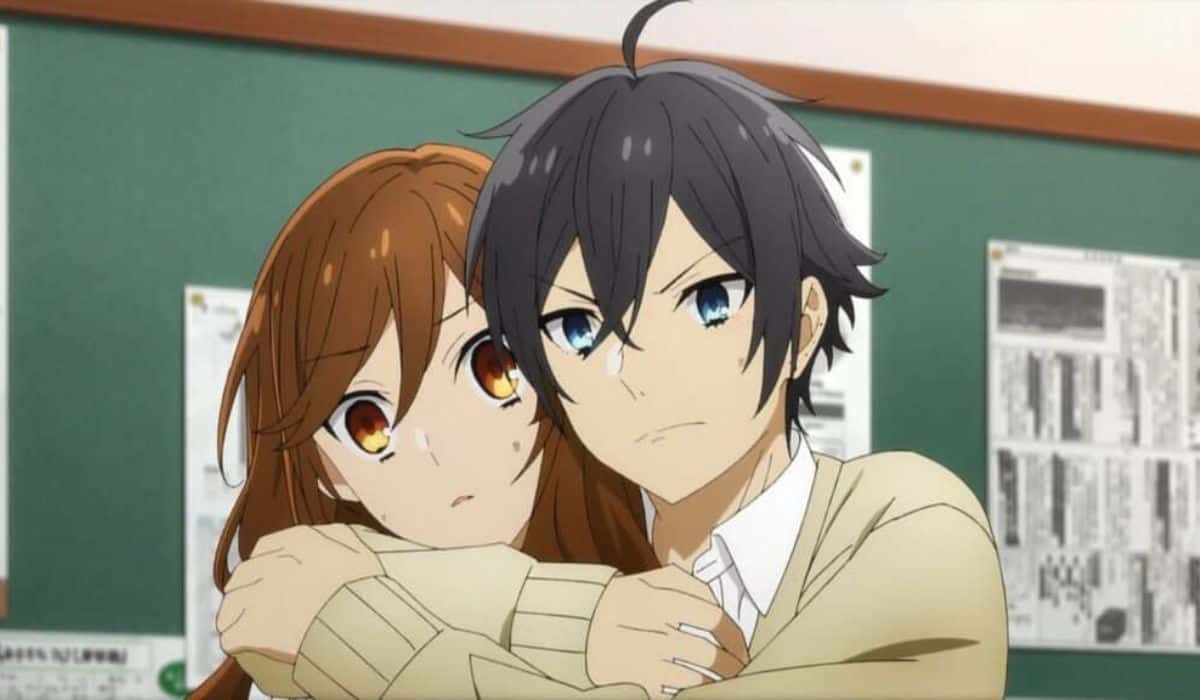
Horimiya(Credit: Netflix)
Yet Horimiya avoids typical melodramatic cliches. There are no contrived love triangles or overblown confessions. Instead, Hagiwara’s naturalistic writing has mutual affection developed through subtle gestures and playful teasing, evocatively captured in the animation.
Miyamura and Hori’s friends equally subvert tropes to feel like authentic teenagers. Yuki’s shy, seeming persona masks his mischievous scheming side, while initially intimidating Tooru is a corny romantic at heart.
Even supporting characters like Seya gets moving backstories, creating an inclusive family dynamic. The voice acting deserves praise for bringing these nuanced characters so vividly to life. Izumi Miyamura’s shy but devoted tone when interacting with Hori is adorable.
I love hearing the scheming glee when Yuki hatches cupid-style plots. Every performance breathes organic personality into roles that could easily be one-note in the other hands.
11. Fruits Basket
Few anime portray the emotional nuances of family and friendship as thoughtfully as Fruits Basket. This beloved series follows orphan Tohru Honda, who discovers a remarkable secret about the Soma clan she befriends – 13 members transform into animals from the Chinese zodiac when hugged by the opposite sex.
Their curse becomes a metaphor for various afflictions as Tohru helps the Somas heal deep psychological wounds. We meet Tohru as a kind yet isolated teenager, having lost her mother and living alone in a tent after her grandfather renovates their house.
Taken in by the mysterious, high-society Soma family, Tohru’s cheerful reliability helps her connect with each haunted member living under the zodiac curse. Yuki, the reserved rat of the zodiac, warms to Tohru’s presence as she chips away at his icy exterior forged from cruel childhood bullying.
Hot-headed cat Kyo finds in Tohru the unconditional love he’s been denied due to being left out of the zodiac legend. Over time, Shigure, Hatori, Momiji, and more reveal their damaged inner selves to Tohru’s patient compassion.
Fruits Basket insightfully employs metaphor to give tangible form to real psychological burdens. For example, Hatori’s seahorse persona represents his feeling trapped by the family despite his dedication to them.
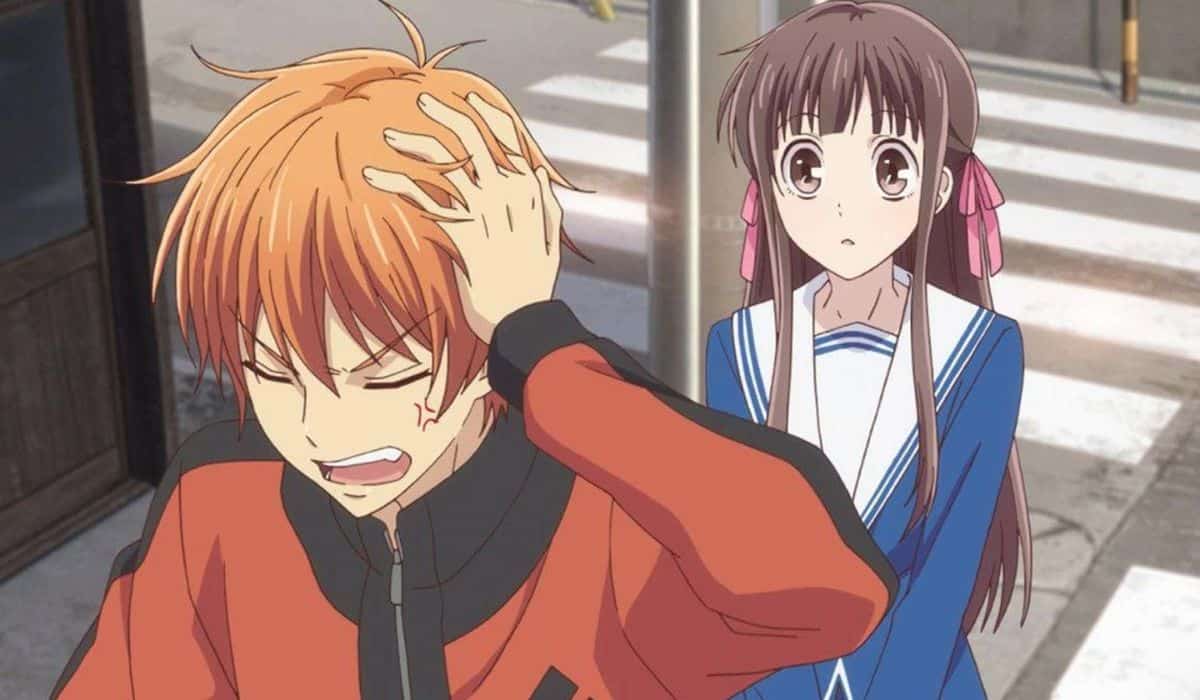
Fruit Basket(Credit: Netflix)
Momiji’s hyperactive rabbit mask hides the trauma of his mother rejecting him. Each animal manifests another aspect of the Somas’ mental anguish.
Of course, the most pivotal relationship is the electric bond between Tohru and Kyo. Despite Kyo’s prickly exterior, Tohru sees through to his vulnerability, having felt like an outcast herself. Their growing affinity flickers between platonic and romantic as deeper feelings simmer beneath the surface.
This nuanced drama is elevated by Production I.G’s detailed animation. Subtle facial expressions convey wordless emotions from joy to heartbreak. Delicate lighting creates an intimate, cozy atmosphere when Tohru bonds quietly with each Soma.
Soft backgrounds highlight tender exchanges through evocative framing and perspective. Moments of levity balance Fruits Basket’s melancholy. Tohru’s ditziness, Shigure’s wisecracks, and Ayame’s dramatics lend comic relief amidst the heavier moments.
12. The Devil is a Part-Timer
“The Devil is a Part-Timer” is a 13-episode fantasy comedy anime series produced by White Fox in 2013. It upends the typical good-versus-evil dynamic by placing the Devil in modern-day Japan, forcing him to adapt to human life and hold down a part-time job.
The Devil King Sadao, the ruler of Ente Isla, is waging war against humans when the hero Emilia confronts him. After their epic battle transports them to Earth, Sadao loses most of his demonic powers.
Stuck in Tokyo, he assumes a human form and the name Sadao Maou to blend in. With no way to return home, Sadao takes a part-time job at the fast food joint MgRonald to support himself. He also attends night school to learn the ways of humans. Sadao’s loyal general, Alciel, serves dutifully by his side while struggling to maintain a human disguise.
Meanwhile, Emilia, the hero, tracks Sadao to Tokyo along with her priestess assistant, Chiho. However, after observing Sadao’s diligent work ethic and kindness to his co-workers, Emilia questions whether he is truly evil. They agreed to a tentative truce while residing in Japan.
Other supernatural beings from Ente Isla also cross over to either aid or thwart Sadao. These include the fallen angel Lucifer, who befriends Sadao, and the archangel Sariel, who hunts the Devil. Back on Ente Isla, Sadao’s demon army conspires to bring him home.
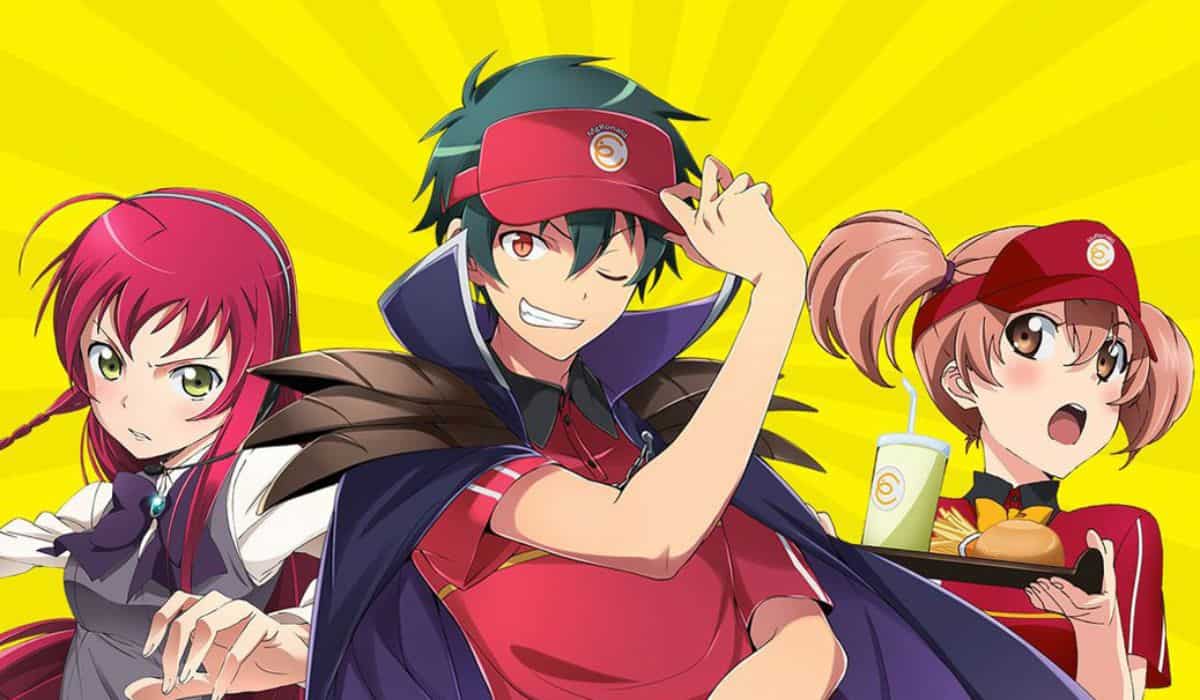
The Devil Is A Part-Timer(Credit: Netflix)
Much of the comedy stems from Sadao engaging in very human activities and pleasures despite being the Devil. He revels in bargain sales, public baths, and fast food while ruling Ente Isla. Seeing fearsome demons navigate everyday life provides ironic humor.
The plot blends slice-of-life antics at Sadao’s workplace with supernatural threats emerging. When assassins target Sadao or portals back to Ente Isla open, his fearsome demon powers briefly return in epic action sequences.
But Sadao always chooses to protect his human friends over conquest. This inversion of assumptions about good and evil forces both Sadao and Emilia to evolve. As they get to know each other’s human sides, prejudices fade.
The line between humans and demons blurs amidst their similarities, just trying to survive in this world. “The Devil is a Part-Timer” garnered praise for its clever premise that subverts fantasy tropes in a funny, heartwarming way. The unlikely friendships that form invite rethinking how we judge others.
13. Komi Can’t Communicate
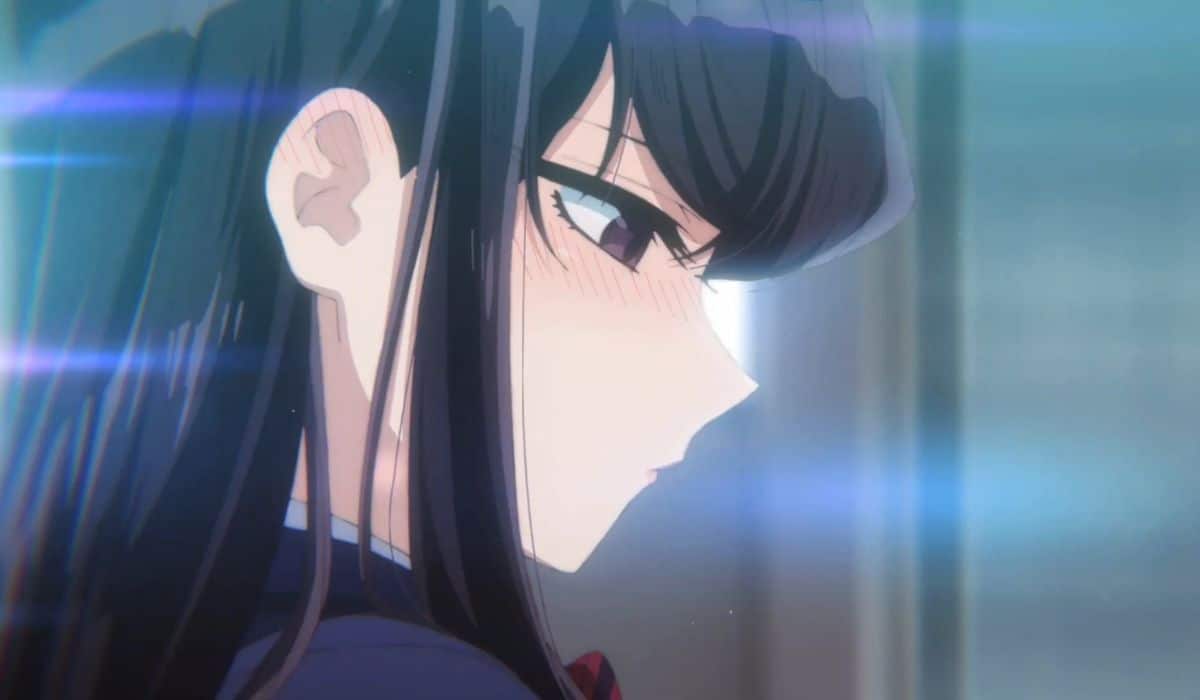
Komi Can’t Communicate is a slice-of-life anime based on the popular manga series by Tomohito Oda. Produced by OLM, the first season of the anime adaptation premiered in 2021 with 12 episodes.
It depicts the socially anxious high schooler Shouko Komi’s quest to make 100 friends. Despite her aloof, cool beauty, Shouko Komi has an extreme social communication disorder that prevents her from properly speaking to people.
On her first day of high school, the reserved Komi sets herself the ambitious goal of making 100 friends. Luckily, she caught the attention of extroverted classmate Hitohito Tadano.
Recognizing Komi’s social struggles, Tadano takes it upon himself to help her achieve her goal. He becomes Komi’s first real friend as he encourages her to gradually open up. Other quirky classmates and friends join this kind of duo on their heartwarming mission.
Komi Can’t Communicate stands out through its ultra-relaxed, comedic pace coupled with Komi’s endearing efforts to interact. Small victories like Komi introducing herself to someone new become momentous.
Watching the shy heroine slowly step out of her comfort zone makes for surprisingly riveting viewing. The light pastel art style and calm piano soundtrack enhance the easygoing, hopeful mood.
Komi Can’t Communicate(Credit: Netflix)
Inner monologues granting access to Komi’s thoughts and observations also humanize her, revealing sharp intelligence and earnestness beneath the stoic exterior.
While the premise seems simple on the surface, Komi’s journey resonates with universally relatable themes. Her communication disorder represents any obstacle, making social interaction difficult. Viewers find catharsis in seeing Komi take small but courageous risks daily.
Komi’s equally kind, patient friends also deserve credit for welcoming her without judgment. Tadano treats her with respect, while theatrical extrovert Ren Yamai helps draw Komi out of her shell. The healthy group dynamics provide a touching positive representation.
Critics praised Komi Can’t Communicate for deftly balancing relaxing humor with social insight. The lighthearted tone still thoughtfully depicts introversion and communication disorders. Komi feels fully realized thanks to their strong writing and empathetic lens.
Honorable Mention
Your Sis Isn’t Good For Me by Okumoto Yuta
Mushoku Tensei
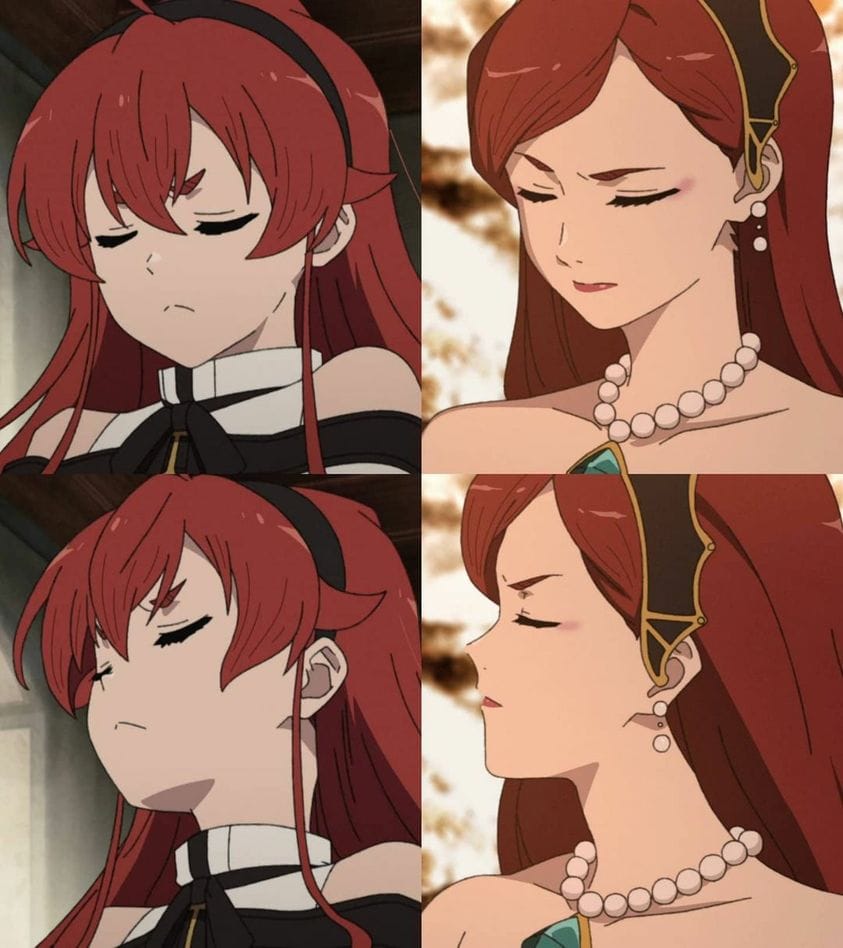
“Mushoku Tensei” is primarily a light novel series that was later adapted into an anime.
The adaptation was highly anticipated by fans of the light novels, who were eager to see the characters and storyline brought to life in animation.
Upon its release, the anime received significant positive feedback from fans, appreciating the creators’ work.
The themes of reincarnation, adventure, romance, fantasy, comedy, and action in “Mushoku Tensei” are also common in other anime series, making it part of a popular genre blend.
My Landlady Noona
High school and University romance dramas have always been popular among the youth. One of the dramas among them is “Professional Single”. Some similar dramas like “Professional Single” are Horimiya, My Little Princess, Love O2O, First Love, and many more. “Professional Single” is a Chinese drama that aired in 2020, directed by Lin Yan.
The plot describes how the arts students of the University face different challenges in life in their journey to achieve their dreams. The main characters of the drama were played by Aaron Deng and Ireine Song as Qin Shen and Yuan Qian, who were art students; one is a handsome and tall sculptor, while the other is a friendly and cute sculptor.
The story of “Professional Single” revolves around the art school, where the art students, the main protagonists, encounter new challenges in the path of their dream with the slice of romance. Yuan Qian missed her drawing exams, and then she wanted to change her major to sculpturing while Qin Shen wanted to pursue his passion for making sculpture but fell in love with Yuan Qian when she became his classmate.
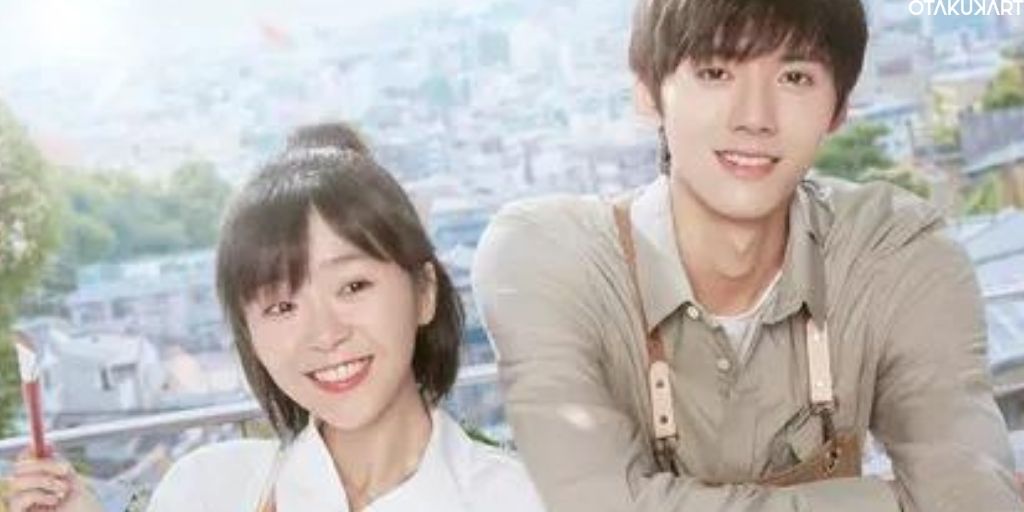
Professional Single main characters
“Professional Single” is a simple love drama that was liked by the audience for its challenge and difficulties, artistic pursuits, visual aesthetics, personal growth and relationships among the characters, and pursuing one’s dreams. The drama is available on YouTube and Netflix.
1. Horimiya
Kyoko Hori is a famous and academically outstanding student who is hiding her responsibilities of managing household work and taking care of her younger brother because her parents are always occupied with work.
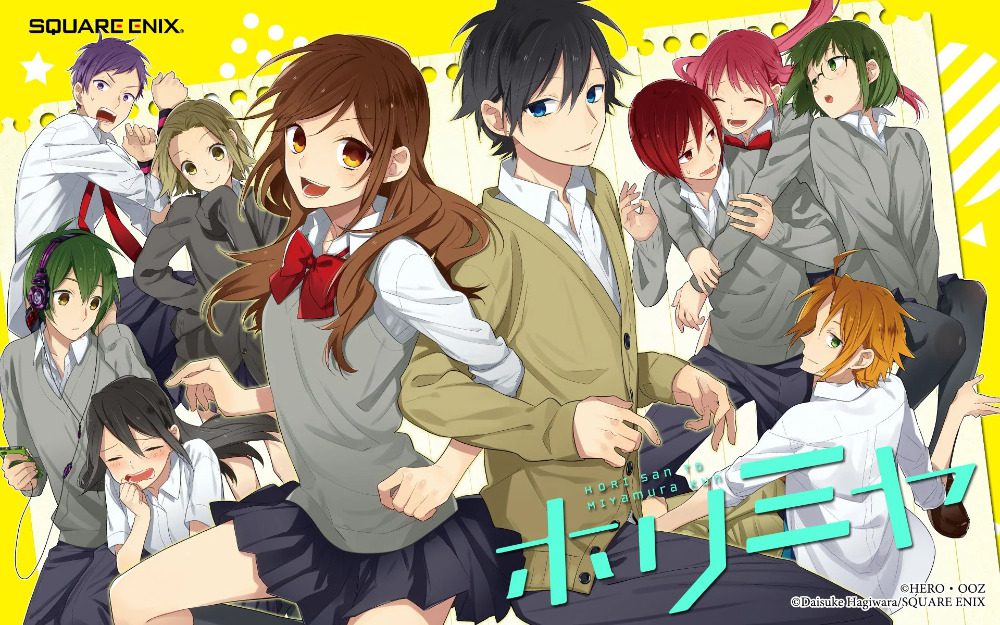
Horimiya
Coincidentally, both Izumi Miyamura and Kyoko Hori discover each other’s secrets. This later helps them to form an unlikely friendship that slowly and gently turns their friendship into a romantic relationship.
The story tells about their journey as they start to handle the twists and turns of high school life and deal with issues like family, friendship, and personal growth in life that continue to grow them closer and support each other in facing every obstacle.
“Horimiya” is a season 1 series that was aired in 2021, while season 2 that is “Horimiya: The Missing Pieces,” aired in 2023, is not related to season 1 but is a side story that tells about the missing pieces of season 1.
Season 2 takes a look at the fine stability between growth, romance, and difference of opinion, helps in making it an inspiring and captivating teen romance story.
- Released in Season 1 aired in 2021, and Season 2 aired in 2023
- Run Time: Season 1 contains 13 episodes of approx. 23 min
- Cast: Haruka Tomatsu, Koki Uchiyama, Seiichiro Yamashita, and Zeno Robinson
- Directed by: Masashi Ishihama
- Streaming platforms: Netflix, Amazon Prime Video, Hulu, Funimation, Crunchyroll, VRV, and HiDive
2. My Little Princess
“My Little Princess” is a Chinese drama. The story is about a wealthy heiress, Lin Xin Chen, who is an illegitimate child of a wealthy family. She was pressured by her family to marry a wealthy heir. Lin Xin Chen is defined as a rich and attractive young lady with a willful attitude, which is the opposite of the obedient and modest qualities that her fiance wants.
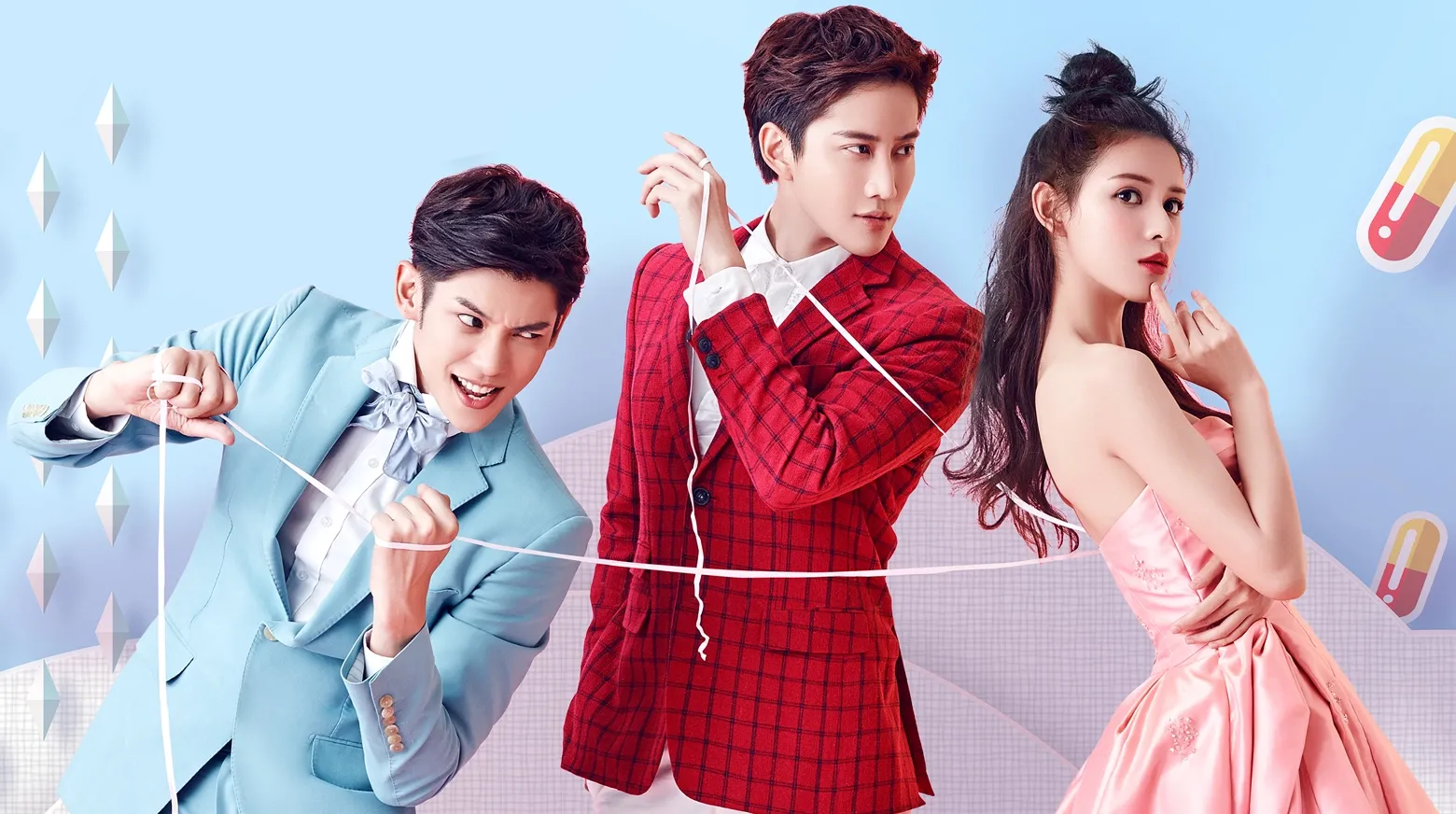
My Little Princess
The story tells about how Lin Xin Chen wins the heart of a rich heir while overcoming different obstacles and facing challenges in her way. The drama discovers themes like family, love, and societal expectations as Lin Xin Chen sails her way through the complications of her relationship and social status.
The series shows a fun and light-hearted tone with a bold female lead who knows what she has to do instead of a delicate female lead, as shown in other dramas.
- Released in 2016
- Run Time: 16 episodes of 45 min
- Cast: Zhang Yu Xi, Mike D. Angelo, Kenji Chen, Li Yi Xiao
- Directed by: Yu Chung Chung
- Streaming platforms: Viki, Asian Crush, Caravan
3. The Best of You in My Mind
“The Best of You in My Mind” is a Chinese romance drama. The story is about two childhood friends, Xu Fang and Lin Xi Chi, who slowly and gently fall in love with each other. Xu Fang is a national defense student and an outstanding musician while Lin Xi Chi is an optimistic and cheerful veterinary medical student in college.

The Best of You in My Mind (2020)
Xu Fang and Lin Xi Chi have been friends since their childhood; the story marks their road from being friends to gradually falling in love with each other. The story describes their path as they sail their way through family relationships, friendship, college life, and personal growth.
- Released in: 2015
- Run Time: 35 episodes of 45 min
- Cast: Zhang Yao, Song Yi Ren, Li Chung Lin, Qu Jing Jing, Guo Xin Yu, Jiang Rui Lin, and Cui Ya Han
- Directed by: Su Hao Qi
- Streaming platforms: Netflix, Amazon Prime Video, Viki
4. Cheese in the Trap
“Cheese in the Trap” is a South Korean romance drama. The story is about two college students, Hong Seol and Yoo Jung. Hong Seol is a painstaking and assiduous student who comes from a meek family, while Yoo Jung is a mysterious guy in college who is also a senior of Hong Seol; he looks like an ideal guy on the surface but has a darker side.
As they come closer to each other in their relationship, they start to experience complications, manipulations filled with dark secrets, and psychological games.
“Cheese in the Trap” is built on a webtoon series by Soonkki of the same name. It displayed an original ending at the time of filming, as the webtoon was not completed at the time. “Cheese in the Trap” displays themes like love, friendship, and the problems of relationships between humans, especially concentrating mainly on Yoo Jung and Hong Seol.
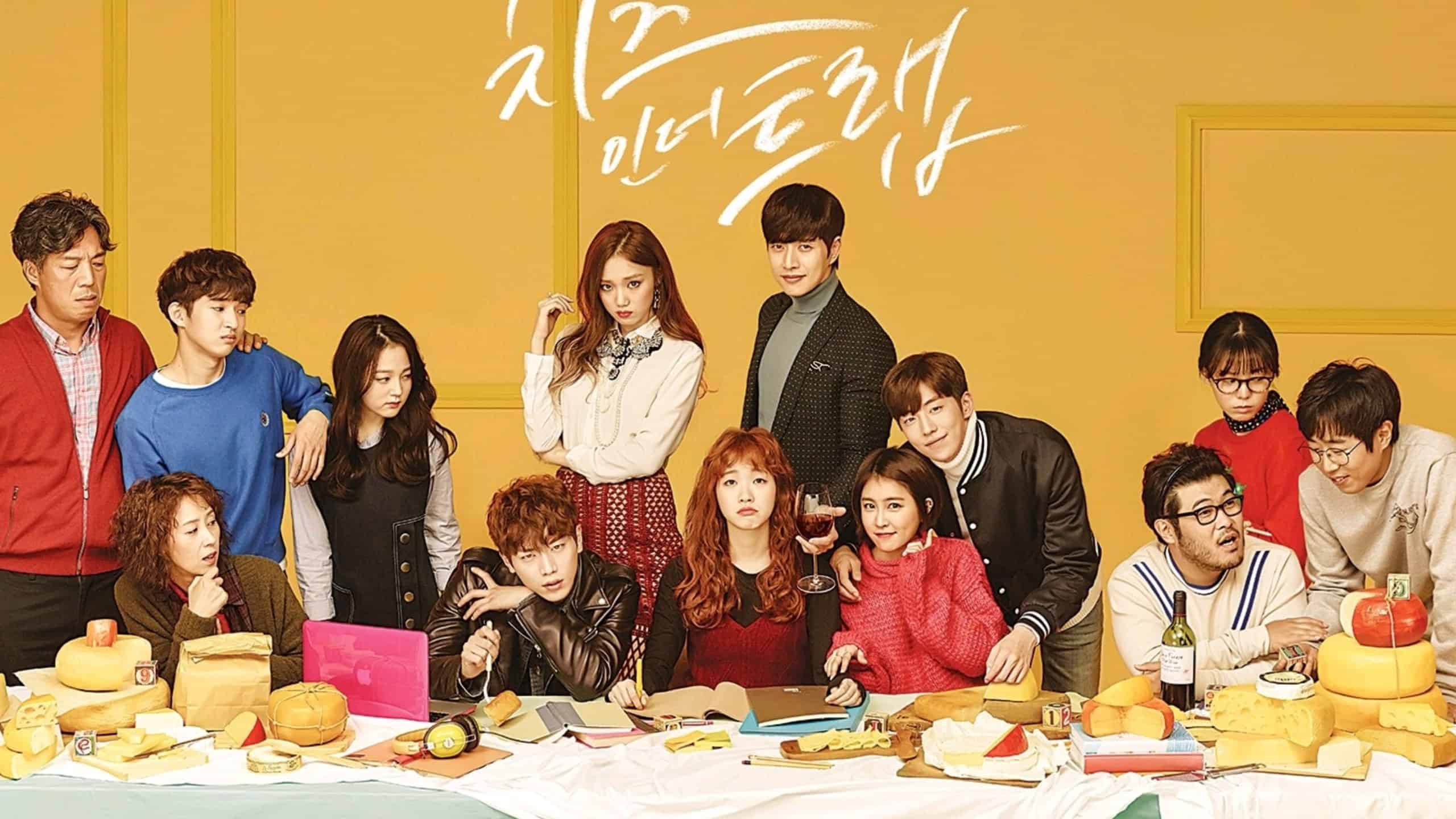
Cheese in the Trap ( credit: Nautiljon.com )
At the end of the drama, both Yoo Jung and Hong Seol, not knowing of each other’s presence, pass by each other on the footpath. At the same time Yoo Jung, after a long time, replies to one of the many emails of Hong Seol, passing the expectations to the audience for a plausible future reunion.
- Released on: 2016
- Run Time: 16 episodes of 1 hr
- Cast: Kim Go Eun, Park Hae Jin, Seo Kang Joon, Lee Sung Kyung
- Directed by: Kim Je Young
- Streaming platforms: Viki, Amazon Prime Video, The Roku Channel, Tubi TV, Kocowa
5. Shining Like You
“Shining Like You” is a Chinese romance drama. The story talks about how Lu Qi Yi, the female protagonist, misled her parents by taking admission to an art school in place of a foreign language college.
In art school, Lu Qi Yi meets Ye Lin, the male protagonist, who is displayed as a cold and arrogant character, but later, he eventually opens up to the female protagonist and helps her achieve her dreams in the entertainment industry. Their relationship grows as the drama moves forward, and they start to work in the entertainment industry with each other.

Shining Like You (2021)
As the female protagonist sets foot in the entertainment industry, the plot shows different locations like entertainment agencies, music studios, and performing stages. The drams also show China’s fashion and music in the modern day.
In the whole drama, both of them face many challenges and fight to pursue their passion for the arts. The drama displays themes like sacrifices, self-doubt and insecurities, competition, rejection and setbacks, personal growth, and overcoming obstacles and limitations.
- Released in 2021
- Run Time: 24 episodes of 45 min
- Cast: Gong Jun, Wang Zi, Ma Chuan Rui, Liu Jan Yu, Nikki Chen, Cheng Pen Wan Li, Wang Jia Yin, and Guo Jia Yi
- Directed by: Fu Cong
- Streaming platforms: WeTV, JustWatch, CPOP HOME
6. Put Your Head on My Shoulder
“Put Your Head on My Shoulder” is a Chinese romance drama. The story is about a genius physics student, Gu Wei Yi, and an accounting student, Si Tu Mo, who is unsure about her future paths as her graduation is held soon.

Put Your Head on My Shoulder (Credits: Tencent Penguin Pictures, S.JE Ideas Media)
The story talks about Gu Wei Yi and Si Tu Mo. Under some circumstances, both were resulted in living with each other. As they spend more time with each other they end up developing feelings for each other.
The main focus of the show was entirely on the main characters, with the story of the drama being simple and sweet. As the drama moves forward, it is seen how both of them encounter different challenges on the path to achieving their passion.
The theme of the story mainly displays personal growth, campus romance, physical and emotional support, simplicity, innocent romance, etc.
- Released in 2019
- Run Time: 24 episodes of 45 min
- Cast: Xing Fei and Lin Yi
- Directed by: Shi Shi
- Streaming platforms: Netflix, Roku, Rakuten Viki, Reelgood
7. A Love So Beautiful
“A Love So Beautiful” is a Chinese romance drama. The story revolves around its main characters, Jiang Chen and Chen Xiao Xi. Jiang Chen is the distant and cold top student in the class, while Chen Xiao Xi is a normal high school girl who has a crush on her neighbor, which is Jiang Chen.
The story talks about how Chen Xiao Xi pursues Jiang Chen and how they develop a relationship in college. Though, they ended up being separated because of the breakup.
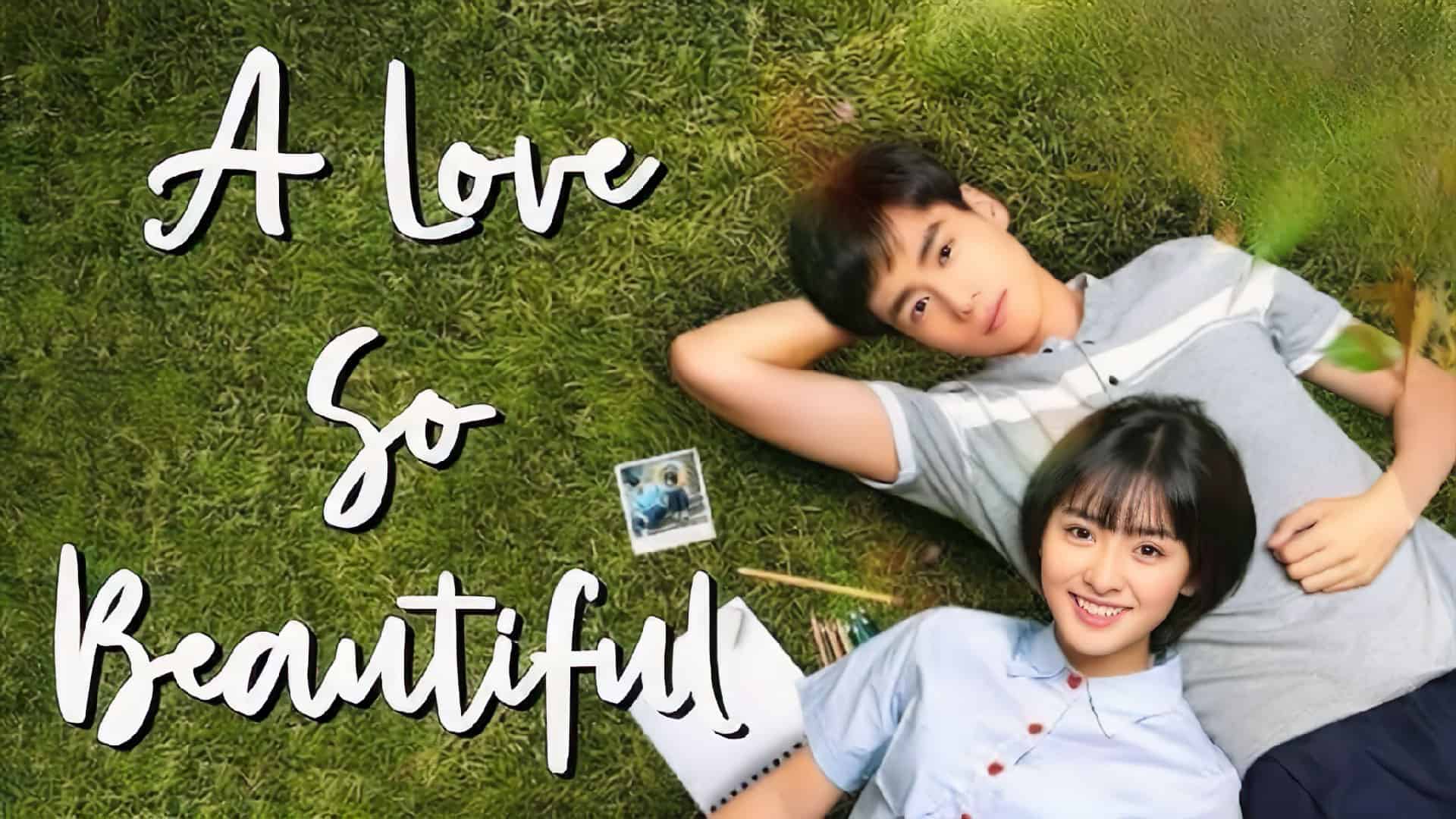
“Fall in love all over again with ‘A Love So Beautiful,’ the sweet and touching story of first love and friendship.
The setting of the drama circles around high school and college romance; it brings one’s emotions of first love that they were separated and only looks at the memories of the past as fondness.
- Released on: 2017
- Run Time: 24 episodes of 30 min
- Cast: Shen Yue, Hu Yitian, Gao Zhi Ting, Wang Zi Wei, Sun Ning
- Directed by: Yang Long
- Streaming platforms: WeTV, Netflix, JustWatch, BetaSeries, Rakuten Viki
8. Flourish in Time
“Flourish in Time” is a Chinese romance drama. The story revolves around Jiang Haoyue, who is displayed as an aloof and cold guy, and Lu Miao, who is displayed as a brave, sweet, and kind girl. The story tells how, because of an accident caused by Lu Miao’s father, Jiang Haoyue enters the life of Lu Miao as her brother.
The drama brings out their journey of how they overcome challenges in high school while gradually developing a close bond with each other and obtaining friends in high school.

All cast of Flourish in Time
The theme of the story is personal growth, independence, and falling in love. The drama makes the audience connect with it by showing the childhood moments of Jiang Haoyue and Lu Miao.
All through the drama, both of them made a deep connection with each other by being supportive and caring. The drama is based on the novel “Shei Neng Ping Ai Yi Jiang Yue Guang Si You.”
- Released in 2019
- Run Time: 24 episodes of 45 min
- Cast: Zhang Ling He, Anchy Deng
- Directed by: Jiang Jin Lin
- Streaming platforms: WeTV, iQiyi, Viki
9. Master Devil, do not Kiss Me
“Master Devil Do Not Kiss Me” is a Chinese romantic comedy-drama. The story revolves around the main characters, Han Qi Lu and An Chuxia. In the drama, An Chuxia, custody was given to Han Qi Lu’s family after the death of her mother.
At first, Han Qi Lu does not like An Chuxia, but as the drama moves forward, they eventually start to get closer, and then later, they end up falling in love with each other.
- Released on: 2017
- Run Time: a total of 46 episodes of 20 min
- Cast: Li Hong Yi, Xing Fei, Zhang Xin Cheng
- Directed by: Shang Tao
- Streaming platforms: Amazon Prime Video, WeTV, Apple TV, MyDramaList

Master Devil, do not Kiss Me
10. Love O2O
“Love O2O” is a Chinese romance drama. The story starts with Xiao Nai, the male lead, who is also a senior in college, notices Bei Weiwei, the female lead and a junior in a PC cafe; Xiao Nai is left with a great impression by Bei Weiwei after seeing her extraordinary skills in computer games.
Xiao Nai proposes to Bei Weiwei to be her partner in the game, which later helps them to get closer, and then they gradually fall in love and develop a relationship in real life. As the story moves forward, Xiao Nai starts to make his name in the entertainment industry by developing a game, with the help and support of Bei Weiwei, they overcome many challenges which come in the path of their passion.
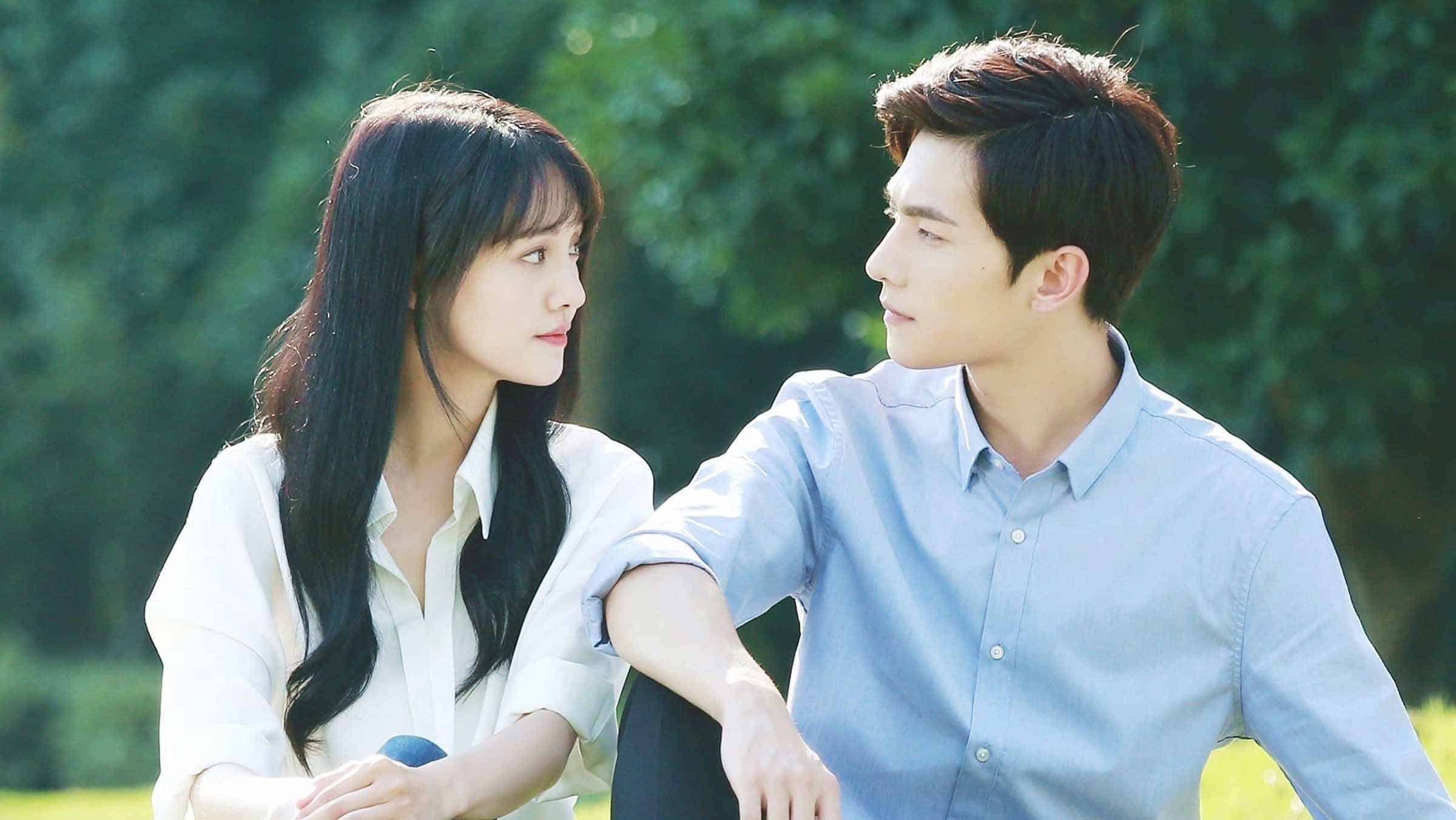
Love O2O
The story brings out themes like friendship, love, and personal growth. The story achieved huge fame in 2016 and was ranked first in ratings during the broadcast; it became a huge topic by becoming the most searched and most discussed topic on online platforms. It has a total of 24 Billion views all over China.
The drama gained a massive audience for its refreshing storyline, visually appealing cinematography, engaging characters, attractive personalities played the main leads, and by showing modern love in a digital era. The story is based on a novel, “Just One Smile Is Very Alluring,” also known as “Wei Wei’s Beautiful Smile”.
- Released on: 2016
- Run Time: 30 episodes of 45 min
- Cast: Yang Yang, Zheng Shuang, Mao Xiaotong, Bai Yu, Ma Chunrui, Qin Yu, Songxin Jiayi
- Directed by Lin Yu Fen and Guo Hu
- Streaming platforms: Netflix, Viki, JustWatch, Redbubble
11. My ID is Gangnam Beauty
“My ID is Gangnam Beauty” is a South Korean romance drama. The story is about a girl named Gi Maeng-gi, a college student who was body shamed in her past and undergoes plastic surgery to change her appearance and become beautiful.
In college, she crosses paths with Do Kyung-seok, a tall and handsome guy who identifies with her and is impressed by her because of her talent in dancing. As they get to know each other, they gradually fall in love with each other.
Together, they face judgemental society and beauty standards and learn the importance of inner qualities and self-acceptance.
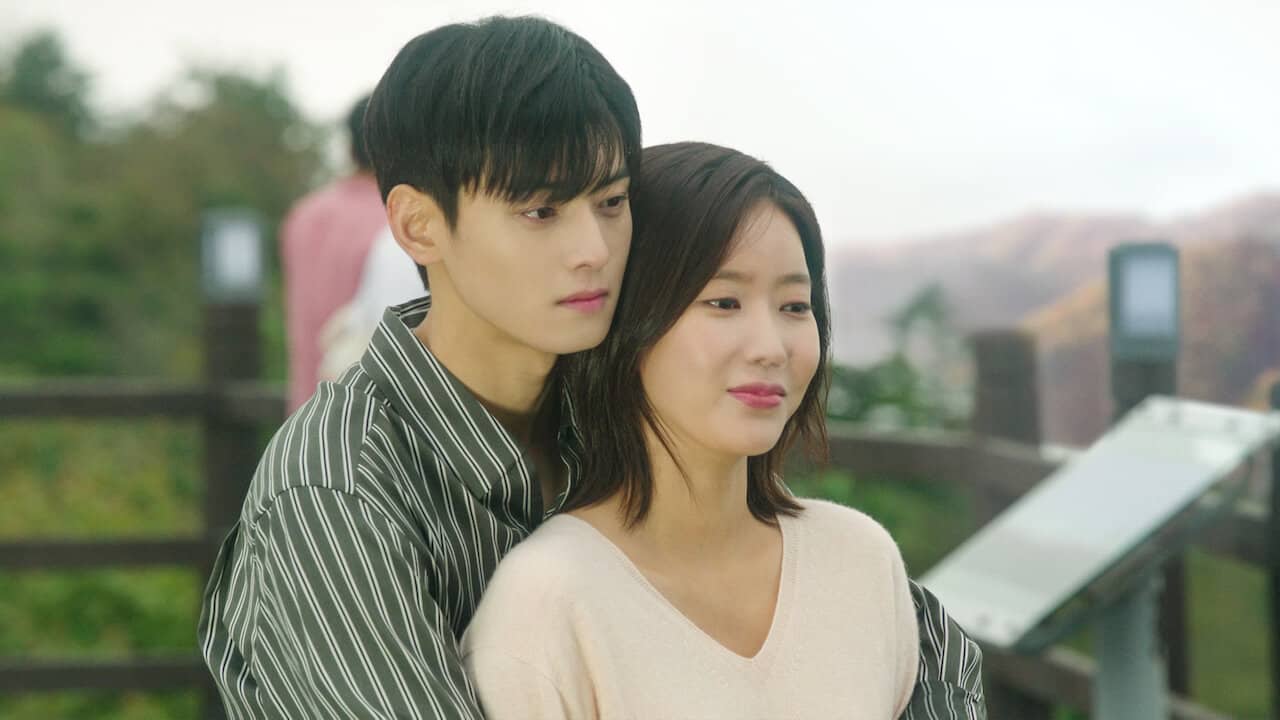
My ID is Gangnam Beauty
The drama deals with themes like love, friendship, trust, self-growth, self-esteem, etc. The drama gained a huge audience for its heartfelt performances, relatable storyline, and thought-arousing messages of self-esteem and self-worth. The drama is based on a webtoon of the same name.
- Released on: 2018
- Run Time: 16 episodes of 1 hr
- Cast: Im Soo-hyang and Cha Eun-woo
- Directed by: Choi Sung-bum
- Streaming platforms: BetaSeries, JustWatch, Tumblr, IMDb, Hums of Sum
12. Love Alarm
“Love Alarm” is a South Korean rom ance drama television series; it was made based on a webtoon of the same name by Chon Kye-young. The story of “Love Alarm” is basically what the name of the story says: one fine day, an app was developed by a stranger; the app tells a person of the presence of a love interest in a distance of 10 m or so.
The mobile phone makes a sound if someone is nearby and tells you that the person nearby loves you. The story moves forward with a high school girl, Kim Jojo, who faces love and personal difficulties.
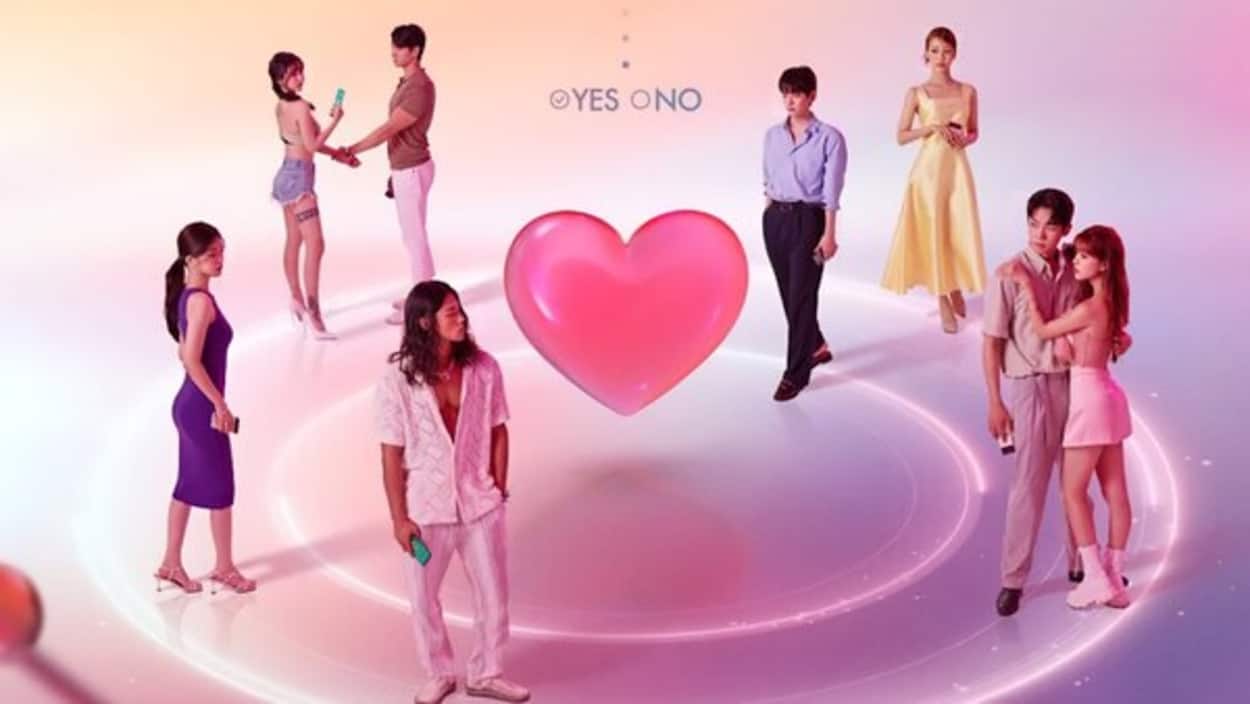
How To Watch Love Alarm Clap! Clap! Clap! Episodes? Streaming Guide (Image Credit: Simki)
The drama was featured on Netflix in 2019 as it appeared as Netflix’s top releases. Despite that, the drama got mixed reactions from the audience; some liked it for its unique plot, while some complained about it being an essential high school drama. “Love Alarm” experiences themes of technology, love, social disruption, etc.
- Released in 2019
- Run Time: 6 episodes of 57 min
- Cast: Kim So-Hyun, Jung Ga-Ram, and Song Kang
- Directed by: Lee Na-Jeong
- Streaming platforms: Netflix, Cosmo.ph, Preview.ph, Yahoo Lifestyle Singapore, PR Newswire, The Review Geek
13. First Love
“First Love” is a Japanese drama. The story was made based on two Hikaru Utada songs, ‘First Love’ and ‘Hatsukoi’. The story shows a young guy, Harumichi Namiki, and a girl, Yae Noguchi. Both of them were childhood sweethearts but had to be separated because of an accident; they met each other a few years later.
Meeting Yae Noguchi after so many years, Harumichi Namiki felt the same excitement and emotions he had a few years ago. As the drama moves forward, they start rebuilding their first love through the past moments and face different obstacles in their journey.

First Love
The story deals with themes like love, friendship, personal growth, etc. The story received mixed reactions from the audience; some liked it for its exquisite and enjoyable value, while some disliked it by saying it was an idiotic plot that lacked understanding.
- Released on: 2022
- Run Time: 9 episodes of 30-60 min
- Cast: Hikara Mitsushima, Takeru Satoh, Rikako Yagi, Taisei Kido, and Minami
- Directed by: Yuri Kanchiku
- Streaming platforms: Netflix, IMDb, Rotten Tomatoes, Variety
