When 28 Days Later hit theaters in 2002, it redefined zombie horror with its terrifyingly fast and aggressive infected. Instead of the traditional slow-moving undead, director Danny Boyle and writer Alex Garland introduced a world where victims of the Rage Virus became relentless predators. The infection spread after animal activists unwittingly unleashed it from a research facility, leading to a harrowing fight for survival. Boyle and Garland returned as producers for the 2007 sequel, 28 Weeks Later , which took the story in a new direction.
The first movie ends with a glimmer of hope as Jim (Cillian Murphy), Selena (Naomie Harris), and Hannah (Megan Burns) await rescue from international forces after the infected begin to starve. But rather than following their journey, the sequel shifts its focus to a fresh outbreak. It introduces siblings Tammy (Imogen Poots) and Andy (Mackintosh Muggleton), who return to London to reunite with their father, Don (Robert Carlyle), in a quarantine zone controlled by the U.S. Army. Unfortunately, their arrival sets off a catastrophic chain of events, proving that the nightmare is far from over.
28 Weeks Later Ending Explained

28 Weeks Later (Image via Getty)
The Rage Virus resurfaces when Tammy and Andy break out of the quarantine zone in search of mementos from their past. Their father had told them that their mother, Alice (Catherine McCormack), died during the initial outbreak, but they soon discover that she’s alive, hiding in their old home. The surprising truth is that Alice possesses a rare genetic immunity—she carries the virus without showing symptoms, making her a walking biological time bomb.
When the military captures Alice and studies her, scientist Scarlet (Rose Byrne) realizes the potential for a cure for her immunity. But before they can act, Don sneaks in to see Alice. Overcome with guilt for abandoning her, he kisses her—unaware that she is a carrier. The infection spreads instantly, transforming him into a raging monster. What follows is a brutal massacre as Don slaughters Alice and attacks the military personnel, triggering chaos within the supposedly secure quarantine zone.
Don’s infection is more than just another tragedy—it’s poetic justice for his earlier cowardice. His decision to abandon Alice during the opening sequence of the film had already marked him as a selfish survivor. Now, he becomes the catalyst for another wave of death and destruction, making him one of the most consequential figures in the film’s brutal narrative.
Andy Holds the Key to Survival
As the infection spreads uncontrollably, the U.S. Army loses its grip on the situation. Panic and violence erupt as the infected flood the streets. But amid the bloodshed, Scarlet realizes that Andy shares his mother’s genetic immunity. This makes him humanity’s best shot at creating a cure. Determined to protect the boy, Scarlet and sniper Doyle (Jeremy Renner) risk everything to get Andy and Tammy out of the city alive.
Their journey is anything but easy. In a desperate bid to contain the outbreak, the military imposes a ruthless shoot-to-kill order, treating survivors as expendable. Bombs rain down on London, reducing it to rubble in a futile attempt to eradicate the infection. Doyle sacrifices himself to ensure the group’s escape, burning alive in a hellish firestorm as he helps them find transportation. His death is a stark reminder that survival in this world often comes at a heavy cost.
The remaining trio makes their way underground, seeking safety in the subway tunnels. But even in the darkness, danger lurks. Don, still consumed by the virus, tracks them down. He brutally murders Scarlet, leaving Tammy and Andy to face their father alone. The moment is emotionally devastating—Andy, despite his immunity, is still vulnerable to infection if his body succumbs to the virus. When Don bites him, it seems like all hope is lost.
But Andy’s resilience shines through. His body resists the virus, proving that he truly is immune. Tammy steps up, killing their father before he can do more harm. With no one else left to protect them, the siblings rely on each other as they fight their way toward an uncertain future.
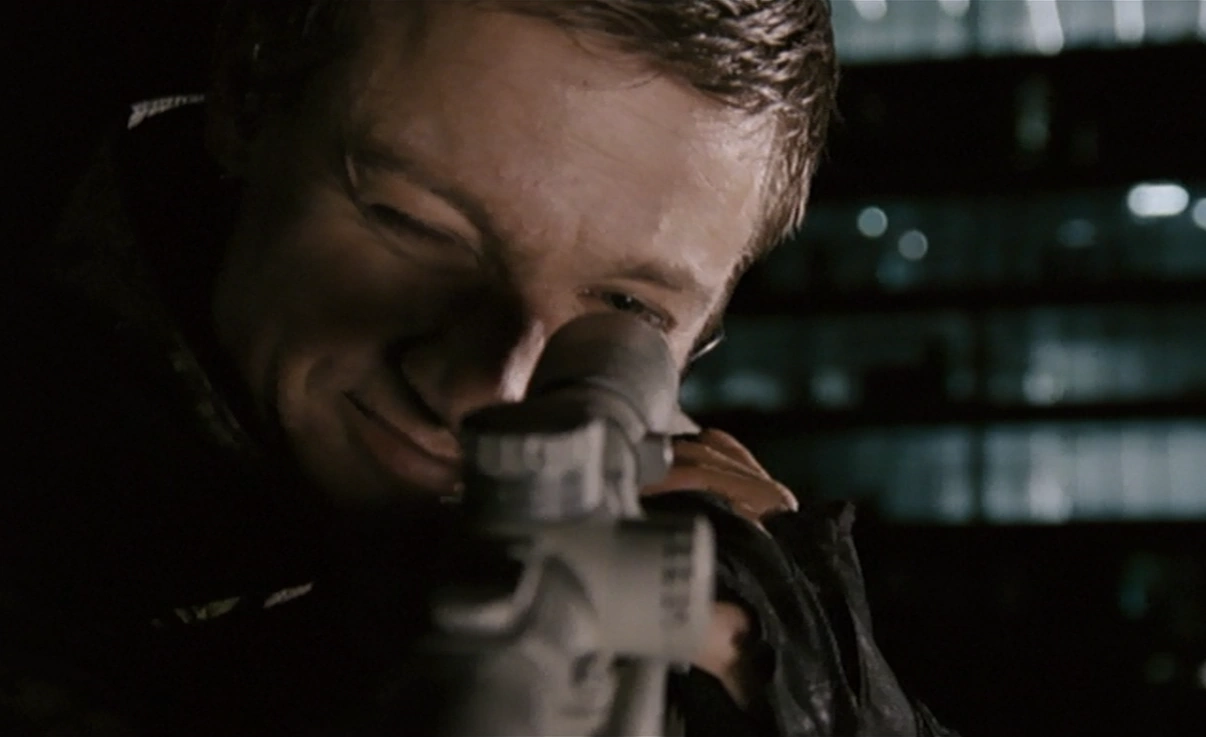
Doyle (Image via Getty)
Escape From London
Their only hope of survival lies in reaching Wembley Stadium, where Doyle’s friend, Flynn (Harold Perrineau), waits with a helicopter. Although Doyle didn’t make it, Flynn chooses to evacuate the children, recognizing that Andy could be the key to stopping the virus once and for all. He flies them across the English Channel, heading toward France.
But the film doesn’t offer a neat resolution. In a chilling final scene, the abandoned helicopter is found weeks later. A French voice crackles through the radio, and the last shot reveals the infected charging toward the Eiffel Tower. The Rage Virus has reached mainland Europe, suggesting that the nightmare is far from over.
The open-ended conclusion leaves audiences with pressing questions. Did Tammy and Andy survive? Could a cure be developed in time? And with the virus spreading beyond Britain, what does this mean for the rest of the world? The bleakness of the ending reinforces the idea that even the smallest act of survival can have dire consequences.
The Future: 28 Years Later
For years, fans speculated about a third installment, but it seemed like a lost cause—until now. In early 2024, it was officially announced that 28 Years Later is happening, and not just as a single movie. Director Danny Boyle and writer Alex Garland are overseeing a full-fledged trilogy, with the first film set to release on June 20, 2025. The sequel, 28 Years Later: The Bone Temple , arrives on January 16, 2026, with Nia DaCosta taking the director’s chair. Details about the third film remain under wraps.
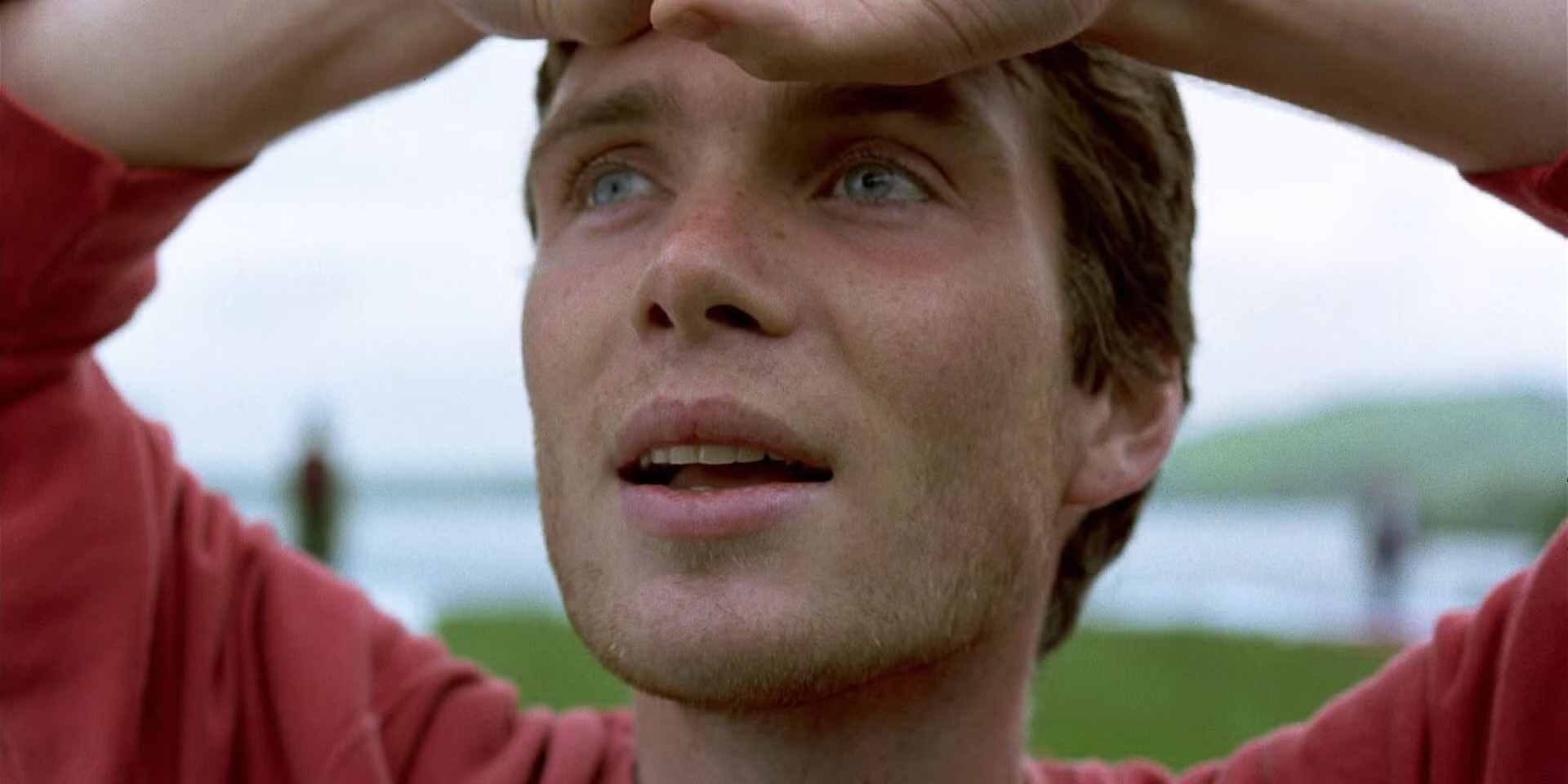
Jim (Image via Getty)
Cillian Murphy, the original protagonist of 28 Days Later , is returning, though his role remains unclear. However, the announced cast for 28 Years Later —including Jodie Comer, Aaron Taylor-Johnson, and Ralph Fiennes—suggests a fresh direction for the franchise. Notably absent are Tammy and Andy, meaning the new films may not follow their storyline or continue directly from 28 Weeks Later .
The first glimpses of 28 Years Later hint at a world where the Rage Virus has spread unchecked. The setting shifts to an isolated island community, connected to the mainland by a causeway. Life there appears stable, but glimpses of military factions and a mysterious religious cult called the Bone Temple suggest that civilization is still teetering on the edge of collapse. The scope of the virus’s devastation is likely to be more global, showing just how deeply it has shaped human survival over nearly three decades.
Conclave leaves audiences with a thought-provoking ending, sparking debates about faith, identity, and institutional change. Directed by Edward Berger and adapted by Peter Straughan from Robert Harris’s novel, the political thriller takes viewers through the intense process of selecting a new pope. With critical acclaim and awards buzz, Conclave successfully blends suspense with philosophical questions about morality and tradition.
The film follows Cardinal Thomas Lawrence, who, despite initial disinterest, finds himself a strong contender for the papacy. However, it is Cardinal Vincent Benitez who is ultimately chosen, a surprising outcome given the secret he carries. Before the announcement is made to the public, Lawrence visits Benitez and discovers something astonishing—Benitez nearly underwent a hysterectomy. The revelation leaves Lawrence stunned, yet he chooses to remain silent. The final white smoke rises, signaling that a new pope has been elected.
Conclave Ending Explained
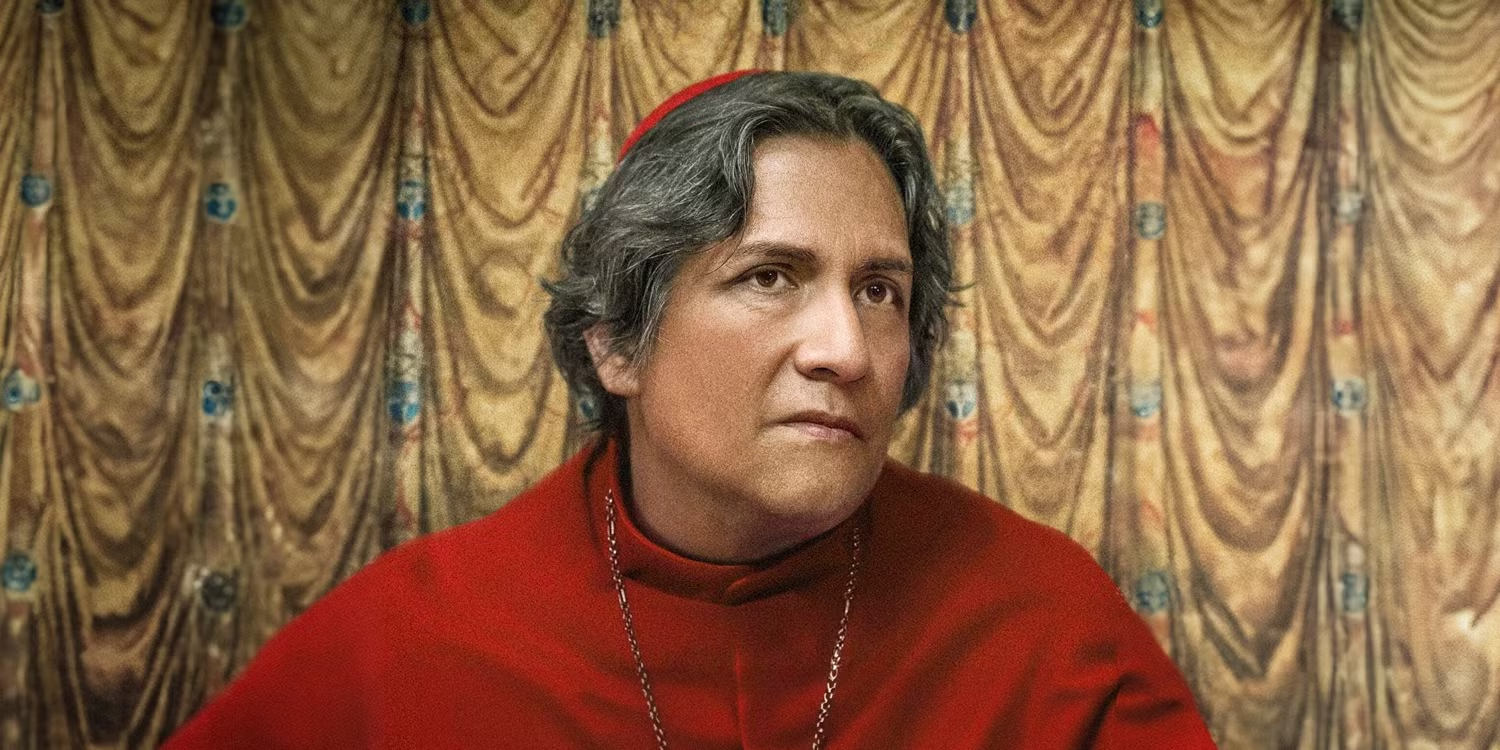
Cardinal Benitez (Image via Getty)
Benitez’s backstory serves as the film’s most unexpected twist. The new pope is intersex, a fact that remained unknown to even himself until adulthood. Raised as a male and sent to seminary early on, Benitez lived under the assumption that he was biologically male. However, a life-altering moment in Afghanistan changed everything. After surviving a car bombing, a routine medical examination revealed he had a uterus.
Believing this disqualified him from his position, Benitez attempted to resign. Instead, the previous pope, aware of the situation, arranged for Benitez to have a hysterectomy. But Benitez ultimately chose not to go through with it, believing that he should remain as God made him. Apart from the late pope and a doctor, no one knew of Benitez’s condition. As he assumes his new role, the question remains—will he reveal his secret to the Catholic Church and the world?
Why Benitez Chose The Name “Innocent”
Upon being elected, Benitez selects the name “Innocent,” a title with deep historical significance. The first Pope Innocent held the Holy See in 401, known for strengthening papal authority. Given the corruption exposed throughout the film, this choice reflects Benitez’s desire to bring integrity to the role.
Director Edward Berger elaborates on the name’s meaning, describing it as a representation of purity and openness. He likens it to the innocence of children—untainted by societal conditioning, free from prejudice. Benitez’s character embodies this concept, standing apart from the more politically driven cardinals. His faith remains unshaken, and his vision for the Church is one of genuine acceptance rather than power struggles.
Why Cardinal Lawrence Keeps Benitez’s Secret
Throughout Conclave , Cardinal Lawrence exposes the hidden agendas of his fellow cardinals, ensuring a just election. Despite this, he makes the conscious choice not to reveal Benitez’s truth. By the time he learns of it, Benitez has already been elected. Unlike the blackmail and unethical tactics used by others, Benitez’s intersex identity is not a scandal but a deeply personal truth.
Lawrence also sees Benitez’s faith as sincere. Outing him would not only betray that trust but serve no real purpose in changing the election’s outcome. While many of the other cardinals manipulated the process for personal gain, Benitez’s journey represents something different—an opportunity for meaningful change within the Church.
Director Berger offers insight into Lawrence’s mindset. He recognizes that the right person has been chosen, not because of political maneuvering, but because of true belief. This realization reshapes Lawrence’s understanding of faith and leadership. The Church, historically a rigid patriarchal institution, experiences a shift—a small but significant crack in its foundation, hinting at a future where tradition and progress can coexist.
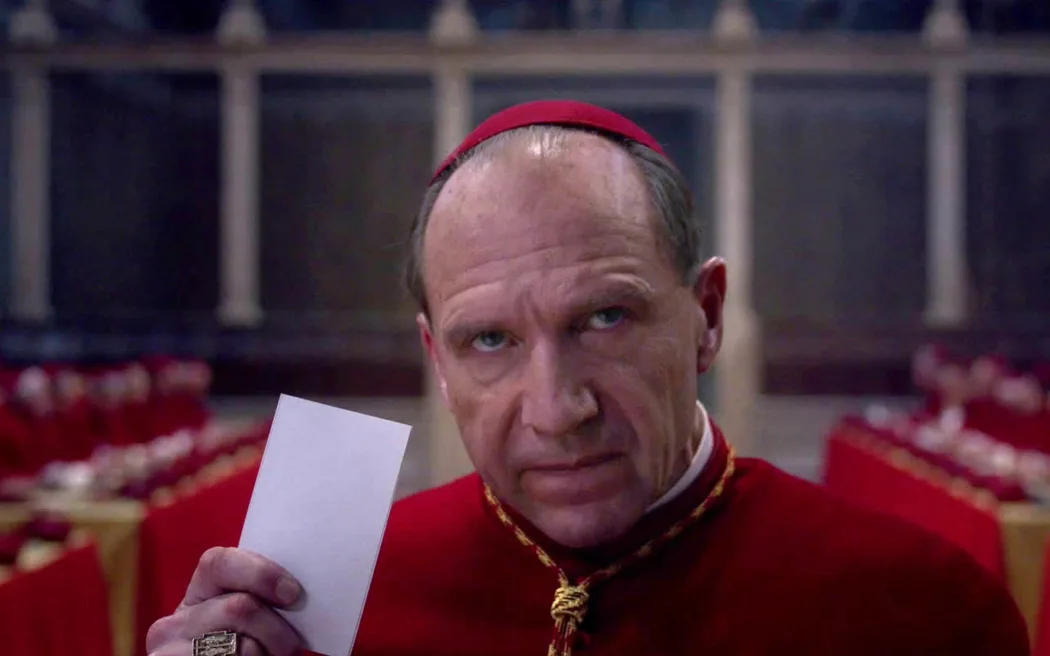
Cardinal Lawrence (Image via Getty)
The Symbolic Meaning Behind Conclave’s Final Shot
The film closes on a visually rich moment—Cardinal Lawrence opens a window, allowing sunlight and fresh air to flood the Sistine Chapel. This action serves as a powerful metaphor, signifying renewal and a shift toward a more open-minded future under Benitez’s leadership. The sound of three nuns laughing further underscores this theme.
Ralph Fiennes, who plays Cardinal Lawrence, interprets the turtles shown in the final scene as symbols of “spiritual independence.” Isabella Rossellini, who portrays Sister Agnes, adds that the moment highlights the contrast between the conclave’s claustrophobic atmosphere and the world beyond its walls. The opening of the window is not just literal—it represents a breaking of barriers, a new beginning for the Church.
Director Berger reinforces this idea, explaining that the laughter of the nuns symbolizes hope. The film’s final moments suggest a future where inclusivity and understanding replace secrecy and exclusion. Benitez’s election, though controversial, may usher in an era of greater acceptance within the Church.
The Real-World Possibility Of An Intersex Pope
The idea of an intersex pope raises intriguing questions about the Catholic Church’s stance on gender and sexuality. Papal expert David Gibson, Director of the Center on Religion and Culture at Fordham University, weighs in on this possibility.
According to Gibson, there is no theological barrier preventing an intersex individual from being elected pope. Just as history has seen gay men take the position, an intersex pope could theoretically lead the Church. However, the film doesn’t fully explore what this would mean in practice, leaving certain questions unanswered.
Gibson points out that Pope Francis has taken steps toward inclusivity. In 2023, he met with a group of trans and intersex Catholics, affirming their dignity and existence. This real-life moment resonates strongly with Conclave’s central themes, showing that the Church is already beginning to acknowledge gender diversity.
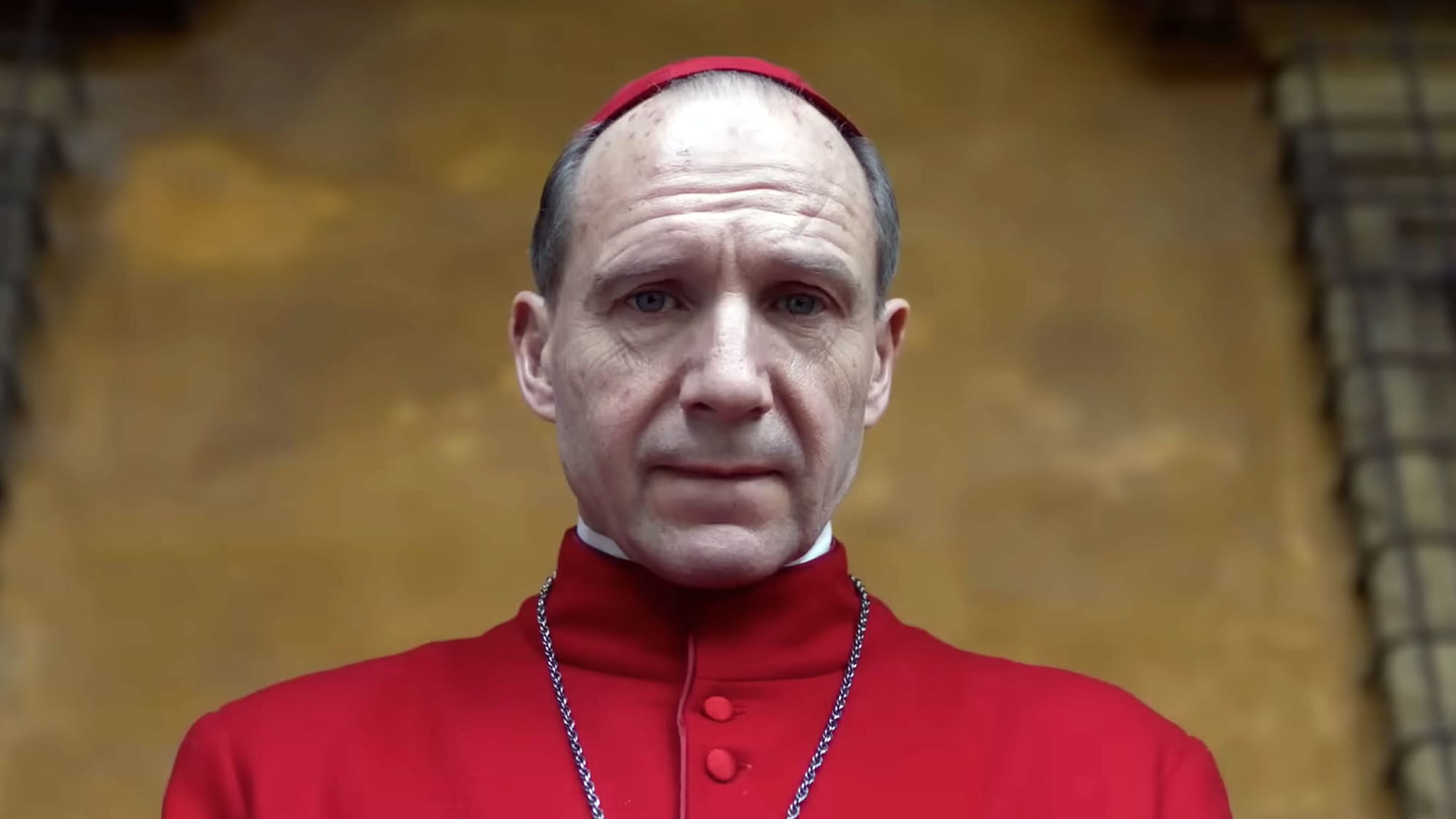
Cardinal Lawrence (Image via Getty)
Cardinal Lawrence’s Changing Perspective On Becoming Pope
At the start of the Conclave , Cardinal Lawrence has little interest in becoming pope. His focus is on maintaining fairness during the election, exposing corruption, and ensuring that a deserving candidate is chosen. However, as the process unfolds, he begins to see himself as a potential leader.
Benitez consistently votes for Lawrence, recognizing something in him that even Lawrence himself struggles to see. His belief, along with Lawrence’s growing awareness of the Cardinals’ moral failings, leads to a shift in perspective.
The Late Pope’s Knowledge Of The Cardinals’ Secrets
Though the pope dies at the beginning of the film, it becomes evident that he is well aware of the political scheming within the conclave. He knew of Cardinal Tremblay’s bribery attempts and had even demanded his resignation before his death. Most notably, he knew about Benitez’s condition and secretly appointed him a cardinal.
The late pope’s choices reveal a depth of foresight. By appointing Benitez, he ensured that the Church had a leader who could bring about transformation, even if his decision would have been controversial.
