As a society, we are very familiar with ghost stories. They are a common part of all cultures worldwide and have been for many years. Ghosts have always sparked fear, curiosity, and sometimes even comfort in people. They have been symbols of hope, evil, and the afterlife, especially through old stories and fables.
When humans began using art to express themselves, ghosts naturally became a part of that. They appeared in paintings, books, poems, and films.
The new film Went Up the Hill, directed by Samuel Van Grinsven, also includes ghosts. It uses a ghost to unite two otherwise disconnected people in a story that takes its time but isn’t without its flaws.
Vicky Krieps (from Phantom Thread) plays Jill, a shy woman grieving the loss of her wife, Elizabeth. She is living in their unsettling, modern house in the isolated countryside of New Zealand.
Suddenly, a young man named Jack (played by Dacre Montgomery from Stranger Things) shows up at her door. Jack says he was invited to the funeral and reveals that he is Elizabeth’s biological son.
This surprises Jill, but she still invites him in and allows him to stay in the house, even though Elizabeth’s suspicious sister, Helen (played by Sarah Peirse), doesn’t like it. As Jill and Jack spend more time in the house, they start to feel Elizabeth’s ghostly presence, and it’s not a peaceful one.
Went Up the Hill Isn’t a Usual Ghost Story
Jack and Jill start waking up in bed together, confused, with no memory of what happened the night before. They soon realize that Elizabeth’s spirit takes control of them when they are unconscious. Her intentions are unclear. Sometimes she controls one of them, and at other times, she controls both at once.
One of the most shocking scenes happens when Elizabeth tries to reconnect with Jill through Jack in an intimate way. She speaks to Jill using Jack’s body, telling her she won’t let him leave so they can be together again. When Jill hesitates, Elizabeth becomes angry and violent.
This scares both Jill and Jack. Jack begins to worry that this side of Elizabeth may be why he was taken away from her as a child. The situation creates fear in both characters, especially when they start to avoid sleep, unsure of how to escape Elizabeth’s control.
Jack and Jill scatter Elizabeth’s ashes in the wild, empty New Zealand countryside, hoping to stop the haunting, but their troubles are far from over. Jack confronts his aunt Helen, searching for answers about his past. This leads to disturbing discoveries about his mother and his childhood.
As emotions rise and tensions increase, Jack and Jill become more and more affected by Elizabeth’s harmful actions. They lose consciousness, fight each other, and face Elizabeth’s full cruelty. The story reaches its peak when everything falls into chaos for Jack and Jill.
Went Up the Hill Has a Weak Script But Strong Acting and Visuals
Went Up the Hill is a movie that succeeds with its eerie atmosphere, thanks largely to Tyson Perkins’ beautiful cinematography and creative use of camera angles. The way he frames the scenes makes viewers feel uneasy, adding to the tension of the story.
The small cast also gives great performances. Krieps and Montgomery have a strange but interesting dynamic as their characters grow closer. Both actors must play two versions of their characters: their regular selves and their “possessed” selves when Elizabeth controls them.
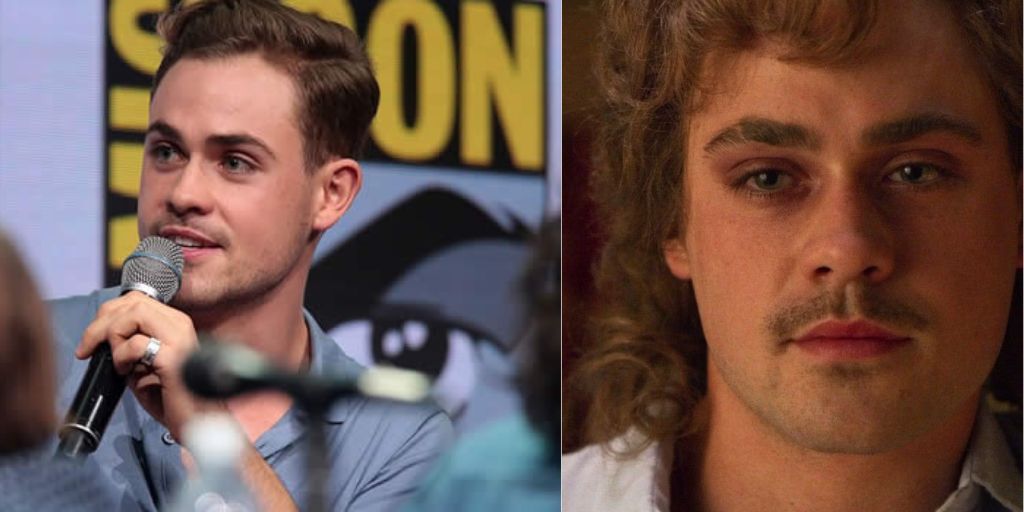
Still from Went Up the Hill (Credit: Causeway Films)
This is a tough challenge, but they pull it off well. Another standout feature is Hanan Townsend’s haunting music score, which adds to the film’s cold and unsettling mood.
While the movie has an interesting idea, it doesn’t always execute it well. Went Up the Hill can be frustratingly slow at times, with some scenes feeling unnecessary and repetitive. The film’s slow pace works against it, and at points, it seems stuck, unsure of how to move the story forward.
In many ways, the film might have been more effective as a short film, where a shorter runtime could have helped with pacing and narrative structure. Despite its flaws, the film still holds up thanks to its strong points.
Samuel Van Grinsven’s eerie ghost story is a chilling concept with committed performances and effective elements, but it feels like it lasts too long.
If there’s one thing that makes a show like Evil special, it is the well-made demons, monsters, and other creatures that appear. The series follows three assessors from the Catholic Church: Dr. Kristen Bouchard (Katja Herbers), Father David Acosta (Mike Colter), and Ben Shakir (Aasif Mandvi).
They investigate and examine strange events happening around New York. The show gives us many scares across its 50 episodes, never shying away from making its monsters bigger, bolder, and even a bit silly.
But are the demons in Evil real? How did the filmmakers bring them to life? Now that the series is finished, we look for answers until more comes our way.
Are the Demons of Evil Real?
When Evil began, Kristen, Ben, and David tried to explain almost every strange event they encountered. The show seemed to suggest that supernatural demons were only symbols of psychological issues, a view Kristen holds for most of the series.
Sometimes, the demons are shown as hallucinations, but the audience sees many grotesque monsters. Even Michael Emerson’s character, Leland Townsend, who believes strongly in Satan, hints that the forces of darkness use natural ways to influence people, like Kristen’s mother, Sheryl (Christine Lahti).
Over time, especially with characters like Sister Andrew (Andrea Martin), Evil starts to suggest that the supernatural might be real and that many demons shown earlier could be genuine.
By Season 3, it becomes clear that demonic forces are a real threat. The introduction of the Entity and different beliefs within that group shows that even if Evil’s demons represent spiritual or psychological issues, the ultimate goals of various demonic groups remain evil.
The series frames it as demons existing but using ordinary, everyday methods to get what they want. Characters like Leland, who is not a demon himself, act under the influence of the Devil. Other characters, like Sheryl, become human tools in a demonic plan. As the series progresses, the connection becomes clearer to the main characters.
We also see some demons switch from one character’s viewpoint to another. In Season 2, the Fire Jinn first appears to a young girl before haunting Kristen. This creature reflects Kristen’s own struggles, and only after an exorcism, which she believes worked only as a placebo, does she find freedom from the fire-headed monster.
Similarly, Andy Bouchard (Patrick Brammall), who has not met demons before, finds many familiar ones in their unfinished house at the end of “The Demon of the End.”
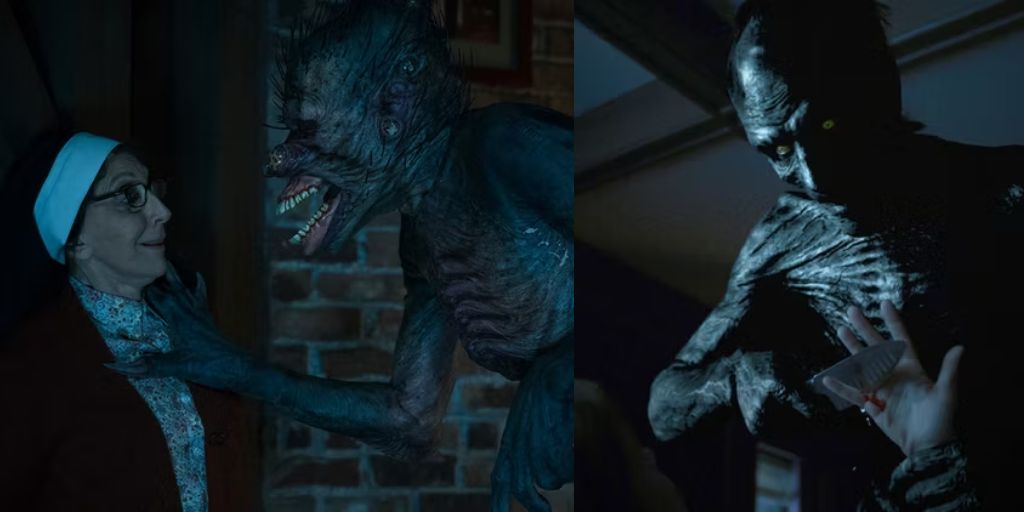
Still from Evil (Credit: Paramount+)
Sister Andrea sees the same evil beings. Demons in Evil make people feel insane, which adds to their effectiveness. They may use ordinary methods to achieve their goals, similar to how Satan uses humans and nature in the biblical Book of Job, but that does not make them any less real.
Evil’s Demons Are Made Practically (and Enhanced Digitally)
What truly sets Evil’s demons apart is not their reality but how they look. Many well-known creators, including Stephen King and Guillermo del Toro, have praised the show for its creepiness. Del Toro highlighted that Evil has become his favorite place for creature design, specifically pointing out the Antichrist Demon Baby from Seasons 3-4.
After Season 3, the creators, Robert and Michelle King, explained that most demon creatures are made with practical special effects, which adds to their spooky appearance. Robert King said, “Often, I find horror movies or TV shows throw me out of it because I can tell when it’s CGI, and I know there’s an unreality to it.
What works best is when [special character designer Joel Harlow] does something real, and then maybe CGI wings need to be attached to it.”
An example is the Bat Demon, which first appears in Season 2’s “C Is for Cannibal” and returns in “The Demon of the Road.” A behind-the-scenes feature shared on Paramount+’s YouTube shows a shot of the Bat Demon on set, followed by the digital version created later.
The only notable change is that the demon’s eyes glow red, which was intended for filming but failed due to a dead battery pack. They added wings in post-production, but otherwise, Harlow and his team sculpted the monster themselves, which is true for most demonic characters in the show.
In an interview with IndieWire, Harlow discussed the hard work behind these creatures. One example is the cannibalistic giant pig from Season 4’s “How to Slaughter a Pig.” Harlow explained that it took about four months to create the demon pig, even though it appears on screen for less than a minute.
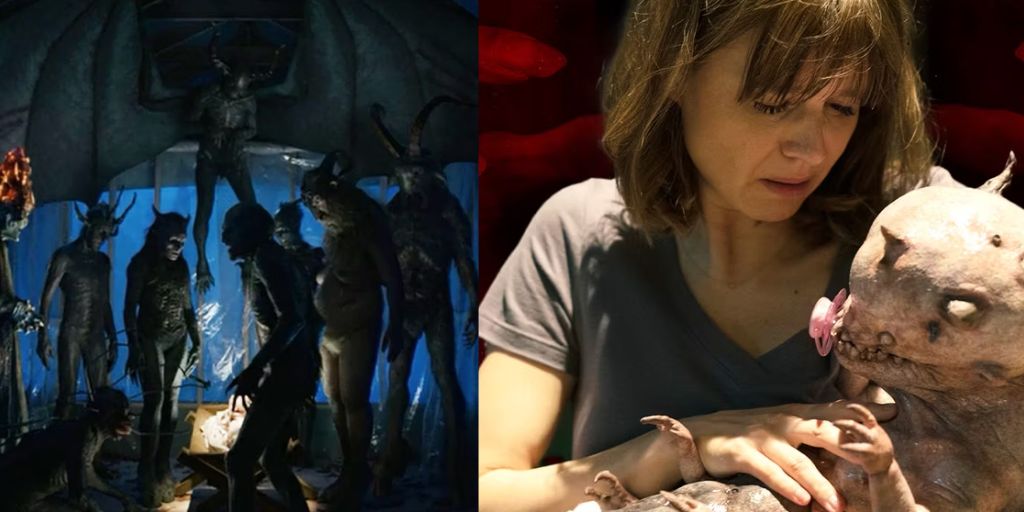
Still from Evil (Credit: Paramount+)
Still, he felt thrilled to be part of such a project. “It’s the fulfillment of a childhood dream,” he said, calling Evil a unique creative opportunity. This shows the incredible effort that the creature artists put in to bring these monsters to life.
Marti Matulis Doesn’t Take His Demonic Characters Too Seriously
Did you know that many demons and monsters in Evil are played by the same actor? If you have not heard of Marti Matulis, now is the time to learn. Matulis has been with Evil since the beginning, playing George, Kristen’s night terror demon in the first season.
He also plays Leland’s Therapist Demon in Seasons 1-2 and the Manager Demon in Seasons 3-4. Throughout the show, he took on the roles of the Fire Jinn, the Bat Demon, the Mosquito Demon, the Sex/Marriage Demon, and more. He even portrayed the frightening version of the Archangel Michael in Season 2’s “A Is for Angel.”
Having acted alongside almost every cast member, it is clear that Matulis has a great talent for these characters and shows great variety in his performances.
Character designer Joel Harlow introduced Marti Matulis to the creators and showrunners, Robert and Michelle King. They chose to work with him throughout the series, which includes appearances in other creature-heavy shows like Sleepy Hollow, Teen Wolf, and Grimm.
Matulis appeared in 33 episodes of the four-season series and enjoyed every moment. In an interview for “Behind the Monsters,” Matulis explained that his success in playing monsters comes from not taking them too seriously.
“This work is about playing, so maintaining that kind of childlike, playful attitude is really super key,” he said. To him, acting as monsters is like a game, and this lightheartedness helps him truly own these roles.
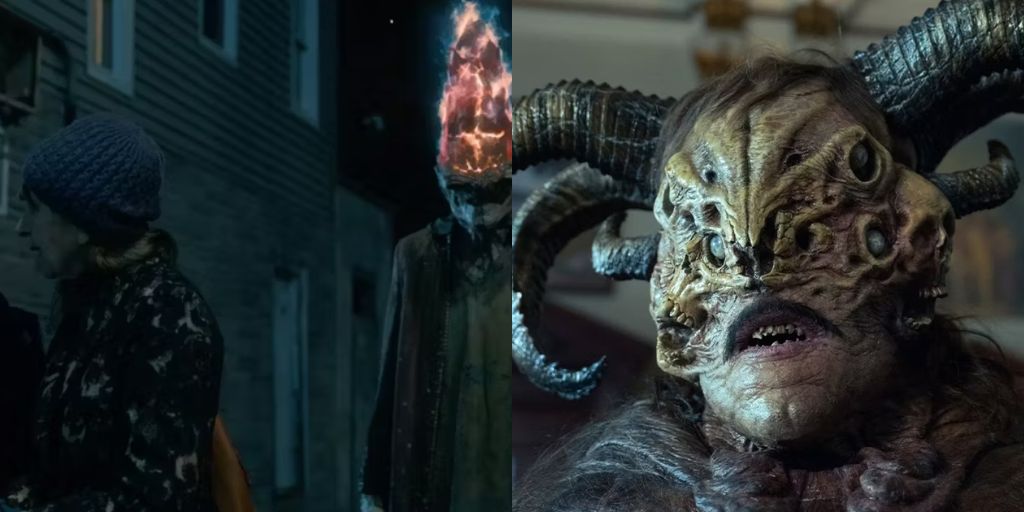
Still from Evil (Credit: Paramount+)
In many ways, the creatures of Evil contribute to the show’s success. While the demonic threats are real, it is the personality that actors like Marti Matulis and others, such as Ashley Edner and Fedor Steer (who played Abbey the Succubus and the Massive Stick Demon), give that helps the show stand out from other supernatural series.
Each monster is memorable and adds to the larger story that challenges the beliefs of Kristen, David, and Ben as they battle against darkness. This achievement comes from the hard work and dedication of everyone involved in creating these creatures and the skillful way the Evil story unfolds.
Evil attracts audiences with its imaginative demons and engaging storytelling. The blend of practical effects and talented actors, like Marti Matulis, brings the terrifying creatures to life. As viewers reflect on the series, they appreciate the blend of horror and humor that makes Evil truly unique.
Evil is available for streaming on Paramount+.
