Being a single parent to two boys and trying to escape your past is difficult. It becomes even harder when you’re raising them in an evil-filled forest where you can only roam outside your home for a limited time. The lurking evil seems personally focused on your downfall.
Never Let Go, the latest horror movie from director Alexandre Aja, features a mother raising her children in a cabin surrounded by a shapeshifting, evil force that wants to destroy them. They are only safe if they stay connected to the home’s foundation.
This horror film offers excellent performances but leaves some unresolved issues in its story. While Never Let Go provides a tense, fear-filled experience, audiences might walk away with many unanswered questions about the ending.
What Is Never Let Go About?
Samuel (Anthony B. Jenkins) and Nolan (Percy Daggs IV) are two boys growing up like most children, arguing, spending time together, and living in a cabin in the woods. The difference is that the evil outside is trying to corrupt and destroy them—or at least that’s what their mother (Halle Berry) tells them.
The cabin, passed down from Mama’s family, is protected by an enchantment that keeps the evil away. However, leaving the cabin requires the boys to hold onto ropes connected to the home’s foundation. The family faces three big problems: First, Mama is the only one who can see the evil.
Second, the boys, especially Nolan, are growing up and questioning whether their mother is telling the truth. Finally, they can’t leave the cabin much, so they rely on whatever they can gather, grow, or save from around the house, and this winter has been the hardest yet. The family faces a dilemma—leaving the cabin and staying both feel dangerous.
Never Let Go Has Great Performances, But Needs Improvement
The movie has excellent cinematography and production design, creating a beautiful yet oppressive world. The green, rich forest feels wild and threatening at times, while the cabin is full of old paintings and carvings, giving it a historical, timeless feel.
A small sunken chamber in the cabin, with a carved wooden door, plays a significant role as it’s where the boys must go to refill the home’s protective energy. The whole setting helps create a strong feeling that the family is alone in the world, fighting against an unknown evil.
Director Alexandre Aja, along with writers KC Coughlin and Ryan Grassby, builds a tense and scary world with plenty of unsettling moments that will leave horror fans satisfied. If you’re looking for tension, this movie delivers it.
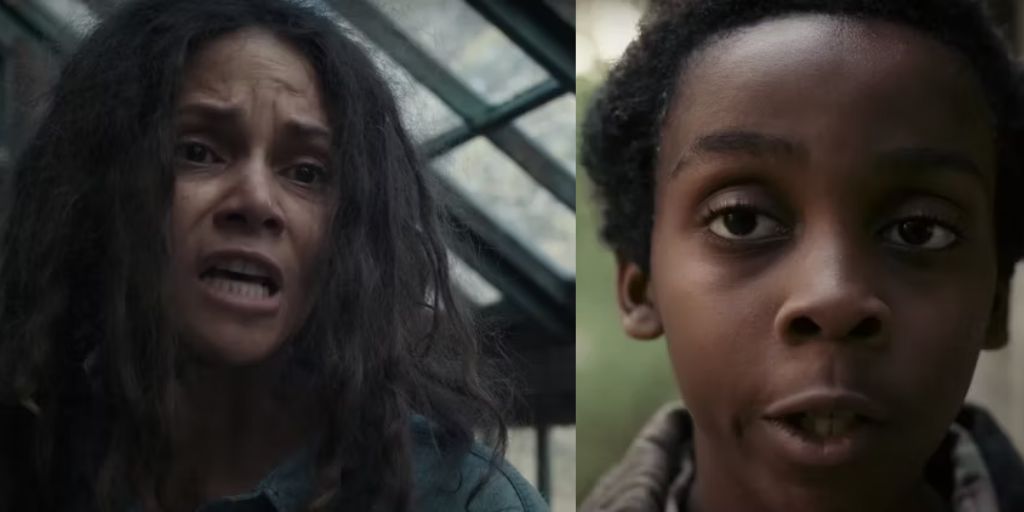
Still from Never Let Go (Credit: Lionsgate Movies)
Halle Berry’s performance as the mother is outstanding, mixing constant stress with deep love for her sons. The two young actors, Jenkins and Daggs, also shine. Jenkins shows a wide range of emotions as Samuel, the son who trusts his mother the most.
Daggs, as Nolan, adds complexity to his character, showing both good-natured curiosity and a rebellious side that leads him to question the rules. The boys have great chemistry, portraying a believable brotherly bond. As the horror escalates, their performances remain grounded in real emotion, which makes the scares more effective.
Themes Are Interesting But Could Be Clearer
The film stumbles when dealing with deeper themes. It’s strange that only Mama can see the evil, and her explanation that it’s hiding from the boys to create division seems weak. We also learn mysterious facts about Mama’s past—things she’s done, regrets she has, and tattoos of spiders and snakes on her body.
These creatures are often linked with evil in Christian folklore, but they also represent wisdom in other traditions. The film’s symbolic and thematic elements are open to different interpretations. The ending, while thought-provoking, leaves some viewers with questions that might not have clear answers.
Despite these issues, Never Let Go remains a suspenseful and layered horror experience. The film offers clever scares and interesting plot twists that mostly work well, even though the ending may not satisfy everyone.
The world created around the family is unique and engaging, with the tension and sense of isolation drawing viewers in. Although some of the themes and ideas are hard to grasp, and the ending raises more questions than it answers, the journey is still exciting enough to keep audiences on edge.
A Unique Take on Cabin Horror
Never Let Go may follow the classic horror trope of an isolated cabin in dangerous woods, but it has a fresh feel thanks to its strong family dynamics and unique evil force. The family’s relationship is central to the story, adding depth to the horror elements and preventing the limited setting from feeling repetitive.
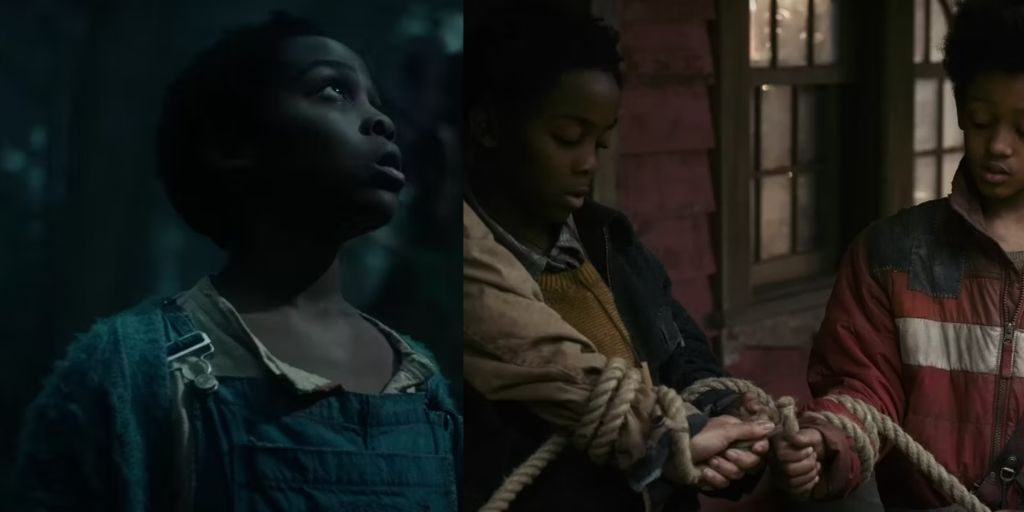
Still from Never Let Go (Credit: Lionsgate Movies)
The evil force is personal, grotesque, and ever-changing, keeping the tension high throughout the movie. Some of the scares rank among the best of the year, making this a solid horror film.
The ending could be clearer, with more context and tighter explanations for some of the film’s symbolic elements. However, it still provides enough tension, twists, and surprises to make for a solid viewing experience. Audiences will likely leave the theater thinking about the film’s deeper meanings and unresolved questions.
It has been 10 years, and the Babadook is still with us – which is great news for those who love horror. Jennifer Kent’s The Babadook will be re-released by IFC Films on September 19 to celebrate its 10th anniversary.
The movie deals with tough topics like guilt, trauma, and depression, and Kent’s twist on a creepy bedtime story became a hit right away. It even created an unexpected LGBTQ+ symbol.
The Babadook was one of the first movies in the “elevated horror” trend and continues to stand out for its emotional look at a mother’s complicated feelings toward her son and her own hidden emotions.
Essie Davis plays Amelia, a single mother working hard to care for her troubled son, Sam (played by Noah Wiseman). Sam’s father, Oskar, died in a car crash while driving Amelia to the hospital for Sam’s birth. This event left Amelia with unresolved trauma that centers on her son.
After Sam finds a strange picture book called Mister Babadook, the creature in the book starts haunting both him and his mother. The situation eventually pushes Amelia to the edge of her sanity, putting both herself and Sam in danger.
Although the ending of The Babadook may seem simple on the surface, its deeper meaning is rich with ideas. This is why the film continues to make it to the top of horror movie lists. As the movie returns to theaters, it’s a good time to take another look at the ending and its powerful thoughts on motherhood, childhood, and dealing with grief.
How Does The Babadook End?
The ending of The Babadook is so strong because of the journey leading up to it. Amelia struggles with both her husband’s death and the challenges of raising Sam, who shows behavior and emotional issues.
Working at a retirement home while trying to take care of Sam, Amelia feels overwhelmed by the pressures placed on her as a single mother. She also struggles with the trauma of Oskar’s death.
Amelia refuses to talk about the accident and avoids celebrating Sam’s birthday on the actual day, as it reminds her of her husband’s death.
Things only get worse when Sam finds the creepy book Mister Babadook and asks Amelia to read it. The book frightens Sam, leading to sleepless nights for Amelia as she tries to calm him. She tries to get rid of the book, but it keeps coming back. The Babadook, a monster from the book, comes to life and haunts them both.
The book warns, “You can’t get rid of the Babadook.” The monster begins to appear in Sam’s visions and possesses Amelia.
Sam’s behavior gets worse because of his fear of the Babadook. He even pushes his cousin out of a treehouse in anger. Amelia’s condition also worsens. When the Babadook possesses her, she kills their dog, cuts the phone lines, puts broken glass in Sam’s soup, and even tries to kill Sam.
The book predicts she will kill Sam and then take her own life. Near the end of the movie, Sam has to tie his possessed mother to a chair in the basement to save both of their lives. They do not manage to kill the Babadook, as the book warned, “You can’t get rid of the Babadook.”
After driving the Babadook out of Amelia, she and Sam trap it in the basement and shut the door. The movie then jumps forward a few months to Sam’s birthday, which is finally celebrated on the actual day. Amelia now calmly goes to the basement to check on the Babadook and feed it.
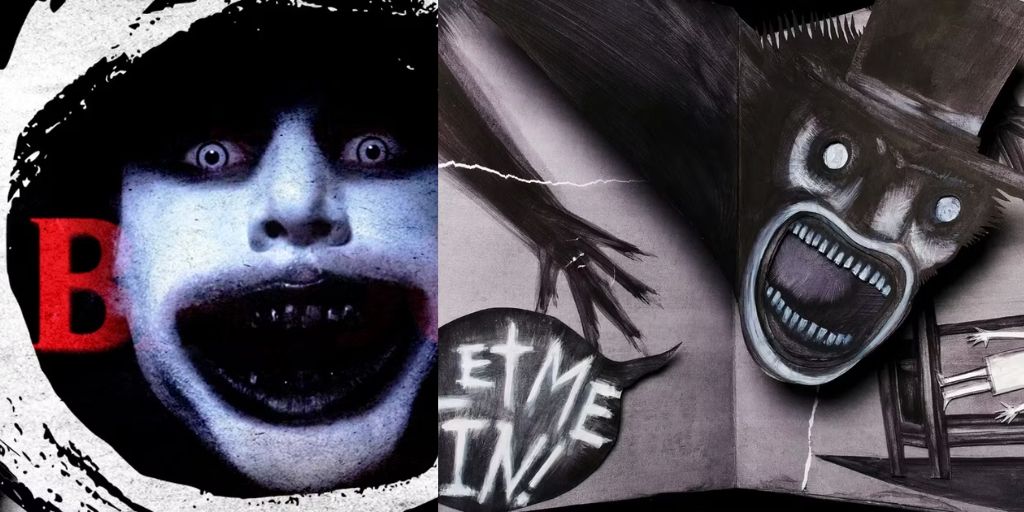
Still from The Babadook (Credit: Screen Australia)
Although she fears it when it comes to eating, she manages her fear and stays in control. Later, her sister asks her how “it” is today. Amelia says it was quiet today, showing that some days the task of taking care of the Babadook is harder than others, but she now accepts that she must deal with her emotions instead of ignoring them.
Ignoring the Babadook Makes It Stronger
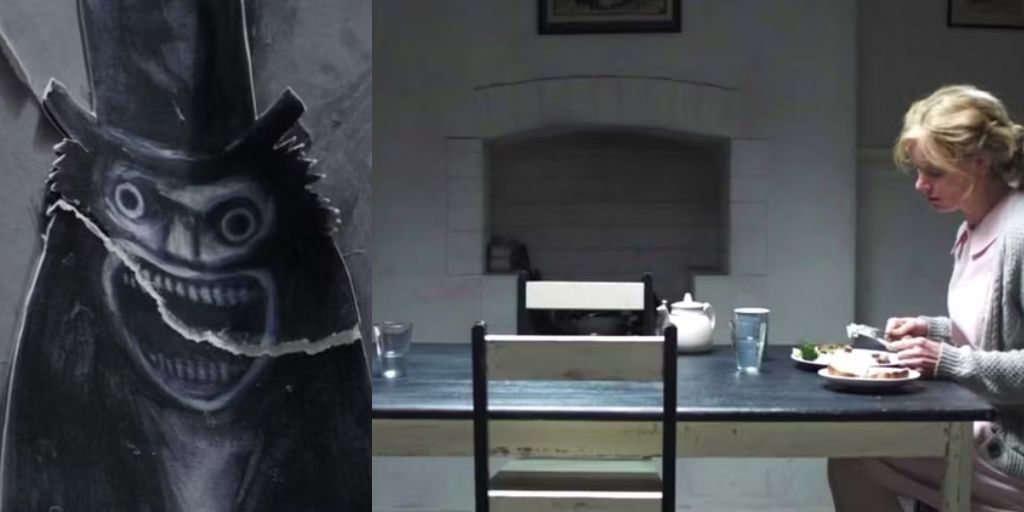
Monsters and ghosts often represent past traumas that the characters try to avoid. The Babadook represents the grief and trauma Amelia and Sam share after losing Oskar. The Babadook wears a suit like the one Oskar used to wear and even looks like him at the end of the movie when it tries to trick Amelia.
The Babadook is finally locked in the basement, the same place where Amelia keeps Oskar’s old clothes and belongings. Amelia does not like Sam playing in the basement because it reminds her of his father.
She wishes they could move on from their grief and pain. Every year, Amelia moves Sam’s birthday celebration to another day, showing she still cannot face the memory of her husband’s death.
The more Amelia tries to ignore their trauma, the worse things get. Sam keeps telling her that the monster is real and tries to make weapons to protect them. Amelia ignores him or asks him to stop. She tries to throw away the book, but the monster steps out of the pages and into their lives.
When Sam is tormented by the monster, Amelia has the doctor prescribe sleeping pills for him, but this doesn’t solve the problem. The Babadook becomes stronger and more dangerous the longer Amelia denies its existence. The book warns them that if they don’t control the Babadook, they will both die, along with their dog.
The book doesn’t explain how they should deal with the monster; it only repeats that they can’t get rid of it. Amelia and Sam finally realize they cannot kill the monster.
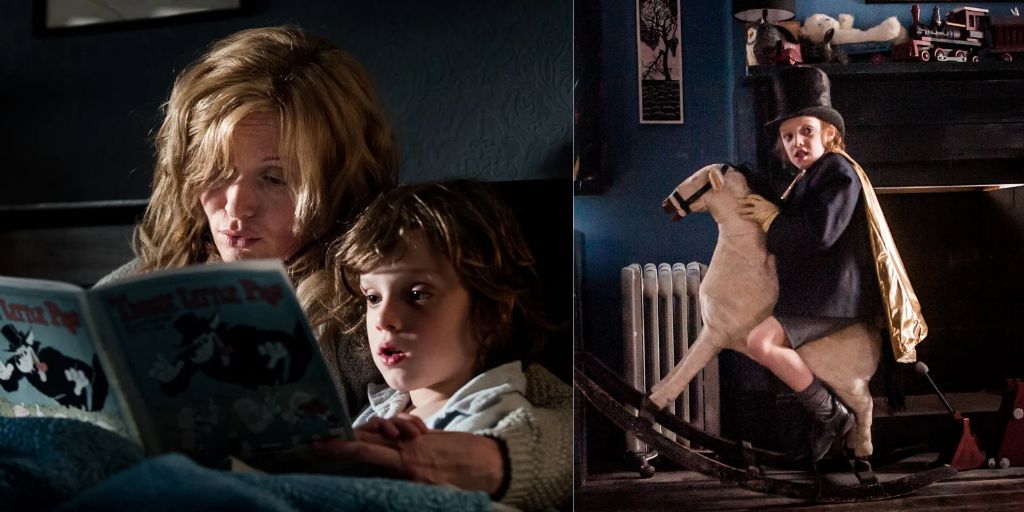
Still from The Babadook (Credit: Screen Australia)
But they learn that when they face it directly, it becomes less dangerous. After Amelia expels it, they trap the Babadook in the basement, showing they have taken control of their trauma and their healing process.
The Ending of The Babadook Shows How to Deal With Emotional Pain
Amelia and Sam must work together to control the Babadook. Some might think it’s the mother’s job to give her child a safe and happy life, but Amelia can’t defeat the Babadook by herself. Sam is part of the family, and they both have to work together to find a healthy way to deal with their shared pain.
The key part of the ending is that the monster stays in the basement, and it must be cared for and fed regularly instead of being ignored. This isn’t a fun task, but it’s much less frightening than facing the Babadook when it had free rein in the house or when it was controlling Amelia or Sam.
Like in real life, they can’t ignore their trauma and hope it goes away. When they try to hide from their painful emotions, the emotions grow bigger, scarier, and harder to control.
Amelia and Sam can only heal by confronting their trauma, though the movie shows that it must happen slowly over time. Healing from deep pain doesn’t happen in one night; it takes a lot of time and emotional work.
The Babadook warns of the danger of pushing painful memories and feelings out of sight. This is where we lose control, and the trauma becomes more powerful.
Is The Babadook Real, or Is It Just in Amelia’s Mind?
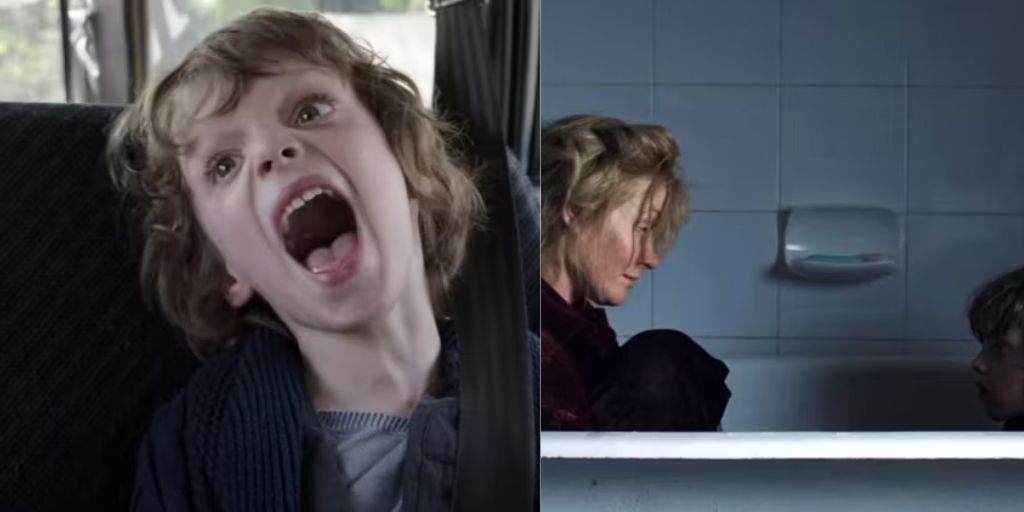
Some people believe the Babadook isn’t real at all. They think it’s a symbol of Amelia’s depression and trauma, and she is the source of the movie’s horrors. There’s some evidence for this idea: Amelia used to write children’s books, which is where the Babadook first appears.
Still from The Babadook (Credit: Screen Australia)
No one besides Amelia and Sam ever sees the Babadook. Some of the supernatural events, like the book returning to their doorstep, could be explained by hallucinations.
But there are problems with this theory. If the Babadook isn’t real, the movie implies Amelia has a mental health issue that she tries to treat on her own.
This could be dangerous in real life, even though the movie shows her defeating it. Also, the Babadook represents a trauma that could affect anyone, not just one person. If the Babadook only exists in Amelia’s mind, it weakens the movie’s message.
Jennifer Kent, the movie’s creator, explained that the movie is about Amelia facing her trauma. If the Babadook isn’t real, then Amelia isn’t truly facing her pain.
The theory that the Babadook is just a figment of Amelia’s imagination misses the point. The Babadook is a symbol of Amelia’s and Sam’s trauma, but it’s also a real force in the movie.
The Babadook Offers Hope for Healing
The ending of The Babadook gives a hopeful message for Sam and Amelia. Sam seems to be getting along better with other kids, and Amelia is reconnecting with her sister and might even have a new romance.
While they haven’t fully moved on from their trauma, since the Babadook is still in the basement, they’ve made a lot of progress. It’s uncertain if the Babadook will ever leave their basement or if they’ll always have to feed it. But it’s likely they’ll never completely get rid of it, as the book says, “You can’t get rid of the Babadook.”
Still from The Babadook (Credit: Screen Australia)
Some traumas never fully disappear. Amelia and Sam will always live with the fact that Oskar is gone. Even if Amelia marries again, it won’t erase what happened.
Over time, though, the Babadook may require less care, and Amelia and Sam might find managing it less frightening. Just like in real life, we may not be able to completely forget our past pain, but we can learn to control it so it doesn’t control us.
