If you’re wondering whether you need to rewatch WandaVision before watching Agatha All Along, the title itself gives you a clue. The phrase “Agatha All Along” comes straight from WandaVision, and many key details in the new series also come from that show.
Even though Agatha All Along is a separate series, the first few episodes refer back to what happened in WandaVision. The new story follows Agatha Harkness (played by Kathryn Hahn), taking off from where we last saw her in WandaVision as the character Agnes in Westview.
In WandaVision, it was revealed that Agatha had been pretending to be an innocent prisoner in Wanda Maximoff’s (Elizabeth Olsen) magical hex over Westview. Agatha had secretly been “messing up everything” in Wanda’s created reality.
She used dark magic to disrupt Wanda’s life, brought in a different version of Pietro Maximoff, and even killed Sparky the dog.
Her goal was to manipulate Wanda into giving up the powers she didn’t know she had. Agatha understood exactly what Wanda was, and her greed for power led her to a fate where she got trapped in Westview, stripped of her magic.
‘Agatha All Along’: A Dark Continuation of ‘WandaVision’
Similar to how WandaVision played with different styles of TV shows, Agatha All Along follows that tradition with a new approach. WandaVision showed sitcom styles from different decades, from the clean-cut 1950s to the modern-day mockumentary style of the 2010s.
But Agatha All Along adopts a modern-day crime drama style, where the once-happy (but trapped) residents of Westview now appear in darker, post-hex roles. WandaVision mostly unfolded through a TV show format, which revealed Agatha as Agnes in a big twist.
As viewers wait for Agatha to drop her cover and reveal her true, witchy self, it’s important to remember that she’s still stuck in Westview because Wanda took away her magic and left her as the nosy neighbor.
Agatha All Along references several elements from WandaVision that might confuse viewers if they don’t remember key parts of the story. This includes small details like character names in the opening credits and the “Hey, neighbor” moment between Agnes and Herb (David Payton).
On a more serious level, the townspeople of Westview often talk about the trauma they shared when they were under Wanda’s mental control during WandaVision, similar to how the Blip was referenced in movies after Avengers: Infinity War.
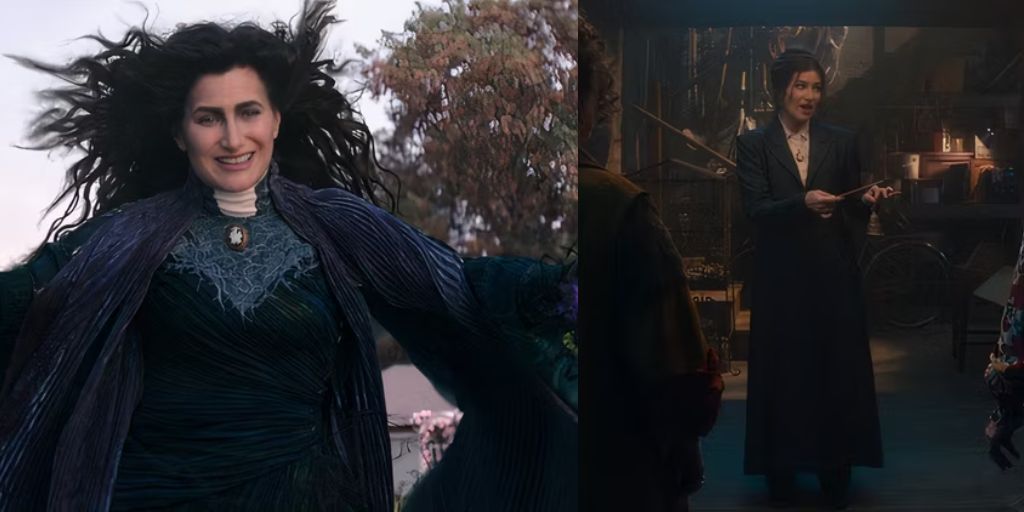
Still from Agatha All Along (Credit: Disney+)
Much of Agatha’s backstory also ties into WandaVision, such as her connection to the Darkhold and why she is hated by other witches after she stole power from her original coven.
It’s a good idea for viewers to catch up on WandaVision before starting Agatha All Along. Enough details from the new show make a rewatch of WandaVision worthwhile. However, this doesn’t mean Agatha All Along will be exactly like its predecessor.
The new series takes place three years after the events of WandaVision, introducing new characters and a fresh storyline. There are even fan theories about new characters being related to Wanda. Plus, familiar objects like the Darkhold and the Hex are mentioned again.
Going into Agatha All Along without any knowledge of WandaVision might mean missing out on important context. The show centers on Agatha’s mission to get back her stolen powers with the help of a quirky group of witches.
Agatha All Along is available to stream on Disney+ in the U.S., with new episodes releasing every Wednesday night.
All Shall Be Well focuses on the seemingly ordinary moments in life, such as making breakfast, going to a flower shop, and decorating a house for a holiday. Although these actions may seem uneventful, director Ray Yeung presents them in a way that makes them feel vital and full of meaning. The film brings depth and humanity to characters who usually do not receive such attention.
What is ‘All Shall Be Well’ About?
The film follows a lesbian couple in their mid-60s, Pat (Maggie Li Lin Lin) and Angie (Patra Au), who live in Hong Kong. Pat is a successful and charming businesswoman, while Angie, more reserved, opens up when they are alone.
Together, they have enough savings from their textile factory to help their friends, such as flower shop owners Kathy (Suen Wai Fong) and Betty (Priscilla Leung Siu Wai), and their struggling nephew Victor (Chung-Hang Leung) and his girlfriend Kitty (Yung Ting Rachel Leung). Pat and Angie seem to be in a fortunate position in their family.
However, things take a tragic turn when Pat unexpectedly dies in her sleep. Angie not only has to face her grief but also deal with the fact that Pat never made a will. They were never able to get married since same-sex marriage is not legal in Hong Kong or China.
This means all of Pat’s assets go to her brother Shing (Tai Bo), his wife Mei (Hui So Ying), and their children Victor and Fanny (Fish Liew).
Each of them is facing financial difficulties, and Angie, who thought she could trust them, soon realizes they are gradually betraying her for their own benefit. This forces Angie to stand up for herself and find her voice.
‘All Shall Be Well’ Features a Groundbreaking Central Couple
It is rare to see characters like Pat and Angie as the main focus of a film. Female leads are already less common, and if they are queer and over 60, it becomes even more unusual. Seeing them not only featured but portrayed with complexity and authenticity is refreshing, making their story relatable to many viewers.
Maggie Li Lin Lin brings a magnetic presence to the role of Pat. She is the type of person people are naturally drawn to, with a lively energy that can fill a room.
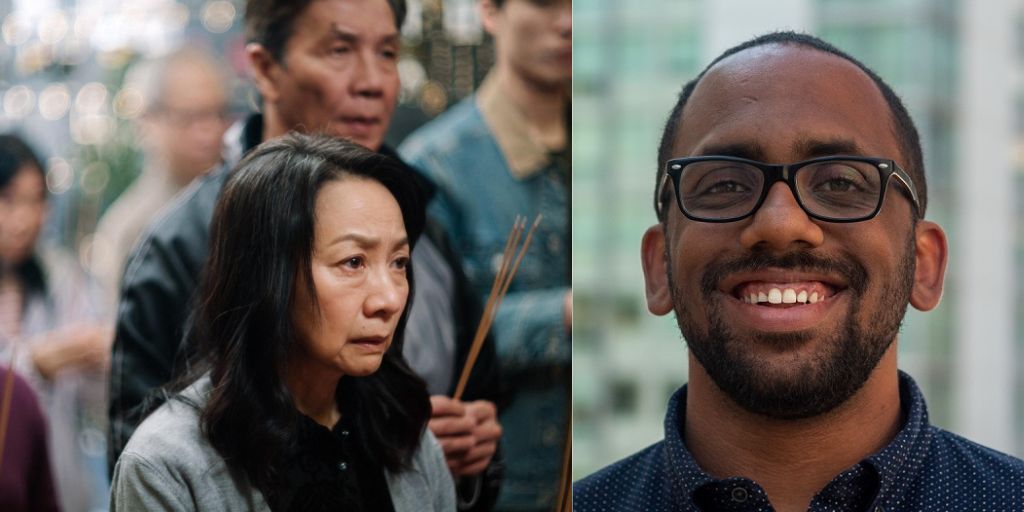
Still from All Shall Be Well (Credit: New Voice Film Productions)
At the same time, Pat is also a caring host, making everyone feel important. Ray Yeung does not idealize her, however, showing her flaws, such as her reluctance to write a will due to the emotions involved. This makes her character more realistic.
Patra Au’s portrayal of Angie is equally strong. The film mainly revolves around Angie, and Au brings out her quiet strength. Watching her lose Pat, her long-term partner, is heartbreaking. Angie is unsure how to show life without Pat, who was always the bold one in their relationship.
For example, when Shing tells Angie about his new job, which takes advantage of him, it is clear that Pat would have been the one to handle it. Now, Angie has to step into that role. Yeung’s decision to make Angie confront her own tendency to be passive while dealing with grief is a brilliant choice.
Angie’s love for Pat’s family, who had accepted her, contrasts with her own parents, who only ever saw Pat as a “friend.” The gradual loss of her connection with Pat’s family after her death adds another layer of sorrow to Angie’s journey. Au excels in the scenes where Angie asserts herself, providing a subtle but satisfying emotional release.
Though the film is mainly about loss and Angie’s path to healing, Yeung spends ample time building their relationship, making the audience care deeply about the couple. Despite the film’s short runtime of just over 90 minutes, their bond feels real, with a natural humor that emerges in their interactions.
For instance, Pat jokes about still dealing with childhood trauma or when Angie jokes after hearing Fanny say she is disgusted by her husband, responding that she would “be sick too” if a man touched her. These moments of humor between them feel genuine and based on a deep trust, making the film feel more real.
‘All Shall Be Well’ is a Simple Yet Emotional Film
The supporting characters in All Shall Be Well are given the same care as Pat and Angie, avoiding simple villain roles.
It is easy to understand their financial struggles and believe they are acting in what they believe to be the best interest when making decisions about Pat’s funeral arrangements, even if they go against her wishes. Their actions, though selfish, feel believable, and it is clear that they genuinely think they are doing the right thing.
Victor and Fanny, though sympathetic to Angie, struggle to confront their parents and eventually become part of the problem.
Their silent judgment slowly turns into complicity as they start to take advantage of Angie without fully realizing it. This slow betrayal is deeply painful to watch as Angie loses more than just Pat—she also loses her connection to Pat’s family.
While the plot is straightforward, it sometimes feels a bit thin. The story could benefit from a few more unexpected moments to add a sense of urgency. Additionally, the film’s minimal use of music could be seen as a missed opportunity to enhance certain scenes.
However, the film’s attention to detail, especially for viewers unfamiliar with aspects of Chinese culture, keeps it engaging.
For instance, the debate over whether Pat should be buried at sea or in a columbarium is thought-provoking. Yeung also does a wonderful job of representing the couple’s large group of queer friends, a realistic depiction of the LGBTQ+ community’s support network.
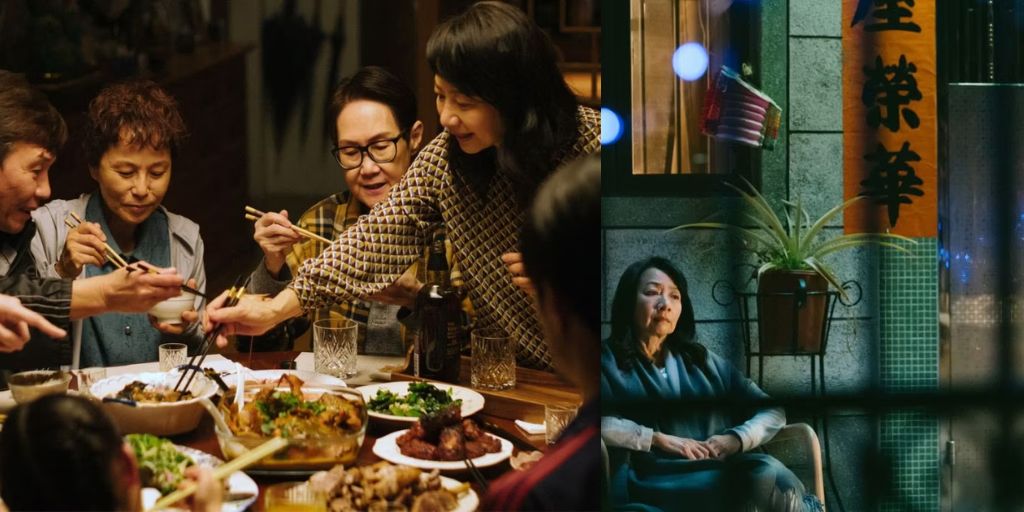
Still from All Shall Be Well (Credit: New Voice Film Productions)
All Shall Be Well is a thoughtful story filled with carefully considered details. It raises important questions about gay rights, honoring loved ones after death, and how easily selfishness can take over when making difficult decisions.
Yeung’s film beautifully captures both the joy and sadness of life, offering a perspective that is rarely seen in cinema. It’s a pity that queer stories like this are so rare in Hong Kong, with Wong Kar-wai’s Happy Together being one of the few notable examples. Hopefully, this film will spark more discussions about queer representation and lead to more stories like this in the future.
