Just when it seemed like Agatha All Along couldn’t surprise us anymore, the latest episode did just that. Episode 7, titled “Death’s Hand in Mine,” brought many fans’ long-time guesses to life and hit us hard emotionally.
The episode revealed that Aubrey Plaza’s character is the Marvel Cinematic Universe’s (MCU) version of Death, and this adds a huge level of excitement as we head into the last two episodes.
While the shocking revelation about Aubrey Plaza’s character is a major part of this episode, what really makes it unique is how it tells its story. The episode mainly focuses on Lilia (played by Patti LuPone) and tells her story in a non-linear fashion, meaning things don’t happen in order.
This way of storytelling gives us a deeper understanding of Lilia’s mind and why her thoughts have seemed so messy and chaotic throughout the show.
Lilia’s Vision and Unique Relationship with Time Unfold
Lilia has been one of the more difficult characters to understand in Agatha All Along. Unlike her villainous comic book counterpart, who was more straightforwardly evil, Lilia in the series shows more empathy. She is not as chaotic as Aubrey Plaza’s Rio character and seems more reasonable than some of the other witches in Agatha’s makeshift coven.
Still, Lilia struggles with being fully present, and her mind often seems to wander. Since her introduction in Episode 2, viewers have noticed this, especially when she suddenly starts screaming during a conversation with Agatha and Teen (played by Joe Locke). From then on, we see Lilia facing increasingly disruptive visions, especially as the coven journeys down the Witches’ Road.
Her visions, though jarring, seem fitting for someone with the ability to see the future. But in Episode 7, we finally learn that these visions are not just about seeing the future; they come from the way Lilia experiences time itself. Lilia explains her unusual relationship with time during one of the most intense moments of the episode.
While she is fleeing from the Salem Seven, Lilia tries to piece together past conversations she had with Jennifer Kale (played by Sasheer Zamata) that she can’t seem to remember clearly.
She finally admits that she doesn’t experience time in a straightforward way like most people do. Instead, her mind jumps between moments of her life, moving out of order. She describes these moments as “gaps” where she experiences flashes from her past or even the future.

Still from Agatha All Along (Credit: Disney)
This isn’t something new for Lilia. She reveals that, as a child, she started having these gaps but decided to suppress them because they were too painful and confusing.
However, throughout Episode 7, these gaps return more frequently, and by the end of the episode, it’s clear that they have a deeper significance. Lilia’s increasingly frequent gaps are a sign of something much more tragic—her own eventual sacrifice.
Lilia’s Journey Through Time: A Deeper Look
As Episode 7 unfolds, we are taken through different key moments in Lilia’s life. The storytelling jumps between several important events: Lilia’s trial with the coven’s Tarot cards, her time spent with Jennifer Kale under the Witches’ Road, and lessons from her Italian upbringing, which were first hinted at in Episode 3.
This back-and-forth between moments paints a picture of who Lilia truly is and helps us better understand why her mind works the way it does. Lilia’s struggle to stay present is linked to her ability to experience time differently from others. Her mind doesn’t stay fixed in the current moment, which is why she often seems distant or confused.
One of the most emotional parts of the episode comes when Lilia talks about these gaps in her life. She explains that she started suppressing these gaps after a traumatic series of events in her childhood. The visions were too much for her to handle as a young girl, so she forced herself to stop experiencing them.
But now, these gaps are happening more frequently, and it becomes clear that Lilia is not just someone who is controlled by these experiences—she actually has control over them, making her one of the most powerful members of Agatha’s coven.
In earlier episodes, we saw hints that Lilia had untapped potential. For instance, in Episode 6, it was revealed that Lilia was the one who put a sigil on Billy Maximoff (Joe Locke), protecting him. This gave viewers a clue that Lilia’s abilities went beyond the visions she was having.
But it isn’t until Episode 7 that we truly understand the depth of her powers. Lilia’s gaps in time aren’t just random events happening to her. They are a reflection of her command over time itself. This control makes her much stronger than anyone, including her fellow witches, ever thought she was.
Lilia’s Power and the Emotional Weight of Episode 7
Lilia’s ability to control time adds an emotional depth to her character that was not fully seen until this episode. Her unique power comes with a heavy price, as it makes her more aware of the tragedies that are coming. At the same time, her power gives her the ability to glimpse future events that other witches cannot see.
One of the most heartbreaking moments in the episode is Lilia’s final Tarot reading. During this reading, she sees a vision of Agatha standing over Billy Maximoff in the future.
This is a clear sign that something tragic is about to happen. Lilia’s ability to see this painful future adds a sense of urgency and sadness to the episode because she knows what’s coming and has no way to prevent it.
At the same time, the episode shows how Lilia’s power has caused her even more personal pain. Her flashbacks to her time in Italy remind her of people she lost to a plague, a memory that still haunts her. In another heartbreaking moment, Lilia tries to use her powers to save Alice Wu-Gulliver (played by Ali Ahn), who died earlier in the series during Episode 5.
But despite her efforts, Lilia is not able to change the past. These moments show the limits of her power and how much it hurts her to see the people she loves suffer without being able to help them.
The Beauty in Lilia’s Gift and Her Final Sacrifice
Although Lilia’s power causes her a lot of pain, there is also beauty in it. Episode 7 shows that time is not just a source of tragedy for Lilia. It is also a gift. The episode ends by showing us the beginning of Lilia’s lessons in the past, hinting that time is something fluid, something that continues.
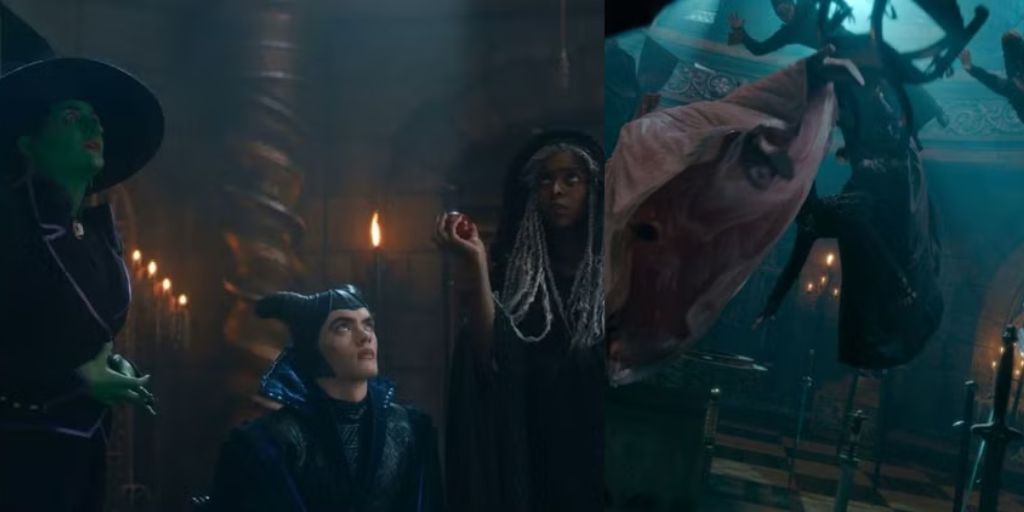
Still from Agatha All Along (Credit: Disney)
In a way, this brings hope, as it suggests that Lilia’s experiences, both good and bad, are part of a larger journey that continues beyond the present moment.
In her final moments, Lilia makes a significant sacrifice. She decides to use her newfound command over time to help Agatha. Before Lilia sacrifices herself to stop the Salem Seven, she warns Agatha, saying, “When she calls you a coward, hit the deck.” This cryptic message will likely make more sense in future episodes, but it shows that Lilia is using her powers for good, even in her final moments.
Lilia’s decision to sacrifice herself adds another layer of emotion to the episode. Her character’s personal growth, combined with the non-linear storytelling, makes Episode 7 one of the most powerful and innovative episodes in the series so far. Lilia’s journey through time, her ability to see both the good and the bad, and her willingness to make a sacrifice all contribute to making this episode stand out.
What’s Next for Agatha All Along?
With only two episodes left, it’s clear that the stakes are higher than ever. Lilia’s death and Aubrey Plaza’s character being revealed as Death suggest that the series is heading toward an intense and emotional conclusion. Fans are eager to see how Agatha will deal with the challenges ahead, especially after Lilia’s warning and sacrifice.
Lilia’s sacrifice is bound to play a key role in how the story moves forward. There are still many questions left unanswered, such as what will happen to Billy Maximoff and how Agatha’s journey will unfold.
Will Agatha find a way to honor Lilia’s sacrifice and use her powers to defeat the Salem Seven? Or will Lilia’s death have a more lasting impact on the coven and the story as a whole?
Whatever happens next, one thing is clear: Agatha All Along has proven itself to be a series that isn’t afraid to take risks. From its innovative storytelling to its deep emotional moments, the show continues to surprise and engage viewers with every episode.
Lilia’s story, in particular, has added a rich layer of complexity to the series, showing us that even the most mysterious and misunderstood characters can become some of the most powerful and important players in the story.
As the series approaches its finale, fans can expect more shocking moments and emotional twists. Lilia’s story may have come to an end, but her impact on the coven and the series will be felt for episodes to come. Agatha All Along is available to stream on Disney+ in the U.S.
For much of the Boruto manga, Kawaki has been portrayed as the deuteragonist, often standing alongside Boruto Uzumaki as an ally in battle.
However, as the narrative reached its ending in Naruto Next Generations, Kawaki’s actions took a sharp turn, leading many to view him as the primary antagonist.
His decision to kill Boruto and the use of Eida’s powers to reverse their roles making himself the central figure and casting Boruto as the outsider has created a perception of Kawaki as a villain.
Yet, digging deeper into his motivations and the nuances of his character suggests that Kawaki is not as clear-cut a villain as he seems.
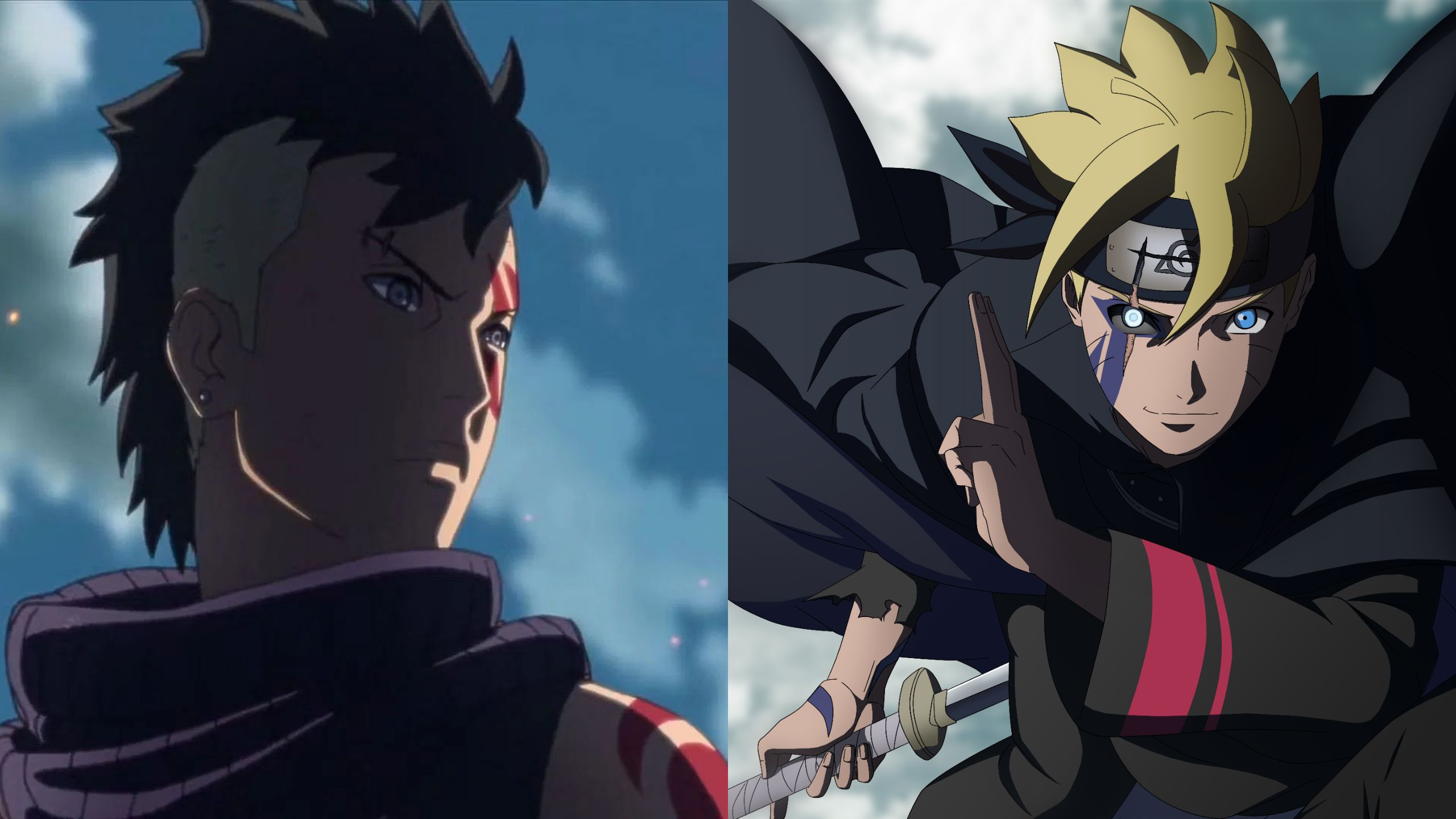
Kawaki Vs Boruto Final Battle (Pierrot)
In fact, Kawaki’s evolution hints that he might be the true hero of Boruto: Two Blue Vortex.
The Complexity of Kawaki’s Character
Kawaki’s motivations are not driven by a desire for power or chaos; instead, they stem from a profound sense of loyalty and a desire to protect those he holds dear.
From his tragic upbringing, marred by abuse and manipulation, Kawaki’s story is one of survival against overwhelming odds.
When Naruto Uzumaki, the Seventh Hokage, took him in, Kawaki found a sense of belonging for the first time.
Naruto became a father figure, a symbol of hope, and a pillar of strength. This bond created in Kawaki an unyielding dedication to Naruto and, by extension, to the Hidden Leaf Village.
However, this loyalty comes with a price. Kawaki’s methods are often extreme, and his willingness to go to any lengths to protect Naruto, even if it means defying Naruto’s own wishes, sets him apart.
His decision to target Boruto , Naruto’s son, was driven by a belief that Boruto posed the greatest threat to the village after Isshiki Otsutsuki’s demise.
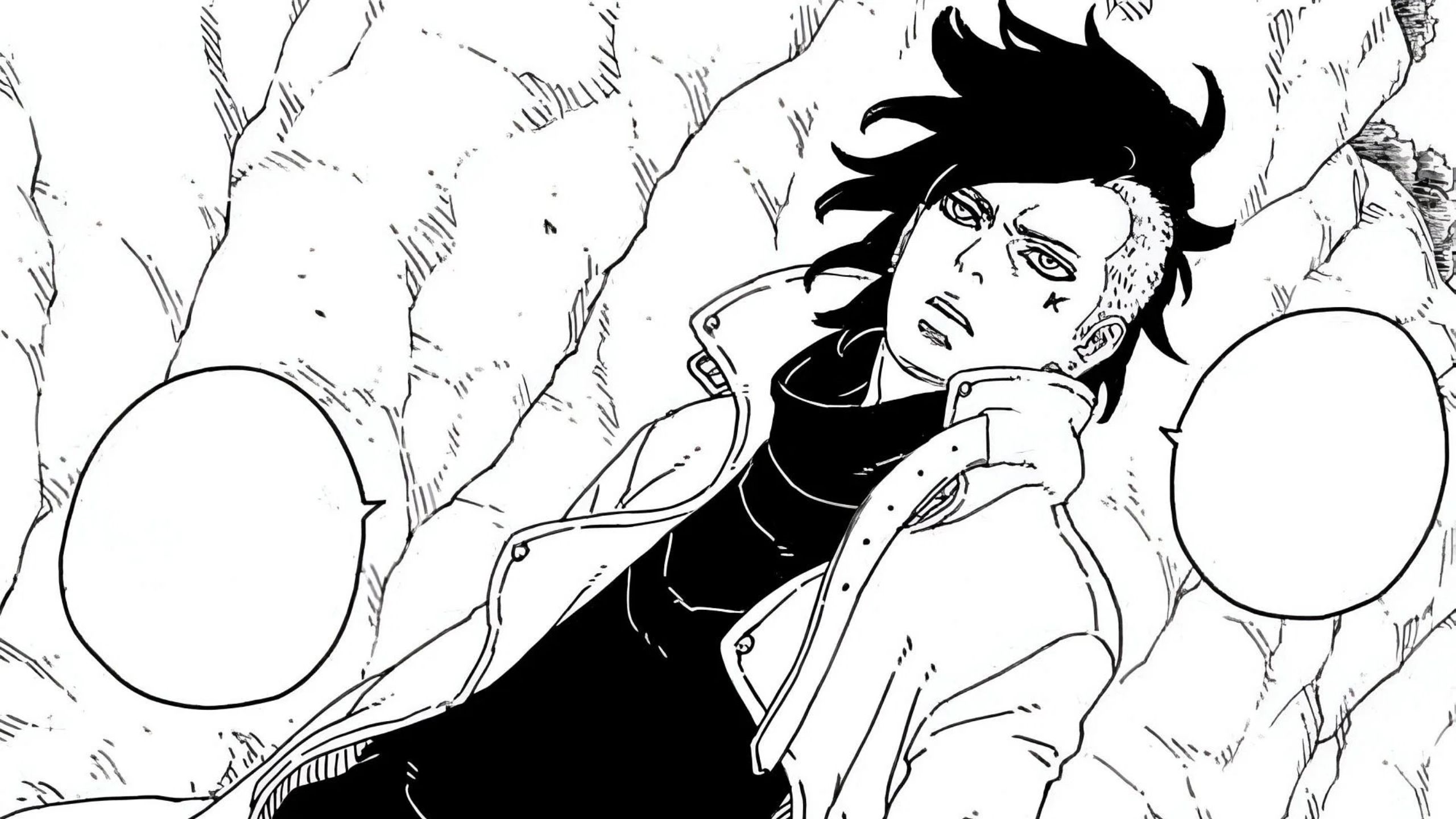
Kawaki From Boruto Two Blue Vortex – Manga (Shueisha)
To Kawaki, Boruto had become a ticking time bomb, harboring the potential to transform into a dangerous force under Momoshiki’s influence.
In this sense, Kawaki’s actions, though drastic, were rooted in a desire to eliminate a perceived threat and shield the village from potential devastation.
The Turning Point: Eida’s Role in Kawaki’s Downfall
Kawaki’s desperation to protect the Hidden Leaf Village and Naruto led him to make a fateful decision: he asked Eida to use her Omnipotence Shinjutsu, a powerful ability capable of altering memories and reality itself.
This act had a profound impact on the narrative, transforming how others perceived both Kawaki and Boruto.
In the blink of an eye, Kawaki’s identity was altered, making him appear as Naruto’s biological son, while Boruto was seen as the outsider who had “killed” the Seventh Hokage and his wife.
This shift in perception caused Kawaki to be further misunderstood, as he was now regarded as the villain who had turned against his own family and friends.
In reality, this manipulation of memories was a desperate move to protect the village and keep the power of Momoshiki at bay.
Yet, to everyone else, it appeared as though Kawaki had betrayed those closest to him, particularly Boruto.
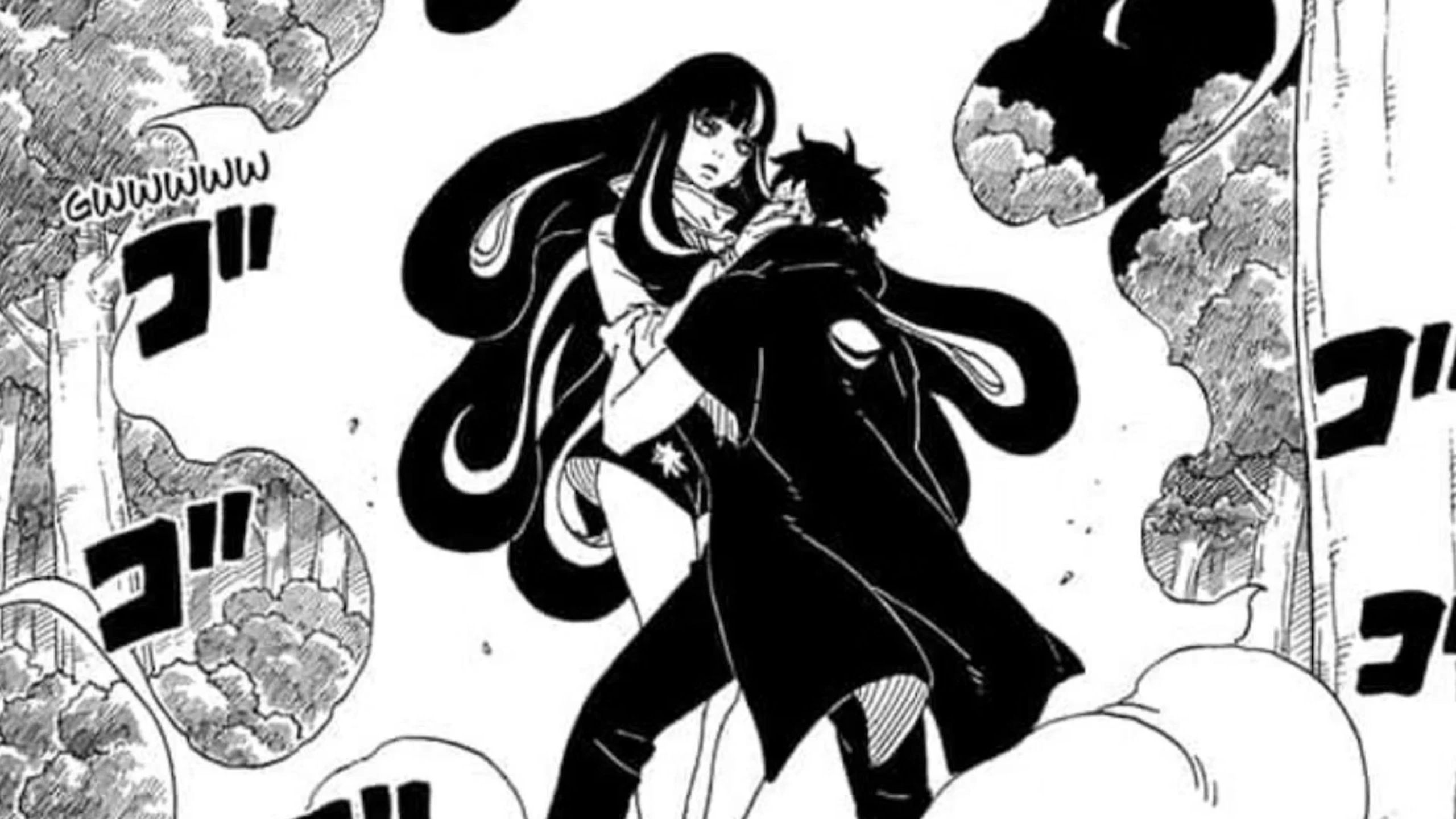
Eida and Kawaki From Boruto Two Blue Vortex (Shueisha)
This act, more than any other, cemented Kawaki’s image as a villain in the eyes of the Hidden Leaf Village and the broader shinobi world.
Kawaki’s Evolution: A Closer Look at His Motivations
As the story progresses, it becomes increasingly apparent that Kawaki’s motivations are more complex than they initially appeared.
His actions are driven not by malice but by a sense of duty a duty to protect the village and those he considers his family.
His willingness to go to extreme lengths to achieve his goals, even if it means being seen as a villain, underscores the depth of his commitment.
One of the most telling moments in Kawaki’s development is his agreement to team up with Boruto despite their strained relationship.
This alliance is not without conditions, as Kawaki makes it clear that his primary goal remains the same: if Momoshiki were ever to take full control of Boruto, Kawaki would not hesitate to kill him.
This agreement highlights the internal conflict within Kawaki, torn between his bond with Boruto and his fear of the threat that Momoshiki represents.
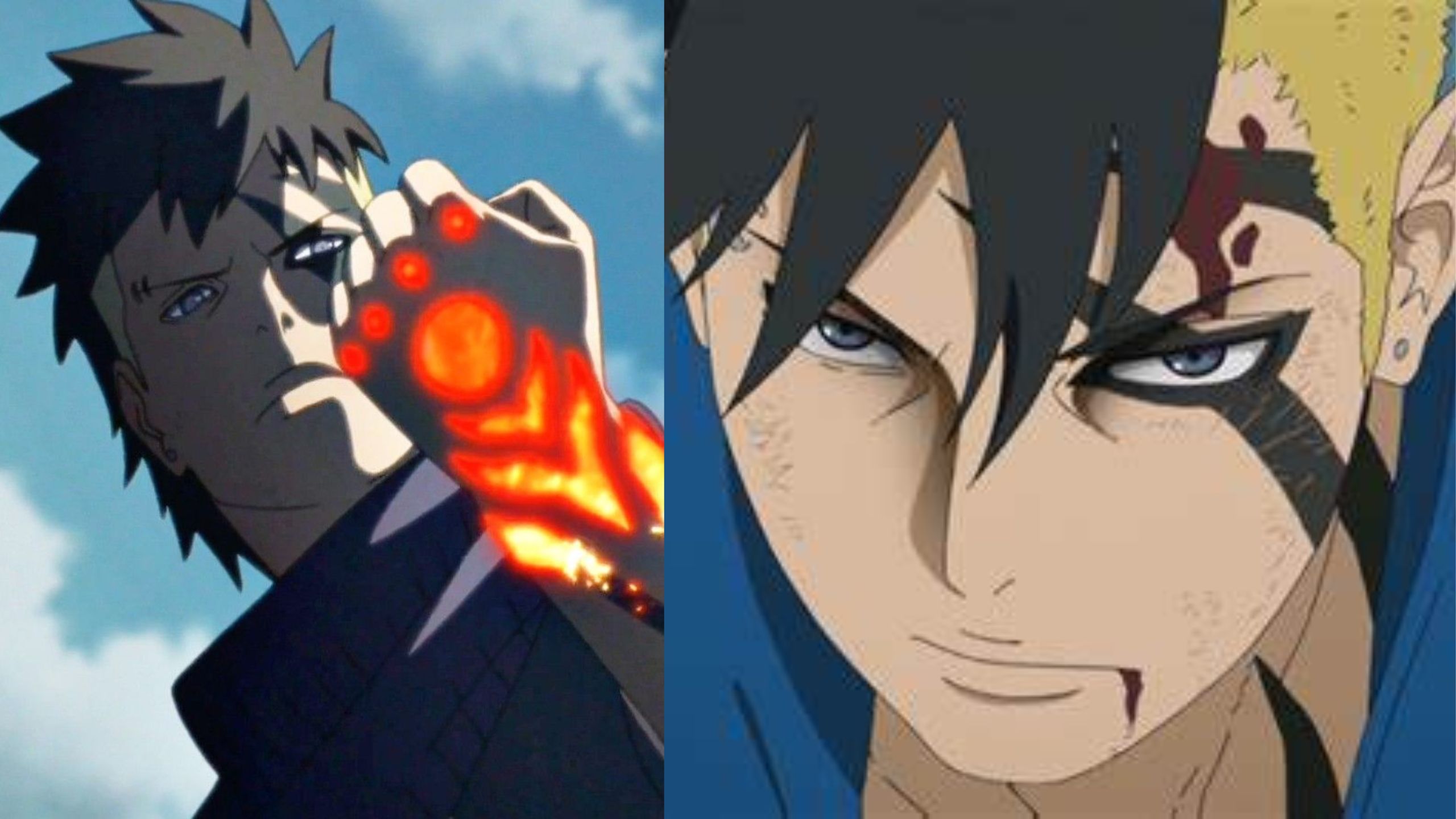
Kawaki (Pierrot)
Even after a three-year time skip, Kawaki’s primary objective remains unchanged. His determination to eliminate the Otsutsuki threat is unwavering, yet there are subtle indications that his mindset is beginning to shift.
This evolution is significant, as it suggests that Kawaki is not merely a one-dimensional character driven by a single purpose but rather a complex individual grappling with conflicting emotions and desires.
Kawaki’s Changing Approach
The opening scene of Boruto: Naruto Next Generations offers a glance into a potential future where Kawaki appears to stand as a villainous figure, telling his adoptive brother Boruto that he would send him to the same place where he sent Naruto.
However, a closer analysis of this scene reveals that Kawaki’s intentions may not be as sinister as they initially seem.
While he may have threatened Boruto with banishment to another dimension, this action signifies a marked change in his behavior.
Kawaki, who once harbored violent tendencies and was willing to take extreme measures to eliminate threats, now seems to be considering non-lethal alternatives.
By suggesting that he would merely send Boruto away instead of killing him, Kawaki hints at a desire to break free from the cycle of violence that has plagued the shinobi world for generations.
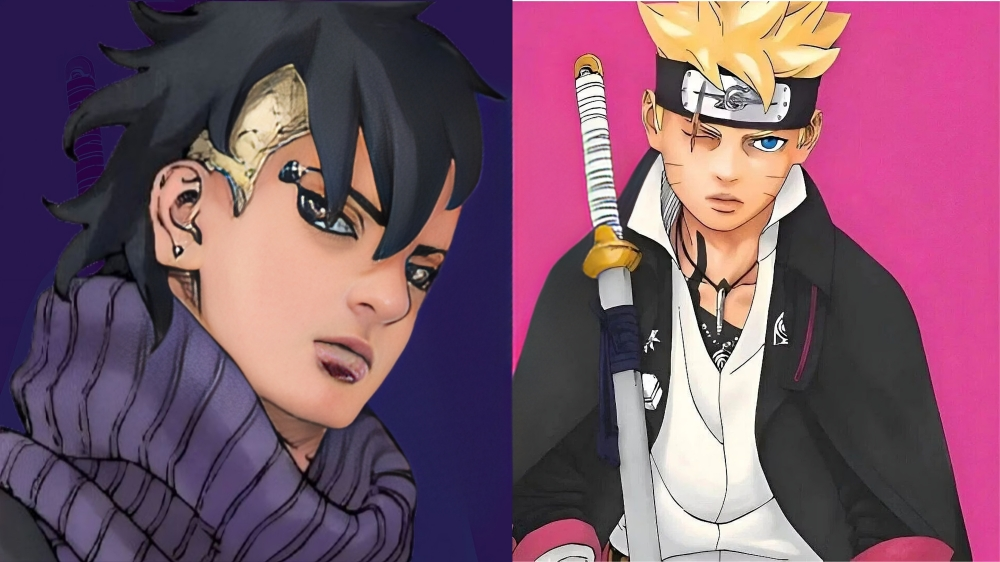
Kawaki And Boruto (Shueisha)
This change in perspective aligns him more closely with the ideals of Naruto himself, who sought to end the cycle of hatred and bring about lasting peace.
Kawaki’s Tragic Hero Journey
Kawaki’s story is not that of a traditional hero. He does not follow the classic path of redemption or the pursuit of glory.
Instead, he embodies the archetype of a tragic hero one whose intentions are noble but whose methods and circumstances often lead to his own downfall.
His willingness to bear the burden of hatred and isolation for the sake of others makes him a complex and, ultimately, sympathetic character.
In many ways, Kawaki’s journey mirrors that of Naruto’s own struggles during his early years. Both characters faced rejection, isolation, and a world that viewed them with suspicion.
Naruto’s journey, however, was marked by a gradual acceptance by the village, while Kawaki’s path has been one of increasing alienation.
This parallel is a poignant reminder of how the shinobi world can shape individuals in vastly different ways, depending on their circumstances and choices.
While Naruto’s path was one of overcoming hatred through understanding and compassion, Kawaki’s journey is one of preventing the resurgence of the cycle of violence, even if it means sacrificing his own happiness.
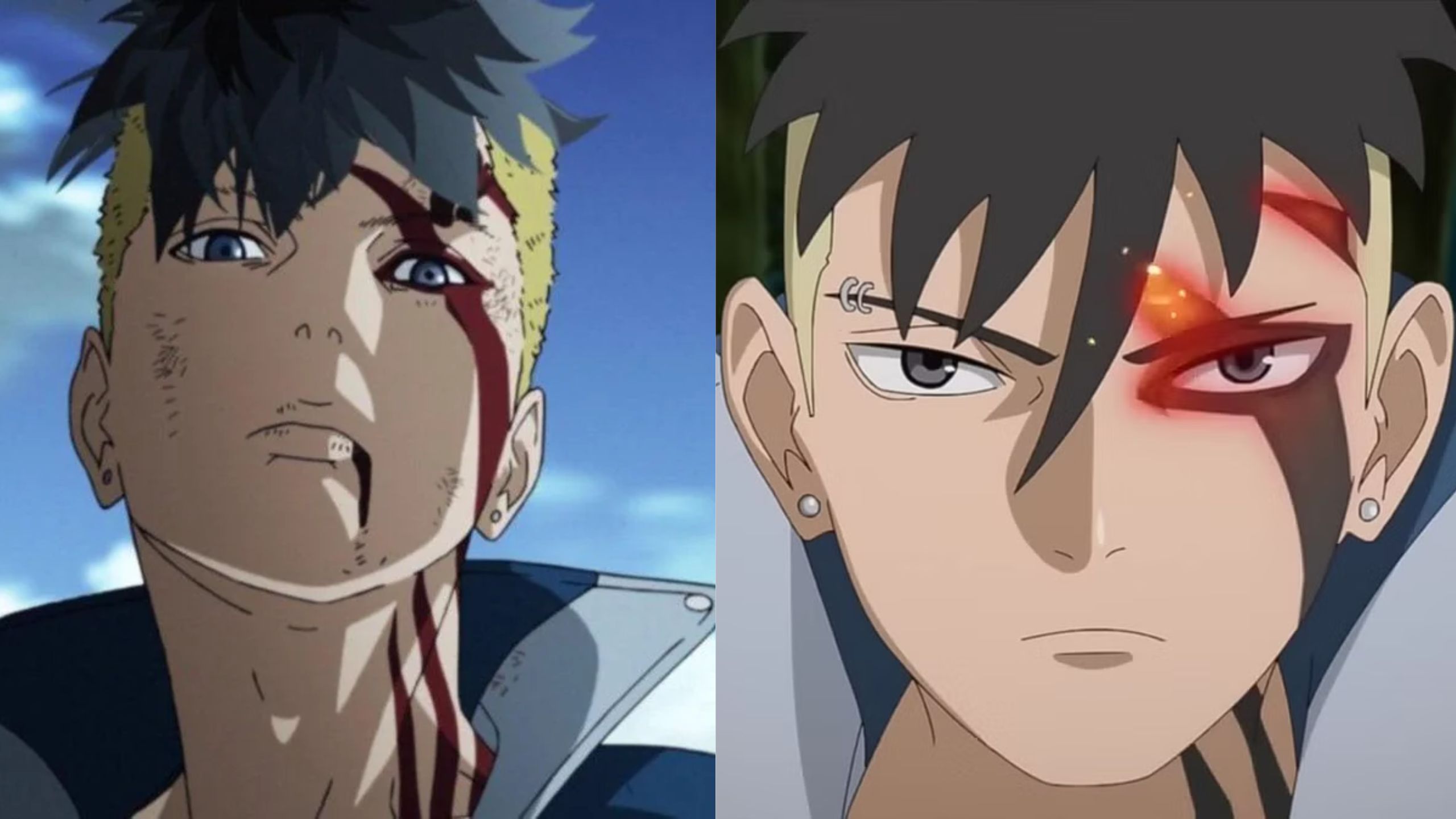
Kawaki | Ishiki Otsusuki Awekening (Pierrot)
In this sense, Kawaki is not so different from Naruto. Both sought to protect the people they loved, even if it meant enduring pain and misunderstanding from those around them.
A Hero Misunderstood: Kawaki’s Transformation in Two Blue Vortex
As the Boruto: Two Blue Vortex manga unfolds, it becomes increasingly evident that Kawaki’s role in the narrative is far from that of a simple antagonist.
While he may currently be viewed as the villain, his actions suggest that he is striving to become a true hero, albeit one who operates from the shadows and is willing to make the hard choices that others shy away from.
This transformation is reminiscent of other tragic heroes in fiction characters whose paths are defined by sacrifice and whose motives are often misunderstood.
One of the key themes of Kawaki’s story is the idea of protection at all costs. Unlike traditional heroes who rely on ideals and diplomacy, Kawaki’s methods are brutal and pragmatic.
He does not shy away from making decisions that others would balk at, and this willingness to shoulder the burden of guilt and hatred for the sake of the greater good is a testament to his strength of character.
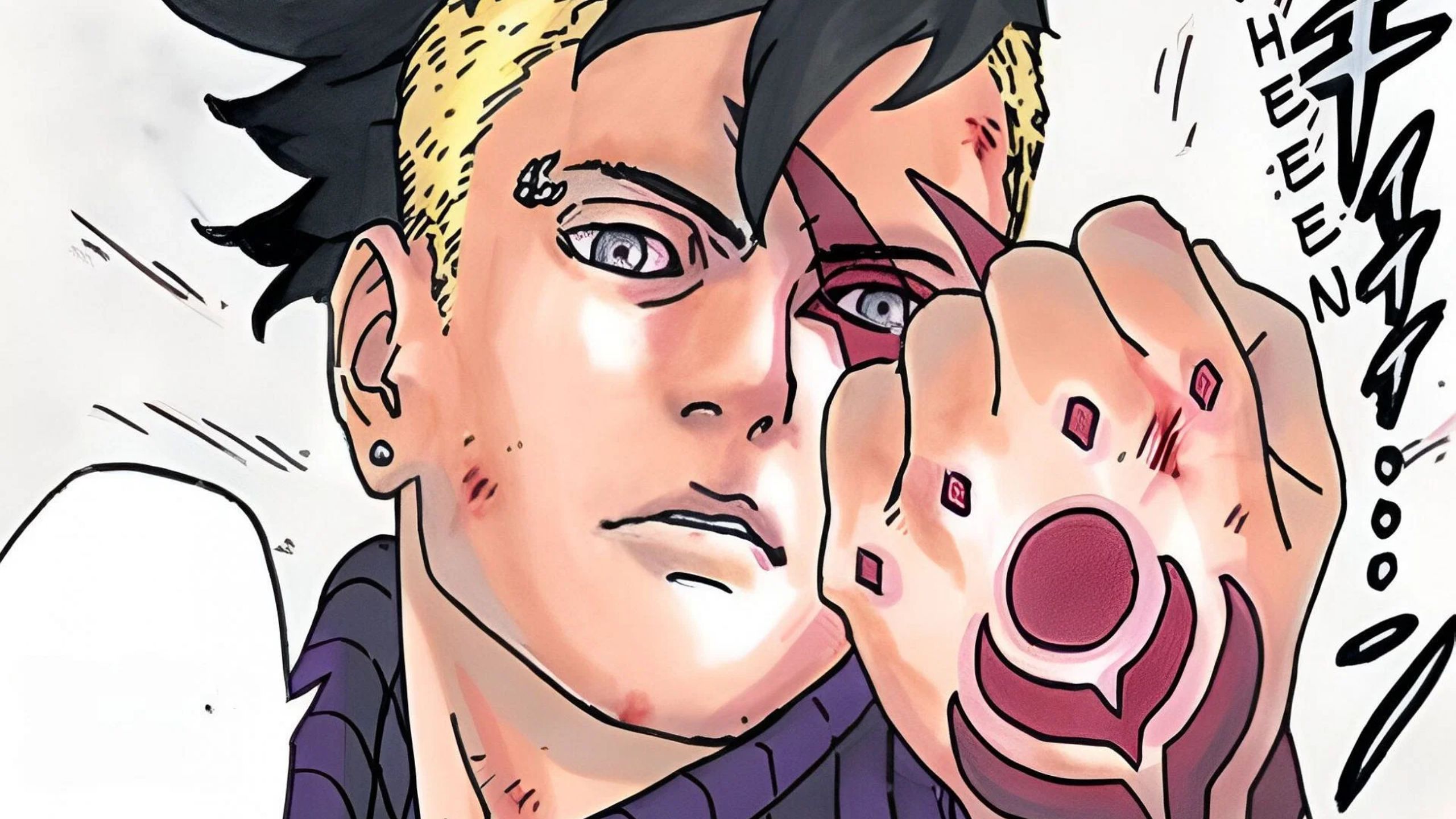
Kawaki From Boruto Two Blue Vortex – Manga (Studio Pierrot)
Kawaki’s evolution from a misguided youth with a penchant for violence to a mature figure seeking a better world is a central aspect of the narrative in Boruto: Two Blue Vortex.
The Influence of Naruto on Kawaki’s Development
Naruto Uzumaki’s influence on Kawaki cannot be overstated. As a father figure, Naruto instilled in Kawaki a sense of belonging and purpose, teaching him about the importance of bonds and loyalty.
Yet, Kawaki’s methods and Naruto’s ideals often stand in stark contrast to one another.
Naruto, who sought to protect the village through understanding and dialogue, represents the idealistic hero, while Kawaki, who is willing to embrace darker methods, embodies a more cynical view of what it takes to safeguard those he loves.
This contrast between Naruto’s idealism and Kawaki’s pragmatism is a recurring theme in the manga.
It raises questions about what it truly means to be a hero in a world where threats like the Otsutsuki exist threats that cannot always be reasoned with or defeated through conventional means.
Kawaki’s willingness to take on the role of the villain, if it means protecting the village, highlights the moral ambiguity that defines his character.
The Possibility of Redemption: Can Kawaki Become a True Hero?
As the story continues to develop, one of the most pressing questions is whether Kawaki can find redemption and emerge as a true hero in the eyes of those who view him as a villain.
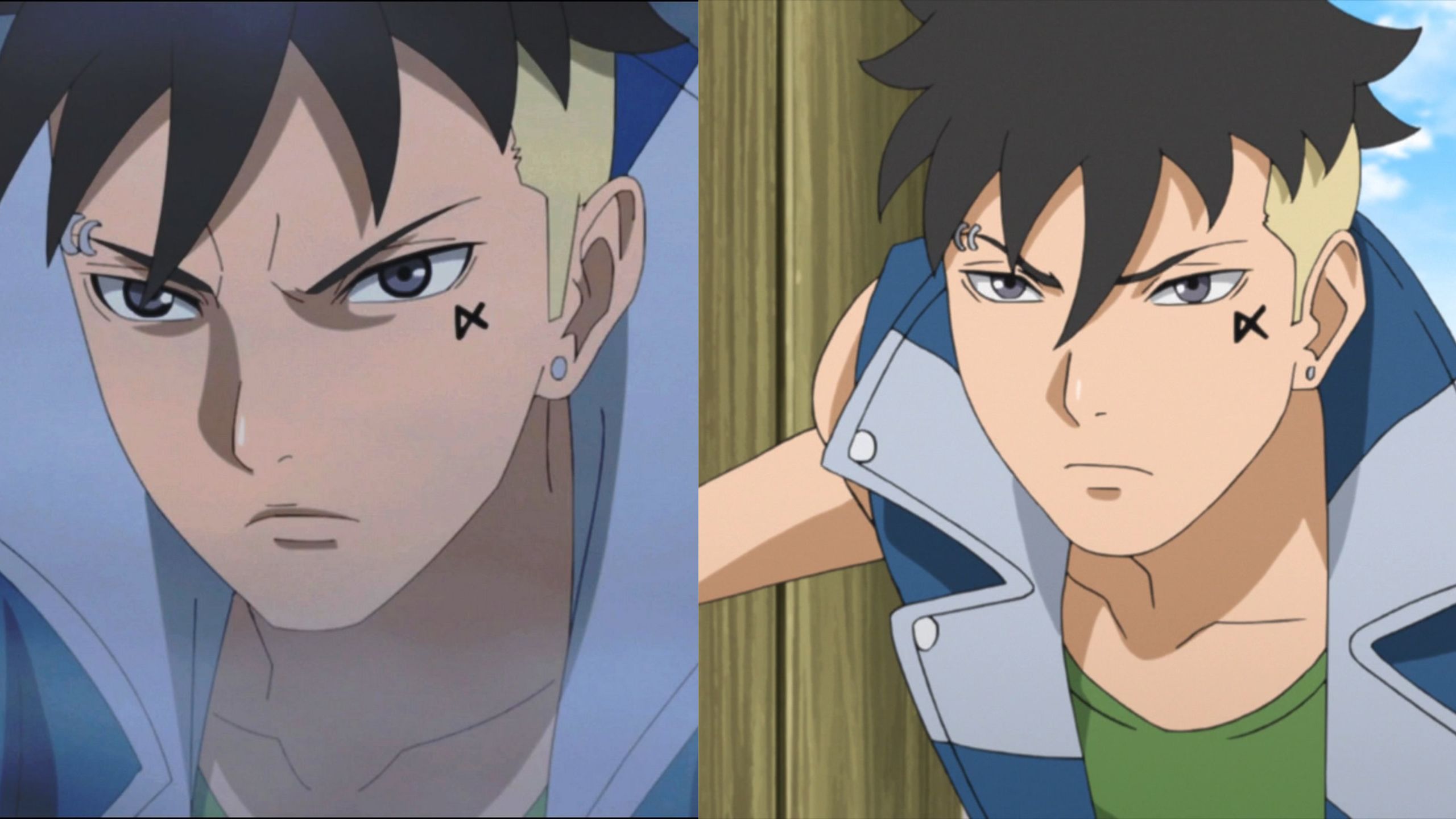
Kawaki From Boruto Two Blue Vortex (Studio Pierrot)
His journey has been one of sacrifice and hardship, marked by difficult choices and a willingness to bear the burden of hatred for the greater good.
Yet, the possibility of redemption remains a central theme, suggesting that Kawaki’s story is far from over.
If Kawaki can learn to reconcile his methods with Naruto’s ideals, there is hope that he can find a way to protect the village without resorting to extreme measures.
This would require a significant shift in his perspective, as well as a willingness to trust in the bonds he has formed with others, particularly Boruto.
Kawaki’s struggle to balance his protective instincts with the need for compassion and understanding is a defining aspect of his character arc, and it is this internal conflict that makes him one of the most compelling characters in the series.
Symbolism of Kawaki’s Journey in Two Blue Vortex
Kawaki’s journey is not just about personal growth and redemption; it also serves as a commentary on the themes of power, sacrifice, and the cycle of violence that has defined the shinobi world.
His willingness to embrace the role of the villain, even if it means being hated and misunderstood, reflects the idea that true heroism often requires sacrifice.
In this sense, Kawaki embodies the concept of the “unsung hero” one whose deeds go unrecognized and whose struggles are overlooked.
The Two Blue Vortex narrative places Kawaki at the center of a story that challenges traditional notions of heroism.
In a world where threats are often supernatural and far beyond the scope of ordinary shinobi, the question of what it means to be a hero becomes increasingly complex.
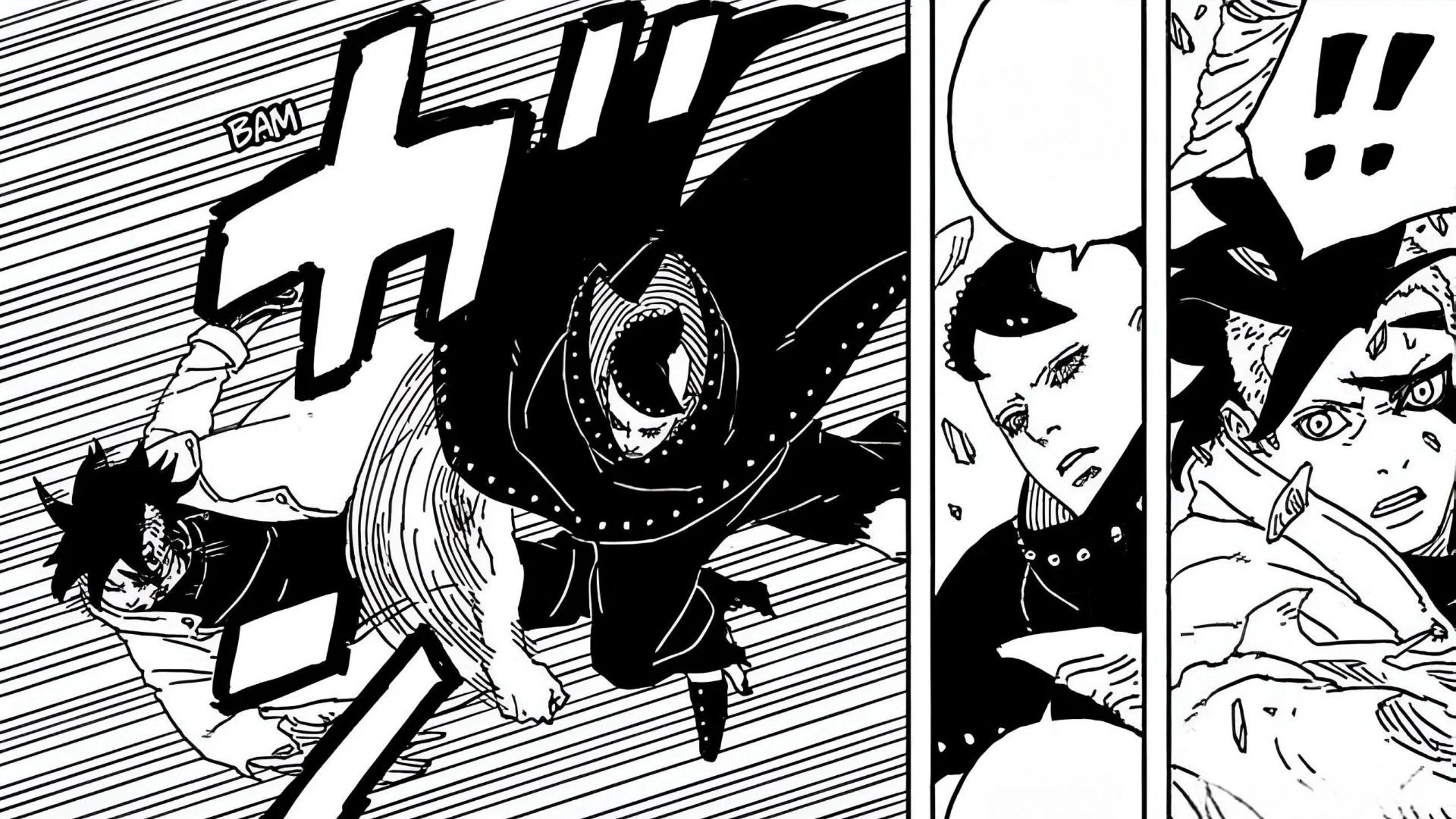
Kawaki and Jura (Shueisha)
Kawaki’s journey, with all its moral ambiguity and internal conflict, forces readers to question the very nature of heroism and what it takes to protect those one loves.
A Hero’s Legacy: Kawaki’s Impact on the Shinobi World
Whether Kawaki ultimately succeeds in his quest for redemption or falls further into the role of the villain, his impact on the shinobi world is undeniable.
His actions have already altered the course of history, reshaping the way the village views him and Boruto.
The memory manipulation caused by Eida’s powers has not only changed the narrative but has also forced characters to confront their own perceptions of loyalty, family, and duty.
Kawaki’s story is one of legacy the legacy of a boy who was once lost and found a home in the Hidden Leaf Village, only to be cast out again in his pursuit of what he believed to be the greater good.
His struggle to protect Naruto’s vision while grappling with the darker aspects of his own nature is a testament to the complexity of his character and the broader themes of the series.
Kawaki, The True Hero of Two Blue Vortex
While the narrative of Boruto might currently paint Kawaki as the antagonist, there are compelling reasons to believe that he could emerge as the true hero of Two Blue Vortex.
His unwavering loyalty, willingness to sacrifice his own happiness, and readiness to shoulder the burden of being misunderstood all point to a character who is far more than a simple villain.
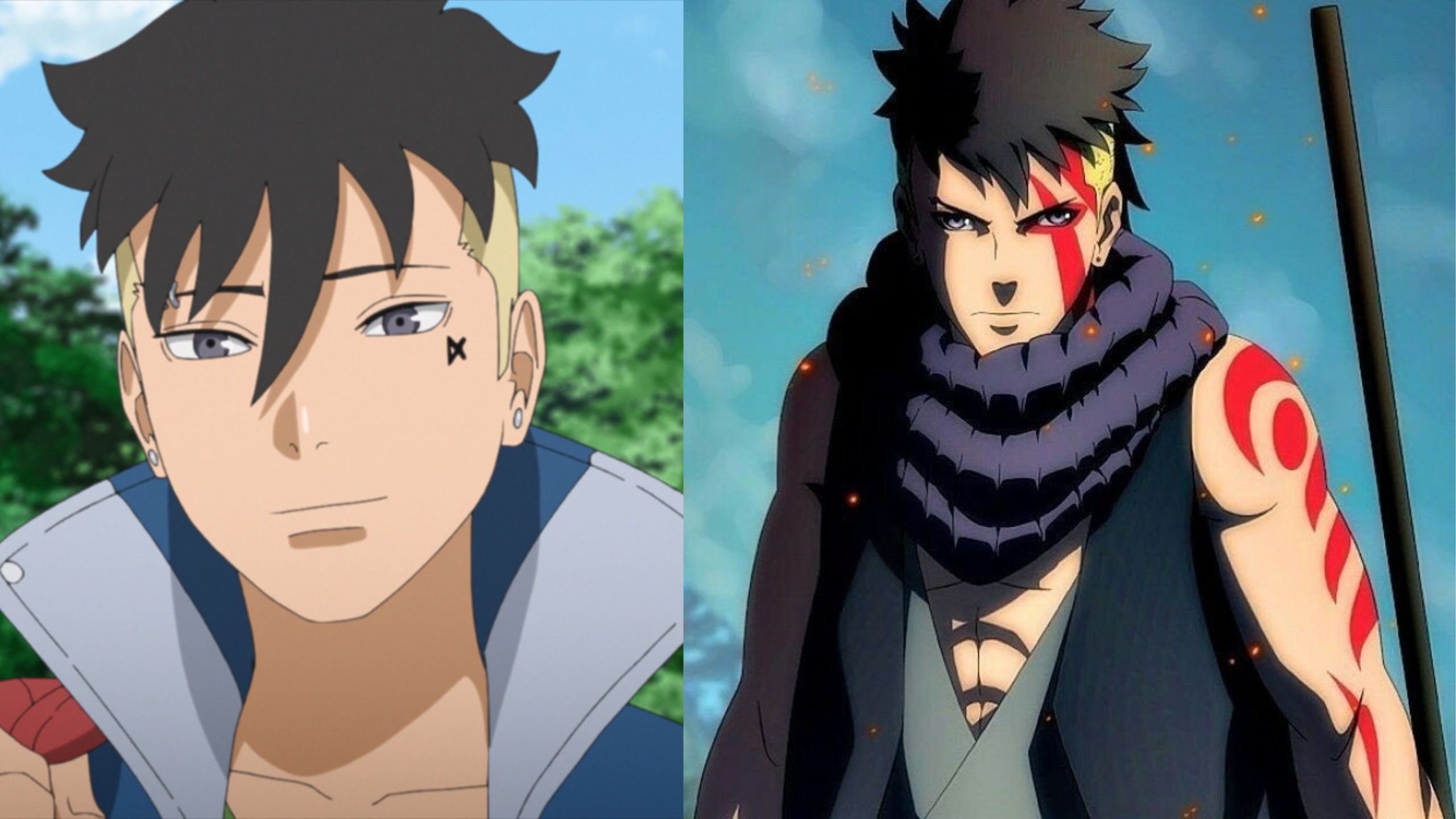
Kawaki From Boruto Two Blue Vortex (Studio Pierrot)
Kawaki’s journey is one of growth, redemption, and the search for a better world, even if that path is fraught with hardship and conflict.
In the end, whether Kawaki is viewed as a hero or a villain may depend on one’s perspective. His actions, though extreme, are driven by a desire to protect and a refusal to allow the mistakes of the past to repeat themselves.
In this sense, Kawaki’s story is a reflection of the broader struggles faced by the shinobi world a world where the line between hero and villain is often blurred, and where true heroism is found in the willingness to make the difficult choices for the sake of those one loves.
Kawaki’s evolution from a troubled youth to a protector willing to bear the weight of hatred for the greater good makes him a unique and compelling character in the Boruto series.
As the Two Blue Vortex saga continues, Kawaki’s story will undoubtedly play a central role in shaping the future of the shinobi world, offering readers a complex and thought-provoking exploration of what it means to be a hero in a world that is anything but black and white.
