Jac Schaeffer is a well-known writer, producer, and director. She recently worked on Marvel Studios’ Disney+ series “WandaVision,” which won an Emmy Award. This series introduced viewers to Agatha Harkness, a witch without a coven, played by Kathryn Hahn.
“WandaVision” shook the Marvel Cinematic Universe (MCU) by expanding on witches within its storyline. It also gave Schaeffer the chance to create another series, “Agatha All Along.” This new series can be enjoyed on its own and also connects with the larger Marvel story.
After “WandaVision,” Agatha is still trapped in a spell cast by Wanda Maximoff, played by Elizabeth Olsen. Wanda’s spell keeps Agatha acting as the nosy neighbor, Agnes, in the town of Westview. In “WandaVision,” Agatha was the main villain.
But in “Agatha All Along,” Hahn’s character is in control. She forms a new group of witches, after things did not work out with her old one. She sets off on a path called the Witches’ Road to search for what she needs.
The first two episodes of “Agatha All Along” will air on Disney+ on September 18. Collider’s Perri Nemiroff talked to Schaeffer about the magic behind this upcoming series.
According to “WandaVision,” Agatha Harkness has mastered the craft of Dark Magic over many centuries. She killed her entire group of witches in Salem, Massachusetts when they tried to punish her for using dark magic.
Agatha went on her own and used a dangerous book called the Darkhold, which made her even more powerful but also corrupted her.
When she felt Wanda’s Chaos Magic, she got close to her in Westview, hoping to take this power. In the end, Wanda found out Agatha’s plan and trapped her in the role of Agnes, the nosy neighbor, stripping her of her magic.
So, what happens to Agatha next? Schaeffer says Agatha is still trapped. This time, she is stuck as the female detective in a TV show that mimics a crime drama.
Schaeffer says she always had this idea. She mentions, “From the very beginning, I had the concept for the pilot.” Schaeffer also got the chance to direct the pilot episode, which she was excited to do.
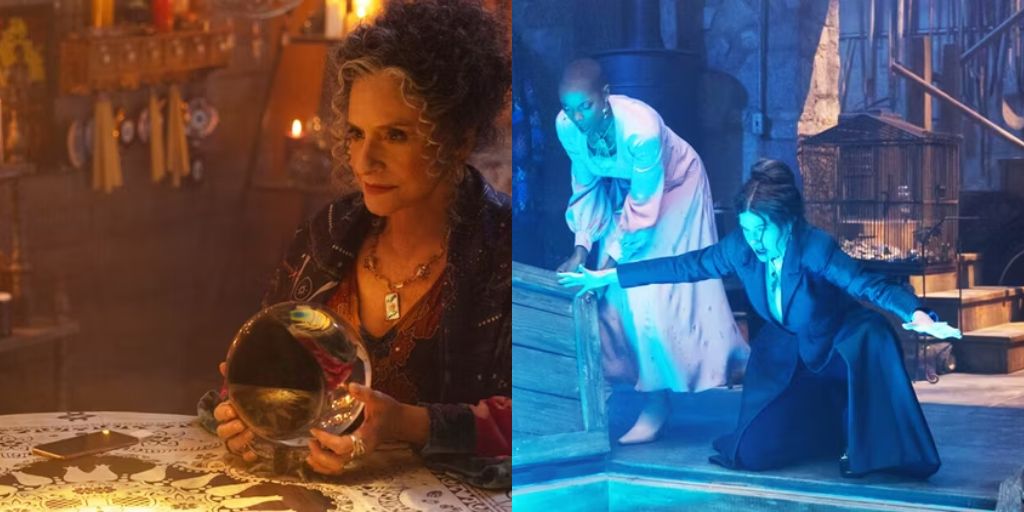
Still from the series (Disney+)
Perri Nemiroff asked Schaeffer how the plot of “Agatha All Along” changed during development. Schaeffer explained that the journey of the character was the biggest question.
They wondered if it would be a story focused on two characters or an ensemble cast. These ideas changed the most as the show took shape. Schaeffer says she can’t give away too much because it would spoil the story.
Marvel Studios has been building an epic cinematic universe since “Iron Man” (2008). The MCU has introduced iconic Marvel characters in movies that connect with each other.
In recent years, Marvel started the “Multiverse Saga,” which allowed for incredible stories like “Loki,” “What If…?,” and “WandaVision.” Now, “Agatha All Along” is part of this journey, focusing on Dark Magic, which was also a theme in “Doctor Strange in the Multiverse of Madness.”
Being a spin-off, “Agatha All Along” is linked to past Marvel projects. But in Marvel’s tradition, shows and movies also help set up future projects. For example, look at “Deadpool & Wolverine.”
This gives creators a lot of responsibility. It can make even the most dedicated Marvel fans question if the focus is on quality or on just adding more characters.
Perri asked Schaeffer if the overarching Marvel Universe impacted “Agatha All Along” in any way. Schaeffer said she has never had a situation where Kevin Feige, the head of Marvel Studios, came in and demanded a specific character be included.
However, she mentions that the creative team often gets involved when planning the ending or any additional scenes after the main story. They consider who should appear and what message to send at the end of the show.
So, are there no cameos? Not necessarily. “Agatha All Along” might open doors for future Marvel spin-offs or films, but Schaeffer is not revealing any details yet. Like “WandaVision” and “Black Widow,” which Schaeffer also wrote, Agatha’s series will be a standalone show that Marvel fans can enjoy.
It will have great visual effects and introduce new characters, giving fans more of the witchcraft they loved seeing in Wanda’s last appearance.
Perri asked about the rules that the creative team followed when making the Witches’ Road. Schaeffer says rules are very important to her and help guide the story. The Witches’ Road is a legendary path that only witches can follow. In the comics, it is described as a dangerous and tricky road.
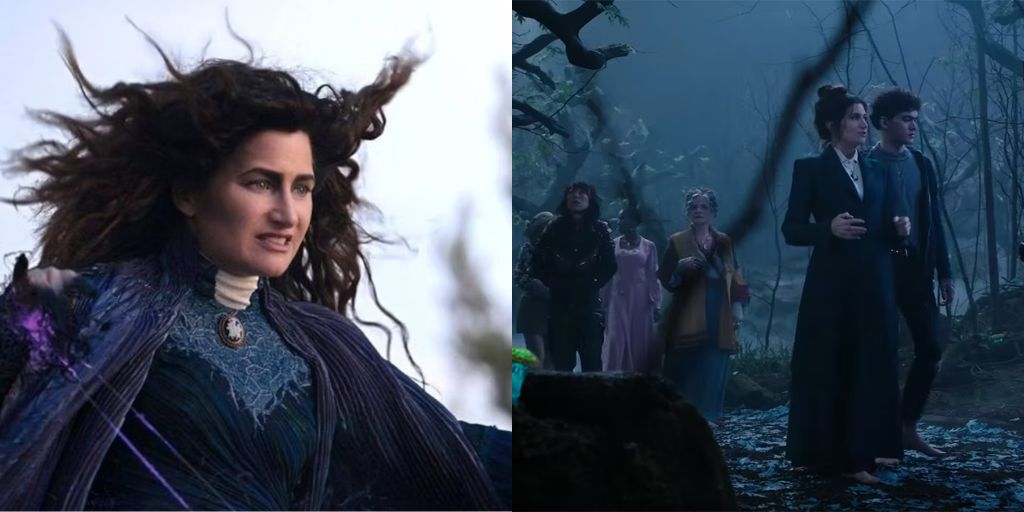
Still from the series (Disney +)
Schaeffer explained that making this road from scratch was a challenge. “WandaVision” was hard to make, but this series was even more difficult because they had to build the concept of witchcraft in the MCU. The Witches’ Road is part of this magical world, and the team had to figure out the rules for this journey.
Schaeffer said that during production, they learned a lot about what rules were important. For example, covens share both blessings and burdens. They also came up with ideas like not stepping off the road, which allowed them to explore what happens when someone does. Schaeffer says it was a fun process that felt like being a kid again.
At the D23 event, the cast performed a song that gave more hints about the Witches’ Road. Perri asked if there would be more music in the show. Schaeffer confirmed that music will continue to be a part of the series in surprising ways.
The show has an ensemble cast, which includes Joe Locke, Sasheer Zamata, Patti LuPone, Ali Ahn, Debra Jo Rupp, and Aubrey Plaza. Agatha is freed from Wanda’s spell by a teenage boy, played by Joe Locke. He asks her to guide him on the Witches’ Road, and together they form a new coven.
The new coven, along with Agatha, gets involved in at least one impressive musical number. Perri had seen up to Episode 4 and confirmed that there will be more musical moments. Perri asked if the cast was chosen for their singing skills, but Schaeffer says that was not the plan.
The focus was on finding the right actors for the roles. It just so happened that many of them, like Patti LuPone and Ali Ahn, had musical talents. Joe Locke, for instance, went on to perform on Broadway after the show. Schaeffer says it felt like these talents came together in a magical way.
“Agatha All Along” promises to be an interesting addition to the Marvel Cinematic Universe, blending dark magic, intricate storytelling, and new characters. With Jac Schaeffer at the helm, fans can expect a fresh, creative take on Agatha Harkness as she navigates her post-WandaVision life.
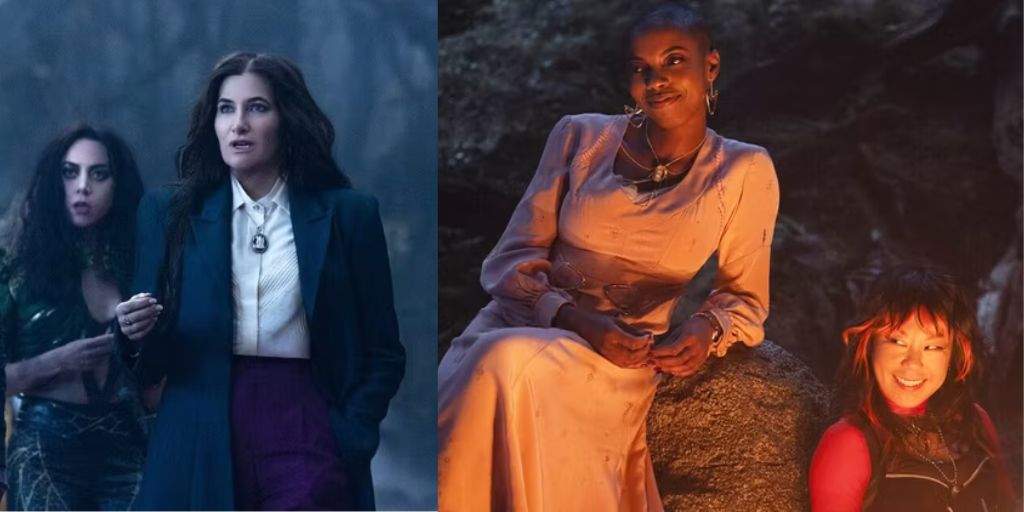
Still from upcoming episode (Disney+)
This series will not only detail Agatha’s journey but also introduce the rich lore of witchcraft in the MCU, including the mysterious Witches’ Road. The rules and challenges Agatha faces will deepen fans’ understanding of magic in this universe, expanding on what was hinted at in previous films like “Doctor Strange in the Multiverse of Madness.”
Schaeffer’s thoughtful approach to character development, combined with the show’s visually stunning effects, musical elements, and rich storytelling, sets the stage for another hit within the MCU.
The inclusion of a talented ensemble cast, including Joe Locke, Sasheer Zamata, Patti LuPone, and Aubrey Plaza, adds an extra layer of excitement and star power to the series. “Agatha All Along” offers something for everyone—whether you’re a longtime Marvel fan or new to the franchise.
As the series premieres, viewers will be taken on a journey full of surprises, magic, and unexpected twists. The bewitching world of Agatha Harkness is about to cast its spell once again, and fans are in for a thrilling ride.
Though My Hero Academia, Kohei Horikoshi’s magnum opus, officially concluded on August 5, 2024, the story’s impact continues to resonate deeply with fans.
Even though the series has ended, its intricate characters, complex plotlines, and thought-provoking themes have led fans to continue dissecting it with great fervor.
Across social media platforms like X (formerly known as Twitter), My Hero Academia still sparks debates, conversations, and endless theories about the characters and their respective journeys.
Recently, a post on X grabbed the attention of many fans when one user decided to compare Tomura Shigaraki to other morally ambiguous characters like Hawks and Lady Nagant.
The post ignited a fierce debate within the My Hero Academia fandom, as the original poster (OP) argued that despite having similar tragic backstories, Shigaraki received much harsher treatment, both from fans and characters in the story, compared to Hawks and Lady Nagant.
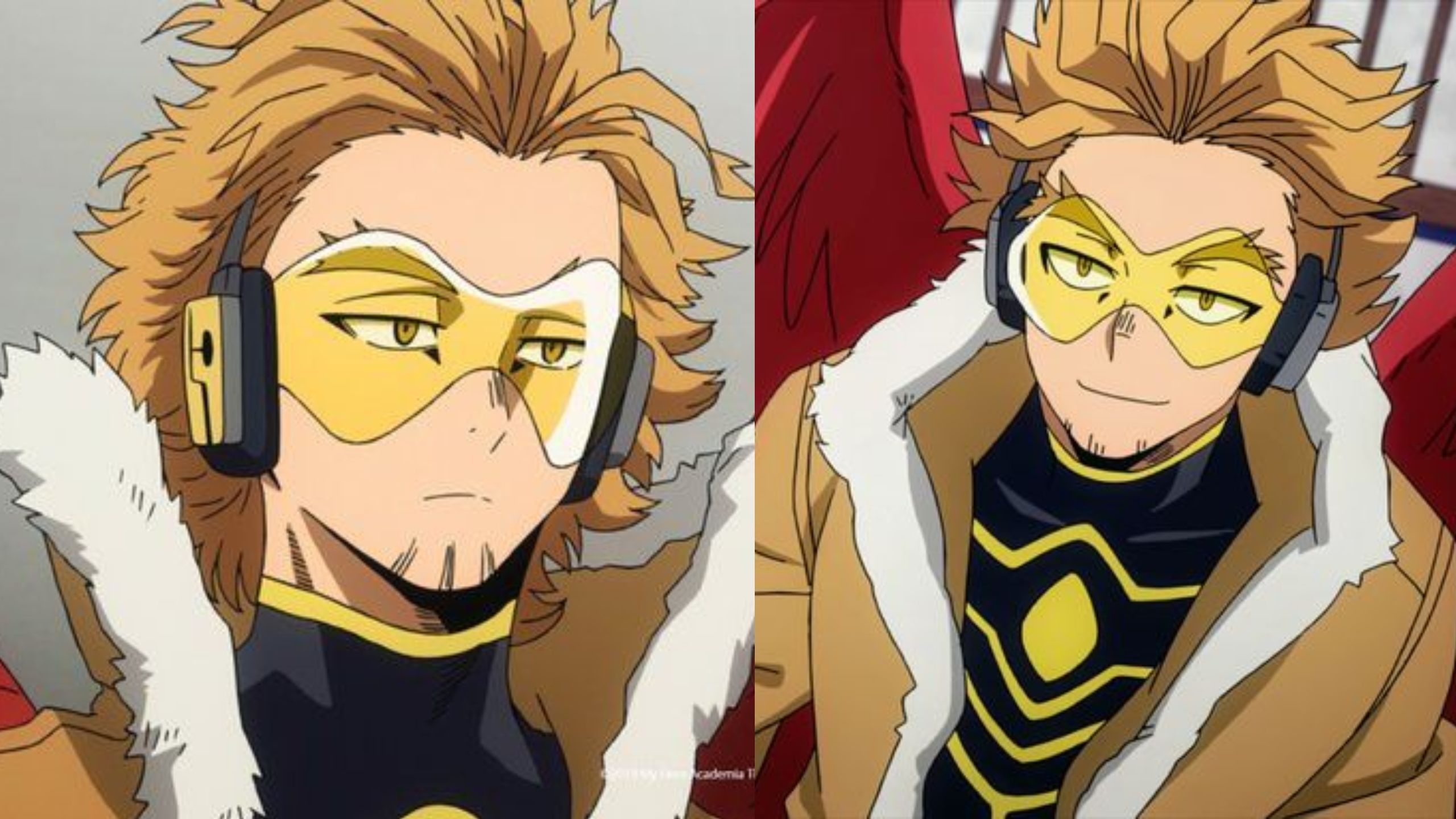
Hawks From My Hero Academia (Bones)
According to the OP, Shigaraki was condemned to death for his actions, while the other two characters were allowed to live freely and were even forgiven for their morally questionable actions.
This post, naturally, sparked heated reactions, with many fans pointing out that the comparison didn’t make much sense.
Some even humorously suggested that the OP had fallen prey to what’s known in the manga and anime community as the “Reading Comprehension Devil” a sarcastic term used when a reader misinterprets or misses key points in a story.
While Chainsaw Man is known for its devils and contracts, the “Reading Comprehension Devil” isn’t a literal entity but rather a humorous way of addressing misinterpretation among readers.
But was the comparison between Hawks, Lady Nagant, and Shigaraki truly as flawed as the majority of fans believed?
Let’s look through the roots of this debate, the motivations behind each character, and why this conversation stirred such intense reactions in the fandom.
Hawks vs. Shigaraki: A Fan Sparks Debate Over Backstories
At the heart of this recent debate is a post on X where the OP compared Shigaraki to two other popular characters from My Hero Academia: Hawks and Lady Nagant.
The OP argued that the three characters Shigaraki, Hawks, and Lady Nagant share tragic backstories, and yet, they seem to be judged by different standards within the series.
According to the OP, Shigaraki was unfairly condemned to die for his actions, while Hawks and Lady Nagant were allowed to live and move forward, despite having committed their own morally dubious acts.
To better understand this debate, it’s important to revisit the backstories of each character and how their experiences shaped the decisions they made throughout the series.
In My Hero Academia, both Hawks and Lady Nagant are considered morally grey characters.
They occupy a unique space in the story, as their roles often force them to walk the fine line between right and wrong.
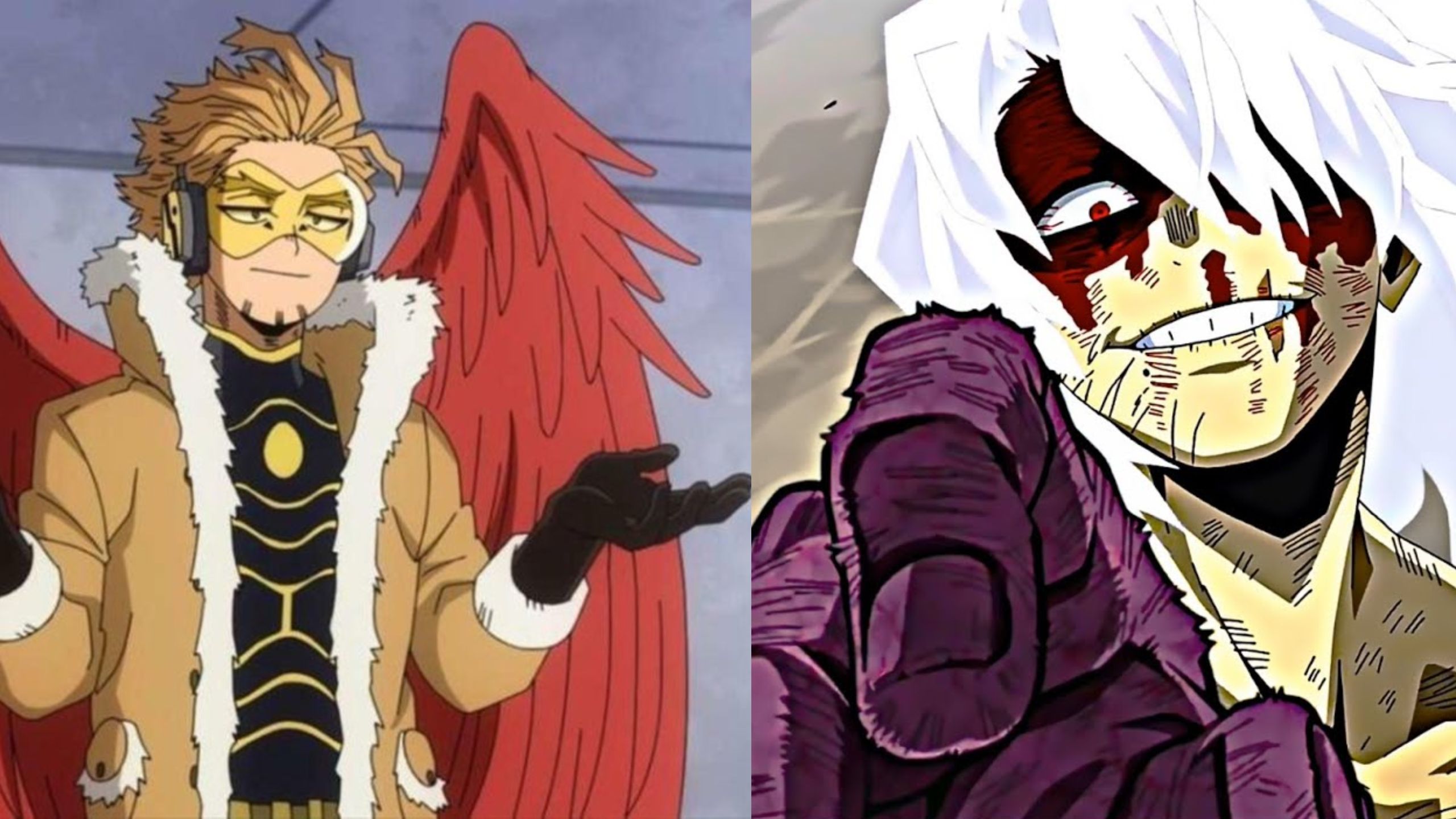
Shigaraki And Hawks From My Hero Academia (Bones)
Hawks, whose real name is Keigo Takami, was taken in by the Hero Public Safety Commission at a very young age.
As a child, Hawks was conditioned to follow orders without question. This led to him growing up with a very practical, almost detached sense of morality he was willing to do whatever it took to maintain peace and protect society, even if it meant committing acts that were morally questionable.
Similarly, Lady Nagant, whose real name is Kaina Tsutsumi, had dreams of becoming a great hero.
However, her path as a hero was quickly derailed when she was manipulated by her superiors in the Hero Public Safety Commission.
Instead of becoming the hero she had once envisioned, Lady Nagant was turned into an assassin, tasked with eliminating villains and even corrupt heroes.
Her assignments required her to “disappear” targets individuals the government didn’t want to deal with through traditional legal processes.
Over time, the disillusionment with her role consumed her, leading her to question the very system she had once sworn to protect.
Then, there is Tomura Shigaraki. Born as Tenko Shimura, Shigaraki had arguably the most tragic backstory of the three.
His life was defined by trauma from a very young age. As the grandson of Nana Shimura, one of the most revered heroes in My Hero Academia, Shigaraki’s life could have taken a very different path.
However, his father, who had a deep resentment toward Nana for abandoning him to pursue her heroic duties, took out his anger on young Tenko, subjecting him to severe emotional and physical abuse.
This abuse, compounded with his family’s cold indifference, led to Shigaraki’s Quirk manifesting in a horrifying way.
In a tragic accident, Shigaraki’s Quirk activated, and he inadvertently killed his entire family.
All For One, the series’ main villain, capitalized on Shigaraki’s grief and rage, manipulating him into becoming the successor to his evil empire.
The key argument from the OP was that Shigaraki, despite his tragic backstory, was judged far more harshly than Hawks or Lady Nagant.
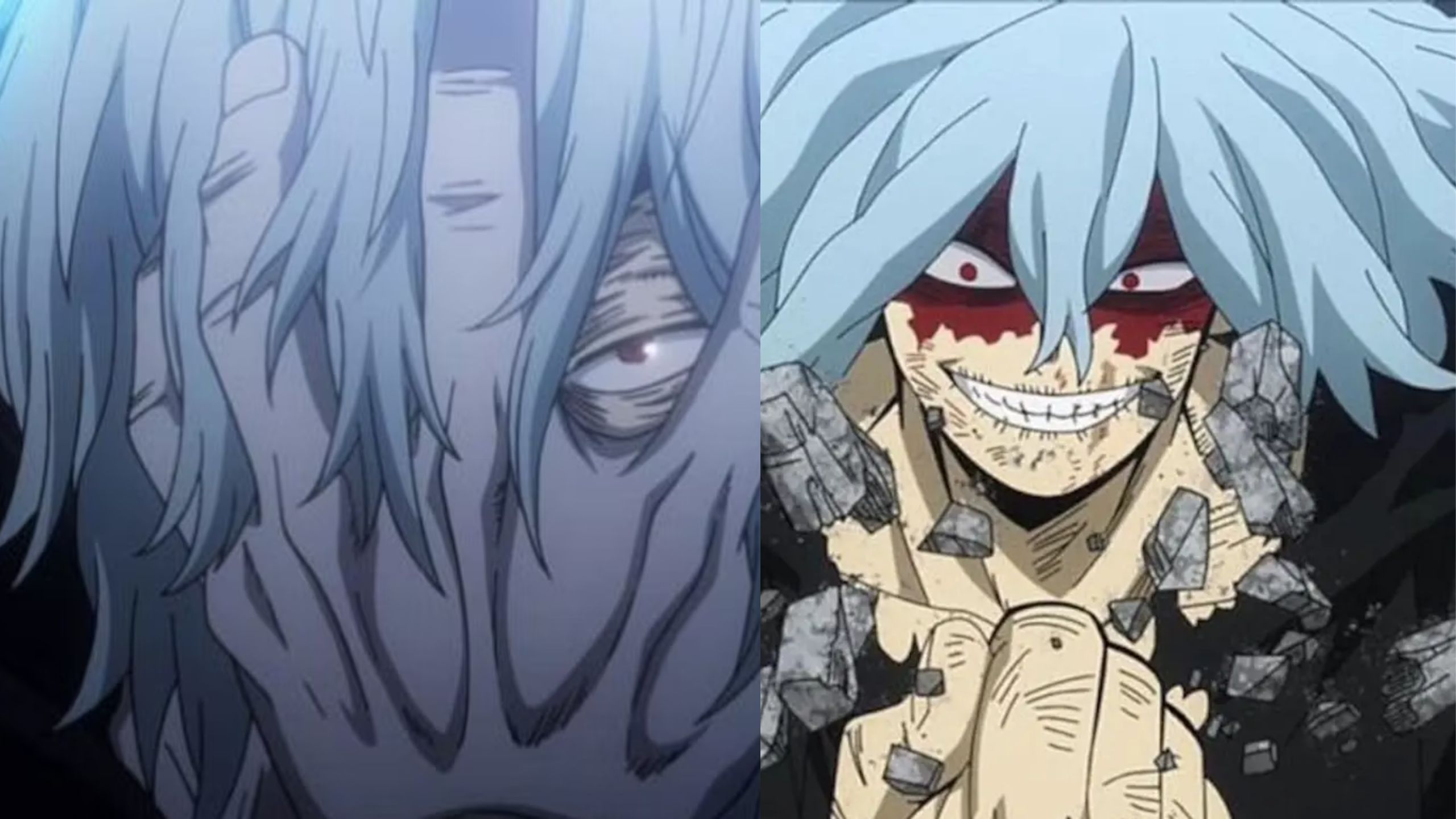
Tomura Shigaraki (Crunchyroll)
Shigaraki was considered irredeemable and deserving of a death sentence, while Hawks and Lady Nagant were allowed to walk free, despite having committed similarly questionable actions under the manipulation of the Hero Public Safety Commission.
This sparked a larger conversation about how society and even the fans themselves perceive and judge characters based on their actions and backstories.
Fans React to the Debate: The “Reading Comprehension Devil” Strikes Again
Once the post comparing Shigaraki to Hawks and Lady Nagant began circulating, the My Hero Academia fanbase didn’t waste any time in responding.
The overwhelming reaction from fans was one of disbelief and ridicule, with many claiming that the OP’s comparison was deeply flawed.
A running joke within the manga and anime communities, the “Reading Comprehension Devil” was quickly invoked to explain the OP’s apparent misunderstanding of the characters and the series as a whole.
For those unfamiliar with the term, the “Reading Comprehension Devil” isn’t an actual character in Chainsaw Man or any other manga.
It’s a sardonic nickname created by fans on Reddit to describe a phenomenon where readers miss obvious details or fail to interpret key aspects of a story.
It’s used to humorously explain why some fans may make arguments or observations that seem to completely ignore major plot points.
One fan humorously pointed out the core issue with the comparison: “You forgot the part where the guy on the right was planning on destroying the world.”
This simple comment underscores the stark contrast between Shigaraki’s intentions and those of Hawks and Lady Nagant.
Reading comprehension devil — Dev今Jonathan (@ZBalance) September 5, 2024
While both Hawks and Lady Nagant made morally grey decisions, their ultimate goal was to protect society, whereas Shigaraki sought nothing less than total destruction.
Another fan expanded on this point, stating: “Nagant was literally in prison before her introduction, she was given a second chance when she literally helped save the entire world. Hawks may have killed people, but they were still villains. SHIGARAKI IS LITERALLY A MASS MURDER WHO WANTED TO KILL EVERYONE AND EVERYTHING.”
This fan was quick to highlight that Hawks and Lady Nagant, though morally ambiguous, were still fighting on the side of justice, whereas Shigaraki’s motivations were rooted in a deep desire to destroy everything and everyone in his path.
Others pointed out the specifics of Shigaraki’s actions and the magnitude of the destruction he caused.
One fan asked sarcastically: “Hey what was manipulated guy gonna willingly do to Japan at the end? Hmm tell me.”
This pointed question called out the OP’s attempt to justify Shigaraki’s actions by focusing solely on his backstory and not acknowledging his later decisions, which included a plan to annihilate Japan.
The fanbase, for the most part, collectively ridiculed the original poster’s argument, seeing it as an oversimplification of the characters’ complexities.
While Hawks and Lady Nagant were certainly morally grey characters who carried out questionable actions under manipulation, Shigaraki was viewed as a mass murderer who sought to destroy society, regardless of his tragic past.
One particularly cutting comment from a fan read: “Me when I cut 90% of the story off so I can make my silly point valid.”
This was a jab at how the OP seemed to be ignoring key parts of the story to support their argument.
Another fan added: “One decided to do the good thing, the other decided to destroy a country to its core.”
This statement sum up the core difference between Hawks and Lady Nagant, who chose to fight for good despite their grey areas, and Shigaraki, who embraced chaos and destruction.
The conversation about Shigaraki’s backstory versus his actions reflects a broader theme that has been present throughout My Hero Academia: the tension between sympathy and accountability.
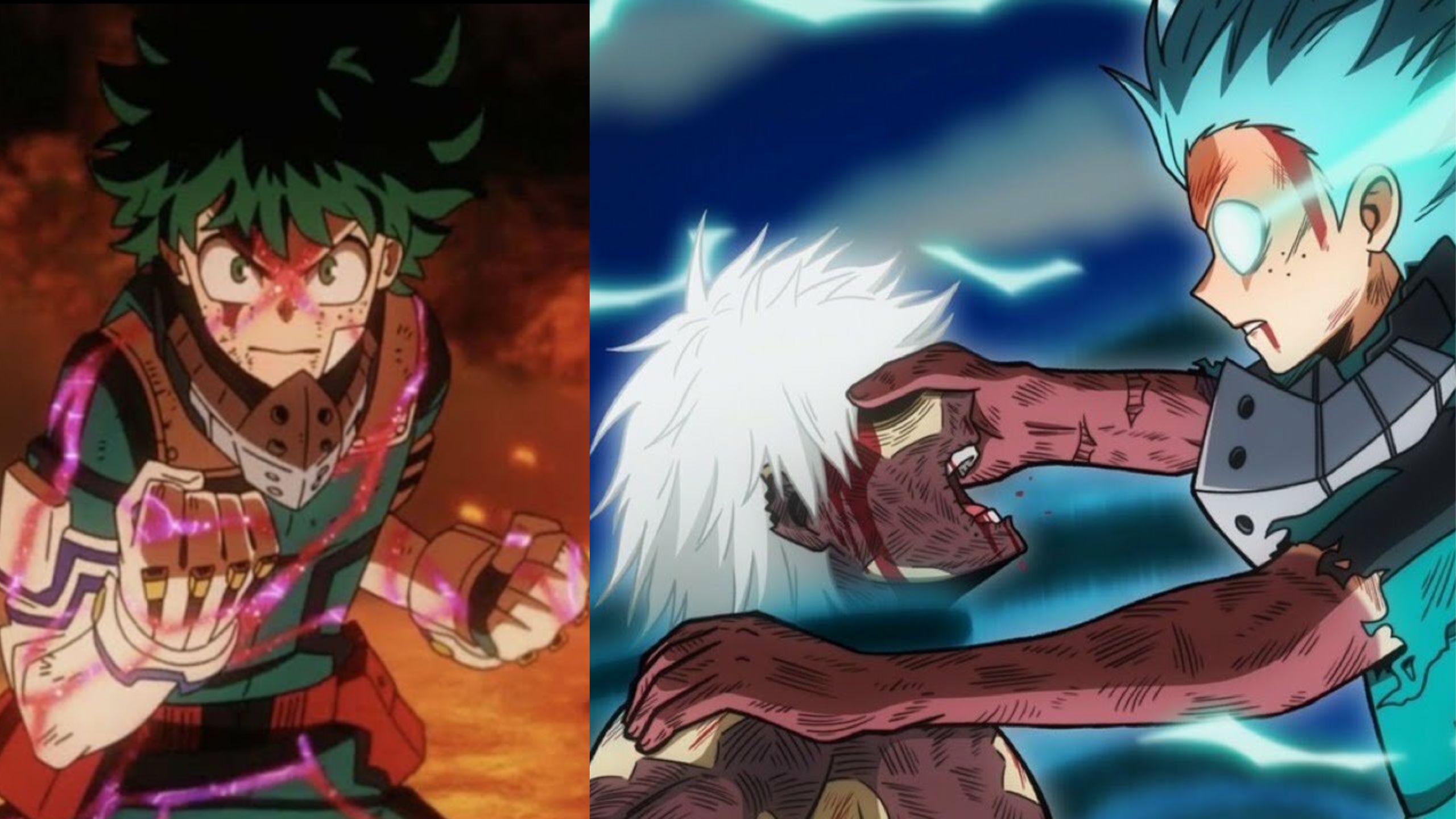
Deku And Shigaraki Final Battle (Twitter)
Can a character’s tragic past ever fully excuse or justify the harm they cause later in life? And at what point does a character become irredeemable, regardless of the trauma they’ve endured?
Sympathy and Accountability: Can Shigaraki Be Forgiven?
The debate about Shigaraki’s character ultimately comes down to one central question: Can we separate the trauma and manipulation he endured as a child from the destruction he willingly caused as an adult?
While Shigaraki’s backstory is undoubtedly one of the most tragic in the series, many fans feel that his later actions especially his plan to annihilate Japan place him beyond redemption.
Shigaraki’s story is one of abuse, manipulation, and an overwhelming desire for destruction. All For One, the series’ central villain, played a major role in shaping Shigaraki into the monster he became.
By capitalizing on Shigaraki’s trauma and hatred, All For One turned him into a weapon of mass destruction.
However, it’s important to note that as the series progressed, Shigaraki became more aware of his own desires and intentions.
By the final arc, Shigaraki had embraced his identity as a villain, choosing to follow a path of chaos and destruction, regardless of the sympathy his backstory might evoke.
Hawks and Lady Nagant, on the other hand, also suffered from manipulation at the hands of the Hero Public Safety Commission.
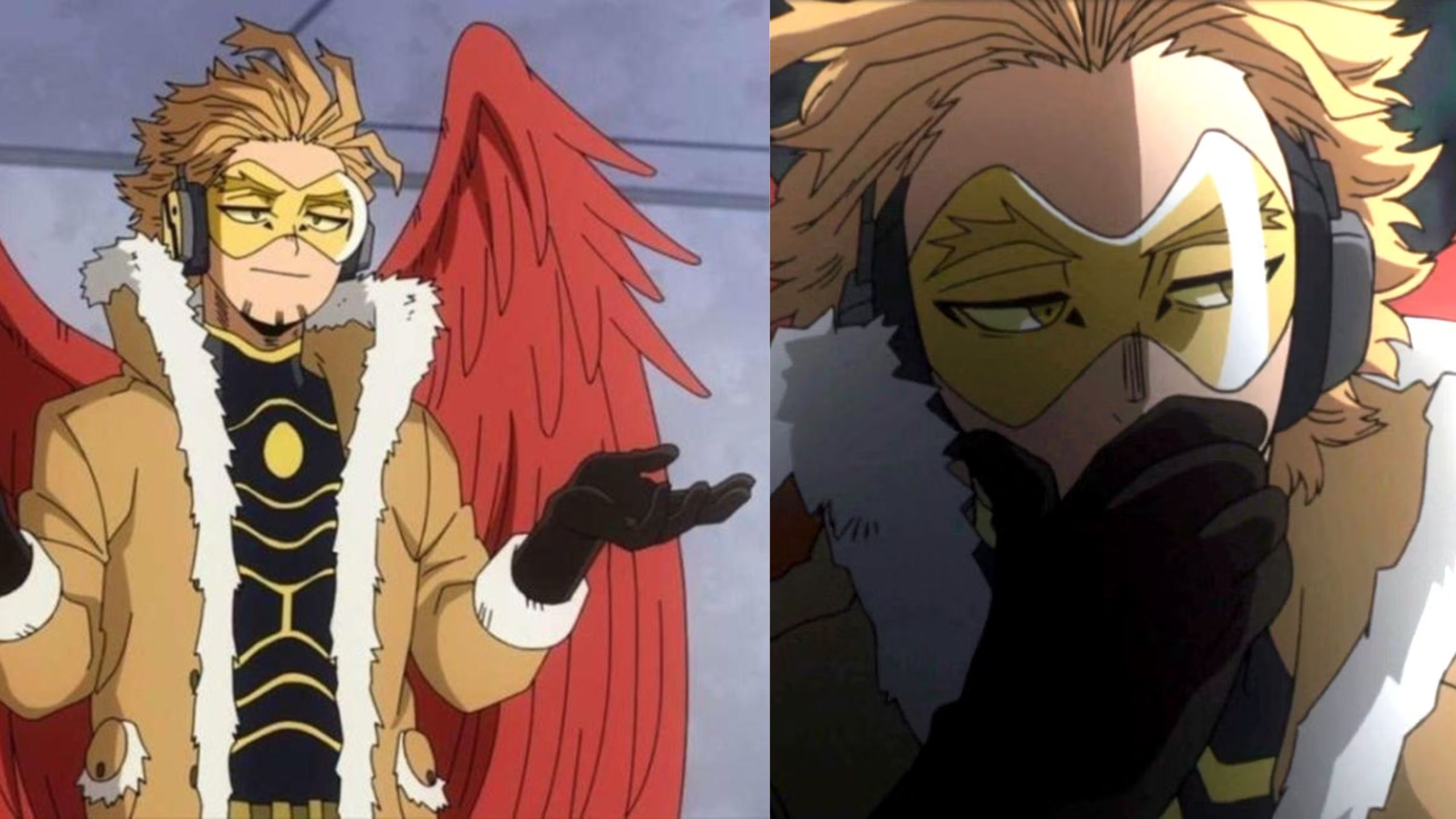
Hawks From My Hero Academia (Bones)
Both characters were used as tools by the government, forced to commit morally questionable acts in the name of maintaining peace.
However, unlike Shigaraki, both Hawks and Lady Nagant ultimately chose to fight for justice and redemption.
Hawks, despite his morally grey decisions, always had the safety of society in mind, and Lady Nagant, after initially turning against the system, eventually decided to help the heroes in their fight to save the world.
In contrast, Shigaraki’s actions were motivated by a desire to destroy society rather than save it. While it’s easy to sympathize with his tragic backstory, many fans feel that his later decisions, particularly his willingness to wipe out an entire country, place him beyond forgiveness.
The Fandom’s Verdict: Why Hawks and Lady Nagant Are Different
Ultimately, the overwhelming majority of My Hero Academia fans rejected the OP’s comparison between Shigaraki, Hawks, and Lady Nagant.
While all three characters had tragic pasts and were manipulated by powerful figures, the key difference lies in how they chose to act moving forward.
Hawks and Lady Nagant, despite their morally grey actions, still fought for a greater good, while Shigaraki embraced his role as a villain and sought to destroy everything in his path.
The term “Reading Comprehension Devil” may have been used humorously in this instance, but it reflects a deeper truth about how fans interpret complex characters and stories.
In a series like My Hero Academia, where characters are constantly grappling with questions of morality, redemption, and justice, it’s easy for fans to form differing opinions.
Consequences for thee but not for me pic.twitter.com/ege92OFd3f — 🃏Jester X🃏 (@ErlangFan69) September 4, 2024
However, as this debate has shown, not all comparisons are created equal, and sometimes, a more nuanced understanding of the story is required.
As My Hero Academia continues to be discussed and dissected by its passionate fanbase, these debates will undoubtedly continue to arise.
The characters, their motivations, and the choices they make will remain a topic of conversation for years to come.
Whether it’s Hawks, Lady Nagant, or Shigaraki, each character represents a different facet of the series’ exploration of morality, and their stories will continue to resonate with fans long after the final chapter has been written.
