Alias Grace is a compelling mystery, and its ending reveals a complex resolution. The key question throughout the series is whether Grace Marks is responsible for the murders of her employer, Thomas Kinnear, and his housekeeper, Nancy Montgomery. The answer is both yes and no. In the final episode, Grace undergoes hypnosis, slipping into a semi-conscious state. As she speaks, a new voice emerges—one that is cruel, abrupt, and vulgar. This new voice suggests Grace suffers from multiple personality disorder. Sometimes she is the innocent maid, Grace Marks, and at other times, she becomes Mary Whitney, the vengeful spirit of Grace’s deceased friend. Ultimately, it is Mary Whitney, not Grace, who is the real murderer.
Alias Grace Ending Explained
This resolution aligns well with the themes explored in Alias Grace . Like Margaret Atwood’s original novel, the mini-series employs quilting as a metaphor to explore various concepts. These include female labor, domesticity, and patchwork images that come together to form a bigger picture. The fragmented nature of Grace’s mind mirrors this quilting theme, and it is only when we step back and view all the parts of her identity that we understand the full mystery.

Alias Grace (Image via Getty)
There are multiple possible explanations for Grace’s behavior and her apparent split personality. It’s possible that Grace truly has multiple personalities. Maybe Mary Whitney’s soul entered Grace’s body after her death, whispering, “Let me in,” and taking over. Alternatively, Grace may suffer from amnesia and be unaware of committing the murders, or even of what happened during the gaps in her life.
The Fabrication of the Mary Whitney Story
Another intriguing possibility is that the entire Mary Whitney hypnosis performance is fabricated. Perhaps Grace and Jeremiah collaborated to create the illusion of Mary Whitney’s possession. Jeremiah’s “Dr. Jerome DuPont” identity is, after all, a sham. His involvement in mesmerism is financially motivated, as it pays more than his previous occupation as a peddler. It’s not out of the question that he and Grace staged the Mary Whitney performance to suggest Grace’s innocence and advance his career in the process.
One of the most compelling moments in the series comes when “Mary Whitney” provides a key clue about the murder. Under hypnosis, Whitney’s voice describes the crime, mentioning how Montgomery was strangled with a handkerchief—the same handkerchief that once belonged to Mary Whitney’s mother. This handkerchief was given to Grace years earlier, making it a significant piece of the puzzle. The scene is satisfying because it offers a “click” of recognition. However, it’s important to remember that the only reason we know about this handkerchief—and by extension, Mary Whitney—is because Grace Marks told us. The entire theory of Mary Whitney is based on Grace’s account.
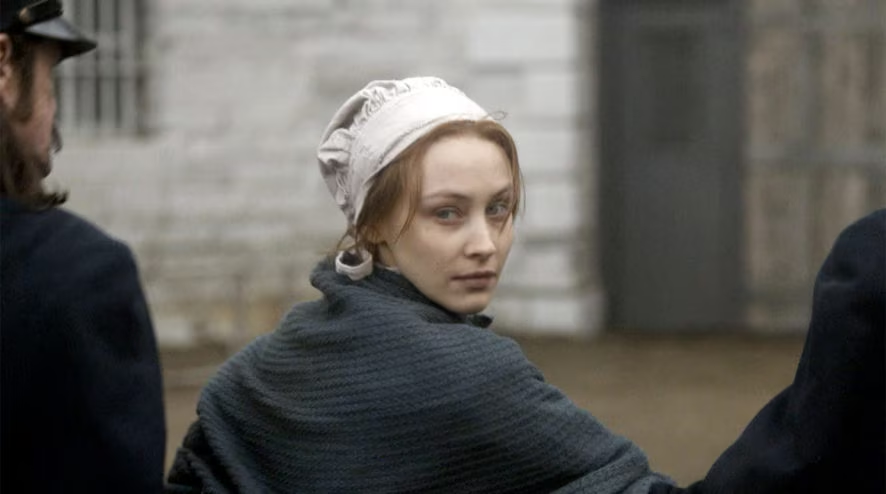
Alias Grace (Image via Getty)
Grace’s Story: Truth or Fabrication?
The mini-series primarily focuses on Grace’s life, from her childhood to the events leading up to the murders. However, it’s essential to note that this story is told through Grace’s voice-over narration. Everything we know about Grace comes from what she chooses to share with Dr. Jordan. This raises questions about the reliability of her story. How can we know if what Grace says is true? How do we know that Mary Whitney even exists, or if she’s entirely a product of Grace’s imagination? Since Mrs. Alderman Parkinson is dead, Dr. Jordan never follows up to verify Grace’s claims, leaving the door open for doubt. Who’s to say if Grace’s stories of abuse are accurate?
In Margaret Atwood’s novel, the concept of Grace as an unreliable narrator is more apparent. The first-person narrative, combined with a lack of dialogue markers, encourages readers to question the accuracy of Grace’s words. The story feels uncertain, and it’s easy to lose track of what is real and what is imagined. In the show, however, it’s harder to maintain that same level of skepticism. As viewers, we tend to trust what we see unless the narrative provides visual clues to undermine the events. Unlike other shows like Mr. Robot or Legion , Alias Grace doesn’t prompt us to actively question the reliability of the story.
Hints in the Visual Language of the Series
Nevertheless, the adaptation by Mary Harron and Sarah Polley still hints at Grace’s unreliability. The visual language of the show—interspersing pieces of Grace’s story, such as Nancy’s death and Mary Whitney’s life—suggests that we are witnessing Grace’s version of events. This is not an omniscient perspective but one shaped by Grace’s experiences and memories. For example, we see images of an apple peel falling to the floor or the unsettling image of Nancy’s forehead opening like an overripe fruit. These moments are filtered through Grace’s perspective, suggesting her subjective view of the world.

Sarah Gadon (Image via Getty)
Grace herself acknowledges her unreliability, especially in a letter she writes to Dr. Jordan after marrying Jamie Walsh. Grace reflects on her relationship with Walsh, noting that he is kind but obsessed with her past. She writes, “He likes to picture the suffering I have endured,” and says, “He listens to it all like a child listening to a fairy tale.” In order to satisfy his curiosity, Grace admits that she sometimes changes the details of her stories to suit what others want to hear. She confesses, “I may have changed some of the details of my stories to suit what I thought you wanted to hear. It did make me feel I was of some use in this world.” Grace knows she’s lying, and she’s performing for an audience. She’s fully aware of her unreliability.
Alias Grace: A Story of Performance and Perception
Despite Grace’s acknowledgment of her own unreliability, Alias Grace doesn’t suggest that we should completely doubt her. The ending of the mini-series isn’t focused on Grace’s honesty or innocence. Instead, it raises a larger question: Why do we, as viewers, find it so entertaining to watch a woman suffer? What do we want from Grace Marks? What version of her life would be most extraordinary or remarkable? How can she make herself visible to a wealthy, educated doctor, given her status as a poor, uneducated maid?
Alias Grace is a remarkable story precisely because it leaves the question of whether Grace Marks killed Thomas Kinnear and Nancy Montgomery unanswered. While the mystery remains unresolved, the mini-series delivers a poignant critique of society. It indicts us, the viewers, for our disinterest in women’s lives unless they are sensationalized or sensational. The real charge is against our voyeuristic tendencies, seeking out suffering and spectacle instead of truly understanding women’s stories. Ultimately, Alias Grace exposes the complexity of perception and the biases that shape how we view the lives of others.
Sergio Leone’s Once Upon a Time in America is regarded by some as the pinnacle of his career, a masterpiece that stands among his previous greats such as A Fistful of Dollars , The Good, the Bad, and the Ugly , and Once Upon a Time in the West . These films, often described as spaghetti westerns, were known for their grand portrayals of vast spaces where cowboys and conmen fought for survival. However, Once Upon a Time in America , released in 1984, is far from Western. It is a gangster epic that contrasts the former by exploring the notion of time itself. The narrative continuously jumps between three distinct eras in the lives of its characters: as young petty criminals in 1918, as hardened gangsters in the early 1930s, and as older men far removed from their criminal pasts in 1968.
Once Upon a Time in America, Ending Explained
The film presents a brutal depiction of the immigrant experience and the American dream, with the central characters far from traditional heroes. Upon its initial release in the United States, the film suffered from studio-imposed cuts, which ultimately transformed it into a version far shorter than the director’s intended edit. Originally, the film had a runtime close to four hours, reflecting Leone’s full vision. In America, however, audiences were subjected to a truncated version, resulting in a less coherent experience and, consequently, a largely confused reception. While this version resembled Leone’s original work, it didn’t fully reflect the depth and richness of the director’s intentions.
At the core of the film’s plot lies a dual mystery, with the ending designed to leave audiences questioning the fates of the main characters. This intricate layering of questions allows viewers to interpret the story in various ways. Leone deliberately left much of the final sequence open-ended, forcing audiences to draw their own conclusions about the truth behind what transpired. Here’s a breakdown of how the film’s ending unfolds.
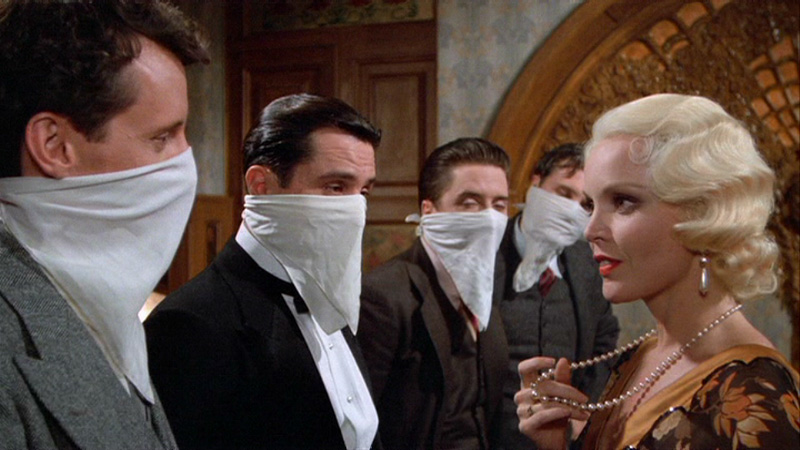
Once Upon a Time in America cast (Image via Getty)
Setting the Stage for the End of Once Upon a Time in America
The story follows Noodles Aaronson (played by Scott Tiler as a young man and Robert De Niro in his adult years), a gangster who initially rose to power alongside his friend Max (Rusty Jacobs as a child and James Woods as an adult). Their journey begins when they form a gang together while still young, based in the Lower East Side. Noodles ends up in prison after stabbing a local boss. Upon his release, he discovers that his gang has prospered, turning into a successful bootlegging operation. Yet, their success is fleeting, as their empire crumbles after the repeal of Prohibition.
At a pivotal moment, Noodles is persuaded by Max’s girlfriend Carol (played by Tuesday Weld) to betray the gang by providing information that would send the members to prison for lesser offenses. The plan goes awry, and instead of helping, Noodles and Max end up fighting. Noodles knocks Max unconscious, and, upon waking, learns that his friends have all been killed in a shootout with the police. Overcome with grief, he flees to Buffalo, where he spends years hiding from his past in an opium den, trying to numb his pain.
Everything changes in 1968 when someone from his past reappears, revealing that Max faked his death with the help of the police. He had spent the last 30 years rising through the ranks of the Teamsters Union under a new identity: Christopher Bailey. Max’s rise has been significant, leading him to become the U.S. Secretary of Commerce. However, Max has now made powerful enemies, and Noodles is contracted to kill him before the Teamsters do.
Max’s Fate in the Final Moments
This is where the first part of the film’s two mysteries comes into play. Noodles refuses to kill Max. He believes that Max died with the rest of their gang and sees the man before him as a stranger who doesn’t deserve his loyalty. As Noodles leaves Bailey’s house, Max, or someone resembling him, follows him in the darkness. The camera cuts to a garbage truck that drives between the two men. When the truck passes, Max is nowhere to be found. Instead, the camera focuses on the truck’s rear end, showing the spinning blade as it compacts refuse.
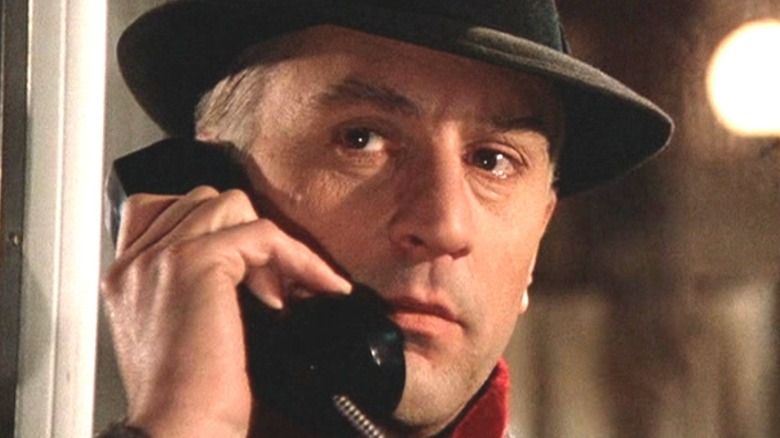
Noodles (Image via Getty)
The scene of the garbage truck is deliberately ambiguous and suggests several possibilities. One theory is that Max, or the man who resembled him, was killed during this moment. The truck’s spinning blades might symbolize the finality of death. Alternatively, the scene could imply that Max escaped or that he was an entirely different person altogether. James Woods, who portrayed Max, has even stated that he didn’t know what happened to his character during the film’s ending. To maintain this uncertainty, Leone chose to use a stand-in actor for the scene rather than Woods himself.
Is Noodles Dreaming the Whole Story?
At this point, the line between reality and imagination starts to blur. The final sequence of the film returns to an earlier scene, where a younger Noodles is seen in the opium den after the death of his friends in the 1930s as he consumes the drug, a blissed-out smile spreads across his face. This moment has sparked various interpretations about the nature of the story’s conclusion.
One popular theory suggests that Noodles, while under the influence of opium, begins to piece together the truth about Max’s plan. The smile, in this context, could indicate Noodles’ realization of Max’s long-standing intentions. It could be a moment where Noodles understands that Max had orchestrated his escape from the gangster world, freeing himself from the misery they both endured. The opium-induced high might serve as the point at which Noodles gains clarity about the master plan, finally coming to terms with what happened.
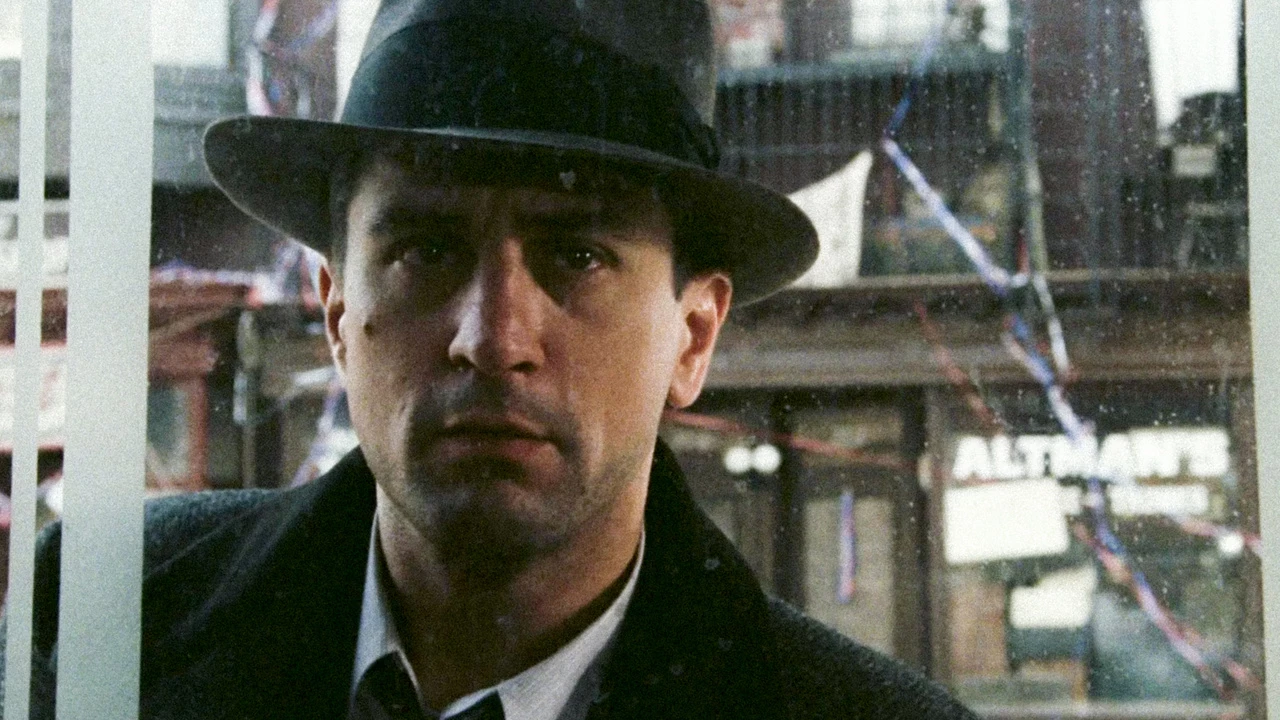
Noodles (Image via Getty)
Alternatively, another theory, widely discussed by Aural Crave, suggests that Noodles’ final moments represent an opium-induced dream. Everything after he enters the den—the escape to Buffalo, his eventual return to New York, Max’s rise to power, and his return to Noodles’ life—could be imagined by Noodles as part of his fantasy of a happier ending. In this version, Noodles dreams that Max survived, and the entire scenario unfolds in his head as a wish-fulfillment fantasy. It could be that Noodles’ smile signals his desire to make peace with Max’s survival, despite the betrayal and violence that marked their past.
The ambiguity of Max’s fate might also represent Noodles’ inner conflict. He is unsure whether he wants Max to live or die. Noodles’ indecisiveness is portrayed in this open-ended sequence, where the mystery of Max’s fate lingers, allowing audiences to interpret it in ways that align with their own desires for the story’s conclusion.
The beauty of Once Upon a Time in America lies in the intricacy of its ending. The film masterfully weaves together two mysteries, inviting viewers to make sense of them while exploring the themes of memory, loss, and the passage of time. Whether the final scenes are a dream, a reality, or a combination of both, Leone leaves his audience with more questions than answers, ensuring that Once Upon a Time in America remains a film that is deeply felt and endlessly debated.
