All Shall Be Well focuses on the seemingly ordinary moments in life, such as making breakfast, going to a flower shop, and decorating a house for a holiday. Although these actions may seem uneventful, director Ray Yeung presents them in a way that makes them feel vital and full of meaning. The film brings depth and humanity to characters who usually do not receive such attention.
What is ‘All Shall Be Well’ About?
The film follows a lesbian couple in their mid-60s, Pat (Maggie Li Lin Lin) and Angie (Patra Au), who live in Hong Kong. Pat is a successful and charming businesswoman, while Angie, more reserved, opens up when they are alone.
Together, they have enough savings from their textile factory to help their friends, such as flower shop owners Kathy (Suen Wai Fong) and Betty (Priscilla Leung Siu Wai), and their struggling nephew Victor (Chung-Hang Leung) and his girlfriend Kitty (Yung Ting Rachel Leung). Pat and Angie seem to be in a fortunate position in their family.
However, things take a tragic turn when Pat unexpectedly dies in her sleep. Angie not only has to face her grief but also deal with the fact that Pat never made a will. They were never able to get married since same-sex marriage is not legal in Hong Kong or China.
This means all of Pat’s assets go to her brother Shing (Tai Bo), his wife Mei (Hui So Ying), and their children Victor and Fanny (Fish Liew).
Each of them is facing financial difficulties, and Angie, who thought she could trust them, soon realizes they are gradually betraying her for their own benefit. This forces Angie to stand up for herself and find her voice.
‘All Shall Be Well’ Features a Groundbreaking Central Couple
It is rare to see characters like Pat and Angie as the main focus of a film. Female leads are already less common, and if they are queer and over 60, it becomes even more unusual. Seeing them not only featured but portrayed with complexity and authenticity is refreshing, making their story relatable to many viewers.
Maggie Li Lin Lin brings a magnetic presence to the role of Pat. She is the type of person people are naturally drawn to, with a lively energy that can fill a room.
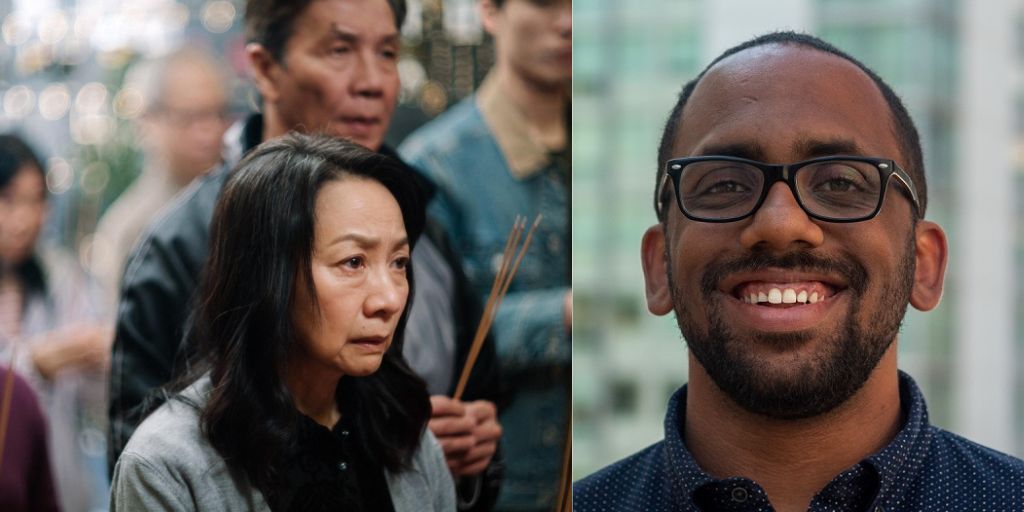
Still from All Shall Be Well (Credit: New Voice Film Productions)
At the same time, Pat is also a caring host, making everyone feel important. Ray Yeung does not idealize her, however, showing her flaws, such as her reluctance to write a will due to the emotions involved. This makes her character more realistic.
Patra Au’s portrayal of Angie is equally strong. The film mainly revolves around Angie, and Au brings out her quiet strength. Watching her lose Pat, her long-term partner, is heartbreaking. Angie is unsure how to show life without Pat, who was always the bold one in their relationship.
For example, when Shing tells Angie about his new job, which takes advantage of him, it is clear that Pat would have been the one to handle it. Now, Angie has to step into that role. Yeung’s decision to make Angie confront her own tendency to be passive while dealing with grief is a brilliant choice.
Angie’s love for Pat’s family, who had accepted her, contrasts with her own parents, who only ever saw Pat as a “friend.” The gradual loss of her connection with Pat’s family after her death adds another layer of sorrow to Angie’s journey. Au excels in the scenes where Angie asserts herself, providing a subtle but satisfying emotional release.
Though the film is mainly about loss and Angie’s path to healing, Yeung spends ample time building their relationship, making the audience care deeply about the couple. Despite the film’s short runtime of just over 90 minutes, their bond feels real, with a natural humor that emerges in their interactions.
For instance, Pat jokes about still dealing with childhood trauma or when Angie jokes after hearing Fanny say she is disgusted by her husband, responding that she would “be sick too” if a man touched her. These moments of humor between them feel genuine and based on a deep trust, making the film feel more real.
‘All Shall Be Well’ is a Simple Yet Emotional Film
The supporting characters in All Shall Be Well are given the same care as Pat and Angie, avoiding simple villain roles.
It is easy to understand their financial struggles and believe they are acting in what they believe to be the best interest when making decisions about Pat’s funeral arrangements, even if they go against her wishes. Their actions, though selfish, feel believable, and it is clear that they genuinely think they are doing the right thing.
Victor and Fanny, though sympathetic to Angie, struggle to confront their parents and eventually become part of the problem.
Their silent judgment slowly turns into complicity as they start to take advantage of Angie without fully realizing it. This slow betrayal is deeply painful to watch as Angie loses more than just Pat—she also loses her connection to Pat’s family.
While the plot is straightforward, it sometimes feels a bit thin. The story could benefit from a few more unexpected moments to add a sense of urgency. Additionally, the film’s minimal use of music could be seen as a missed opportunity to enhance certain scenes.
However, the film’s attention to detail, especially for viewers unfamiliar with aspects of Chinese culture, keeps it engaging.
For instance, the debate over whether Pat should be buried at sea or in a columbarium is thought-provoking. Yeung also does a wonderful job of representing the couple’s large group of queer friends, a realistic depiction of the LGBTQ+ community’s support network.
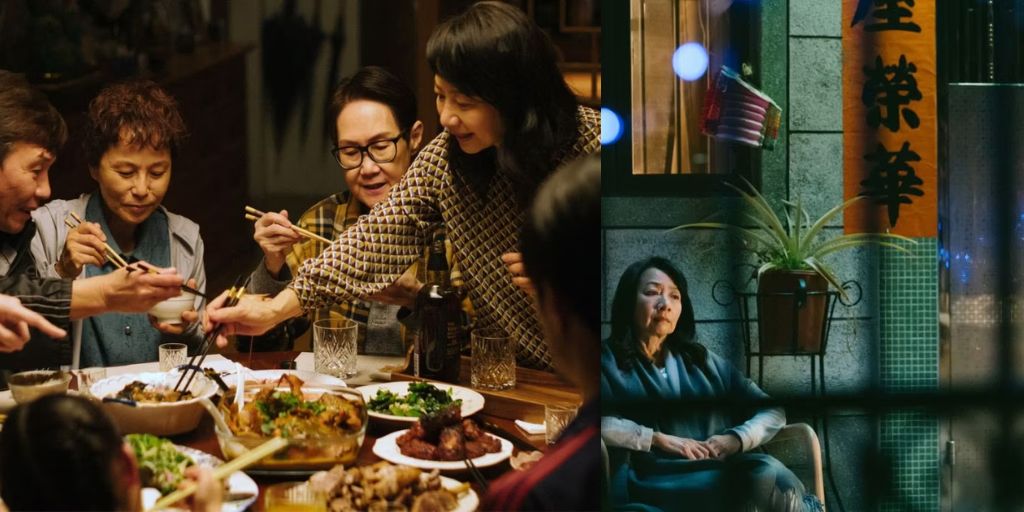
Still from All Shall Be Well (Credit: New Voice Film Productions)
All Shall Be Well is a thoughtful story filled with carefully considered details. It raises important questions about gay rights, honoring loved ones after death, and how easily selfishness can take over when making difficult decisions.
Yeung’s film beautifully captures both the joy and sadness of life, offering a perspective that is rarely seen in cinema. It’s a pity that queer stories like this are so rare in Hong Kong, with Wong Kar-wai’s Happy Together being one of the few notable examples. Hopefully, this film will spark more discussions about queer representation and lead to more stories like this in the future.
I am not the first to say this, and I won’t be the last, but I will shout it out anyway: I am very tired of legacy sequels. Or prequels.
Or whatever studios choose to make to take advantage of existing intellectual properties that did not need a follow-up. Top Gun: Maverick did it right, but that does not mean every sequel that comes after will have the same success. This is especially true if Tom Cruise is not involved.
This is the case for Rosemary’s Baby, a classic horror film. Paramount decided that this film needed to be resurrected for a prequel called Apartment 7A, which just premiered at Fantastic Fest. Apartment 7A walks the same path as the nearly 60-year-old original without changing anything.
The plot is almost the same: a young dancer named Terry (Julia Garner) moves into an apartment in New York City that she cannot afford. She is encouraged by her wealthy, elderly neighbors (Dianne Wiest and Kevin McNally).
She soon discovers that she has been forced into a dark situation, becoming pregnant against her will for the chance to achieve her dreams. If you remove the clueless husband from the original film, it is nearly an exact copy.
Apartment 7A Adds Nothing to the Legacy of Rosemary’s Baby
This year has seen many sequels, from Deadpool and Wolverine to Twisters dominating the box office. But why must we continue to explain how a franchise works? Why do we take away the magic of leaving some things to our imagination?
This approach works even less often in horror, where the appeal comes from the unknown, from things hiding in the shadows that we cannot explain. There are a few exceptions to this rule, such as The First Omen, because if you removed the references to the original, it could stand alone without the pressure of being a sequel.
It does not repeat old stories, and audiences do not already know what will happen. It understands that fear can move a story forward in horror. So, why did Apartment 7A work so hard to explain their own little demon, which only takes the fun out of the movie?
There is not much fun to be had here, even if you love the original film. The setup is strange, even if we ignore the unsettling nature of Terry’s neighbors and their little Satanic cult. The young dancer, hurt after a bad fall in a production of Kiss Me, Kate, finds herself involved with a Broadway producer who is bad news from the start.
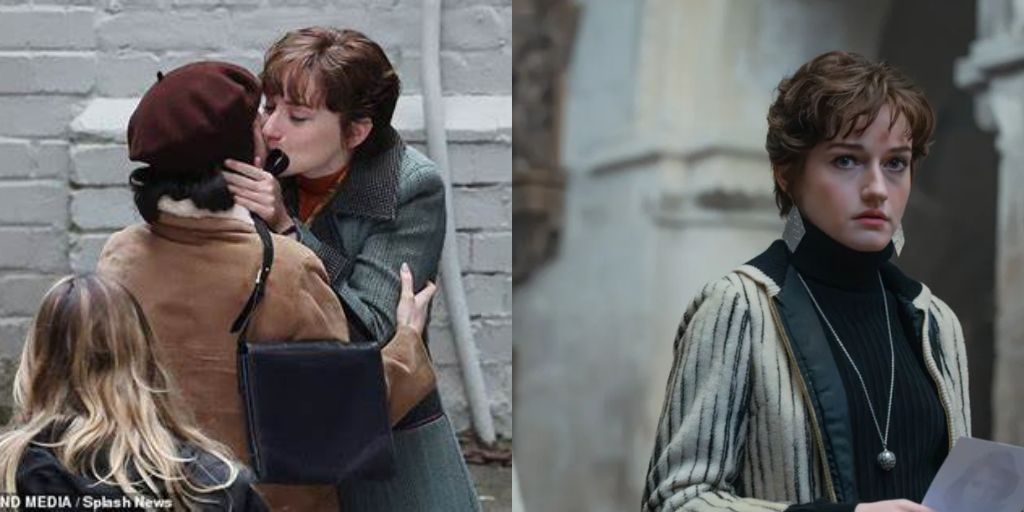
Still from Apartment 7A (Credit: Paramount+)
He is a danger, practically standing under a bright sign saying, “Look at me! I’m going to take advantage of you for a chance at success!” Even when it is so clear who the real villain is, the film goes out of its way to show you how to feel, right down to Terry’s protests about having children, especially demonic ones.
Julia Garner’s Terry Is No Match for Mia Farrow’s Rosemary
This kind of simplicity does not help Garner here. She will be compared to Mia Farrow countless times, even by this reviewer, despite trying to stay objective. This is unavoidable, especially when Terry gets a mid-film haircut from her demanding neighbor.
However, it is not nearly as iconic as Farrow’s famous Vidal Sassoon cut. (I know this because I took a picture of that hairstyle to the salon when I got my blonde pixie cut.) I cannot tell if it is the script’s clear view of morality that makes Terry so dull, or if it is that Garner is not delivering her best performance (which is a far cry from her Emmy-winning work in Ozark), particularly in the film’s final scene.
Compared to Farrow, whose horrifying scream at the sight of her child is unforgettable in cinema history, Garner is just another forgettable leading lady.
Dianne Wiest, on the other hand, is enjoying her role to the fullest. It is a joy to watch actors grow into roles like this. She is the highlight of the film and perhaps the only part worth watching. I cannot tell exactly what kind of accent she is trying to use. Is it New York? Is it Jersey?
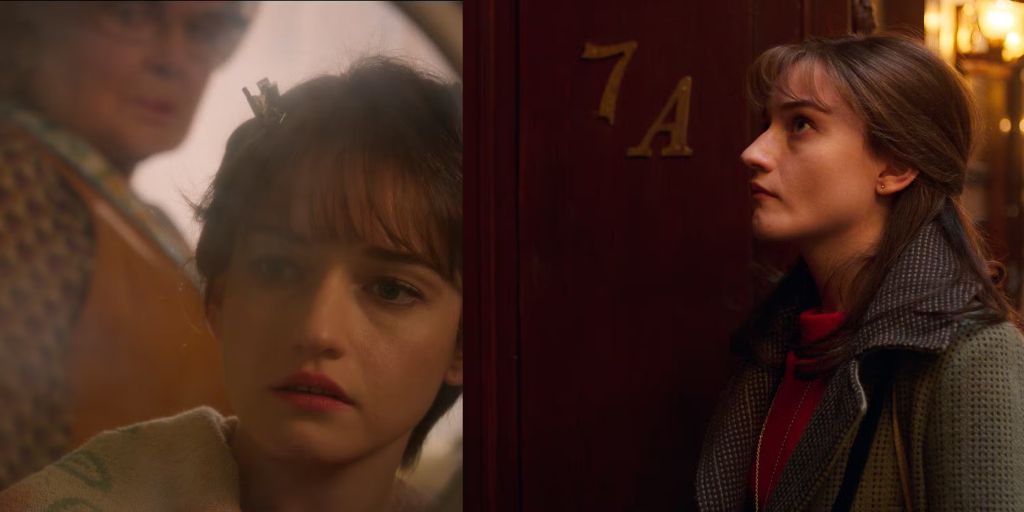
Still from Apartment 7A (Credit: Paramount+)
Who knows! But anytime someone puts on a voice that sounds just like my elderly cousin Carol, I am all for it. Kevin McNally is also present, but it is hard for anyone else to shine when Wiest steals every scene she is in, even the climactic ones for Terry.
Apartment 7A Lacks the Atmosphere of Rosemary’s Baby
The film does so little to make me care about the girl before Rosemary that I found myself wondering how she would die to set up the events of the original film. As much as I dislike praising Roman Polanski, Rosemary’s Baby has a mood to it; a tone that makes you feel uneasy, rather than just a series of scenes with some outdated furniture and a bad haircut.
Apartment 7A, on the other hand, does not try to make you feel disturbed, except for a few jump scares that belong in a haunted house rather than a real film.
It never truly deals with the horror of what is happening to Terry. It simply shows you what is happening, like watching paint dry. You know from the start who the villains are, what the stakes are, and where the story is going. So why bother watching until the end?
It is hard to care about Terry when it is clear that she is just an obstacle for the antichrist before he gets to poor Rosemary. Many people were disappointed to find that Twisters was essentially a rehash of the original film with a new coat of paint. Apartment 7A has the same issue.
Sure, our views on pregnancy and a woman’s right to choose have changed, which alters the story, but that does not make anything better. Instead, it places it firmly in modern times, distancing it from the story it claims to be a prequel to.
Rosemary’s Baby is the ultimate antichrist story, a tale about intimacy and childbirth as a violation and horror of the body in a way that few other films have managed since.
It makes my stomach turn to think of being betrayed in such a deep way, even as someone who is not a fan of Satanic Panic stories and feels uncomfortable about them. Apartment 7A only manages to pour a cold bucket of water on those feelings.
The article critiques Apartment 7A, a prequel to the classic horror film Rosemary’s Baby. The author expresses frustration with legacy sequels and highlights that Apartment 7A fails to bring anything new to the table, merely repeating the original’s plot.
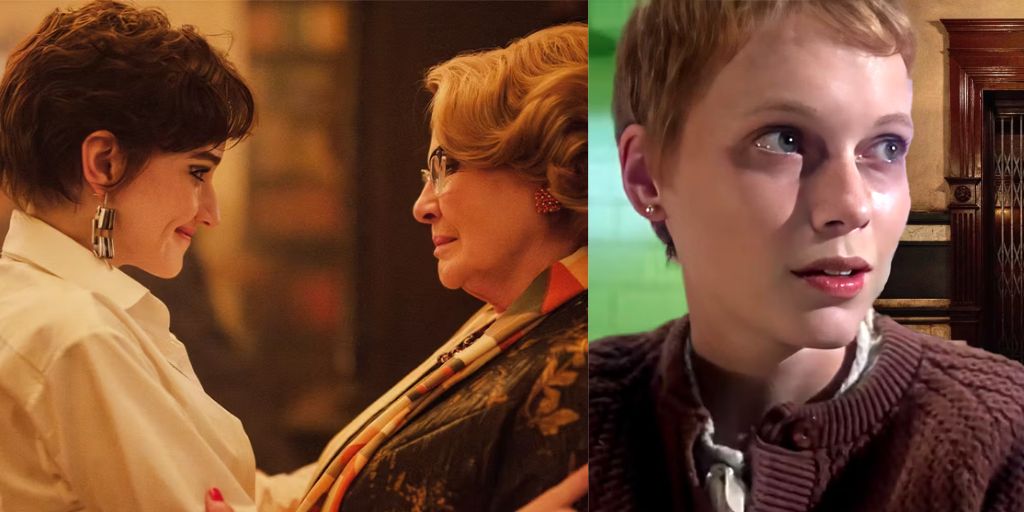
Still from Apartment 7A (Credit: Paramount+)
Julia Garner’s performance as Terry struggles to match Mia Farrow’s iconic portrayal, while Dianne Wiest shines as a memorable character.
The film lacks the unsettling atmosphere of the original, relying on predictable scares instead. Ultimately, it does not effectively capture the themes of intimacy and horror that made Rosemary’s Baby significant, leaving viewers feeling disappointed.
Apartment 7A premiered at Fantastic Fest. It will be available for viewing on VOD and Paramount+ on September 27.
