The Garvey sisters have always been inseparable, bound by a deep, unbreakable bond. They would do anything for each other, and no one could ever tear them apart. However, in Bad Sisters Season 2, Episode 2, that bond is pushed to its limits.
As Grace (Anne-Marie Duff) begins to unravel, the sisters are forced to face the possibility that they may not be as safe as they thought. In a shocking final twist, the episode reveals a devastating blow that changes everything for the Garvey family.
The Sisters Rush to Help Grace
The episode opens with Grace in her bedroom, listening to her sisters’ voices from the next room. The tension is palpable, as we can sense that something is wrong. Grace’s nieces, Blanaid (Saise Quinn) and her family, have reached out for help, which has brought the sisters together to check on Grace.
This is where we start to see clues that something bad may have happened to Ian (Owen McDonnell) after his heated argument with Grace in Episode 1.
One of the first hints that things have gone awry is a cut on Grace’s hand. She claims it’s from smashing a cup, but there’s a sense that there’s more to the story. Later, Becka (Eve Hewson) discovers Ian’s abandoned phone hidden in the cupboard of the bathroom.
Most alarming of all is the bloody shirt found stuffed in the washing machine. These signs point to the possibility that Grace may have been involved in Ian’s disappearance or, worse, his death. Is Ian fleeing from Grace after hearing her confession about John Paul’s murder?
Or is there something darker at play? Grace insists that the argument with Ian was just that – a simple argument – and refuses to admit anything more, even though it’s clear that the situation is much more complicated than she’s letting on.
Grace continues to try and go about her day despite the crisis unfolding around her. She tries to reassure her sisters, but the tension only grows. She confides in them that Roger (Michael Smiley) has threatened to go to the police about his involvement in John Paul’s death.
This revelation shocks the sisters. They had no idea that Roger had helped Grace cover up the murder. The group is forced to act quickly to protect themselves.
The Sisters Confront Roger
Eva (Sharon Horgan), Bibi (Sarah Greene), Ursula (Eva Birthistle), and Becka drive to Roger’s house. The atmosphere is tense as they sit outside, unsure of what to do next. They know that confronting Roger is their best move, so they follow him to a pub, where they meet with him face-to-face.
During the conversation, the sisters defend Grace, insisting that she was justified in killing John Paul. Ursula even goes as far as saying, “The world’s better off without him. Even the Pope would agree!” Eva adds, “We were all involved in this. We all tried to kill that f**ker.”
In a show of solidarity, they place their hands on Roger’s, making it clear that they all share the same secret. They assure him that they can all keep quiet about the murder, protecting each other from prison time.
Despite their best efforts, the situation continues to spiral out of control. The sisters know that their actions have made them complicit in a serious crime. With Roger’s threat hanging over them, they’re left with a sense of dread. If they don’t keep their secrets, everything could come crashing down.
Detectives Loftus and Houlihan Keep Digging
As the Garvey sisters try to protect their secrets, Detective Inspector Fergal Loftus (Barry Ward) and Detective Una Houlihan (Thaddea Graham) are still investigating John Paul’s death. Loftus is seen in a private moment, taking a bath and receiving a call from his ex-wife.
His daughter and ex-wife are planning to move, which causes Loftus some distress. While the audience is accustomed to seeing Loftus as a gruff and serious detective, these scenes show a more vulnerable side to him. He’s not just a cop – he’s a father dealing with personal struggles.
Loftus and Houlihan are determined to get to the bottom of the case. They visit the Claffin and Sons office, which has been mysteriously abandoned. Loftus and Houlihan are still convinced that John Paul’s death wasn’t a suicide, as Grace had initially claimed in Episode 1.
The detectives’ investigation leads them to uncover more disturbing details about John Paul’s life. They learn that he had been siphoning money from his father’s pension for over ten years. Grace, on the other hand, inherited her late father-in-law’s property after John Paul died. From an outsider’s perspective, this could suggest a motive for murder, especially if Grace stood to gain financially from her husband’s death.
Loftus and Houlihan follow up with Grace, hoping to gather more information. When they arrive at the Garvey sisters’ house, the tension is palpable. The sisters are on edge, and their awkward behavior around the police only raises more suspicion.
The detectives mention Grace’s claim that John Paul killed himself, and the sisters grow increasingly uncomfortable. Once the detectives leave, the sisters immediately question Grace about why she would lie about the circumstances surrounding John Paul’s death. Grace’s attempts to explain only make things worse, and Ursula bluntly states, “She’s gonna land us all in jail.”
As the investigation continues, Loftus is ordered to get a warrant for Grace. It’s clear that the sisters’ carefully constructed facade is starting to crumble. The once-solid house of cards they’ve built is about to come crashing down, and the sisters will soon have to face the consequences of their actions.
Angelica’s Creepy Influence Grows
In Episode 2, a new character, Angelica (Fiona Shaw), becomes even more of a mystery. In previous episodes, she’s shown to be a bit of an oddball, but now her presence is taking a much darker turn. Throughout the episode, Angelica is shown obsessively looking at pictures of Grace on her phone and iPad.
She always seems to be watching the Garvey sisters, tracking their every move. At one point, she follows Grace to church, claiming that Roger has told her everything. Grace brushes her off and promises to call her later. Despite Grace’s lack of interest, Angelica keeps calling her, leaving unsettling messages that Grace refuses to acknowledge.
Angelica’s behavior becomes even more disturbing when she approaches Bibi’s wife, Nora (Yasmine Akram), and drops a bombshell. She reveals that Bibi is worried about having a second child with Nora, as she struggled to bond with their firstborn.
This is a deeply personal conversation that Bibi had with her sister, and it’s clear that Angelica has been eavesdropping. By sharing this secret with Nora, Angelica causes a rift between the couple. Nora suddenly calls off their plans for a second child, leaving Bibi completely confused. She has no idea that Angelica is the one who caused this disruption in their relationship.
As if this wasn’t troubling enough, Angelica’s behavior becomes even more unsettling when she is shown tying chains around her upper leg. This self-punishing act has religious undertones, and it suggests that Angelica is using pain as a form of penance. She leaves the chains on as she goes about her day, which is both eerie and disturbing. It seems that Angelica is hiding a dark side, and her role in the story is only becoming more twisted.
Grace’s Unraveling Reaches a Tragic Climax
Throughout the episode, it becomes increasingly clear that Grace is falling apart. Her interactions with her sisters are tense, and she lashes out, especially at Blanaid, who indirectly blames her mother for John Paul’s death and Ian’s departure.
Grace tries to reconnect with Blanaid by wearing the gold earrings that her daughter gave her for the wedding, but Blanaid isn’t interested in bonding. The rift between them grows wider, and Grace seems to lose control of everything in her life.
In the final moments of the episode, Grace seems ready to flee. She packs money into plastic bags and heads to her car with a sense of urgency. She calls Eva, but her sister doesn’t pick up. Grace leaves a voicemail, asking for help but refusing to explain further.
As she drives through the night, Grace becomes increasingly anxious, realizing she’s lost one of Blanaid’s earrings. She frantically searches for it, almost causing an accident. Just as she regains control of the car, another set of headlights appears, heading straight for her. In the final moments of the episode, Grace loses control of the car once again.
The next scene shows Eva waking up on her couch to flashing lights outside her home. When she opens the door, she sees a police car, with Blanaid sobbing in the backseat.

Still from Bad Sisters (Credit: Apple TV)
Eva instantly knows what has happened. Grace is gone. The final haunting image shows Grace’s car, overturned and totaled on the pavement. Broken glass litters the ground, and one of Blanaid’s balls eerily rolls across the pavement.
This shocking twist changes everything for the Garvey sisters. They will now have to grapple with the loss of one of their own. How will they cope without Grace? And what will they do to uncover the truth about Ian’s disappearance and the tragic events that have led them to this moment?
Bad Sisters continues to keep viewers on the edge of their seats, with each episode raising more questions than it answers. As the story unravels, it’s clear that the Garvey family is in for a rough road ahead. With secrets, lies, and betrayal lurking around every corner, the only certainty is that things are about to get even more complicated.
My Hero Academia has attracted the fans worldwide with its rich cast of characters and their journeys toward becoming true heroes.
Among these characters, Katsuki Bakugo stands out as one of the most complex and polarizing.
From his fierce temper to his explosive powers, Bakugo’s initial portrayal as a brash, aggressive individual led many fans to see him solely as an antagonist.
But as the story has unfolded, we’ve seen that there’s much more to Bakugo than meets the eye.
Creator Kohei Horikoshi has masterfully crafted a character who, despite his flaws, undergoes genuine personal growth and transformation.
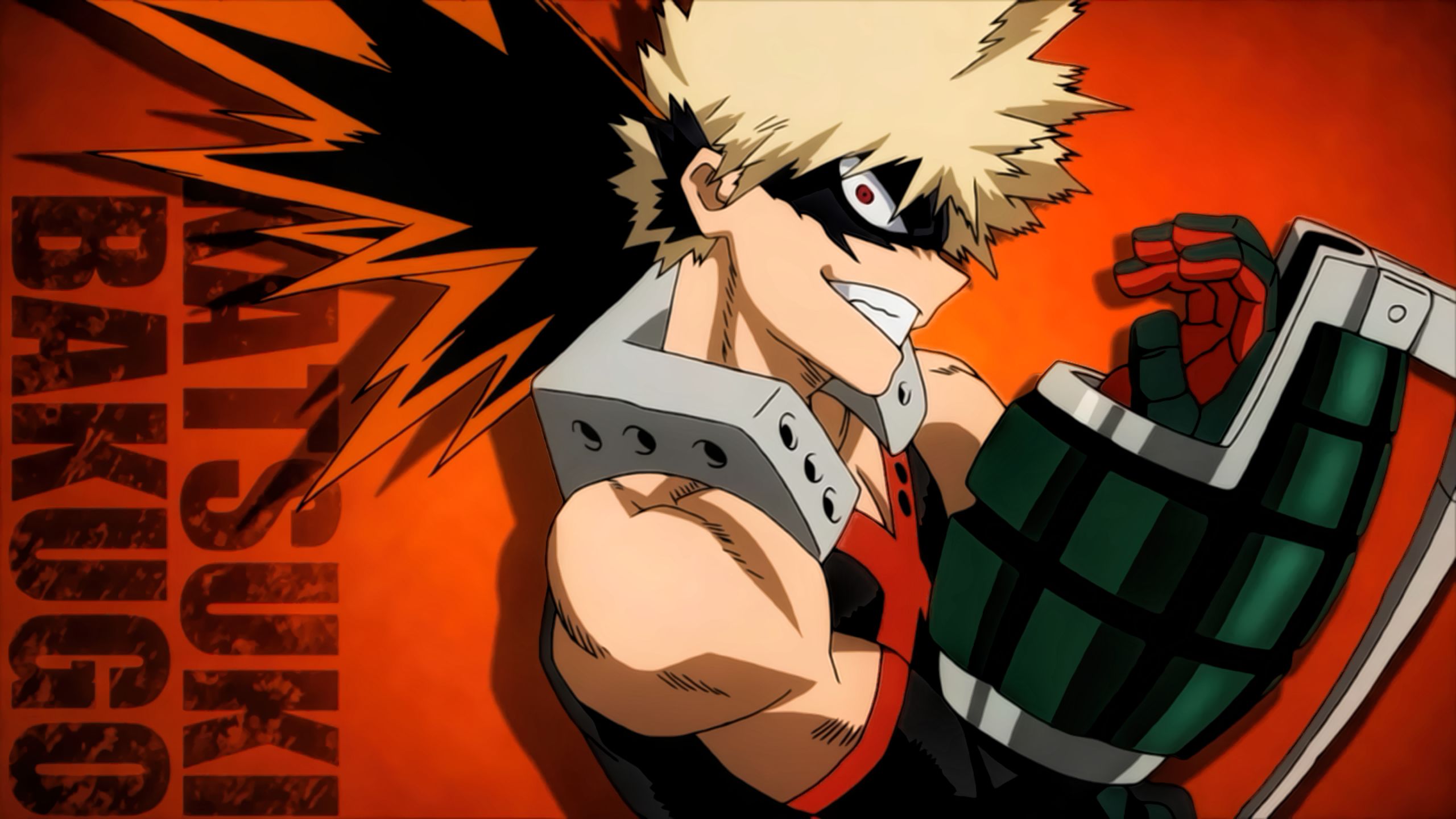
Katsuki Bakugo (Bones)
Over time, Bakugo has evolved from a loud, self-centered bully to a more nuanced and, ultimately, admirable figure.
His journey shows a character grappling with insecurity, guilt, pride, and the need for acceptance and validation emotions that resonate with many.
However, some fans find it difficult to see beyond his earlier transgressions, missing the rich, layered journey Bakugo goes through.
This misinterpretation overlooks a significant aspect of My Hero Academia’s message: that true heroism isn’t just about strength; it’s about growth, compassion, and learning to overcome one’s inner struggles.
In this article, we’ll go deeper into the transformation of Katsuki Bakugo, exploring how he went from a troubled bully to a figure of genuine heroism and the different stages of growth that make him one of the most intriguing characters in My Hero Academia.
From Bully to Rival: The Origins of Bakugo’s Complex Character
When we first meet Katsuki Bakugo, his character is hard to overlook. He’s introduced as a loud and abrasive presence, a person who commands attention and acts with complete confidence in his own abilities.
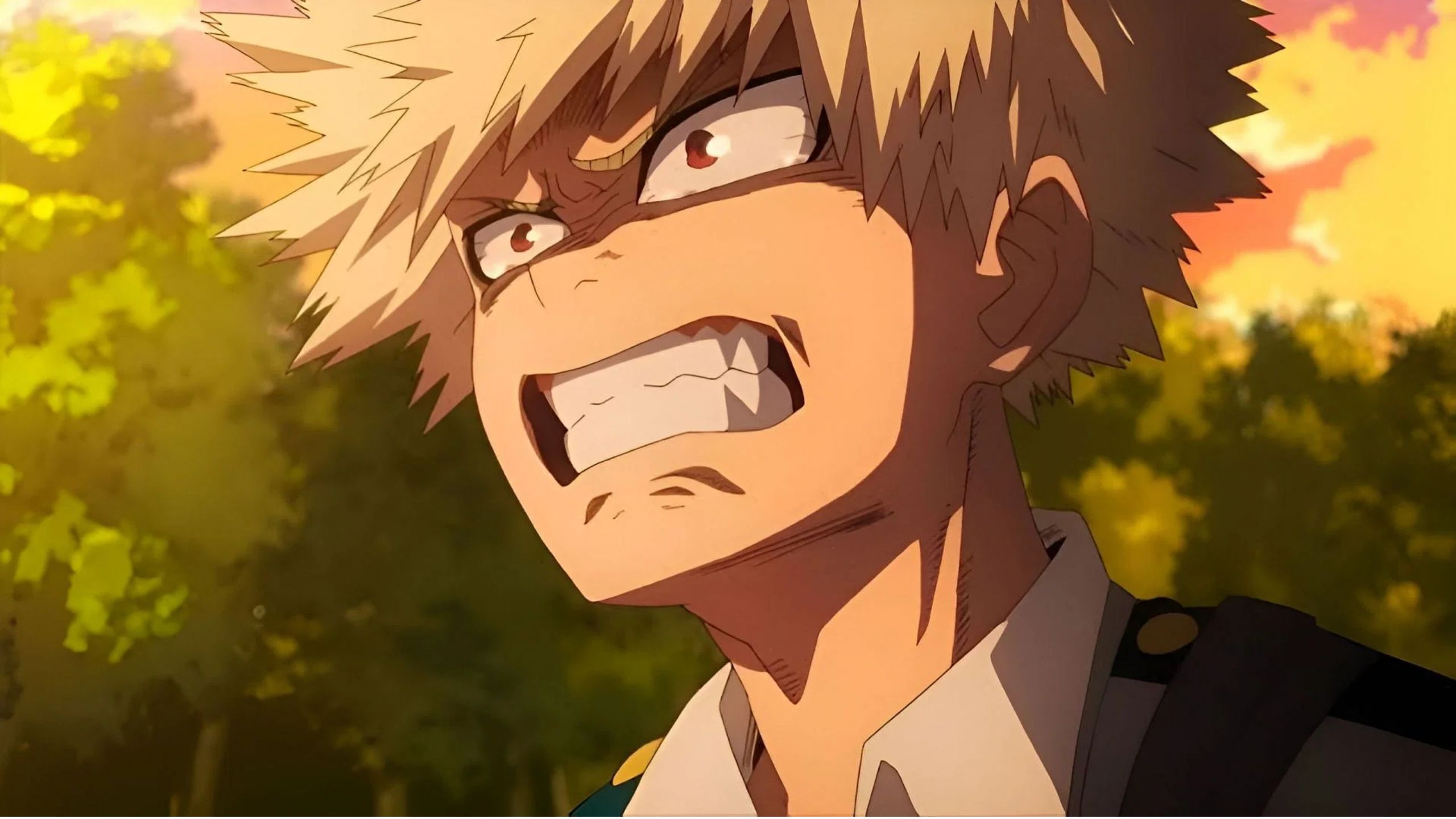
Katsuki Bakugo (Bones)
Armed with an immensely powerful Quirk called Explosion, Bakugo has been conditioned to believe he’s exceptional, destined for greatness.
His Quirk allows him to create explosions from his sweat, a power that’s both visually impressive and highly destructive, lending to his cocky and overconfident nature.
The praise and admiration he received as a child only inflated his ego further, setting him on a path where he viewed himself as superior to everyone else.
Bakugo’s interactions with Izuku Midoriya, or Deku, highlight the less admirable aspects of his character.
From a young age, Bakugo looked down on Deku, who was born without a Quirk, and went out of his way to assert his dominance over him.
This bullying was not just a product of his inflated self-esteem; it also revealed Bakugo’s disdain for what he perceived as weakness.
In his eyes, Deku represented everything he despised someone powerless, yet unwavering in his resolve.
Bakugo saw this quiet determination as a threat to his own sense of superiority, which he tried to reinforce by keeping Deku beneath him.
However, Deku’s unexpected rise begins to shake Bakugo’s confidence.
When Deku inherits the powerful Quirk One For All (OFA) from the legendary hero All Might, Bakugo’s perception of himself and his relationship with Deku is challenged.
Suddenly, the boy he used to mock is becoming a formidable rival. Bakugo’s intense emotions, particularly his resentment and jealousy, come to the surface as he grapples with the idea of Deku surpassing him.
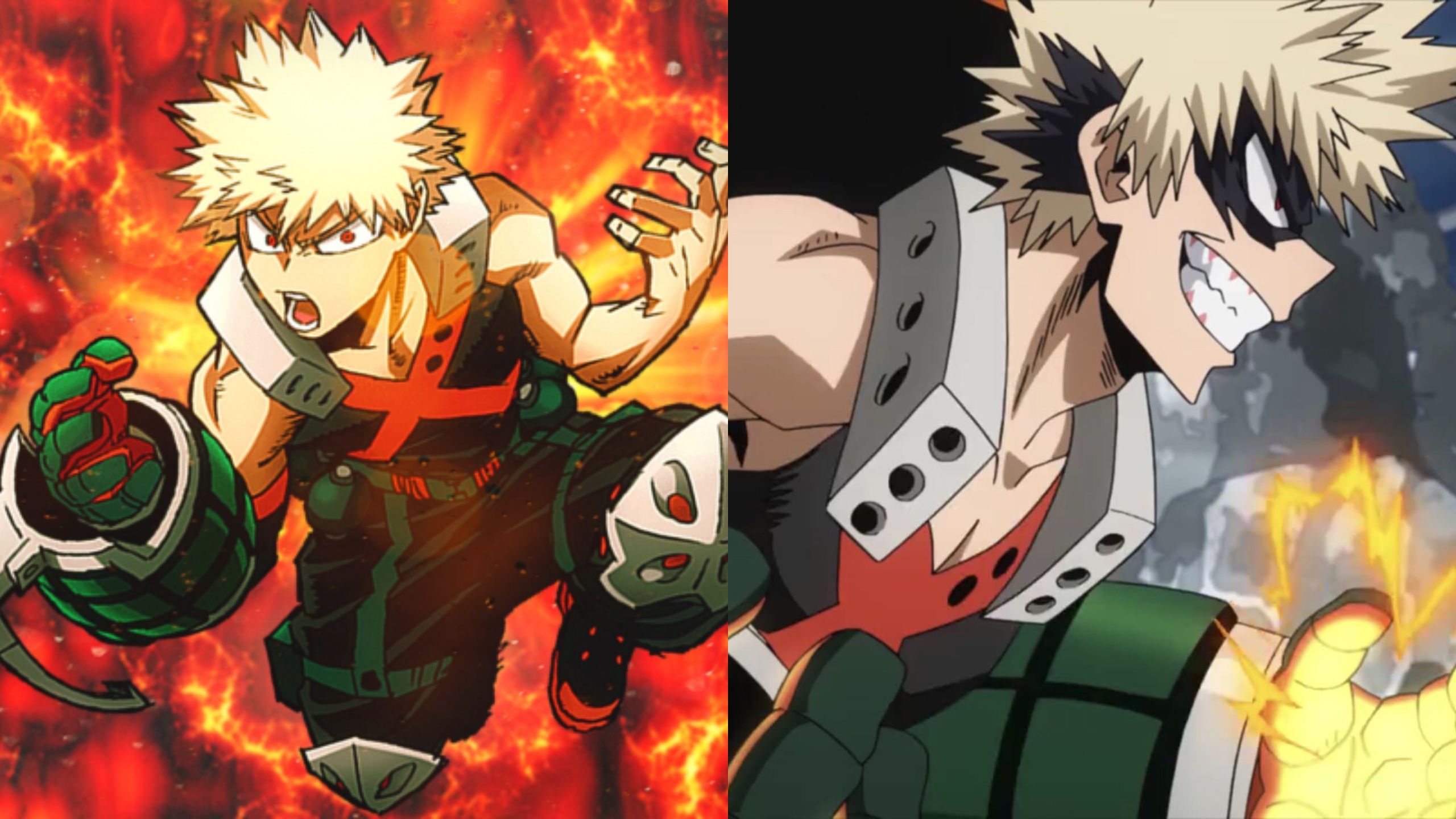
Katsuki Bakugo Using Explosion (Crunchyroll)
His need to be the best is no longer just about himself; it’s intertwined with his fear of being overshadowed by someone he once deemed inferior.
This rivalry, while initially antagonistic, becomes a catalyst for Bakugo’s transformation.
The Impact of Constant Competition: Early Signs of Change
In the first seasons of My Hero Academia, Bakugo remains largely the same: a hotheaded, egotistical figure who refuses to accept anyone as his equal.
His disdain for Deku is evident at every turn, and his actions often come across as cruel or thoughtless.
However, we start to see subtle signs of change, particularly during pivotal moments like the Sports Festival and the encounter with All Might.
The U.A. High School Sports Festival marks a significant point in Bakugo’s journey. This high-stakes event pits the students against each other, testing their abilities and resolve.
Bakugo’s determination to win is fierce, yet he finds himself constantly observing Deku’s progress.
Although he outwardly maintains his superiority, inwardly, Bakugo is forced to acknowledge Deku’s resilience and creativity.
The festival serves as a moment where Bakugo’s perspective begins to shift, even if he doesn’t fully understand or accept it yet.
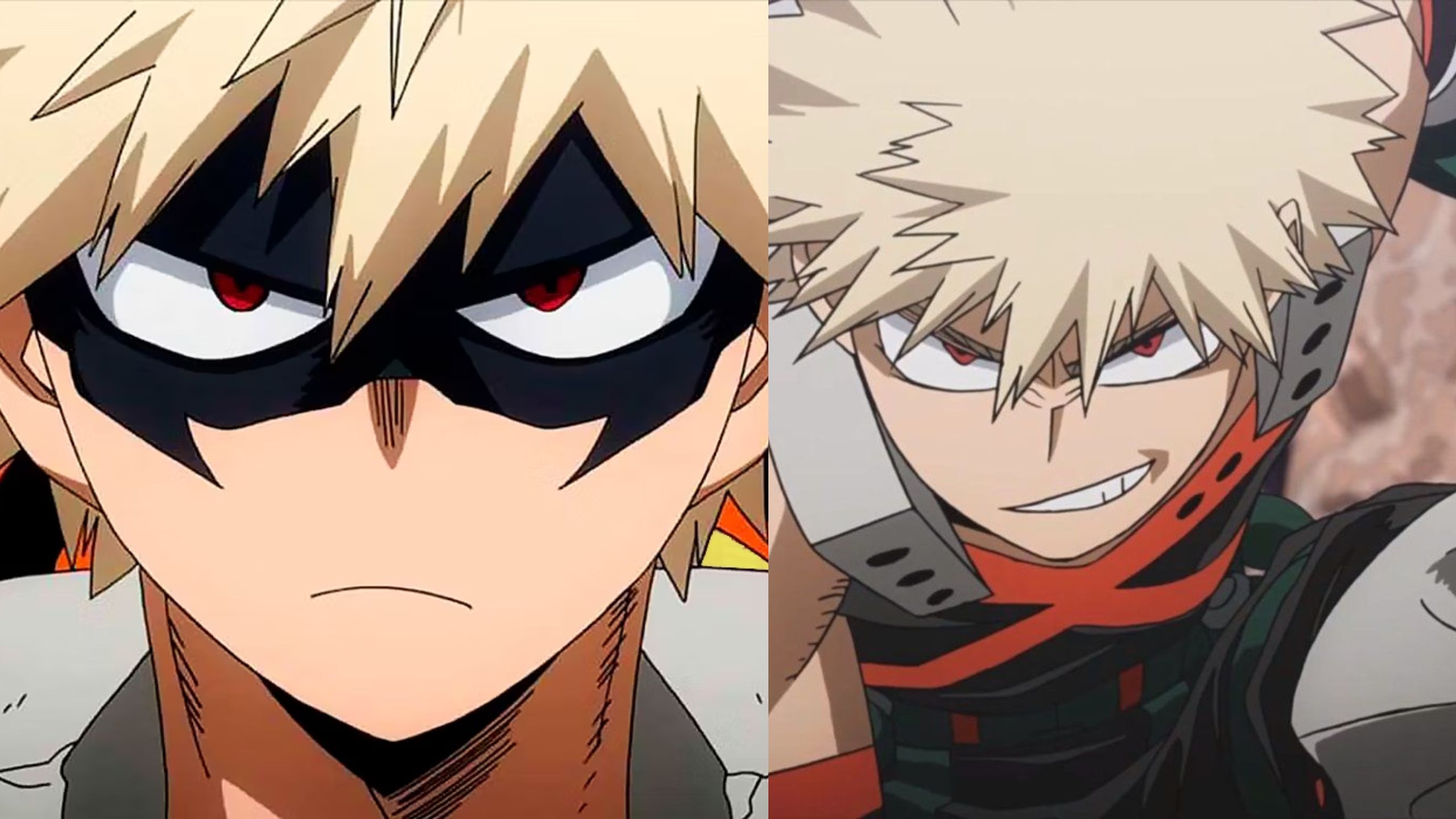
Bakugo From My Hero Academia (Bones)
Another crucial moment comes when Bakugo is captured by the League of Villains. Although he manages to escape, the experience deeply affects him.
This ordeal makes him confront his own vulnerability and the fragility of his strength. Bakugo, who had always prided himself on his invincibility, is forced to acknowledge his limitations.
He also realizes the impact of his actions on those around him, as he feels responsible for the sacrifices others made to protect him.
This incident instills in Bakugo a sense of guilt and failure, marking the start of his self-reflection and the beginning of a profound transformation.
Confronting His Insecurities: A Pivotal Moment with All Might
One of the most impactful moments in Bakugo’s journey is his conversation with All Might, which brings his internal struggles to the forefront.
In a moment of vulnerability, Bakugo confides in All Might, admitting the complex feelings he has toward Deku.
He opens up about his insecurities and confesses that his antagonism towards Deku was driven by a deep-seated fear of his resilience and strength, traits he once dismissed but has come to recognize and respect.
For Bakugo, acknowledging these feelings is a huge step; it forces him to confront the insecurities he has masked with arrogance and aggression.
All Might’s response is pivotal. He doesn’t scold or judge Bakugo; instead, he listens and provides reassurance, showing Bakugo that he doesn’t need to bear his burdens alone.
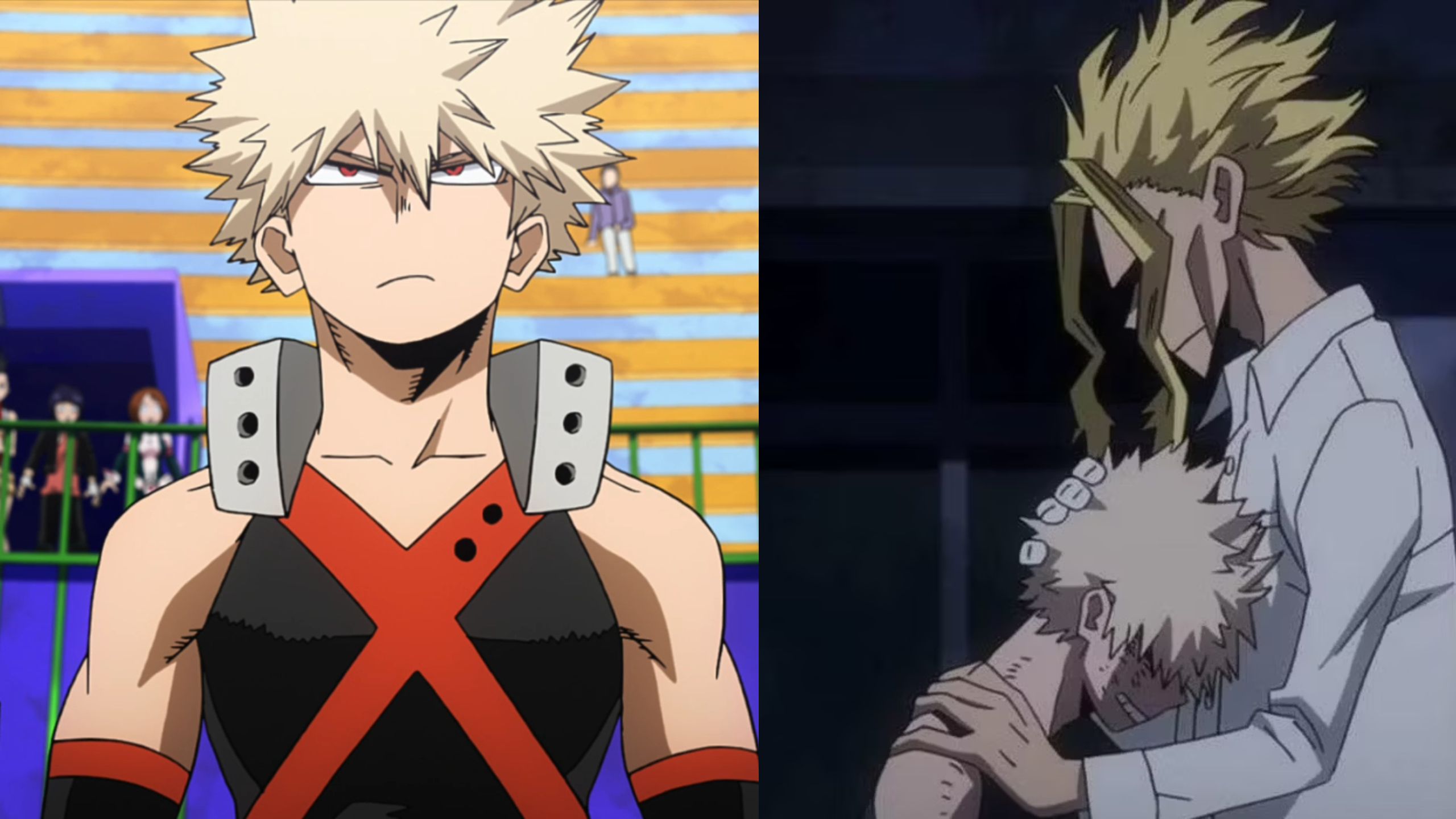
Katsuki Bakugo And All Might (Crunchyroll)
This moment signifies a shift in Bakugo’s character. For someone who prided himself on his independence and strength, reaching out and revealing his vulnerabilities is both humbling and empowering.
It allows him to start seeing Deku as a comrade rather than a threat. This conversation with All Might helps Bakugo understand that his path to becoming a hero isn’t a solitary one, and that true strength involves accepting support from others.
The Internship Arc: Learning from Failure and Growing in Humility
The Internship Arc is another critical phase in Bakugo’s development. Paired with other heroes, Bakugo is pushed to confront his limitations in a real-world setting.
The experience forces him to take on more responsibility, learn teamwork, and even accept guidance from those he once considered beneath him.
He realizes that power alone isn’t enough to make a difference in people’s lives; it’s about how he uses that power and the kind of person he becomes in the process.
This arc also highlights the growth in Bakugo’s understanding of heroism. His interactions with other heroes and his experiences during the internships help him see that being a hero is not just about being strong or winning fights.
It’s about protecting people, making sacrifices, and working as part of a larger team.
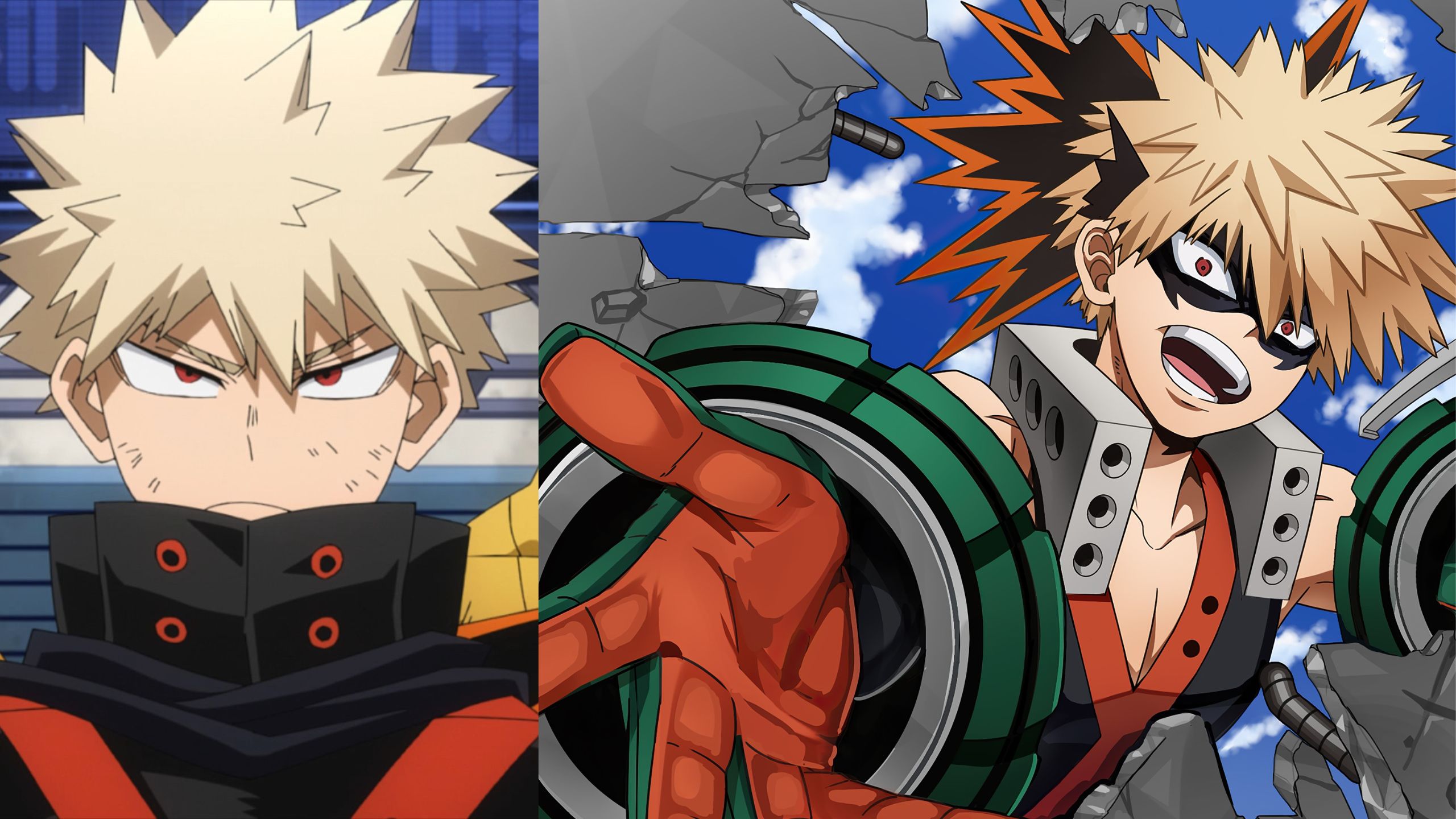
Bakugo From My Hero Academia (Bones)
Through this experience, Bakugo begins to develop a more nuanced view of what it means to be a hero, marking another step in his journey towards true growth and maturity.
In the War Arc, Bakugo’s development takes a new direction. Faced with life-threatening danger, he finds himself acting not out of pride but out of a genuine desire to protect others, including Deku.
In one of the series’ most emotional moments, Bakugo sacrifices himself to save Deku, showing a newfound selflessness.
This act of heroism, which comes at great personal risk, demonstrates just how far he has come from the days when he saw Deku as a mere obstacle to his own success.
Dark Deku Arc: Confronting Past Mistakes and Seeking Redemption
The Dark Deku Arc is arguably the most emotionally charged arc for Bakugo. During this period, Deku isolates himself from his friends to protect them, driven by a desire to keep them safe from the villains targeting him.
Bakugo, however, isn’t willing to let Deku carry this burden alone. In a powerful confrontation, Bakugo apologizes for the years of bullying and mistreatment, acknowledging the pain he caused Deku and the mistakes of his past.
This apology is a significant milestone in Bakugo’s journey. It’s not just a moment of regret; it’s a profound expression of his transformation.
Bakugo’s willingness to take responsibility for his actions and to make amends shows a level of maturity that would have been unimaginable in the early stages of the series.
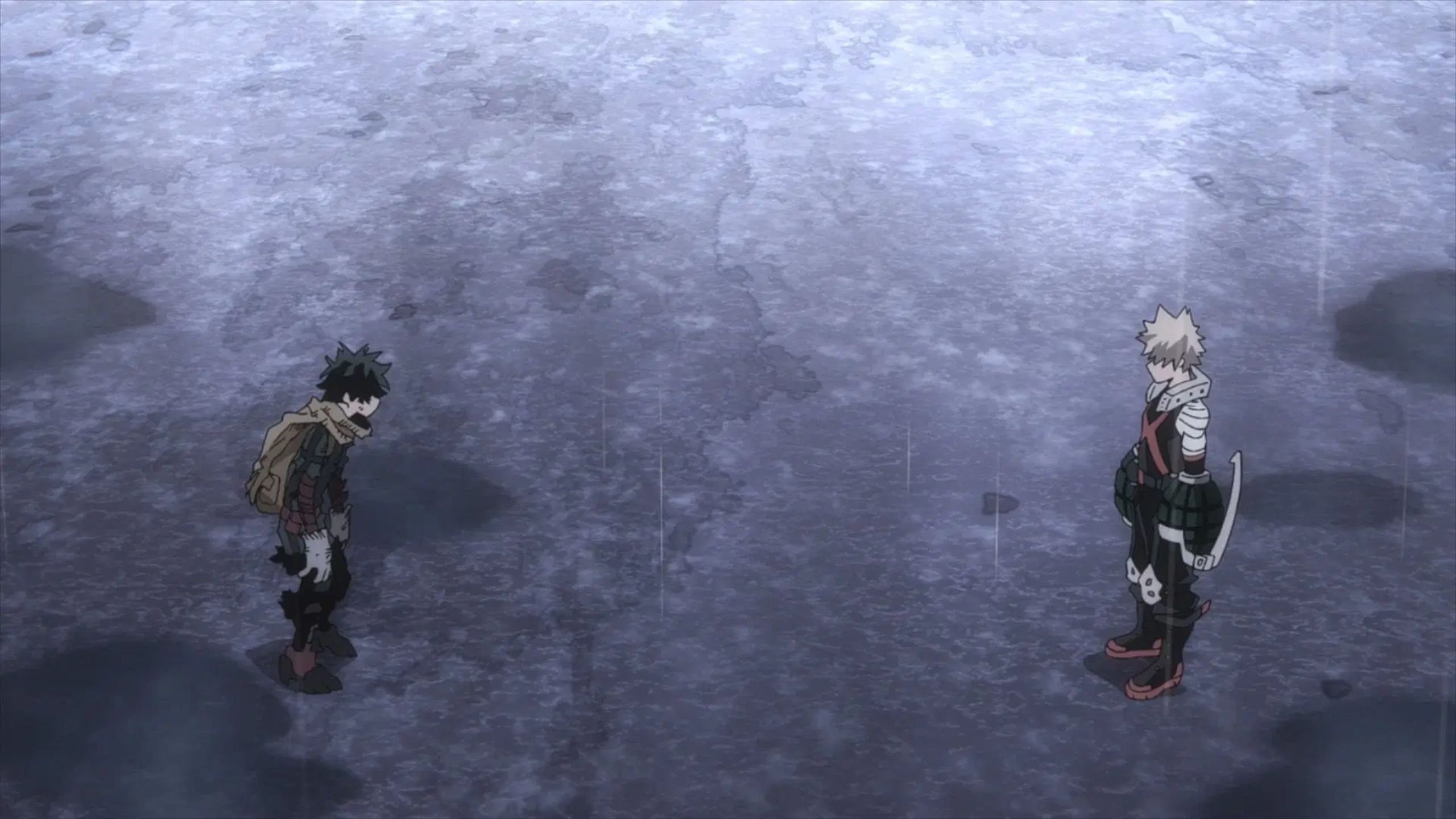
Deku and Bakugo in My Hero AcademiaKatsuki Bakugo in My Hero Academia (Studio Bones)
By apologizing to Deku, Bakugo frees himself from the guilt and bitterness he has carried, allowing him to truly embrace his role as a hero and friend.
The apology is more than just words; it’s a testament to how far Bakugo has come. He no longer needs to be the best at the expense of others. Instead, he recognizes the value of teamwork, compassion, and friendship.
This moment is a culmination of Bakugo’s entire character arc, as he sheds the last remnants of his prideful, arrogant persona and embraces a more humble, empathetic outlook.
Shifting Priorities: The New Meaning of Strength for Bakugo
For most of his life, Bakugo equated strength with superiority. He believed that being the strongest meant being the best, and that anyone who couldn’t keep up was weak and unworthy of his respect.
However, through his interactions with other heroes, his experiences in battle, and his evolving relationship with Deku, Bakugo learns that true strength is not about domination but about resilience, compassion, and the ability to inspire others.
Bakugo’s journey ultimately leads him to redefine what it means to be a hero. He realizes that heroism isn’t about seeking glory or proving oneself to others; it’s about making sacrifices, protecting others, and standing up for what is right.
This shift in perspective allows Bakugo to become not only a stronger hero but a better person.
He understands that being a hero means embracing his vulnerabilities, acknowledging his mistakes, and continually striving to improve not just for himself but for the people he cares about.
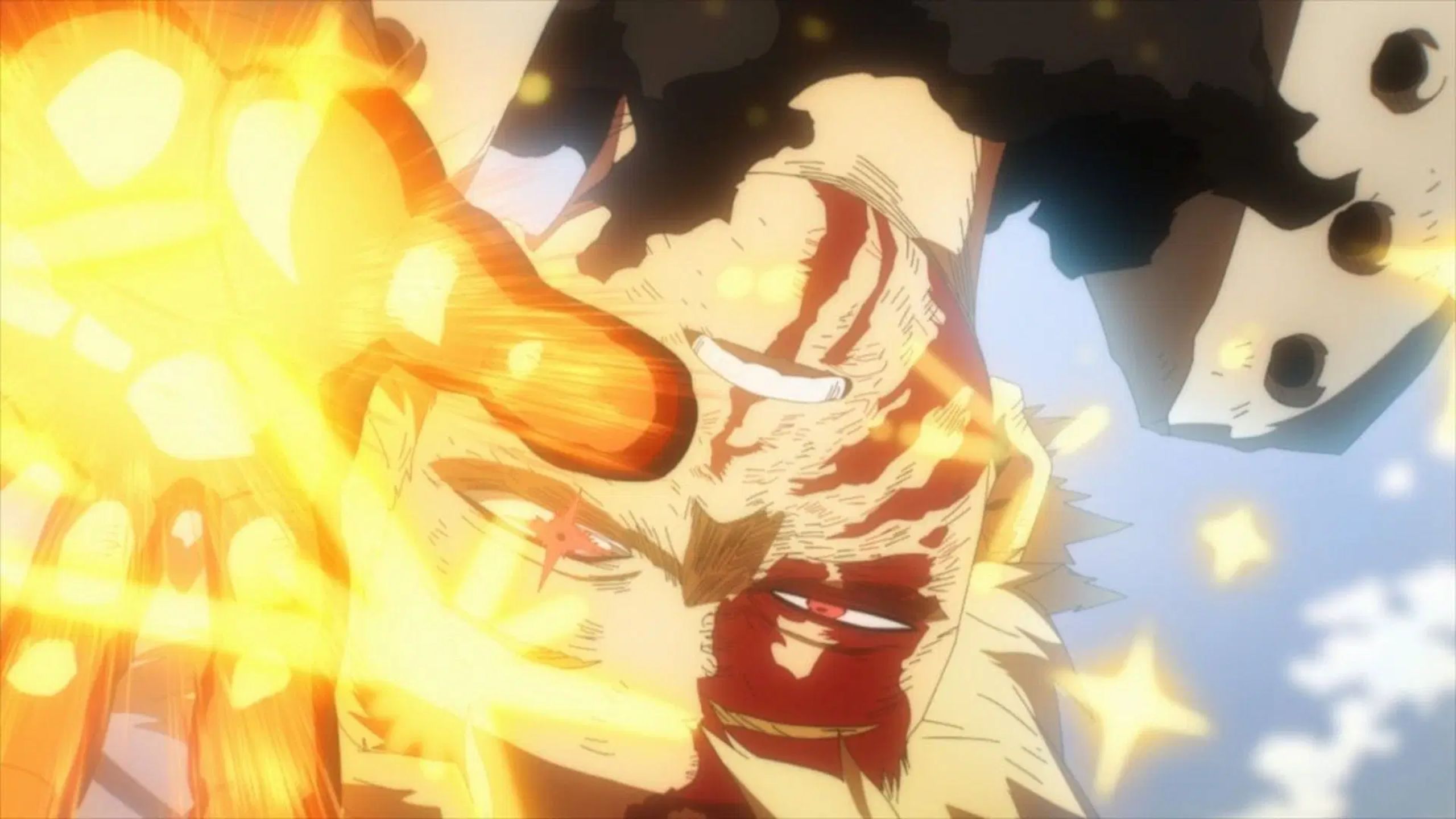
Katsuki Bakugo in My Hero Academia (Studio Bones)
By the end of the series, Bakugo has evolved into a character who embodies true heroism.
He is no longer the brash, arrogant bully we met at the beginning; instead, he is a complex, multi-dimensional hero who has grown through his mistakes and emerged stronger and wiser.
His journey is a testament to the transformative power of self-reflection, humility, and the willingness to change.
Bakugo’s story reminds us that anyone, no matter their flaws or past mistakes, has the potential for growth and redemption.
Bakugo as a Symbol of Redemption and Growth in My Hero Academia
Katsuki Bakugo’s journey in My Hero Academia is one of the most profound character arcs in the series.
From his early days as a bully driven by pride and arrogance to his transformation into a hero who embodies selflessness and compassion, Bakugo’s character shows us that growth is a continuous process.
His evolution is a powerful reminder that real strength comes not from power alone but from the courage to confront one’s own flaws and the willingness to change.
Bakugo’s journey is not just about becoming a stronger hero; it’s about becoming a better person.
His story speaks to the idea that true heroism lies in one’s ability to change, to learn from past mistakes, and to strive to be better for oneself and others.
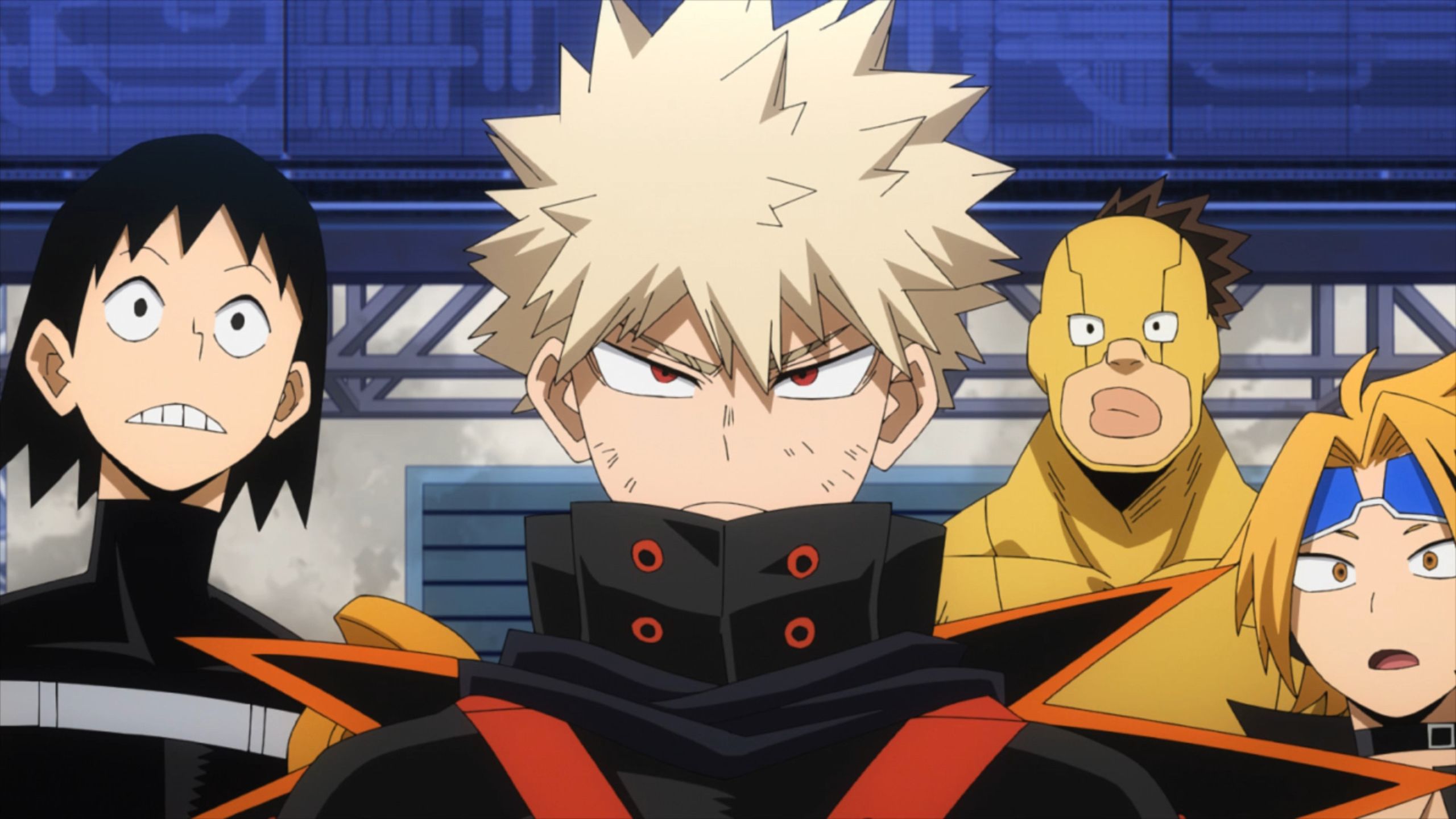
Bakugo (Studio Bones)
Bakugo’s transformation is a testament to the series’ message that everyone has the potential for growth, and that even the most unlikely individuals can become heroes if they have the courage to embrace change.
For fans of My Hero Academia, Bakugo’s character arc is a reminder of the power of redemption and the possibility of transformation.
Through his journey, Bakugo has shown us that no matter where we start, we all have the potential to become heroes in our own right by embracing growth, learning from our past, and striving to protect and uplift those around us.
Bakugo’s story is a true testament to the series’ message that heroism is not about perfection but about the willingness to grow, change, and be better.
