Tim Burton’s Beetlejuice has attracted fans since its release in 1988. The film is a unique blend of horror and comedy, featuring imaginative sets and a memorable performance by Michael Keaton as the mischievous demon Beetlejuice.
The original movie is beloved for its inventive approach to the afterlife and its quirky, dark humor. Beetlejuice remains a favorite for those who enjoy a mix of spooky and fun.
Now, after many years, audiences have a chance to revisit this strange and fascinating world with the sequel, Beetlejuice Beetlejuice. Directed once again by Tim Burton, the film continues the story of Beetlejuice and introduces new characters and twists.
Michael Keaton returns to his iconic role, bringing back the chaotic energy that made the first film so memorable. The sequel aims to build on the original’s charm, expanding its lore and keeping the same spooky yet humorous tone.
A New Adventure in the Afterlife
The sequel, Beetlejuice Beetlejuice, picks up where the original left off, but with several new developments. Lydia Deetz, now an adult, has made a name for herself as a psychic medium on her television show “Ghost House with Lydia Deetz.” This new career has made her famous, but it has also led to tensions in her personal life.
Lydia’s daughter, Astrid, who is played by Jenna Ortega, is not a fan of her mother’s public persona. Astrid is skeptical of Lydia’s abilities and feels that Lydia has not been able to contact her deceased father, Richard, who is played by Santiago Cabrera.
Lydia’s world takes a turn for the worse when she starts seeing Beetlejuice again. Beetlejuice, who was last seen causing chaos in the first film, still wants to marry Lydia.
He believes that marrying her will allow him to escape the afterlife and live in the real world. Lydia is understandably frightened by Beetlejuice’s return. She is still haunted by her experiences with him and struggles to cope with his sudden reappearance.
Adding to Lydia’s troubles, she reconnects with her stepmother, Delia, who is now an eccentric artist. Delia, played by Catherine O’Hara, has taken over the Deetz family home, which is now free of the ghosts that haunted it in the first film.
Lydia returns to the family home after the death of her father, Charles, played by Jeffrey Jones. The reunion with Delia is awkward and adds another layer of complexity to Lydia’s already chaotic life.
The Trouble with Marriage
Beetlejuice’s desire to marry Lydia becomes a central plot point in the sequel. Despite his new job in the afterlife as a call center boss, Beetlejuice is still fixated on Lydia.
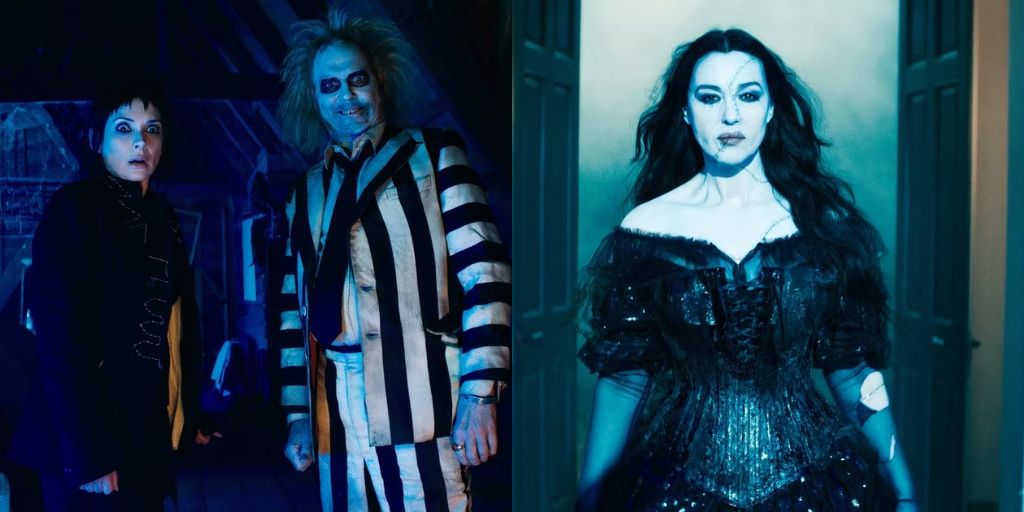
Still from Beetlejuice Beetlejuice (Credit: Warner Bros. Pictures)
He believes that marrying her is his ticket to escaping the afterlife. Lydia’s producer and boyfriend, Rory, played by Justin Theroux, becomes involved in the situation when he tries to help Lydia overcome her fear of Beetlejuice.
Rory’s misguided attempt to say Beetlejuice’s name causes a series of problems. His actions lead to a chaotic sequence where Beetlejuice appears and creates havoc.
Rory and Lydia are transported to a model town at Lydia’s old home, where they experience Beetlejuice’s wild and frightening antics. Beetlejuice’s antics include forcing Lydia to give birth to a baby Beetlejuice. This scene highlights Beetlejuice’s continuing desire to disrupt Lydia’s life and adds to the film’s darkly comedic tone.
As the plot progresses, Rory’s intentions become clear. He is not just a supportive boyfriend but is also using Lydia’s fame for his own gain. At Charles Deetz’s funeral, Rory seizes the opportunity to propose to Lydia, planning a Halloween wedding. His proposal is part of his broader scheme to benefit from Lydia’s success, further complicating the situation.
Beetlejuice’s Old Enemy: Delores
In addition to the chaos caused by Beetlejuice, the sequel introduces a new antagonist: Beetlejuice’s ex-wife, Delores. Played by Monica Bellucci, Delores makes a dramatic entrance in the afterlife. Her character adds a new layer of complexity to the story, as she has a deep connection to Beetlejuice’s past.
Delores was a key figure in Beetlejuice’s earlier life. In the 14th century, Beetlejuice was a grave robber who married Delores. However, Delores was not what she seemed. She was the leader of a cult that sought to consume souls for immortality.
Delores’s true intentions were to kill Beetlejuice and use his soul to gain eternal life. This backstory adds depth to the character and provides insight into Beetlejuice’s motivations.
In the afterlife, Delores escapes to find Beetlejuice and complete her dark mission. She consumes other souls along the way, drawing the attention of Wolf Jackson, played by Willem Dafoe. Wolf Jackson is a former actor who now works as a detective in the afterlife. His pursuit of Delores adds another layer of intrigue to the story.
Astrid’s New Romance and Danger
As Lydia deals with Beetlejuice and Delores, her daughter Astrid faces her own challenges. Feeling overwhelmed by her family situation and the upcoming wedding, Astrid goes for a bike ride.
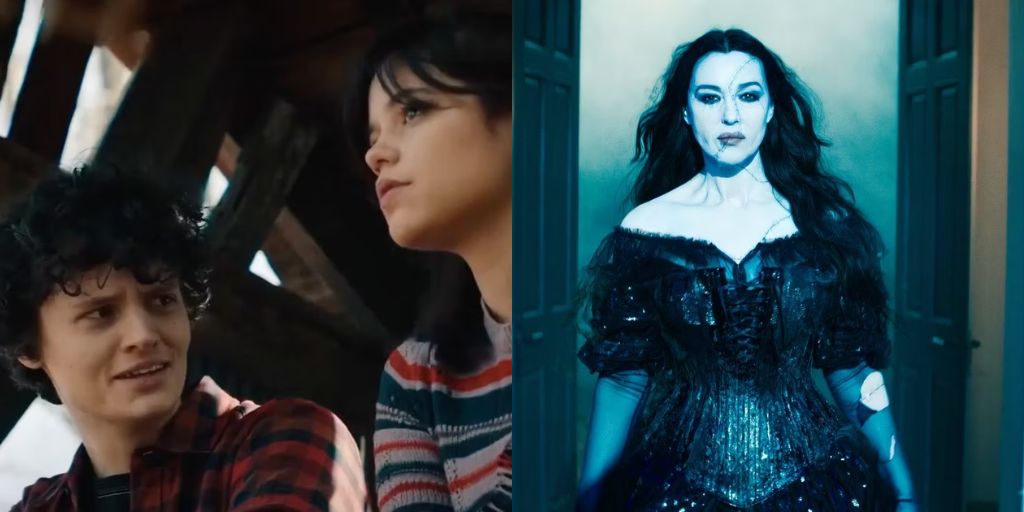
Still from Beetlejuice Beetlejuice (Credit: Warner Bros. Pictures)
Her ride leads to a series of near-accidents and eventually crashes into a treehouse. There, she meets Jeremy, played by Arthur Conti, a charming boy who seems to offer a respite from her troubles.
Jeremy’s home is full of oddities, and he has an impressive collection of records. He invites Astrid to spend Halloween with him.
However, it is soon revealed that Jeremy is a ghost. Despite not believing in the supernatural, Astrid can see Jeremy and learns that he died in a tragic fall from his treehouse. Jeremy wants Astrid’s help to complete a ritual that will bring him back to life.
In return for her help, Jeremy promises to assist Astrid in seeing her father in the afterlife. Lydia learns that Jeremy’s past is dark and troubling. He killed his parents and died while trying to escape the police.
Jeremy plans to use Astrid’s life to return to the living, putting her in grave danger. Lydia makes a deal with Beetlejuice to save Astrid. In exchange, Lydia agrees to marry Beetlejuice.
The Climactic Showdown
As the story reaches its climax, Lydia goes on a journey through the afterlife to find Astrid. Meanwhile, Astrid is guided by Jeremy through various bureaucratic hurdles. Astrid discovers Jeremy’s betrayal too late, as he intends to sacrifice her life to return to the living. Lydia and her father, Richard, who is seen briefly, work together to rescue Astrid.
In the real world, Lydia’s wedding is approaching, and Beetlejuice makes a surprise appearance. He uses his powers to create chaos at the wedding, revealing Rory’s true motives.
Beetlejuice’s antics include cursing Rory and transforming the wedding into a spectacle. Wolf Jackson arrives with supernatural police, but Beetlejuice’s control over the situation makes their efforts ineffective.
Delores also makes a return, but she and Rory are quickly dealt with by a supernatural sandworm. Lydia and Astrid use their quick thinking to overcome the challenges posed by Beetlejuice. They open a portal to the sandworm, which helps them defeat Delores and Rory. Astrid regains control, and Lydia finally banishes Beetlejuice by saying his name three times.
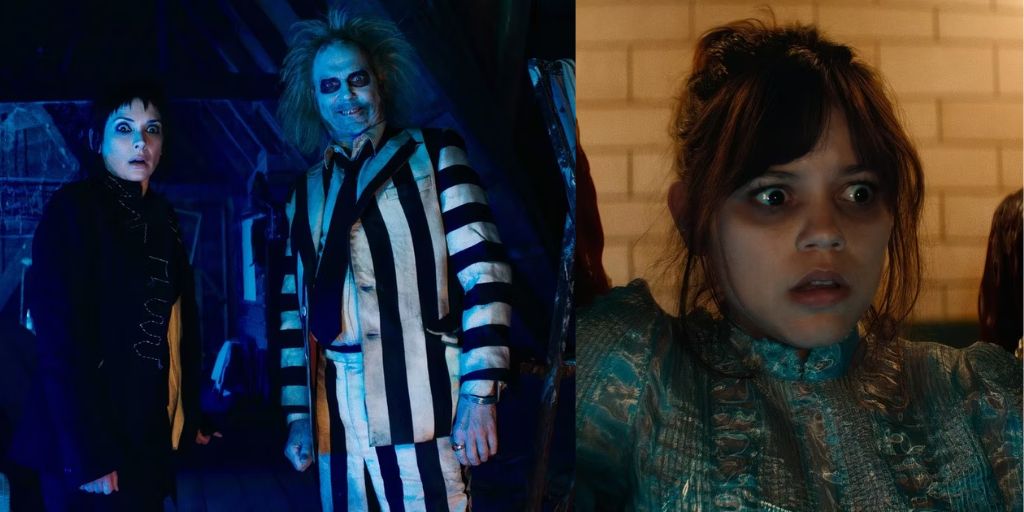
Still from Beetlejuice Beetlejuice (Credit: Warner Bros. Pictures)
The film ends with Lydia dreaming of a happy future for Astrid. The dream includes the baby Beetlejuice from earlier, suggesting that while the immediate crisis is over, the supernatural elements of Lydia’s life are far from finished.
Beetlejuice Beetlejuice is now showing in theaters, offering fans a new chapter in the quirky and spooky saga of Beetlejuice.
In the first season of The Lord of the Rings: The Rings of Power, viewers were introduced to a group of Númenóreans known as “the Faithful.” This group remains in the background while the majority of Númenor is consumed by pride and isolation.
The Faithful are portrayed with Elendil (played by Lloyd Owen) as their main representative. As the series continues into its second season, many fans are eager to understand more about who the Faithful are, what they believe, and their role in the grand narrative.
The Faithful: An Overview
The Faithful, also known as the Elendili, are a faction of Númenóreans who are deeply committed to the traditions of their ancestors. The name Elendili means “Elf-friends” in the Elvish language Quenya.
This group is distinguished by their unwavering loyalty to the Valar, powerful spiritual beings in Tolkien’s world, and their respect for the divine creator, Eru Ilúvatar. Unlike the majority of Númenóreans, who either rebelled against or forgot about the Valar, the Faithful remain devoted and do not dishonor these spiritual entities.
The Faithful’s Beliefs and Practices
The Faithful follow the teachings and customs of their ancestors, particularly their devotion to the Valar. They believe in the “Gift of Men,” which the Elves refer to as death.
While many Númenóreans sought immortality by trying to reach Valinor, the Faithful accept death as a natural and integral part of life. This acceptance reflects their adherence to the old ways and their refusal to pursue immortality as the Elves do.
In addition to their devotion to the Valar, the Faithful also worship Eru Ilúvatar, the supreme deity in Tolkien’s universe.
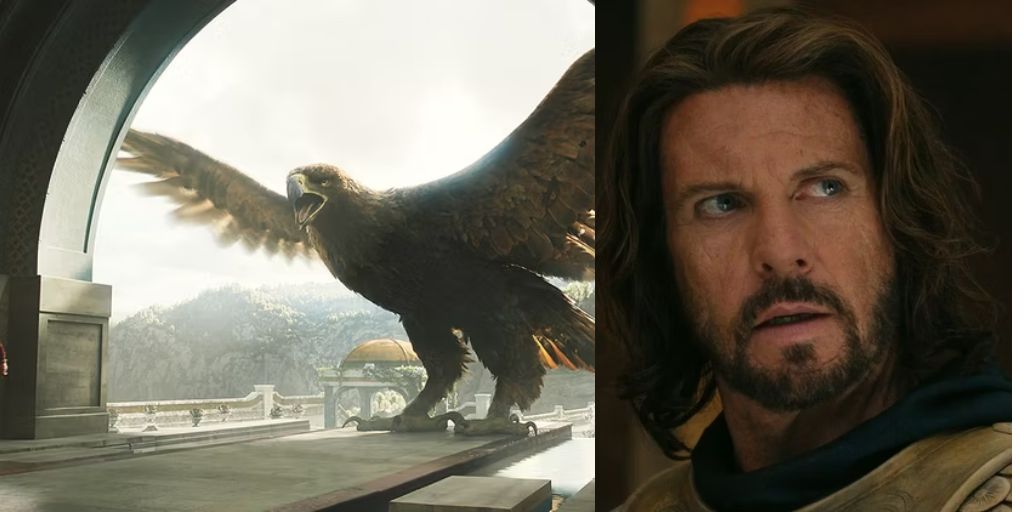
Still from The Rings of Power (Credit: Prime Video)
According to Tolkien’s Unfinished Tales, the Faithful regularly climbed Meneltarma, a sacred mountain in the center of Númenor, to worship Eru. This practice was a significant part of their religious life. However, the situation changed drastically when Ar-Pharazôn (played by Trystan Gravelle) became king.
Pharazôn’s Reign and the Persecution of the Faithful
Ar-Pharazôn, once a devotee of the Valar, began to challenge the traditional practices and beliefs of Númenor. Under his rule, the king outlawed the worship of Eru Ilúvatar and prohibited climbing Meneltarma for religious reasons.
Those who defied this edict faced severe punishment, including the death penalty. This crackdown forced many of the Faithful to practice their religion in secret to avoid persecution.
Despite the changing tides, the Faithful remained dedicated to their beliefs and traditions. Elendil’s name, meaning “Elf-friend,” symbolizes this commitment.
The Faithful’s loyalty to the Valar and their friendship with the Elves, who were viewed with suspicion by the King’s Men, highlights their adherence to the old ways and their resistance to the prevailing sentiment of distrust and animosity towards the Elves.
The Downfall of Númenor and the Faithful’s Struggle
Towards the end of the Second Age, Númenor focused its efforts on defeating Sauron (played by Charlie Vickers in Rings of Power). Initially, the Faithful opposed the dark lord, hoping to protect their land and restore their traditions.
However, Sauron, a cunning and deceitful Maia, managed to trick Ar-Pharazôn into believing that Eru Ilúvatar was merely a creation of the Valar designed to keep Men under control.
Sauron’s manipulation led Pharazôn and his followers to worship Melkor (also known as Morgoth), the original Dark Lord. This shift in allegiance resulted in a period of darkness and human sacrifice, with the Faithful often being the victims of these grim practices.
The Faithful’s commitment to their beliefs made them targets in this time of turmoil, as their resistance to the new religious practices and their continued worship of the Valar set them apart.
The Great Wave and the End of Númenor
Sauron exploited Pharazôn’s fear of death, convincing him to invade Aman, the continent where Valinor is located, in a bid to gain immortality. This invasion attempt, akin to a Tower of Babel event, ended in disaster.
Eru Ilúvatar, angered by the Númenóreans’ actions and their defiance, unleashed a great wave that destroyed Númenor. This cataclysmic event rivaled the biblical Great Flood, wiping out the entire kingdom and punishing its inhabitants for their wickedness.
The Faithful, though greatly diminished in number, managed to survive this catastrophic event. Their survival was not a mere stroke of luck but a testament to their unwavering faith and dedication.
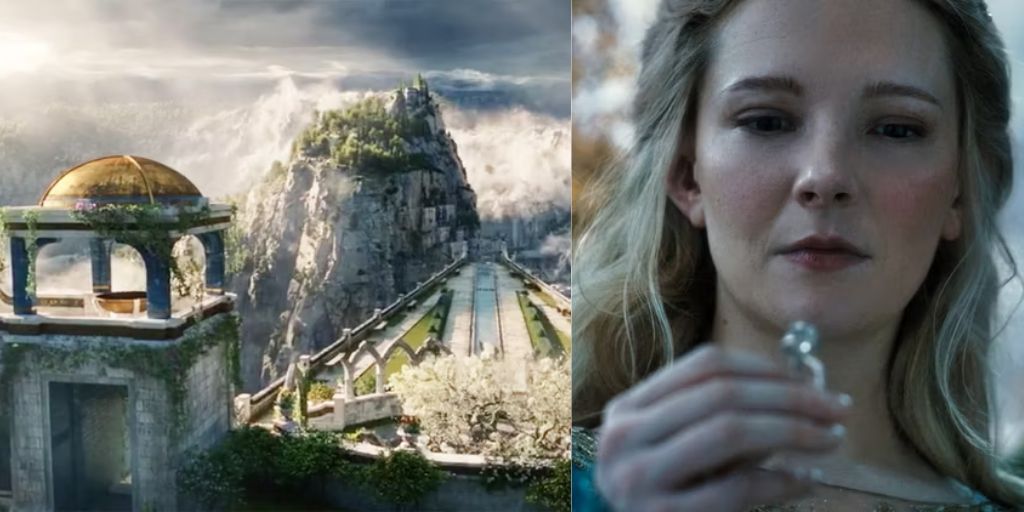
Still from The Rings of Power (Credit: Prime Video)
Before the disaster struck, Elendil’s father, Amandil, had sailed to Aman to seek forgiveness and deliverance from Sauron. Amandil also instructed Elendil to prepare for any potential disaster by assembling a fleet of ships. When the waves came, Elendil, his sons, and other Faithful managed to escape to Middle-earth.
The Legacy of the Faithful and Their Impact on Middle-earth
Elendil and his sons, Isildur (played by Maxim Baldry) and Anárion, arrived in Middle-earth and founded the Kingdoms of Arnor and Gondor. Elendil became the first High King of these realms, which would play a crucial role in the ongoing struggle against Sauron.
Despite the loss of his homeland, Elendil’s dedication to Eru Ilúvatar and his resistance to the darkness of the Second Age earned him a significant place in Middle-earth’s history.
Elendil and his sons fought alongside the Elves in the War of the Last Alliance, the final battle of the Second Age. Although Elendil fell in battle, his son Isildur succeeded in defeating Sauron and claiming the One Ring. Isildur’s possession of the Ring was short-lived, but his actions set the stage for the eventual downfall of Sauron.
The Faithful’s Influence in Later Ages
The legacy of the Faithful extended beyond the events of the Second Age. Centuries later, Elendil’s descendant, Aragorn, returned to reclaim the thrones of Arnor and Gondor. Aragorn played a crucial role in the final defeat of Sauron and the destruction of the One Ring. His marriage to an Elf, Arwen, honored the Faithful’s enduring connection with the Elves and their commitment to the old ways.
The Faithful’s story serves as a reminder of the enduring power of faith and dedication in the face of overwhelming adversity. Despite their trials and the eventual fall of Númenor, their commitment to their beliefs and their influence on Middle-earth’s history highlight their significant role in the larger narrative.
The Faithful’s Legacy in The Rings of Power
As The Rings of Power continues to unfold, the Faithful, including key characters like Elendil and Tar-Míriel (played by Cynthia Addai-Robinson), remain central to the story.
Their secretive actions and resistance to the prevailing trends in Númenor emphasize their enduring commitment to their values. Despite facing criticism and challenges, the Faithful’s role in the battle against Mordor and their continued faithfulness highlight their importance in the series.
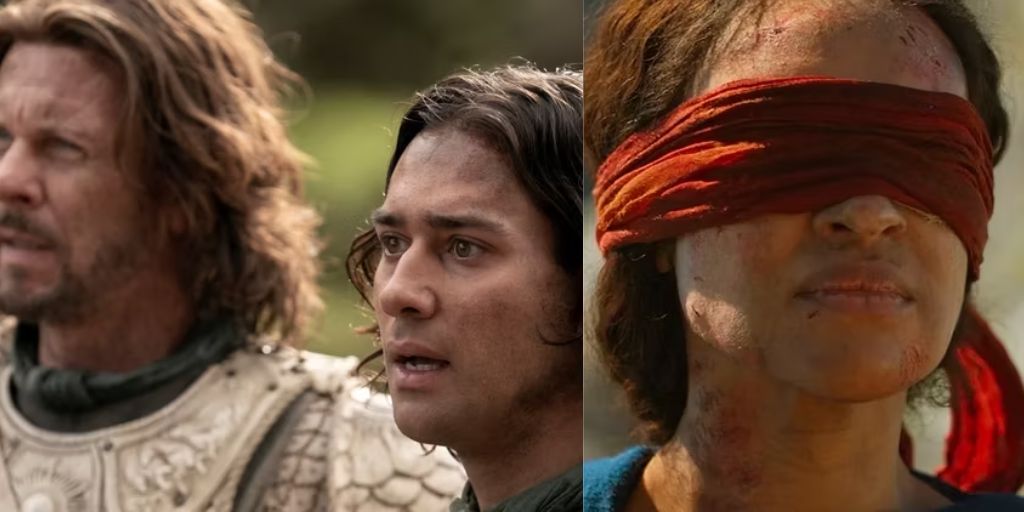
Still from The Rings of Power (Credit: Prime Video)
The depiction of the Faithful in The Rings of Power brings to light their significant impact on the events of the Second Age and their lasting influence on Middle-earth. Their story is a testament to the enduring nature of faith and loyalty, even in the face of great challenges and adversity.
The Faithful’s journey in The Rings of Power reflects their complex history and their vital role in the larger narrative of Middle-earth. Their struggles, beliefs, and legacy continue to resonate with fans and add depth to the rich views of Tolkien’s world.
