In today’s world of reality TV, there are plenty of competition shows, but few are as tough to win as CBS’ Big Brother.
Created by John de Mol, the show has captured viewers for more than two decades. The idea behind the game is both simple and complicated: a group of strangers must live together, vote each other out, and try to last until the end to win a grand prize of $750,000.
While the concept may seem easy to understand, the strategy behind it is far from straightforward. There is no official rulebook on how to win Big Brother.
Although many strategies have worked in the past, they can easily fail when faced with the wrong group of people, as clearly shown in Big Brother 26.
This season’s twists and turns have made it one of the most dramatic seasons yet. Over the past two weeks, viewers have been shocked not just by the wild gameplay but also by who was sent home.
The two players evicted were very different: one was seen as the strongest competitor in the house, while the other had burned almost every bridge.
Despite their differences, both players experienced a similar downfall. In Big Brother, your relationships with others are what win you the game, no matter what strategy you choose or which past winner you try to emulate.
Quinn Martin and T’kor Clottey Were Key Players in Big Brother 26
Quinn Martin started the season as a strong competitor, so it wasn’t surprising when he became the eighth person to be evicted and the first member of the jury. His final plea for votes perfectly showed the weaknesses in his game.
Sitting next to Kimo Apaka, Quinn made deep-cut Big Brother references and cracked jokes, hoping his charm and brief talk of strategy would convince the other houseguests to keep him.
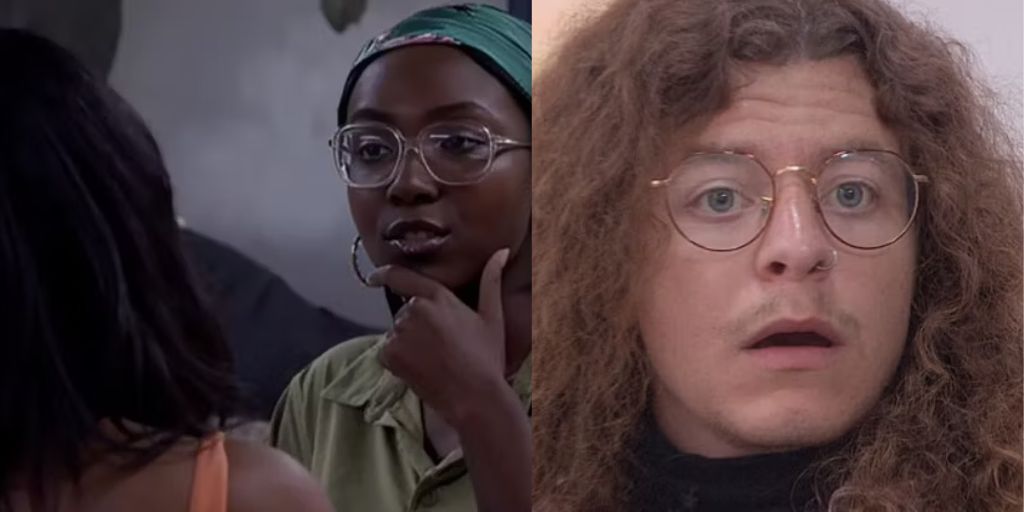
Still from Big Brother (Credit: CBS)
However, Apaka’s heartfelt plea won the cast over, and Quinn was sent packing. This awkward moment mirrored why Quinn had steadily been losing power throughout the season.
Quinn was a massive fan of Big Brother and was eager to make the “big moves” that his favorite players had done in the past.
He tried to imitate the nerdy yet strategic personalities that he admired. Unfortunately, most of his attempts to make big moves ended up as betrayals.
Quinn backstabbed his alliances with Chelsie Baham and Angela Murray and focused on acting like the player he wanted to be rather than being his genuine self. This false approach cost him the goodwill of nearly everyone in the house and led to his relatively early elimination.
It was a clear sign of how little power he had left in the game. But how did such a powerful player like T’kor Clottey end up evicted right after Quinn?
T’kor Clottey quickly became a dominant force in the Big Brother house during her two months of gameplay. She wasn’t as loud as some of the other contestants, but she built strong connections through her honest and direct approach. In many ways, she was the complete opposite of Quinn.
While Quinn played a character, T’kor used her true personality to create solid alliances. She led a strong trio with Kimo Apaka and Rubina Bernabe, and she even managed to pull strong competitors like Tucker Des Lauriers and Chelsie Baham into her social circle.
Yet, despite her success, T’kor was voted out nearly unanimously the first time she was nominated. How could someone with such strong social connections be sent home so easily? The answer lies in her failure to look at the bigger picture.
Flexibility Wins in Big Brother
The core issue behind both Quinn and T’kor’s eliminations was their authenticity, or lack of it. While T’kor was more genuine than Quinn, she was very selective about who she connected with in the house.
In the week leading up to her eviction, T’kor put little effort into getting to know the houseguests who weren’t in her alliance.
The live feeds showed several moments where T’kor sat in silence with others, struggling to even make small talk, despite knowing that these were the people she needed to convince to keep her in the game.
This failure to connect with others was a more straightforward version of Quinn’s flaw.
While he tried to play a character and be someone he wasn’t, T’kor simply remained quiet and didn’t engage with those outside her alliance. In her mind, her strong bonds with a few key players might have been enough to keep her safe.
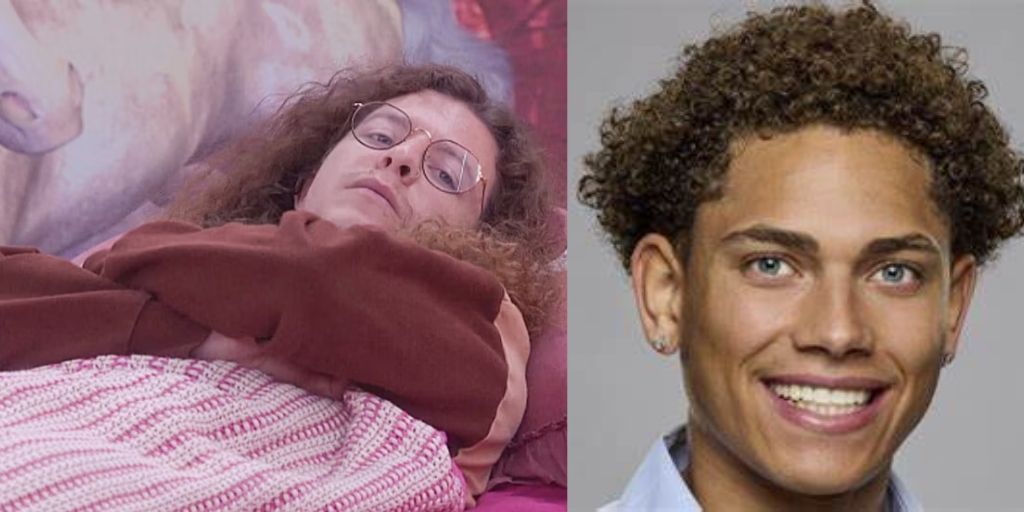
Still from Big Brother (Credit: CBS)
However, this narrow focus caused her to overlook the rest of the house. It was the people she ignored who eventually voted her out. Both Quinn and T’kor show how being too selective or not genuine enough can ruin your game in Big Brother. Leah Peters would do well to learn from their mistakes.
Leah Peters has played a quiet game for most of the season, but in the last few weeks, she has emerged as a real threat to win the grand prize. During her time as Head of Household (HoH), Leah dismantled T’kor’s powerful trio, removing what could have been a major force moving forward.
Leah’s ability to form strong connections with players from all parts of the house, including Cam Sullivan-Brown, has kept her from becoming a major target.
However, that doesn’t mean she’s completely safe. Like Quinn before her, Leah has been accused of hiding her strategy behind the “genuine” persona she shows to others.
Her involvement in T’kor’s eviction has also damaged any potential relationships she could have had with Rubina and Kimo.
Although Leah has other allies, her failure to recognize the stronger threats in the game — such as alliances that pose a much bigger challenge than T’kor’s — could be her downfall.
Some players believe that Leah’s personality is fake, and although she is more open than T’kor, her refusal to openly target certain players has made many in the house turn against her.
In a game as unpredictable as Big Brother, these three players prove why being genuine can make or break your game.
Chelsie Baham Might Be the One to Beat in Big Brother 26
Big Brother is a difficult, high-stress game with no guaranteed path to victory. Each player tries to show their authentic self in different ways, but their success depends on the situation they are in and the other players around them.
In another season, Quinn might have been seen as charming, and T’kor’s strategy of focusing on a few strong alliances might have backfired sooner.
The only way to succeed in Big Brother is to constantly assess the situation and adjust your strategy accordingly. You need to show different sides of your true self to different people, giving everyone the idea that an alliance with you is possible.
This makes Big Brother a mentally exhausting game, but Chelsie Baham seems to be handling it well. Chelsie has positioned herself at the center of the house’s dynamics.

Still from Big Brother (Credit: CBS)
She leads her own alliance and, even though she has clashed with players like Cam and Angela in recent weeks, she manages to maintain enough of a connection with them to pull them back in when needed.
It’s never a good idea for a Big Brother player to try and copy the game of someone who came before them, as Quinn’s downfall shows. However, future contestants could learn a lot by watching how Chelsie uses her authenticity to her advantage.
Chelsie has managed to form connections with nearly everyone in the house, giving her a strong position as the game moves forward. If she can continue to adapt and stay genuine, she might just be the one to beat this season.
The long-awaited second season of Ryan Murphy’s crime anthology series, Monster, is now available on Netflix. Monsters: The Lyle and Erik Menendez Story focuses on one of the most famous legal cases in the United States.
This new season faces criticism for how it shows the Menendez brothers and the details of the murders.
Nicholas Alexander Chavez and Cooper Koch play the brothers, while Javier Bardem and Chloë Sevigny portray their parents, José and Kitty Menendez. The series covers a seven-year timeline, starting from the murders in 1989 to the brothers’ sentencing in 1996.
The first season, Dahmer — Monster: The Jeffrey Dahmer Story, also received a lot of backlash when it was released. Critics called out the show for glorifying a real-life serial killer.
Families of Dahmer’s victims said the series retraumatized them and that they were not involved in the making of the show.
Similarly, the second season of Monster has been criticized for being an exploitative retelling of events. However, it has also sparked new interest in the case, especially after the discovery of new evidence.
The Menendez Brothers Case Still Lives in Infamy
On August 20, 1989, Lyle and Erik Menendez shot and killed their parents in their home in Beverly Hills.
The brutal nature of the killings and the fact that José Menendez, an entertainment executive, had several business rivals made police suspect that the Mafia was involved.
This theory was supported by the Menendez brothers themselves. Initially, Lyle and Erik were not seen as suspects. However, their strange behavior, especially their spending habits right after the murders, raised suspicions. At the time, José Menendez was worth about $14 million.
According to Robert Rand’s book, The Menendez Murders, the brothers spent almost $700,000 within a few months of their parents’ deaths.
In 1990, Erik confessed to his psychologist, Dr. Jerome Oziel. Erik had seen Dr. Oziel for court-ordered therapy after being involved in a series of burglaries. Dr. Oziel recorded their sessions and told his mistress about the confession. She then reported the murders to the police, leading to the arrest of the brothers.
After they were arrested, Lyle and Erik claimed they killed their parents out of fear due to years of emotional, physical, and sexual abuse from their father.
Two Trials Turned the Menendez Brothers Into Tabloid Sensations
The case went to trial in 1993 and gained a lot of media attention because of the brothers’ claims against their parents.
The trial was broadcast on Court TV, turning the Menendez case into a prime-time event with constant coverage before, during, and after both trials.
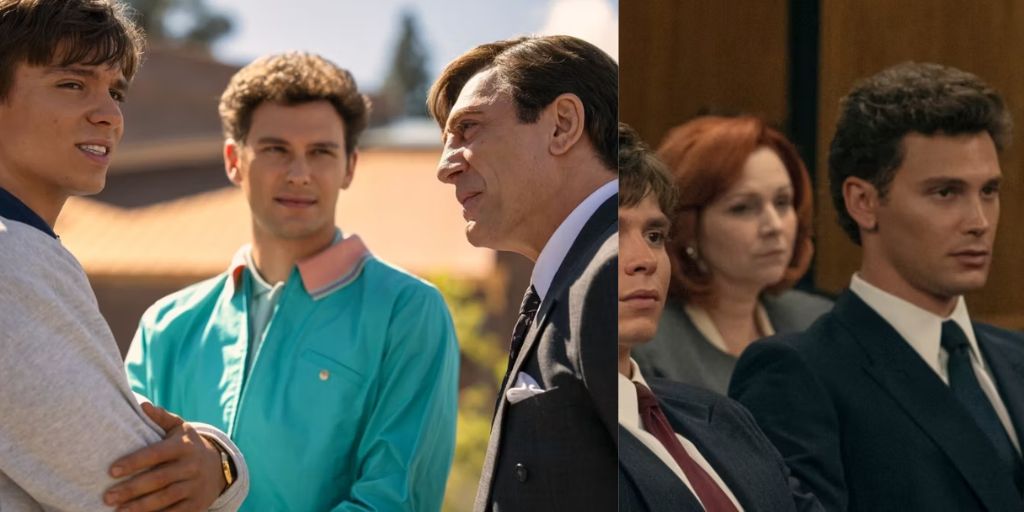
Still from Monsters The Lyle and Erik Menendez Story (Credit: Netflix)
Renowned criminal defense attorney Leslie Abramson represented both brothers in the 1993 trial, but they faced separate juries. The first trials focused mainly on the sexual abuse Lyle and Erik said they suffered from their father, José Menendez, as well as their mother Kitty Menendez’s alleged indifference after learning about the abuse.
Some members of the extended Menendez family supported the claims of sexual abuse, but the prosecution argued that the brothers killed their parents for money. They controversially claimed that men cannot be sexually abused because they “lack the necessary equipment.”
The 1993 trials ended with two hung juries, leading to a retrial in 1996. Lyle and Erik were found guilty of first-degree murder and conspiracy to commit murder.
They received life sentences in prison without the possibility of parole. The Menendez case raised many questions about abuse, wealth, and the criminal justice system.
During the brothers’ second trial, the limited understanding of sexual abuse at the time led to the exclusion of their abuse claims.
‘Monsters: The Lyle and Erik Menendez Story’ Has Caused Renewed Interest in the Case
All nine episodes of Monsters: The Lyle and Erik Menendez Story were released on September 19 and have already faced criticism online regarding how the series handled the Menendez brothers’ case.
While the show mostly sticks to the facts and includes the typical sensationalism of a Ryan Murphy crime drama, the earlier episodes portray the brothers as having a somewhat incestuous relationship.
This portrayal seems irresponsible, especially considering the later episodes that discuss the sexual abuse Lyle (played by Chavez) and Erik (played by Koch) allegedly faced from their father, José Menendez (played by Bardem).
Despite this criticism, the series has succeeded in bringing attention back to the Menendez brothers’ story.
Fox News 11 reported that the show “has brought renewed interest to the Menendez brothers’ case.” This interest has led to a group of TikTok users advocating for clemency for the brothers.
Social media users have reacted to the Menendez case before, but this happens at a time when Lyle and Erik are still serving life sentences in the RJ Donovan Correctional Facility in San Diego.
They are seeking a new hearing and retrial after new evidence supporting their claims of sexual abuse was found in 2023.
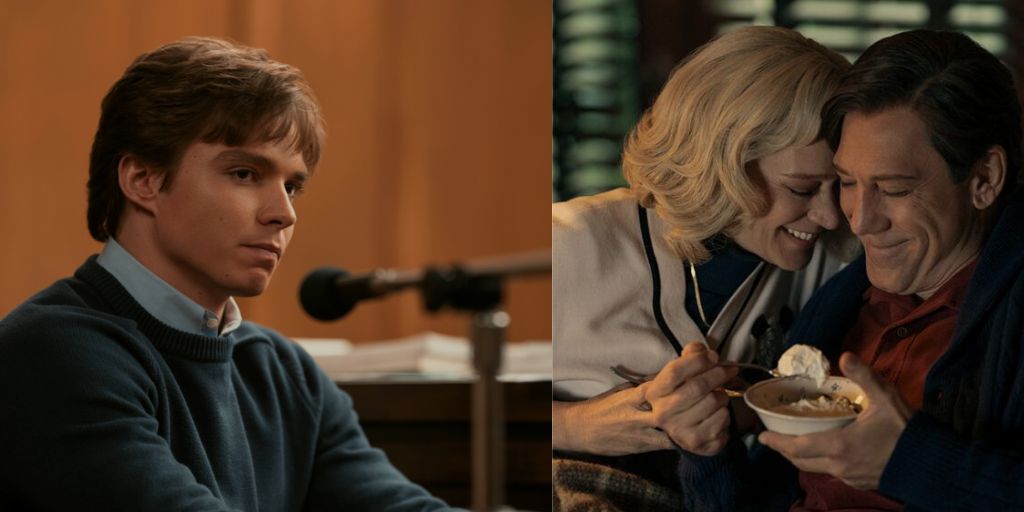
Still from Monsters The Lyle and Erik Menendez Story (Credit: Netflix)
In 2023, Menendez + Menudo: Boys Betrayed, a series on Peacock, was released. This show discussed the abuse that former Menudo member Roy Rosselló said he suffered from the band’s manager, Edgardo Díaz.
Rosselló claims that he was also sexually abused by José Menendez when he was with Menudo in New York at age 13.
This evidence, along with a letter from Erik Menendez to his cousin in 1988 that mentioned the abuse, led to a habeas corpus petition filed on behalf of the Menendez brothers. If this petition succeeds, their convictions could be overturned.
Monsters: The Lyle and Erik Menendez Story is available for streaming on Netflix.
