Sequels are a major challenge across all media platforms because they come with inherent risks. Although sequels benefit from the groundwork laid by their predecessors, their quality and reception can determine if the story continues.
Despite facing criticism from audiences and critics over the years, sequels remain a popular format as long as viewers continue to desire them. While many sequels fail to live up to their originals due to poor creative decisions, there are occasions when a sequel matches or even surpasses the quality of the original film and strengthens the franchise.
Guillermo del Toro’s Blade II is a notable example of a successful sequel. It continues the adventures of Blade, the vampire hunter, and holds significance across multiple genres. The Blade series integrates action, superhero, and horror elements, which is why it appeals to a wide range of audiences.
Fans of horror enjoy the film’s intense blood and gore, superhero enthusiasts appreciate Blade’s role in saving people, and action fans are entertained by the dynamic fight scenes. Despite not being widely recognized as a key film, Blade II has an important place in the broader context of sequels.
Blade II Showcased the Potential of the Comic Book Sequel
Before Blade II, many sequels had been released, with varying degrees of success. In the comic book films, Blade II was a rare and significant entity. Prior to this film, only Superman and Batman had successful franchise runs.
However, even these iconic heroes faced difficulties, as the genre had not yet gained widespread popularity or respect. Alex Proyas’ The Crow, which shares a similar tone with Blade due to its supernatural elements, was among the few films that came close to Blade’s unique style.
Marvel struggled for years to produce successful films, but the first Blade film, starring Wesley Snipes, opened doors for Marvel and set the stage for future success. Blade II played a crucial role in solidifying this success and contributed to the rise of comic book sequels.
The first Blade film introduced a character that was relatively unknown to general audiences. The success of both Blade and Blade II significantly raised the character’s profile. Blade II was released two years after X-Men and in the same year as Spider-Man, which demonstrated the growing interest in films of this nature.
This success led studios to gain confidence in producing more comic book sequels. Guillermo del Toro’s ability to blend body horror with heroic elements paved the way for a wider variety of superhero films in modern cinema.
Guillermo del Toro Seamlessly Mixes Genres in ‘Blade II’
One of the greatest strengths of the comic book genre is its versatility. Filmmakers have the freedom to create stories that span different genres while maintaining a connection to comic book roots.
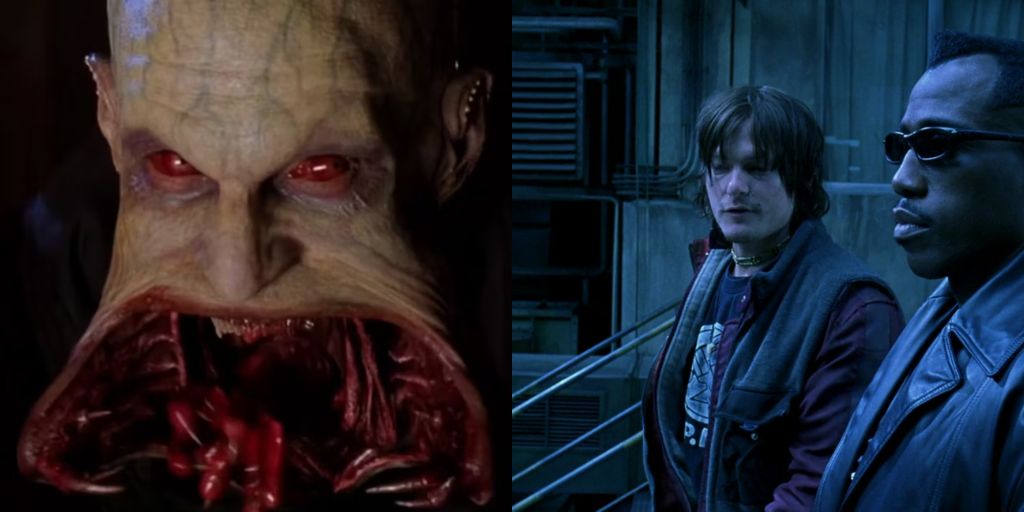
Still from Blade II (Credit: Prime Video)
For example, The Dark Knight is praised as a crime thriller rather than just a superhero film, Logan is recognized as a neo-western, and films like Deadpool and Wolverine are known for their adventurous road-trip style.
Blade II, more than any other film in the genre, proved that superhero films could go beyond simple good versus evil narratives. It effectively incorporated elaborate makeup effects and gore into its storytelling.
The film’s main antagonists, the Reapers, have had a lasting impact on pop culture. They influenced Guillermo del Toro’s later work, such as The Strain, showcasing the film’s enduring legacy. Blade II fully embraces its pulpy nature, using its own absurdity to enhance the shock value of its violence.
Roger Ebert, a renowned film critic, described the film as “underrated” and praised it as “a really rather brilliant vomitorium of viscera, a comic book with dreams of becoming a textbook for mad surgeons.”
The film’s visual style and brutal elements push it towards the horror genre, while Wesley Snipes’ commanding presence further supports his action career. Blade II respects its comic book origins but adds a unique personality to the story.
The Character of Blade Is Portrayed Perfectly in ‘Blade II’
In comparison to the weaker third film, Blade: Trinity, the first two Blade films effectively capture Blade’s complex nature. As a hybrid of vampire and human due to his mother being bitten, Blade’s character is portrayed with depth.
He has a close bond with Whistler, who acts as a father figure, and collaborates with Dr. Karen Jenson and Whistler’s daughter. The film hints at a potential romance with Nyssa, who, despite being an antagonist, shares Blade’s views on vampires. This relationship adds a tragic layer to Blade’s character, as Nyssa’s death leads Blade to choose solitude, remaining the last of his kind.
Wesley Snipes’ portrayal of Blade is exceptional. He brings a combination of physical prowess, wit, and aggression to the role, making his performance stand out. Snipes’ dedication to the character is evident, and his collaboration with Guillermo del Toro resulted in a successful and memorable film.
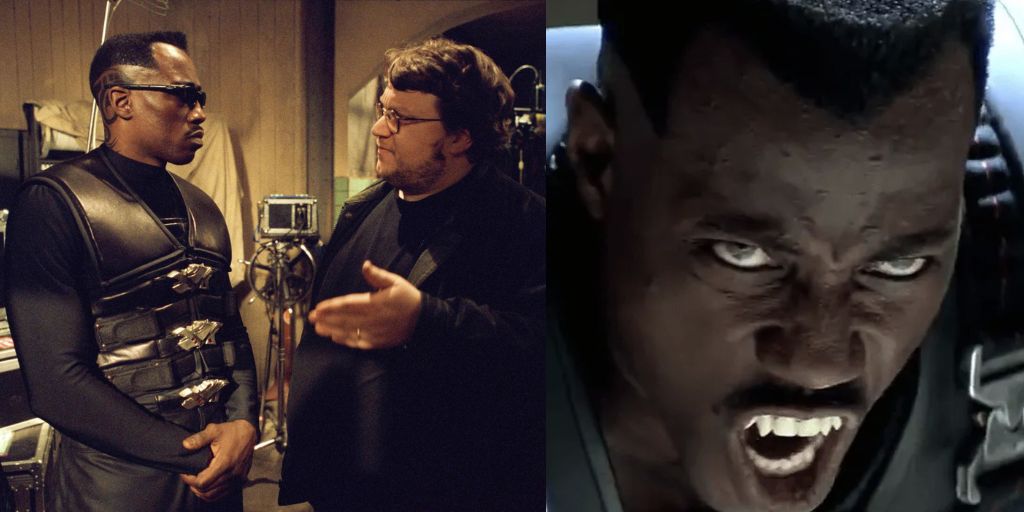
Still from Blade II (Credit: Prime Video)
Before other actors like Hugh Jackman as Wolverine or Robert Downey Jr. as Iron Man, Snipes played a crucial role in leading the superhero genre on screen. His love for the character is clear, and his work alongside a visionary director like del Toro created a perfect synergy.
Blade II is a successful sequel blending action, horror, and superhero genres. Guillermo del Toro’s direction and Wesley Snipes’ portrayal of Blade upgraded the film, influencing future comic book adaptations. Released alongside X-Men and Spider-Man, it proved the potential of comic book sequels and remains a significant part of the genre.
Blade II is currently available to rent or buy on Prime Video in the U.S.
A new set of Rings of Power arrives in the latest episode, “Halls of Stone,” from The Lord of the Rings: The Rings of Power Season 2. The episode begins with King Durin III (played by Peter Mullan) receiving his own ring while six other rings remain for their future owners.
As soon as King Durin puts on his ring, everything in Khazad-dûm starts to shift, and he immediately works on solving the issue of sunlight beneath the mountain. The ring’s power seems to bring immediate positive changes, but the question remains: will these changes last in the long run? Also, which Dwarves will receive the other six rings?
What Are the Powers of the Dwarven Rings?
In The Rings of Power, Celebrimbor (Charles Edwards) and Annatar (Charlie Vickers) first offer the idea of the Dwarven Rings to Prince Durin IV (Owain Arthur) and his wife, Disa (Sophia Nomvete), in Episode 3 of Season 2, titled “The Eagle and the Scepter.”
These rings are the second set of Rings of Power, created after the three Elven Rings in Season 1. However, in the books, they are forged first along with the Nine Rings for Men by Celebrimbor and Annatar, who is actually Sauron in disguise. The Elven Rings are crafted later by Celebrimbor alone.
The Dwarven Rings are created to continue the work of the Elven Rings by stopping the spread of darkness in Middle-earth. In the books, these rings are meant to preserve light, strengthen the bonds between Elves and Dwarves, and bring prosperity.
However, Sauron, who helped create these rings, had a hidden motive. He wanted to use the rings to control the Dwarf-lords. Because of Sauron’s involvement in their creation, the Dwarven Rings are filled with his malice and become dangerous, even more so than the Elven Rings.
The Dwarven Rings grant their bearers a long life, preventing them from aging as quickly. However, due to Sauron’s influence, the rings do not work exactly as they were meant to. Instead of bringing prosperity, the rings bring greed.
This is clearly seen in King Durin III throughout the episode. He says that the ring allows him to “see the mountain” and discover its hidden treasures, but this turns him into a greedy treasure hoarder. He even uses the other rings to impose heavy taxes on the other Dwarf-lords.
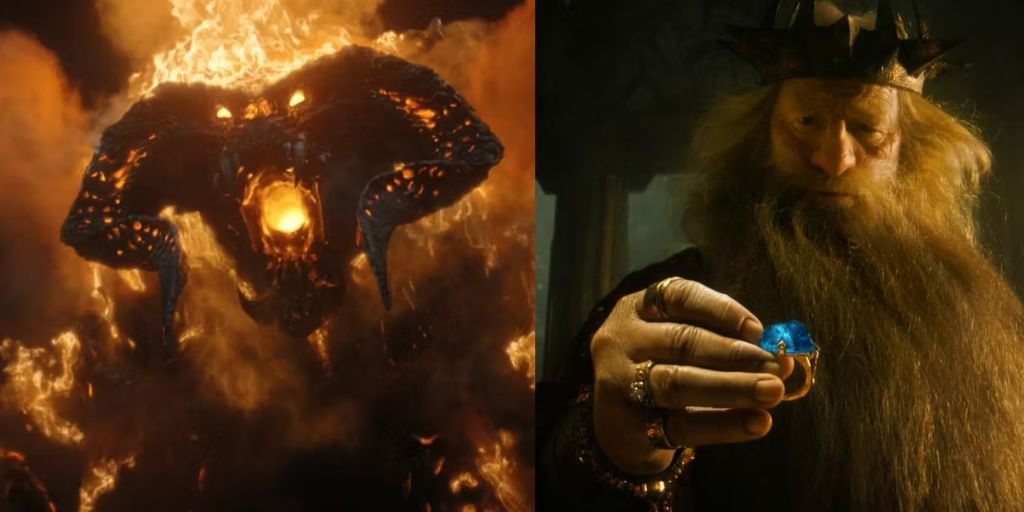
Still from The Rings of Power (Credit: Prime Video)
The Dwarven Rings also do not fully bend to Sauron’s will. His plan was to make the rings work like the Nine Rings for Men, binding their bearers to him.
However, the Dwarves show surprising resistance. The two main effects of the rings are greed and longevity, and they do not grant any special powers like the ability to see through rocks. Eventually, greed proves to be the most harmful effect of the rings.
Who Are the Dwarves That Receive the Rings of Power?
When thinking about the Rings of Power, many people recall the famous verses from J.R.R. Tolkien’s poem that describe how many rings were given to each race in Middle-earth. So far, The Rings of Power has shown the first verse come to life: “Three rings for Elven-kings under the sky.”
Now, it’s time for the second verse: “Seven for the Dwarf-lords in their halls of stone.” In this week’s episode, we see the seven rings being presented to the Dwarves, who will soon carry them across Middle-earth.
When King Durin III reveals the remaining six rings, he makes it clear they are not yet for their bearers. He even tells one Dwarf that the rings are for his “master.” This scene involves emissaries from other Dwarf-lords, suggesting that the series will eventually reveal who will receive the Rings of Power.
Even in Tolkien’s books, there is no detailed list of the Dwarves who receive these rings, only that they are members of the most powerful Dwarven clans: Durin’s Folk (or Longbeards), Broadbeams, Firebeards, Ironfists, Stiffbeards, Blacklocks, and Stonefoots. Over time, these rings are likely passed down through these families.
King Durin III’s ring is the only Dwarven Ring with a well-known history. It is passed down from Durin III to Durin VI, the ruler during the time when the Dwarves dig too deeply and awaken the Balrog of Moria.
Both Durin VI and his heir, Náin, are killed within a year of each other, and the ring is eventually passed down to Thráin II, the father of Thorin Oakenshield (played by Richard Armitage in The Hobbit). Thráin is a troubled king, heartbroken over the loss of Erebor to the dragon Smaug.
He later leaves his people and tries to reach the abandoned Khazad-dûm during the Third Age. Unfortunately, Sauron, who is disguised as the Necromancer in the fortress of Dol Guldur, captures and kills Thráin, taking his ring in the process.
What Happens to the Dwarven Rings of Power?
By the end of the Third Age, none of the seven Dwarven Rings remain with the Dwarves. After Sauron’s defeat in the War of the Last Alliance, it takes time for him to rebuild his strength in the Third Age.
When he does, one of his goals is to reclaim the Rings of Power. While the Nine Rings for Men are still in his control through the Nazgûl, the seven Dwarven Rings prove harder to recover.
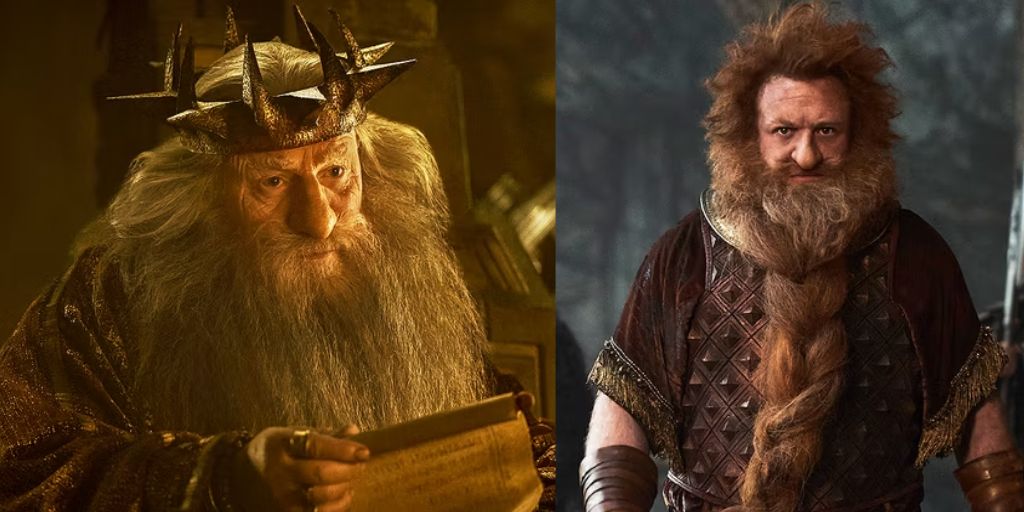
Still from The Rings of Power (Credit: Prime Video)
Sauron is able to reclaim three of the Dwarven Rings, including Thráin’s ring. The other four are destroyed by dragons. The Dwarves who wear these rings amass great wealth, which attracts the attention of dragons.
This is similar to what happens with Smaug in The Hobbit, who is drawn to Erebor. Over time, these dragons either kill the Dwarves or destroy their strongholds, consuming the rings in the process.
New episodes of The Rings of Power Season 2 are available on Prime Video, with fresh episodes airing every Thursday in the U.S.
