Anyone who has watched the Blade movies knows the story of Wesley Snipes’ famous vampire hunter. Before Eric Brooks, the character’s real name, was born, his life took a drastic turn when the vampire Deacon Frost attacked his mother.
This attack passed on some of the traits of a vampire to Eric, without him inheriting the most significant vampire weakness – sensitivity to sunlight. Due to this unique trait, Blade was given the nickname “Daywalker” by vampires.
He dedicated his life to hunting and destroying vampires while also battling his inner urge to drink blood. This is a major update from Blade’s original character in Tomb of Dracula #10 created by Marv Wolfman and Gene Colan.
In that early version, Blade also survived Deacon Frost’s attack, but he remained fully human and was immune to being turned into a vampire by their bites.
However, after the release of the first Blade movie, his character evolved, and the change involved another well-known Marvel vampire: Michael Morbius, also known as Morbius the Living Vampire.
How Morbius Helped Blade Become a Daywalker
As the events unfold, it becomes clear that Blade is also hunting Hunger. Hunger had possession of a mysterious trunk, which soon attracted the attention of Wilson Fisk, also known as the Kingpin of Crime. Fisk’s criminal network had its eyes on this trunk for its secrets.
As Spider-Man and Blade joined forces to battle Fisk’s henchmen, Kingpin opened the mysterious trunk, revealing Morbius the Living Vampire inside. Morbius had been captured and was being transported to a secret location for further experimentation.
Spider-Man attempted to reason with Blade, arguing that Morbius wasn’t a full vampire and therefore shouldn’t be staked. Despite Spider-Man’s pleas, the situation escalated, and Morbius bit Blade during their confrontation.
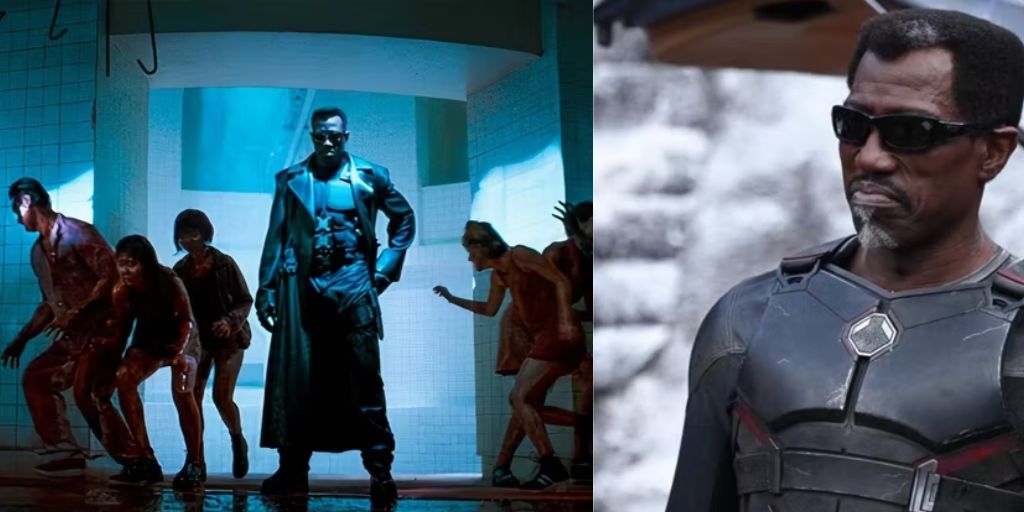
Still from Blade (Credit: MCU)
At the time, Blade’s reaction to the bite wasn’t immediate or drastic, so its significance wasn’t clear right away. However, the impact of Morbius’ bite would eventually be revealed to have significant consequences for Blade’s powers and abilities.
The Effects of Morbius’ Bite on Blade’s Powers
The bite from Morbius had a lasting impact on Blade and made him far more dangerous to vampires. Due to the combination of Blade’s unique blood and Morbius’ altered genetics, Blade developed several new abilities that made him a formidable opponent.
These included superhuman strength, enhanced agility, and a healing factor that allowed him to recover quickly from injuries. Additionally, Blade gained the ability to sense supernatural creatures, which gave him an advantage when tracking and hunting vampires.
This combination of abilities made Blade not just a skilled vampire hunter, but also a being with the powers of a vampire, minus their weaknesses. He became a true Daywalker, able to operate during daylight hours without the vulnerabilities that traditional vampires suffer from.
Blade’s new powers put him on a level playing field with the very creatures he despised. This transformation allowed him to fight vampires on their own terms, without being hindered by their limitations.
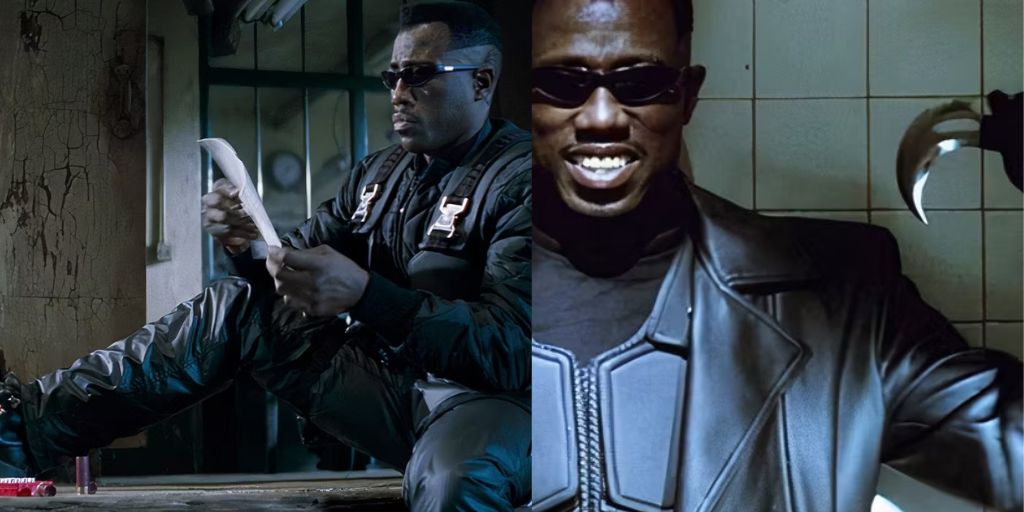
Still from Blade (Credit: MCU)
This law required all superhumans to register their identities and follow government regulations. As a result, Morbius was legally authorized to arrest Blade, adding an interesting dynamic to their already complicated relationship.
Blade and Morbius Almost Fought on the Big Screen
While Blade and Morbius’ rivalry played out in the comics, the two characters almost faced off in the Blade films as well. Originally, there were plans for the two to clash on the big screen.
In fact, in a deleted scene from the first Blade movie, Morbius was supposed to make an appearance, hinting at a future confrontation between the two.
Director Stephen Norrington even portrayed Morbius in the scene, although he decided not to return for the second film, which was eventually directed by Guillermo del Toro. The plan to include Morbius was ultimately shelved, and the vampire didn’t appear in the Blade film series.
It wasn’t until 2022 that Morbius finally appeared in theaters, with Jared Leto taking on the role of the Living Vampire in the film Morbius.
Ironically, the comic storyline from Peter Parker: Spider-Man #7-8, in which Blade, Morbius, and Spider-Man all cross paths, became a source of inspiration for the Morbius film’s antagonist, Milo (played by Matt Smith). Milo’s transformation into a vampire closely resembled Hunger’s arc in the comic, and even Milo’s real name, Lucien, was suspiciously similar to Hunger’s real name, Loxias Crown.
Blade’s Transformation Into a Daywalker Shaped His Comic Legacy
The first Blade movie is often credited with launching a wave of successful comic book films. It proved that lesser-known characters could be just as interesting and engaging as mainstream heroes like Spider-Man or the X-Men.
The film’s success influenced the Marvel Cinematic Universe (MCU) and its approach to showing a wider variety of characters. This approach was later mirrored by DC Studios, led by James Gunn and Peter Safran.
But the Blade film’s impact didn’t stop at influencing the cinematic world. It also began a trend within the comics, where characters were adapted to align with their film counterparts. Before the movie, Blade was often depicted in the comics wearing a maroon coat, a bright green visor, and using wooden knives to fight vampires.
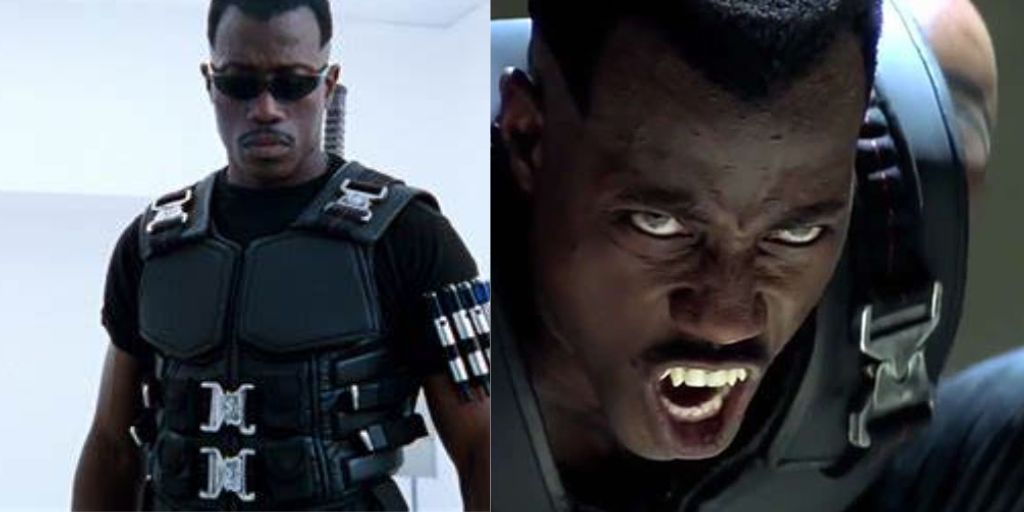
Still from Blade (Credit: MCU)
However, after the release of the film, Blade’s appearance was updated to match Wesley Snipes’ portrayal.
In Peter Parker: Spider-Man #7, Blade was shown wearing a long black trench coat, sunglasses, and wielding a katana – the look Snipes made iconic on the big screen. This transformation has continued to shape how Blade is portrayed in the comics to this day.
Blade’s transformation into the Daywalker was not only significant for his character development, but it also created a new level of depth. His hatred for vampires remained strong, but he could now battle them on equal footing because he had many of their abilities.
This change made Blade a more complex and compelling character. The fact that all of this happened due to a bite from a “living” vampire makes Blade’s story even more unique within the Marvel Universe.
Colin Farrell’s amazing performance, combined with the prosthetics and makeup, stands out as one of the strongest parts of The Penguin.
In almost every scene, Oz Cobb’s tough and magnetic personality pulls us into the dangerous gangster world, making it an exciting yet frightening trip through Gotham’s dark side.
Like much of Matt Reeves’ version of The Batman, Oz Cobb’s nickname, “The Penguin,” is grounded in his noticeable limp.
This limp causes the large man to walk with a painful, waddle-like motion. Farrell’s portrayal of this limp offers a fresh take on the character, setting him apart from the comic book version.
The limp adds more depth to the character by being a physical and emotional reminder of why he’s called “The Penguin.”
His limp leads some to disrespect him, while others admire him. It is this very limp that shapes him into The Penguin and makes him such an intriguing character.
Oz Cobb’s Limp Isn’t From the Comics
In the original comics, Oswald Cobblepot’s nickname comes from childhood bullying due to his love for birds and his unfortunate appearance.
However, in other versions, like Robin Lord Taylor’s portrayal in Gotham, a limp explains his penguin-like appearance.
In The Penguin, Farrell’s version makes this limp a visible and painful problem. This change immediately makes him feel tougher than previous versions, who were often shown as mentally sharp and creepy but not physically threatening.
This shift isn’t the only thing that makes him stand out from the comics. It’s also a key reason why the limp plays such an important role in this version of the character.
Oz Cobb is a shortened form of the comic version’s full name, Oswald Cobblepot.
The showrunners wanted a more “grounded” version of the character, and the name change helps achieve that. Shortening Cobblepot to Cobb removes the sense of wealth and power that the name might suggest.
Instead, we see Oz’s mother, Francis (played by Deirdre O’Connell), living in a small suburban home, giving the character a more working-class background.
Along with the limp, it suggests that Oz didn’t have much help with his condition, adding to the challenges he faced from birth.
Colin Farrell’s Acting and Prosthetics Highlight the Pain of Oz’s Limp
Farrell’s acting, along with the prosthetics and makeup, makes Oz’s limp look painful and brutal.
In The Penguin, we first see this when Oz and Victor Aguilar (Rhenzy Feliz) carry Alberto’s (Michael Zegen) body after catching Victor trying to break into Oz’s car. Oz mentions that carrying the body hurts his leg, and later, we see a brace on his foot when he climbs stairs.
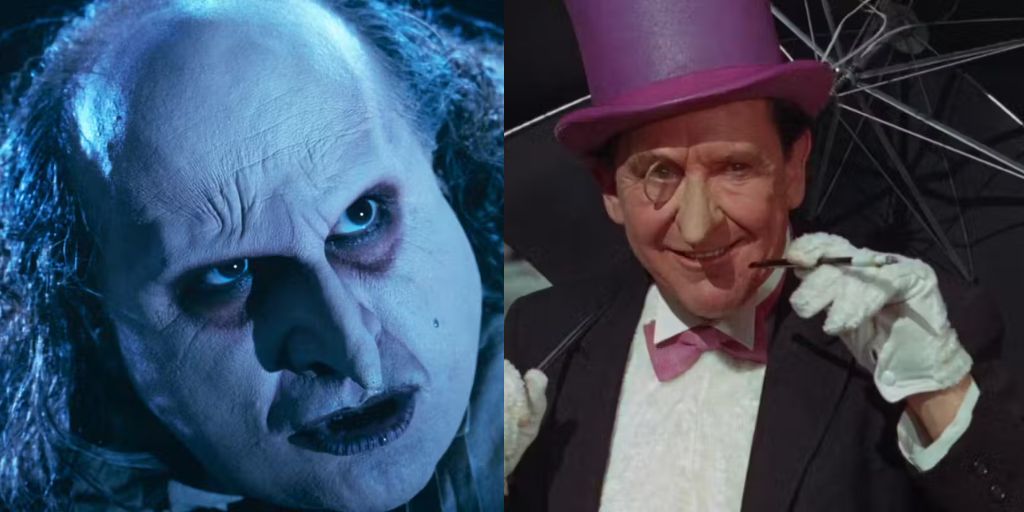
Still from The Penguin (Credit: HBO)
In a later scene, Oz removes the brace, revealing twisted, conjoined toes. The showrunners confirmed that Oz has a clubfoot.
The sound of the heavy brace being removed, along with the creaking noises, paints Oz as an outcast living with constant pain. Seeing Oz’s limp earlier in the series makes the reveal even more powerful and painful.
Oz Cobb’s Limp Shows His Struggles in The Penguin
Oz’s limp is more than just a physical condition. It’s a reminder of the struggles he faces while trying to rise as a kingpin.
Sofia Falcone (Cristin Milioti) points this out when she underestimates him. Similarly, Alberto taunts Oz, telling him he’ll never be loved and mocking him with the comment, “handsome guy like you.”
This is similar to the story of Beauty and the Beast. Oz’s apartment, located above a jeweler’s shop named Burgess Jewelry, references actor Burgess Meredith, who played the Penguin in the 1960s Batman TV show.
The apartment also has vault-like doors that Oz uses to close off his bedroom, symbolizing how he locks himself away from the world.
Before taking off his brace, Oz shuts these doors, massages his foot, and pulls out a single ring, linking his limp to his ability to dominate the underworld.
While some underestimate him due to his limp, it also earns him respect, especially from those who have faced hardship.
For instance, Oz refuses to sit in a handicapped seat when riding the Gotham subway. This shows how he views himself — not as weak, but as someone who lives with and overcomes his limp every day.
He also seeks to help those who are less fortunate, similar to how he admired Rex Calabrese for doing the same. This moment earns Victor’s respect, marking the beginning of the two characters’ growing bond.
Oz Cobb’s limp is firmly rooted in the gritty reality of Matt Reeves’ The Batman universe. It differs from the comic book origin to make Oz a tougher enemy for his rivals. By making the limp a painful, constant reminder of how people underestimate him, the show adds more depth to the character.
This is further enhanced by the detailed prosthetics and Colin Farrell’s powerful performance as Gotham’s gangster. More than just a scar, Oz’s limp has shaped him into a figure worthy of respect.

Still from The Penguin (Credit: HBO)
Oz Cobb’s limp is more than a physical ailment—it’s a core element of his character’s evolution. In a world where power and dominance often come from brute strength, Cobb’s limp forces him to adapt and rise above his physical limitations. It not only shapes how others see him but also how he sees himself.
His refusal to be defined by his impairment, combined with his clever mind and resilience, makes him a formidable adversary in Gotham’s criminal world.
Farrell’s portrayal brings this transformation to life, making The Penguin a compelling and fresh take on a classic Batman villain.
