The long-awaited sequel to Todd Phillips’ acclaimed film Joker is finally here. Titled Joker: Folie à Deux, this film continues the story of Arthur Fleck, played by Joaquin Phoenix, who was introduced to audiences as a troubled man struggling with mental illness and societal rejection.
While Joker: Folie à Deux does not receive the same level of praise as the original film, it still shows intriguing elements of D.C. lore and the origins of beloved characters.
In this sequel, Arthur Fleck remains the central character, but there are two other figures that fans are particularly eager to see: Harvey Dent and Harleen “Lee” Quinzel, better known as Harley Quinn. Harvey Dent is portrayed by Harry Lawtey, while Lady Gaga takes on the role of Harley Quinn.
Both characters have been depicted in various ways throughout comic book history and film adaptations. Harvey Dent, for example, has appeared in The Dark Knight trilogy, while Harley Quinn has made notable appearances in films like Suicide Squad and the animated series Harley Quinn.
During a Q&A session reported by SlashFilm, Todd Phillips explained that he ran these characters through a “real-world lens.” This approach is evident in both Dent and Quinn, who embody traits that are both familiar and fresh, creating a new take on their classic origins.
Lady Gaga’s Harley Quinn Is Put in a More Powerful Position Than Usual
In Joker: Folie à Deux, Harley Quinn is presented in a way that diverges significantly from her traditional portrayal. One of the most striking changes is that she is introduced as a patient at Arkham Asylum rather than as a therapist.
This shift is crucial because it removes Joker’s ability to manipulate Harley into madness, as seen in other adaptations like Batman: The Animated Series.
This change serves a purpose. It allows the film to focus on the forgotten citizens that Arthur Fleck connects with throughout the story. The narrative takes a turn when it is revealed that Harley is not just a victim at Arkham. She lies about her circumstances, claiming she is checked in against her will and that her parents are deceased.
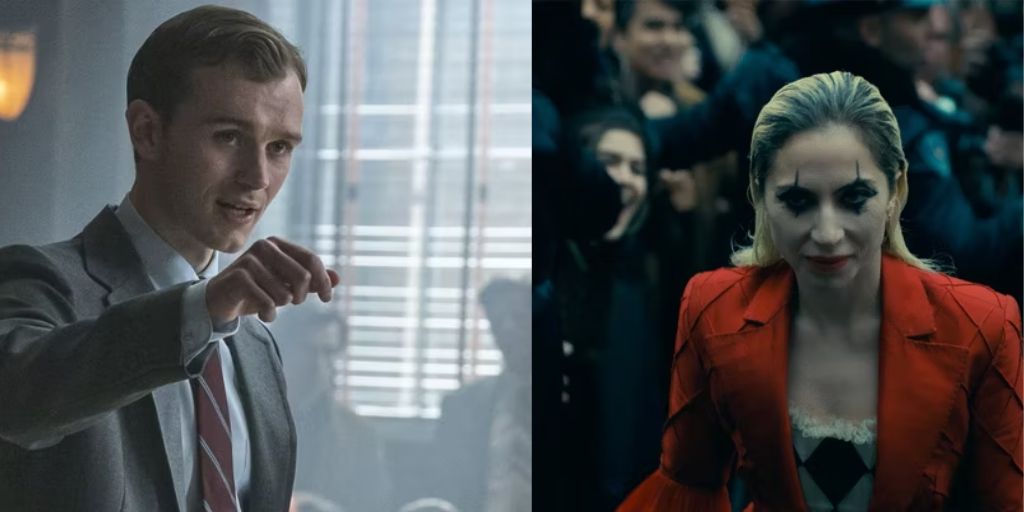
Still from Joker Folie a Deux (Credit: Warner Bros.)
This alteration places her in a more dominant position within her relationship with the Joker, which contrasts with how they are typically portrayed.
In many interpretations, Joker is the one who lures Harley with promises of love and grandeur. However, in Joker: Folie à Deux, it is Harley who deceives him about her past, her family, and the reasons for her presence in Arkham.
While it is hinted that she may also be lying about being pregnant, this detail remains ambiguous, and its significance fades in the larger narrative. This element of manipulation aligns with Phoenix’s portrayal of Fleck, who is desperately seeking connection. When Harley eventually leaves him, he is left feeling completely broken.
This fresh take on Harley Quinn showcases her as a more complex character. While she retains elements of her playful and unpredictable nature, the film shows her darker motivations and the power dynamics within her relationship with Joker. This approach adds depth to Harley’s character, allowing audiences to view her through a different lens while still capturing the essence of who she is.
Harvey Dent Is Surprisingly More Accurate Than Lady Gaga’s Harley Quinn or Joaquin Phoenix’s Joker
Turning to Harvey Dent, the portrayal by Harry Lawtey takes a more measured approach than previous adaptations. Unlike the comics where Dent is often depicted as a larger-than-life character, this film tones down his persona. However, the core of who Dent is shines through, albeit in subtler ways.
From the beginning, it was uncertain whether the film would go into Dent’s dark transformation into the villain Two-Face.
Yet, after a dramatic scene where a car bomb explodes, we see that Dent’s face has been burned on one side, a clear hint at his future villainy. This visual cue is a nod to his comic book roots while still being grounded in the film’s more realistic tone.
One significant aspect of Dent’s character is that he publicly denounces Fleck’s crimes. Still, it becomes apparent that his primary concern is advancing his political career rather than genuinely seeking justice for the victims of Fleck’s actions.
This portrayal reflects the themes of corruption and moral ambiguity that were introduced in the first Joker film. Lawtey’s portrayal captures Dent’s smarmy and cocky demeanor, which aligns perfectly with the arrogance often associated with the character, even before he succumbs to villainy.
This duality in Dent’s character adds a layer of complexity, making him a more relatable and realistic figure in the narrative. While he embodies the traits of a traditional superhero, his ambitions and moral shortcomings reveal a character that is both flawed and compelling.
Unique Adaptations of Harley Quinn and Harvey Dent
Harley Quinn and Harvey Dent in Joker: Folie à Deux are unique adaptations that feel at home within Todd Phillips’ Joker universe.
Gaga’s Harley represents a notable reversal of the character’s origin story, showcasing her as a stronger figure than in previous depictions. Meanwhile, Lawtey’s Dent remains true to his core characteristics while also reflecting the complexities of political ambition and morality.
The different portrayals of these characters underscore the film’s commitment to reinventing classic D.C. figures while remaining faithful to their essence. While Harley Quinn’s character is transformed, Dent’s portrayal stays rooted in his traditional narrative, creating a balance that appeals to fans of the original source material.
Joker: Folie à Deux may signal the conclusion of this unconventional approach to the Joker character, but it undoubtedly offers intriguing adaptations of classic D.C. characters.

Still from Joker Folie a Deux (Credit: Warner Bros.)
Both Harley Quinn and Harvey Dent have their own cinematic identities, making them feel like they belong in this unique and gritty world. As the film unfolds, viewers will see these characters show their relationships and the consequences of their choices, all while staying true to the spirit of the D.C. universe.
Joker: Folie à Deux not only builds on the legacy of its predecessor but also enriches the D.C. cinematic landscape by providing fresh takes on beloved characters. Whether fans love or criticize these adaptations, they undoubtedly add depth and intrigue to the ongoing saga of Arthur Fleck and his world.
The second episode of HBO’s The Penguin offers a deeper look into Sofia Falcone’s character, portrayed by Cristin Milioti. This episode not only expands on her backstory but also introduces viewers to her therapist, Julian Rush, played by Theo Rossi.
Rush’s treatment methods raise eyebrows, as they appear to be inappropriate for a professional setting. While he may simply be an unethical psychiatrist, fans of the show have begun speculating that he could be linked to several other characters from the rich mythology of DC Comics’ Batman.
Julian Rush: Not the Scarecrow, but a Possible Villain
The episode kicks off with what seems to be a flashback to Sofia’s time in Arkham Asylum. Sofia is in Arkham because she is believed to be a serial killer known as “The Hangman.” As the scene unfolds, it transitions to a reenactment of her brother Alberto’s death, a moment Sofia did not actually witness.
However, the narrative reveals that she is experiencing a dream-like vision during a therapy session with Rush. He uses a moving red light in the room, seemingly designed to trigger a hallucination in Sofia.
This unsettling experience understandably frightens Sofia. As she struggles with her fears, Rush tries to assure her that she is safe. However, the way he holds her during this moment raises concerns about professional boundaries.
Both actors’ expressions suggest a complicated interplay, where the characters may derive some form of romantic or sexual pleasure from their interaction. As Rush instructs Sofia to focus on various items in his office, the camera notably lingers on the nameplate on his desk, intensifying the viewers’ curiosity about his true identity and motivations.
Fan Theories About Julian Rush
Following the episode’s airing, some fans quickly began speculating that Julian Rush could be a version of Jonathan Crane, better known as Scarecrow. In the comics, Crane is a supervillain who studies psychiatry and is sometimes depicted working at Arkham.
He uses fear as a weapon against his enemies, including Batman. When asked about the possibility of using Crane for the role of Rush, director Craig Zobel replied, “Possibly there were [discussions],” but the team ultimately decided against it. They wanted to avoid interfering with any future plans that executive producer Matt Reeves might have for Crane within his Batman saga.

Still from The Penguin (Credit: HBO)
Zobel mentioned, “To be able to make him a standalone character just for the story, that felt like the smartest thing to do, really.”
This statement indicates that while Rush may not be Crane, the showrunners still have room to introduce characters from the comics later on. In particular, two other figures from the Batman universe stand out as possibilities: Hugo Strange and Calendar Man.
The Possibility of Hugo Strange
Hugo Strange is another character frequently associated with psychiatry in the Batman comics. Created by Bill Finger and Bob Kane, Strange made his first appearance in Detective Comics #36 in 1940. He is one of Batman’s oldest foes.
Early versions of Strange portrayed him as a mad scientist and a criminal mastermind, common traits among early comic villains.
However, after DC’s post-Crisis on Infinite Earths reboot, a different version of Strange emerged. In this updated portrayal, he is a psychiatrist who uses his medical knowledge to manipulate Bruce Wayne psychologically, turning the city of Gotham against Batman.
Strange has appeared in live-action only in the Fox television series Gotham, which means he would be a fresh character for many viewers of The Penguin. His character has deep ties to Batman’s psyche, making him a perfect fit for a series focused on character development and psychological complexity.
Calendar Man: Another Strong Possibility
Another character who has a role similar to Rush’s is Calendar Man. Created by Bill Finger and Sheldon Moldoff, he first appeared in Detective Comics #259 in 1958. Calendar Man, whose real name is Julian Day, is a member of Batman’s rogues’ gallery.
As his name suggests, he often commits crimes on holidays and other significant dates. Though he is frequently presented as a joke villain, Day has shown himself to be a serious threat in darker storylines.
Notably, the miniseries Batman: The Long Halloween and its sequel, Batman: Dark Victory, have influenced Matt Reeves’ Batman saga, including The Penguin. Dark Victory introduces Sofia’s Hangman persona, which adds layers to her character.
In The Long Halloween, Batman and Police Commissioner Jim Gordon interrogate Calendar Man while he is in Arkham.
They seek his insight into a serial killer known as Holiday. Day, who dislikes other criminals gaining more notoriety than himself, provides useful information, echoing famous dialogues between Clarice Starling and Hannibal Lecter in The Silence of the Lambs.

Still from The Penguin (Credit: HBO)
At the beginning of Dark Victory, Alberto Falcone is under house arrest at the Falcone estate, supervised by his brother Mario. During this time, he begins to hear a voice urging him to kill again.
Initially believing the voice to be the ghost of his father, Carmine, Alberto eventually discovers that it is actually Calendar Man. Day had escaped Arkham and was hiding in the walls of the estate, impersonating Carmine to manipulate Alberto into committing murder.
Given their shared connections to the Falcone family and their similar first names, Calendar Man stands out as a likely candidate if Rush is revealed to be based on a comic book character. However, it remains possible that Rush could also be an original character, as he has been presented thus far.
The Themes of Trauma and Manipulation
This episode not only introduces new characters but also goes into significant themes of trauma and manipulation.
Sofia’s time in Arkham Asylum highlights the impact of mental health struggles and the ethical dilemmas faced by those in the psychiatric profession. The relationship between Sofia and Rush reflects the fine line between healing and harm in therapeutic settings.
Sofia’s journey is marked by her traumatic experiences, including the belief that she is a serial killer. The flashbacks and dream-like visions serve as a narrative device that reveals her inner turmoil. The use of light and sound in Rush’s therapy sessions adds a psychological layer to the storytelling, emphasizing the confusion and fear Sofia feels.
The Significance of Therapy in The Penguin
The series places a strong emphasis on the role of therapy in understanding characters’ motivations. It invites viewers to question the effectiveness and ethicality of various treatment methods.
The interactions between Rush and Sofia raise important questions about trust, power dynamics, and the potential for exploitation within therapeutic relationships.
As Rush guides Sofia through her hallucinations, the audience is reminded of the complex relationship between patients and therapists.
The portrayal of therapy as a tool for both healing and manipulation invites critical reflection on the power dynamics at play. This theme is particularly relevant in today’s discussions about mental health, making it an important aspect of the series.
Streaming Availability and Episode Release Schedule
The Penguin is available to stream on Max, and new episodes premiere every Sunday at 9 p.m. ET. The show has quickly garnered attention for its complex characters and intricate storytelling.
As viewers goes deeper into Sofia Falcone’s story, they can expect to see how her relationships with other characters, including Rush, evolve.
As the season progresses, it will be interesting to see whether Julian Rush is revealed to be a well-known villain from the Batman comics or if he remains an original character. The possibilities for character development are vast, and the audience’s engagement with these stories continues to grow.
Conclusion: The Ongoing Appeal of Batman’s Villains
The Batman universe is rich with characters that are not only villains but also deeply complex individuals shaped by their experiences and choices.
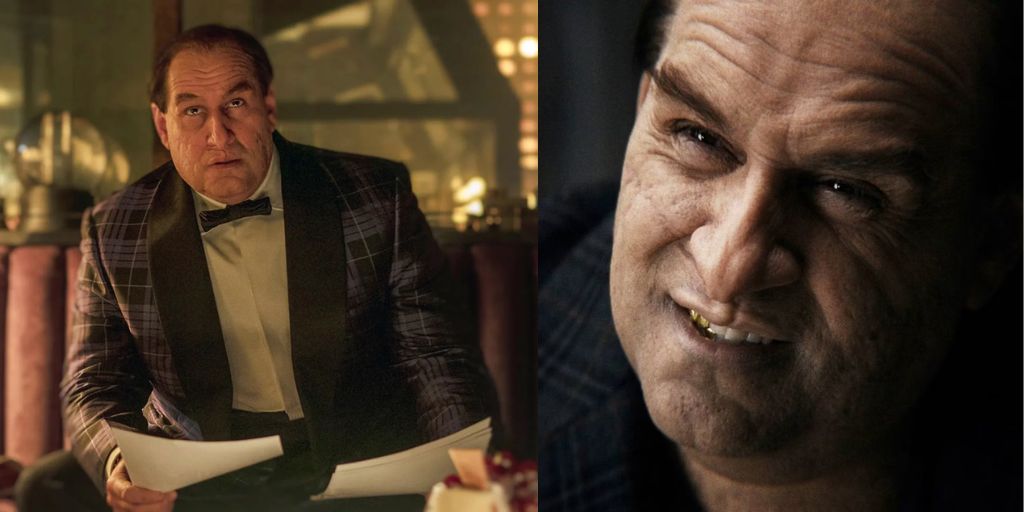
Still from The Penguin (Credit: HBO)
Characters like Scarecrow, Hugo Strange, and Calendar Man highlight the psychological struggles that often accompany villainy. As The Penguin continues to show these themes, it deepens the audience’s understanding of the characters and their motivations.
The second episode of The Penguin not only deepens Sofia Falcone’s character but also raises intriguing questions about the nature of therapy and manipulation. As viewers continue to speculate about Julian Rush’s true identity, the show remains a attractive scheme of Gotham’s dark underbelly.
