In the modern television, it’s become common for new series to either create a brand-new universe or build upon an existing one.
Every new show feels like it needs to create spin-offs or develop a franchise. For example, The Boys on Prime Video gave birth to Gen V and an animated anthology.
Taylor Sheridan’s Yellowstone led to two prequel shows, while CBS’s Elsbeth came from The Good Wife and The Good Fight.
When the Russo Brothers launched Citadel in 2023, it was announced as an “international event series,” with spin-off shows planned in different locations, from the Italian Alps to Mexico. This series became a big part of what many fans are calling the “Spyverse.”
Following the success of Citadel, a spin-off titled Citadel: Diana was released in the previous month. This show developed the Citadel universe even further, with a storyline that mostly takes place between Seasons 1 and 2 of the original Citadel show.
However, the recent release of Citadel: Honey Bunny marks a shift in the direction of the series. Unlike the other parts of the franchise, this series is not just a prequel or a spin-off in the usual sense. It does much more.
Citadel: Honey Bunny not only takes us back to the origins of the characters but also stands out as the strongest installment in the Citadel universe.
The series boasts impressive stunt work, complex characters, and a perfect mix of drama and action. Let’s go deeper into why Citadel: Honey Bunny is a must-watch.
What Is Citadel: Honey Bunny About?
Citadel: Honey Bunny introduces a fresh but familiar tale set in two different timelines. The show is set in 1992 and 2000.
These timelines help build the central story about romance, action, and espionage. The year 1992 is where we first meet the characters of Honey and Bunny.
Honey, played by Samantha Ruth Prabhu, is an actress trying to make it big. She has a lot of dreams but is stuck doing small roles in movies.
Bunny, portrayed by Varun Dhawan, is a stuntman who works behind the scenes. His job involves doing dangerous stunts for the heroes of the movies, yet his face is never shown.
Even though Bunny’s work is vital, he knows that he will never be the star of the film. Still, he keeps working hard, putting his life at risk to make sure others look good on screen.
Honey and Bunny have been friends for a long time, and they share a bond that goes beyond work.
One day, after another failed audition for Honey, Bunny is there to comfort her. However, this time, instead of just offering sympathy, Bunny makes her an offer that will change everything.
Bunny works for a secret agency led by the mysterious Guru, played by Kay Kay Menon. Guru is a man who recruited Bunny as a young orphan and trained him to become the perfect spy.
Although Honey initially hesitates, she eventually joins the agency. However, Guru is not pleased with bringing a woman into the team, and he warns her that the world of espionage is dangerous for someone like her.
As Honey undergoes her training, she grows more determined to prove herself. Under Bunny’s guidance, she becomes a skilled agent.
But as she spends more time with Bunny, the two of them become closer, and their relationship turns romantic. However, as their connection deepens, Honey starts to question the motives behind the agency’s actions and whether Guru can be trusted.
Fast forward to 2000, and Honey is leading a quiet life, raising her daughter, Nadia (played by Kashvi Majmundar). She’s been away from the dangerous world of espionage for years, but when an old enemy resurfaces, Honey and her daughter are forced to go on the run.
In the process, they find themselves reunited with Bunny, who has retired from spy work. Despite Bunny’s desire to stay out of danger, he is willing to risk everything to protect his family.
Bunny calls on his old friends and fellow agents Chacko (Shivankit Singh Parihar) and Ludo (Soham Majumdar) to help him with one final mission to save Honey and Nadia.
The show’s central focus is on the relationships between the characters, particularly Honey and Bunny. Their journey is filled with twists and turns, both in their professional lives and personal connections.
Citadel: Honey Bunny doesn’t just focus on global espionage; instead, it tells a grounded, intimate story about love, loyalty, and betrayal. It’s this mix of drama and action that makes the show stand out in the larger Citadel franchise.
Citadel: Honey Bunny Thrives on the Strength of Its Cast
One of the biggest reasons Citadel: Honey Bunny stands out is because of the incredible performances from its lead actors, Varun Dhawan and Samantha Ruth Prabhu. From the moment they appear on screen together, it’s clear that they have fantastic chemistry.
Their relationship feels real and intense, which makes their scenes together both dramatic and emotionally charged.
There are moments when it’s hard to tell whether Honey and Bunny are about to kiss or fight. This tension adds a layer of complexity to their relationship, making it much more than just a typical spy romance.
As their relationship progresses, their bond is tested by the dangers of their work and outside forces that threaten to tear them apart.
The emotional tension between them only grows as the story moves forward, and viewers are able to see the depth of their love and how much they care for each other, even after years of separation.
The performances of both actors bring these emotions to life and make the audience root for them, even when the stakes are high, and the risk of failure is looming.
The supporting cast also does an excellent job of adding depth and dimension to the story. As Nadia, the young version of the Citadel agent, Kashvi Majmundar impresses with her ability to play a character who is both smart and charming without falling into the trap of being an annoying child actor.
Meanwhile, Kay Kay Menon’s portrayal of Guru is both attracting and unsettling. His character is complex—at times, he inspires loyalty in others, while at other moments, he comes across as a potential threat to the main characters.
Guru’s actions drive much of the tension in the story, as Honey and Bunny struggle to understand his true intentions.
Chacko and Ludo, played by Shivankit Singh Parihar and Soham Majumdar, add another layer to the plot. These two agents have been part of Bunny’s life for years, and while they each have their own personal struggles, their loyalty to Bunny never wavers.
Whether they’re working together in the field or having personal moments of reflection, the chemistry between the characters is undeniable. Even though some of the characters have left the agency and sought peaceful lives, their bonds remain strong.
Sikander Kher and Saqid Saleem play the antagonists, Shaan and KD, with a surprising level of complexity.
These two characters bring an extra layer of conflict to the story, but unfortunately, Simran’s character, Zooni, doesn’t get the same level of development.
Despite her importance to the plot, Zooni’s character feels underexplored, which is a shame given the stakes involved in the narrative.
Citadel: Honey Bunny Is a Perfect Blend of Family Drama and Espionage Thriller
While Citadel: Honey Bunny may not have the same world-saving stakes as its predecessors, it doesn’t need them.
The series is more grounded and focuses on the importance of family, loyalty, and how loyalty can sometimes blind people to the harsh truths.

Still from Citadel Honey Bunny (Credit: Prime Video)
Bunny, in the past, works for a man he refers to as Baba because he believes he owes him everything. Honey, on the other hand, sees through Guru’s motives and begins to question whether she should continue working for the agency.
Today, Honey’s main goal is to protect her daughter, Nadia. Once Bunny discovers that he is Nadia’s father, his sole focus becomes keeping her safe.
The series doesn’t just revolve around global threats; it goes deep into the emotional drama of family dynamics and how these relationships evolve over time.
The action scenes in Citadel: Honey Bunny are also a major highlight. Raj and DK, the directors, are well-known for their work in both film and television, and they bring their signature style to the show’s fight sequences and stunt work. The long-take action scenes are some of the most thrilling moments in the series.
Both Dhawan and Samantha are put through their paces in these intense action sequences, where they fight and shoot their way through enemies.
The cinematography and editing play a huge role in making these action scenes unforgettable. With the help of editor Sumeet Kotian and cinematographer Johan Heurlin Aidt, the action is presented in a visually dynamic way that keeps viewers on the edge of their seats.
Despite the show’s many strengths, there are still a few minor issues. The most frustrating aspect of Citadel: Honey Bunny is the open-ended nature of the finale.
While the series sets up plenty of tension and excitement, the ending leaves the story unresolved, with no clear indication of whether a Season 2 will be coming.
This cliffhanger approach may leave some fans frustrated, but given the strength of the show and the star power of the leads, it’s likely that we will see more of this universe in the near future.
Citadel: Honey Bunny Stands Strong on Its Own
Citadel: Honey Bunny proves that it doesn’t need to rely on the larger Citadel universe to succeed. While having some basic knowledge of the existing world helps, the series is powerful enough to stand on its own. It’s a tightly focused, action-packed thriller that doesn’t sacrifice character depth for mindless action.

Still from Citadel Honey Bunny (Credit: Prime Video)
It’s a story about love, family, and the complexity of loyalty, with a perfect balance of drama and espionage.
Citadel: Honey Bunny should be on your watchlist if you enjoy emotional character-driven stories with high stakes . Citadel: Honey Bunny premieres November 7 on Prime Video.
In the latest episode of The Penguin, titled “Top Hat,” the show delivers a shocking twist with the death of Salvatore Maroni (Clancy Brown), a key figure in Gotham’s criminal underworld.
While the episode continues to build on the drama between the various factions vying for power in Gotham, it also signals the end of one of the last ties to the city’s classic mob scene.
For many viewers, it’s an unexpected and abrupt turn, as neither Victor (Rhenzy Feliz) nor Oz’s mother (Deirdre O’Connell) meet their end this week.
Instead, the mob boss’s death sets the stage for the show’s focus to shift further away from Gotham’s traditional crime families, a move that has some fans questioning whether Maroni’s character was given enough time to shine before his untimely demise.
Though Maroni’s death feels inevitable given the series’ buildup, it is ultimately a disappointment for those familiar with his rich comic book legacy.
It’s clear that the character was set up to be more significant in The Penguin, but by the end of Episode 7, he is reduced to little more than a plot device.
The death, while impactful in the moment, underscores how The Penguin could have made better use of Maroni’s established history in Gotham mythology, especially considering how crucial he has been in Batman lore for decades.
Salvatore Maroni’s Legacy in Gotham Mythology
Salvatore Maroni is a pivotal figure in the history of Gotham. His character first appeared in Detective Comics #66 in 1942 and has played an important role in shaping Gotham’s criminal show ever since.
Maroni is known for being a ruthless mob boss who controls much of Gotham’s underworld. However, his most significant claim to fame is his role in the creation of one of Batman’s most iconic villains: Two-Face.
In the landmark comic book story The Long Halloween, Maroni’s actions directly contribute to Harvey Dent’s transformation into the dual-faced villain. Maroni, in a fit of rage, throws acid in Harvey Dent’s face, leading to Dent’s disfigurement.
This act sets the stage for the creation of Two-Face, a villain whose internal struggle between his good and bad sides mirrors Gotham’s ongoing battle between justice and corruption.
Maroni’s influence on the Batman mythos is undeniable, and yet, The Penguin seems to miss the opportunity to fully show this rich history.
Despite Maroni’s deep ties to Gotham and Batman’s legacy, The Penguin seems content to treat him as a secondary character. Throughout his time on the show, Maroni’s impact on the plot is minimal at best.
His interactions with the other characters, especially with Oz, feel shallow and lack the depth that his comic book counterpart would typically carry.
In The Penguin, Maroni is presented as little more than a washed-up mob boss, a character who has clearly seen better days and is no longer the powerful figure he once was.
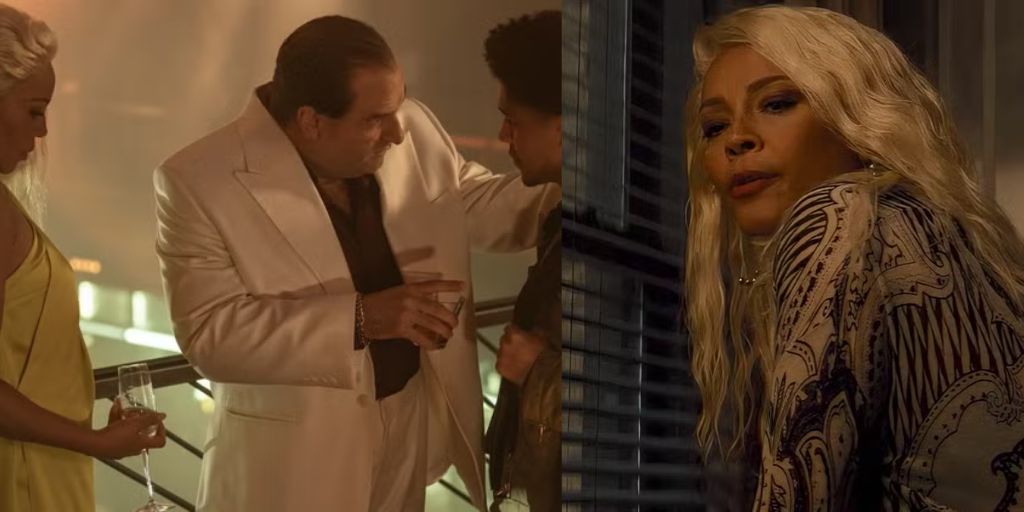
Still from The Penguin Episodes (Credit: HBO)
While this fits with the theme of the show’s scheme of the changing criminal show in Gotham, it also undermines the character’s potential to contribute meaningfully to the story.
The Death of Maroni: A Missed Opportunity
The way in which Maroni dies in The Penguin feels almost like an afterthought. The episode’s climax has Maroni confront Oz, who manages to escape from his clutches.
The two briefly struggle in a trailer, and in the midst of their fight, Maroni suffers a heart attack and dies. This anticlimactic death feels rushed and unsatisfying, especially given Maroni’s importance in Gotham’s criminal hierarchy.
The suddenness of Maroni’s death works in some ways. It plays into the show’s theme of the inevitability of death in the criminal underworld.
In many gangster stories, characters like Maroni meet their end unexpectedly, as seen in iconic moments like Tony Soprano’s (James Gandolfini) sudden fade to black in the final episode of The Sopranos or the shocking deaths in The Departed.
These deaths are often intended to reflect the unpredictable and brutal nature of the criminal world. Maroni’s death fits this mold, but it also feels underwhelming because of the lack of attention given to his character development.
For the most part, Maroni’s role in The Penguin is defined by his brief interactions with other characters. He is tricked by Oz into trusting him, and he forms a short-lived partnership with Sofia (Cristin Milioti), a character who quickly emerges as the true power player in Gotham.
Throughout this arc, Maroni is portrayed as a tired and defeated figure, someone who has long since lost the ambition and power that once made him a formidable foe in Gotham’s underworld.
While it is clear that the show wants to focus on Sofia’s rise to power, the sidelining of Maroni makes his death feel unearned and lackluster.
Clancy Brown’s Performance: A Waste of Talent?
Clancy Brown is an actor known for his deep voice and commanding presence, qualities that have made him a standout in both animated and live-action roles.
Brown’s portrayal of Maroni in The Penguin certainly reflects his tough, no-nonsense approach to playing characters.
His Maroni is a physically imposing figure who uses his strength and experience to face the dangerous world of Gotham’s criminal underworld. However, despite the potential for Brown to truly bring Maroni to life, The Penguin never fully utilizes his talents.
Brown has proven his ability to portray complex characters in other comic book adaptations. He voiced Mr. Freeze in the 2004 animated series The Batman and played The Blacksmith in Marvel’s Daredevil Season 2. Both of these roles allowed Brown to show the darker, more tragic sides of his characters.
Unfortunately, The Penguin does not give him the same opportunity. The series never allows Maroni to have a true moment of emotional depth, nor does it shows his backstory or motivations in any meaningful way.
Instead, Maroni’s character is relegated to being a mere stepping stone in the larger power struggles unfolding in Gotham.
One of the few moments where Maroni stands out is in Episode 5, when he survives an assassination attempt by Oz. This scene hints at Maroni’s toughness and resourcefulness, but it also serves to highlight how the show fails to build on this potential.
In comparison to the other villains in The Penguin, Maroni is not given the chance to make a lasting impression.
Sofia’s confrontation with Eve Karlo (Carmen Ejogo) in Episode 6, for example, allows both characters to showcase their strength and resolve.
Even Johnny Viti (Michael Kelly), who meets a sudden end in Episode 7, has a more memorable moment when he delivers a monologue about his regrets before being shot in the head.
Maroni, on the other hand, never gets the chance to show his emotional complexity or show his past connections to Gotham’s old crime families, such as the Falcones and the Waynes.
It’s clear that the show is positioning Sofia as the central villain of the series, with Maroni serving as a temporary obstacle in her path. But this decision comes at the cost of giving Maroni the depth and gravitas he deserves.
Brown’s performance is strong, but it is ultimately wasted in a role that does not fully capitalize on his skills. Fans of the actor, and of the character, will likely be left wanting more after his abrupt exit from the show.
The Penguin: A New Focus on Sofia Gigante
With Maroni’s death marking the end of Gotham’s old guard, the series seems poised to focus more on Sofia Gigante, the ambitious villain played by Cristin Milioti.
Sofia has quickly become one of the most compelling characters in The Penguin, thanks to Milioti’s scene-stealing performance.
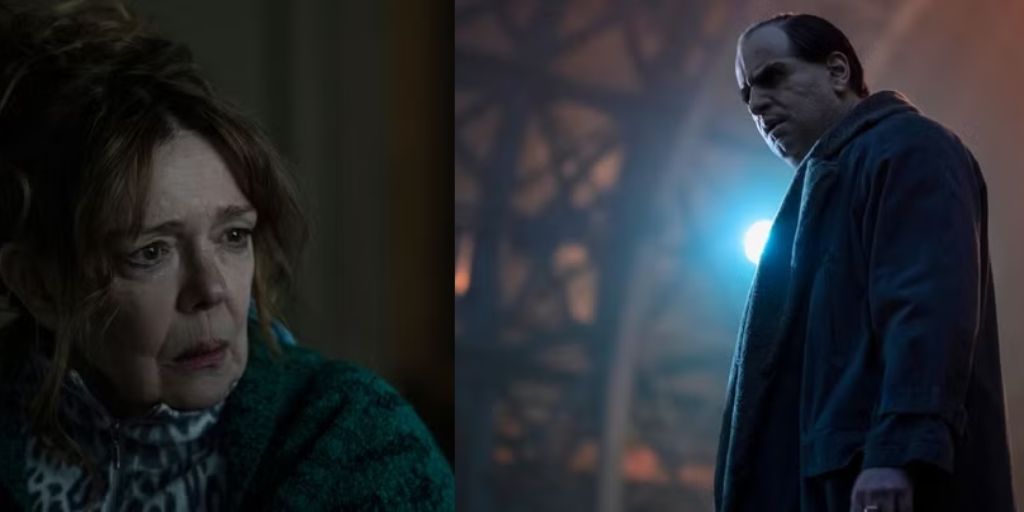
Still from The Penguin (Credit: HBO)
Her rise to power in the criminal world is a central focus of the series, and it is clear that she will be the one to reshape Gotham’s criminal show in the coming episodes.
As The Penguin progresses, it will be interesting to see how the show balances Sofia’s dominance with the lingering presence of other villains, such as Oz.
The show has made it clear that Sofia is the one to watch, and her continued rise to power will likely be the focal point of the finale.
However, with the death of Maroni and the sidelining of other traditional Gotham criminals, it’s uncertain what role the old guard will play in the new order that Sofia is working to establish.
For now, Maroni’s death marks the end of an era in Gotham’s criminal underworld. The show has shifted its focus, and while it may have missed the opportunity to fully show the character’s potential, it has certainly set the stage for the rise of a new villain in Sofia Gigante.
As The Penguin moves toward its finale, fans will be watching closely to see how the series continues to evolve and whether it can redeem its treatment of one of Gotham’s most iconic mob bosses.
Maroni’s death may have served a narrative purpose, but it feels like a missed opportunity to go deeper into one of Gotham’s most iconic figures.
The Penguin has yet to fully take advantage of the character’s rich backstory, leaving fans to wonder what could have been.
With the show’s focus shifting toward Sofia, it remains to be seen how Maroni’s death will shape the future of Gotham’s criminal show.
