Conclave leaves audiences with a thought-provoking ending, sparking debates about faith, identity, and institutional change. Directed by Edward Berger and adapted by Peter Straughan from Robert Harris’s novel, the political thriller takes viewers through the intense process of selecting a new pope. With critical acclaim and awards buzz, Conclave successfully blends suspense with philosophical questions about morality and tradition.
The film follows Cardinal Thomas Lawrence, who, despite initial disinterest, finds himself a strong contender for the papacy. However, it is Cardinal Vincent Benitez who is ultimately chosen, a surprising outcome given the secret he carries. Before the announcement is made to the public, Lawrence visits Benitez and discovers something astonishing—Benitez nearly underwent a hysterectomy. The revelation leaves Lawrence stunned, yet he chooses to remain silent. The final white smoke rises, signaling that a new pope has been elected.
Conclave Ending Explained
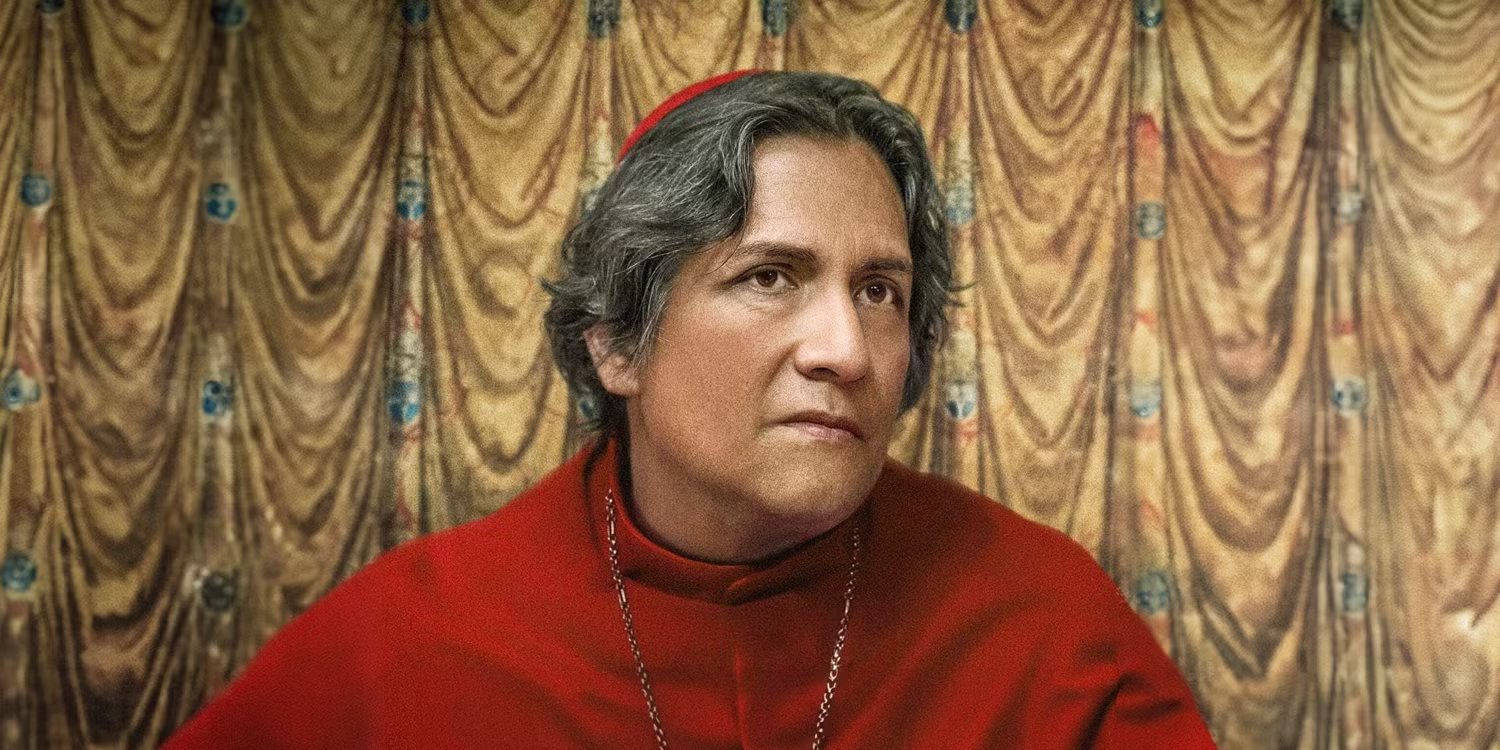
Cardinal Benitez (Image via Getty)
Benitez’s backstory serves as the film’s most unexpected twist. The new pope is intersex, a fact that remained unknown to even himself until adulthood. Raised as a male and sent to seminary early on, Benitez lived under the assumption that he was biologically male. However, a life-altering moment in Afghanistan changed everything. After surviving a car bombing, a routine medical examination revealed he had a uterus.
Believing this disqualified him from his position, Benitez attempted to resign. Instead, the previous pope, aware of the situation, arranged for Benitez to have a hysterectomy. But Benitez ultimately chose not to go through with it, believing that he should remain as God made him. Apart from the late pope and a doctor, no one knew of Benitez’s condition. As he assumes his new role, the question remains—will he reveal his secret to the Catholic Church and the world?
Why Benitez Chose The Name “Innocent”
Upon being elected, Benitez selects the name “Innocent,” a title with deep historical significance. The first Pope Innocent held the Holy See in 401, known for strengthening papal authority. Given the corruption exposed throughout the film, this choice reflects Benitez’s desire to bring integrity to the role.
Director Edward Berger elaborates on the name’s meaning, describing it as a representation of purity and openness. He likens it to the innocence of children—untainted by societal conditioning, free from prejudice. Benitez’s character embodies this concept, standing apart from the more politically driven cardinals. His faith remains unshaken, and his vision for the Church is one of genuine acceptance rather than power struggles.
Why Cardinal Lawrence Keeps Benitez’s Secret
Throughout Conclave , Cardinal Lawrence exposes the hidden agendas of his fellow cardinals, ensuring a just election. Despite this, he makes the conscious choice not to reveal Benitez’s truth. By the time he learns of it, Benitez has already been elected. Unlike the blackmail and unethical tactics used by others, Benitez’s intersex identity is not a scandal but a deeply personal truth.
Lawrence also sees Benitez’s faith as sincere. Outing him would not only betray that trust but serve no real purpose in changing the election’s outcome. While many of the other cardinals manipulated the process for personal gain, Benitez’s journey represents something different—an opportunity for meaningful change within the Church.
Director Berger offers insight into Lawrence’s mindset. He recognizes that the right person has been chosen, not because of political maneuvering, but because of true belief. This realization reshapes Lawrence’s understanding of faith and leadership. The Church, historically a rigid patriarchal institution, experiences a shift—a small but significant crack in its foundation, hinting at a future where tradition and progress can coexist.
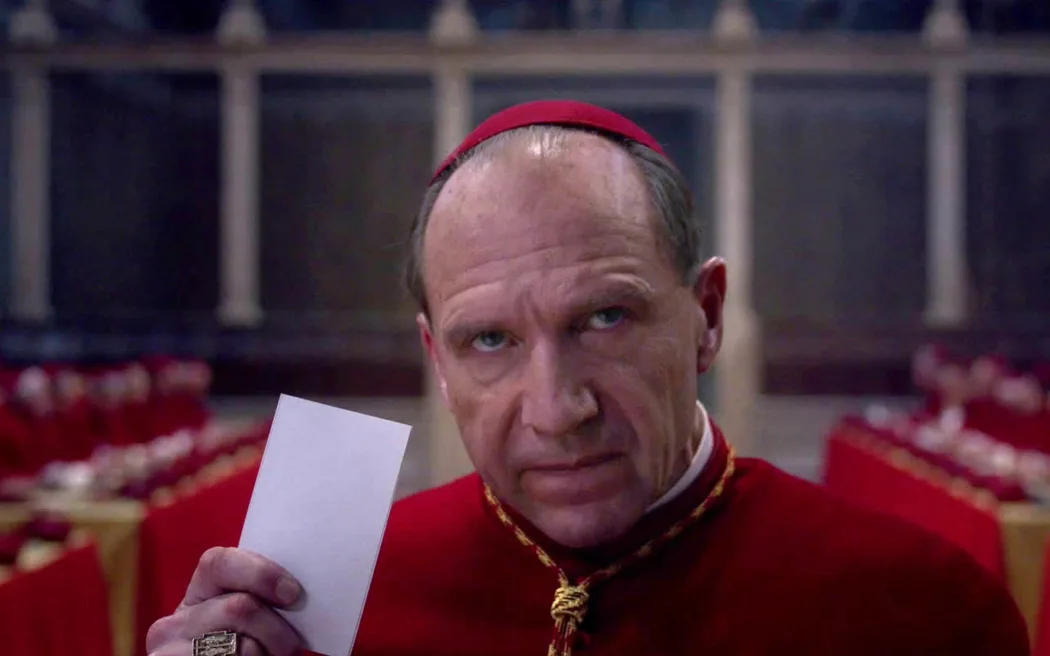
Cardinal Lawrence (Image via Getty)
The Symbolic Meaning Behind Conclave’s Final Shot
The film closes on a visually rich moment—Cardinal Lawrence opens a window, allowing sunlight and fresh air to flood the Sistine Chapel. This action serves as a powerful metaphor, signifying renewal and a shift toward a more open-minded future under Benitez’s leadership. The sound of three nuns laughing further underscores this theme.
Ralph Fiennes, who plays Cardinal Lawrence, interprets the turtles shown in the final scene as symbols of “spiritual independence.” Isabella Rossellini, who portrays Sister Agnes, adds that the moment highlights the contrast between the conclave’s claustrophobic atmosphere and the world beyond its walls. The opening of the window is not just literal—it represents a breaking of barriers, a new beginning for the Church.
Director Berger reinforces this idea, explaining that the laughter of the nuns symbolizes hope. The film’s final moments suggest a future where inclusivity and understanding replace secrecy and exclusion. Benitez’s election, though controversial, may usher in an era of greater acceptance within the Church.
The Real-World Possibility Of An Intersex Pope
The idea of an intersex pope raises intriguing questions about the Catholic Church’s stance on gender and sexuality. Papal expert David Gibson, Director of the Center on Religion and Culture at Fordham University, weighs in on this possibility.
According to Gibson, there is no theological barrier preventing an intersex individual from being elected pope. Just as history has seen gay men take the position, an intersex pope could theoretically lead the Church. However, the film doesn’t fully explore what this would mean in practice, leaving certain questions unanswered.
Gibson points out that Pope Francis has taken steps toward inclusivity. In 2023, he met with a group of trans and intersex Catholics, affirming their dignity and existence. This real-life moment resonates strongly with Conclave’s central themes, showing that the Church is already beginning to acknowledge gender diversity.
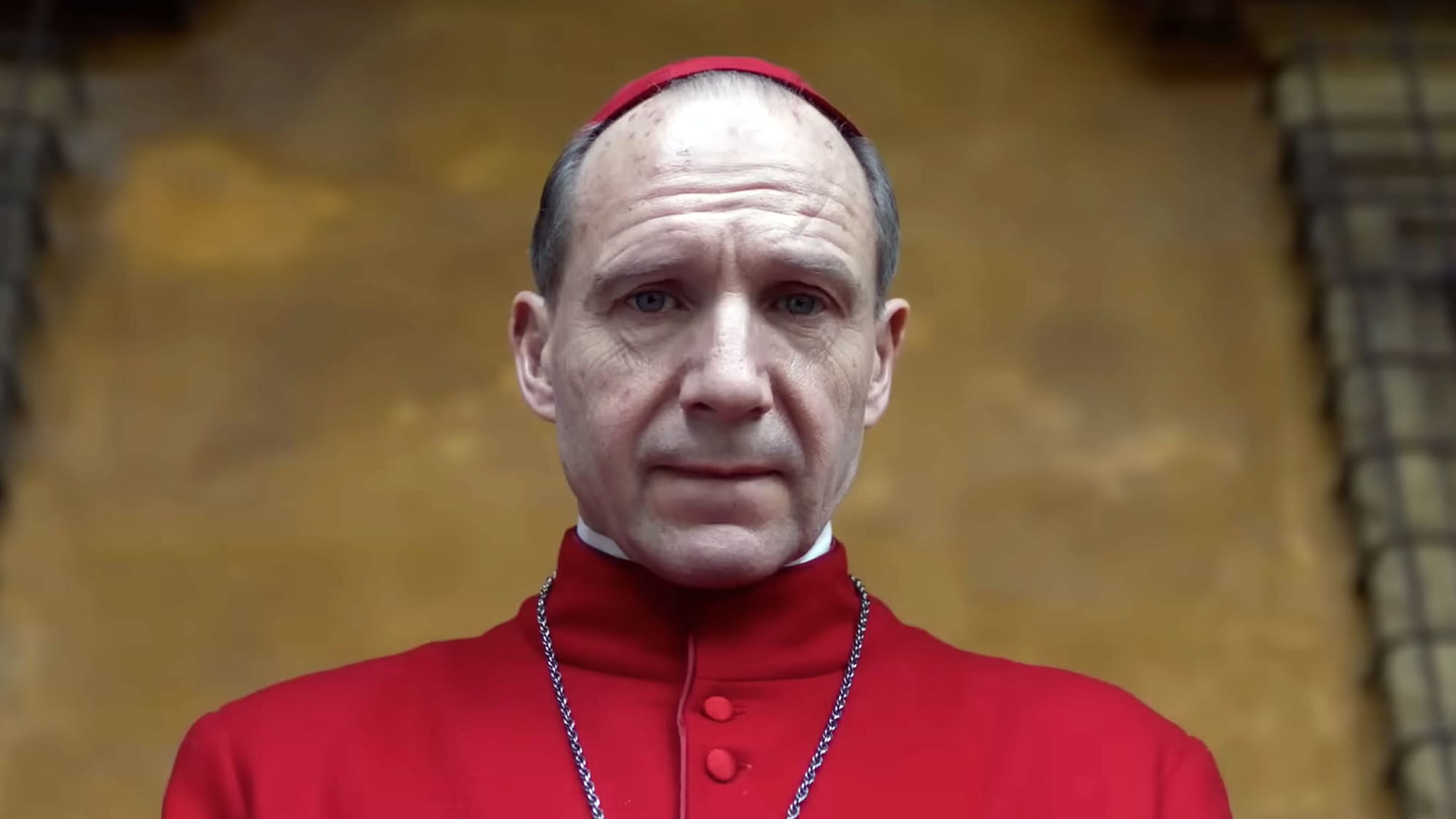
Cardinal Lawrence (Image via Getty)
Cardinal Lawrence’s Changing Perspective On Becoming Pope
At the start of the Conclave , Cardinal Lawrence has little interest in becoming pope. His focus is on maintaining fairness during the election, exposing corruption, and ensuring that a deserving candidate is chosen. However, as the process unfolds, he begins to see himself as a potential leader.
Benitez consistently votes for Lawrence, recognizing something in him that even Lawrence himself struggles to see. His belief, along with Lawrence’s growing awareness of the Cardinals’ moral failings, leads to a shift in perspective.
The Late Pope’s Knowledge Of The Cardinals’ Secrets
Though the pope dies at the beginning of the film, it becomes evident that he is well aware of the political scheming within the conclave. He knew of Cardinal Tremblay’s bribery attempts and had even demanded his resignation before his death. Most notably, he knew about Benitez’s condition and secretly appointed him a cardinal.
The late pope’s choices reveal a depth of foresight. By appointing Benitez, he ensured that the Church had a leader who could bring about transformation, even if his decision would have been controversial.
The 2024 horror movie Longlegs , directed by Osgood Perkins, culminates in a chilling and intense conclusion that leaves viewers questioning the fate of Agent Lee Harker. The story follows Harker, played by Maika Monroe, as she investigates a series of murders committed by the titular character, Longlegs, portrayed by Nicolas Cage in a role that critics have hailed as one of his most iconic.
Throughout the film, Harker decodes several cryptic letters left at crime scenes by Longlegs, which ultimately leads her to uncover a surprising personal connection to the killer. In a major plot twist, Harker realizes she was one of the girls Longlegs targeted in the past. With the FBI’s help, Harker identifies Longlegs’ true identity, and his eventual capture seems imminent.
Longlegs Ending Explained

Longlegs (Image via Getty)
As the investigation intensifies, Agent Harker revisits her own past, eventually confronting her mother, Ruth. Ruth is revealed to have played a pivotal role in the killings. Ruth confesses that she made a deal with Longlegs, agreeing to deliver handmade dolls to each family and ensuring the murders happened, in exchange for sparing Harker’s life. In the final confrontation, Ruth murders one of Harker’s colleagues, and Harker is forced to take lethal action against her mother.
Despite her victory over Ruth, Harker hesitates when it comes to destroying the doll Longlegs created, which has a strange influence over her. It seems that the doll may have some kind of supernatural control over Harker, causing her to freeze at a crucial moment. As she stares hypnotically at the doll, the eerie silence intensifies, leading to the belief that Harker is now under its influence.
Is Harker Now Under Longlegs’ Control?
The film’s ending leaves viewers questioning whether Harker has truly fallen under Longlegs’ influence. As she attempts to shoot the doll, the sound of her gun firing suggests something is wrong—perhaps the gun’s safety is on, or she is unable to pull the trigger. The doll seems to have a powerful psychological hold over her, making it impossible for her to destroy it.
Longlegs, even in death, might still exert control over Harker. The doll is his final creation, and it may serve as his lingering presence, reaching out beyond the grave. While Harker could eventually overcome this trance-like state, it seems more likely that she will continue to be manipulated by Longlegs’ influence. The possibility exists that she will become a new vessel for his legacy of death.
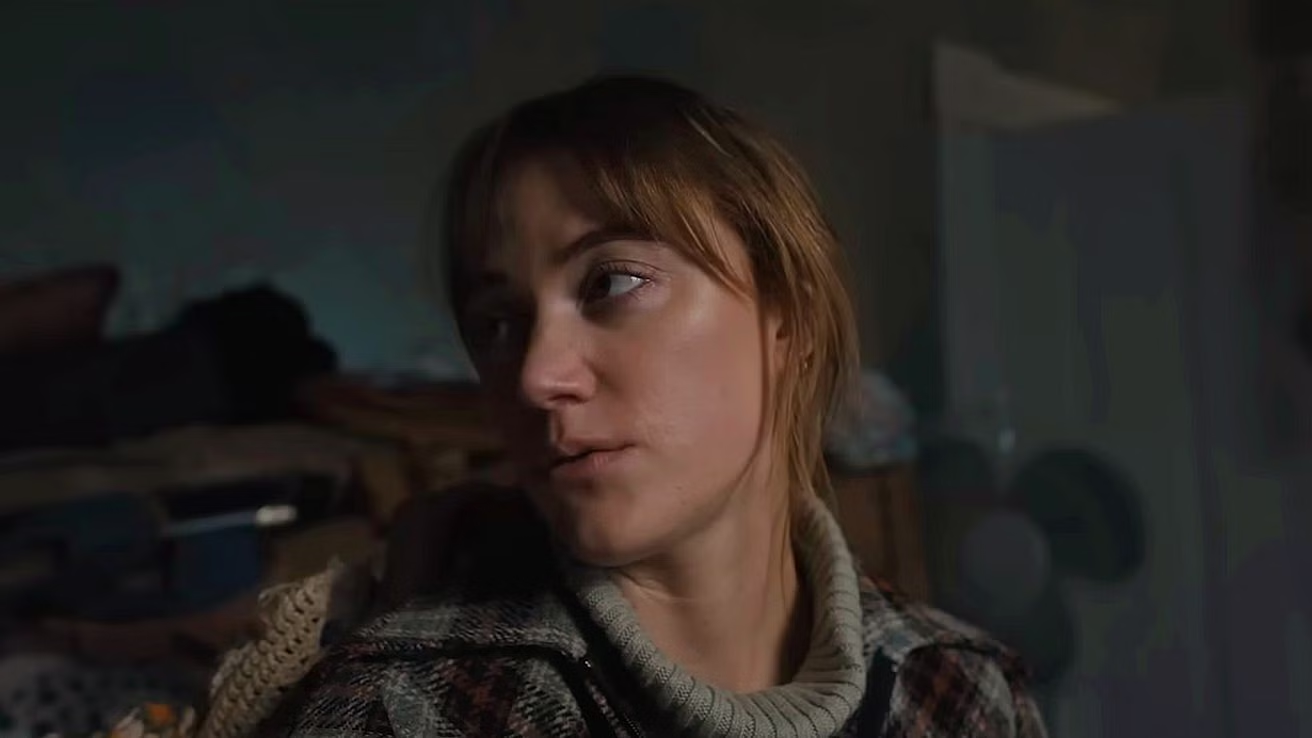
Harker (Image via Getty)
The Biblical Context: Revelation 13:1 and The Beasts
A key theme in Longlegs involves religious and biblical symbolism, particularly the quote from Revelation 13:1, cited by both Longlegs and Ruth before their deaths. This passage refers to a beast with seven heads and ten horns, often interpreted as a demonic or Antichrist figure. In the film, Longlegs and Ruth symbolize these “beasts,” controlling the families they target. Longlegs uses these families, believing they are part of some grand plan to “save” them through death.
The film introduces an unsettling idea that violence can be justified under the guise of righteousness. Ruth’s transformation into a “beast” is a prime example of someone who, though initially manipulated by Longlegs, ultimately embraces the same deadly path. By quoting Revelation 13:1, Ruth and Longlegs align themselves with the biblical beasts, continuing their work of corruption and control even after death.
The Doll’s Influence on the Victims
Another chilling element of the film is the role of the doll. Longlegs crafts each doll with a hollow silver orb inside its head, which emits a strange, static-like whisper that only the families can hear. This sound is a key part of the killer’s manipulation, hypnotizing the victims and causing them to fall under his control. It’s suggested that Longlegs, even after death, is able to pass on his influence through the doll, continuing to torment his victims long after his capture.
The 14th Birthday Murders and Biblical Connections
Longlegs’ methodical approach to his killings involves targeting families with daughters born on the 14th day of any given month. The murders occur close to or on the 14th day, a number that holds biblical significance. The number 14, when broken down, adds up to 7 + 7, symbolizing the two beasts—Longlegs and Ruth—and further tying the story to the themes of Revelation.
The 14th birthday killings might symbolize a twisted form of “divine” action, with Longlegs believing that by carrying out these murders, he is fulfilling some higher purpose. The connection to Revelation 13:1 adds depth to the film’s unsettling narrative, as Longlegs sees himself as an instrument of divine punishment.
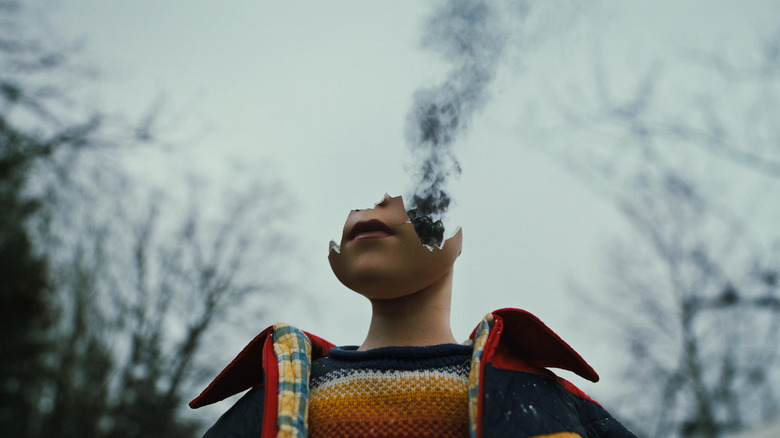
The Doll (Image via Getty)
The Final Deaths and the Continuing Legacy of Longlegs
Throughout the film, several key characters meet their tragic ends, contributing to the general sense of doom. These deaths include Longlegs himself, Ruth Harker, Agent Carter, and several others connected to the killer’s twisted plan. Despite the deaths of these primary figures, the final moments of the film suggest that Longlegs’ work is far from over.
Harker’s hesitation to destroy the doll hints at the possibility of a new chapter in the story, with Longlegs’ influence continuing to spread through the people he leaves behind. The doll’s presence suggests that the cycle of violence could begin again, and Harker might be the one to carry out Longleg’s evil legacy.
The Film’s Themes of Family and Violence
Beyond its supernatural aspects, Longlegs explores the disintegration of the nuclear family. Longlegs targets not just children but parents, forcing fathers to commit violence against their wives and daughters. This dark portrayal of family dynamics is especially significant considering Harker’s background, having grown up in a single-mother household.
The film also underscores how anyone, no matter how good or righteous they may seem, can be influenced to commit unspeakable acts. The characters in Longlegs are driven by a belief that they are protecting loved ones or fulfilling a greater purpose, yet they are ultimately manipulated into committing violence. Harker’s final act of killing her own mother demonstrates the devastating cycle of harm that is perpetuated throughout the film.
