Dancing With the Stars Season 33 has become very popular. The premiere had 4.9 million viewers, which is a 4 percent increase from the last season.
Celebrities from different backgrounds are participating to improve their dance skills. The cast includes athletes, actors, models, and reality TV stars.
Last week was Oscar night, and contestants dedicated their ballroom dance routines to famous films like Dirty Dancing and Top Gun.
Next up is Soul Train Night, where audience favorites will dance to some soulful music. Before watching Episode 3, here is everything you need to know.
When and Where Is ‘Dancing With the Stars’ Season 33, Episode 3 Releasing?
Episode 3 was postponed due to a vice presidential debate on Tuesday, October 1. Instead of airing on Tuesday, Soul Train Night will air on Monday, October 7, at 8:00 PM ET on ABC and Disney+.
For those who cannot watch the latest episode live, it will be available on Hulu the next day. If you do not have a Hulu subscription, plans start from $7.99 per month to $17.99 per month. The first option has ads, while the second option does not.
What Can We Expect From ‘Dancing With the Stars’ Season 33, Episode 3?
Episode 3 will follow a theme like the previous episode. It will be Soul Train Night, and celebrities with their professional partners will dance to soul music.
The specific songs for each pair have not been revealed yet. However, viewers can expect to see lots of hip movements and strong emotions in their dances since soul music emphasizes feelings and groovy beats.
Which Celebrities Are Still Competing on ‘Dancing With the Stars’ Season 33?
So far, two contestants have been eliminated. Eleven celebrities are still competing for the mirrorball trophy. Here are the celebrities still in the competition along with their pro partners and Week 2 scores:
- Chandler Kinney – Partner: Brandon Armstrong – Score: 24 out of 30
- Dwight Howard – Partner: Daniella Karagach – Score: 22 out of 30
- Joey Graziadei – Partner: Jenna Johnson – Score: 22 out of 30
- Stephen Nedoroscik – Partner: Rylee Arnold – Score: 22 out of 30
- Danny Amendola – Partner: Witney Carson – Score: 21 out of 30
- Phaedra Parks – Partner: Val Chmerkovskiy – Score: 21 out of 30
- Ilona Maher – Partner: Alan Bersten – Score: 21 out of 30
- Brooks Nader – Partner: Gleb Savchenko – Score: 20 out of 30
- Jenn Tran – Partner: Sasha Farber – Score: 19 out of 30
- Reginald VelJohnson – Partner: Emma Slater – Score: 15 out of 30
- Eric Roberts – Partner: Britt Stewart – Score: 15 out of 30
What Happened in the Previous Episode of ‘Dancing With the Stars’?
Oscar night was glamorous. Celebrities like Chandler Kinney and Joey Graziadei danced with their partners to honor popular Hollywood films. The premiere did not eliminate anyone, but Week 2 had a tough double elimination.
The two contestants who left were Tori Spelling, known from Beverly Hills 90210, and Anna Delvey, who was a con artist and is now a fashionista. She was in the spotlight when it was announced that she would join the show this season.

Still from Dancing With the Stars (Credit: ABC)
She faced a lot of criticism online for her behavior on the show. Although she mentioned that the negative feedback was hard to handle, she left by saying she learned “nothing” during her short time on DWTS.
Despite the eliminations, all the competitors showed improvement in Season 33. Reginald VelJohnson and Eric Roberts had the lowest scores for the second week in a row. The Oscar-themed night allowed them to reflect on their careers and made the audience emotional.
VelJohnson dedicated his paso doble to his former co-star Bruce Willis, who he acted with in Die Hard, the movie that inspired his dance.
As in the premiere, the judges noticed that Kinney and Dwight Howard stood out in Week 2. Joey Graziadei and Stephen Nedoroscik, an Olympic medalist, tied for third place again.
In the film community, no movie has sparked as much talk, interest, and disagreement as Megalopolis. This dream project by Francis Ford Coppola has been in his mind for about 40 years.
He has used his reputation and earnings from the wine business to finance what could be the boldest and most experimental movie seen in theaters lately.
From the beginning, it was clear that this film, which breaks the usual rules of cinema and might not appeal to most viewers, was unlikely to make money or receive much praise.
However, it aimed to stay true to Coppola’s ambitious vision and challenge audiences with its mix of brilliance and clumsiness.
Unsurprisingly, a movie as wild and daring as Coppola’s 2024 sci-fi/fantasy drama was bound to have an ending that is both touching and confusing, in true Megalopolis style.
What Is Francis Ford Coppola’s Megalopolis About?
Megalopolis follows a clever but unpredictable architect named Cesar Catilina (played by Adam Driver). He has conflicts with an unpopular mayor, Franklyn Cicero (played by Giancarlo Esposito), about how to rebuild New Rome and prepare it for the future.
The film is almost impossible to critique because of its boldness. It has a unique visual style, shifts in tone between serious and absurd, and performances that are deliberately exaggerated, which go against our basic ideas of what makes a good film.
Moreover, no one wants to criticize Francis Coppola, who has been proving his critics wrong for 50 years. The film’s main story centers around Cicero’s daughter, Julia (played by Nathalie Emmanuel), who is torn between her father and her lover, Cesar.
While this story seems familiar, Megalopolis touches on themes of ancient history, the media’s role in culture and politics, and the rise of fascism. The film’s complex story reflects Coppola’s unclear storytelling, but his ambition keeps the film interesting to analyze.
How Does Megalopolis End?
After a satellite from the Soviet Union crashes into New Rome and destroys much of the city, Cesar starts building Megalopolis, a perfect city that will supposedly advance civilization into a new era.
In the chaos, Cesar’s cousin, Clodio (played by Shia LaBeouf), leads protests using fascist ideas, which causes violence in the streets.
Clodio, along with sensational TV reporter Wow Platinum (played by Aubrey Plaza), tries to take power from Cesar’s uncle, Crassus (played by Jon Voight), who funds Megalopolis. Crassus stops this takeover by killing Platinum and injuring Clodio.
Cesar confronts the protesters and convinces them with an emotional speech about creating a better world for future generations. After Julia asks her father to let Cesar create a brighter future for his granddaughter, Cicero reconciles with Cesar.
He finally allows Cesar to finish his ambitious new city. During the grand reveal of Megalopolis, Cesar, Julia, Cicero, and the baby Sunny Rose stand on stage. Cesar, as he often does in the film, freezes reality by asking Julia to do so.
The only one who moves is Cesar and Julia’s baby daughter. Coppola focuses on the baby while time stands still around her.
The film then shows a title card with a new pledge of allegiance, not just to one nation, but to the entire world. While Megalopolis can be confusing with its storytelling, its message is clear: create a better world for your children and future generations.
The Big Ideas Behind the Ending of Megalopolis and Francis Ford Coppola’s Career
The lead-up to Megalopolis’ release was as strange as the film itself. It included manipulated quotes in the trailer and interactive screenings where an audience member could ask Cesar a question at a press conference. The film represents both a victory for artistic freedom and a bold gamble by Francis Ford Coppola.
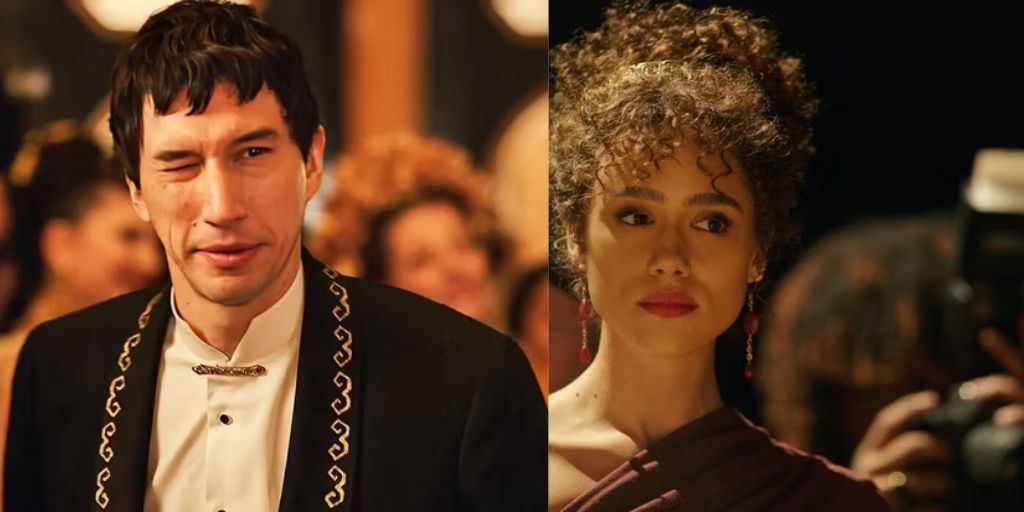
Still from Megalopolis (Credit: American Zoetrope)
Many viewers, even those who liked the film, feel unsure about what they just saw. It is not surprising that Megalopolis ends with an unusual and heartfelt end that reflects the 85-year-old director’s ambitious, if lofty, vision. For Coppola, making movies is part of his family.
His sister, Talia Shire, his nephew, Jason Schwartzman, and his granddaughter, Romy Mars, all have small roles in this film. His production company, American Zoetrope, was created to be a family of artists without ties to Hollywood.
Despite its chaotic nature, Coppola’s sincerity as an artist shines through in Megalopolis. What better way to show genuine feelings than by featuring an innocent baby?
Even before the disaster, Cesar strongly argued for a better society, refusing to compromise his vision for the future, despite the critics. Mayor Cicero and others dismissed his ideas as mere noise, labeling him a reckless artist with a big ego.
Coppola, who has clashed with studio executives multiple times, clearly sees himself in Cesar, making him a representation of his own struggles. Cesar’s extraordinary abilities get caught up in a fight for power among the main characters, each seeking control.
In the third act, the characters confront what is most important to them. For Cicero, it is love and approval from his daughter, who has chosen to support Cesar.
As Claudio starts a violent takeover of Crassus’s business, Cicero suddenly realizes that Cesar’s vision comes from a genuine desire to improve society, which needs radical change to survive.
This heartfelt idea, while touching, feels rushed. With Cicero and Crassus representing the studios and investors who stopped Coppola from making Megalopolis for many years, the director clearly doubts these authority figures. He shows them as obstacles to civilization’s progress.
However, after a brief motivational talk from his daughter, where she explains that Megalopolis aims to create a sustainable future for his granddaughter, Cicero starts to understand. He begins to support Cesar’s grand plan.
The emotional push for family values aligns with Coppola’s sincere writing and directing style, but it clashes with his portrayal of these authority figures as harsh tyrants. Coppola reveals his perspective with this unusual ending. The characters lack depth and are more like ideas he has been considering for 40 years.
Megalopolis, which grew from an abstract concept into a concrete film (another aspect that feels rushed in the third act), is shown as a gift from Cesar, who will be remembered as a spiritual leader of this new place.
The ending is surprisingly simple compared to the rest of the film, serving as a personal victory for Coppola, who, like Cesar, made his dream project happen against all odds.
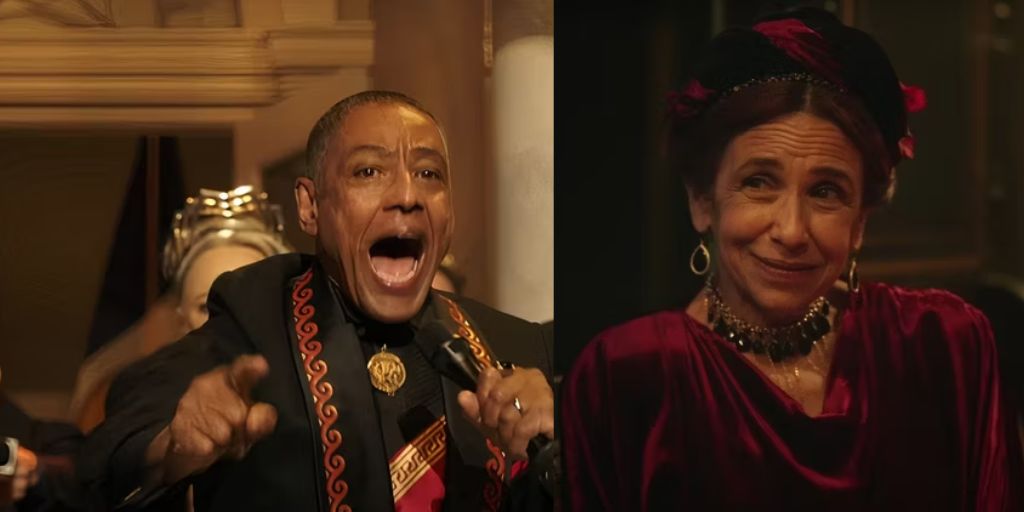
Still from Megalopolis (Credit: American Zoetrope)
The ending of Megalopolis is both emotionally powerful and confusing. It reflects the spirit of the whole film. You will think about every choice made by Francis Ford Coppola, but the ending, which features a baby symbolizing the future of society, stands out as the most intriguing decision.
The grandness of this final moment reflects the sincere, personal touch that is present throughout Megalopolis. Ultimately, the strong emotions at the center of this wild cinematic experiment make it a valuable artistic work.
In a time when many expensive blockbusters often have poor special effects and lack a distinct voice, viewers can see both the money spent on each scene and visual effect, as well as the personal reflections of Coppola’s life and long career as a filmmaker in Megalopolis.
