Anime has always been a medium that challenges norms, and Dandadan has been leading that charge lately. Since its explosive premiere—where Okarun was possessed and Momo was abducted—the series has consistently embraced its provocative elements.
Episode 9 is no exception, delivering an unexpected lineup of antagonists while showcasing a bold moment that surprisingly bypassed censorship. Thanks to their new ally, Aira, the group managed to survive another day, but not before one particularly awkward situation caught fans’ attention.
A Controversial Scene That Stays True to the Manga
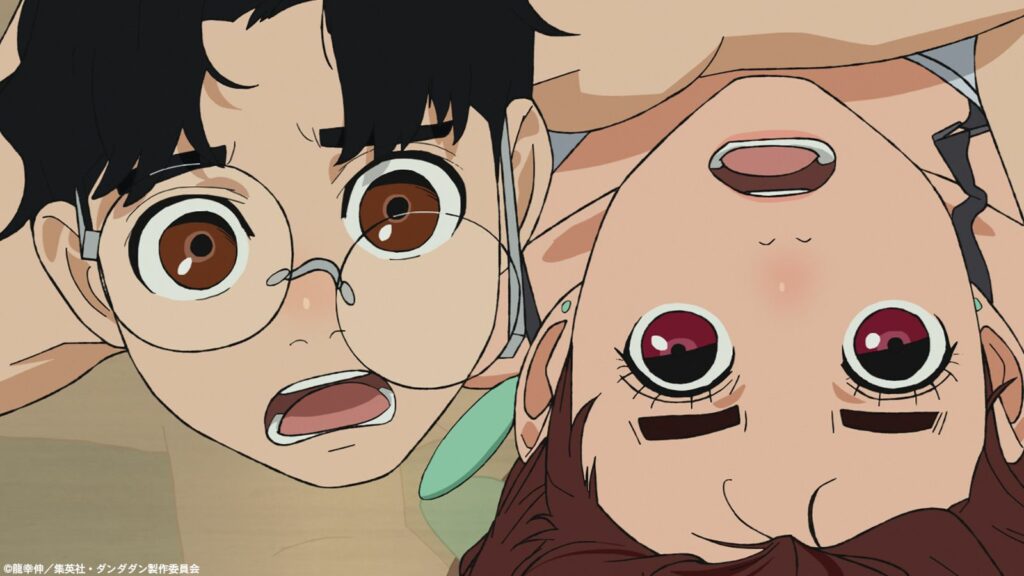
Dandadan Episode 10 Still
As many anticipated, the scene adapted from chapter 25 features Okarun completely nude in an unfortunate position on top of Momo, who is left in her underwear. It’s undeniably suggestive, made even more awkward by the realization that they’re once again surrounded by students outside the Empty Space dimension. Much like the premiere, this moment proves that Science SARU is committed to staying faithful to the source material rather than watering things down. The buzz surrounding the scene, highlighted by a viral post from @ReignofPride on X, confirms that this decision paid off in terms of engagement.
Dandadan Episode 9 Avoids Censorship, Keeping Its Signature Edge
Fans had been discussing this scene for weeks before its adaptation, reinforcing just how bold Dandadan is as both an anime and a shonen manga. The series has never shied away from controversial elements, tackling dark topics like Turbo Granny’s origins, scenes of attempted assault, and plenty of innuendo. Even its most tragic episode so far stunned viewers with a well-executed tweak to Acrobatic Silky’s fate, skillfully avoiding overt gore while maintaining emotional impact without feeling censored.
With Jiji’s story unfolding and an unexpected adversary making a return, the excitement around Dandadan only continues to grow. The adaptation has gone beyond simply animating the manga, positioning itself as a standout of the Fall 2024 season. But the decision to keep this risqué moment intact, despite its technically tame nature, raises questions about how censorship has impacted the series elsewhere.
Dandadan Faces Heavy Censorship in China

Dandadan
While episode 9 remained uncensored, Dandadan hasn’t escaped restrictions in other regions. Chinese fans watching on BiliBili quickly noticed significant editing in episode 3, particularly concerning a spirit medium grandmother with exaggerated features. Beyond altering her appearance, the Chinese version even took expected measures like replacing cigarettes with lollipops.
Similar censorship choices have affected anime for years, with iconic cases like Pokémon and Yu-Gi-Oh! replacing guns with finger-pointing. For Dandadan, however, the comedic and risqué elements are integral to its identity. The decision to preserve Okarun and Momo’s moment in episode 9 underscores how crucial this aspect is to the series’ charm. Given how much discussion this scene has sparked, it will likely remain one of the most talked-about moments in the latter half of the season.
The ending of Fight Club is widely discussed for its intricate layers, moving beyond the mind-bending twist to delve deep into themes of mental illness, consumerism, and masculinity. David Fincher’s adaptation of Chuck Palahniuk’s 1996 novel has remained a subject of serious analysis since its release. Told from the perspective of an unnamed narrator, the story chronicles his spiral into chaos after founding the infamous Fight Club, eventually culminating in an unforgettable finale.
The protagonist of Fight Club , played by Edward Norton, begins his journey as a disillusioned insomniac. He crosses paths with the charismatic Tyler Durden (Brad Pitt), who introduces him to a more thrilling life. However, Tyler’s increasingly dangerous exploits push the narrator to the edge, leading to a pivotal twist in the film: Tyler is revealed to be a mental projection, representing the narrator’s internal conflict. This revelation shifts the entire narrative, leaving the ending and its climactic scenes open to various interpretations.
Fight Club Ending Explained: The Narrator Faces His Inner Demon: The Final Confrontation
In the final moments of Fight Club , after realizing Tyler is merely a manifestation of his psyche, the narrator shoots himself. The act appears to kill Tyler, yet the narrator survives. This moment of self-inflicted violence marks the supposed end of the destructive force of Tyler Durden. However, the narrator’s actions come too late to prevent the unfolding chaos. With Marla by his side, the narrator watches as Project Mayhem’s destruction continues to wreak havoc on the city, suggesting that Tyler’s mission will succeed globally, despite his death.
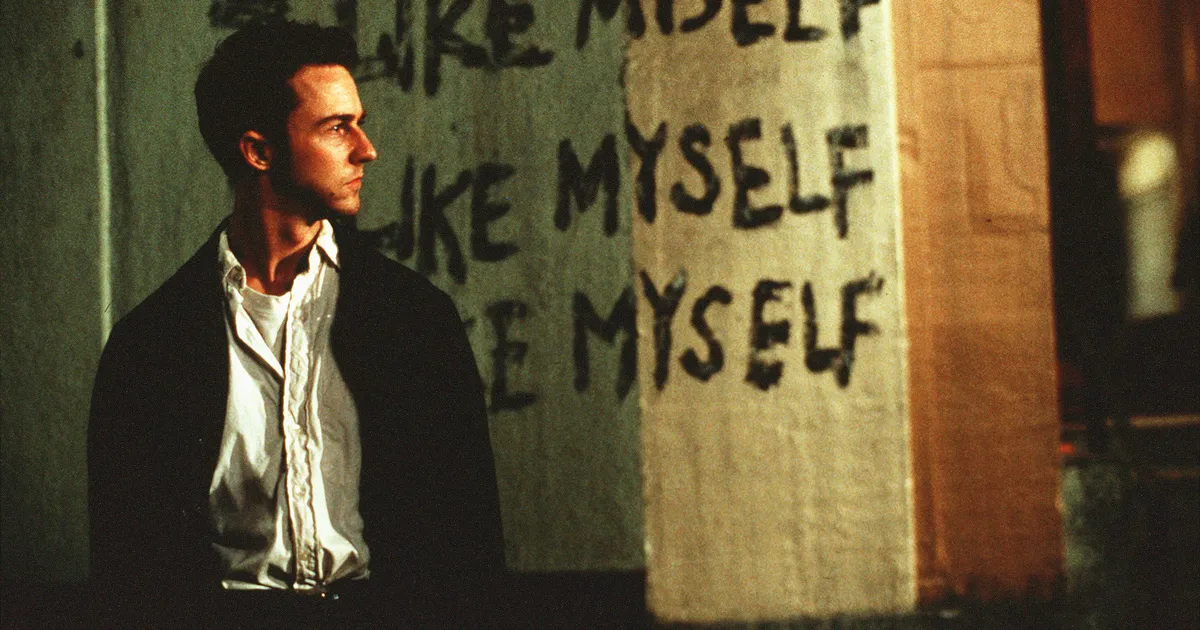
The Narrator (Image via Getty)
Is Tyler Durden Truly Dead?
While the narrator seems to eliminate Tyler by shooting himself, his actual demise is questioned. Since Tyler is a figment of the narrator’s imagination, a bullet shouldn’t logically harm him. However, the destruction of Tyler is symbolic of the narrator confronting his own internal struggles and reclaiming control. By surrendering in this self-destructive way, the narrator ultimately defeats his alternate personality, symbolizing empowerment through self-realization.
Another significant question raised by Fight Club’s ending is the true nature of Marla Singer’s existence. Throughout the film, Marla serves as a grounding influence for the narrator, offering him a sense of comfort amidst the chaos. However, as Tyler’s existence unravels, viewers are left wondering whether Marla is real or another creation of the narrator’s troubled mind. While the film doesn’t provide a definitive answer, her relationship with the narrator—both loving and destructive—mirrors his tumultuous relationship with Tyler, further blurring the lines between reality and illusion.
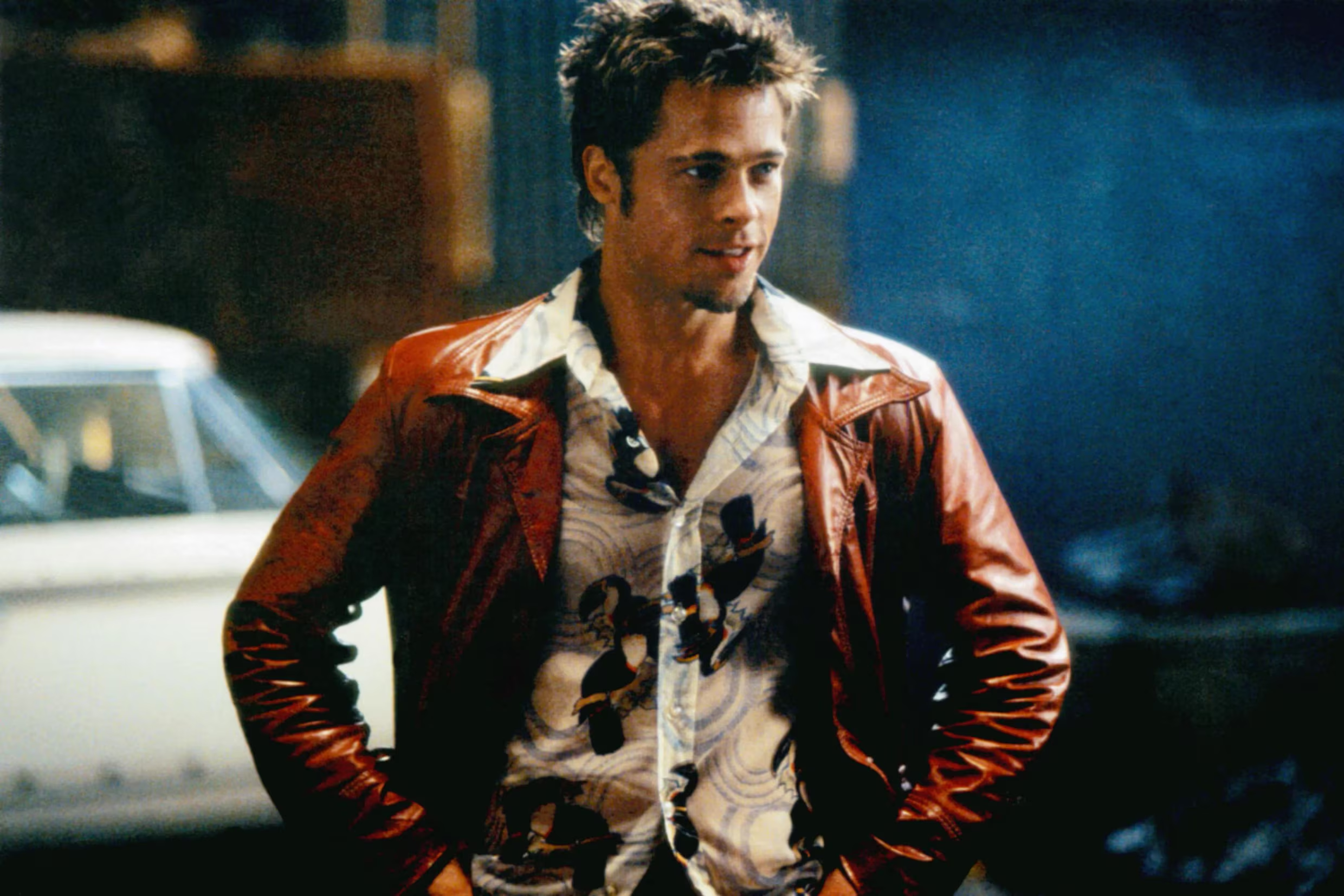
Tyler Durden (Image via Getty)
The Narrator’s Survival: How Did He Live?
One lingering question about the film’s conclusion is how the narrator survives the gunshot to his cheek. While the bullet seems to have been aimed at his head, it missed vital areas, allowing him to survive. The injury, while severe, is not necessarily fatal. In real-life instances, individuals have survived similar wounds, so the narrator’s survival is not entirely far-fetched. Nonetheless, this moment remains a key talking point among fans of the film.
Fight Club is known for its critique of modern consumerism, particularly through the recurring presence of Starbucks cups throughout the film. Tyler’s rants about the hollowness of a consumer-driven society are central to the narrative. However, Tyler’s rebellion is more than just an anti-capitalist statement—it’s also a manifestation of the narrator’s internal struggles with masculinity. Tyler represents everything the narrator wishes he could be: free, unburdened, and uninhibited. Yet, this is not the solution to his problems; rather, it highlights the dangers of toxic masculinity and blind rebellion.
The Ultimate Message of Fight Club’s Ending
The conclusion of Fight Club offers a form of catharsis for the narrator. By confronting his psychological issues head-on, he regains control over his life, even as the consequences of his actions remain irreversible. While the destruction caused by Project Mayhem cannot be undone, the narrator’s decision to face his demons brings him a sense of peace, even if it’s a fleeting moment of clarity. In this way, the film suggests that true resolution comes not from avoiding conflict but from confronting it.
The Unlikely Sequel: Fight Club 2
While a Fight Club sequel seems improbable in film form, there is a continuation in the form of Fight Club 2: The Tranquility Gambit , a comic book series. In this narrative, the protagonist, now named Sebastian, continues his tumultuous relationship with Marla. The story explores what happens after the death of Tyler Durden, with Tyler’s return further complicating Sebastian’s life. This comic offers a new perspective on the aftermath, exploring deeper into the psychological and physical struggles that follow the movie’s ending.
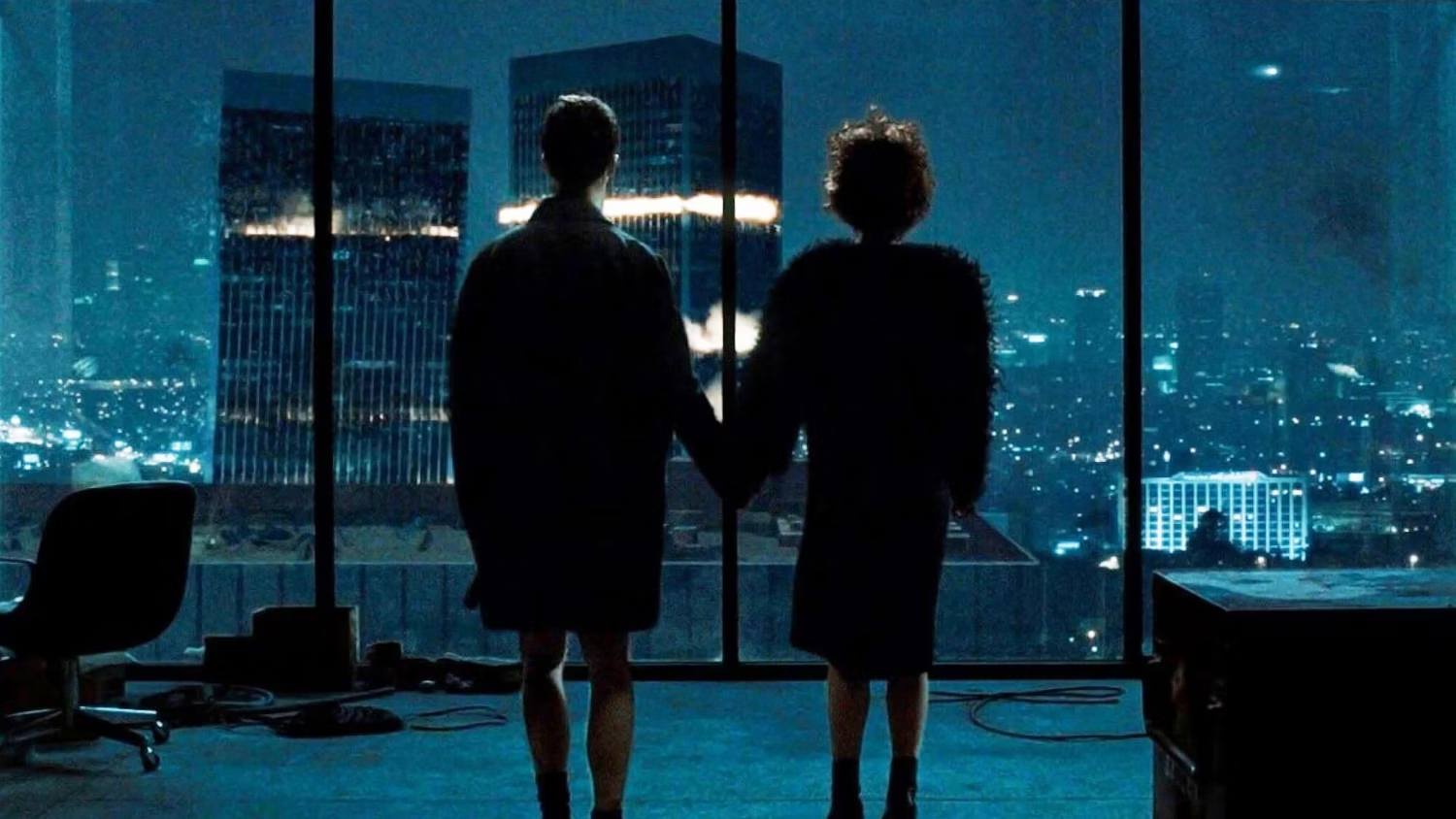
The Final Scene (Image via Getty)
The Difference Between the Movie and Book Endings
The film’s ending differs significantly from Chuck Palahniuk’s novel. In the book, Tyler’s final plan involves collapsing a skyscraper, resulting in the destruction of a library, with Tyler intending to be a martyr. However, a malfunction prevents the disaster from occurring. Marla plays a more active role in saving the narrator, causing Tyler to disappear. Instead of the film’s iconic final shot of the narrator watching the skyline collapse, the book ends with the narrator in a psychiatric facility, visited by members of Project Mayhem who are ready to continue their mission.
How the Fight Club Ending Mirrors Fincher’s Other Films
David Fincher is known for his impactful endings, and Fight Club is no exception. Similar to other works like Se7en , Gone Girl , and The Game , the conclusion of Fight Club leaves audiences grappling with its themes. Like Se7en , the film ends with the protagonist confronting the consequences of their actions, though the results are more ambiguous. In Gone Girl , the villainous Amy manipulates the system to continue her toxic relationship with Nick, leaving viewers unsettled. Similarly, The Game offers a thrilling conclusion that hints at lingering uncertainties, much like Fight Club .
The Enduring Legacy of Fight Club’s Conclusion
Fight Club may not have been a commercial success upon its release, but its ending has become one of the most iconic in cinematic history. The twist, combined with the final moments of destruction set to The Pixies’ “Where Is My Mind?”, leaves a lasting impression on viewers. The film’s ability to provoke thought and spark discussion about its themes of consumerism, masculinity, and self-destruction has solidified its place in popular culture. Even decades after its release, Fight Club remains a topic of passionate debate and analysis. Its ending continues to haunt viewers, cementing its status as one of the most unforgettable finales in film.
