True Detective has built a devoted fan base over time, thanks to its standout Season 1 featuring Matthew McConaughey and Woody Harrelson, as well as the more recent success of True Detective: Night Country, led by Jodie Foster and Kali Reis.
Among a crowded genre of crime dramas, True Detective stands out with its intense atmosphere, solid writing, and strong performances throughout its various seasons.
AMC’s Dark Winds has found new life on Netflix, reaching a larger audience while capturing the culture of the Navajo Nation.
Created by Graham Roland and based on the “Leaphorn & Chee” novels by Tony Hillerman, this show is a great choice for True Detective fans. While viewers wait for Season 5 of True Detective, Dark Winds, with two seasons already available and a third in the works, offers a fresh but familiar experience filled with mystery, drama, and intrigue.
‘Dark Winds’ Shares Similarities With ‘True Detective’
Set in the 1970s, Dark Winds follows three Navajo Tribal Police officers — Lieutenant Joe Leaphorn (Zahn McClarnon), Sergeant Bernadette Manuelito (Jessica Matten), and Deputy Jim Chee (Kiowa Gordon) — as they investigate a local murder tied to a bank heist in Gallup, New Mexico.
As they dig deeper into the case, they uncover a bigger conspiracy. With producers like Robert Redford and George R. R. Martin, Dark Winds boasts a talented cast led by McClarnon, who also serves as an executive producer. The show also shines by showcasing Indigenous talent, which adds depth to its story.
While Dark Winds excels on its own, it shares many themes with True Detective, making it an appealing watch for fans of the latter. Both shows focus on “buddy cop” partnerships and use their settings to create a strong impact.
For instance, True Detective Season 1 is set in Louisiana, where the aftermath of Hurricane Rita and the political climate enhance the narrative. Similarly, the Ozarks in Season 3 and the cold Alaskan desert in Season 4 contribute to the atmosphere of those stories. In Dark Winds, the vast, open spaces of the Navajo Nation serve as the backdrop for its tale of crime and politics.
Rich Cultural Settings Add Depth to Both Shows
In True Detective: Night Country and Dark Winds, Native American history and culture are central to the stories. Both shows weave elements of mysticism, mythology, and cultural symbolism into their narratives, giving their crime dramas a touch of the supernatural.
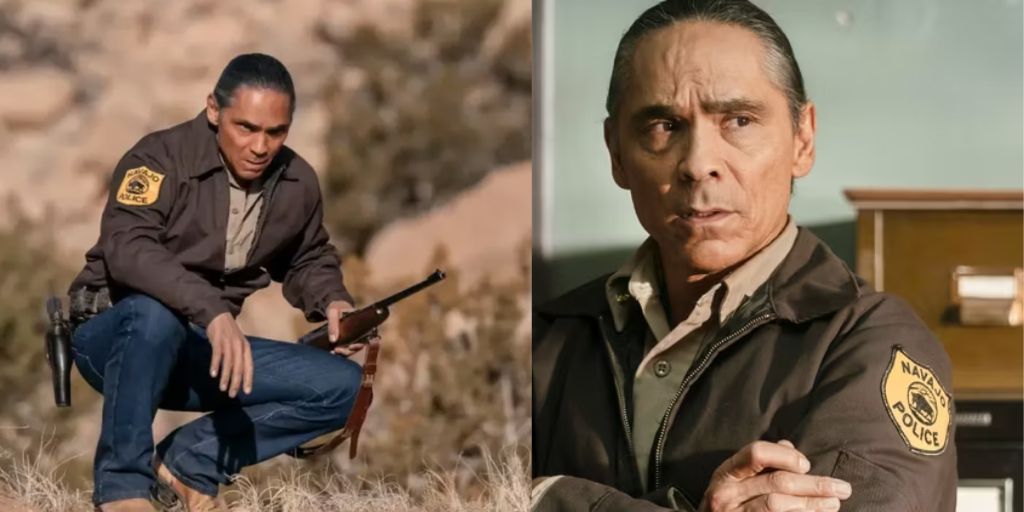
Still from Dark Winds (Credit: Netflix)
These elements add depth to the shows, helping viewers connect to the characters’ inner struggles. For example, Jessica Matten’s character, Bernadette, in Dark Winds experiences a journey similar to Reis’ character, Navarro, in True Detective: Night Country. Both women are deeply influenced by their belief systems rooted in Native American customs.
Both shows also show larger themes like faith and the supernatural, going beyond the mysteries at hand. In True Detective, religion and differing views of God create tension.
In Dark Winds, magic, and mysticism, key elements of Native American culture, play a significant role in the unfolding of the story, adding layers to the crime and deception in the background.
Characters in ‘Dark Winds’ Will Remind You of ‘True Detective’
Like True Detective, Dark Winds blends the personal lives of its main characters with their duties as detectives. For example, in Season 1 of True Detective, McConaughey’s character, Rustin “Rust” Cohle, stands out due to his complex personality and unique worldview.
Similarly, McClarnon’s Joe Leaphorn in Dark Winds goes through an emotional journey, impacted by his personal tragedies. Both characters must confront their inner demons while solving their cases.
Leaphorn’s story in Dark Winds echoes the emotional challenges faced by characters like Rust in True Detective or Liz Danvers (Jodie Foster) and Evangeline Navarro (Kali Reis) in Season 4.
Much like these characters, Leaphorn carries the weight of personal loss, which affects his interactions and decisions throughout the season. His journey, like those of True Detective’s leads, creates a gripping narrative as viewers witness him struggle to balance his personal pain with his professional responsibilities.
At the same time, the choices these characters make, often influenced by their personal struggles, add an extra layer of tension. In True Detective: Night Country, Danvers and Navarro must come to terms with their past decisions while investigating the murder of Annie Kowtok.
Similarly, Dark Winds and True Detective are both driven by characters on the brink of emotional collapse, making for an intense viewing experience as these flawed individuals seek justice while showing their own realities.
A Strong Focus on Characters and Performances
Both True Detective and Dark Winds are powerful crime dramas led by compelling performances. Their protagonists carry the shows, and the mysteries themselves are engaging enough to keep viewers hooked. On top of that, the shows’ use of rich, culturally significant settings allows them to rise above other detective dramas that don’t offer as much substance.
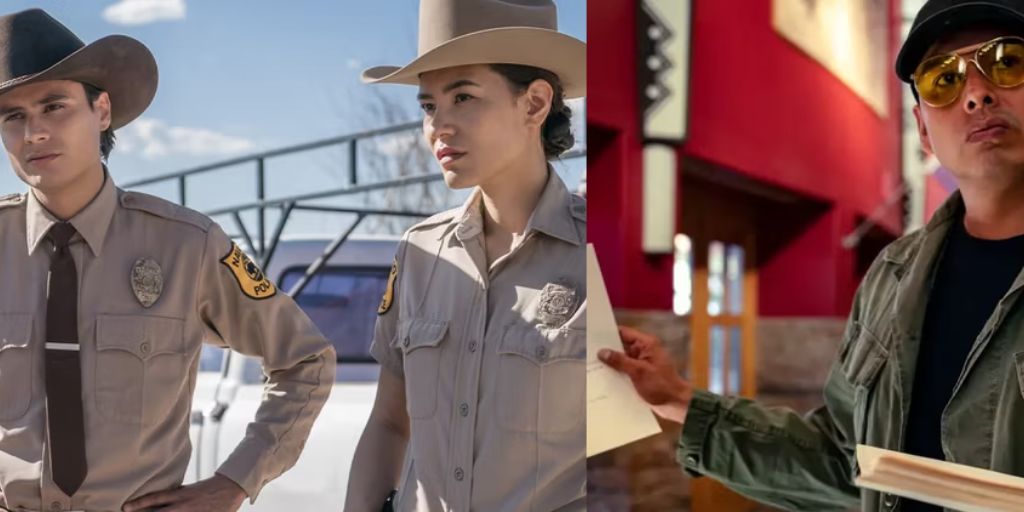
Still from Dark Winds (Credit: Netflix)
While True Detective has already cemented its place as one of the best detective series, Dark Winds has similar elements and more to offer. If you’re looking for a thrilling detective drama with suspense and depth, both seasons of Dark Winds on Netflix provide an excellent alternative while waiting for the next season of True Detective.
Dark Winds is a crime drama similar to True Detective, set in the Navajo Nation. Both shows feature complex characters, rich cultural backgrounds, and intense mysteries. With deep emotional journeys and supernatural elements, Dark Winds offers a thrilling experience for fans of True Detective, now available on Netflix with two seasons.
Luca Guadagnino often focuses on the theme of love and its addictive nature in his films. His past works, like I Am Love, Call Me by Your Name, and Challengers, show different kinds of love—whether it’s the excitement of new love, the overwhelming feeling of first love, or the kind of love that is hard to let go.
This theme connects to show different kinds of love whether it’s the excitement of new love, the overwhelming feeling of the first love, or the kind of love that is hard to let show different kinds of love whether it’s the excitement of new love, the overwhelming feeling of first love, or the show different kinds of love whether it’s the excitement Queer, novel by William S. Burroughs, which had a big impact on Guadagnino when he was younger.
Queer tells the story of a man obsessed with finding someone, while also dealing with addiction and the complicated nature of love. Guadagnino’s adaptation of this novel fits well with his other work, as he builds on the original story while bringing in his own style and ideas.
What Is Queer About?
In Queer, Daniel Craig plays William Lee, an American man living in Mexico City in the 1950s. Lee spends his days drinking, sweating through the city, and having casual sexual encounters with men. His routine shows his deep loneliness and longing for a real connection.
When he meets Eugene Allerton (played by Drew Starkey), Lee feels a real bond. Unlike his past brief relationships, Lee sees something deeper with Eugene. At one point, Lee says to Eugene, “I want to talk to you without speaking,” which shows his vulnerability and desperation for love.
Lee becomes more attached to Eugene, but it’s clear that Eugene doesn’t feel the same way. Eugene is sometimes interested in Lee, but at other times, he acts distant, treating Lee like a stranger. Lee’s drinking and heroin use make things worse, and his unpredictable behavior pushes Eugene away.
Lee also tells Eugene about a drug called “yage,” which is supposed to give telepathic powers. Lee becomes obsessed with the idea that yage will help him understand what Eugene is thinking, making his pursuit of love even more desperate.
Luca Guadagnino’s Style in Queer
Guadagnino’s adaptation of Queer captures a slow, dreamlike feeling. There are many scenes where we see Craig’s character wandering around Mexico City, intoxicated and stumbling through the streets. The movie uses a soundtrack that doesn’t fit the time, with songs from Nirvana and Prince, even though the film is set in the 1950s.
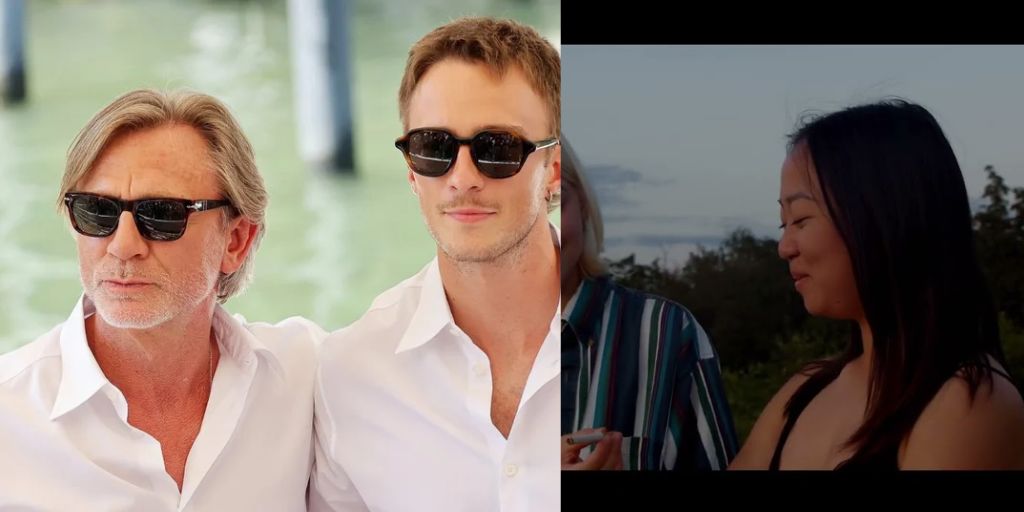
Still from Queer (Credit: Frenesy Film Company)
These songs match the emotions of the characters, even though they didn’t exist yet. For example, the opening credits feature a cover of Nirvana’s “All Apologies,” which sets the mood for who William Lee is before we even see him.
Guadagnino collaborates with composers Trent Reznor and Atticus Ross, as he did for Challengers. Their music perfectly complements the story’s tone, making even the quieter moments feel engaging. The film’s slow pace allows the audience to feel the heat and tension in the air, even when little is happening on screen.
The Connection to Guadagnino’s Other Work
Guadagnino’s films often deal with love, desire, and obsession, and Queer fits right in with his previous projects. In interviews, Guadagnino has said that a line from his film A Bigger Splash influenced the themes in Queer.
The movie also brings in elements of surrealism and horror, similar to the works of directors like Luis Buñuel and David Lynch. Guadagnino uses shocking, disturbing imagery in Queer, taking these horror elements further than he did in Bones and All or Suspiria.
A particularly interesting comparison can be made to Call Me by Your Name, Guadagnino’s most well-known film about queer love. In Call Me by Your Name, the director chose not to show explicit sex scenes, instead filming a window to give the characters privacy. In Queer, Guadagnino takes a similar approach, but he also shows more intimate moments that feel honest and surprising, especially compared to his past films.
Daniel Craig’s Bold Role in Queer
Daniel Craig has taken on many unique roles since his time as James Bond, and his performance in Queer is another bold choice. Craig’s character, William Lee, is outgoing but filled with sadness.
He is seeking love but doesn’t want to show how much pain he’s in. This role pushes Craig in new directions as an actor, and it highlights his talent for playing complex, layered characters.
Drew Starkey, who plays Eugene, is the opposite of Lee. Eugene is quiet and hard to understand, making Lee feel unsure about how to act.
Eugene’s distant attitude is frustrating for Lee, but it’s clear that Eugene is also struggling with his own issues, especially his reluctance to reveal his true self to the world. This tension between the two characters creates a powerful love story that doesn’t follow the usual path.
Supporting Cast and Guadagnino’s World
Although Daniel Craig and Drew Starkey lead the story, Queer also benefits from strong supporting performances. Jason Schwartzman appears as Joe, one of Lee’s outgoing friends, who adds humor and energy to the film.
Lesley Manville also gives a standout performance as Dr. Cotter, a wild character that’s very different from the prim, proper roles she usually plays. Guadagnino seems to enjoy introducing strange, eccentric characters into the story, adding more depth and variety to the world of Queer.
The Script and the Hunt for Yage
Justin Kuritzkes, who also wrote Challengers, wrote the screenplay for Queer. He expands Burroughs’ original novel, particularly in the section where Lee searches for yage. This part of the film becomes more experimental, with surreal and symbolic imagery.
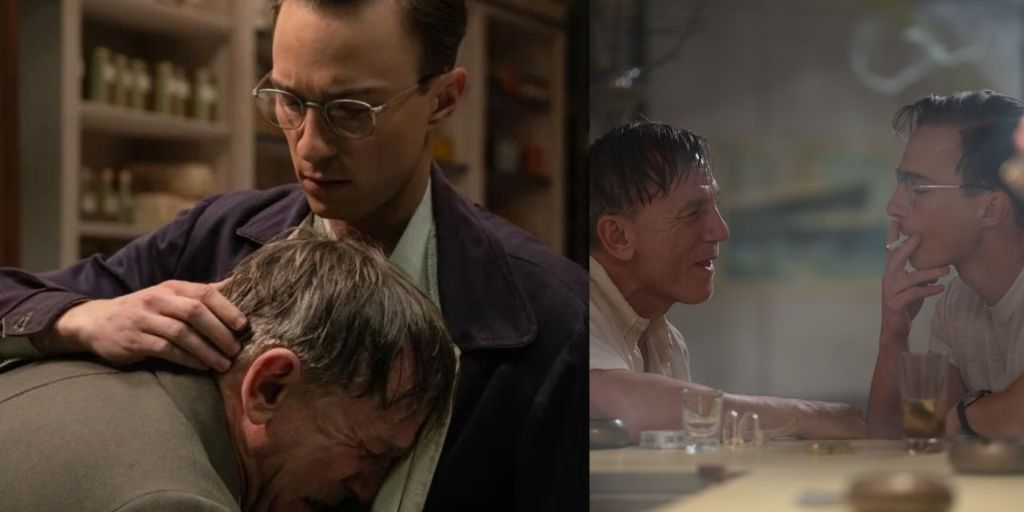
Still from Queer (Credit: Frenesy Film Company)
Kuritzkes’ script captures Lee’s aimless life as a queer man in the first part of the film, but in the final section, the film takes a strange turn, filled with unsettling images and odd symbolism. This shift in tone may feel disconnected from the rest of the story, but it still holds the audience’s attention with its bold ideas.
A Daring Adaptation
Queer is a daring adaptation of Burroughs’ novel and another remarkable film in Luca Guadagnino’s growing body of work. Daniel Craig gives a memorable performance that shows his range as an actor.
While the film’s wild final act might not appeal to everyone, Guadagnino’s ability to combine all these elements into a unique story shows his talent as one of today’s most important filmmakers.
