On October 1, 2006, a character named Dexter Morgan (played by Michael C. Hall) captured the attention of viewers worldwide. Dexter wasn’t your typical serial killer. By day, he worked as a blood spatter analyst for the Miami Metro Police Department, often bringing his colleagues donuts. However, by night, Dexter turned into a vigilante, hunting down killers and violent criminals who escaped justice.
Dexter quickly became one of Showtime’s most popular shows, setting viewership records. Its success sparked a wave of similar narratives in the following years, including Hannibal , Mindhunter , and True Detective . However, none of these shows quite matched the magnetic character of Dexter Morgan, who followed a unique moral code as he carried out his vigilantism.
Dexter Ending Explained

Dexter (Image via Getty)
The story behind Dexter’s dark nature starts when he was just a child. At the age of two, Dexter witnessed his mother’s brutal murder by a cartel boss, who hacked her apart with a chainsaw. This trauma seemed to shape Dexter into the person he would become. Initially, it appeared that this event set him on his path as both a forensic analyst and a serial killer.
Harry Morgan, Dexter’s adoptive father, realized early on that his son was lacking in emotional empathy, possibly even showing psychopathic tendencies. After Dexter killed neighborhood pets, Harry decided to teach him a code of conduct to prevent Dexter from getting caught. This code ensured that Dexter would only target individuals who deserved to die. Harry’s law enforcement background came in handy in evaluating these targets.
Revelations and Harry’s Role
As the series progressed, Dexter’s backstory grew even more complex. It was revealed that Harry had collaborated with criminal psychiatrist Dr. Evelyn Vogel, who had developed the code that Harry applied to Dexter. Harry’s decision to use Dexter as a test case brought a heavy burden on him, and when he discovered the monster his son had become, Harry took his own life, unable to live with the truth.
Dexter, in turn, learned the truth years later — his father’s death wasn’t from a heart attack but a suicide. Dexter would come to refer to his darker side as his Dark Passenger , a persona that he could never fully escape, no matter how much he tried.
The Psychopath’s Struggle
One of the most compelling aspects of Dexter’s character is his level of self-awareness. While Dexter lacks empathy and struggles with human emotions, he is acutely aware of these limitations. He understands what love and empathy look like in others, even though he doesn’t experience them himself. His struggle to fit in with society and emulate the emotions others feel is what makes him such a fascinating character.
Throughout the series, Dexter grows emotionally, especially in his relationships with those closest to him. This development, however, often leads to unintended harm. His emotional attachments put those around him in danger, and his attempts at justice often result in collateral damage.
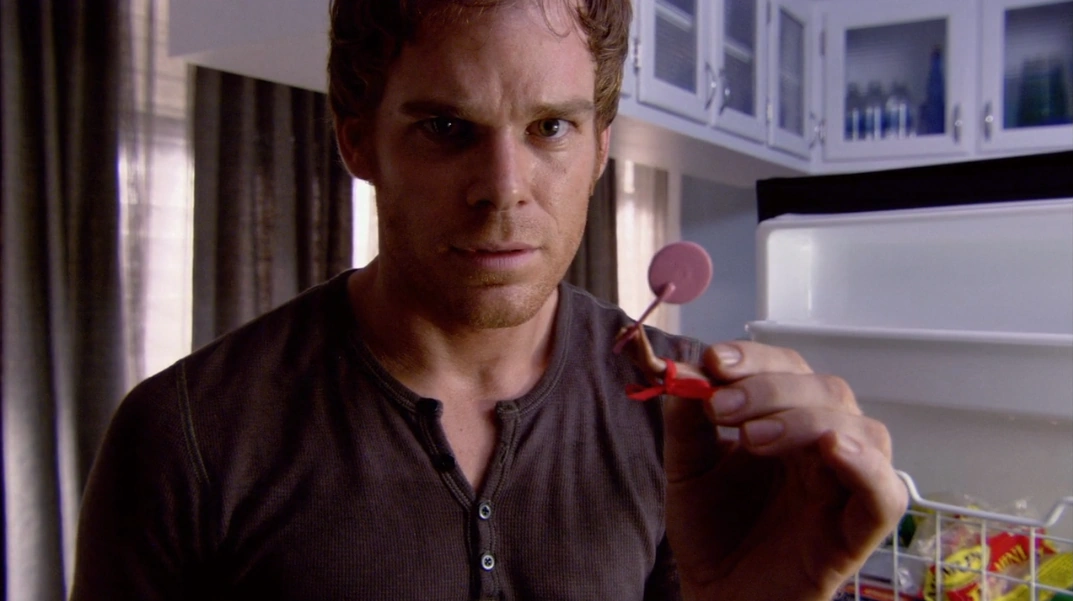
Dexter (Image via Getty)
Dexter’s Role in the Criminal Justice System
Though Dexter is the central character, his story also sheds light on the flaws within America’s criminal justice system. The show reveals how criminals can escape justice through legal loopholes or expert defense attorneys. Dexter’s role as a vigilante exposes the real-world issues of underreporting and mishandling crimes, particularly in cases of sexual violence.
Dexter often targets sexual predators, such as rapists and spouse killers, highlighting how the justice system fails to bring these offenders to justice. Dexter’s actions suggest that sometimes vigilante justice is the only way for victims to get the justice they deserve. His crusade exposes the inadequacies in the system, where victims can be disbelieved, and evidence such as rape kits often go untested.
The Collateral Damage of Dexter’s Actions
While Dexter’s code aimed to limit harm, it was far from foolproof. His relationships with others—especially those closest to him—became increasingly dangerous as Dexter’s life evolved. His transformation into a family man made him more vulnerable to emotional ties, but it also led to more innocent victims.
One of the most shocking and tragic deaths in the series is that of Dexter’s wife, Rita. Rita becomes an unintended victim of the Trinity Killer, a serial killer Dexter was pursuing. The death, which was a direct result of Dexter’s involvement with the Trinity Killer, left a lasting impact on the series.
The Bay Harbor Butcher
By the second season of Dexter , the world learns about his secret identity as the Bay Harbor Butcher. Dexter had previously been meticulous in hiding his crimes, but when his dumping ground is discovered by divers, the tension surrounding his secret intensifies. Despite his attempts to control the situation, Dexter’s life spirals out of control, leading to more death and mistakes as he struggles with his Dark Passenger . The reveal of the Bay Harbor Butcher marks a turning point in Dexter’s journey, where the collateral damage caused by his vigilante justice becomes impossible to ignore.

Debra Morgan (Image via Getty)
Dexter and Revenge as Justice
Throughout the show, Dexter often uses revenge as a form of justice. His quest for justice is particularly evident when he hunts down a group of men who have brutalized women. In one instance, Dexter helps Lumen Pierce, a survivor of the gang, to hunt down the remaining men responsible for the crimes.
Dexter’s actions raise difficult questions about the nature of justice. When law enforcement fails, can revenge be justified? Dexter and Lumen’s pursuit of revenge becomes an emotional journey that highlights the complexities of morality and justice, especially for survivors of traumatic crimes.
Debra Morgan: Dexter’s Conscience
Debra Morgan, Dexter’s adopted sister, plays an essential role in his life. After their father’s death, Debra serves as Dexter’s moral compass, often reminding him of his humanity. Their complicated relationship is made even more complex when Debra discovers the truth about Dexter’s identity. In the end, her tragic fate is sealed when she chooses to protect Dexter at the cost of her own life, cementing her status as the most important woman in Dexter’s life.
Dexter’s Final Days
In the series finale, Dexter’s dream of a happy ending with his son and lover in Argentina is shattered. After causing Debra’s death, Dexter realizes he cannot live a normal life and fakes his death, retreating to a remote cabin in the woods. The ambiguous ending leaves viewers with many questions about Dexter’s future and whether or not he will continue his killing spree in isolation.
Fresh delves into the dark and twisted world of modern online dating while blending horror and comedy. Sebastian Stan plays Steve, a seemingly charming boyfriend, and Daisy Edgar-Jones portrays Noa, who is disillusioned with her dating life. At the start, Noa experiences a disastrous date with a man she met online. He insults her, belittles her, and even steals food she paid for. Frustrated, Noa vents to her friend Mollie about her failed dating attempts. Mollie encourages her to take a more carefree attitude, leading Noa to encounter Steve in the grocery store. Their chemistry is immediate, and Noa feels she might have finally found a good match. However, as the relationship progresses, she discovers Steve’s horrifying secret: he has cannibalistic tendencies. Steve kidnaps women, cuts off parts of their bodies, and sells them as meat while keeping his victims alive as long as possible to preserve their “freshness.” Noa, along with her friends Mollie and Penny, must fight to survive as the film builds to a terrifying climax.
Fresh Movie Ending Explained

Fresh (Image via Getty)
As the plot unravels, Noa finds herself trapped in Steve’s gruesome world. Steve uses his charm and wit to manipulate women into trusting him, only to later sell them as human meat. Realizing she is his next victim, Noa plays along with Steve’s advances to gain his trust, allowing her to make her move. Steve takes Noa to his home, where he reveals a disturbing “trophy wall” of body parts from past victims. Among these items is Mollie’s cell phone, a clue that Noa can use to her advantage. As Steve relaxes, Noa executes a plan to escape. She seduces him and, in a surprising move, bites off part of his penis, using the distraction to free herself and rescue Mollie and Penny. Together, they make a daring escape. Noa’s ability to turn Steve’s manipulative tactics against him is the first step in reclaiming her power.
Noa Turns the Tables on Steve Using His Tactics
The climax of Fresh showcases Noa’s cunning and resourcefulness. After seducing Steve, Noa seizes the opportunity to escape and turn the tables on him. By using the same methods Steve employed to victimize her, she shifts the power dynamic in her favor. She, Mollie, and Penny’s experiences represent victims of violence who are forced to reclaim control by any means necessary. The trio’s violent retaliation—knocking Steve out in the kitchen, then killing him and his wife Ana (Charlotte Le Bon)—symbolizes the ultimate act of vindication for women who have been mistreated. This act of rebellion against their oppressors underscores the film’s message of empowerment, mirroring the escape in Get Out where the protagonist Chris kills his captors to regain his freedom.
Fresh includes a darkly ironic twist during its opening credits. When Noa meets Steve, she is seen standing in a grocery store under a sign that reads “fresh meats,” which foreshadows Steve’s horrifying intentions. Noa becomes the perfect target for Steve, as she has no immediate family ties. In an early conversation, she reveals that her father is deceased and she’s estranged from her mother. Steve is quick to pick up on this vulnerability, seeing her as a woman who won’t be missed if she disappears. Throughout the film, Steve’s victims are often women who have no one to notice their absence, making them easier prey. This chilling pattern exposes Steve’s twisted career as a human butcher, highlighting his systematic targeting of those who are marginalized or disconnected.

Noa (Image via Getty)
How Does Steve Choose His Victims?
Steve’s method of selecting victims is unsettlingly calculated. He targets women with weak or non-existent family connections. This allows him to continue his grisly work with little fear of being caught. Noa’s admission about her lack of close family ties makes her an ideal target. Steve has perfected his method of seduction, ensuring that his victims feel safe and secure enough to trust him before he reveals his true intentions. Penny, another victim trapped in Steve’s home, shares a similar background: she too lacks a support system, making her disappearance less likely to raise suspicion. This careful targeting underlines the predatory nature of Steve’s operations, as he picks women who have little chance of being missed.
Fresh’s Ending and What It Means
Fresh is more than just a horror film—it’s a biting social satire, reflecting on modern dating dynamics and the exploitation of women. The film critiques how online dating has become a dangerous terrain for young women, who must navigate a world rife with predatory individuals. Steve represents a dark exaggeration of the entitled attitudes some men have towards women’s bodies, commodifying them for personal gain. But as Noa fights back, Fresh shows how women can regain their autonomy by working together. The final moments underscore the importance of female solidarity, as Noa and her friends save themselves without the help of a man. This sense of empowerment culminates when Noa receives a text from a previous date, “You up?”—a reminder that the horrors of modern dating, while not as extreme as what she experienced with Steve, continue to exist.

Steve (Image via Getty)
The ending of Fresh drives home its themes of body autonomy, the dangers of online dating, and how women can reclaim power through unity. Noa’s escape from Steve is not just a personal victory, but a broader symbol of resistance against the commodification of women’s bodies. By banding together with her fellow victims, Noa demonstrates that survival depends on solidarity, not romantic rescue. The final shot of Noa receiving a text from her disastrous date is a stark reminder that, although her horrific experience with Steve is over, the world she inhabits still views women as objects to be consumed. This ending ties the film’s critique of the online dating scene into a wider commentary on gender dynamics.
The Fresh Movie Ending Was Praised Less Often Than The Rest of the Movie
While Fresh was largely praised for its tense build-up and unique premise, the ending received mixed reactions. Some viewers felt that the final act lost the tension built earlier in the film, especially after the escape moves outside the confines of Steve’s home. Despite this, the film’s thematic payoff and its stunning finale remained a highlight for many. Noa’s final victory over Steve and the oppressive systems he represents was seen as satisfying, though some critics noted that the horror aspect was somewhat diluted in the latter stages. Still, the film’s approach to horror, combining gore with social commentary, was widely regarded as fresh and innovative.
