Episode 7 of Dragon Ball Daima goes deep into the lore of the Demon Realm, focusing on Supreme Kai Shin’s origins and a major turning point in Panzy’s arc. In this episode, Shin reveals his birth name, “Nahare,” when Panzy asks him about his true identity beyond the title he uses in the outside world. This name reflects Shin’s botanical roots as a Glind, a unique race born from mystical Glind Trees.
The Glinds’ ability to survive on water alone ties them to characters like Namekians, hinting at ancient connections between the two races. Shin’s revelation adds a personal touch to his character, offering a glimpse of the life he left behind in the Demon Realm.
The removal of Panzy’s collar is another emotional highlight of the episode. Bound by this oppressive device, Panzy was under constant surveillance by the Gendarmerie. By freeing her, Shin not only liberates Panzy but also solidifies his role as a protector within the group.
Dragon Ball Daima Episode 7 Explores Supreme Kai Shin’s True Name and Bold Lore Twists
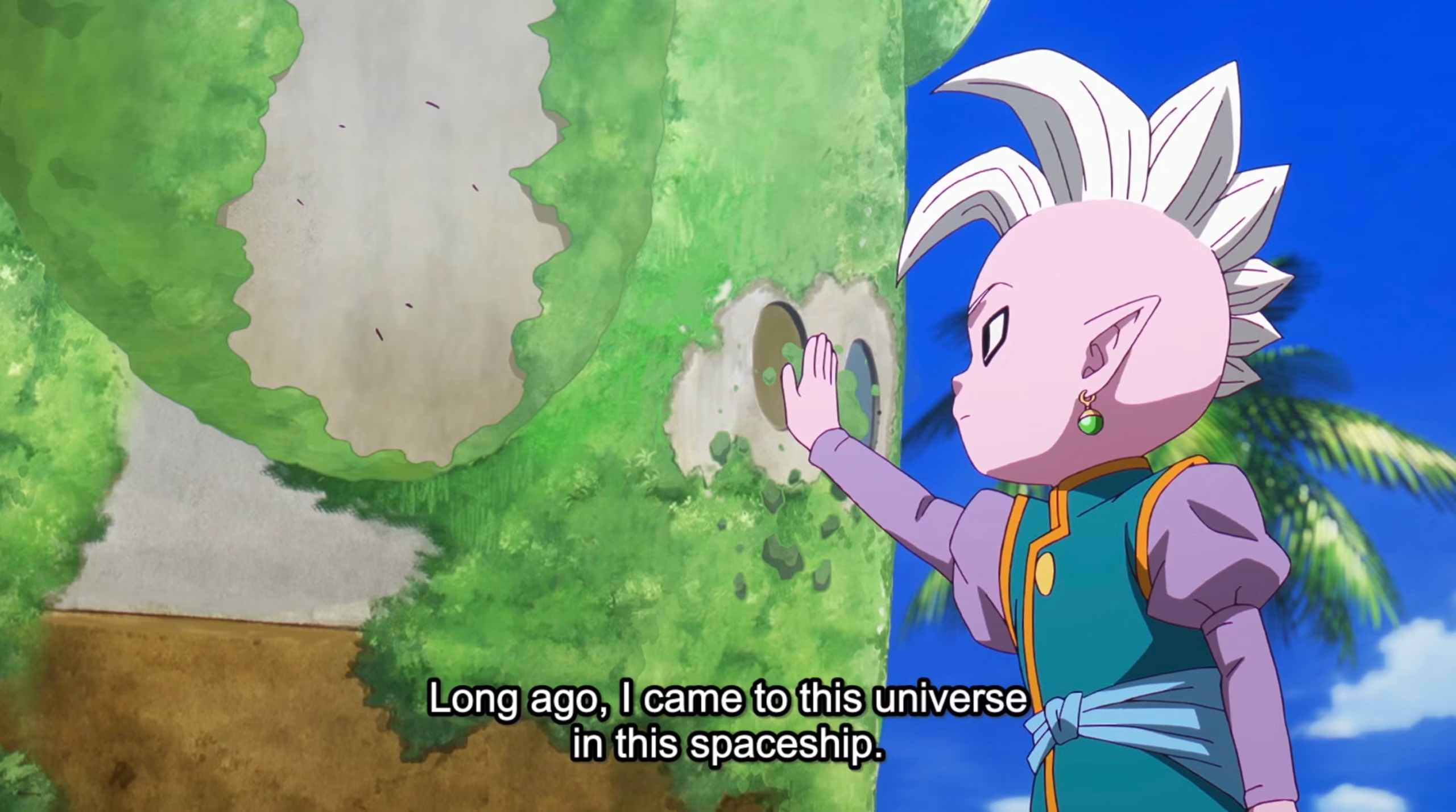
Supreme Kai
This act of kindness prompts Panzy to express gratitude, creating a touching moment that strengthens their bond. Meanwhile, Goku (Mini) and the group prepare for their next trial—facing a deadly Tamagami to retrieve the three-star Dragon Ball. These scenes keep the action moving, balancing emotional weight with thrilling stakes.
While the episode advances the characters’ journey, it also introduces controversial shifts in the Dragon Ball lore. The claim that the Demon Realm Dragon Balls predate the Super Dragon Balls contradicts earlier explanations from Dragon Ball Super. This decision has sparked debates among fans, with some praising the series for adding new layers to its universe, while others question the need to rewrite established canon. Additionally, Episode 7 continues to explore the mysterious origins of Shin’s Glind race, their connection to other species, and their role in the broader story.
As Dragon Ball Daima celebrates the franchise’s 40th anniversary, it balances nostalgia with bold storytelling. By shedding light on unanswered questions—like Goku’s Power Pole and Piccolo’s demonic heritage—while challenging established lore, the series ensures it remains a fresh and dynamic addition to the franchise. The blend of emotional depth, character development, and new revelations makes Episode 7 a standout entry, leaving fans eager for what comes next.

Following the defeat of Majin Buu and the death of Dabura, Gomah, newly crowned King of the Demon Realm, and Degesu (a Demon Kaioshin) use Earth’s Dragon Balls to curse Goku and his friends, to shrink them into children and kidnap Baby Dende. They also seek the fabled Evil Third Eye item for ultimate power. A mysterious ally, Glorio, teams up with Panzy to help the heroes journey through the three levels of the Demon Realm, battling guardians (Tamagami) to gather Demon‑Realm Dragon Balls to undo the wish and rescue Dende.
My Hero Academia concluded its extraordinary journey with the publication of its final chapter, marking the end of Deku’s story as the number one hero. Kohei Horikoshi celebrated this milestone with an homage on the cover of volume 42, mirroring the series’ inaugural cover where All Might stood proudly above Izuku Midoriya. This time, Deku takes his mentor’s place, symbolizing the fulfillment of his dream, while Dai, a newer character, stands in Midoriya’s original position—a possible hint at a sequel.
First introduced in chapter 258 and later explored in chapter 430, Dai shares striking similarities with Deku. He is a young boy with an underwhelming Quirk—throwing disk-like objects from his hair—struggling to fit into the heroic society that idolizes strength. His story parallels Deku’s early struggles as a Quirkless child aspiring to become a hero.
During their brief but impactful encounter, Deku encouraged Dai to chase his dreams, mirroring the conversation he once had with All Might. Dai’s placement on volume 42’s cover and his central focus in the final chapter strongly suggest that he could be the protagonist of a sequel series.
My Hero Academia’s Finale: A New Era and Hints of a Potential Sequel
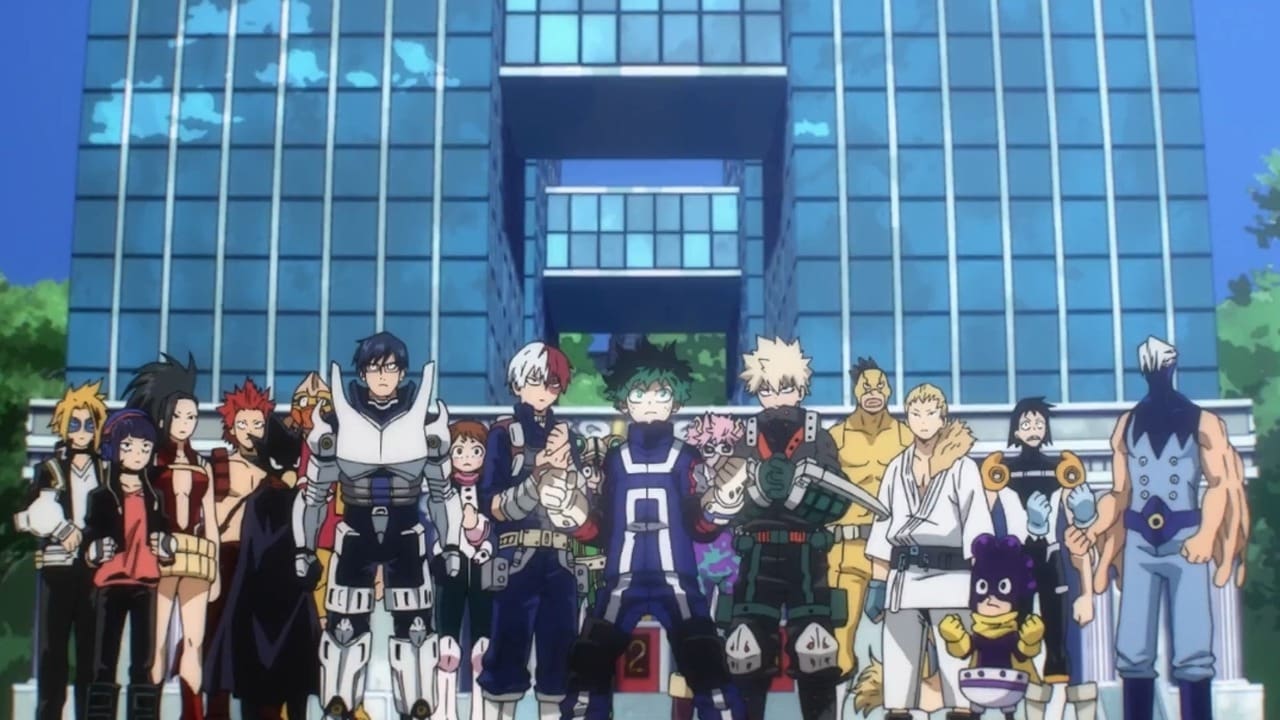
UA 1-A Students as seen in My Hero Academia Season 7 trailer (Credits: Studio Bones)
The My Hero Academia finale highlighted the positive transformations in hero society after the defeat of All For One and the League of Villains. The series hinted at societal progress, including reduced crime rates, better public awareness, and efforts to eliminate Quirk discrimination. A potential sequel starring Dai could explore these changes in depth, showcasing how hero society continues to evolve. It would also provide fans with the opportunity to see Deku as a mentor or teacher, guiding the next generation of heroes in a more peaceful era.
Despite its emotional and satisfying conclusion, My Hero Academia left several significant issues unresolved. Topics such as the morality of Quirk marriages and the implications of the Quirk Singularity Theory—introduced in episode 60—remain unexplored. The sequel could go into these subjects, offering new narratives and challenges for Dai’s generation of heroes, whose increasingly powerful Quirks may threaten the stability of society.
Horikoshi’s epilogue leaves the door open for the franchise to continue, with Dai serving as a spiritual successor to Deku. A sequel could provide a fresh perspective on hero society while tackling contemporary issues within its universe. With its blend of heartfelt storytelling and dynamic action, My Hero Academia’s legacy could expand further, delivering a new era of heroic tales.

My Hero Academia is a Japanese anime series set in a world where nearly everyone possesses superpowers known as “Quirks.” The story follows Izuku Midoriya, a Quirkless boy who inherits the powers of the world’s greatest hero and enrolls in U.A. High School to train as a professional hero.
