If you look at any list of the best films from 2021 or even from the 2020s, you will almost certainly find “Drive My Car” among the top picks. This film, directed by Ryusuke Hamaguchi, is not just another movie; it’s a real piece of art.
It tells the story of an actor and playwright dealing with deep grief. Even though watching a three-hour film about life and death might seem like a lot, “Drive My Car” is both honest and simple.
This makes its deep themes accessible to everyone. Anyone watching the film will feel something and be inspired to think about their own life.
Ryusuke Hamaguchi’s View of Grief in ‘Drive My Car’
Ryusuke Hamaguchi is a Japanese writer and director who first became known internationally for his films “Happy Hour” and “Asako I & II.”
His films have a unique way of showing human emotions without any pretension. “Drive My Car” is a powerful example of his work.
It tells the story of a famous stage actor and director who is struggling with the death of his wife while working on a production of Anton Chekhov’s play “Uncle Vanya” in Hiroshima. The film received significant recognition at the 94th Academy Awards.
It was nominated for four Oscars, including Best Picture (making it the first Japanese film to be nominated in this category), Best Director, and Best International Feature (which it won). This recognition shows that the Academy is working to broaden its range of films and voices.
The main character, Yusuke Kafuku, is portrayed by Hidetoshi Nishijima. Yusuke is an artist living in Tokyo whose creativity is guided by his emotions. After being intimate with his wife, Oto (played by Reika Kirishima), Yusuke’s mind is filled with new ideas.
However, tragedy strikes when Oto suddenly dies from a brain hemorrhage. This leaves Yusuke in a state of deep grief. He becomes lost and starts driving aimlessly. In a striking move, Hamaguchi introduces the opening credits 40 minutes into the film, signaling that Yusuke’s journey is just beginning.
Moving to Hiroshima, Yusuke takes a job directing a multilingual version of “Uncle Vanya.” His contract requires that he be driven in his own car by a chauffeur, Misaki Watari (played by Toko Miura). During these car rides in his red Saab, Yusuke learns his lines by listening to tapes of Oto reading “Uncle Vanya.”
Ryusuke Hamaguchi’s Mastery of Slow-Burn Drama in ‘Drive My Car’
Ryusuke Hamaguchi is known for his long, slow-paced dramas. For instance, “Happy Hour” runs for more than five hours.
“Drive My Car” is another example of his skill in handling sensitive topics and human growth. Some Western viewers may wrongly believe that international films are dull and not for them.
However, those who watch “Drive My Car” will discover a deeply moving and poetic view of dealing with intense loss.
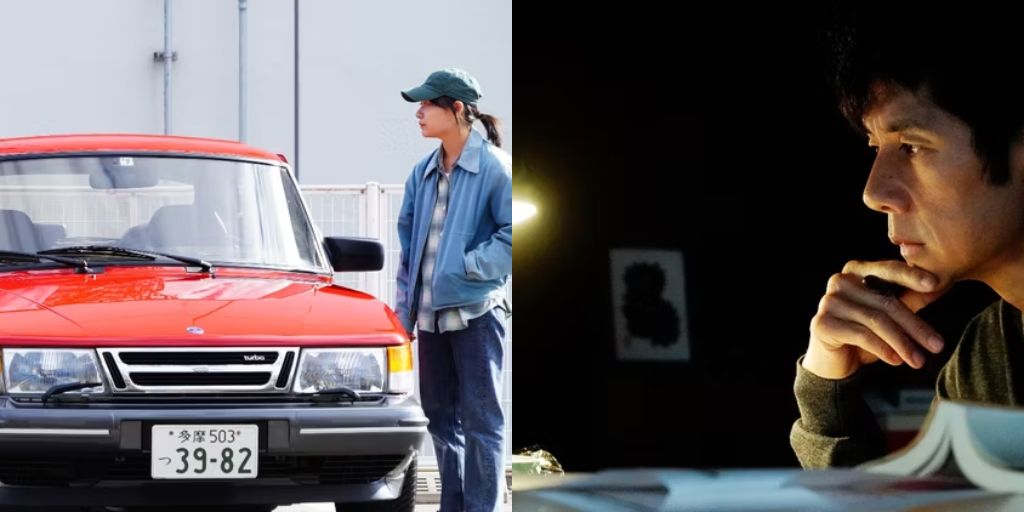
Still from Drive My Car (Credit: Max)
Even though the film’s plot—a reserved playwright working on a Chekhov play without a clear ending—might seem complex, Hamaguchi tells it with genuine emotion. The intricate feelings that Yusuke experiences are universal and relatable to people from any culture.
“Drive My Car” is a prime example of slow-burn cinema, a genre that can sometimes fall into predictable patterns. However, Hamaguchi’s confident direction allows the film’s lengthy runtime to reveal new aspects of Yusuke’s character throughout the “Uncle Vanya” production.
The film’s deliberate pacing draws viewers into Yusuke’s perspective, where his surroundings become a stage for showing his personal struggles. His life and his art are shown as interacting elements that both reflect and challenge each other.
‘Drive My Car’ Highlights Simple Yet Poetic Storytelling
When talking about a powerful film like “Drive My Car,” it is tempting to use grand language. Yet, it’s important to appreciate the film’s simple and beautiful approach. The story involves everyday tasks like making appointments, driving to work, and preparing for a play.
It presents these routine aspects of life in a thoughtful and reflective way. The relationship between Yusuke and his driver, Misaki, develops naturally during their time together in the car. As they spend time in the confined space of the car, they share deep secrets and Misaki helps Yusuke step out of his emotional shell.
Hamaguchi’s storytelling is clear and effective, showing that empathy is crucial in going through life’s difficulties. The film uses the metaphor of Misaki driving Yusuke to symbolize his need for guidance in his repetitive life.
Losing a loved one can be so overwhelming that it’s hard to see reality clearly. For Yusuke, the sudden death of Oto makes life feel like an unsolvable puzzle. This is why the multilingual production of “Uncle Vanya,” which includes Japanese, English, Mandarin, and Korean Sign Language, fits his state of mind.
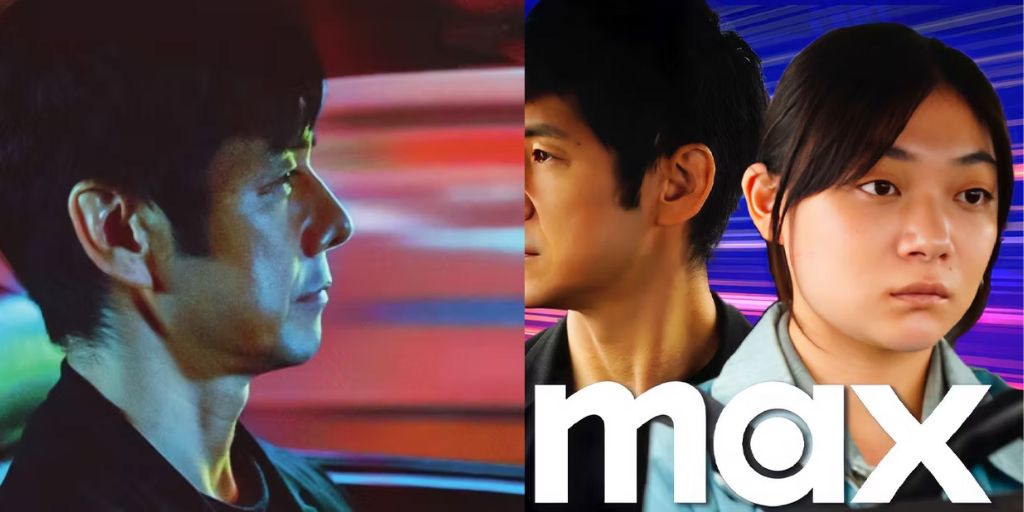
Still from Drive My Car (Credit: Max)
The film’s view of life and grief through different languages reflects Yusuke’s struggle to understand his sorrow. “Drive My Car” is not just a raw portrayal of grief; it is also a testament to the power of art to express and process deep emotions.
Ryusuke Hamaguchi’s film is essential viewing, providing a poetic insight into the act of mourning and the value of artistic expression. “Drive My Car,” directed by Ryusuke Hamaguchi, is a profound film about a grief-stricken actor and playwright dealing with his wife’s death while directing “Uncle Vanya” in Hiroshima.
Known for its slow-burn storytelling and emotional depth, it shows universal themes of loss and healing through art and personal reflection. “Drive My Car” is available to watch on Max in the U.S.
Tom Bombadil (Rory Kinnear) appears in the newest episode of The Lord of the Rings: The Rings of Power titled “Eldest.”
Many viewers might be surprised to meet one of the most powerful characters not featured in previous adaptations by Ralph Bakshi or Peter Jackson.
Tom Bombadil’s abilities are not fully explained, but the limited powers he does show in J. R. R. Tolkien’s writings suggest that he can do things other great beings in Middle-earth cannot.
Despite his great strength, Bombadil is not a “Deus-ex-Machina” (a term often incorrectly used for the eagles).
He is powerful but cannot defeat Sauron by himself, which is why he tells The Stranger (Daniel Weyman) that it is his duty, similar to how he tells Frodo in the books.
Tom Bombadil Is Unaffected by the One Ring
In The Lord of the Rings: The Fellowship of the Ring, Frodo and the hobbits—Merry, Pippin, and Sam—meet Tom when he rescues them from Old Man Willow, a tree with a nasty spirit that tries to eat the hobbits. Tom shows his ability to disappear at will and talk to trees, like he does with Old Man Willow.
When Frodo offers him the One Ring, Bombadil reacts in a way never seen before. Tom takes the Ring, sees it as unimportant, puts it on, and remains visible before making it disappear and then reappearing to Frodo.
Tom not only gives up the Ring without any trouble, but being a ‘ring-bearer’ does not seem to affect him. Even when Frodo makes himself invisible with the Ring to check if it works, Tom can still see him. Until this point and afterwards, every character who encounters the Ring is either afraid or tempted by it.
To see Bombadil treat it so lightly is surprising. His ability to see Frodo in the Unseen World might hint that he has a similar origin to the Valar and Maiar, though his true origin remains a mystery.
In Rings of Power, Tom is shown to be very powerful, saving The Stranger from Old Man Ironwood and appearing much older than he looks. The big question is: “Why doesn’t Tom take the Ring to Mordor himself?”
Why Doesn’t Tom Bombadil Take on Sauron Himself?
The answer to this question is found in The Fellowship of the Ring. It is similar to Tom’s response to The Stranger in the episode: “Tom’s a wanderer, not a warrior.” As shown in Rings of Power, Tom was in Middle-earth before the trees, acorns, and even calls stars “newcomers.”
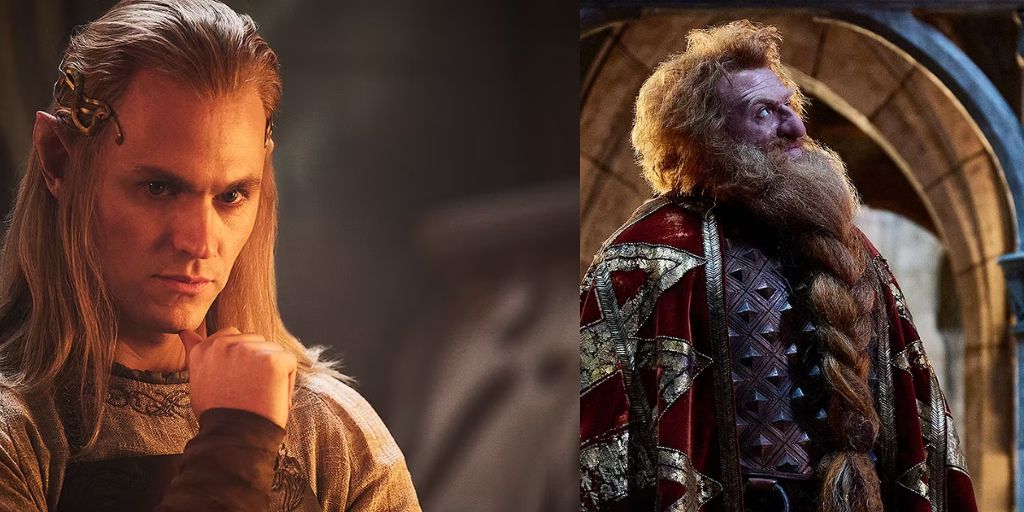
Still from The Rings of Power (Credit: Prime Video)
This suggests that Tom is not originally from this world. This explains why the Ring does not tempt him and why he cannot intervene in the world’s struggles. His power seems to come from a different source, making him unaffected by Sauron’s power yet unable to counteract it.
The Council of Elrond in The Fellowship of the Ring discusses hiding the Ring in Bombadil’s realm. However, it is decided that even Bombadil could not protect against all of Sauron’s forces. This highlights that even the most powerful beings cannot defeat evil alone.
It requires everyone in Middle-earth working together. Tom is not from Middle-earth; he represents something else. In a letter from 1937, J.R.R. Tolkien told Stanley Unwin that Bombadil represents the English countryside. This makes Bombadil a figure to protect rather than a warrior.
Tom Bombadil’s brief appearance in “Eldest” shows him to be one of the most powerful characters ever adapted in The Lord of the Rings franchise.
He is not affected by the Ring and his age and ability to see into the Unseen World suggest ancient, mythical origins. However, as a symbol of the English countryside, Tom cannot fight wars for others. He is a wanderer, not a warrior, and that’s exactly how he should remain.
The Lord of the Rings: The Rings of Power is available to stream on Prime Video.
