The Dune universe has once again attracted audiences, this time through the premiere of Dune: Prophecy on Max. This exciting new series is set 10,000 years before the events that fans saw in Denis Villeneuve’s Dune movies. It shows a period of history long before Paul Atreides rose to power.
The first episode, titled “The Hidden Hand,” introduces a universe in recovery. It shows a time when humanity is still healing from a devastating war against machines and the political systems of the future are taking shape.
One of the biggest focuses of the episode is the state of the universe. Humanity is still recovering from the Butlerian Jihad, a war that took place against sentient machines.
These machines were once integral to the galaxy, but after the war, humanity outlawed the use of such technology. This conflict has left deep scars, and as the episode unfolds, it is clear that its impact still echoes in the decisions and attitudes of the people and factions that remain.
Humanity Struggling to Recover from the Butlerian Jihad
The episode opens with a flashback to a century earlier, during the final battle of the Butlerian Jihad. In this scene, viewers get a glimpse of the war that shaped the future of the universe. Valya Harkonnen, voiced by Emily Watson, provides a voiceover explaining that history often claims that an Atreides led humanity to victory over the thinking machines.
However, Valya challenges this version of history, claiming that the real story has been distorted. According to her, the Harkonnen family, which she is a part of, was wrongly labeled as cowardly and banished to a desolate world.
This altered history sets the stage for Valya’s journey. Many decades later, we see her as a young woman, voiced by Jessica Barden. Along with her sister, Tula, Valya joins the Sisterhood on Wallach IX, a world where the order has been established by Raquella Berto-Anirul.
Raquella is the first Mother Superior of the Sisterhood and serves as a motherly figure to Valya. Under her guidance, Valya learns the ways of the Sisterhood, which trains women to serve as Truthsayers. These women help the Great Houses of the galaxy discern truth from lies, allowing the Sisterhood to form a powerful network of influence across the Imperium.
Despite her strong abilities and potential, Valya’s Harkonnen heritage makes her an outcast within the Sisterhood. However, her life changes after the death of Mother Raquella. On her deathbed, Raquella shares a vision with Valya, one of a sandworm swallowing the Sisterhood headquarters in a desert.
The vision ends with a pair of mysterious blue mechanical eyes. Raquella warns Valya of an upcoming reckoning for the galaxy, telling her that she “will be the one to see the burning truth and know.”
Raquella’s passing causes a brief divide within the Sisterhood. Reverend Mother Dorotea, played by Camilla Beeput, refuses to recognize Valya as the rightful leader and threatens to destroy the genetic matrix that the Sisterhood uses to track the lineage of the Great Houses.
Valya, however, is able to stop her with a technique she has mastered called the Voice, which allows her to control others with her words. She orders Dorotea to kill herself, thus establishing her dominance and setting the stage for her leadership.
Valya Plans Humanity’s Future in ‘Dune: Prophecy’ Episode 1
Fast forward thirty years, and Valya is now the Mother Superior of the Sisterhood. She has built a thriving order, and Tula, now voiced by Olivia Williams, is her most trusted advisor. Tula teaches young girls the ways of the Sisterhood, including martial arts, brain anatomy (focusing on detecting lies), and the art of Truthsaying.
The Sisterhood is flourishing, with young girls from all over the galaxy eager to join their ranks. This development also ties into a larger plan that Valya has been quietly orchestrating over the years.
One of Valya’s most important tasks is training Princess Ynez Corrino, the heir to the Golden Lion Throne, to join the Sisterhood. Princess Ynez, voiced by Sarah-Sofie Boussnina, is set to spend ten years with the Sisterhood, where she will be trained as a Truthsayer.
This is part of a long-term strategy to ensure that a member of the Sisterhood will eventually sit on the throne and have significant power over the Imperium.
The episode reveals that Valya has been watching the behavior of the Great Houses closely, using her network of Truthsayers to track their movements. Valya has also implemented a secret breeding program, encouraging the Great Houses to marry according to a specific genetic plan.
This plan will, in theory, eventually put a Sister on the throne. To ensure that the plan proceeds smoothly, Valya assigns Kasha, a Truthsayer (played by Jihae Kim), to be close to both Princess Ynez and Emperor Javicco Corrino, the ruler of the Imperium.
Political Tensions Build as House Corrino Struggles to Control the Imperium
At the same time, the power of the Imperium is unstable. House Corrino, which rules the Imperium, is struggling to maintain control. The Fremen, the desert people of Arrakis, remain a significant challenge. They have not been pacified, and their control of the spice supply is a key issue.
To stabilize the Imperium, Emperor Javicco Corrino (Mark Strong) arranges for the marriage of Princess Ynez to Pruwet Richese (Charlie Hodson-Prior) of House Richese. This union is meant to secure the throne and maintain control over the spice supply, which is crucial to the power of the Imperium.
However, not everyone agrees with this plan. Empress Natalya, played by Jodhi May, strongly disapproves of the marriage, but Javicco sees it as the only viable solution. Tensions rise as different factions in the Imperium fight for influence over the throne, while the looming shadow of the past war clouds everyone’s decisions.
In the midst of these tensions, a mysterious stranger named Desmond Hart (Travis Fimmel) arrives. Hart is a former soldier who fought for the Imperium on Arrakis, but he mysteriously survived an attack that wiped out his entire regiment.
Desmond’s arrival shakes things up, especially when he tells Emperor Javicco that the attack he survived was not carried out by the Fremen, as everyone assumed, but by rebel insurgents from within the other noble houses. This revelation catches the attention of the Emperor and his Truthsayer, Kasha.
A Dangerous Vision of the Future
As the royal engagement celebrations unfold, a strange vision begins to haunt Kasha. She has a vision of Princess Ynez in her red wedding dress, being swallowed by a sandworm, with Ynez calling out that Kasha “did this.” The vision ends with the same mysterious pair of mechanical blue eyes and an unintelligible message.
Distressed by the vision, Kasha travels to Wallach IX to speak with Valya and ask her to cancel Ynez’s wedding. However, Valya refuses, warning Kasha to stay true to the Sisterhood’s mission.
During the engagement party, an incident occurs when Pruwet Richese accidentally releases his robot pet. Robots, or “thinking machines,” were banned after the Butlerian Jihad, and the incident causes Empress Natalya to call for the wedding to be canceled.
However, Emperor Javicco minimizes the situation, and Pruwet faces no real consequences. Frustrated, Princess Ynez lashes out at Pruwet and later spends the night with her swordmaster, Keiran Atreides (Chris Mason), in a secret relationship.
The next day, Desmond Hart speaks with Emperor Javicco again, offering his views on the state of the Imperium. He tells the Emperor that the problems the Imperium faces, especially with Arrakis, go far beyond simple political alliances.
According to Hart, there is an insurgency at work, and people are beginning to question the ban on thinking machines. Hart expresses his disdain for the Sisterhood and suggests that the true threat may be something much larger than anyone realizes.
Tragic Deaths and a Dark Revelation
That night, something tragic occurs. Desmond Hart has a private conversation with young Pruwet, who is struggling with a nightmare. Hart tells the boy about a war that is “hidden in plain sight,” being fought by an enemy who manipulates everyone and does their thinking for them.
He assures Pruwet that his sacrifice won’t be in vain. Moments later, Pruwet dies painfully, his body burning from the inside out. This shocking death mirrors the death of Kasha on Wallach IX, who also dies in agony, screaming as Valya and the other sisters watch in horror.
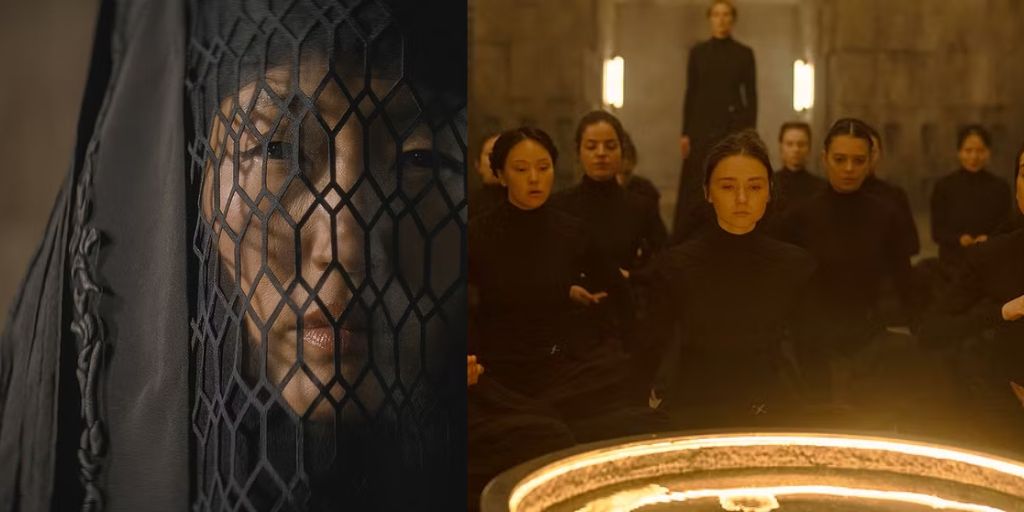
Still from Dune Prophecy (Credit: Max)
As Kasha dies, Valya whispers, “I see, Mother. I see.” This moment suggests that the “burning truth” that Raquella had foretold has finally come to pass.
A New Beginning for Dune: Prophecy
With its first episode, Dune: Prophecy sets the stage for a political and spiritual revolution. As the episode closes, the real story of the Dune saga begins to unfold, revealing a deep web of deceit, prophecy, and war that will have lasting consequences on the galaxy.
As Valya Harkonnen takes center stage as a pivotal figure, her fate, and that of the Imperium, lies at the intersection of truth, power, and destruction.
Eiichiro Oda’s One Piece has long been celebrated as one of the most immersive and intricately built fictional worlds in anime and manga.
A significant factor in its attracting the allure lies in its masterful worldbuilding. Oda has created a universe so expansive and layered that every island, sea, and character feels alive, distinct, and interwoven with the overarching narrative.
Central to this immersive worldbuilding is the clever use of rumors and hearsay. These tools are more than just narrative devices; they form the backbone of storytelling in One Piece.
In a vast world where characters are often separated by great distances and rarely meet face-to-face, information travels through fragmented accounts.
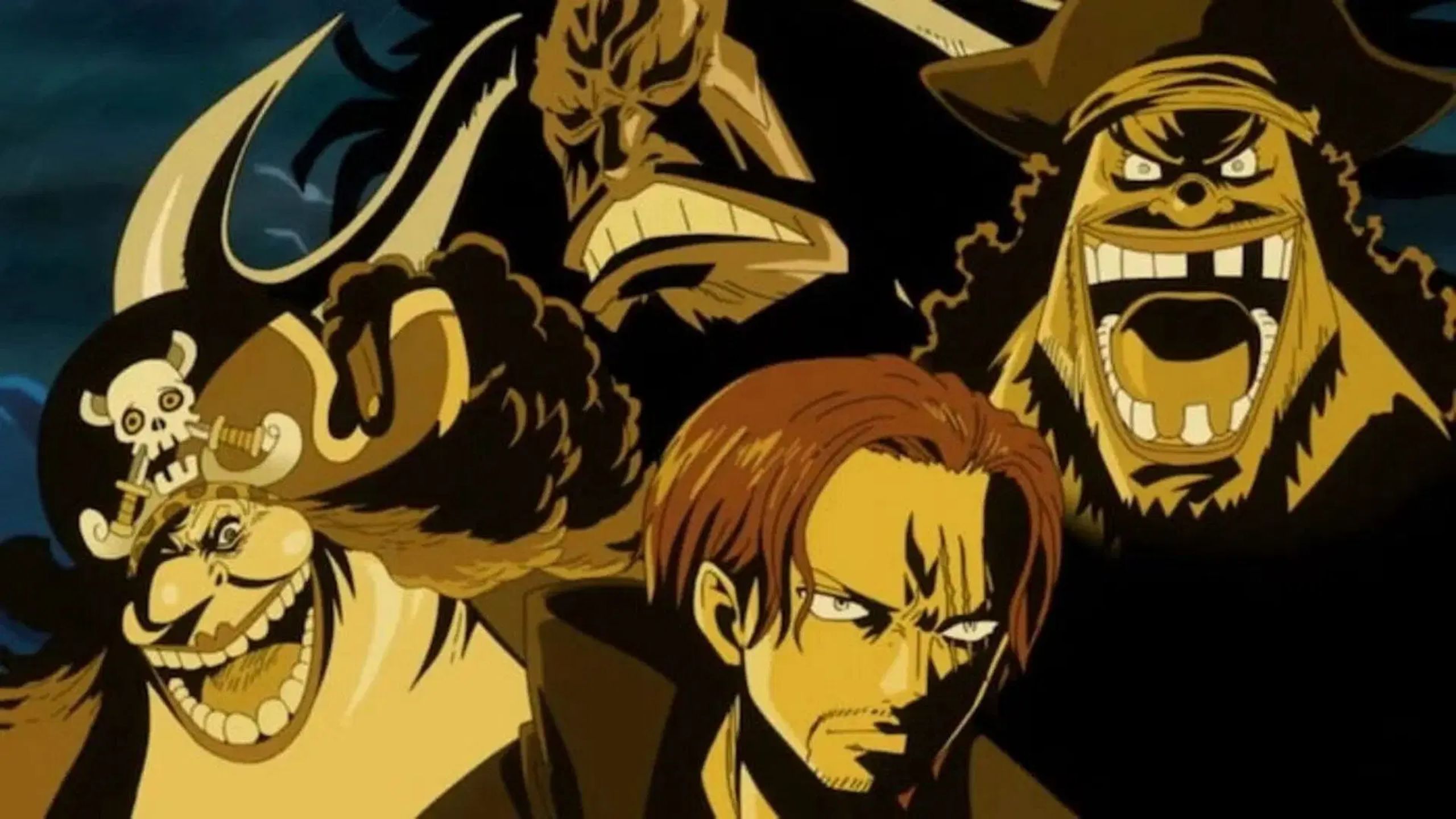
The Yonkos (Toei Animations)
This reliance on incomplete or unreliable information shapes the perceptions of both characters and fans, influencing how events unfold and how the world is understood.
Oda’s reliance on this narrative device not only drives the intrigue of the series but also makes it a study in the power of perception versus reality.
The role of rumors extends beyond the main series and is further explored in its spinoffs, such as the Ace novels and One Piece: Fan Letter .
These works jump deeper into how hearsay shapes character dynamics and world events, showcasing how perception often overrides objective truth in Oda’s fictional universe.
The Role of Rumors in One Piece’s Worldbuilding
One of the hallmarks of Eiichiro Oda’s storytelling is his frequent use of phrases such as “he said,” “she said,” “they say,” and “I heard.”
These phrases reflect the fundamental structure of the One Piece world, where information often spreads second-hand or even third-hand, creating an atmosphere of mystery and uncertainty.
In a universe as vast as One Piece, where the seas are seemingly endless and characters are scattered across islands separated by treacherous waters, direct communication is rare.
As a result, rumors, stories, and legends play a pivotal role in shaping the perception of events, individuals, and groups.
This approach is more than a clever narrative technique; it is a reflection of the world Oda has built. In this expansive universe, no single person or entity has a complete grasp of the truth.
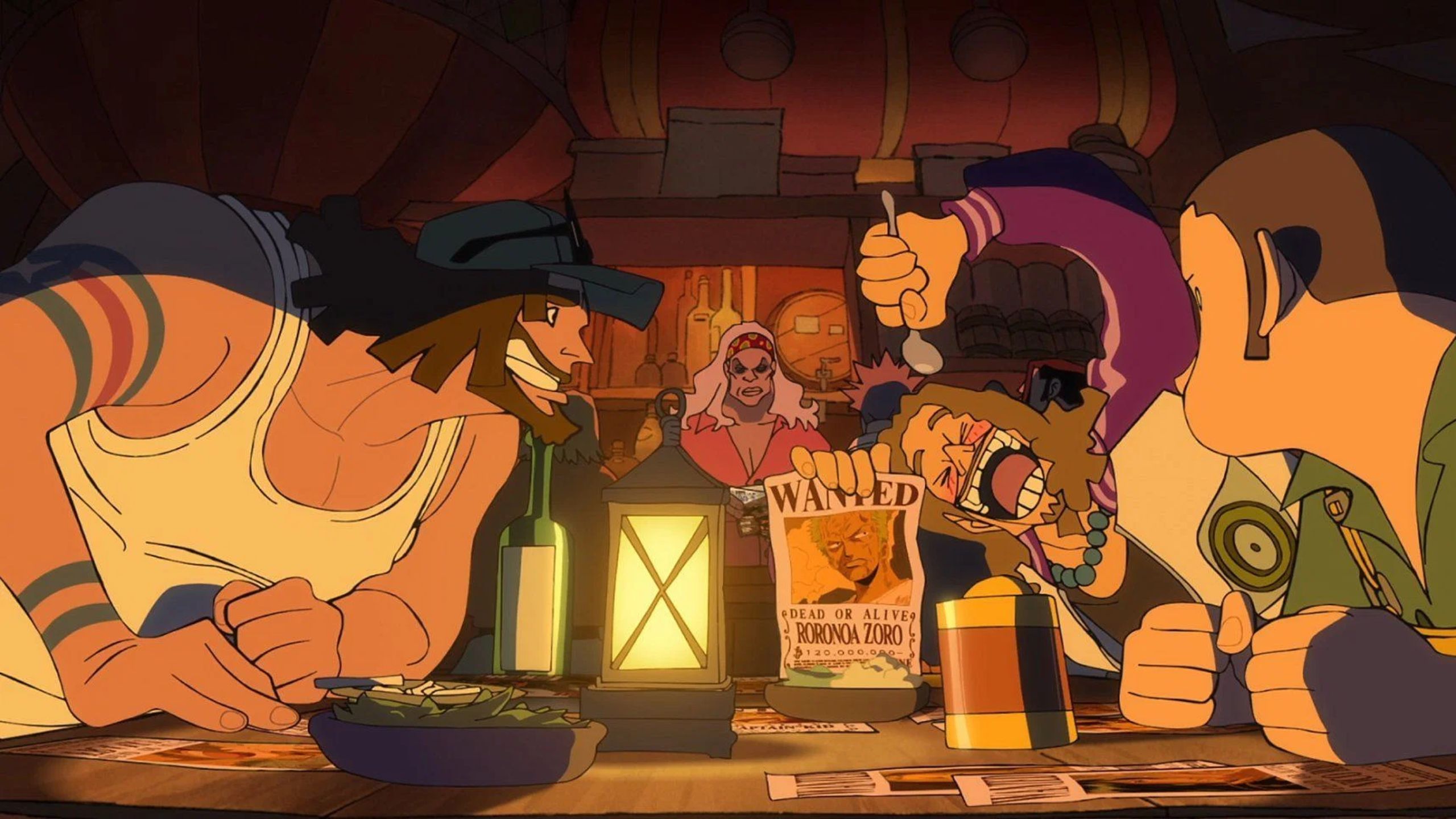
One Piece Fan Letter Conon (Toei Animations)
Even powerful organizations like the World Government or the Marines operate based on partial or biased information.
This dynamic creates an environment where rumors and hearsay thrive, shaping the actions and decisions of both major and minor players in the story.
The spreading of rumors also serves to enrich the world’s lore. Characters are not just defined by their actions but by how those actions are perceived and retold by others.
For instance, Monkey D. Luffy’s reputation as an unpredictable and formidable pirate grows as much from his direct exploits as from the exaggerated or embellished tales that follow in his wake.
These narratives, often colored by the perspectives of those who share them, add depth to the storytelling and make the world feel more alive and interconnected.
Exploring Rumors Through the Ace Novels
The Ace novels, which provide a deeper look into the life and adventures of Portgas D. Ace, offer a prime example of how rumors influence the world of One Piece.
As Ace sails the Grand Line in pursuit of his dreams and builds his reputation as a pirate, the stories that circulate about him often shape how he is perceived by others.
These stories, which are frequently based on hearsay rather than direct observation, highlight the role of rumors in shaping both individual identities and broader world events.
In these novels, Ace encounters a wide variety of individuals, each with their own perspectives and interpretations of the world around them.
These characters often share their own versions of events, blending fact with fiction and creating a drapes of interconnected narratives.
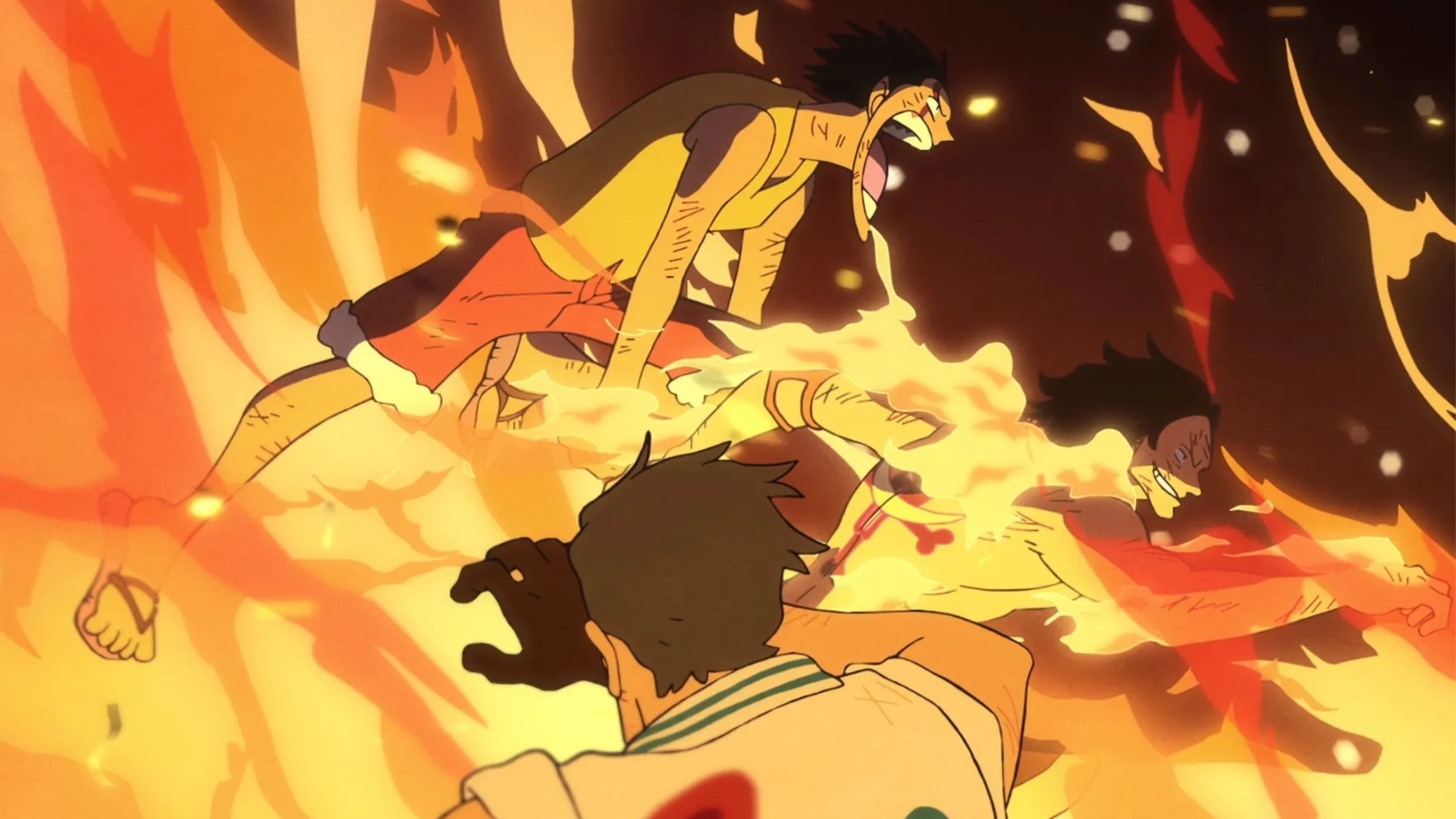
Luffy Saving Ace In Marine One Piece Fan Letter (Toei Animations)
Through these interactions, readers gain insight into how the spread of information or misinformation affects the actions and decisions of characters in the One Piece world.
For example, Ace’s growing infamy as a pirate is fueled not only by his actual deeds but also by the tales that spread in his wake.
These tales, often exaggerated or distorted, contribute to his reputation as a formidable and unpredictable figure.
This phenomenon underscores a central theme of One Piece: that perception is as powerful as reality, and in some cases, even more so.
The Ace novels also explore how rumors can influence the decisions of both allies and adversaries.
Pirates, marines, and civilians alike must steer across a world where the truth is often obscured by layers of speculation and falsehoods.
This dynamic creates a rich and unpredictable narrative world, where characters must rely on their instincts and judgment to separate fact from fiction.
The Influence of Rumors in One Piece Fan Letter
Another spinoff that jumps into the power of rumors is One Piece: Fan Letter. This story centers on a young girl who admires Nami, the skilled navigator of the Straw Hat Pirates.
Through her perspective, readers gain a deeper understanding of how rumors and hearsay shape the way people perceive the Straw Hats and their adventures.
The girl’s admiration for Nami is based entirely on second-hand accounts, emphasizing how characters in the One Piece universe are often defined by the stories told about them rather than by direct interactions.
In Fan Letter, the spread of information is depicted as both a unifying and divisive force. On one hand, it allows people from distant corners of the world to feel connected to the Straw Hats and their exploits.
On the other hand, it creates misunderstandings and misconceptions that can lead to conflict or confusion.

One Piece Fan Letter (Toei Animations)
The story highlights the dual nature of rumors: they can inspire admiration and loyalty, but they can also sow discord and mistrust.
The spinoff also emphasizes the uncertainty that often accompanies the spread of rumors.
Characters frequently question the accuracy of the information they receive, reflecting the broader theme of how truth is often elusive in the One Piece world.
This uncertainty adds a layer of complexity to the storytelling, encouraging readers to think critically about the nature of information and its role in shaping perceptions.
Beast Pirates and the Power of Speculation
One of the most striking examples of Oda’s use of rumors in the main series is the depiction of the Beast Pirates, the fearsome crew led by Kaido.
When the silhouettes of the Beast Pirates were first introduced, they sparked widespread speculation among fans and characters alike.
Many assumed that the crew consisted entirely of Zoan Devil Fruit users, given their imposing and animalistic appearances.
This assumption, fueled by incomplete information, quickly spread and became a widely accepted belief.
As the story progressed, however, it became clear that this assumption was only partially true.
While the Beast Pirates did include some Zoan users, the majority of the crew was composed of failed SMILE fruit users or individuals awaiting the chance to acquire a Devil Fruit.
This revelation highlighted how rumors and speculation can lead to distorted perceptions, both within the One Piece universe and among its audience.
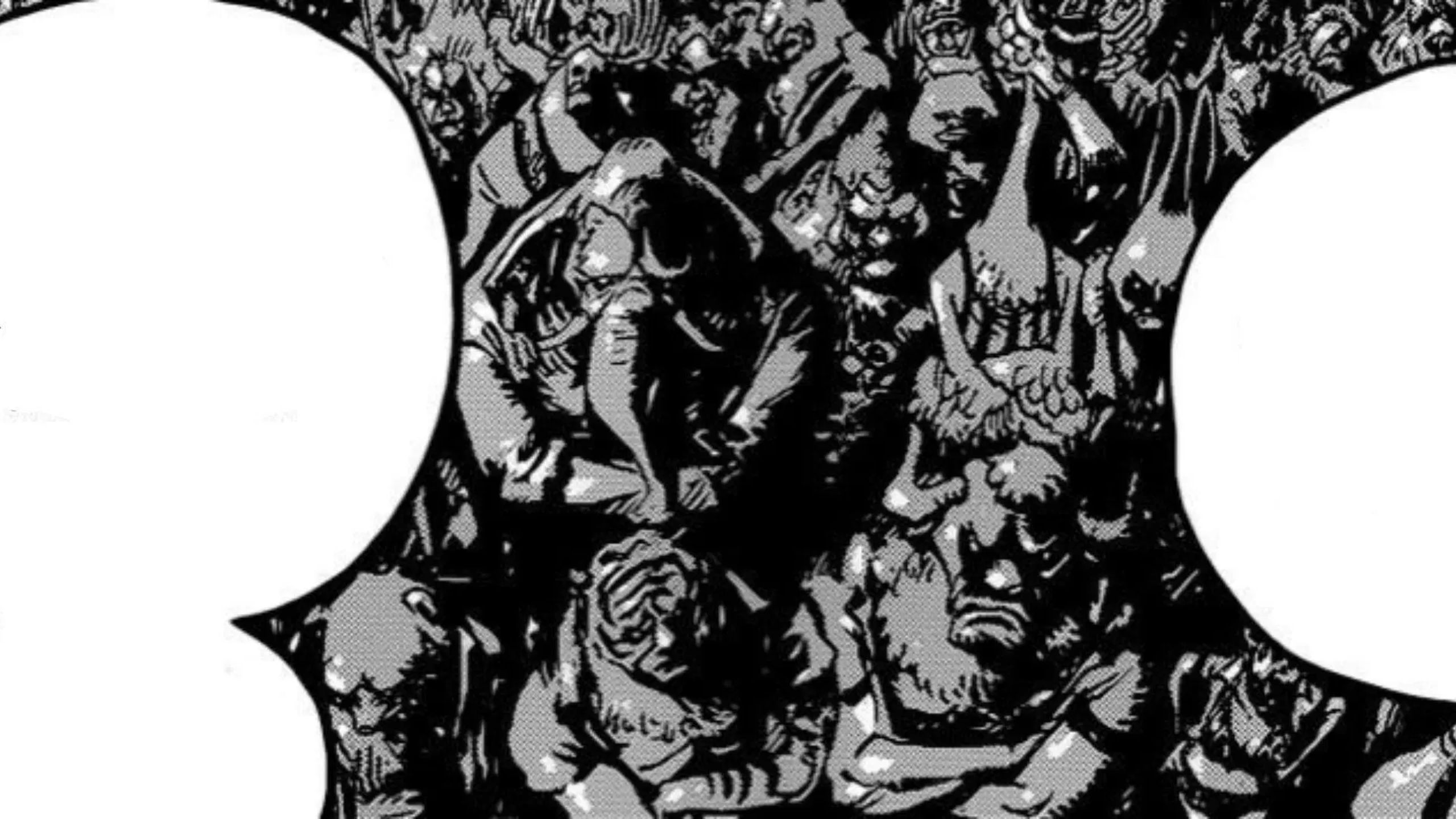
Silhouette of the Beast Pirates (Shueisha)
Oda’s handling of the Beast Pirates exemplifies his ability to use rumors and hearsay to create intrigue and subvert expectations.
By presenting information through the lens of speculation and incomplete knowledge, he keeps readers engaged and encourages them to question their assumptions.
This narrative strategy also reinforces the idea that in a world as vast and complex as One Piece, truth is often obscured by the fog of rumor and perception.
Thematic Significance of Rumors in One Piece
The use of rumors in One Piece is not merely a narrative device; it is a reflection of the series’ broader themes. At its core, One Piece is a story about freedom, individuality, and the pursuit of dreams.
The spread of rumors and hearsay mirrors the unpredictable and ever-changing nature of the world Oda has created.
Just as characters must steer across the physical challenges of the Grand Line, they must also contend with the complexities of a world where truth and fiction are often indistinguishable.
This theme is particularly relevant to the series’ exploration of identity and legacy. Characters in One Piece are frequently defined by the stories told about them, whether they are accurate or not.
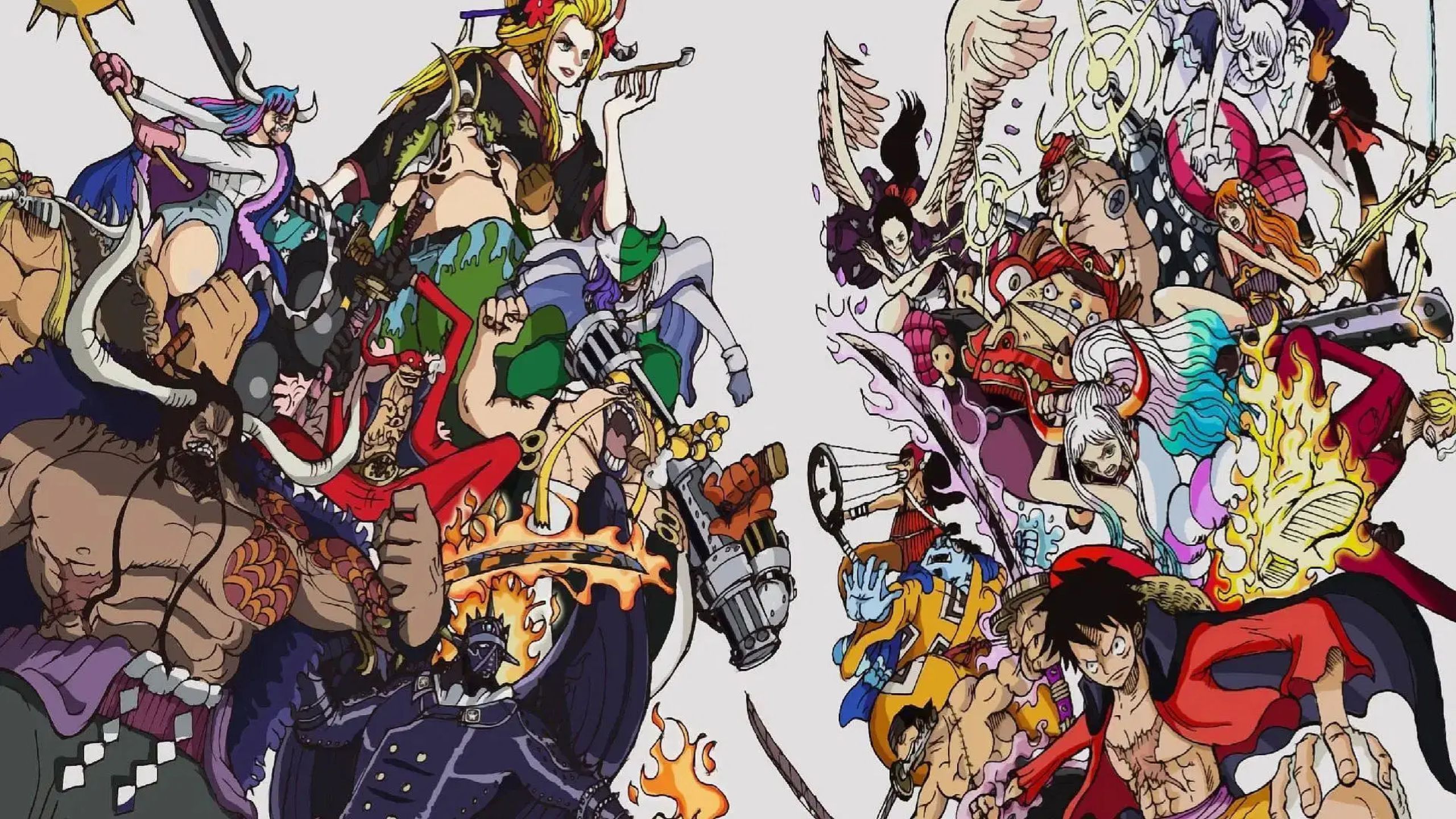
Kaido and the All Stars (Shueisha)
For example, Monkey D. Luffy’s reputation as a fearless and formidable pirate is shaped as much by the rumors surrounding him as by his actual actions.
These narratives, which often take on a life of their own, contribute to the Melting pot of the One Piece world and add depth to its characters.
How Rumors Enhance Storytelling in One Piece
By emphasizing the role of rumors and hearsay, Oda creates a narrative world that is both dynamic and immersive.
The spread of information or misinformation adds layers of complexity to the storytelling, creating a world that feels alive and constantly in motion.
This approach also mirrors real-world dynamics, where information is rarely complete or entirely reliable, and people must make decisions based on incomplete or conflicting accounts.
The emphasis on rumors also serves to heighten the sense of mystery and intrigue that defines One Piece.
By presenting information through the lens of hearsay and speculation, Oda keeps readers on their toes and encourages them to question their assumptions.
This narrative strategy not only adds depth to the storytelling but also fosters a sense of engagement and curiosity among fans.
The role of rumors and hearsay in One Piece is a testament to Eiichiro Oda’s unparalleled skill as a storyteller.
From the main series to its spinoffs like the Ace novels and One Piece: Fan Letter, this narrative element is integral to the world Oda has built.
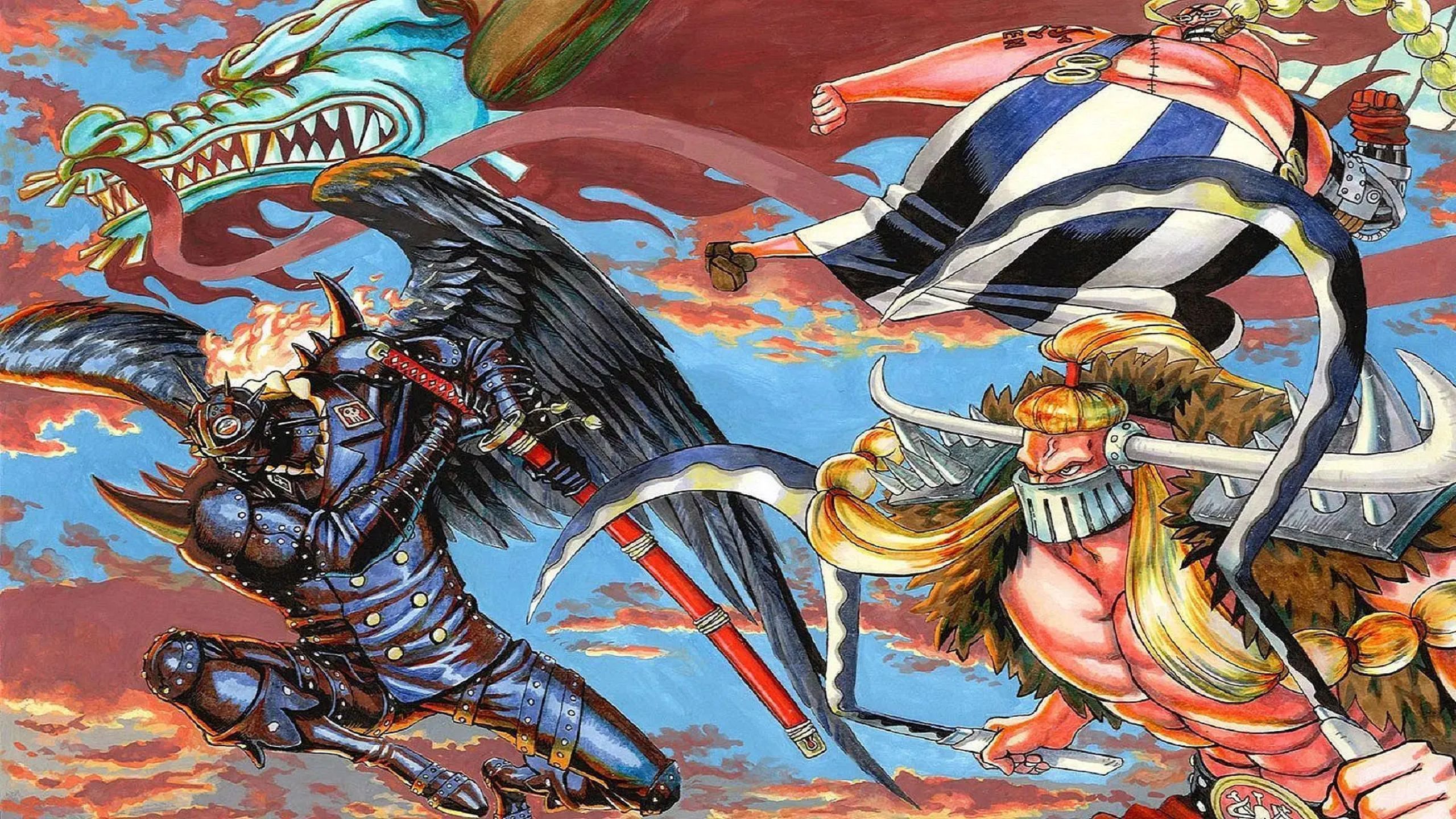
Kaido and the All Stars (Shueisha)
By embracing the uncertainty and complexity of information, he creates a universe that feels vast, interconnected, and alive.
Through his use of rumors, Oda not only adds depth to his storytelling but also challenges readers to engage with the narrative on a deeper level.
He invites us to consider the power of perception, the nature of truth, and the ways in which information shapes our understanding of the world.
As fans continue to explore the boundless seas of One Piece, the role of rumors will remain a central and compelling aspect of this legendary series.
