In 2021, the classic science fiction novel Dune by Frank Herbert was brought to life. Director Denis Villeneuve made it happen with his film, Dune. Villeneuve’s version became a great success, capturing the story’s depth, something previous attempts had failed to do.
One of the smartest things Villeneuve did was split the book into two movies. This gave the story and characters enough time to develop properly. Dune: Part Two became one of the top movies in 2024, and soon after, a third movie, Dune: Messiah, was announced.
The first spin-off from Dune will be a prequel series on Max called Dune: Prophecy. This series, originally titled Dune: The Sisterhood, will focus on the rise of the Bene Gesserit, a powerful group in the Dune universe. Here’s everything we know about the series.
When and Where Will Dune: Prophecy Come Out?
A Dune spin-off has been in the works at HBO since 2019, even before the 2021 release of the Dune movie. On November 22, 2022, former director Johan Renck said that production had started, stating: “Through events that happened thousands of years before the story you all know, we look into the group that will one day be known as the Bene Gesserit.”
Since then, Renck left the project and was replaced by Anna Foerster. However, the series is still scheduled to be released in November 2024.
Does Dune: Prophecy Have a Trailer Yet?
The story of Dune: Prophecy is set many years before Paul Muad’dib Atreides was born. It focuses on a sisterhood that aims to change the future. The first trailer for the series shows us Frank Herbert’s Dune in a new way, unlike anything we’ve seen before.
What Is the Plot of Dune: Prophecy?
The universe of Dune is incredibly vast, with stories spreading across the universe and covering thousands of years. Frank Herbert’s novels created one of the most detailed fictional worlds, similar to J.R.R. Tolkien’s Middle Earth.
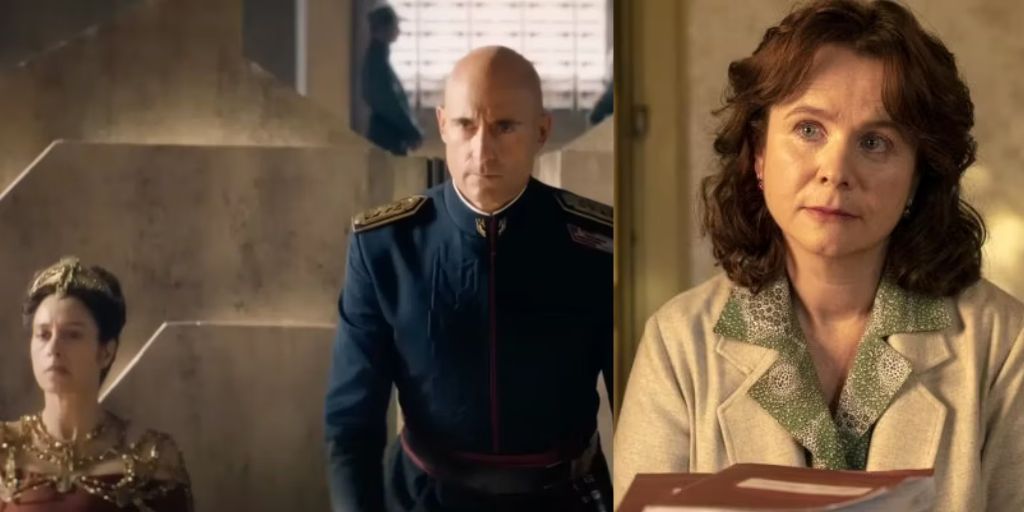
Still from Dune Prophecy (Credit: Max)
The story of Dune: Prophecy takes place around 10,000 years before the events of Dune and the birth of Paul Atreides, the prophesied Kwisatz Haderach.
The story follows Griffin and Valya Harkonnen, the eldest children of the Harkonnen family, as they work to rebuild their family name and fortune. Eventually, they help form the Bene Gesserit, the powerful group known throughout the universe.
In Dune, the Bene Gesserit is a major force. They are a secretive group that carefully plans and manipulates events to control their future and have a big influence on politics and power in the universe.
In the first Dune movie, we see Villeneuve’s portrayal of the Bene Gesserit through the characters of the Reverend Mother (played by Charlotte Rampling) and Paul’s mother, Lady Jessica (played by Rebecca Ferguson). The new series will show the origins of the Bene Gesserit and expand their story.
Here is the official synopsis of the show released by Max:
“Set 10,000 years before the rise of Paul Atreides, the hero of the 1965 novel Dune, the series follows two Harkonnen sisters as they fight against forces threatening humanity’s future and form the legendary group known as the Bene Gesserit.”
Who Is in the Cast of Dune: Prophecy?
One of the biggest strengths of the Dune movie was its talented cast, and Dune: Prophecy is continuing with a similar approach by assembling an impressive cast.
Emily Watson, known for her roles in Chernobyl and Punch-Drunk Love, will play Valya Harkonnen, a strong woman rising in power within the Bene Gesserit. Jodhi May (The Witcher) will play Empress Natalya, who unites thousands of worlds through her marriage to the Emperor.
Mark Strong (Shazam! and Sherlock Holmes) will play Emperor Javicco Corrino, a ruler descended from powerful European leaders who govern the Imperium during a period of unrest. Travis Fimmel (Vikings) will portray a charismatic warrior who seeks to gain the Emperor’s trust, even if it means going against the Sisterhood.
Olivia Williams (The Sixth Sense) will play Tula Harkonnen, an early member of both the Harkonnen family and the Bene Gesserit.
Other actors like Jade Anouka, Chris Mason, Sarah-Sofie Boussnina, Shalom Brune-Franklin, Faoileann Cunningham, Aoife Hinds, and Chloe Lea will also have important roles in the series.
Shirley Henderson (Star Wars: The Rise of Skywalker) and Indira Varma (Game of Thrones) were originally cast to play Tula Harkonnen and Empress Natalya, but both left the project in early 2023.
Who Is Making Dune: Prophecy?
Denis Villeneuve’s vision for Dune is remarkable. His influence will continue with Dune: Prophecy, as he will return as an executive producer on the show. Production on the series has seen some challenges, with several people leaving the project.
Diane Ademu-John (Empire, The Originals) and Alison Schapker (Lost, Westworld) initially led the project as showrunners. However, Ademu-John left the show in November 2022, leaving Schapker as the only showrunner. Johan Renck (Chernobyl, Breaking Bad) was originally supposed to direct the first two episodes but left in February 2023.
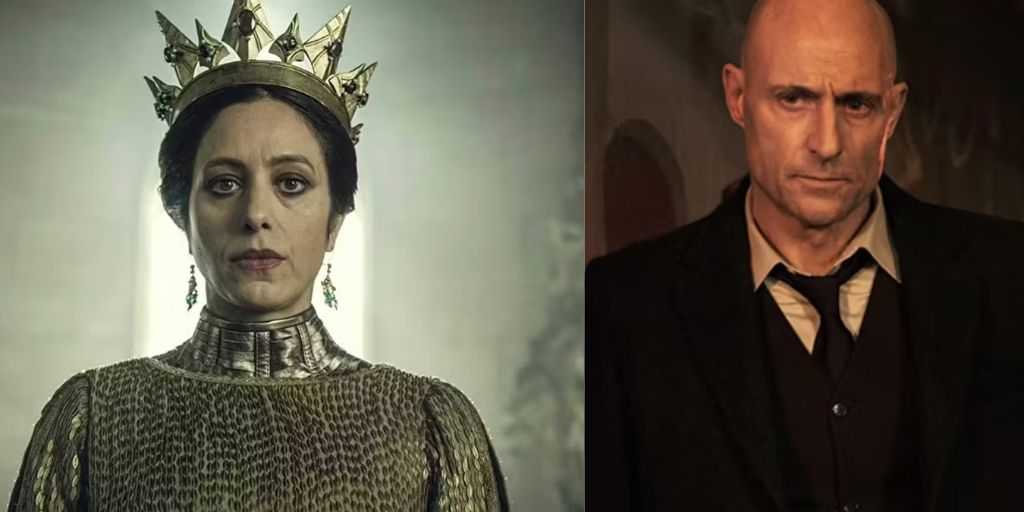
Still from Dune Prophecy (Credit: Max)
HBO provided the following statement about Renck’s departure to Variety:
“There are some creative changes being made to the production to ensure the best series possible and to stay true to the source material. Johan Renck has completed his work on the series, and a new director will be brought on. By mutual agreement, Johan is moving on to pursue other projects.”
We don’t know yet how much of Renck’s work will be used in the final series, but we do know that Anna Foerster is directing several episodes. The series is now in post-production and is still on track to be released later this year.
With Netflix’s Kaos, audiences were treated to a wild and almost crazy take on mythology. The show takes familiar Greek gods like Zeus, Hera, Poseidon, and Hades, and changes how we usually see them. Instead of being all-powerful, destructive beings, they are shown as deeply flawed and even petty at times.
The gods are involved in complicated divine politics that mess with the world of humans. Over eight episodes, these gods tell a story of lies, betrayal, and the thirst for power.
Things get so chaotic that humans discover what could be the biggest scam of their time. The season ends on a big cliffhanger. If this mix of divine messiness and modern storytelling left you wanting more, American Gods is the next show you should watch.
American Gods, based on Neil Gaiman’s novel, is more than just a story about gods fighting. It was developed by Bryan Fuller, the person behind Pushing Daisies and Hannibal, and Michael Green, who created Kings and co-wrote Logan.
At first glance, American Gods seems like a battle between old gods, like Odin and Anansi, and new gods, like technology and media. But if you look more closely, the show also talks about belief and how it shapes people.
It’s a clever reflection of America, representing its diversity, cultural clashes, and the tension between old traditions and modern trends. Just like Kaos reimagines the Greek gods in a modern world, American Gods shows the clash between the old and the new. It’s the perfect watch for anyone who likes mythology with a modern twist.
American Gods Shows Gods as Flawed and Relatable
The gods in American Gods are powerful, but the show goes out of its way to highlight their flaws. Their lives are affected by chance events, just like humans. For example, Mr. Wednesday (played by Ian McShane), who is actually Odin, is wise and powerful.
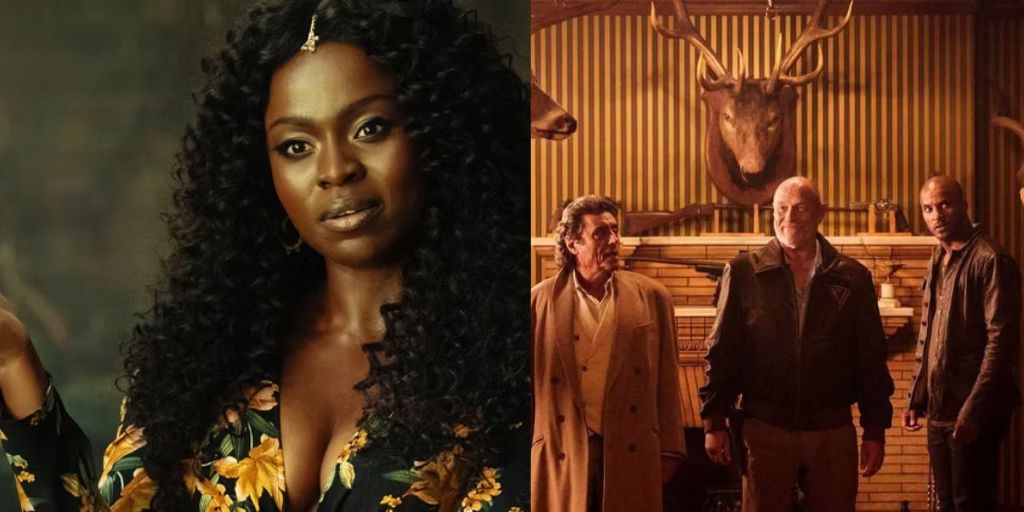
Still from American Gods (Credit: Prime Video)
But he’s also manipulative and self-centered. When Shadow first meets him, Mr. Wednesday is pretending to be a confused old man at an airport to get a class upgrade. While his intelligence and divine power make him frightening, his trickster nature makes him more human. He constantly shifts between being a god and a crafty conman.
Then there’s Bilquis (Yetide Badaki), once the goddess of love and sex, who has fallen on hard times. Now, she gets her “worship” through sex work. Her need for attention is similar to the human need for validation and relevance.
Other gods, like Mr. Nancy (Anansi, played by Orlando Jones), use charm and wit to stay important, much like humans rely on humor and storytelling to survive. Even Easter (Kristin Chenoweth) feels angry and frustrated that Jesus has taken over her once-holy day.
The new gods are just as flawed. Technical Boy (Bruce Langley), for example, is impulsive and obsessed with power. He constantly seeks validation, similar to how people today chase likes, follows, and DMs on social media. Each god, old or new, is trying to prove their worth, making them relatable to humans.
Their interactions with one another and humans are not simple. They are layered and complicated, showing that they are more than just divine beings. American Gods presents characters that reflect our own imperfections and fears.
American Gods Gives a New Look at Belief
At the heart of American Gods is the clash between old and new gods. This gives viewers a look at how worship and faith have changed over time. On one side of this battle are the old gods, like Odin, Anansi, and Bilquis.
These gods were once worshipped by ancient cultures and were brought to the “new world” by immigrants. But in today’s modern world, they are mostly forgotten. This is where their struggle begins, as both the old and new gods survive by being believed in.
On the other side are the new gods, such as Technology, Media (played by Gillian Anderson), and Mr. World (Crispin Glover). These gods represent what modern society values, such as celebrity culture and constant connectivity.
Gone are the days when prayers and sacrifices were the main forms of worship. Now, it’s all about who has the best PR or marketing plan. For the new gods, belief is about popularity and staying in the public eye.
However, the old gods see belief as something much deeper. Mr. Wednesday refuses to change his image, despite advice from the new gods. To him, their shallow approach is meaningless.
One god, Vulcan (Corbin Bernsen), the Roman god of fire, decides to embrace the modern world. In one episode, Mr. Wednesday visits Vulcan and discovers that he has adapted to the times by becoming the god of guns. Instead of traditional prayers and offerings, Vulcan’s worship comes in the form of bullets being fired.
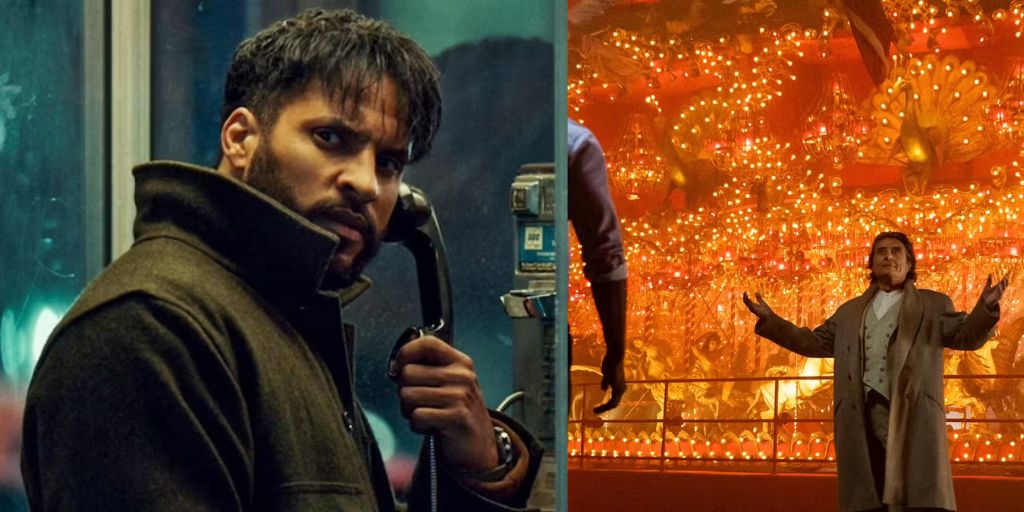
Still from American Gods (Credit: Prime Video)
American Gods shows that the battle isn’t just between old and new gods, but also between old and new ideas. One key message of the show is how modern desires have replaced older spiritual beliefs, but the need to believe in something remains constant.
American Gods Stands Out with Its Stunning Visuals
If there were an award for visual creativity, American Gods would easily win it. Even when parts of the story feel unclear, the show’s visuals keep the audience engaged. From the first scene, where Viking warriors engage in a slow-motion, bloody battle to honor their god, it’s clear that this show is unique.
The visuals capture each god’s vibe perfectly. Media’s scenes are filled with playful pop culture references, like Lucille Ball, while Technical Boy’s scenes are filled with glitchy, neon effects. Bilquis’ scenes mix a sense of discomfort with attraction, and her glow is otherworldly, drawing you in even as she literally absorbs her lovers.
With visuals like these, even the slower parts of the story become more enjoyable. The road trip scenes with Shadow and Mr. Wednesday, while seemingly mundane, are made cinematic with sweeping shots of the American view and lighting that makes you want to join them — minus the ancient gods.
From the worn-out look of the old gods to the sleek, high-tech aesthetic of the new gods, the visuals in American Gods do a great job of showing their fight for relevance.
American Gods, based on Neil Gaiman’s novel, is a story about the clash between ancient and modern gods, showing themes of belief, power, and relevance.
Developed by Bryan Fuller and Michael Green, the show features old gods like Odin and Anansi fighting for survival against new gods like Media and Technology. While gods are often seen as all-powerful, American Gods highlight their human flaws.
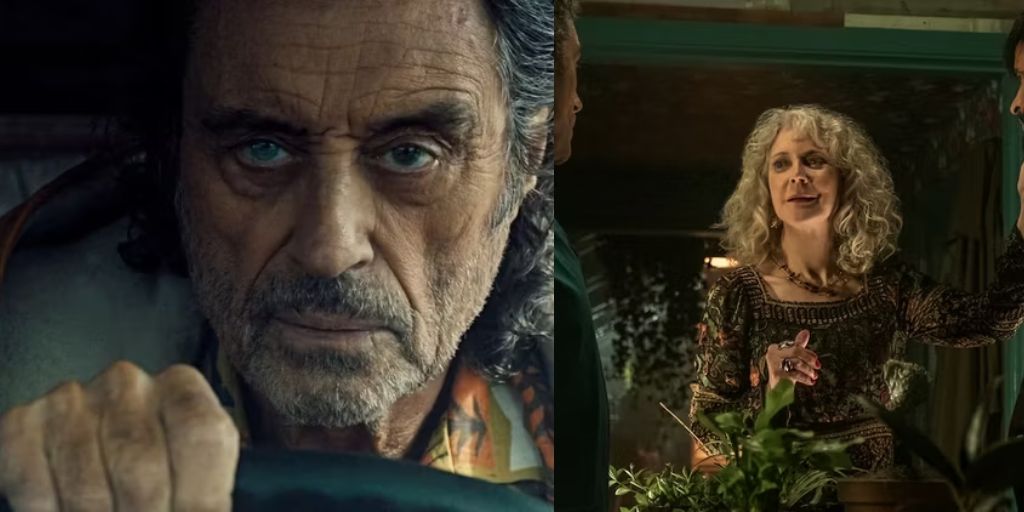
Still from American Gods (Credit: Prime Video)
Characters like Mr. Wednesday (Odin) and Bilquis, once powerful gods, struggle with manipulation, validation, and adapting to modern times. The show cleverly reflects America’s cultural diversity and the tension between old traditions and new trends.
Visually stunning, American Gods uses creative imagery to represent each god’s personality, from neon-lit scenes for Technical Boy to pop culture references for Media. This modern take on mythology blends epic battles, deep character development, and striking visuals, making it a must-watch for fans of myth and modern storytelling.
You can watch American Gods on Prime Video in the U.S.
