Venom: The Last Dance is the last adventure for Eddie Brock, played by Tom Hardy, and his symbiotic partner. They go on a road trip across the United States and fight against the symbiote god Knull along the way.
Even though this is the final chapter, there are two extra scenes—one at the end and another in the middle—that tease what might happen next in the Venom series. Fans of the first two movies, Venom and Venom: Let There Be Carnage, will find plenty to enjoy and will likely want more.
What Is Venom: The Last Dance About?
Venom: The Last Dance continues right after Venom: Let There Be Carnage. Eddie and the Venom symbiote return to their own world after a short visit to the Marvel Cinematic Universe. They do not have a moment to relax because many law enforcement agencies are after them.
One of these agencies is led by General Rex Strickland, played by Chiwetel Ejiofor. He works with scientist Teddy Payne, played by Juno Temple, to capture symbiotes.
While trying to escape, Eddie and Venom meet both familiar and new characters. They run into Ms. Chen, a convenience store owner played by Peggy Lu. Ms. Chen has been a friend to Eddie and Venom in the past. They also encounter Martin, played by Rhys Ifans.
Martin is known for his love of aliens and was previously in The Amazing Spider-Man as the Lizard. These meetings add depth to the story and remind viewers of the connections Eddie has in his life.
The main focus of the movie is the battle against Knull, a powerful symbiote god. Knull is a strong and evil figure who wants to take over and destroy. Eddie and Venom must work together to stop Knull and protect the world from his dark plans. Their road trip becomes not just a physical journey but also a test of their partnership and strength.
Eddie and Venom’s Dynamic
Eddie and Venom have a unique relationship. Eddie is a journalist who once faced many challenges in his life. He struggled with his career and his personal relationships.

Still from Venom The Last Dance (Credit: Sony)
When Venom, the symbiote, joined him, everything changed. Venom is not just a suit that Eddie wears; he is a living being with his own personality and desires. They argue, bicker, and often disagree, but they also rely on each other.
This dynamic adds a lot to the story. Eddie is not just trying to survive; he is trying to find balance in his life with Venom. They share a bond that is both complicated and powerful. As they face new challenges together, their relationship grows. Eddie learns more about himself, and Venom becomes more than just a partner; he becomes a true friend.
The Importance of Humor
One of the most enjoyable parts of the Venom movies is the humor. The writers include funny moments that lighten the mood.
Eddie and Venom’s conversations often lead to comedic scenes. Their arguments can be hilarious, especially when Venom tries to convince Eddie to do something wild or dangerous. This humor helps make the darker moments in the film feel less heavy.
For example, during their road trip, Eddie finds himself in strange situations that lead to laughter. Whether it’s dealing with odd characters or strange locations, the humor adds a fun element to the movie. This makes it more accessible to a wide audience, from children to adults.
Fans of the Venom movies are curious about the future of the franchise. The trailer for Venom: The Last Dance hints that either Eddie or the Venom symbiote may face serious danger.
This leaves viewers wondering if there will be more stories to tell. Writer and director Kelly Marcel has teased the return of Knull in future projects. She mentioned this during a Sony Pictures panel at New York Comic Con.
Tom Hardy, who plays Eddie, was also present at the panel. He shared his feelings about leaving the character behind. “It’s been seven years this day…It’s like I started the day seven years ago and now it’s nighttime.
It’s time to go to sleep. I’ve absolutely loved playing Eddie and Venom… It’s been one of the best things I’ve ever done in my life, so it’ll be sad to see him go.” His words show how much he cares for the character.
Even though he says goodbye to Eddie, fans should not count him out yet. In recent years, other actors have returned to their famous roles, like Michael Keaton as Batman and Hugh Jackman as Wolverine. This gives hope that Tom Hardy might don the Venom symbiote again someday.
The Multiverse Connection
There are exciting possibilities for the future of the Venom franchise, especially with the upcoming Marvel movies. Titles like Avengers: Doomsday and Avengers: Secret Wars are set to show the multiverse.
In the original Secret Wars storyline, Spider-Man first gets the symbiote suit. This means there could be a chance for Tom Holland’s Spider-Man and Hardy’s Venom to meet on screen.
The idea of seeing these two characters together excites many fans. The interaction between Spider-Man and Venom has always been a significant part of comic book history. If the Venom franchise continues to grow, there is a strong possibility of crossovers that fans would love to see.
Sony’s Success with the Venom Franchise
The Venom franchise has been a big success for Sony Pictures. The first Venom movie earned a lot of money at the box office. It showed that there was a strong interest in the character and story. Following this success, Venom: Let There Be Carnage also did well during its theatrical run.
Sony has tried to recreate this success with other Spider-Man-related characters, such as Madame Web and Morbius. However, none of these films have done as well as the Venom movies. Part of the reason for this success is Tom Hardy’s creative involvement.
He has been a producer and helped develop the stories for both Let There Be Carnage and The Last Dance. His passion for the character shines through, making the films more enjoyable for fans.
The End of an Era
As Venom: The Last Dance closes out the trilogy, it does so with a mix of excitement and sadness. Fans who have followed Eddie and Venom through their journeys have become attached to the characters. This final movie brings many elements together, giving viewers a sense of closure while still leaving the door open for new adventures.
The film shows how Eddie has grown and changed over the years. He is no longer just a troubled journalist; he is now a hero who fights for what is right. Venom, too, has evolved. He started as a dark and chaotic force but has become more than just a monster. Together, they make a strong team that has faced many challenges.
The Future of the Venom Franchise
While Venom: The Last Dance might mark the end of this chapter, it also hints at what could come next. Fans are left wondering about the potential stories that could be told in the future. The bond between Eddie and Venom remains strong, and their adventures are far from over.
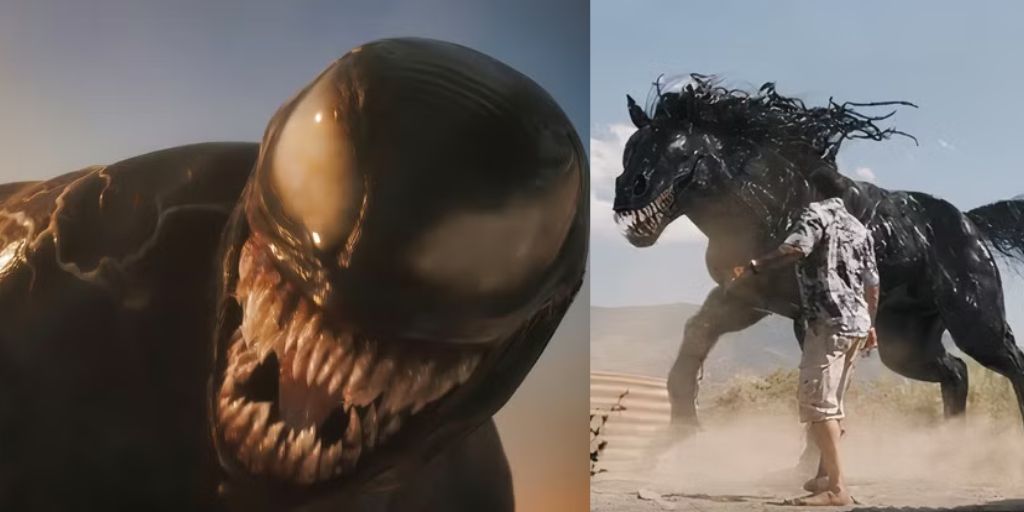
Still from Venom The Last Dance (Credit: Sony)
As the superhero movie continues to evolve, there are many paths the Venom franchise could take. Whether it leads to new characters, crossovers, or fresh stories, fans will be eagerly waiting for the next announcement.
Conclusion
Venom: The Last Dance provides an exciting and emotional conclusion to Eddie and Venom’s story. It balances action, humor, and character development, creating a memorable experience for fans. While this may be the last dance for Eddie Brock and Venom, their legacy will continue. The hints at future stories leave audiences hopeful for more adventures in the Venom universe.
In recent years, documentaries have taken many different forms, with some offering fresh ways to present historical events. Some documentaries stick to a formula, giving us a familiar structure: archival footage spliced together with interviews from experts or people connected to the story.
But, with the growing availability of technology used in everyday life, like body cams, CCTV, and personal recordings, new elements are being added to documentary filmmaking, particularly in true crime. These resources have enhanced the presentation of real events, providing viewers with a more intimate and direct experience.
Sometimes, though, recreations of past events can make a documentary feel less serious or even cheap. They can remind viewers of ‘80s true crime shows that aired on cable TV.
However, certain filmmakers are changing the game by mixing fact and fiction, using the techniques of narrative filmmaking to create something more engaging and dynamic. One such filmmaker is Mati Diop, who brings a refreshing approach with her documentary Dahomey, a project that combines historical storytelling with cinematic flair.
Diop’s work won the Golden Bear at the Berlin International Film Festival, an indication of its unique and powerful storytelling. In Dahomey, Diop doesn’t simply retell history. Instead, she merges documentary techniques with narrative filmmaking to create a deep and meaningful portrayal of past and present.
Her approach invites the audience to look closely at how history, memory, and culture are intertwined, particularly through the lens of repatriation—returning cultural artifacts to their places of origin.
What is Dahomey About?
The documentary Dahomey focuses on the repatriation of 26 artifacts to the Republic of Benin in 2021. This country was once known as the Kingdom of Dahomey, a name that may be familiar to those who watched the 2022 historical film The Woman King, starring Viola Davis.
The Kingdom of Dahomey had a rich history, but during the French invasion in 1892, thousands of its cultural treasures were looted and taken to France. These objects were displayed at the Musée du Quai Branly – Jacques Chirac in Paris for over a century.
For many years, the people of Benin have been calling for the return of their cultural artifacts. These items, which include statues of King Glele and King Béhanzin, represent a significant part of their heritage. In 2021, 26 of these objects were finally returned to Benin. Diop’s documentary captures the emotional and historical significance of this repatriation process, offering viewers a look into what it means for a nation to reclaim a piece of its past.
Right from the start, Diop makes it clear that she is not interested in the typical documentary format. Instead of beginning with a long explanation about the Dahomey Wars, French colonization, or the events that led to the artifacts being returned, she uses a single title card to provide the essential information.
From there, the film takes a more visual and meditative approach, moving slowly through the halls of the museum. The camera focuses on the people involved in the repatriation process—security guards, movers, scientists, and anthropologists—without making them the main focus.
The camera also lingers on the artifacts themselves, capturing their beauty in a way that feels respectful and thoughtful. These objects are not glamorized or upgraded beyond their natural form; instead, they are presented as creations of human hands, made with care and artistry, and still standing after centuries of history.
The Artifacts Speak: A Unique Narrative Approach
One of the most interesting elements of Dahomey is the way Diop incorporates an unconventional narrative device: the voice of the artifacts themselves. Throughout the film, there are moments when the screen goes black, and we hear a deep, distorted voice, as if the objects are speaking directly to us.
The voice, which speaks in the Fon language, gives us insight into the thoughts and emotions of the artifacts as they make their journey back to Benin.
This technique is both experimental and evocative. It allows the audience to imagine what these cultural treasures might feel, after having been taken from their homeland and displayed in a foreign land for so long.
The voice of the artifacts describes their thoughts on returning home, expressing uncertainty about whether the place they are going back to is still the same one they left behind.
At one point, the voice says, “I feel far removed from the country I saw in my dreams.” This adds a layer of emotional complexity to the documentary, making the audience think about the relationship between cultural artifacts and the people to whom they belong.
The use of sound design in these moments is particularly effective. The voiceover is accompanied by the sound of nails being hammered and the light slowly fading as the artifacts are sealed in crates for transport. This creates a sense of claustrophobia and confinement, mirroring the objects’ journey from one place to another.
It also gives viewers a deeper connection to the artifacts themselves, as they are no longer just inanimate objects but something more, almost alive with their own memories and histories.
A Joyous Yet Unsettling Homecoming
When the artifacts finally arrive back in Benin, we see real footage of the celebrations that took place. The streets are filled with performers, crowds of people cheering, and a sense of pride and joy. For the people of Benin, the return of these objects represents a victory—a triumph over colonization and a celebration of their enduring culture.
However, Diop does not let the audience settle into the comfort of these happy moments for too long. The voice of the artifacts reminds us that while the objects have come home, things have changed. They speak of feeling alienated, not quite recognizing the land they once called home.
This adds an underlying tension to the film, reminding viewers that the scars of colonization cannot be erased by the return of a few objects. The history of exploitation and theft still lingers, even as the people of Benin celebrate.
The Role of Music in Dahomey: A Tool for Emotional Expression
Throughout the film, Diop uses music to convey the emotional range of the documentary. The score plays an important role, moving between different moods and tones as the film progresses.
In the early scenes, we hear soft, melodic music with the delicate sound of harps, which seems to emphasize the fragility and beauty of the artifacts. This music underscores the care that is being taken to protect and preserve these objects during their journey home.
As the film moves forward, the music shifts. It becomes more electronic, with heavy synth sounds that create a slightly eerie, almost sci-fi atmosphere. This change in tone reflects the strangeness and alienation felt by the artifacts as they narrate their thoughts.
The deep, distorted voice that speaks for the objects adds to this sense of disconnection, making the audience feel as though they are hearing from something far removed from humanity.
Some viewers might find this voice unsettling, and Diop’s choice to make the narrator sound so different from human voices is a deliberate one. It distances the audience from the artifacts, making them seem otherworldly, but it also risks alienating viewers from the beauty and depth of the language being spoken.
A more natural voice might have allowed audiences to connect more closely with the artifacts’ narration, helping them appreciate the vernacular and regional accent of the Fon language.
Conversations on Repatriation: A Look to the Future
The second half of Dahomey takes a more direct and naturalistic approach, focusing on a conversation between students at the University of Abomey-Calavi.
These students are discussing the repatriation of the artifacts, and while they acknowledge that the return of the 26 objects is a positive step, they point out that there is still a long way to go. The students call for the return of all the stolen artifacts—more than 7,000 of which remain in the Paris museum.
Diop captures this conversation in a raw, unpolished way, using a shaky camera that follows the voices of the speakers rather than relying on neat cuts between shots.
This technique makes the discussion feel immediate and urgent, as though it is happening in real-time. It also reflects the ongoing nature of the issues being discussed; the repatriation of cultural artifacts is not a settled matter but a continuing struggle for justice.
Through this debate, Diop reminds the audience that the return of these artifacts is not the end of the story. While it is a victory for the people of Benin, it is also a reminder that much more work needs to be done.
The young people in the film represent the future, and they are determined to continue calling for reparations for the injustices of colonization. Their voices and perspectives offer hope for a more just and equitable future, one in which the cultural heritage of all nations is respected and preserved.
Colonization’s Legacy and a Call for Justice
As Dahomey draws to a close, it confronts the larger issue of colonization’s legacy. The film makes a clear statement about the hypocrisy of colonial powers, who continue to benefit from the exhibition of stolen cultural objects.
These artifacts, which should have been returned to their rightful owners long ago, are still being paraded as symbols of European power and cultural superiority.
The documentary ends on a more somber note than viewers might expect. While the repatriation of the 26 artifacts is undoubtedly a moment of triumph, it is also a reminder of the deep wounds left by colonization. However, there is also a sense of hope.
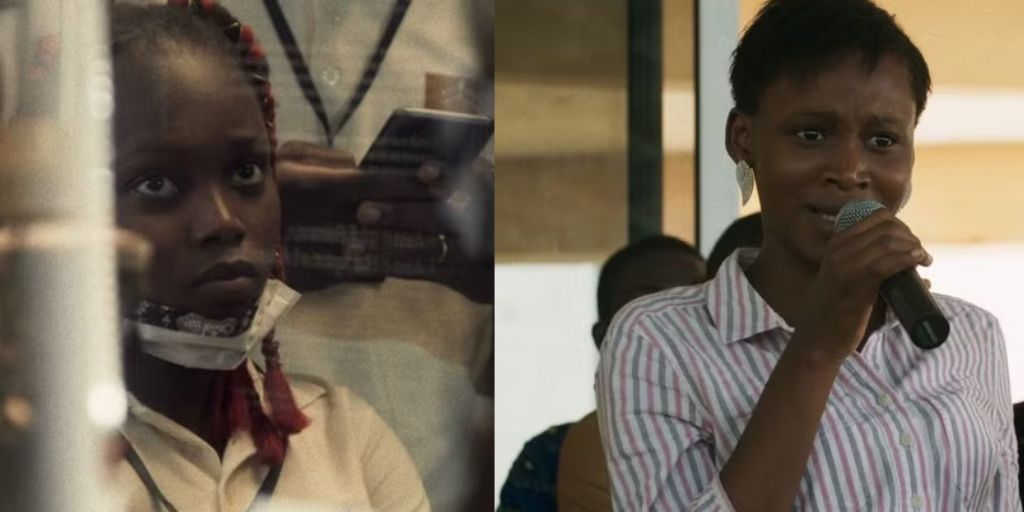
Still from Dahomey (Credit: Mubi)
Diop’s film begins with older French men overseeing the repatriation process, but it ends with the voices of young students, who are committed to creating a more just future. This shift in focus from the past to the future suggests that while there is still much work to be done, the next generation is ready to take on the challenge.
A Dense but Vivid Scheme of History
Dahomey is not a documentary for everyone. Those who are deeply interested in history, anthropology, or the effects of colonization may find it fascinating, but others might struggle to stay engaged during its slower moments.
The film’s experimental style, especially the use of the artifacts’ voiceover, might not appeal to all viewers. However, with a runtime of just over an hour, Diop makes every moment count. She manages to pack centuries of history, injustice, and triumph into a film that is both dense and vivid.
For those willing to immerse themselves in Diop’s unique storytelling approach, Dahomey offers a powerful reflection on the importance of cultural heritage, the enduring impact of colonization, and the ongoing fight for justice and reparations.
