Since it began in 1997, One Piece has become one of the most famous and longest-running manga series in the world. Created by Eiichiro Oda, the story follows Monkey D. Luffy and his pirate crew as they explore the Grand Line in search of the legendary treasure known as the One Piece.
Over the years, the manga has built a vast world filled with thrilling adventures, rich characters, emotional moments, and intricate mysteries. Now, as the story moves closer to its conclusion, fans are eagerly watching for any sign of when it will finally end.
In a 2025 interview with Gosho Aoyama, the creator of Detective Conan , Oda surprised readers by saying he planned to finish One Piece in three more years-aiming for a conclusion around 2028. The interview appeared in a special feature published in Japanese magazines and quickly spread throughout the manga community.
Oda explained that, while he wasn’t absolutely certain of the exact date, he had set a personal goal to wrap up the story within that timeframe. This estimate gave fans a rough target of 2028, though many remembered that Oda’s past projections often shifted.
Eiichiro Oda has a long history of offering time estimates for the series’ end-at least seven times over the past two decades. His first prediction came early on, around 1999 or 2000, when he suggested he wanted to finish the story within five years. At that point, the world and narrative were still relatively small compared to today, and that five‑year mark obviously passed without conclusion. The manga is still ongoing more than 28 years later ( MangaPlus ).

Going Merry FromOne Piece(Credit: Eiichiro Oda)
Eiichiro Oda Says One Piece Will End in 2028, But Fans Remain Cautious
In 2010, Oda remarked that One Piece was about halfway done-around Chapter 597, just after the Marineford War arc. Fans hoped the end was drawing near, but the second half of the story proved even more expansive, introducing new islands, characters, and powers.
At the 2016 Jump Festa event, Oda updated readers that the final arc was “not far off” and that he already had the ending in mind, though he still avoided giving a date. Then in 2019, while promoting the One Piece Stampede movie, he made headlines by saying the manga would finish in five years. He repeated that estimate on Fuji TV in 2020, suggesting four to five years remained-projecting an end between 2024 and 2025.
Despite these announcements, fans treated each projection as hopeful rather than definitive, recalling how past predictions had slipped.
Oda’s Changing Predictions: A 25‑Year Journey to the End of One Piece
Over the last quarter‑century, Oda’s timeline estimates have shifted numerous times:
- 1999–2000: First 5‑year prediction made early in serialization.
- 2010: Series “about halfway done” after Marineford.
- 2016: Final arc “not far off,” no date given.
- 2019: Announces a 5‑year finish timeline.
- 2020: Repeats 4–5 years remaining on television.
- 2025: Sets a 3‑year goal, targeting a 2028 conclusion.
Each announcement generated excitement-but also skepticism-because the story’s scope kept expanding, and Oda has prioritized quality over speed.
One Piece Nears Its Final Saga as Oda Targets a 2028 Conclusion
As of 2025, One Piece has entered its Final Saga. Major events are unfolding, and decades‑old mysteries-like the Void Century, the nature of Devil Fruits, and the true identity of Joy Boy-are finally coming to light. Characters such as Shanks, Blackbeard, Imu, and the Revolutionary Army play increasingly pivotal roles.
Luffy has unlocked Gear 5, and the narrative pace has quickened. Oda now publishes around 35 chapters per year, allowing roughly 100 over three years-potentially enough to resolve remaining threads, provided he maintains his health and avoids burnout.
Oda has faced health challenges, including eye surgery and stress from tight deadlines, prompting scheduled breaks that slow the story’s pace. Voice actors and production staff, many devoted to the anime for over 20 years, are also aging-adding both urgency and caution to the completion process.

Zoro FromOne Piece(Credit: Eiichiro Oda)
Despite these challenges, Oda’s passion remains undiminished. He promises that core secrets-about Shanks, Blackbeard, Devil Fruits, and Joy Boy-will be answered before the finale. Whether One Piece wraps in 2028 or slightly later, fans know the end is finally in sight.
After more than two decades of weekly chapters, the Straw Hat Pirates’ ultimate journey is poised to reach its climax-and fans around the world are ready to follow them to the very end.
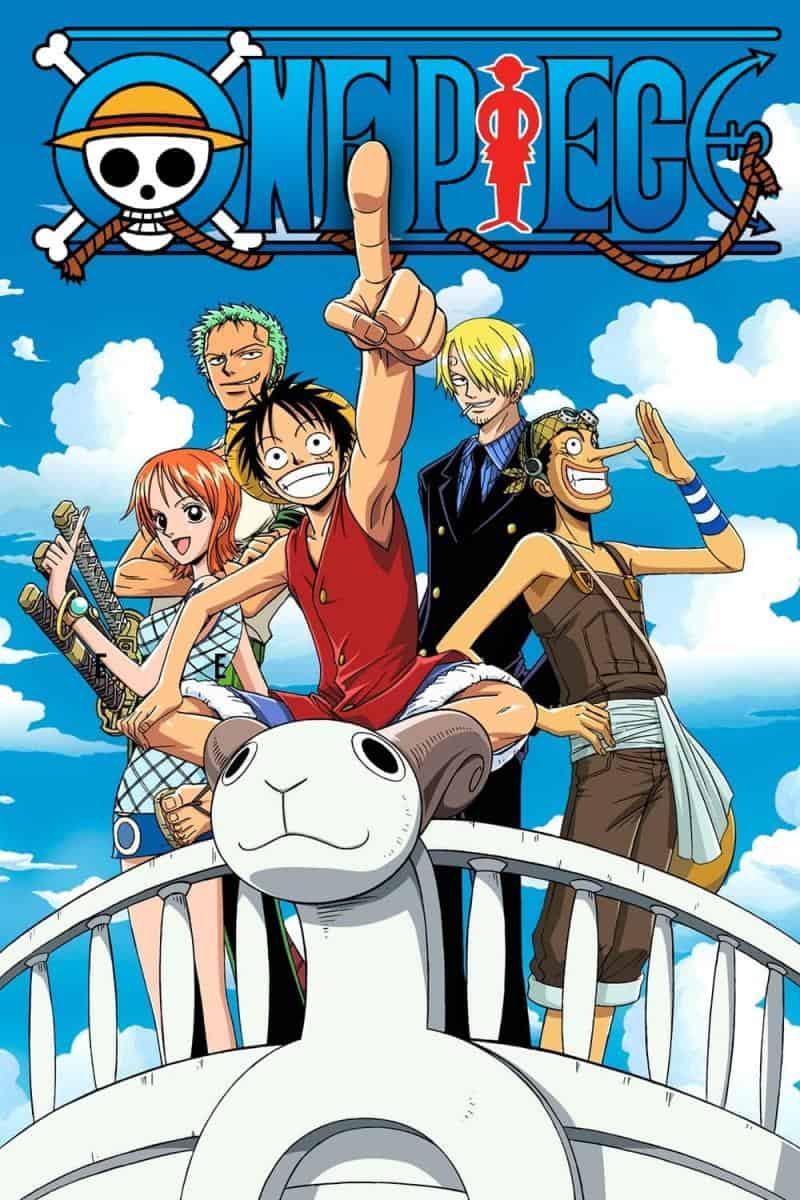
“One Piece” is a beloved Japanese manga and anime series that chronicles the adventures of Monkey D. Luffy and his pirate crew. Luffy, imbued with rubber powers from a mystical fruit Hito Hito no Mi, aspires to become the Pirate King. To achieve this, he seeks the ultimate treasure, the “One Piece,” hidden at the Grand Line’s end. Along the journey, Luffy gathers a diverse crew, confronts formidable foes, and uncovers world-altering secrets, all while promoting themes of friendship, freedom, and adventure.
The Japanese version of Marry My Husband is gaining attention for all the right reasons. Released in late June, this 10-episode remake of the Korean webtoon-turned-drama takes a slower, more introspective approach that many fans feel improves on the original.
Directed by Ahn Gil Ho, who previously helmed The Glory , and penned by Oshima Satomi, known for A Litre of Tears , the adaptation draws viewers into the emotional evolution of its characters without relying on over-the-top dramatics.
Rather than sticking strictly to high-tension revenge arcs, this version emphasises healing, personal agency, and the slow rebuild of a broken life. It’s a story that finds strength in silence and one that resonates deeply with audiences.

Japanese Remake of Marry My Husband (Credits: Amazon Prime)
A Fresh Take on a Familiar Story
At the centre of the plot is Kobe Misa, played by rising actress Kojima Fuka. After being betrayed and murdered by her husband and best friend, Misa wakes up ten years in the past. Determined to avoid the same fate, she begins to take calculated steps to change the course of her life.
One of her first moves is to speed up the inevitable, urging her husband to marry the mistress early. But as she rewrites her own story, a new figure enters her life: Suzuki Wataru, her reserved and thoughtful boss, played by Sato Takeru.
Unlike in the Korean version, where some twists felt abrupt, the Japanese series keeps a steady, cohesive pace. Scenes flow naturally, and the storytelling leans heavily into emotional weight over dramatic shock.
Japanese Remake of Marry My Husband (Credits: Amazon Prime)
Kojima Fuka’s Powerful Transformation
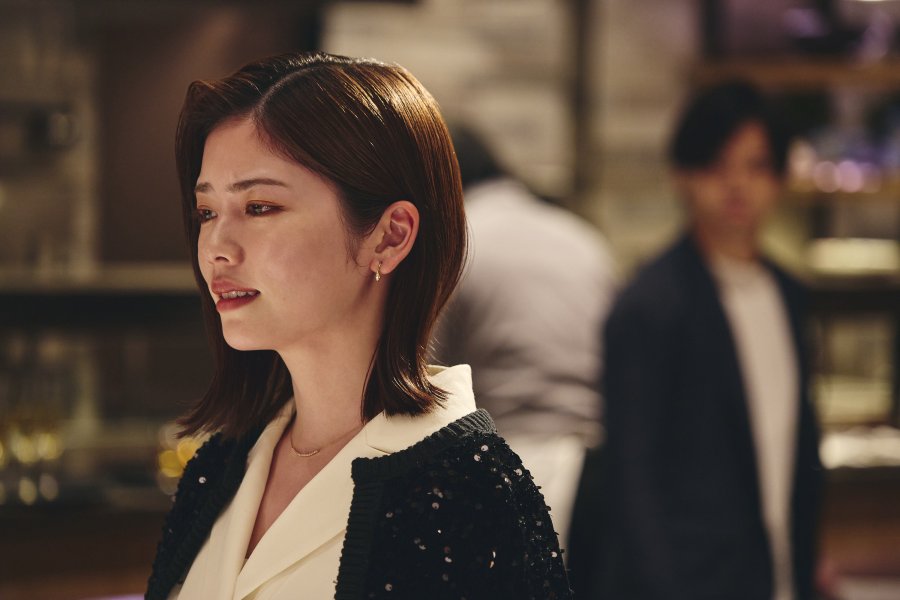
While Kojima Fuka may not be widely recognised internationally, this role proves her ability to hold a story on her shoulders. Her portrayal of Misa begins with uncertainty and fragility, but evolves into strength and composure.
Audiences watch her shift from someone shaped by others’ expectations to a woman who chooses her direction. Her performance is emotionally rich and nuanced, on par with Park Min Young’s from the Korean adaptation, yet with a tone uniquely her own.
Misa’s growth is carefully built, with scenes that reflect her inner changes rather than just external action. From soft moments with Wataru to her quiet defiance at a reunion, Kojima’s subtle expressions speak volumes.
Japanese Remake of Marry My Husband (Credits: Amazon Prime)
Sato Takeru: A Standout Male Lead
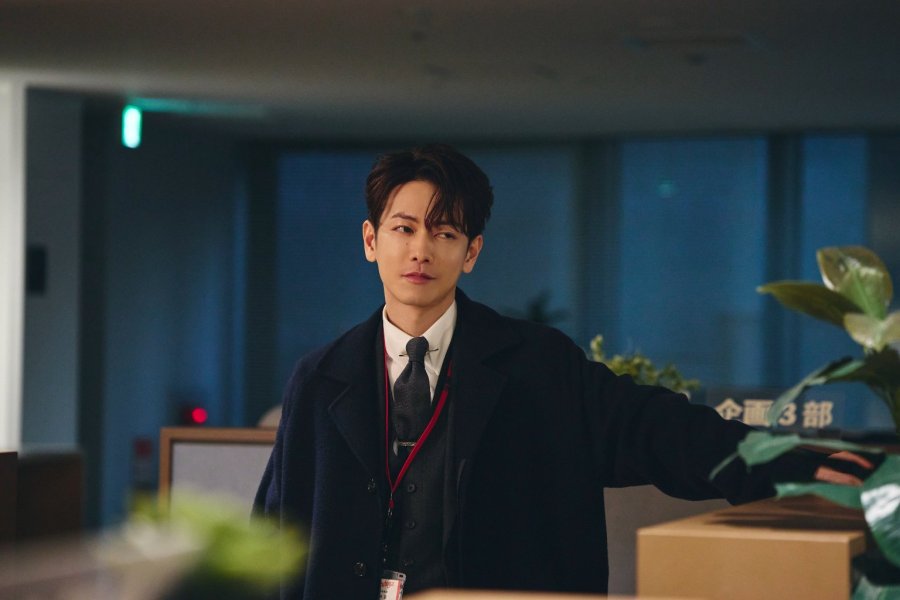
The heart of the Japanese adaptation, however, is Sato Takeru. Known for his acclaimed performances in Rurouni Kenshin , Be With You , and Love Lasts Forever , Sato brings a deep sincerity to his character.
As Wataru, he is distant yet compassionate, awkward yet kind. His portrayal contrasts sharply with Na In Woo’s cheerful warmth in the Korean version. Here, Wataru’s inner life is filled with loneliness, obligation, and unspoken pain.
Though outwardly successful with looks, status, and intellect, Wataru lives a life shaped by duty, not desire. Meeting Misa cracks open that shell, revealing a man who yearns for connection but is unsure how to reach for it.
Japanese Remake of Marry My Husband (Credits: Amazon Prime)
Quiet Romance and Symbolism
Wataru’s love for Misa never demands attention. He supports her from a distance, quietly encouraging her without expecting anything in return. His feelings grow in silence, and it’s this restraint that makes the romance feel genuine.
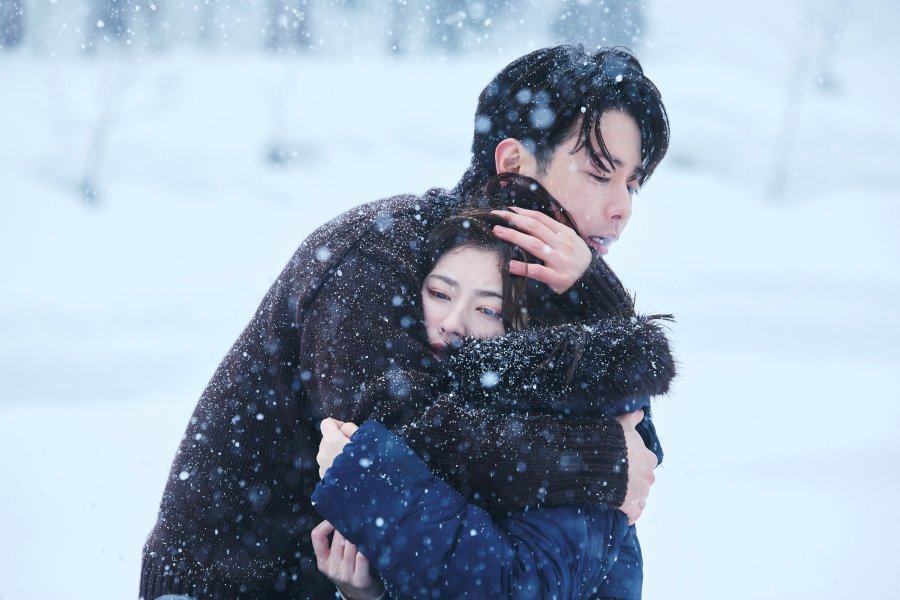
In one devastating moment, Wataru is seen holding Misa’s ashes, overcome with grief. His quiet disappearance following her death is left unexplained. Was it suicide or an accident? The show never answers. That ambiguity adds emotional weight and invites viewers to feel rather than just react.
Soft motifs like scenes where they share wagashi (Japanese sweets) or turtles representing fate, add layers of cultural charm. These moments ground the story in Japanese sensibilities and emphasise the emotional texture over flashy plot devices.

Japanese Remake of Marry My Husband (Credits: Amazon Prime)
Sharp Supporting Roles
The drama’s supporting cast also leaves a strong impression. Yokoyama Yu plays Misa’s husband with chilling precision, while Shiraishi Sei delivers a biting performance as the backstabbing best friend.
Both antagonists are sharply written and feel more realistic than the Korean version’s exaggerated villains. Their cruelty is subtle, manipulative, and painfully believable.
These characters push Misa’s transformation forward while keeping the emotional stakes high. Their presence lingers without overshadowing the central arc.
Fan Reception and Global Buzz
Since its release, the Japanese Marry My Husband has gone viral across Asia. TikTok edits have surged in popularity, and the show recently climbed to No. 8 on China’s hot search rankings.
Chinese outlets have praised the adaptation for its warmth and emotional clarity. One platform described it as “a gentle novel that leaves you full after each chapter.” Viewers feel satisfied with the slow-burn storytelling, something that contrasts with the Korean version’s more chaotic second half.
Notably, fans of the Korean version often shifted their sympathy to the villain. In contrast, this remake keeps the spotlight on Misa, ensuring the audience roots for her growth till the end.
A New Benchmark for Adaptations
While remakes often struggle to stand apart, this version succeeds because it doesn’t try to copy. Instead, it focuses on emotional realism, strong performances, and thoughtful pacing.
And at the centre of it all, Sato Takeru and Kojima Fuka shine in roles that feel honest, understated, and unforgettable.
