The Season 2 finale of The Lord of the Rings: The Rings of Power changes everything for the players in Middle-earth, especially the Elves. The fall of Eregion is a big loss for them and a significant victory for Sauron (Charlie Vickers). However, there is a small hope in this dark time.
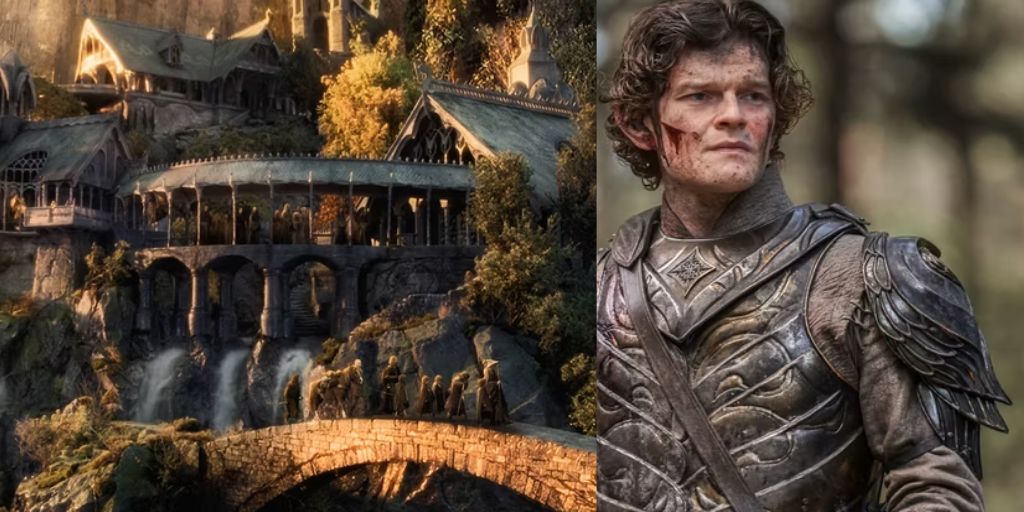
As they retreat, Elrond (Robert Aramayo) guides the Elves to a safe place, a beautiful valley on the western side of the Misty Mountains. This valley is known as Imladris. Many viewers may recognize it as Rivendell, and its appearance in the finale suggests it will be important in Season 3.
Elrond Discovers Rivendell While Retreating From the Battle in Eregion
The fall of Eregion is one of the saddest events in Middle-earth’s history. Celebrimbor’s (Charles Edwards) realm was a place where Elvish culture was celebrated for its beauty. It also strengthened friendships with other races, such as the Dwarves of Khazad-dûm.
In The Rings of Power, the great battle that begins in Episode 7, “Doomed to Die,” is led by Adar’s (Sam Hazeldine) forces from Mordor. Sauron cleverly plays both sides to his advantage and ultimately wins, destroying Eregion and gaining a new army.
In the books, things happen differently. For example, Gil-galad (Benjamin Walker) does not fight in the battle; he stays in Lindon. Instead, he sends Elrond with an Elven army to face Sauron. Sauron is there to take the Rings of Power from Celebrimbor, including the three Elven Rings.
However, Sauron’s army is too big, preventing Elrond from reaching Eregion and forcing him to go north, where he finds Imladris. In the series, Eregion’s defenses are led by Celeborn, who is Galadriel’s (Morfydd Clark) partner. They also head north. Most survivors of Eregion’s attack find their way to Imladris, and Elrond makes it his stronghold.
“Imladris” is a Sindarin word that means “Rivendell” in the common language. “Riven” means “split apart,” and “dell” means a small valley among the trees.
This perfectly describes Rivendell, which is a small valley that splits a part of the Misty Mountains. It is a lush, hidden place that is hard to reach but full of resources and shelter. There is no better place for Elrond to establish his home, and he wisely makes use of it.
Elrond Makes Rivendell a Safe Haven for the Free Peoples of Middle-earth
In the Second Age, Rivendell becomes so important that it takes the place of Lindon as the center of Elven decision-making. Most strategic, political, and military meetings happen there. Gil-galad secretly trusts Elrond with Vilya, his Ring of Power, knowing Lindon is an easier target.
Later, in the books, it is in Rivendell that Gil-galad and Elendil (Lloyd Owen) form the Last Alliance of Elves and Men to defeat Sauron. As The Rings of Power moves toward a full-scale war against Sauron in Season 3, Imladris will likely play an important role in the series.
Moreover, Elrond turns Rivendell into a safe place for anyone seeking refuge in Middle-earth. Eventually, it is known as “the Last Homely House East of the Sea,” showing its role as a space for rest, guidance, and healing, far away from the dangers of the road. Before travelers enter the wide and dangerous lands of Eriador and reach the sea, Rivendell provides them with comfort.
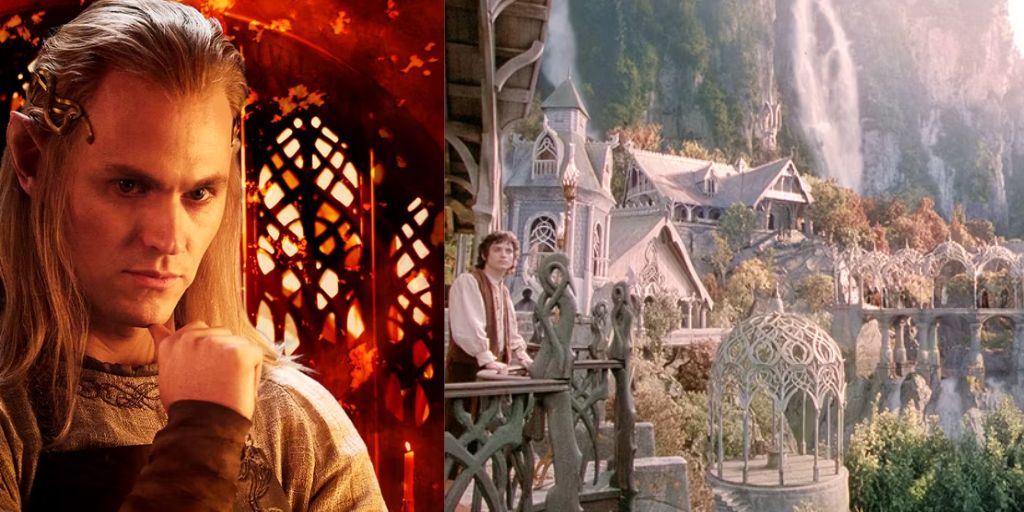
In The Hobbit and The Lord of the Rings, both Bilbo (Martin Freeman) and Frodo Baggins (Elijah Wood) notice the beautiful scenery and calm atmosphere that fill Rivendell, where the beauty of nature combines with the Elves’ elegance.
Still from The Rings of Power (Credit: Prime Video)
After the fall of Elendil’s realm of Arnor in the Third Age, Rivendell also helps keep the legacy of Númenor alive. All that remains are the Dunedáin, who work to maintain peace in Eriador by forming the Rangers of the North. Elrond is related to Elendil through his brother, Elros Half-Elven. Over the years, he has taken care of many members of Elendil’s line, including Aragorn (Viggo Mortensen).
By the end of the Season 2 finale, Elrond changes his mind about the Elven Rings of Power. This reflects their role in strengthening Rivendell as a refuge. Vilya is connected to air and has the power to preserve and heal.
Elrond uses it to protect Rivendell from outside dangers and to enhance its natural beauty and peacefulness. When the One Ring is destroyed, Vilya’s power fades, removing protection from Rivendell. This is one of the reasons that urge the Elves to leave Middle-earth for Valinor.
Rivendell Is Based on a Real-Life Location in Switzerland
One of the most fascinating facts about Rivendell is that it is inspired by a real place. In one of his letters, J.R.R. Tolkien shares details about his trip to Switzerland in 1911 when he was 19. He went hiking in the Lauterbrunnen valley and other areas in the German part of Switzerland.
He talks about how this trip helped him create Rivendell as a tree-filled, pine-scented sanctuary. The peacefulness and beauty of Lauterbrunnen, along with its remoteness, match the qualities of Rivendell, making it a perfect model for the Elven home.
Still from The Rings of Power (Credit: Prime Video)
In the Season 2 finale of The Rings of Power, Elrond leads the Elves to Rivendell after the fall of Eregion, turning it into a haven. Inspired by a real Swiss valley, Rivendell becomes crucial for Elven decision-making and a refuge for all seeking peace in Middle-earth.
Season 2 of The Lord of the Rings: The Rings of Power is available to stream on Prime Video.
“I have many names.” This phrase is said many times by Sauron (played by Charlie Vickers) in The Lord of the Rings: The Rings of Power. As a master deceiver, it makes sense for Sauron to have many names. His constant repetition of this quote has even turned it into a popular meme among fans.
In the Season 2 finale, titled “Shadow and Flame,” Sauron says this line to the Orc Glüg (played by Robert Strange) right after he kills Celebrimbor (played by Charles Edwards). This raises an interesting question: just how many names does Sauron have?
Sauron Is Not His Preferred Name, Actually
In The Rings of Power, the main villain frequently calls himself Sauron, especially after his true identity is discovered by Galadriel (played by Morfydd Clark) at the end of Season 1. However, Sauron is not his original name, nor is it the name he prefers.
The character we know as Sauron is a Maiar, which means he is an angelic being. When the universe was still very young, he served as a smith under the Valar Aulë. At that time, his name was Mairon, and that is the name he still likes to be called.
The name “Mairon” comes from Quenya, which translates to “the admirable” or “the excellent.” It is easy to see why he would prefer this name; it reflects a sense of greatness. However, Mairon’s path changes when he is corrupted by Melkor, who is also known as Morgoth, the dark Valar.
Mairon followed Morgoth into Middle-earth, and as time passed, the Elves began to refer to him as Sauron. The name Sauron translates to “the cruel” or “the abhorred.” Even though he became evil, Sauron always saw himself as a champion of order and efficiency. Therefore, being called “the cruel” is likely very upsetting to him. Unfortunately, the names we dislike the most often stick with us, and that is what happened to Sauron.
When He Served Morgoth, He Had Two Other Names
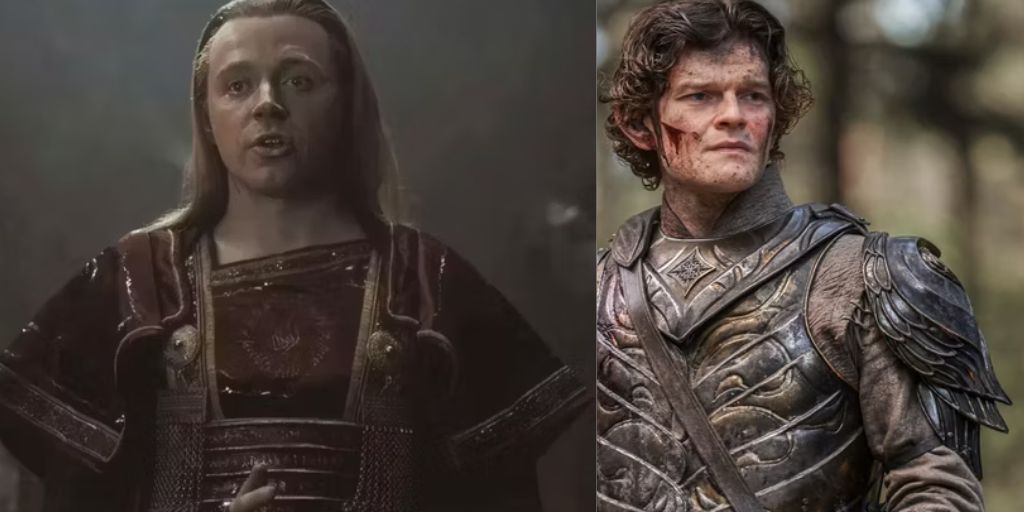
Sauron served Morgoth for more than an entire age. During the First Age, he had many encounters with the Sindarin Elves, who called him Gorthaur. This name became associated with him as he became Morgoth’s most trusted lieutenant.
The name “Gorthaur” combines two elements from Sindarin: “gor,” meaning “horror,” and “thaur,” meaning “abominable.” Some translations suggest it could also mean “Mist of Fear” or “the Cruel.”
Another name that is connected to Sauron during the First Age is Thû. This name is less well-known and appears in J.R.R. Tolkien’s early drafts of The Silmarillion, especially in the Legendarium surrounding the story of Beren and Lúthien.
Still from The Rings of Power (Credit: Prime Video)
The exact meaning of Thû is not clear, but it is often linked to a sinister, shadowy presence. In later versions of Tolkien’s writings, the name Thû was replaced with more familiar names like Sauron and Gorthaur, but it still remains in some older texts.
In ‘The Rings of Power,’ We Learn Two of Sauron’s Names
The Rings of Power introduces a new name for Sauron in Season 1: Halbrand. The true meaning of this name is never explained, but it likely combines the Sindarin word “hall,” which means “tall and massive,” and the Noldorin word “brand,” meaning “exalted” or “high.” This fits with his story of coming from an ancient line of kings in the Southlands, as well as with his not-so-humble sense of self.
Another name Sauron uses in Season 2 appears in Episode 2, titled “Where the Stars Are Strange.” In this episode, Sauron disguises himself as an emissary from the Valar, calling himself Annatar.
This name translates to “Lord of Gifts” in Quenya. It uses the elements “anna,” meaning “gift,” and “tar,” meaning “lord.” This name is fitting as he tries to persuade Celebrimbor to forge the Rings of Power.
There is yet another name that may be revealed in Season 3. Ar-Pharazôn (played by Trystan Gravelle) eventually invades Mordor and takes Sauron back to Númenor as a prisoner. However, Sauron quickly becomes the king’s advisor, going by the name Zigûr, which means “the Wizard.” During this time, he influences Númenor, leading to its eventual destruction.
Sauron Is Also Known by Some Dreadful Titles
Sauron is known not just by many names, but also by various titles. The most common title is “the Dark Lord.” After this, there is a long list of other names and titles. For example, in the Third Age, Sauron settles in the abandoned fortress of Dol Guldur.
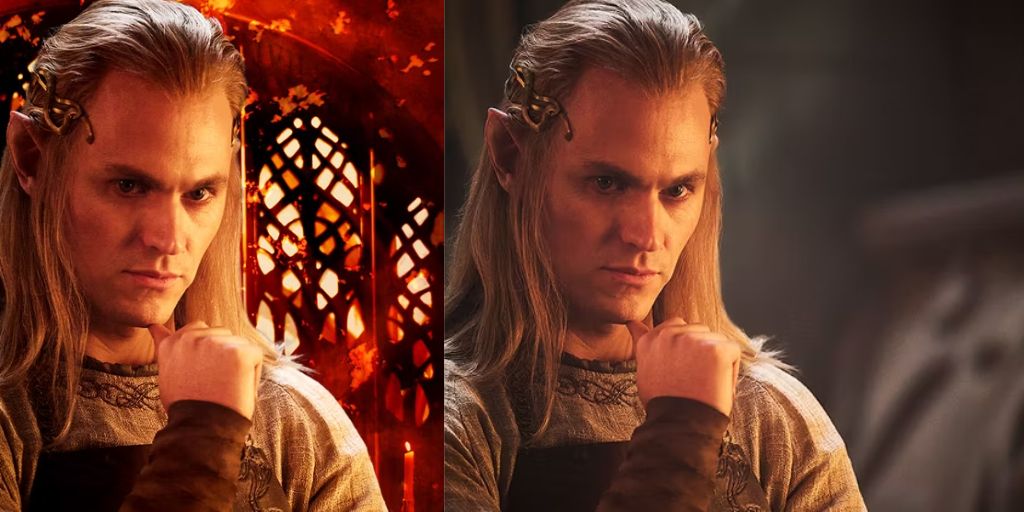
He aims to reclaim as many Rings of Power as possible and regain his strength, as shown in The Hobbit. During this time, he disguises himself as a dark sorcerer known as the Necromancer. Even after leaving Dol Guldur, some people still call him that.
Still from The Rings of Power (Credit: Prime Video)
Many years later, Sauron created the famous sigil of the Eye of Sauron. Because of this, many people simply refer to him as “the Eye” when talking about him. This title is widely recognized and shows the fear he instills in others.
However, the most epic title he holds is the one that gives the whole franchise its name. Due to his influence over the Rings of Power, he is called “the Lord of the Rings.”
This title is mentioned by Celebrimbor both in pity and mockery before he dies in the Season 2 finale. While this title sounds impressive, it also highlights how dependent Sauron has become on the rings. He struggles to separate his own identity from them.
