Season 4 Part 2 of Emily in Paris starts strong but quickly loses continuity, leaving fans puzzled. While Sylvie (Philippine Leroy-Beaulieu) and Mindy (Ashley Park) provide stability, Camille’s (Camille Razat) inconsistent storyline creates confusion. The finale introduces Marcello (Eugenio Franchesini), offering a hopeful twist for future episodes.
A Shaky Start for Part 2
When we last saw Emily Cooper (Lily Collins) in Emily in Paris, it seemed like her life was finally falling into place. She was in a stable relationship with Gabriel (Lucas Bravo), her friendship with Camille (Camille Razat) was improving, and her professional life with Sylvie (Philippine Leroy-Beaulieu) was on solid ground.
The anticipation for Season 4 Part 2 was high, as fans hoped to see these positive developments continue. However, the second part of the season has not met these expectations.
It appears to have overlooked the progress made in Part 1, leaving many viewers frustrated and confused.
Part 2 of Season 4 starts with a sense of discontinuity. The character arcs that were carefully developed in Part 1 seem to unravel, leading to a disjointed narrative.
For instance, Emily’s stable romance with Gabriel is quickly overshadowed by new complications, while her professional growth is sidelined.
This lack of continuity affects the full viewing experience, making it difficult for fans to stay invested in the storylines.
The show’s tendency to shift focus and change character dynamics without clear resolution contributes to a sense of unpredictability that many viewers find off-putting.
The lack of a coherent storyline in Part 2 makes it hard to appreciate the developments that were set up in the previous episodes. What initially seemed like a promising continuation has turned into a fragmented narrative.
As the season progresses, fans are left questioning whether the series will ever achieve a stable direction or if it will continue to reinvent itself at the expense of narrative clarity. This uncertainty adds to the growing dissatisfaction with the show’s progression.
Sylvie and Mindy Bring Sensibility to Part 2
Amid the chaotic and inconsistent plotlines of Part 2, Sylvie (Philippine Leroy-Beaulieu) continues to be a stabilizing force. Her role as Emily’s boss has always been vital, and her strong, composed presence remains a cornerstone of the series.
Sylvie’s character is crucial for maintaining a sense of balance amidst the often tumultuous narrative. Her decisions and actions are grounded and deliberate, providing a counterpoint to the often erratic behavior of other characters.
In Season 4 Part 2, Sylvie gets new romantic developments with clarity and purpose. Unlike many other characters who seem to fluctuate between extremes, Sylvie’s storyline is marked by her ability to set boundaries and make thoughtful choices.
This consistency makes her a reliable character in a show that often feels disjointed. Fans can trust that Sylvie will handle any challenges with her characteristic poise, making her storyline one of the most engaging aspects of the season.
Mindy (Ashley Park) also adds a sense of realism and stability to Part 2. For the first time, Mindy faces significant struggles in both her career and personal life. Her departure from her usual glamorous appearance and her grappling with uncertainty offer a more grounded perspective.
The scenes where Mindy’s singing talent is showcased provide a welcome break from the show’s typical chaos, highlighting her growth and depth. Together, Sylvie and Mindy offer a balanced and compelling counterpoint to the show’s more unpredictable elements.
Confusion with Camille’s Storyline
Camille’s storyline in Season 4 Part 2 stands out as a major source of confusion. The show seems to ignore important aspects of her past, particularly her emotional breakup with Sofia (Melia Kreiling) and her previous plans to co-parent a baby.

Still from Emily in Paris (Credit: Netflix)
This oversight creates a disjointed narrative that affects Camille’s character development and her role in the story. The sudden shift in focus to Gabriel, coupled with Camille’s fluctuating status as either friend or rival to Emily, disrupts the full flow of the plot.
Camille’s inconsistent portrayal highlights a broader issue within the series: a tendency to prioritize drama and surprise twists over character consistency.
While this approach may create short-term excitement, it often undermines the depth and believability of the characters.
Camille’s confusing arc is a prime example of how the show’s frequent changes can detract from its full impact. Viewers are left struggling to understand Camille’s motivations and intentions, which affects their engagement with the storyline.
The lack of coherence in Camille’s character arc points to a need for greater narrative consistency. While soap operas and melodramas often thrive on constant changes, Emily in Paris would benefit from a more cohesive approach.
By addressing past storylines and maintaining character consistency, the show could enhance its full appeal and provide a more satisfying viewing experience.
A Refreshing Twist in the Finale
Despite the challenges of Part 2, the season finale offers a refreshing twist that sets it apart from the rest of the episodes. The introduction of Marcello (Eugenio Franchesini) adds a new and interesting dynamic to the show.
As an unexpected love interest for Emily, Marcello brings a grounded and level-headed perspective that contrasts with the usual melodrama. His straightforward attitude and refreshing presence offer a welcome change from the show’s often chaotic plotlines.
The finale itself is a highlight of Season 4 Part 2. It features strong writing, direction, and performances that make it feel like a new chapter for the series.
The major twist at the end hints at a potential new direction for Emily, suggesting that the show could benefit from a reset. This twist provides a sense of hope that the series might find a more cohesive and satisfying path in future seasons.
Marcello’s addition, along with the smart writing and strong performances in the finale, helps to redeem some of the shortcomings of Part 2. They offer a view of what the show could become if it builds on these positive elements.
While it remains uncertain how the series will continue, the ending of Part 2 suggests that there is potential for a more engaging and coherent storyline.
Fans are hopeful that the show will capitalize on this momentum and deliver a more consistent and satisfying experience in future seasons.
In Season 4 Part 2 of Emily in Paris, the narrative suffers from a lack of continuity, confusing fans who were eager to see the positive developments from Part 1 continue.
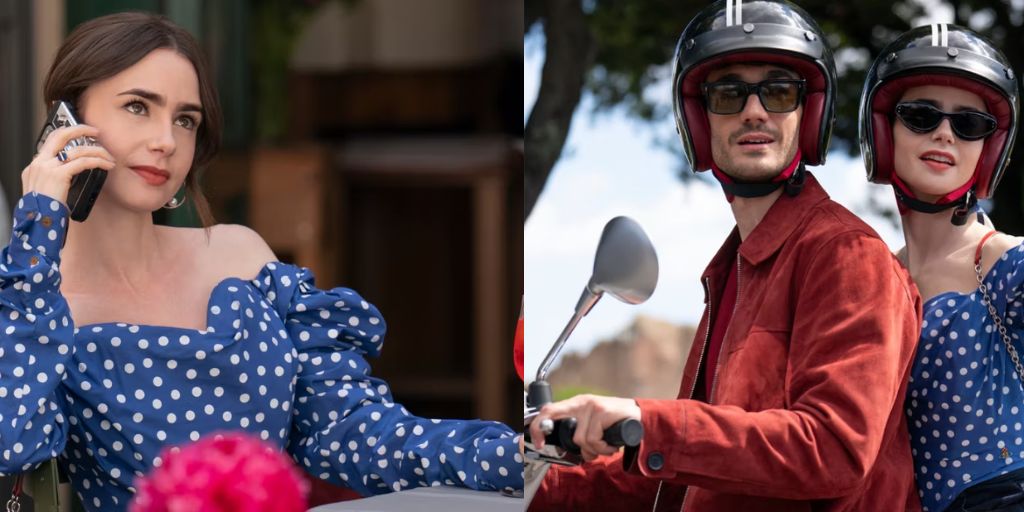
Still from Emily in Paris (Credit: Netflix)
Emily Cooper’s (Lily Collins) previously stable romance with Gabriel (Lucas Bravo) and her improved professional and personal relationships seem to unravel, leaving viewers frustrated. The season begins with promise but quickly becomes disjointed, making it difficult for fans to stay invested.
Despite these issues, Sylvie (Philippine Leroy-Beaulieu) and Mindy (Ashley Park) offer stability and depth.
Sylvie’s composed nature and thoughtful decisions remain a strong anchor, while Mindy’s struggles and growth provide a relatable and grounded perspective. Their storylines stand out amidst the chaos of other characters.
Camille’s (Camille Razat) arc is particularly confusing, as the show overlooks her previous emotional breakup and shifts her focus abruptly. This inconsistency affects her role and disrupts the narrative flow.
The finale, however, introduces Marcello (Eugenio Franchesini), a new love interest for Emily, bringing a refreshing change.
The strong ending and Marcello’s grounded presence hint at a potential reset for the series, offering hope for a more cohesive storyline in future seasons.
Robert Burns, in his 1784 poem “Man was Made to Mourn: A Dirge,” captures a profound truth with the line, “Man’s inhumanity to man makes countless thousands mourn.” Burns uses just eight words to express the unimaginable suffering people can inflict on each other.
When we hear about a shocking act of cruelty or violence, it often feels like it barely registers before another, even worse, act occurs. This endless cycle of horror is vividly portrayed in Netflix’s new docuseries, Worst Ex Ever.
This series, composed of four episodes, shows some of the most terrifying stories of abuse by people who once claimed to love their victims.
The stories of these brave survivors are deeply unsettling and serve as a stark reminder of the darkness that can exist in human relationships.
‘Worst Ex Ever’ Exposes the Failings of the Justice System
The team behind Worst Roommate Ever has created a new series, Worst Ex Ever, that shifts its focus from roommates to romantic partners.
This series takes viewers from “chilling betrayals to murder plots,” offering a look at the dark side of love through eyewitness testimonies. Each episode includes interviews with survivors, their families, and investigators to give a complete picture of each horrifying case.
The first episode, titled “Dating the Devil,” centers on Ben Foster, a man with a history of violence who planned to kill his girlfriend, Justine Siemens. Foster’s past is filled with disturbing behavior. In 2017, he was charged with domestic violence against his ex-girlfriend.
Then, in 2019, he held his girlfriend captive for two weeks, during which he inflicted severe injuries using zip ties and duct tape. Foster was charged with five felonies but managed to plead guilty to lesser charges, receiving a 30-month prison sentence.
The justice system failed in this case, as Foster was released on the same day he was transferred to state prison after serving 729 days while awaiting trial.

Still from Worst Ex Ever (Credit: Netflix)
After his release, Foster moved to Oregon and started working as a bartender, where he met Justine Siemens. Their relationship seemed promising until Siemens discovered Foster’s criminal history and reported it to his employer, leading to Foster’s dismissal.
This act of reporting triggered a terrifying chain of events. Foster began stalking Siemens, and his behavior escalated into severe physical abuse. He held Siemens captive for three days, during which she was bound, naked, and brutally beaten.
She suffered brain damage, had to relearn how to walk, and needed dental work. Foster eventually escaped and went on the run, but after a standoff with the police on January 31, 2023, he took his own life. He never faced justice for the suffering he caused.
In ‘Worst Ex Ever,’ the Most Horrifying Stories Only Seem To Get Worse
The episode “Betrayed by the Badge” features Seemona Sumasar, a financial adviser and franchise owner who had a young daughter. Sumasar’s life changed dramatically when she met Jerry Ramrattan, an NYPD officer and detective.
Their romantic relationship took a dark turn when Ramrattan’s wife contacted Sumasar and revealed that Ramrattan was actually married with three children. Despite their breakup, Sumasar allowed Ramrattan to stay in her basement for a while. However, things took a horrific turn on March 8, 2009.
That day, Ramrattan forced himself on Sumasar, binding and gagging her with duct tape before raping her. After the assault, Ramrattan fled and faced charges of rape and impersonating a police officer. What followed was even more disturbing.
While out on bail, Ramrattan tried to intimidate Sumasar into withdrawing her cooperation with the investigation. When this failed, he tried to frame her for armed robbery by staging fake crimes and reporting them. Despite Sumasar’s innocence and having an alibi, she was arrested in May 2010 based on these false allegations.
She faced multiple robbery charges and a potential 25-year prison sentence. After seven months, an informant came forward and confirmed Sumasar’s claims of being framed. She was released and eventually settled for $2 million after filing a lawsuit. Ramrattan was convicted in January 2012.
The Netflix Docuseries Turns a Custody Battle Into a Crime Scene
“Killing for Custody” recounts the disturbing story of Eric Hill, a man who met Mei Li at work. They married and had a daughter, but their relationship deteriorated, leading to a separation. When Li refused to let Hill see their daughter on her first birthday, Hill sued for custody.

Still from Worst Ex Ever (Credit: Netflix)
Li responded with false accusations, including a claim that Hill intended to carry out a shooting at his workplace. Although these claims were proven false, Li’s attempts to obstruct Hill’s custody rights continued.
On January 7, 2009, Li and Mei broke into Hill’s grandmother’s home. They tased, strangled, and left her body in a trashcan. When Hill arrived and began searching for his grandmother, he was attacked by Li and Mei, who pulled a gun on him.
The investigation that followed uncovered a horrifying plan. Detectives found Sally Hill’s body and discovered a backpack with rope, crossbows, a hunting knife, a throwing star, and a crowbar. Rosa’s car was found nearby, containing a samurai sword and leg irons.
This led detectives to “Operation Custody,” a plot designed to frame Hill for the murder and force him to write a confession. The plan was to then have Hill “kill himself,” making Li the sole custodian of their child. Ultimately, both Li and Mei were sentenced to life in prison.
‘Worst Ex Ever’ Exposes How Cold-Blooded and Vicious Some People Can Be
The final episode, “Married to a Monster,” focuses on Kevin Lewis, the husband of Amanda Canales. As their family grew, Lewis’s behavior became increasingly dark. He started with controlling actions and cruel remarks about his wife’s body during her pregnancy.
Amanda tried to overlook these issues until one day, Lewis went through her phone, cornered her in the closet, and knocked her unconscious. This was the last straw for Amanda, who left Lewis and took their children to another home.
However, Lewis’s actions did not stop there. He hired hitmen, Jerradon Phelps and Alexis Hale, to kill Amanda. On September 20, 2017, the hitmen entered Amanda’s home, but she was away on a business trip. Instead, they targeted Amanda’s sister, Alisha Canales-McGuire, shooting her multiple times.
Although Phelps and Hale were apprehended, proving Lewis’s involvement initially proved challenging. It was only through social media evidence and neighborhood security camera footage that detectives were able to link Lewis to the crime. Lewis was eventually convicted, but the case highlighted how some individuals can become cold-blooded and ruthless.
‘Worst Ex Ever’ Presents the Survivor’s Stories Without Glamorizing the Details
True-crime documentaries often risk glamorizing the perpetrators of the crimes they cover. Worst Ex Ever avoids this pitfall by using animated recreations instead of graphic live-action scenes.
These animations help to emphasize key moments without being overly graphic or disturbing. This approach allows viewers to understand the events and feel the emotional impact without sensationalizing the violence.
Additionally, Worst Ex Ever presents a balanced view. While it shows the failures of the justice system and the horrors inflicted by the guilty parties, it also acknowledges the efforts of law enforcement professionals who worked to bring justice.
The series includes the episode “Killing for Custody,” which offers a rare look at female-perpetrated abuse, a subject that is not often highlighted in media.
Most importantly, the series serves as a warning, highlighting signs of abusive relationships and offering hope for those who may be going through similar experiences.
By sharing these survivor stories, Worst Ex Ever aims to provide support and raise awareness, making it more than just another true-crime docuseries. The series is available for streaming on Netflix in the U.S.
Netflix’s docuseries Worst Ex Ever presents chilling stories of abuse perpetrated by romantic partners. The series, comprising four episodes, highlights some of the most disturbing cases of betrayal and violence, illustrating the extreme cruelty that can arise in personal relationships.
The series starts with “Dating the Devil,” focusing on Ben Foster, a man with a violent history who planned to kill his girlfriend, Justine Siemens.
Foster’s past includes a domestic violence charge in 2017 and a severe abuse case in 2019. After serving 729 days while awaiting trial, Foster was released and met Siemens.
After being reported for his criminal history, Foster escalated his abuse, holding Siemens captive, torturing her, and severely injuring her. Foster eventually escaped and took his own life after a standoff with police, avoiding justice for his crimes.

Still from Worst Ex Ever (Credit: Netflix)
“Betrayed by the Badge” follows Seemona Sumasar, who was sexually assaulted by Jerry Ramrattan, an NYPD officer. After the assault, Ramrattan attempted to manipulate and intimidate Sumasar to withdraw her cooperation with the investigation.
He then tried to frame her for armed robbery, leading to her wrongful arrest and a potential 25-year prison sentence. Sumasar was eventually exonerated after seven months, and Ramrattan was convicted in 2012.
“Killing for Custody” recounts the disturbing story of Eric Hill, who faced false allegations from his estranged wife, Mei Li, during a custody battle. Li and her accomplice Mei broke into Hill’s grandmother’s home, killed her, and framed Hill for the crime.
The plot, called “Operation Custody,” was intended to make Hill take the fall for the murder and then commit suicide. The plan was discovered, leading to Li and Mei receiving life sentences.
Finally, “Married to a Monster” details the abuse suffered by Amanda Canales at the hands of her husband, Kevin Lewis.
Lewis’s escalating violence included hiring hitmen to kill Canales, but they targeted her sister instead. Lewis was eventually convicted, but the case underscores the series’ views of the darkest sides of personal relationships.
Worst Ex Ever uses animated recreations to present these stories without sensationalizing the violence, providing a balanced view of the justice system’s failures and the efforts to seek justice.
