Rapper Eminem’s mother, Debbie Nelson, passed away at the age of 69 on December 2, 2024, after battling complications from lung cancer. Eminem’s representative confirmed the news to the public, and tributes to Debbie have been pouring in from various circles, reflecting on her complex and often tumultuous relationship with her son.
Born in 1955, Debbie Nelson married Eminem’s father, Marshall Bruce Mathers Jr., when she was just 16 years old. Two years later, in 1972, she gave birth to the rap icon, Marshall Bruce Mathers III, known to the world as Eminem.
However, Debbie’s relationship with her son was marked by significant challenges. Their difficult relationship played out publicly over the years, with Eminem addressing their strained bond in his music.
In particular, his 2002 hit song “Cleanin’ Out My Closet” was widely interpreted as a deep, emotional venting of his feelings about his mother, portraying her in a very negative light.
The song led to Debbie Nelson filing a defamation lawsuit against Eminem for $11 million, although the case was later dismissed.
Despite the public fallout, there were moments of hope for reconciliation. In a 2008 interview with The Village Voice, Debbie expressed her desire to rebuild her relationship with her son, stating,

Rapper Eminem’s mother, Debbie Nelson (Credit: YouTube)
“There’s hope for everybody. It’s a matter of just basically swallowing your pride. It’s like a cashed check. It’s over, it’s done. You need to move on.”
Her willingness to make peace with the past was apparent in these words, though the two never fully reconciled in a public sense.
However, fans of Eminem speculated that he sought some level of redemption for their relationship in his 2013 track “Headlights,” from his album The Marshall Mathers LP 2. In the song, he acknowledges his faults, saying,
“And I’m mad I didn’t get the chance to thank you for being my mom and my dad,” as well as apologizing for the pain caused.
The song seemed to be a heartfelt tribute to his mother, offering a public apology for his previous harsh lyrics.
Though their personal relationship was marred by conflicts and misunderstandings, Eminem did show signs of growth and maturity over the years.
In recent times, Debbie Nelson, too, seemed to have moved past their differences. In 2022, when Eminem was inducted into the Rock and Roll Hall of Fame, she made a rare public appearance in a video posted online, congratulating her son.
In the now-deleted video, she said,
“Marshall, I want to say, I could not let this day go by without congratulating you on your induction into the Hall of Fame.”
Despite their history, this moment of shared pride stood as a testament to how both mother and son had matured and found a form of distant reconciliation.
In addition to Eminem, Debbie is survived by her other son, Nathan Mathers, and will be remembered for her role in shaping one of the most successful and controversial figures in the music industry.
Eminem himself, while not speaking publicly about her death, has likely been affected by the loss of his mother, considering the complexity of their relationship over the years.
Maria Callas, one of the most renowned opera singers of the 20th century, led a life as dramatic and complex as the roles she portrayed on stage. Born as Cecilia Sophia Anna Maria Kalogeropoulos in New York in 1923 to Greek immigrants, Callas’s early life was shaped by her parents’ separation and her mother’s determination to nurture her prodigious musical talent.
She began piano lessons at age seven, and her voice soon garnered attention. Callas studied singing at a conservatory in Athens under Elvira de Hidalgo, where her perfectionist nature helped her achieve professional success.
In the 1940s, Callas struggled to find roles due to the war but eventually made her mark in Italy with successful performances in works like La Gioconda and Norma.
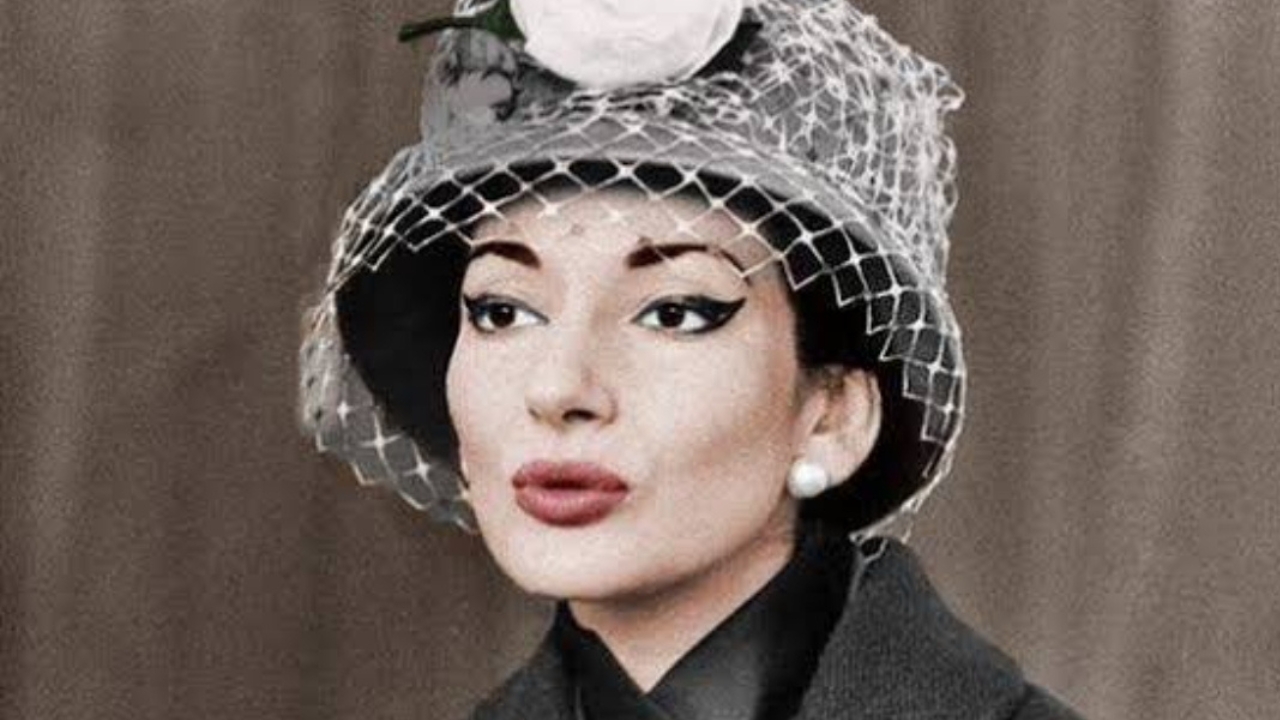
Maria Callas (Credit: YouTube)
By the late 1940s, she had married industrialist Giovanni Meneghini, who also became her manager.
Callas’s career took off internationally, and she made her U.S. debut at the Lyric Opera of Chicago in 1954, though her relationship with the Metropolitan Opera soured a few years later. Despite her career triumphs, her personal life was tumultuous, marked by her affair with shipping magnate Aristotle Onassis.
This relationship caused heartbreak, as Onassis eventually married Jacqueline Kennedy in 1968 but continued to pursue Callas.
The 1960s saw a decline in Callas’s vocal ability, and her career began to falter. Her final performance was in 1969.
In the years leading up to her death, Callas withdrew from the public eye, living a reclusive life in Paris. Unpublished letters revealed painful details of her personal life, including allegations of abuse and betrayal by those close to her, including her mother, father, ex-husband, and Onassis.
Maria Callas died suddenly in 1977 at the age of 53. While her official cause of death was a heart attack, there were suspicions surrounding the circumstances of her passing.
Franco Zeffirelli, a close friend of Callas, suggested that she might have been poisoned by her Greek friends, though no testing was conducted, and her body was cremated shortly after her death.
This mysterious end to her life left a cloud of uncertainty surrounding the true cause of her death. Her will, believed to have been destroyed, further fueled speculation about the nature of her final years.
Today, Callas remains an iconic figure in the opera world, remembered for both her unparalleled talent and the tragic, enigmatic life she led.
