The world of Harry Potter has attracted fans of all ages for more than two decades. While the films have become beloved by fans across the globe, they originated from J.K. Rowling’s groundbreaking book series, which began in 1997 with Harry Potter and the Philosopher’s Stone.
The release of the first book created a generation of readers, sparking a worldwide phenomenon that would continue to grow for years to come.
The Harry Potter franchise started as a literary phenomenon but soon transformed into a cinematic giant. Since then, the books have been translated into over 80 languages, and the films have grossed billions of dollars worldwide.
The world of Harry Potter continues to expand with theme parks, merchandise, and more, but fans still hold a special place in their hearts for both the books and the films. With an upcoming television adaptation on the way, fans of the series are wondering just how close this new project will stay to the original material.
Throughout the history of the Harry Potter films, several book-to-film adaptations have been praised, while others have been criticized for straying too far from the source material.
While the casting of Daniel Radcliffe, Emma Watson, and Rupert Grint as Harry, Hermione, and Ron is iconic and beloved, some decisions made in adapting the novels to film were met with disappointment.
With such an expansive world and complex storylines, certain changes and omissions were inevitable. In this article, we’ll look at each of the Harry Potter films, examining what was left out, what was changed, and how these differences affected the full story.
8. Harry Potter and the Half-Blood Prince (2009) Directed by David Yates
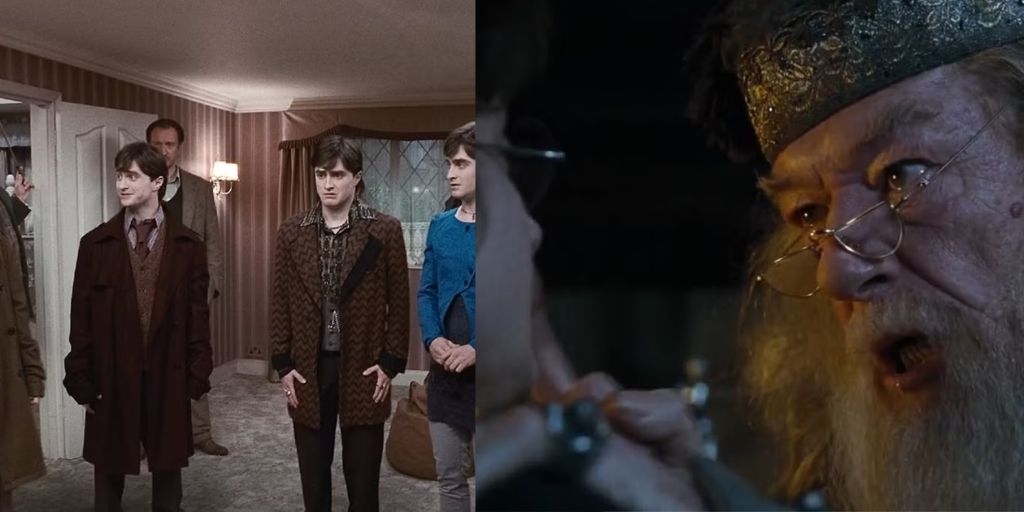
Harry Potter and the Half-Blood Prince is often considered one of the most emotionally charged films in the series. Directed again by David Yates, this film shows Harry’s sixth year at Hogwarts, where he learns more about Voldemort’s past and the Horcruxes—objects containing pieces of Voldemort’s soul.
One of the film’s strongest elements is its focus on the relationships between the characters, particularly the romantic tension between Harry and Ginny, and Ron and Hermione. The film does an excellent job of balancing the lighter, more humorous moments of teenage romance with the darker, more serious plot involving Voldemort’s rise to power.
However, like the previous films, The Half-Blood Prince makes significant changes to the source material. One of the most notable omissions is the scheme of Voldemort’s past. In the book, Dumbledore and Harry spend several chapters going into Voldemort’s early life, learning about his family and his rise to power.
This backstory is crucial to understanding Voldemort’s motivations and the creation of the Horcruxes, but the film only touches on these elements briefly.
Additionally, the film’s portrayal of the final battle at Hogwarts is significantly different from the book. In the novel, the Death Eaters infiltrate the school, leading to a dramatic fight between the Order of the Phoenix and the Death Eaters.
The film, however, downplays this sequence, focusing instead on Dumbledore’s death and the aftermath. While this decision allows for a more emotionally charged ending, it loses some of the action and tension that the book builds during this climactic battle.
Still from Harry Potter (Credit: HBO)
Despite these changes, The Half-Blood Prince is often praised for its emotional depth and strong performances. The film’s focus on the relationships between the characters adds a layer of complexity to the story, making it one of the most emotionally resonant films in the series.
7. Harry Potter and the Order of the Phoenix (2007) Directed by David Yates
David Yates took over as director for Harry Potter and the Order of the Phoenix, a role he would keep for the remainder of the series. This film is based on the longest book in the series, but the film adaptation is one of the shortest. As a result, many subplots and details from the book were cut.
In this film, Harry returns to Hogwarts for his fifth year and faces the growing threat of Lord Voldemort’s return. At the same time, he must deal with the oppressive rule of Dolores Umbridge, who takes control of the school. The film focuses on Harry’s struggle to convince the wizarding world of Voldemort’s return, as well as his growing sense of isolation and anger.
One of the film’s strongest elements is its portrayal of the relationship between Harry and Sirius Black. Their bond is central to the emotional core of the story, and the film does an excellent job of capturing the father-son dynamic between them. Sirius’s tragic death in the Department of Mysteries is one of the most heart-wrenching moments in the series, and the film handles it with the emotional weight it deserves.
However, the film makes significant cuts to the book’s plot, particularly regarding Harry’s growing anger and frustration.
In the book, Harry’s internal struggles are given more attention, with multiple scenes showing him lashing out at his friends and feeling isolated from the world around him. The film, while still portraying some of these emotions, doesn’t go as deeply into Harry’s mental state as the book does.
Additionally, the subplot involving the Order of the Phoenix—a secret group of wizards and witches working to fight Voldemort—is somewhat downplayed in the film. In the book, the Order plays a central role in the fight against Voldemort, with key members like Lupin, Tonks, and Moody getting more screen time. The film, however, focuses more on Harry’s personal journey and less on the larger war brewing in the background.
Despite these omissions, The Order of the Phoenix is praised for its portrayal of the political tension within the wizarding world and the growing threat of Voldemort. Yates’s darker tone and focus on character development would continue in the final three films.
6. Harry Potter and the Deathly Hallows – Part 2 (2011) Directed by David Yates
The final film in the series, Harry Potter and the Deathly Hallows – Part 2, is the culmination of a decade-long journey. Directed by David Yates, this film focuses on the final battle between Harry and Voldemort, as well as the ultimate fate of the wizarding world.
Part 2 is notable for its action-packed sequences, particularly the Battle of Hogwarts, which is one of the most thrilling and emotionally charged moments in the entire series. The film does an excellent job of capturing the epic scale of the battle, while also focusing on the individual moments of heroism and sacrifice from key characters.
One of the film’s strongest elements is its portrayal of the final confrontation between Harry and Voldemort. The film builds up to this moment with great tension, and the final showdown is both visually stunning and emotionally satisfying.
However, some fans were disappointed with the changes made to the final battle. In the book, Harry’s final confrontation with Voldemort is more intimate and personal, taking place in front of a small group of onlookers.
The film, however, turns this moment into a larger, more dramatic spectacle, with Harry and Voldemort battling throughout the castle. While this change adds to the visual excitement of the film, it loses some of the emotional weight that the book conveys.
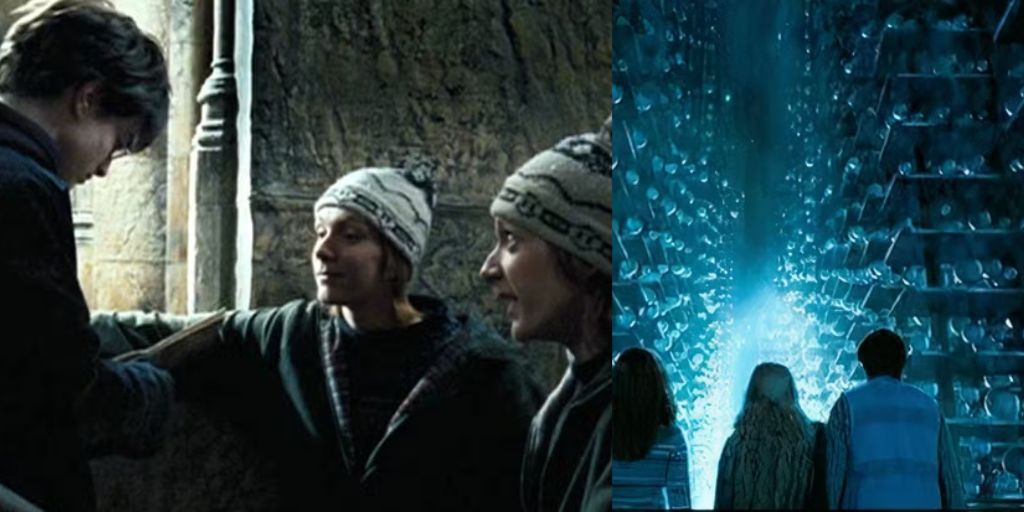
Another significant change is the treatment of key characters’ deaths, particularly those of Fred Weasley, Lupin, and Tonks.
Still from Harry Potter (Credit: HBO)
In the book, these deaths are given more attention, with emotional moments of reflection from the surviving characters. The film, however, moves through these deaths quickly, focusing more on the action of the battle than the emotional impact of these losses.
Despite these changes, The Deathly Hallows – Part 2 is often praised for its epic conclusion to the series. The film’s action-packed sequences, stunning visuals, and emotional performances make it a fitting end to the Harry Potter saga.
5. Harry Potter and the Goblet of Fire (2005) Directed by David Yates
Harry Potter and the Goblet of Fire is where the series begins to shift toward a more action-packed, high-stakes narrative. Directed by Mike Newell, this film follows Harry as he competes in the dangerous Triwizard Tournament, which tests his bravery, intelligence, and magical skills.
The film’s action sequences are some of the most thrilling in the entire series, with the dragon challenge and the underwater task standing out as highlights. Newell does a great job of capturing the spectacle and danger of the Triwizard Tournament, and the visual effects bring these challenges to life in an exciting way.
However, the film makes significant changes to the story, particularly in its handling of the tournament’s final task—the maze. In the book, the maze is filled with magical creatures and spells that test the champions’ wits and abilities.
The film, however, reduces the maze to a more straightforward obstacle course, relying on visual spectacle rather than the intellectual challenges presented in the book. This change sacrifices some of the complexity and suspense of the original story.
Another major difference between the book and the film is the portrayal of the villain Barty Crouch Jr. In the book, his identity is revealed gradually through a series of clues, building up to a dramatic reveal. In the film, however, this twist feels more rushed and less impactful, as the filmmakers chose to prioritize action over character development.
Additionally, the film’s treatment of the Triwizard Tournament’s rules and the introduction of key characters like Viktor Krum and Fleur Delacour are somewhat simplified. The book gives these characters more depth and backstory, particularly Fleur, whose struggles as a competitor are downplayed in the film.
Despite these changes, The Goblet of Fire is still a fan-favorite for its action sequences and dramatic tone. The film’s climax, featuring the resurrection of Voldemort and the tragic death of Cedric Diggory, remains one of the most powerful moments in the entire series.
4. Harry Potter and the Deathly Hallows – Part 1 (2010) Directed by David Yates
Harry Potter and the Deathly Hallows was split into two films, with Part 1 focusing on Harry, Ron, and Hermione’s search for the Horcruxes. Directed by David Yates, this film is more introspective and character-driven than previous entries in the series.
Part 1 is notable for its slower pace and focus on the trio’s journey through the wilderness as they struggle to find and destroy the Horcruxes. The film captures the sense of isolation and despair that the characters feel, as they are cut off from their friends and the safety of Hogwarts.
One of the film’s greatest strengths is its portrayal of the growing tension between Harry, Ron, and Hermione. The trio’s relationships are tested as they face the challenges of their mission, and the film does an excellent job of showing the strain that the Horcruxes have on their friendship.
However, some fans felt that the film’s slower pace made it less exciting than previous installments. The decision to split the final book into two films allowed for more detail and character development, but it also meant that the action was spread out over two movies. As a result, Part 1 is more focused on the emotional journey of the characters, with less emphasis on the action and spectacle that fans had come to expect.
Despite this, The Deathly Hallows – Part 1 is often praised for its character-driven storytelling and its scheme of the darker, more complex themes of the series. The film’s focus on the trio’s relationships adds emotional depth to the story, making it one of the most introspective entries in the series.
3. Harry Potter and the Prisoner of Azkaban (2004) Directed By Alfonso Cuarón
Widely regarded as one of the best Harry Potter films, Harry Potter and the Prisoner of Azkaban marked a turning point in the series. Directed by Alfonso Cuarón, this film took a darker and more mature tone, reflecting the growing complexity of the books.
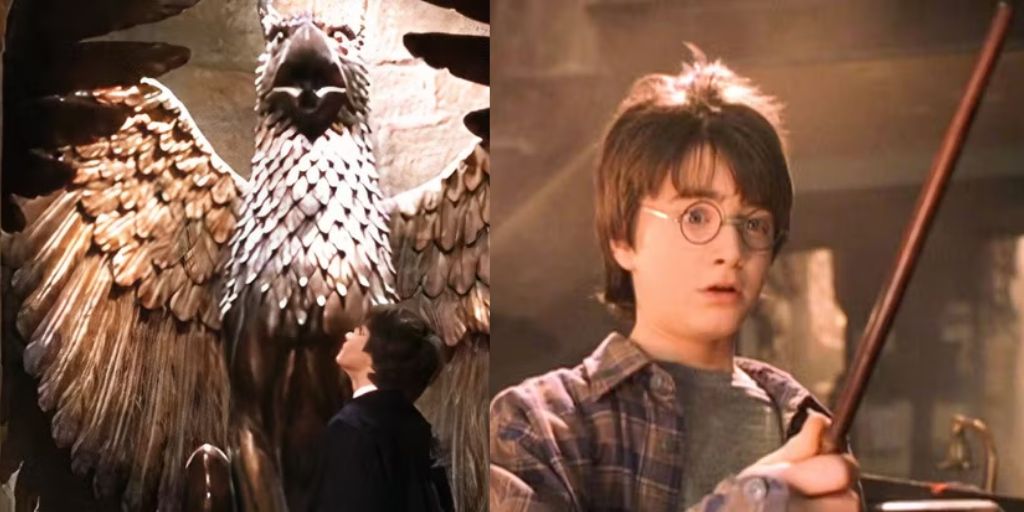
In this third installment, Harry learns about Sirius Black, a dangerous prisoner who has escaped from Azkaban and is believed to be after him. The film introduces new elements, such as the magical Marauder’s Map and the terrifying Dementors, while also focusing on the emotional journey of Harry as he grapples with the truth about his past.
Cuarón’s direction brought a fresh visual style to the series, with more artistic camera work and a darker, moodier color palette. This shift in tone matched the growing maturity of both the characters and the story, and the film’s atmosphere reflects the increasing dangers in Harry’s life.
However, like the previous films, The Prisoner of Azkaban made some notable changes from the book. One of the most significant omissions is the detailed backstory of the Marauders—James Potter, Sirius Black, Remus Lupin, and Peter Pettigrew.
Still from Harry Potter (Credit: HBO)
In the book, this backstory plays a crucial role in explaining the history of the Marauder’s Map and the deep connections between these characters. The film, while still enjoyable, misses the opportunity to show this rich history, which would have added depth to the relationships between Harry, Sirius, and Lupin.
Another change is the removal of certain moments of humor and light-heartedness that appear in the book. While Cuarón’s darker tone worked well for the full film, it did come at the cost of some of the book’s more whimsical moments, such as Harry’s interactions with the Weasley twins and other Hogwarts students.
Despite these changes, The Prisoner of Azkaban is often praised for its emotional depth, stunning visuals, and strong performances. Many fans and critics consider it one of the best adaptations in the series.
2. Harry Potter and the Philosopher’s Stone (2001) Directed by Chris Columbus
The first Harry Potter film, Harry Potter and the Philosopher’s Stone (also known as Harry Potter and the Sorcerer’s Stone in the U.S.), is directed by Chris Columbus.
This movie did an excellent job of introducing the magical world of Hogwarts to viewers, capturing the wonder, charm, and adventure of Rowling’s novel. Many fans agree that the first film is one of the most faithful adaptations in the series.
The film follows Harry as he discovers his magical heritage and go on his first year at Hogwarts. Columbus successfully translated the magic of the book to the screen, bringing the world of witches and wizards to life. Nearly all major events from the book made it into the film, from Harry’s first encounter with Hagrid to his final showdown with Voldemort (disguised as Professor Quirrell).
However, even in this faithful adaptation, some important scenes and details were left out. One notable omission is the potions trial that Harry, Ron, and Hermione must pass to access the Philosopher’s Stone.
In the book, Hermione plays a key role by solving a logic puzzle involving potions, which showcases her intelligence and problem-solving skills.
The film chooses to cut this moment, instead giving Hermione the task of defeating the Devil’s Snare. While this change doesn’t drastically alter the plot, it diminishes Hermione’s contribution to the trio’s success in the climax of the story.
The film also simplified some of the magical elements from the book. For example, in the novel, Harry’s discovery of the Mirror of Erised, which shows a person’s deepest desires, is given more depth and explanation.
In the film, while the scene remains touching, it doesn’t go into the emotional complexity that the book conveys, where Harry repeatedly returns to the mirror to see his parents.
Despite these changes, The Philosopher’s Stone remains one of the closest adaptations in the series, and its success laid the groundwork for the films to come.
1. Harry Potter and the Chamber of Secrets (2002) Directed by Chris Columbus
Chris Columbus returned to direct Harry Potter and the Chamber of Secrets, the second film in the series. The novel it’s based on is the second shortest in the series, but the movie is the longest. This allowed the filmmakers to include most of the key moments from the book.
In this film, Harry returns to Hogwarts for his second year, only to discover that the mysterious Chamber of Secrets has been opened, releasing a deadly creature within the school. The film does a great job of translating the key plot points to the screen, including Harry’s first encounter with Dobby, the discovery of Tom Riddle’s diary, and Harry’s climactic battle with the Basilisk.
One of the film’s greatest strengths is its faithful adaptation of the mystery surrounding the heir of Slytherin and the Chamber of Secrets. Key characters like Gilderoy Lockhart and Dobby the house-elf are portrayed with accuracy and charm, bringing their quirky personalities to life.
However, some small but significant changes were made. In the book, the dangers within the hedge maze at the end of the Triwizard Tournament are more complex and terrifying, featuring magical creatures and spells.
The film simplifies this sequence, reducing it to a visually impressive but less challenging final task for the champions. While the film’s version is still exciting, it loses some of the tension and depth that the novel builds during the maze challenge.
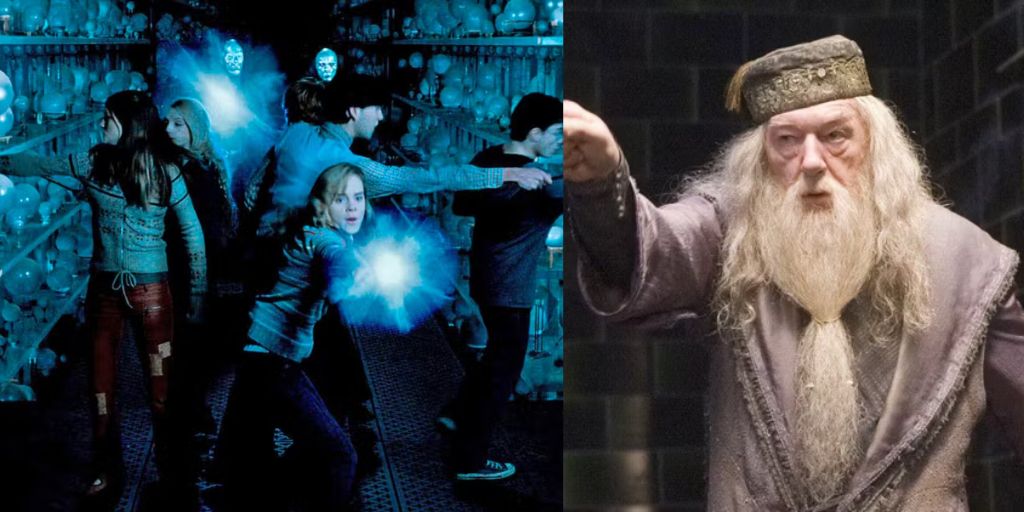
Additionally, the subplot involving Hagrid’s past and his connection to the Chamber of Secrets is somewhat downplayed in the film.
Still from Harry Potter (Credit: HBO)
In the book, this storyline helps to expand the lore of Hogwarts and adds emotional depth to Hagrid’s character. While the film includes this element, it doesn’t emphasize Hagrid’s vulnerability and the prejudice he faces as much as the book does.
Nevertheless, The Chamber of Secrets remains one of the most faithful adaptations in the series, and its success can be attributed to its attention to detail and commitment to capturing the spirit of Rowling’s story.
Conclusion
The Harry Potter films, while beloved by many fans, inevitably made changes and omissions when adapting J.K. Rowling’s expansive books to the screen. Some of these changes were necessary to fit the story into a cinematic format, while others were more controversial among fans.
However, despite these differences, the films remain a beloved part of the Harry Potter franchise, capturing the magic and wonder of the wizarding world while also showing the deeper themes of love, friendship, and sacrifice. Whether you’re a fan of the books, the films, or both, the world of Harry Potter continues to inspire and attract audiences around the world.
From season 3 has continuously intensified the mysteries of the town, but episode 5 marked a turning point in the narrative, specifically with Dale’s shocking and brutal death. The ending of this episode doesn’t just kill off a character; it destroys hope for the residents trapped in the town and sets up a series of more significant problems.
Dale’s death, caused by his attempt to escape through the faraway tree, is not only horrifying but also sends a clear message to those still trapped: the town is in control, and there’s no easy way out.
The ending of season 3, episode 5 shows how Dale’s decision to go through the faraway tree ended in one of the most brutal deaths ever seen in the show. His journey not only resulted in his death but also impacted the hopes of the residents for escaping.
As we saw in earlier episodes, Tabitha had seemingly escaped the town through the faraway tree and ended up in the real world in Maine. This gave the residents a sense of optimism that maybe they had found a way out of their nightmarish situation.
Dale, determined to follow her footsteps, made his own journey through the faraway tree. But instead of freedom, it ended with his body being gruesomely crushed inside the concrete wall of the motel’s pool.
Tabitha’s Return and the Meeting in Episode 5
Before Dale’s fatal attempt, From season 3, episode 3 had set the stage for what was to come. In that episode, Tabitha had returned to the town after her own bizarre experience with the faraway tree.
She recounted her story in a meeting in episode 5, where she explained how she had been transported to a lighthouse from the faraway tree, then pushed from the lighthouse, only to find herself in the real world in Maine.
This was groundbreaking for the residents because it was the first known instance of someone leaving the town and making it back to the real world. This event was the catalyst for Dale’s decision to follow the same path.
Despite warnings from others about the faraway tree’s unpredictability, Dale chose to focus on the fact that Tabitha had escaped. He stubbornly believed that if she could leave, so could he.
He ignored the warnings that the faraway tree might not take him to the same destination or that it might have different outcomes depending on who used it. All that mattered to him was getting out of the town and finding help for the others. Dale’s determination made him overlook the possible dangers and consequences of using the faraway tree.
Dale’s Fatal Journey Through the Faraway Tree
From the beginning of the episode, it was clear that Dale was set on going through the faraway tree, despite the objections of others. He boasted about his plan, confident that he could escape and return with help for the trapped residents.
His single-minded determination was not necessarily selfish; in his mind, this was the only way to help everyone. However, his decision was reckless, and ultimately, it led to one of the show’s most horrifying moments.
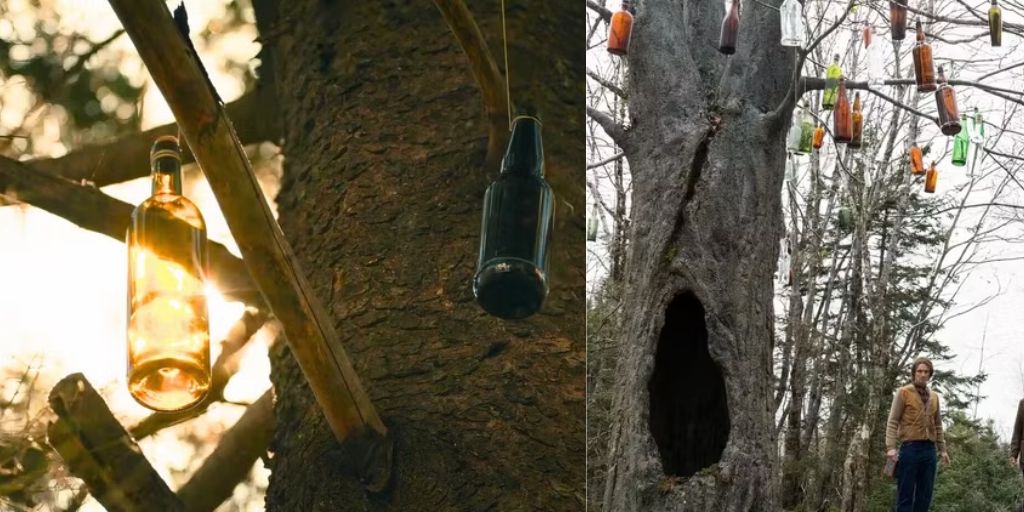
Still from From Season 3 (Credit: MGM)
As Dale stepped through the faraway tree, the audience could sense that something terrible was about to happen. From has always used the faraway trees as a mysterious and unpredictable force, transporting characters to different locations, but this time, the outcome was fatal.
Instead of being transported to a different location, like Tabitha’s lighthouse, Dale ended up embedded in the concrete wall of the motel’s pool. Only parts of his face and body were visible, with the rest of him crushed into the concrete. The town’s residents watched in horror as Dale was slowly and painfully suffocated to death, trapped in the wall with no way to save him.
This scene was more than just a brutal death. It was a pivotal moment that revealed the faraway tree could not be trusted and that using it as a method of escape was far more dangerous than anyone had realized. Dale’s death was also the first recorded instance of someone being killed immediately after going through the tree. This brutal event sent shockwaves through the town and shattered the residents’ newfound hope of escape.
The Faraway Tree’s Unpredictability: What Dale’s Death Means
Throughout From, the faraway tree has been used as a portal that sends characters to different locations, often tied to the town’s dark history. Boyd, for example, was transported to a well, Sara to a church, Julie to the root cellar, and Tabitha to the lighthouse.
These destinations had always seemed dangerous but served a purpose, either revealing more about the town’s mysteries or helping characters escape dangerous situations. In contrast, Dale’s journey was purely motivated by his desire to escape the town, not by the town’s own mysterious forces.
Dale’s death may signify that the faraway trees are not simply tools that the residents can use at their will. Instead, they appear to serve the town’s purposes, with the destination being chosen based on what the town’s dark forces want from the individual.
Boyd’s journey to the well and Tabitha’s trip to the lighthouse seemed purposeful, as if the town was guiding them toward specific revelations.
Dale, however, was not seeking any deeper knowledge or understanding; he only wanted to leave. The town, seemingly in control of the faraway trees, rejected Dale’s desire to go home and instead sent him to a gruesome death in the pool’s concrete wall.
This moment raises several questions about the true nature of the faraway trees and what they represent. Are they controlled by the same dark forces that seem to govern the town, or are they independent entities? Why do they send some characters to places that provide answers or clues while sending others to their death?
Dale’s fate suggests that the faraway trees are not a reliable way out of the town and that attempting to use them for escape is not only dangerous but also fatal.
The Town’s Control Over Hope and the Consequences of Dale’s Death
From has consistently shown that hope is a dangerous thing for the residents of the town. The dark forces that control the town seem to thrive on crushing the residents’ hope, making them feel isolated and powerless. Dale’s death is a perfect example of how the town manipulates hope to maintain control over the people trapped there.
Before Dale’s death, the residents had a glimmer of hope. Tabitha’s return from the real world through the lighthouse portal had given them reason to believe that escape was possible. This hope led Dale to believe that he could follow the same path and find freedom.
However, the brutal reality of his death quickly shattered that hope. The town’s forces, by killing Dale in such a public and horrifying manner, effectively reset the residents’ belief in escape. They are once again left with the feeling that there is no way out and that any attempt to leave the town will end in disaster.
This loss of hope is likely to have significant consequences for the group moving forward. Without the belief that escape is possible, the residents may become more desperate and divided. This division could lead to even more dangerous actions as they try to find alternative ways to escape the town’s control.
Dale’s death may also push the characters to show darker methods of finding freedom, potentially involving more interaction with the creatures that lurk in the town’s shadows.
Boyd’s Mission and the Future of the Group
In the aftermath of Dale’s death, it seems that the group will have to find new ways to cope with their situation. Boyd, who has been one of the central figures in the town’s struggle for survival, may be forced to take even more drastic actions.
Boyd has always been determined to find answers, and with the faraway trees proving unreliable, he may turn his focus back to the town’s mysterious monsters.
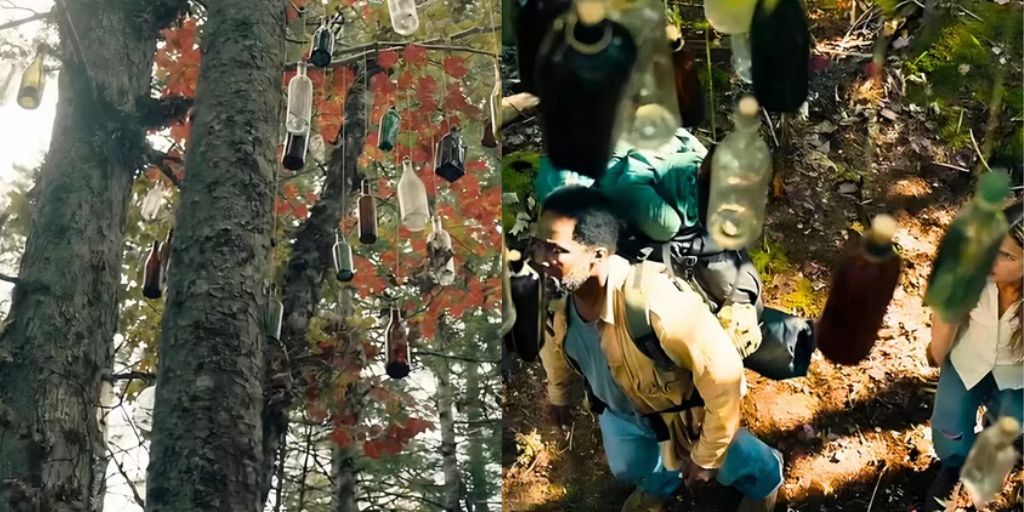
Still from From Season 3 (Credit: MGM)
Additionally, the group may have to rely on Victor’s knowledge of the town’s history. Victor has already revealed some details about Christopher’s tragic massacre and the town’s deeper mysteries.
As the residents search for new ways to escape, they may need to dig even deeper into the town’s dark past, hoping that the answers they find will provide a way out. However, this path is fraught with danger, as the town seems determined to keep its secrets hidden.
The Faraway Trees: Not a Path to Freedom
Dale’s death serves as a grim reminder that the faraway trees are not a reliable escape route. While Tabitha’s journey through the tree led her to the real world, Dale’s journey ended in tragedy.
The town’s forces appear to control the trees, determining who gets to survive and who meets a grisly end. The residents can no longer trust the trees as a way out, and they must now search for other methods of escape.
The group’s future is uncertain, but one thing is clear: the town is not willing to let them go easily. Dale’s death has shown that any attempt to leave must be carefully considered, and the residents will need to be smarter and more cautious if they want to survive. With Boyd’s determination and Victor’s knowledge, they may still have a chance, but it will not be easy.
