Telling stories about generational trauma is a delicate challenge. Many films attempt to address this complex issue, but they often end up portraying one of two extremes: either the trauma is too easily overcome, or it permanently tears the family apart.
Both of these outcomes rarely reflect the reality of how trauma affects families. In life, trauma doesn’t just disappear, and family ties can’t be broken so easily. People can’t escape their trauma, and they can’t truly escape their families either.
With this in mind, it’s clear that telling a story about generational trauma in a truthful and meaningful way is no small task.
Exhibiting Forgiveness manages to do so by skillfully facing the complexities of healing, offering a depiction of a family struggling to reconcile their past while acknowledging the difficult reality that true healing is not easy or immediate.
Titus Kaphar’s Exhibiting Forgiveness focuses on Tarrell, played by André Holland, who returns to his childhood home with his wife, Aisha (Andra Day), and their son. They arrive to help Tarrell’s mother, Joyce (Aunjanue Ellis-Taylor), pack up the house.
Upon arrival, Tarrell is confronted by his estranged father, La’Ron (John Earl Jelks). This reunion forces Tarrell to face the trauma and abuse he suffered at the hands of his father while grappling with the painful contrast between the man he once knew and the man his father is now.
Tarrell, like Kaphar, is an artist who communicates through his work, using evocative images to express complex emotions. Kaphar’s unique perspective as an artist translates perfectly to the medium of film, allowing him to tell a deeply personal story with sensitivity and emotional depth.
The Reality of Generational Trauma in Exhibiting Forgiveness
In fictional stories, there’s often a tendency to conclude with a neatly satisfying ending. Audiences frequently seek closure or catharsis, which can result in unrealistic depictions of generational trauma and healing. However, real change is rarely instantaneous.
Years of pain and suffering don’t disappear simply because someone says they’re sorry. Exhibiting Forgiveness avoids this mistake by showing a more grounded and honest depiction of trauma and healing. Kaphar is fully aware that the wounds from past experiences don’t simply vanish after an apology, and he brings this to the forefront of the film.
When we first meet Tarrell, it’s clear what kind of person he is. He is a successful and influential artist, but he is also a devoted father to his son and a supportive husband to Aisha, who has sacrificed her own career to focus on their family.
Aisha is a musician and performer, but her professional life has taken a backseat to their family’s needs. This sacrifice is a key aspect of the film, as it sets the stage for the family dynamics and reveals Tarrell’s deep desire for balance and equality.
This is especially important to him because of his own childhood experiences. While Tarrell is an accomplished artist, he is also determined to be a different kind of father than the one he had. He is committed to being emotionally present for his son and ensuring that his son has the opportunity to experience a childhood that he himself never had.
One of the first challenges Tarrell faces is the pressure to do another art exhibition, suggested by his pushy art agent, Janine (Jaime Ray Newman).
Although Tarrell is reluctant, he knows that he hasn’t fully stopped painting, but he is also deeply aware that his wife, Aisha, has had to put her own career on hold to support their family. This situation is symbolic of the delicate balance between personal ambition and family responsibilities that Tarrell constantly tries to maintain.
The Challenge of Forgiveness in Exhibiting Forgiveness
Despite the film’s title, forgiveness is anything but easy for Tarrell. When he finally comes face-to-face with his father, all of his childhood trauma resurfaces. The memories of the abuse and neglect he suffered are overwhelming, and he is haunted by nightmares.
These recurring dreams fill him with anxiety and panic, and he is unable to escape the emotional scars that his father left on him. His father, La’Ron, is a living embodiment of those painful memories. When they meet, Tarrell’s reaction is one of irritation and resistance. He is not ready to forgive his father, and Kaphar doesn’t try to force a quick resolution.
Rather than offer a simple narrative of forgiveness, Kaphar gives us a much more realistic and nuanced portrayal of the process. The film makes it clear that just because Tarrell learns more about his father’s painful past does not mean that he is ready to forgive him.
Understanding the reasons behind his father’s actions doesn’t erase the hurt that has been done. Tarrell’s struggle to forgive is a central theme of the film, and Kaphar is careful not to offer any easy answers. The pain of the past remains with Tarrell, and healing is a slow and complicated journey.
The film’s realism in addressing generational trauma is what makes it stand out. Kaphar doesn’t sugarcoat the experience of healing. There is no magical moment when everything is forgiven and forgotten. Instead, the story shows the ongoing struggle of trying to reconcile the past with the present.
Tarrell’s journey is one of understanding, but that understanding doesn’t instantly make everything okay. The scars of the past continue to affect him, and it’s clear that he is far from being able to fully forgive his father, no matter how much he may try.
A Masterful Performance by André Holland and John Earl Jelks
While Kaphar’s storytelling is undeniably powerful, the performances of André Holland and John Earl Jelks upgrade the film to another level. Their portrayal of Tarrell and La’Ron is a masterclass in acting. Both actors bring a raw emotional depth to their roles, making their characters’ pain and struggle feel real and relatable.
John Earl Jelks’s portrayal of La’Ron is especially noteworthy. He is able to convey the complex emotions of a father who is trying to make amends, but also an addict who has been consumed by his past mistakes. La’Ron’s regret and desire to reconcile with his son are palpable, but so are the lingering effects of his addiction.
In one particularly powerful scene, La’Ron recounts the cruelty of his own father, telling Tarrell how his father’s abuse shaped him. La’Ron tries to justify his actions by claiming that his tough love made Tarrell the man he is today.
This type of rhetoric, common among older generations, highlights the toxic cycle of abuse that has passed down through the generations. Jelks plays this scene with heartbreaking sincerity, capturing the tragic contradiction in his character: a man who believes he is doing good while perpetuating harm.
André Holland’s performance as Tarrell is equally compelling. He conveys the emotional weight of Tarrell’s experience with subtlety and depth. While Tarrell is a successful artist and a loving father, he is also deeply scarred by his past.
Holland expertly portrays the conflict within Tarrell: his understanding of his father’s pain, his love for his own son, and his inability to forgive his father. The emotional tension between Tarrell and La’Ron is palpable in every scene, as Holland’s portrayal shows the deep, unspoken pain that Tarrell carries with him.
The Complexities of Family and Healing
At the film’s climax, a tragedy strikes the family. However, rather than serving as a moment of reconciliation, this tragedy pushes father and son even further apart. This is a crucial moment in the film, as it emphasizes that time does not heal all wounds.
Exhibiting Forgiveness shows us that some pain remains with us, and that healing is not a linear process. The family does not come together in a moment of catharsis, and past mistakes are not easily forgiven. The trauma of the past continues to haunt the characters, but there is a sense that the anguish is not permanent.
The film offers a form of peace, but it is not the traditional fairy tale ending. It is a peace that comes with acceptance of the complexity of family relationships and the understanding that healing takes time.
The final moments of the film highlight this reality. Although Tarrell and La’Ron come to a certain level of understanding, it is clear that their relationship will never be the same. The past cannot be erased, and Tarrell cannot forget the pain his father caused.
However, there is a glimmer of hope in their relationship, even if that hope is uncertain and fragile. The film doesn’t offer a neat resolution, but it does show that there is room for growth and healing, even if it’s not immediate or perfect.
Titus Kaphar’s Artistic Vision
Titus Kaphar’s talent as an artist shines through in Exhibiting Forgiveness. While this is his first feature film, Kaphar’s background as a visual artist informs his storytelling.
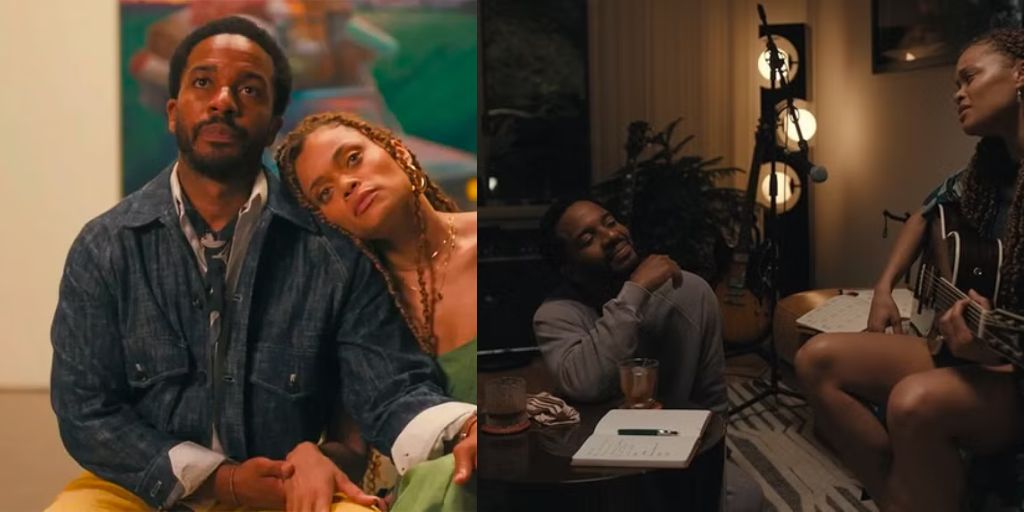
Still from Exhibiting Forgiveness (Credit: Sundance)
The film shows themes of family, art, and societal privilege, drawing from Kaphar’s own experiences. In particular, the film touches on the tension between artistic success and personal growth, as well as the way that art can both reflect and shape identity.
Ultimately, Exhibiting Forgiveness is a raw, unflinching look at the complexity of generational trauma. Kaphar doesn’t try to simplify the experience or offer easy answers. Instead, the film presents an honest portrayal of a family struggling to heal, showing that forgiveness is not an immediate solution but a long and difficult process.
With stunning performances and a nuanced scheme of trauma and healing, Exhibiting Forgiveness is a film that will resonate with anyone who has ever tried to reconcile with their past.
Brotherly relationships have been a central theme throughout history and in pop culture, often providing a source of conflict, humor, and deep emotional connection.
From the ancient stories of Cain and Abel, Romulus and Remus, to more modern examples like The Godfather Part II, Step Brothers, and F9, sibling bonds are frequently mined for both comedy and tragedy.
Max Barbakow, who gained popularity with his 2020 film Palm Springs, brings this dynamic to his second feature, Brothers. While Palm Springs garnered critical acclaim for its innovative approach to comedy, Brothers follows a more traditional path.
The film presents a crime comedy that doesn’t quite match the brilliance of its predecessor but remains an enjoyable watch, largely thanks to its talented cast.
What is Brothers About?
Brothers centers on the complicated relationship between two brothers, Moke (Josh Brolin) and Jady Munger (Peter Dinklage). The brothers were raised by their criminal mother, Cath (Glenn Close), who disappeared after a botched job left them to fend for themselves.
Growing up, the brothers turned to a life of crime, pulling off heists and cons. However, their paths diverged when Jady got caught and sent to prison, while Moke managed to escape.
Five years later, Moke is a reformed man, married, and expecting a baby. Jady, on the other hand, is released from prison, thanks to the help of the corrupt Officer Farful (Brendan Fraser). Farful wants the brothers to help him find a set of long-lost jewels.
Now estranged, Moke and Jady must work together one last time for a final job, all while dealing with a corrupt officer, an untrustworthy mother, and the risk of Moke losing his stable life. The film follows their journey as they try to reconcile their differences and survive the dangerous situation they find themselves in.
Strong Performances But Safe Storytelling
The central focus of Brothers is the relationship between the two brothers, and in this, Josh Brolin and Peter Dinklage shine. The duo shares excellent chemistry and comedic timing, making their interactions feel authentic. Brolin plays Moke, the more serious brother who has worked hard to leave his criminal past behind.
He is trying to build a stable life with his wife, Abby (Taylour Paige), and their soon-to-be-born child. Dinklage, as Jady, brings a lighter, more chaotic energy to the film. His character is unpredictable, bringing constant drama and conflict, which contrasts well with Brolin’s more grounded portrayal.
Brolin’s portrayal of Moke as the “straight man” works well, and he delivers a strong performance. However, Dinklage’s character, with his sharp wit and energetic presence, gets the majority of the film’s best lines. Their easy back-and-forth chemistry makes their relationship entertaining, even when the plot itself feels somewhat predictable.
Brendan Fraser, playing Officer Farful, also delivers a strong performance. His character is a corrupt cop with an inflated sense of importance, and Fraser’s comedic timing suits the role perfectly.
However, Farful is not fully utilized as an antagonist. While he brings some physical menace to the table, his character could have been more active in the plot. Instead, he often feels more like a henchman than a major threat to the brothers.
Taylour Paige, playing Moke’s wife Abby, is a standout, even though her screen time is limited. Despite being somewhat underused, Paige brings charisma to the role, making Abby a memorable character.
Her presence adds an extra layer of emotional depth to Moke’s character, though the script doesn’t give her enough to do in the story. With more screen time, Abby could have added an important perspective to the film’s narrative, heightening the tension between Moke’s criminal past and his desire for a better life.
A Familiar Crime Caper with Missed Opportunities
The film’s plot follows the well-worn path of many crime capers, especially those in the vein of Logan Lucky or Guy Ritchie films. The brothers’ journey to pull off one final job, with a corrupt officer involved, is a familiar setup. While the film has plenty of charm, particularly in its dialogue and comedic moments, it doesn’t take many risks.
The humor can be hit-or-miss, with some bits, such as a subplot involving Moke becoming friends with an orangutan, feeling out of place in a film that otherwise maintains a more grounded tone.
There are also several narrative threads that don’t quite land. For example, the plot involving Marisa Tomei’s character, Bethesda, feels like a needless detour. While it introduces some interesting dynamics, it ultimately doesn’t add much to the full story.
Similarly, some key characters, like Officer Farful and Abby, are not as developed as they could be, leaving their potential untapped. The lack of deeper scheme of these characters weakens the full tension and emotional stakes.
The film’s pacing also struggles at times, with certain scenes dragging on or feeling unnecessary. For example, while the clock ticking down on Moke’s need to return home creates some suspense, the film could have benefited from a tighter narrative.
The inclusion of more scenes with Abby, and perhaps less focus on peripheral characters, could have sharpened the film’s focus. These minor issues accumulate, making Brothers feel more like a missed opportunity rather than the standout follow-up to Palm Springs that it could have been.
An Enjoyable Watch, but Not Revolutionary
While Brothers is an enjoyable film, it doesn’t quite live up to the expectations set by Barbakow’s previous work. The performances from Brolin and Dinklage are solid, and the film has some genuinely funny moments, but the script and direction fall into familiar crime comedy tropes without offering much new. The film is not without its charms, but it often feels safe and predictable.
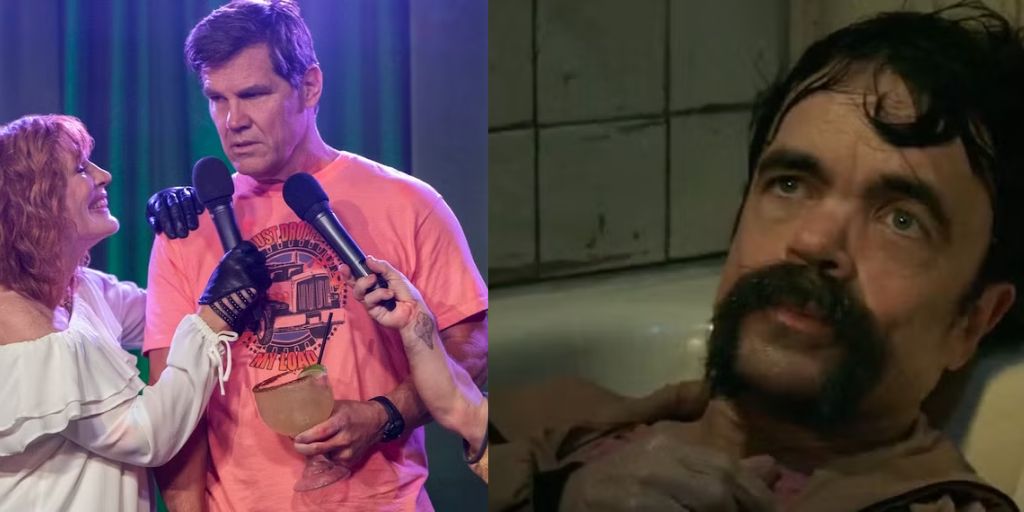
Still from Brothers (Credit: Prime Video)
The lack of innovation is its biggest flaw. With such a talented cast, Brothers had the potential to break new ground in the crime comedy genre. Unfortunately, it doesn’t take full advantage of its premise or characters. While it’s still a fun movie to watch, it’s unlikely to leave a lasting impression.
Brothers is available to stream on Prime Video in the U.S. While it may not be a groundbreaking film, it provides an enjoyable experience for fans of crime comedies and is worth watching for the performances alone. However, those looking for something fresh or innovative may find themselves wishing for more.
In the end, Brothers feels like a film that had the potential to be much more but ended up playing it too safe. With the right adjustments, it could have been a more memorable experience, but for now, it remains a solid, if forgettable, entry in the crime comedy genre.
