Bode Leone’s first day in cadet training for the Edgewood Rescue Crew was expected to be demanding, but no one anticipated the level of personal tension and risk involved. While Bode is committed to his role, he’s carrying the weight of a controversy that stems from an emotional decision to keep something that doesn’t belong to him.
At the start of the day, Jake, one of the station captains, confronts Bode and Gabriela about a significant item: Gil’s necklace, which was found in Bode’s locker. The necklace is a personal item and meaningful to Jake, making it all the more hurtful for him to find it hidden away by Bode, someone he’s expected to trust.
Jake wastes no time bringing up the necklace issue, and he doesn’t mince words. Bode and Gabriela, to their credit, don’t attempt to lie or hide the truth from him. This openness spares them from further confrontation, but Jake’s frustration is understandable.
The position they’ve put him in is one of immense difficulty, especially given the close-knit relationships and trust that bind the members of the Fire Country crew. Jake has worked hard to balance being a competent leader with being approachable to his team members, yet Bode and Gabriela’s actions make his job seem impossible. His frustration shows just how difficult it can be to manage both authority and friendship.
During this tense exchange, Bode’s response only adds fuel to the fire. He reacts with a touch of teenage defiance, questioning Jake’s right to search his locker. This reaction feels misplaced and inappropriate given the context; Jake, as the station captain, has every right to inspect any locker since they technically belong to Cal Fire, not to individual cadets.
Jake swiftly corrects Bode, reminding him of this fact with authority. Despite having every reason to take a more aggressive approach, Jake remains composed and shows an admirable level of patience. He doesn’t make Bode feel worse than necessary and refrains from emphasizing how unwise it was for Bode to hide the necklace in such an obvious place.
In this moment, Jake demonstrates his own strength of character, showcasing qualities that make him a strong leader, even if Bode’s defiance makes things more challenging.

Still from Fire Country (Credit: CBS)
As a result of this initial conflict, Jake decides to bench Gabriela and places Bode on probation, making it clear that he’s on thin ice. This is not the ideal start for Bode, who knows the difficulty of succeeding in a high-stakes environment like the cadet training program.
To further emphasize the challenge, the first task for the cadets is a “drill den” exercise, designed to simulate real-life rescue situations. Their goal is to find and save a hidden dummy, simulating the experience of locating an individual trapped in a fire.
If a cadet fails the drill, they earn a “strike,” and three strikes mean they will be dismissed from the program. This setup raises the stakes for every participant, and for Bode, the pressure to succeed feels more intense due to his strained relationship with Jake.
In this exercise, Bode is paired with Audrey, another cadet with her own complex relationship with him. Previously, Audrey tried to sabotage Bode during his “hot wash” audition for the crew, hoping to have him disqualified.
But now, as teammates, she is forced to shift her perspective. Audrey, who has a strong sense of self-preservation and a practical outlook, recognizes that working together is essential for success. Her resentment toward Bode still lingers, however, as his legacy within Cal Fire creates a sense of unfairness in her mind.
Audrey has struggled to prove herself independently and harbors resentment toward those who seem to receive support through family connections. As they prepare for the drill, the story of Audrey’s own past struggles unfolds. Audrey has a troubled history, including battles with substance abuse and time spent in incarceration.
This history led her to the Cal Fire program as part of her efforts to rebuild her life, yet her journey has not been smooth. She has already failed the program twice, a fact that weighs heavily on her. Determined to succeed this time, Audrey knows she cannot afford another strike.
She is committed to staying focused and maintaining control over her actions, a sharp contrast to Bode, who often lets emotions guide him. Audrey’s determination means that she needs Bode to be fully present and focused on the task at hand, as any distraction could jeopardize both of them.
For Bode, this moment is about more than just passing a drill. He’s also trying to repair his damaged relationship with Jake, hoping that his actions in training will help regain Jake’s trust. Bode understands that his recent actions have disappointed Jake, and he worries that if Jake continues to feel disrespected, he might report the situation to Bode’s family, which could lead to even more severe consequences.
Both Bode and Gabriela face the risk of damaging their careers if this matter escalates. For Bode, who has always felt the weight of his family’s expectations, losing this opportunity would feel like a deep personal failure.

Still from the show (Paramount+)
In an unexpected moment of support, Bode’s family steps in to show their encouragement. Grandpa Walter Leone, a figure who holds a lot of weight in the family, arrives on Bode’s first day to watch the drill. Walter brings along Vince, Bode’s father, as they both come to show solidarity and perhaps help calm Bode’s nerves.
Before the drill begins, Walter takes Bode aside and shares an important piece of advice: the dummy, meant to represent a person trapped in the fire, is often hidden in the closet. Walter explains that in real-life fires, children tend to hide in closets, a detail that could be critical for Bode’s success in the drill.
As Bode and Audrey enter the drill den, they work systematically through the building, searching every corner for the dummy. With each step, Bode feels the weight of Walter’s advice, but he struggles with whether to use it.
Finally, as they near the end of the drill without finding the dummy, Bode makes the call to check the closet. With only 30 seconds left, they managed to locate the dummy and complete the drill. For a moment, it seems like a victory—until Jake steps in, noticing something unusual.
Jake, who has been observing the drill, knows that something isn’t right. The drill requires participants to communicate every movement over the radio, yet Bode and Audrey’s sudden change in direction went unannounced. Jake questions Bode’s decision to pivot without radioing in, and Bode is forced to admit that he used advice from Walter, his grandfather.
This admission frustrates Jake, as today’s training was supposed to be about trust and communication, values Bode ignored. Jake, unable to overlook this violation, makes the difficult decision to remove Bode from the program. He explains that without honesty and teamwork, there’s no place for Bode on his crew.
Bode feels the weight of this consequence deeply, yet he finds unexpected support from Audrey, who has grown closer to him during this experience. She sympathizes with Bode and doesn’t want him to face the blame alone, so she takes the unusual step of pleading his case to Jake.
She argues that their success in the drill was a team effort, and she willingly takes one of Bode’s strikes to even the playing field. This action leaves both Bode and Audrey with two strikes each, meaning one more misstep from either of them will end their chances in the program.
Amid these tensions, Bode decides it’s time to resolve another lingering issue. He and Gabriela approach Gil to be honest about the necklace and explain why they kept it. Gil, who appreciates their honesty, is also relieved simply to be alive.
He shares that their quick thinking saved him and now allows him to take a safer desk job, freeing up time to enjoy life with his daughter before she moves to New York University. This moment reinforces that Bode and Gabriela’s intentions, while sometimes misguided, often come from a place of genuine care.
Once again, they escape severe consequences, and Gil’s gratitude reminds them of the importance of family and support. This experience also brings a new perspective to Gabriela, who reflects on how much they’ve risked in the past.
In a candid conversation with Bode, Gabriela expresses a realization. She remembers Jake’s comment that “99 out of 100 firefighters” would not have tried to cover up their actions the way Bode did. She brings up how Bode was willing to disrupt her wedding plans, and she admits that she, too, wanted him to do it.
This pattern of making dangerous choices has become clear to her, and she realizes that it isn’t healthy for either of them. Gabriela recognizes that every time Bode is involved, she ends up making reckless decisions, a cycle that cannot continue if they hope to move forward in life.
While Bode sees the necklace incident as something that could strengthen their bond, Gabriela feels differently. She believes that they both need time to grow individually and learn to make safer, more thoughtful decisions before considering a relationship.
They’ve had similar conversations before, but perhaps this time it will finally make an impact. Bode might soon develop a new connection with Audrey, yet there’s a glimmer of hope that some personal growth might come from this realization.

Still from Fire Country (Credit: CBS)
Meanwhile, at the beginning of the episode, another storyline unfolds with Manny’s first day at Three Rock. Manny, like Bode, faces his own set of challenges, and he shares his concerns with Eve. Both worry about how the other inmates will respond to Manny’s presence, especially given his past. But Manny finds that his reputation precedes him, and the crew members welcome him with respect.
They see him not just as a former inmate but as a skilled firefighter who has earned his place. Manny’s actions at the Firefighter’s Banquet, where he stood up for the inmates, have won him admiration, and his presence among them feels reassuring.
During a routine task at Smokey’s, where they are clearing out damage, Manny’s quick thinking comes into play when a fellow inmate is injured. Manny is the first to help, bandaging the injury and offering reassurance. While doing so, the inmate shares a surprising sentiment, saying that Manny’s daughter, Gabriela, inspires them even more than Manny himself.
This comment hits Manny hard, as he realizes the impact his journey has had on his family. He’s doing everything he can to reconnect with Gabriela, who has been affected by his choices in profound ways.
Observing Manny’s reaction, Eve becomes more concerned about the toll this is taking on him. She glances over Manny’s visitor paperwork and notices that Gabriela isn’t on the list, a fact that weighs heavily on her mind.
She tells Manny that “it takes support on the outside to do good on the inside,” hoping he’ll understand the importance of maintaining a connection with Gabriela. Manny, however, believes that keeping his distance is in Gabriela’s best interest. He doesn’t want to burden her with his struggles and feels that she’s better off without the complications his life brings.
Eve, who has her own complicated family history, empathizes with Manny’s situation. She hasn’t spoken to her parents in six years, a reality that saddens her. Yet she recognizes the importance of family, even if relationships are strained.
Eve encourages Manny to let go of his pride and reach out to Gabriela. She believes Gabriela would welcome the contact, and her words leave an impression on Manny, who realizes that reconnecting with his daughter could make a difference.
Elsewhere, Walter’s presence serves as a reminder for Vince about the type of father he wants to be. Vince has often struggled with his role, balancing his career and family expectations. Seeing how Walter’s involvement impacts Bode, Vince is inspired to support Sharon’s decision to buy Smokey’s, a local restaurant.
He realizes that stepping back from firefighting could allow him to focus on family and create a sense of stability for Bode. The decision to rebuild Smokey’s as a community hub brings hope for new beginnings and even opens the door to performances, possibly by Vince himself, adding a fresh dynamic to the story.
This episode leaves viewers excited about potential developments. It’s a chance for Fire Country to introduce real-life musicians and add more character depth. As the community gathers at Smokey’s, we might see a new side of Vince, embracing music and helping foster a warm, inclusive environment. This direction signals an intriguing mix of personal growth and community connection, making it a pivotal moment for the series.
In Fire Country, Bode’s first day as a cadet sets the stage for a gripping finding of growth, redemption, and the intricate balance between personal relationships and professional duties.
His conflicts with Jake over the necklace, Gabriela’s reflections on her decisions, and Audrey’s choice to share responsibility reveal the pressures cadets face when trying to prove their worth in a high-stakes environment. Each character wrestles with personal challenges—Bode with his reputation and desire for redemption, Audrey with her history and drive to succeed, and Gabriela with the consequences of impulsive choices.
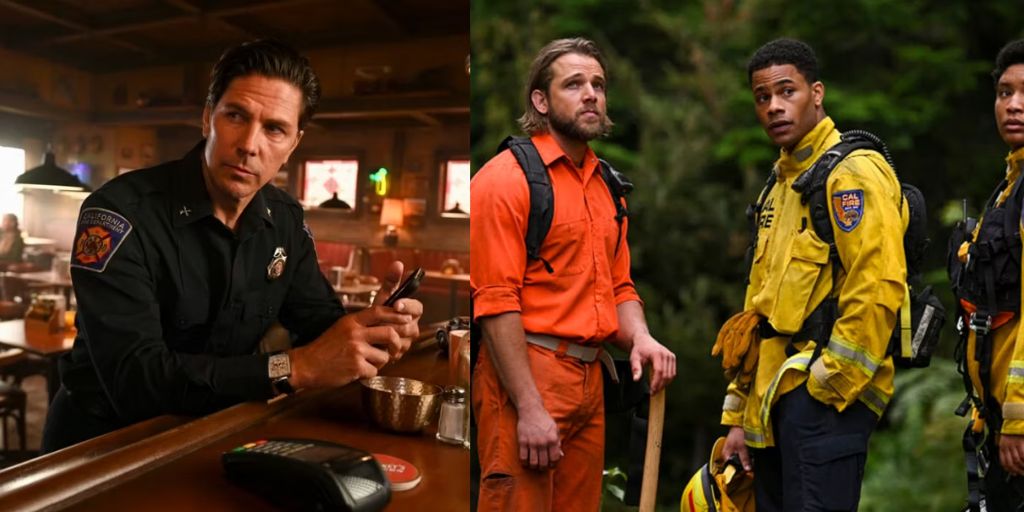
Still from Fire Country (Credit: Paramount+)
These struggles highlight the personal transformations that come from facing the consequences of one’s actions, especially when surrounded by individuals with conflicting motivations and loyalties.
Bode’s decision to use Walter’s advice during the drill exercise was a pivotal moment that demonstrated both his eagerness to succeed and his lack of understanding of the importance of communication. His breach of protocol with Audrey brought harsh consequences, yet it also forced him to confront his flaws and the repercussions his decisions had on others.
The dynamic between Bode and Audrey evolves as she steps in to share the blame, illustrating the camaraderie and accountability that the cadet program instills in its participants. Audrey’s selfless act of accepting a strike for Bode speaks to her growth as well, showing that her resentment has been overshadowed by a sense of shared responsibility.
Her gesture represents a turning point in their relationship and sheds light on the development of trust between them—an essential quality for any team facing life-threatening situations.
Manny’s storyline adds a deeper layer of emotional resonance, as he grapples with his role as a father and mentor. His interactions with Eve and his choice to distance himself from Gabriela for her well-being underscore the sacrifices he’s willing to make to protect his daughter.
Yet Eve’s advice encourages Manny to reconsider, reminding him that his connection to Gabriela is essential for both of them. Manny’s journey shows the importance of family support in times of struggle, even when those relationships are strained or complicated.
This subplot reflects the broader theme of reconciliation that runs throughout the episode, illustrating how characters’ relationships evolve as they learn from one another and face difficult truths.
The potential opening of Smokey’s restaurant, led by Vince and Sharon, serves as a beacon of hope and renewal, offering the community a fresh start. Vince’s decision to support Sharon’s plans represents a shift in priorities, emphasizing the value of family, community, and personal happiness over professional achievements.
Smokey stands as a symbol of rebirth, not only for Vince and Sharon but also for the entire community, which could find comfort and connection within its walls. By choosing to prioritize family and embrace a new chapter, Vince sets an example for Bode and the others, showing that life is about more than the job—it’s about creating a legacy and building relationships that endure beyond the fires they fight.
Fire Country masterfully intertwines the lives and challenges of its characters to find themes of loyalty, sacrifice, and resilience. Bode’s experiences with his team, Manny’s struggle to connect with his daughter, and the reopening of Smokey’s all contribute to a rich narrative that goes beyond the adrenaline-fueled firefighting.
Each character’s journey reveals the strength that comes from facing one’s past and the hope that emerges from embracing new beginnings. This episode underscores that redemption and growth are possible, even in the most difficult circumstances, and that the bonds formed through shared trials are what ultimately bring individuals closer together, forging a stronger community.
I have been a longtime fan of Julianne Hough and her journey on Dancing With The Stars. When the announcement came that she would return as a host alongside Alfonso Ribeiro, I was thrilled.
Julianne’s presence brings a kind of energy and enthusiasm to the show that few others can match. Together, she and Alfonso create a dynamic duo that makes each episode enjoyable and memorable.
Julianne has been a central part of Dancing With The Stars for many years, from her early days as a dancer to her current role as a host. Her contributions to the show—her choreography, memorable performances, and vibrant personality—have left a lasting impact on fans.
Yet, it seems that recently she has faced unwarranted criticism on social media. Despite her history with the show and her positive influence, some fans appear dissatisfied, and I believe she deserves much more appreciation.
Long-Standing Presence and Positive Energy
Julianne’s connection with Dancing With The Stars goes back many years. She started as one of the professionals, becoming known not only for her skills but also for her infectious energy. Week after week, she brought unforgettable performances to the stage, each one crafted with care and creativity.
Her dancing and choreography were always highlights of the show, drawing attention and admiration from fans and judges alike. Beyond her technical skills, it was her ability to emotionally connect with the audience that made her a fan favorite. Julianne’s joy and passion for dance were visible in every performance, and that sincerity resonated with viewers.
When she moved from dancing to hosting, she brought that same enthusiasm with her. Her positive energy lights up the screen, creating a welcoming and exciting atmosphere for viewers and contestants. Hosting is a different challenge, but Julianne embraced it wholeheartedly, bringing her authentic self to the role.
Her experience as a dancer allows her to relate to the stars and professionals on a personal level, creating connections that add depth to her interactions. This genuine engagement is one reason fans have loved her for so long, as she brings a personal touch that enhances the show’s atmosphere.

Still from Dancing with the Stars (Credit: ABC)
Facing Criticism: Concerns and Misunderstandings
However, it seems that recently, some fans of Dancing With The Stars have grown critical of Julianne’s hosting style. They claim she stumbles over her words, lacks “polish,” and doesn’t connect with the contestants and professionals as strongly as she should. I don’t agree with these criticisms at all. In fact, I see Julianne as the heart of Dancing With The Stars, a vital part of what makes the show special.
Criticism of her speaking style, especially when it comes to minor stumbles or moments of nervousness, feels unfair and out of place. Many fans seem focused on her occasional slips, arguing that they make her less suited for the role. But to me, these moments show her authenticity. They reveal a human side, and they’re a reminder that she, like everyone else, isn’t perfect.
Every host in television, regardless of experience or training, has moments where they trip over words or misspeak. It’s a natural part of live TV. Julianne isn’t the first, nor will she be the last. Even the show’s judges, like Derek Hough—her brother—and Carrie Ann Inaba, have their own moments of mispronunciation or occasional awkward phrasing.
Instead of allowing these moments to detract from their authority or presence, they’ve embraced them, often laughing at themselves and moving on. Julianne, too, handles these situations with grace, often brushing them off with a smile or laugh, which endears her to viewers even more. These slip-ups aren’t signs of weakness; rather, they show a genuine, unscripted side to her personality that many fans appreciate.
It’s disheartening to see fans suggesting that her minor stumbles should be grounds for removing her from the show. Holding her to such a high standard of “perfection” ignores the fact that hosting a live show involves many unpredictable moments.
Julianne’s occasional stutters or tongue-tied moments only serve to make her more relatable and down-to-earth. We all have moments where we don’t speak perfectly, and to expect Julianne to be immune to that is simply unrealistic.
The Call for Role Changes
Among the criticisms, some fans have suggested that Julianne and her co-host Alfonso should swap roles, arguing that Alfonso is a “better host.” I find this suggestion to be unfair and a misunderstanding of each host’s unique strengths. Alfonso reads from a screen during the show, which gives him a scripted advantage.
Julianne, on the other hand, interacts directly with each professional dancer and their partner after their performances. She engages with them, asks them questions, and reacts to their successes and struggles. This level of personal interaction sets her apart and gives the show a warm, personal touch.
The suggestion that they swap roles overlooks the fact that both hosts bring different qualities to the show. Alfonso’s style is polished and precise, but Julianne’s approach is grounded in empathy and connection.
She doesn’t simply read from a script; she actively engages with each contestant, offering them encouragement and celebrating their achievements.
By creating a space where contestants feel seen and supported, Julianne fosters an environment that allows the stars to feel comfortable and confident. She has the ability to make them feel special, which enhances their experience on the show.

Still from Dancing with the Stars (Credit: Disney)
The Emotional Connection Julianne Brings
One of Julianne’s greatest strengths as a host is her emotional connection with the contestants. She isn’t afraid to show her emotions, which makes her relatable to both the stars and the viewers. When Ilona Maher became frustrated and began to cry after a dance that didn’t meet her expectations, Julianne was the first to comfort her.
She approached Ilona, offering her a hug and genuine words of encouragement. Moments like this demonstrate Julianne’s empathy and her commitment to the contestants’ well-being. Her reactions show that she truly cares about each participant and is invested in their journey.
Similarly, when Dwight Howard and Daniella Karagach received the first perfect score of the season, Julianne celebrated with them wholeheartedly. She jumped for joy, sharing in their excitement and letting them know that their hard work was recognized and appreciated.
Her presence in these moments isn’t simply that of a host; she becomes a part of the contestants’ journeys, supporting them emotionally and celebrating their achievements.
These gestures may seem small, but they have a significant impact on the contestants. Knowing that the host is genuinely invested in their success can be incredibly motivating, and Julianne’s support provides that encouragement.
Her interactions go beyond the typical role of a host, creating a bond that makes the show feel more like a family. This sense of connection is what makes Dancing With The Stars unique, and Julianne plays a significant role in fostering that atmosphere.
Timing and Humor: The Lighthearted Side of Julianne
Julianne also brings humor and a playful spirit to her role, which adds a lighthearted touch to the show. Her comedic timing, especially when interacting with her brother Derek, brings laughter and joy to viewers. Their sibling banter is a delightful addition, providing a sense of warmth and familiarity that makes the show feel welcoming.
Julianne’s humor adds a layer of enjoyment for the audience, as her genuine interactions and playful exchanges remind viewers that Dancing With The Stars is not just a competition but also a celebration of dance and connection.
Her humor is balanced with sensitivity, which is important in a show that involves intense emotions and high stakes for the contestants. Julianne knows when to joke and when to offer comfort, showing an understanding of each contestant’s needs. Her ability to shift between lighthearted moments and heartfelt support demonstrates her range as a host and makes her an asset to the show.
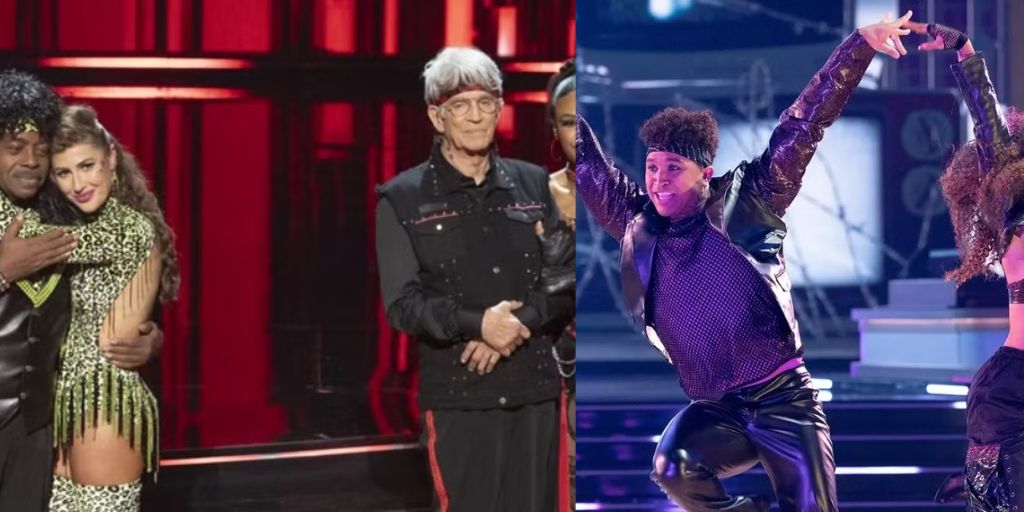
Still from Dancing with the Stars (Credit: Disney)
Why Julianne Deserves Continued Respect and Appreciation
Julianne Hough has earned her place on Dancing With The Stars. She is more than just a host; she is a mentor, a cheerleader, and a friend to the contestants. Her experience as a former dancer gives her unique insights into the challenges the contestants face, and her empathy allows her to connect with them on a personal level. Julianne’s passion for the show is evident, and she brings a sense of joy that resonates with viewers.
The criticisms she faces feel misplaced, especially when considering all that she contributes to the show. Her occasional stumbles don’t detract from her abilities as a host; rather, they make her relatable. In a world where perfection is often expected, Julianne reminds us that authenticity is far more valuable. Her imperfections make her real, and that authenticity is part of why fans have loved her for so long.
Julianne’s role on Dancing With The Stars isn’t just to read from a script or deliver flawless lines. Her purpose goes deeper; she is there to support, to celebrate, and to connect. She brings out the best in the contestants, offering them encouragement and showing them that they are valued. Her positive energy and genuine kindness make her an integral part of the show’s success.
Why Calls for Her Removal Are Misguided
The suggestion that Julianne should be removed from the show or that her role should be minimized feels unjust. Hosting a live show is challenging, and no host is immune to occasional mistakes. Julianne’s small missteps are minor in the grand scheme of her contributions.
Her ability to connect with the contestants and her willingness to show her true self are qualities that make her a beloved host. Removing her would be a loss not only to the contestants who benefit from her support but also to the viewers who appreciate her warmth and sincerity.
In a competitive show environment, having a host who genuinely cares about the contestants’ experiences is invaluable. Julianne’s compassion and empathy set her apart from other hosts, making her a unique and irreplaceable part of Dancing With The Stars. Her presence reminds viewers that the show is not just about scores and performances; it’s about the journeys, the connections, and the moments of joy and vulnerability that make each season memorable.

Still from Dancing With the Stars (Credit: Disney+)
Julianne’s Enduring Legacy on Dancing With The Stars
Julianne Hough has been part of Dancing With The Stars for years, and her impact on the show is undeniable. From her days as a professional dancer to her role as a host, she has contributed significantly to the show’s success.
Her passion, energy, and authenticity have endeared her to fans, and her presence adds a unique dimension to the show. She has created unforgettable moments, both on the dance floor and as a host, leaving a lasting legacy that fans will remember for years to come.
Julianne deserves respect for all that she has given to Dancing With The Stars. Her connection with the contestants, her humor, and her genuine kindness make her a beloved figure on the show. Fans may criticize her for minor slip-ups, but those moments only serve to make her more human.
Julianne’s authenticity is a rare quality in television, and it’s one of the reasons fans continue to support her. She is an essential part of the show, and her presence brings warmth and joy to each episode.
Julianne Hough is more than just a host on Dancing With The Stars; she is the heart of the show. Her empathy, humor, and genuine love for the contestants make her an irreplaceable part of the show’s success. She may not be perfect, but her imperfections make her real, and that authenticity is what fans love about her.
Julianne deserves respect and appreciation for all that she brings to the show. Her role is more than just reading lines; she is there to support, to connect, and to celebrate each contestant’s journey. For all these reasons, I will always defend Julianne Hough and her place on Dancing With The Stars.
