In 1993, Frasier Crane (Kelsey Grammer) left his friends at Cheers in Boston. He moved to Seattle to be with his father, Martin (John Mahoney), and brother Niles (David Hyde Pierce) in the NBC series called Frasier. This spinoff became very successful, winning many Emmys and was often considered even better than Cheers.
After eleven seasons, Frasier ended in 2004, seemingly for good. However, Frasier surprised everyone by returning last year on Paramount+. This new version is quite different from the original.
All the familiar characters are gone, and now it is just Frasier moving back to Boston to be with his son, Frederick (Jack Cutmore-Scott), whom he barely knows. Before you jump into Frasier Season 2, let’s recap what happened in Season 1.
After a Failed Relationship, Frasier Crane Returned to Boston
In the original NBC show, the last time we saw Frasier in 2004, he was feeling sad. Niles and Daphne (Jane Leeves) were married and new parents, and Frasier’s father had just found love and married too. Feeling lonely and wanting a change, Frasier decided to leave Seattle for a new job as a TV therapist in San Francisco.
At the last moment, he changed his mind and flew to Chicago to meet his ex-girlfriend, Charlotte (Laura Linney), who had moved away. The ending of Frasier suggests that Dr. Crane found happiness.
In the 2023 reboot of Frasier, we see him at a low point. His relationship with Charlotte did not work out, and his father, Martin, has died (John Mahoney passed away in 2018). Feeling lost, Frasier travels back to Boston to give a guest lecture at Harvard, where he studied. His son, Frederick, also lives in Boston.
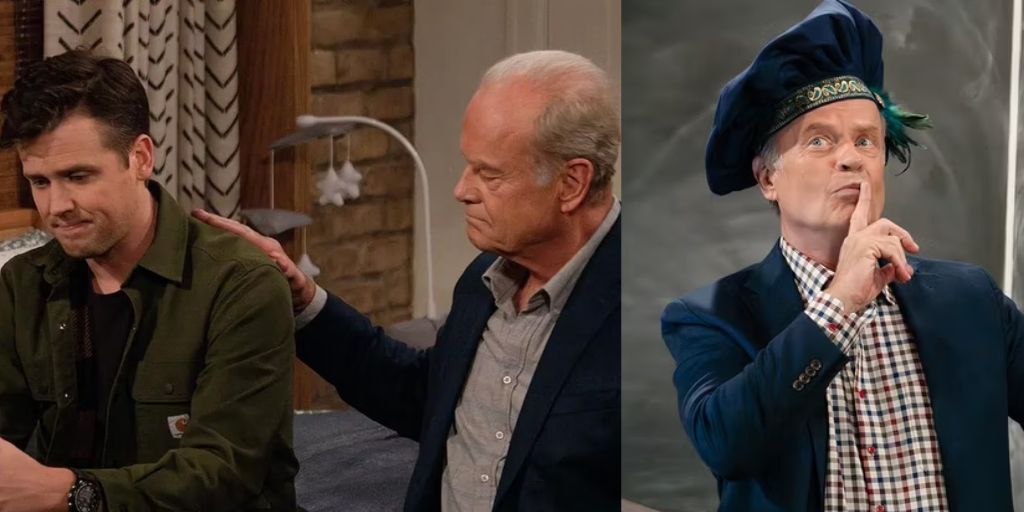
Still from Frasier (Credit: Paramount+)
We saw Freddy a few times in the original series when he visited Seattle, but now he is about to be a big part of Frasier’s life. Because of Frederick, Frasier moves back to Boston and becomes a full-time teacher at Harvard.
He reconnects with a former classmate, Alan Cornwall (Nicholas Lyndhurst), and Olivia Finch (Toks Olagundoye), who leads the Psychology department. Many people admire Frasier for his Dr. Phil-style TV show, but he no longer feels like a big deal.
Frederick Crane Is Taking Care of a Deceased Friend’s Girlfriend and Baby
When Frasier first arrives in Boston, he surprises Frederick at his door, shocking his adult son. Their meeting is awkward. Freddy went to Harvard like his father but dropped out to become a firefighter. He did not become a doctor like Frasier or Niles, although Niles’ son David (Anders Keith) is a freshman at Harvard, studying Psychology and is similar to his father.
Frasier struggles to understand Freddy’s choice of career. One is an intellectual, and the other is a blue-collar worker. Frasier senses that Freddy is hiding something from him. He thinks it is about a girlfriend named Eve (Jess Salguerio), but the truth is more complicated.
Eve and Freddy are connected through Adam, her boyfriend, who is also the father of her baby, John. Adam was Freddy’s fellow firefighter.
Sadly, Adam died in an accident while on duty, and now Frederick takes care of both Eve and the baby. Frasier feels stunned and proud when he learns what his son is doing. This inspires Frasier to move in across the hall so he can be part of Freddy’s life.
Frasier also meets Freddy’s colleagues at the fire department, which leads to funny moments when he joins their lives. This creates a mix of social groups, with the Harvard crew hanging out with the firefighters for trivia nights at a bar called Mahoney’s, and there is even a potential romance between Olivia and one firefighter.
Frasier and Frederick Mourn Martin Crane and Become Closer
Frasier has his usual romantic encounters, but that is not the focus of the reboot. This story centers on the relationship between father and son.
This was also the main theme of the original series, where Martin, a retired cop who was shot in the line of duty, had his son move in with him in Seattle. Frasier and Martin often struggled to understand each other.
In the reboot, we see that Frederick is similar to Martin. Freddy did not attend his grandfather’s funeral, which upset Frasier. Eventually, they talk, and Freddy reveals that the pain of loss and guilt over his friend’s death was too much to handle. The loss of Martin helps Frasier and Freddy connect as they grieve together.
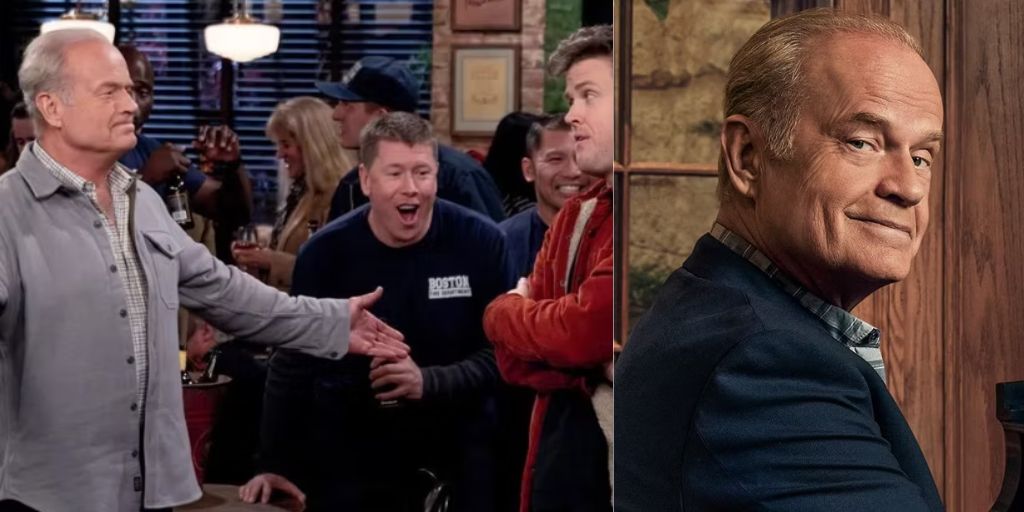
Still from Frasier (Credit: Paramount+)
In the Season 1 finale, it is Christmas time, and Frasier struggles to get through the holiday without his father. To keep himself busy, he plans a fancy party at his home, but things go wrong. It is also difficult for Freddy, who needs to support both his mourning father and Eve, who is also grieving. He finds it hard to be there for both of them at the same time. Eventually, Freddy decides to go to Eve’s party instead of his father’s.
Meanwhile, a lonely Frasier calls his old friend from Seattle, Roz Doyle (Peri Gilpin). She visits, and they discuss Martin and Frasier’s feelings about Freddy choosing Eve over him. When Roz reminds Frasier about the great man Frederick has become, Frasier realizes he has been selfish.
He goes to his son, only to find a surprise party at his home. Frasier and Freddy embrace, finally understanding each other. What adventures await Frasier next? Season 2 of Frasier will introduce new cast members, including Patricia Heaton, Rachel Bloom, Yvette Nicole Brown, and Amy Sedaris.
There is an old saying about boiling a frog. Many people may have heard this saying. The idea is that if you throw a frog into boiling water, it will immediately jump out to escape.
However, if you place the frog in cold water and slowly increase the temperature, it will not notice the change until it is too late.
This metaphor is often used to illustrate how dangerous situations can develop gradually, making it hard for those involved to react until it is too late.
Recent studies suggest that frogs might not behave this way in reality, but the metaphor serves well to explain how democracies can fall victim to the fear and violence of fascism.
A historical example of this is the rise of Benito Mussolini in the 20th century. The new series M. Son of the Century, directed by Joe Wright, invites viewers to follow Mussolini’s political career from its beginnings until the moment he solidified his dictatorship in January 1925.
Nearly a century after this significant event in history, the series acts as a timely reminder of how fragile democracy can be when faced with the unchecked power of fascist organizations.
What is M. Son of the Century About?
M. Son of the Century adapts the novel by Antonio Scurati. It tells the story of Benito Mussolini, who started as a war reporter and eventually became a dictator.
The series begins in 1919 when Mussolini established the Fasci Italiani and continues through key events, including the assassination of Socialist politician Giacomo Matteotti in 1924. The show captures Mussolini’s rise to power and the establishment of Fascist Italy in early 1925.
The narrative closely examines Mussolini’s path to dominance. Played by Luca Marinelli, Mussolini often addresses the camera, breaking the fourth wall in a way that draws viewers into his thought processes. This technique is reminiscent of characters like Richard III, who frequently turn to the audience for insight into their motivations.
These moments of direct address disrupt the usual realism found in historical dramas. The technique has a rich history in Western storytelling, from the choruses of ancient Greek theater to the monologues of Shakespeare.
It has also persisted throughout the history of film and television, often appearing in comedies like Blazing Saddles and the Austin Powers trilogy.
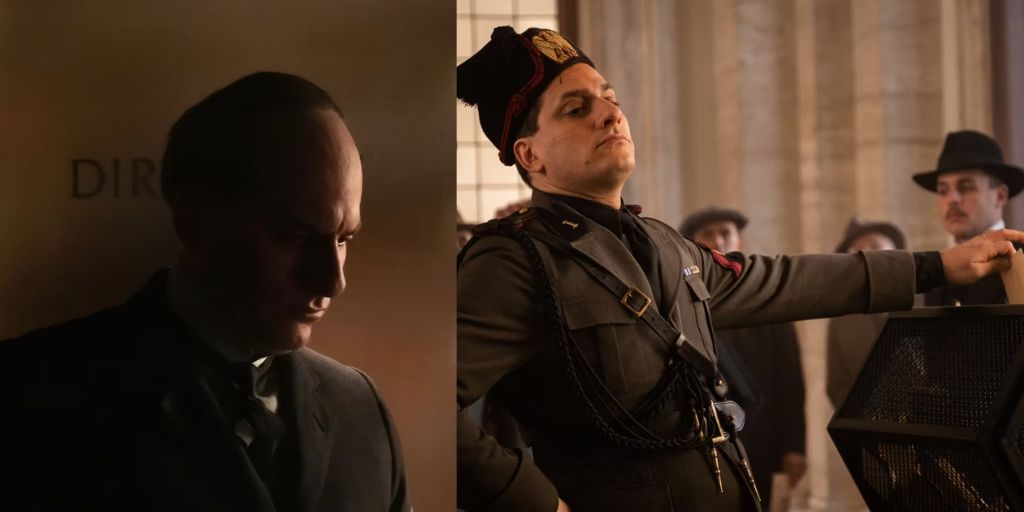
Still from M. Son of the Century (Credit: Sky Studios)
In darker genres, films like Fight Club and Funny Games also utilize this method effectively. This approach proves particularly powerful in M. Son of the Century, as it gives viewers a look into the mind of a fascist leader.
Luca Marinelli Is Excellent as Mussolini in M. Son of the Century
The series presents a visually stunning portrayal of the era, featuring sepia tones and a modern soundtrack, which includes music by Tom Rowlands from the Chemical Brothers. It begins with Mussolini’s early days as a leader who uses violence to gain power.
From the very start, the series establishes that violence is central to Mussolini’s ethos. In one early scene, he turns to the camera and states, “If you want to make history, start with the people at the bottom,” referring to the disaffected, mainly male youth, “and arm them.” This belief in harnessing the anger of the youth grows as the fascist party gains strength, eventually leading to its control over Italy.
These moments where Mussolini speaks directly to the audience are important in helping viewers understand his mindset. When reflecting on the assassination of Socialist Giacomo Matteotti, Mussolini describes Matteotti as “my exact opposite.”
While Matteotti comes from wealth and shows empathy for the poor, Mussolini reveals his true character. He says, “Coming from poverty, I love power. I detest poverty. And I despise the weak.” This contrast highlights how Mussolini’s populist rhetoric masks his actual intentions.
The series effectively captures the essence of fascism: power-hungry individuals who make false promises to manipulate the masses. Marinelli’s portrayal of Mussolini is compelling, showcasing a blend of tactical intelligence and malicious charm.
He embodies a character capable of rallying the angriest and most frustrated individuals around him. The show thoroughly shows the connection between the glorification of strong leaders and the rise of fascism, revealing how Mussolini confidently tells viewers, “Follow me, I’ll make you a fascist.”
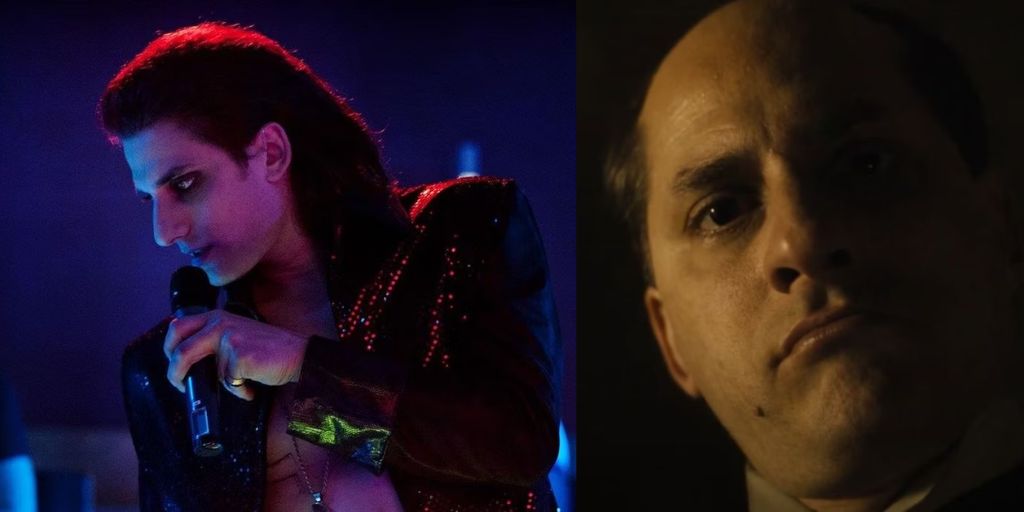
Still from M. Son of the Century (Credit: Sky Studios)
While the series primarily focuses on Mussolini’s public persona, it also goes into his private struggles. The show portrays him as anxious, uncertain, and even jealous at times, revealing moments of vulnerability that enhance his character depth.
The supporting cast plays important roles, such as Francesco Russo as the sycophantic Cesare Rossi. However, the primary focus remains on Mussolini, illustrating how everything else in the series revolves around him, echoing the structure of the Fascist state.
Artistic Choices and Their Impact
At times, the artistic style of the series may overshadow its narrative. Certain scenes appear to be constrained by special effects, and some directorial choices can feel overly on-the-nose. While the musical score is generally excellent, there are instances where song choices seem too much like over-explained jokes.
For example, in a pivotal scene where Mussolini scores a significant political victory, the series cuts to a subplot while playing Elvis Presley’s “Can’t Help Falling in Love.” Although this choice cleverly reflects Mussolini’s growing influence, by the end of the scene, the musical emphasis feels excessive and blunt.
Despite these artistic choices that might detract from the storytelling, they rarely undermine the full impact of the series. A bit more restraint in these moments could strengthen the message and the full experience.
The Fragility of Democracy
Ultimately, M. Son of the Century serves as a strong reminder of how democracies can collapse under the weight of fascism.
It points to various failures in 1920s Italy that contributed to this crisis, such as the inability of the press to recognize the emerging threat of fascism and the cowardice of religious institutions that supported it for their own oppressive ends. Additionally, the series emphasizes the weakness of non-fascist politicians who failed to act decisively when they had the chance.
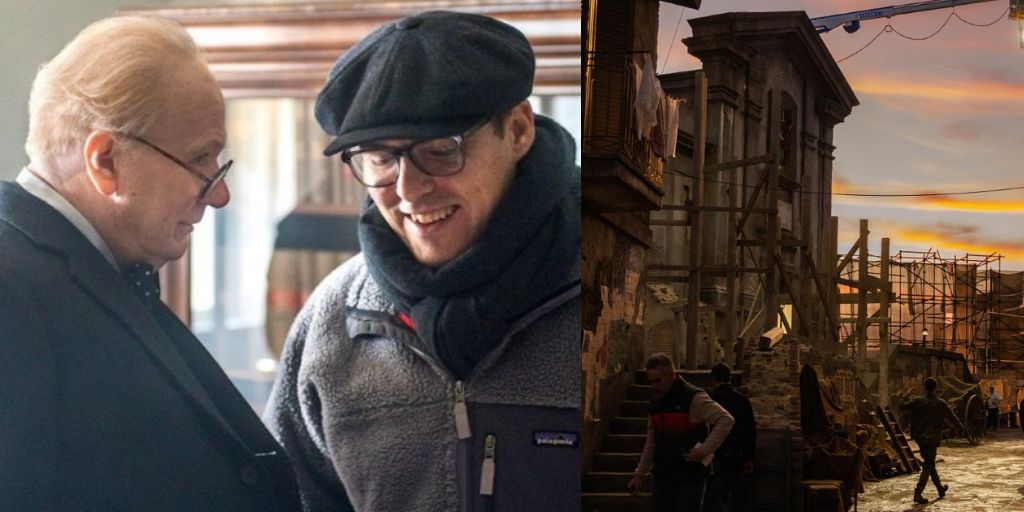
Still from M. Son of the Century (Credit: Sky Studios)
Mussolini stands as a tyrant who expertly weaponizes the frustrations of the populace, spreading lies and demonizing his opponents. He threatens severe retaliation against those who oppose him, demonstrating classic tactics employed by authoritarian leaders.
His chilling statement, “I believe that categories no longer exist. Socialist, Catholic, Bourgeois. There are only those who are with me, and those against me,” shows this mindset. He further asserts, “It’s not worth it, because those who are with me, tend not to love those against me.”
These tactics resonate with the strategies used by fascist movements throughout history and serve as a warning about contemporary political dynamics around the world.
A Harrowing Reflection on Contemporary Politics
M. Son of the Century is not just a historical account; it reflects current issues as well. The series offers a grim reminder of the consequences of political inaction in the face of rising extremism. The events depicted in the show closely mirror modern political climates in many countries.
The dangers of populist rhetoric and the manipulation of public discontent can be seen in various political movements today. Mussolini’s words resonate chillingly: “This is the last time we’re holding elections.”
Such statements echo sentiments expressed by current political figures who thrive on spreading division and hatred, targeting democracy as their enemy.
This harrowing portrayal of Mussolini’s rise serves as a warning for contemporary society. The series emphasizes the need for vigilance against authoritarianism, urging viewers to recognize the signs of democratic decay before it becomes too late.
It highlights the importance of being bold in defending democratic values and standing up against fascist tendencies, emphasizing that it is crucial to act before the opportunity is lost.
Philosophical Underpinnings
M. Son of the Century also engages with deeper philosophical questions about power and justice. It draws parallels with Plato’s Republic, a foundational text in political philosophy. In this work, Socrates engages in dialogues about justice, virtue, and the ideal society.
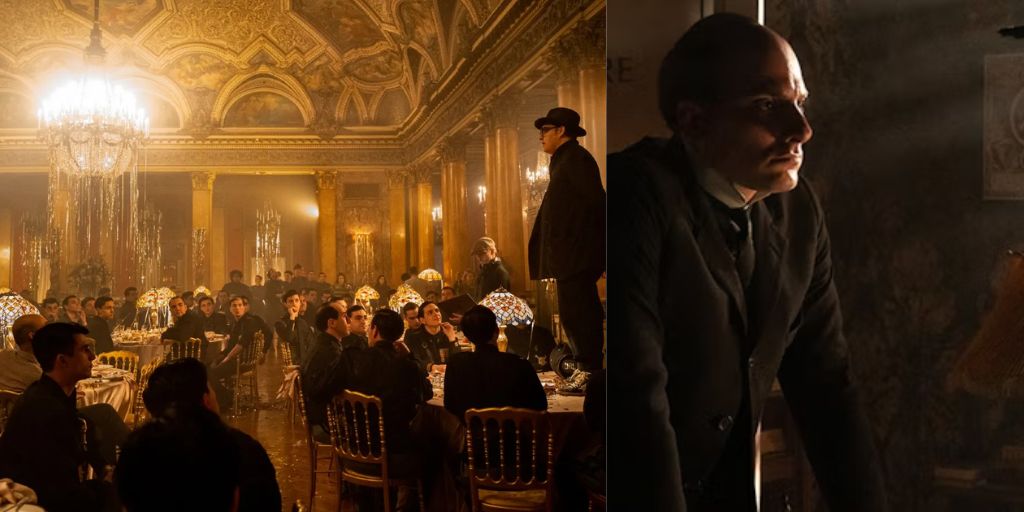
Still from M. Son of the Century (Credit: Sky Studios)
One of the most challenging discussions occurs between Socrates and the sophist Thrasymachus, who argues that justice is merely whatever benefits the powerful. This argument raises fundamental questions about morality and the nature of authority.
The series suggests that fascism aligns with Thrasymachus’ philosophy. Mussolini asserts, “Fascism is the rule of force. It’s the will of a few imposed on the will of many. It’s oppression.” He embodies the idea that justice is dead, replaced by the raw power of the strong.
Like Socrates, political figures in 1920s Italy fail to address this challenge, leaving the way open for Mussolini’s fascist forces to rise and take control.
Mussolini relishes this political impotence, stating, “Democracy is beautiful. It gives you a lot of freedom, even the freedom to destroy it.”
This statement serves as a stark reminder of the delicate balance that exists in any democracy. It underscores the necessity for active engagement and resistance to those who seek to undermine democratic principles.
A Warning for Our Time
The powerful legacy of M. Son of the Century lies in its ability to resonate with contemporary audiences. In a world where far-right and neo-fascist movements are gaining ground in many nations, the series provides a crucial warning.
Mussolini’s rise illustrates the dangers of complacency and the need for collective action in the defense of democracy.
As the series unfolds, viewers witness the way Mussolini exploits public anger, drawing parallels to modern political tactics that capitalize on division and fear.
The portrayal of Mussolini as a master manipulator serves as a call to remain vigilant against those who wield power without regard for democratic norms.
M. Son of the Century is a gripping view of the rise of fascism through the lens of one of history’s most notorious dictators. It serves as both a historical account and a cautionary tale, urging viewers to recognize the warning signs of authoritarianism in contemporary politics.
As Mussolini himself stated, “If you want to make history, start with the people at the bottom.” It is up to us to heed this warning, ensuring that history does not repeat itself.
M. Son of the Century serves as a powerful view of Benito Mussolini’s rise to fascist power, highlighting the dangers posed to democracy by authoritarian movements.
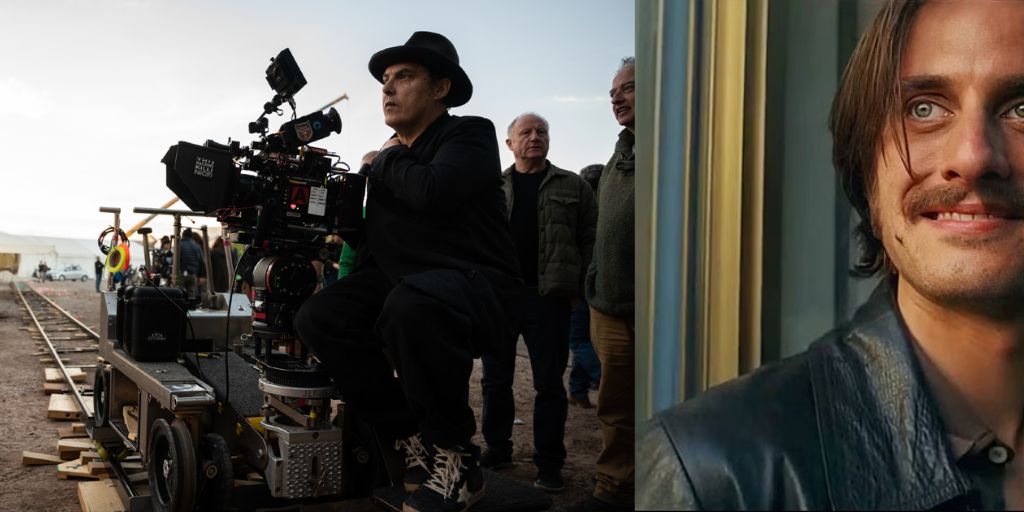
Still from M. Son of the Century (Credit: Sky Studios)
Through the lens of Mussolini’s character, the series illustrates how political complacency and the manipulation of public discontent can lead to tyranny.
The connection to contemporary political dynamics emphasizes the importance of vigilance in protecting democratic values.
By reflecting on historical events, the show urges viewers to recognize and resist the signs of rising authoritarianism in their own societies. Ultimately, it is a call to action, reminding us that democracy requires active and courageous defense.
The series premiered at the Venice International Film Festival and will air on Sky Atlantic in 2025, inviting audiences to engage with this important narrative and reflect on the significance of democracy in today’s world.
