The question of what is happening with Fatima’s (Pegah Ghafoori) pregnancy has lingered in the minds of viewers since the start of Season 3 of “From.”
This mystery has become more intense as the episodes unfold. In Episode 6, a surprising twist complicates the situation dramatically.
The beginning of Episode 7, titled “These Fragile Lives,” picks up right where we left off, with the shocked faces of Fatima, Ellis (Corteon Moore), and Boyd (Harold Perrineau) as they learn the startling news that Fatima is not pregnant.
At least, not in the conventional sense. The ultrasound shows no baby, and Fatima’s unsettling cravings only add to the mystery. This leads to two terrifying possibilities.
As confusion erupts in the hospital room, Fatima and Ellis return to Colony House filled with despair. Boyd feels a strong responsibility to figure out what is happening. He turns to Kristi (Chloe van Landschoot) and insists that she must find a solution to this strange problem.
However, they are all still uncertain about the true nature of the issue. Later, Boyd speaks with Donna (Elizabeth Saunders) about Fatima’s condition, emphasizing the need for transparency as they lead their community. Boyd shares his fears about Fatima’s situation.
He worries that she could be genuinely pregnant, but with something that does not appear on the ultrasound.
This could be a manifestation of the terrifying, supernatural elements of their environment—much like when a bus crawled under Boyd’s skin in Season 2, an image that only he could see.
The second, more psychological possibility is that Fatima’s mind is being influenced by their surroundings. The dreadful atmosphere may be starting to penetrate her thoughts, just as it did with Boyd’s wife and Sarah (Avery Konrad).
This psychological horror adds a layer of complexity to the narrative, making the audience question what is real and what is a product of the characters’ fears.
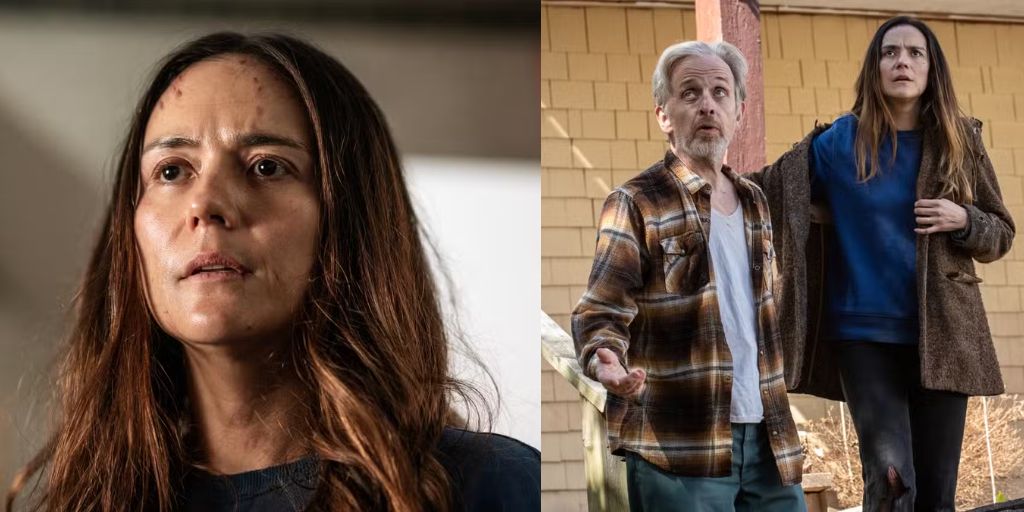
Still from From Season 3 (Credit: MGM)
Each of these possibilities implies that doom and death are imminent. Because of this, Donna insists that they need to move out of Colony House to safeguard the other residents.
Boyd understands her concern but is left feeling frustrated. The delicate balance between leadership responsibilities and personal emotions is tested as they deal with this chaotic situation.
Meanwhile, the final scenes of Episode 6 show Tabitha (Catalina Sandino Moreno) recalling a haunting dream from her childhood. In this dream, she runs from an unknown entity at the homestead, a location filled with creepy mannequins and ominous red rocks.
This episode also features Tabitha, Ethan (Simon Webster), and Jade (David Alpay) as they decide to return to the homestead in search of answers. As Jim (Eion Bailey) is gathering crops with other residents, he sees Tabitha and becomes worried.
He tries to dissuade her from pursuing her investigation. Jim is deeply concerned about how she is linked to this dreadful place, fearing that going into its mysteries could lead to horrific consequences. This concern adds depth to Jim’s character, showcasing his protective instincts toward those he cares about.
However, Jim eventually relents, allowing Tabitha to follow her instincts. This leads to a disturbing conversation with Jade. Jim shares his theory that Tabitha’s dreams about this strange place as a child may have sealed her fate.
He believes she was always destined to encounter that tree, implying that fate has played a cruel hand in her life.
This discussion highlights the show’s ongoing theme of destiny and the inescapable nature of the characters’ circumstances. The past and present are intertwined, affecting their decisions and ultimately their fates.
A new character, Acosta (Samantha Brown), enters the scene with an eager desire to find answers. She shows signs of what some may call “I’m going to solve this” syndrome, and Kenny (Ricky He) quickly notices this when he talks to her in the diner.
Acosta feels slighted by Boyd’s authority and his rejection of her ideas. During her conversation with Kenny, she expresses her frustration.
When he tries to discuss the situation with her, she retaliates against his acceptance of the current events, further voicing her dissatisfaction. Acosta storms out of the diner with a renewed determination to escape the town.
Just as she leaves, Bakta (Angela Moore) enters and suggests reopening the diner. This moment captures the tension within the group as they each pursue their own goals, reflecting the fragmented dynamics among the residents.
Later, Acosta confronts Boyd again, this time demanding her gun back. After a heated argument, Boyd reluctantly agrees to return the weapon but chooses to keep the bullets. He tells her that he will give them back once she has proven herself deserving of them.
This interaction shows Boyd’s growing approach to leadership. He is learning to overcome the pressures that come with leading a community under duress, while also trying to maintain personal relationships with the other residents.
In another storyline, Jullie (Hannah Cheramy) is nurturing her budding connection with Randall (A.J. Simmons) by accompanying him on a walk.
During their time together, she reveals that she does not have her driver’s license yet. This disclosure inspires Randall to teach her how to drive using the town’s emergency vehicle.

Still from From Season 3 (Credit: MGM)
This leads to a light-hearted joyride, offering a brief moment of relief amidst the ongoing tension in the show.
However, their carefree moment is interrupted when Randall is once again attacked by his hallucinations of locusts. In a panic, he jumps out of the car, with Jullie closely following him.
As they run through the forest, they stumble upon the ruins that were shown in Season 2. This is the same place where Boyd found Julie, Randall, and Marielle (Kaelen Ohm) when they were trapped in a comatose state caused by the cursed music box.
Julie feels an eerie connection to the ruins and expresses a desire to find them further, but Randall urges her to reconsider.
Their choice to walk away from the potential danger showcases one of the more rational decisions in horror history, emphasizing the theme of survival that permeates the series. They are faced with the decision to confront their fears or avoid the unknown horrors that lie ahead.
In Season 3, Episode 7, trouble arises in the relationship between Victor (Scott McCord) and his father, Henry (Robert Joy).
After Victor retrieves the ventriloquist dummy, Jasper, he becomes frustrated with Henry’s silence. Henry grows uncertain about Victor’s obsession with the puppet and tries to distance him from it, causing tension between father and son.
Victor decides to take Jasper to Sarah’s house, using her basement as a space for Jasper to potentially reveal his secrets. This subplot adds emotional depth to the characters, finding the dynamics of their relationships amid the chaos around them.
Meanwhile, Henry finds himself sharing a drink with Donna at the bar. During their conversation, he opens up about his internal struggles. For a brief moment, he expresses regret about coming to the town with Tabitha.
He contemplates whether it would have been easier if he still believed Victor was dead, indicating the emotional burden he carries. This moment sheds light on the psychological toll that their experiences have had on him, as he grapples with feelings of loss and guilt.
Back at Colony House, Elgin (Nathan D. Simmons) provides a poignant moment in Episode 7. He creates a handmade crib mobile for Fatima’s unborn child, showcasing his nurturing side. However, the delicacy of this scene is soon disrupted by a memory of the camera he acquired in a previous episode.
The camera prints out a polaroid depicting the doors of the bunker that viewers saw in Seasons 1 and 2. This revelation compels Elgin to investigate further. He discovers doors within the bunker that lead to a boarded wall.
Just as he is about to give up, he hears ominous knocking from behind the wall. As he moves a piece of furniture, he uncovers another door that opens into a small room, revealing a decaying skeletal corpse in the corner.
In this chilling moment, Elgin turns to the illusory kimono lady who had promised to save them, and he questions, “Is this really what happens?” This inquiry encapsulates the essence of the series, where characters are continually forced to confront their fears and uncertainties.
Elgin’s discovery adds yet another layer of mystery to the narrative, leaving viewers to ponder the implications of this newfound information and what it means for the characters.
Returning to the central mystery surrounding Fatima in this episode, she finds herself on the brink of losing her grip on reality.
She wrestles with the implications of the ultrasound and pleads with Ellis to believe that something is genuinely inside her. She struggles to cope with the thought that all the chaos and horror surrounding them may stem from her.
At the same time, Ellis and Boyd are left questioning what they should be preparing for or fearing. They ponder whether Fatima is experiencing a psychological breakdown or if there is a supernatural entity growing within her.
This uncertainty heightens the tension, as the characters grapple with their own fears and anxieties while trying to understand the nature of their reality.
Marielle hooks Fatima up to an IV drip to provide her with nourishment. However, in a disturbing twist, Fatima’s body rejects the nutrients and instead craves things that are far from alive.
The situation takes a horrifying turn when Fatima sees her stomach cave in and begins to writhe in agony on the bed, releasing excruciating wails of pain.
When Ellis enters to comfort her, he becomes increasingly alarmed by her condition. In a desperate attempt to help, he seeks anti-psychotic medication from the hospital, but Kristi intervenes, claiming that it could worsen Fatima’s state. Boyd, recognizing the emotional turmoil Ellis is experiencing, steps in to mediate.

Still from From Season 3 (Credit: MGM)
Despite the chaos, Ellis remains calm but distressed as he slowly returns to Fatima. He has already confided in Tillie (Deborah Grover) about Fatima’s uncertain status regarding her pregnancy.
Tillie, an older woman with cancer, expresses her desire to help, motivated by her appreciation for a good love story.
She seeks to support Fatima in her time of need, showcasing her compassionate nature. When Tillie finds Fatima in the greenhouse, she approaches her in an attempt to provide comfort. However, Fatima, overwhelmed by her sensations and confusion, lashes out in fear and desperation.
In a shocking turn of events, Fatima grabs a pair of shears and violently stabs Tillie in the chest. This act of aggression leaves Ellis to walk into a horrific scene where Fatima is crying over Tillie’s lifeless body. Tillie, even in her final moments, urges them to run away from the situation.
This violent act encapsulates the show’s themes of fear, desperation, and the consequences of unchecked supernatural forces.
The emotional impact of this moment leaves viewers in shock, solidifying the idea that the characters’ struggles are not only against external horrors but also their own inner demons.
The complexities of the relationships and the psychological battles they face add depth to the narrative, creating a gripping atmosphere of suspense.
As the story unfolds, the audience is left pondering the fates of Fatima, Ellis, and the rest of the Colony House residents. Each character faces their own challenges, grappling with personal fears and the dark forces that threaten their existence.
Throughout the series, the writers expertly weave together elements of horror, psychological drama, and mystery. The twists and turns keep viewers engaged, as each revelation adds another layer to the story. The characters’ interactions highlight their resilience in the face of overwhelming odds, making them relatable and compelling.
The question of what is truly happening with Fatima’s pregnancy remains unanswered, adding to the tension of the show.
Viewers are left anxiously awaiting further developments as the characters overcome the challenges posed by their environment. The supernatural elements continue to intrude upon their lives, forcing them to confront their worst fears and ultimately question their own realities.
As Season 3 progresses, the stakes continue to rise. The characters are pushed to their limits, both emotionally and physically, as they strive to survive in a world filled with unknown dangers.
The emotional connections between them deepen, and their struggles resonate with audiences, making them invested in the outcome.
Each episode builds upon the last, creating a rich collection of storytelling that impresses viewers. The blending of horror and psychological elements allows for a unique viewing experience, drawing audiences into a world where nothing is as it seems.
As the mysteries unfold, the characters’ journeys become increasingly intertwined, leading to a crescendo of suspense and emotional turmoil.
“From” Season 3 presents a gripping narrative filled with shocking twists and emotional depth. The story covers the complexities of relationships and the impact of supernatural forces on the characters’ lives.
As the series continues, audiences are left eagerly anticipating what lies ahead for Fatima, Ellis, and their companions in the Colony House.
The questions raised by their experiences challenge viewers to consider the nature of fear, destiny, and the lengths one will go to protect those they love.
As “From” Season 3 unfolds, the intertwining narratives of the characters deepen the mystery surrounding Fatima’s unsettling condition, presenting viewers with a haunting tale of fear, identity, and the unknown.
The series masterfully blends psychological horror with supernatural elements, compelling the audience to confront the thin line between reality and the psyche.
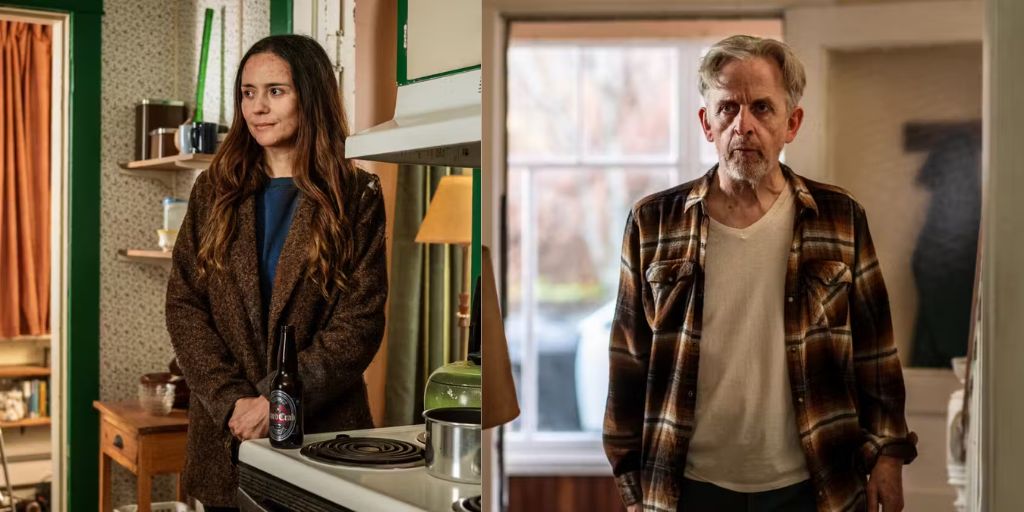
Still from From Season 3 (Credit: MGM+)
One of the pros of this episode is its ability to create intense emotional moments, particularly during Fatima’s shocking actions, which highlight the characters’ vulnerabilities. Additionally, the suspenseful pacing keeps viewers engaged, eager to uncover the next twist in the plot. However, a con is that some viewers may find the plot increasingly complex, leading to confusion about the overarching narrative.
Fatima’s plight, marked by her agonizing cravings and the terrifying implications of her supposed pregnancy, serves as a potent metaphor for the broader struggles faced by all the residents of Colony House.
As they grapple with their inner demons and the external horrors of their environment, viewers are left on the edge of their seats, eagerly anticipating how these intricate threads will converge.
With each episode, the stakes rise, revealing the fragile nature of hope and the enduring power of human connection in the face of overwhelming darkness.
As the season progresses, fans can only wonder what fate awaits Fatima and her companions as they overcome this treacherous terrain, leaving us hungry for answers and immersed in the chilling atmosphere that defines “From.”
“The Lord of the Rings” is an interesting story about Frodo (played by Elijah Wood) and his friends trying to defeat the dark lord Sauron.
Their mission is to destroy the One Ring, a magical item that holds the power to rule all other rings. Even though the story’s title suggests that there’s just one ring, Middle-earth has a total of nineteen other magical rings.
These were spread out across various groups in Middle-earth, with three rings going to the Elves, seven to the Dwarves, and nine to the leaders of Men.
The story begins with a prologue narrated by Galadriel (played by Cate Blanchett). She introduces these rings, explaining that each ring holds the “strength and will to govern” the race that owns it.
The One Ring, however, has power over all the others, which makes it especially significant. This powerful ring is central to J.R.R. Tolkien’s novels and the film trilogy.
Even though the opening scene brings up the nineteen other rings, they receive little attention in the story afterward.
The focus on the One Ring instead of the other nineteen rings is because the One Ring must be destroyed in a specific and challenging way.
However, the other rings still exist and are part of Middle-earth’s complex history. By the time the events in “The Lord of the Rings” begin, the rings have been around for thousands of years.
They were forged in the Second Age of Middle-earth, while the events of the books, known as the War of the Ring, occur at the end of the Third Age. During that long time, the rings passed between many different characters.
The Elves’ Rings and Their Holders
The three rings of the Elves have a rich history. The prologue shows Galadriel and two other Elves receiving these rings. In Tolkien’s stories, the other two Elves are named Gil-galad and Círdan.
Galadriel continues to possess her ring, and while it isn’t directly stated, Gandalf (played by Ian McKellen) is shown with another ring.
The books reveal that Elrond (played by Hugo Weaving) holds the third. These rings stayed in the possession of these characters through the events of the story, playing an essential role in the Elves’ resilience against Sauron.
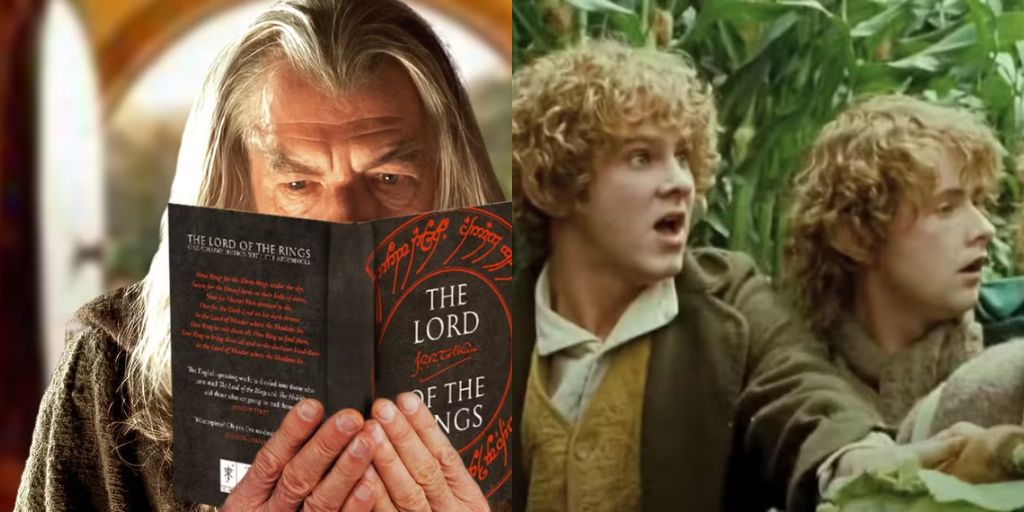
Still from The Lord of the Rings (Credit: Prime Videos)
The Rings of Men and the Ringwraiths
The nine rings given to Men have a dark history. When Men received these rings, they gained great power, but it came with a curse.
These nine men eventually transformed into the Ringwraiths, who constantly chase Frodo and his friends throughout the story.
The Ringwraiths are bound to Sauron, and he regains control over their rings, using them to keep the Ringwraiths under his influence. The fate of these rings shows how Sauron’s power spreads by taking advantage of the weaknesses in Men.
The Seven Dwarven Rings and Their Legacy
The seven rings for the Dwarves have a different story. They were given to the leaders of the seven Dwarven clans: the Longbeards, Firebeards, Broadbeams, Ironfists, Stiffbeards, Blacklocks, and Stonefoots.
These rings were scattered across Middle-earth, carried by each Dwarven king. Only one of these Dwarven ring-holders is named—Durin III of Durin’s Folk.
Durin wore the Ring of Thrór, and this ring was passed down through his family line. Although these rings did not give the Dwarves the long lives of the Elves, they became powerful family symbols.
These rings also made the Dwarves more stubborn and protective of their treasures, eventually connecting them to some of Middle-earth’s wealthiest and most dangerous hoards.
Unlike Men, the Dwarves did not transform into servants of Sauron because of their rings. Instead, the rings affected them differently, increasing their desire for wealth and power. With their rings, the Dwarves gathered great riches, including the legendary Seven Hoards of treasure.
However, their increased greed and anger also attracted trouble. One of the most significant examples of this is the Dwarves of Khazad-dûm, who, while mining too deeply for treasure, woke a terrifying creature known as a balrog in the Mines of Moria.
Although the Dwarves did not intentionally harm others, their actions often benefited Sauron indirectly. By the time the events in “The Lord of the Rings” begin, these rings are no longer in the hands of the original owners or their descendants.
The Fate of the Seven Dwarven Rings
At the start of “The Lord of the Rings,” there are no longer seven Dwarven rings in existence. Over the thousands of years since they were made, some of the rings were destroyed.
During the battles and conflicts between Dwarves and dragons, four of the seven rings were lost, swallowed by dragons or destroyed in their fire.
This happened because dragons, like Smaug (voiced by Benedict Cumberbatch in “The Hobbit”), often invaded Dwarven homes, taking treasures and, in some cases, destroying the rings in the process.
Of the remaining three rings, none are with the Dwarves anymore. After regaining strength, Sauron managed to recapture these rings. Tolkien’s writings briefly mention what happened to these rings in Appendix A.
He tells readers that the last known Dwarven ring-wearer was Thráin II, a character fans might recognize as the father of Thorin Oakenshield (played by Richard Armitage in “The Hobbit”).
During his attempt to reclaim his home, Thráin II was captured by Sauron’s spies and imprisoned in Dol Guldur. Sauron took Thráin’s ring, the last Dwarven ring still in Dwarven hands, a few hundred years before the War of the Ring.

Still from The Lord of the Rings (Credit: Prime Videos)
The Changes in Middle-earth’s Rings Over Time
The fates of the Dwarven rings are complex and diverse. Each ring had a unique path, some becoming symbols of wealth, others sources of tragedy, and a few lost forever to dragons or Sauron.
Although there is limited information about what happened to each ring, the history of these rings highlights how much Middle-earth has changed between their creation and the events of “The Lord of the Rings.”
These rings, meant to unite or control, ended up having mixed results—sometimes bringing wealth, other times tragedy, and in the end, returning to the dark lord they were meant to resist.
The rings in The Lord of the Rings carry both history and influence, representing power, greed, loyalty, and corruption. While the story focuses on the One Ring and the quest to destroy it, each of the nineteen other rings holds a legacy of its own.
Together, they embody the ways in which power shapes and transforms individuals and entire races. The One Ring’s influence is central because it controls the fate of Middle-earth, but the other rings still impact the storyline and character relationships in subtle yet profound ways.
The Elven rings, for instance, symbolize resilience and hope. Galadriel, Elrond, and Gandalf use these rings to protect and strengthen their people, resisting Sauron’s attempts to dominate them.
The Elves, with their long lives and wisdom, see their rings not as tools of control but as means of preservation.
Through these rings, Tolkien shows the role of wisdom and restraint when dealing with power. The Elven rings suggest that power can be used for good when handled responsibly, contrasting sharply with the way the rings given to Men affect them.
In the case of Men, the nine rings serve as a cautionary tale. Men, who are more vulnerable to ambition and corruption, fall under Sauron’s control, eventually becoming the Ringwraiths. These fallen kings highlight the dangers of unchecked power and ambition.
The nine rings not only rob them of their humanity but also bind them to Sauron’s will forever. Tolkien uses the rings of Men to reveal how the lust for power can consume individuals, turning even kings into servants of darkness.
The Dwarven rings, meanwhile, tell a story of ambition and wealth. Although the Dwarves do not become enslaved by their rings, they still experience the effects.
The rings amplify their natural desire for riches, leading to the creation of great treasures but also inviting disaster.
The fate of the Dwarven rings, lost to dragons and reclaimed by Sauron, reveals the cost of greed. These rings ultimately fail to bring lasting prosperity, instead luring the Dwarves into conflicts with powerful enemies.
In the end, the history of the nineteen rings reinforces Tolkien’s central themes about the nature of power. Power can corrupt or help, protect or destroy.
The varied fates of these rings illustrate how different races and individuals respond to power, reflecting their strengths, weaknesses, and vulnerabilities.
The One Ring’s destruction symbolizes a rejection of absolute control, hinting that true peace comes from letting go of power rather than seizing it.
The other rings, though often overshadowed, play an important role in deepening the domain of Middle-earth and highlighting the consequences of desiring and wielding power.
In The Lord of the Rings, each ring has its own story, revealing that the path to peace lies in humility, cooperation, and, ultimately, self-sacrifice.
Through this timeless tale, Tolkien reminds readers of the choices and values that define both heroes and villains, in Middle-earth and beyond.
