Japanese action choreographer and stunt specialist Kensuke Sonomura has built a remarkable career in the film industry. He has contributed to a variety of projects, showcasing his talent in both movies and video games.
Notably, he has worked on films like The Machine Girl and the Baby Assassins series, which have garnered a cult following due to their unique blend of action and humor.
Additionally, Sonomura has lent his skills to popular video games such as Devil May Cry 4 and Metal Gear Solid 4: Guns of the Patriots, enhancing the gameplay experience with his expertise in fight choreography.
However, despite his extensive background in action choreography, Sonomura has directed relatively few films. This year’s Ghost Killer marks only his third film as a director. In this new project, Sonomura channels the influences of the filmmakers he has worked alongside, proving that he can do much more than choreograph fight scenes.
He creates a unique style that combines elements of comedy and drama with thrilling action sequences. The film’s co-writer, Yugo Sakamoto, who is also known for his work on Baby Assassins, lays the foundation for an unconventional action dramedy.
While the film features quirky sensibilities, it also suffers from some tonal inconsistencies and uneven pacing. Nevertheless, viewers may find these complaints less bothersome, as Sonomura delivers exhilarating action when it matters most.
What Is ‘Ghost Killer’ About?
In Ghost Killer, Akari Takaishi, who played a lead role in Baby Assassins, reunites with Sonomura. Takaishi portrays Fumika Matsuoka, a college student who avoids confrontation at all costs. Masanori Mimoto stars as Hideo Kudo, a decorated assassin with a dark past.
The two characters’ fates become intertwined when Kudo dies from a gunshot wound. Later, Fumika finds the bullet casing that caused his death.
To her surprise, she sees Kudo’s spirit appearing in her kitchen, leading to a shocking revelation. Fumika realizes she has a mysterious connection to Kudo’s ghost, allowing him to possess her body whenever they clasp hands.
As the story unfolds, Fumika and Kudo realize that Kudo has unfinished business. His spirit cannot rest until he avenges his own death. This twist adds a layer of depth to the narrative, making it not just an action film but a story about justice and redemption.
Fumika, despite her non-confrontational nature, becomes Kudo’s ally in his quest for vengeance. It’s a good thing that Kudo is available as a tag-team partner, as they fulfill the challenges of avenging his death together.
Like its predecessor, Baby Assassins, Ghost Killer is more than just an action movie; it incorporates elements of comedy and supernatural themes. Takaishi plays dual roles: she embodies both Fumika, the waitress at a skewer shop, and Kudo when he possesses her body.
While Kudo controls Fumika’s actions, she can still speak and express her emotions. This leads to humorous moments where Takaishi engages in comical arguments with herself while battling adversaries.
Fumika often expresses her disapproval of Kudo’s violent methods, even as her own hands cause injury to others. This dynamic maximizes the film’s comedic potential and allows for an scheme of morality within the action genre.
Sakamoto, who is known for his witty writing, crafts some clever jokes throughout the film. Meanwhile, Sonomura expertly executes his signature blend of rapid-fire slaps, kicks, and takedowns, all while Takaishi portrays the panic that comes from being possessed by a ghost. The combination of action and humor makes Ghost Killer a unique viewing experience.
‘Ghost Killer’s Shift From Comedy to Crime Drama Doesn’t Work
As Kudo and Fumika grow more attuned to each other’s personalities, the playful bickering and humorous protests gradually cease. The film shifts to a more straightforward thriller focused on Kudo’s quest for revenge against the “anti-social group” (the criminal gang) that ordered his execution.
However, this transition is not as enticing. The quirky paranormal activities fade away, and Fumika becomes more unified with Kudo. As a result, the storytelling developments that occur between intense confrontations feel stilted and lack excitement.
Kudo’s cocky apprentice, Toshihisa Kagehara, played by Mario Kuroba, aids Fumika in her and Kudo’s quest for vengeance. Kagehara hardly questions the unusual circumstances surrounding Kudo’s spirit.
While Kagehara’s support adds to the narrative, it also contributes to the film’s flatness when it shifts to a crime syndicate drama. Unlike Baby Assassins, which maintains a lively, bubblegum-poppy style filled with excitement, Ghost Killer struggles to retain that same energy.
The fight sequences in Ghost Killer hold their own, whether Fumika is beating drugging rapists or Kudo confronts his ex-syndicate’s top enforcer. Takaishi effectively keeps up with complex choreography, showcasing her character’s helplessness when not possessed and engaged in combat.
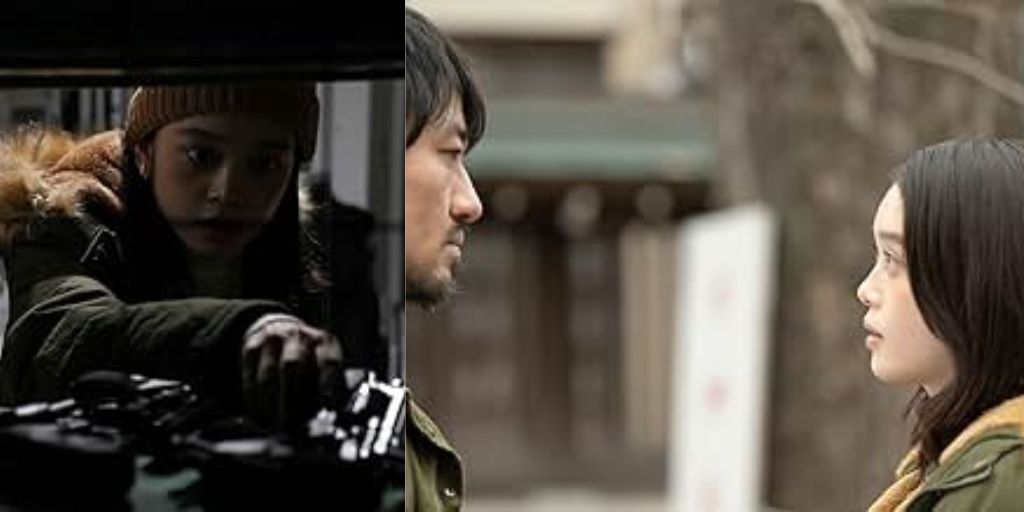
Still from Ghost Killer (Credit: Well Go USA Entertainment)
Mimoto’s performance is more polished and experienced, particularly visible during the climactic battle, which flows seamlessly through an extended combat sequence that is captured fluidly.
The steady cinematography avoids the shaky camera work often found in American action films, allowing viewers to appreciate the grace and intention behind each actor’s swift movements.
Despite the impressive fight choreography, some scenes feel repetitive due to the minimalist style employed. However, the action remains engaging, even in smaller doses. The third act, in particular, drags in parts, leaving a sense of déjà vu. The full pacing issues contribute to the film’s decline, impacting its effectiveness as a cohesive story.
Ghost Killer presents a tale of two haunted fighters: the energetic, comedic first half and the more subdued, serious second half. Takaishi shines as a pseudo-comedian, using humor to deliver impactful moments during fight scenes. The film is more enjoyable when it leans into its comedic elements rather than trying to adopt a serious tone.
Sonomura demonstrates his competence as a director and generally finds ways to merge elements of a CW show with invigorating Japanese action features. However, he faces challenges in finding the right balance between humor, vengeance, and existential themes.
The film’s thematic elements feel muted as they converge in a supernatural mix of regret, remorse, and retribution. Despite these shortcomings, Ghost Killer still manages to win over audiences with its engaging action sequences.
Ghost Killer is an intriguing film that offers a blend of action, comedy, and supernatural elements. While it faces challenges in pacing and tone, it ultimately provides an entertaining experience for viewers. The unique premise of Fumika and Kudo’s partnership creates moments of humor and action that keep the audience engaged.
Ghost Killer reminds us that even during chaos, there can be laughter and camaraderie, making it a memorable addition to the action genre.
Ghost Killer is an action-comedy film directed by Kensuke Sonomura, known for his work on projects like The Machine Girl and Baby Assassins.
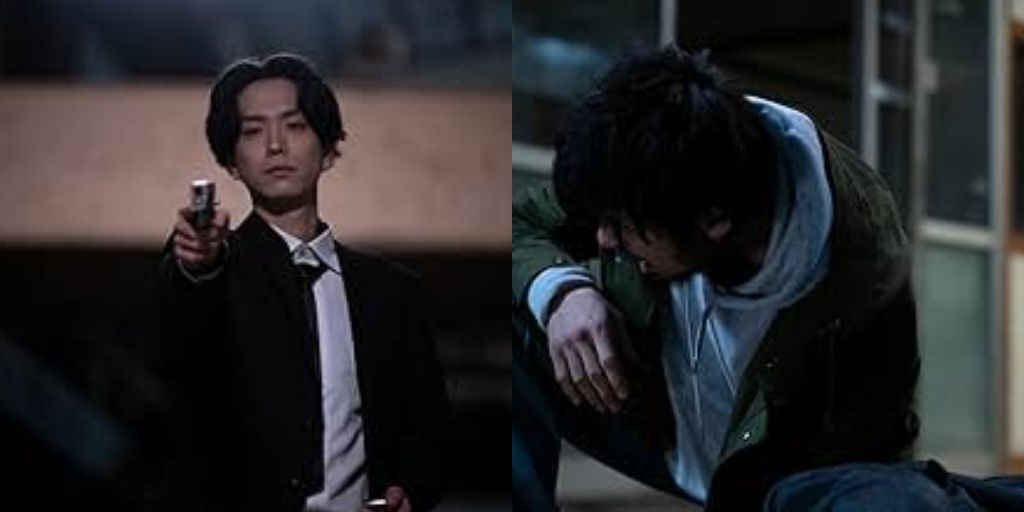
Still from Ghost Killer (Credit: Well Go USA Entertainment)
The story follows Fumika Matsuoka, played by Akari Takaishi, a non-confrontational college student who becomes connected to the ghost of Hideo Kudo, a deceased assassin portrayed by Masanori Mimoto. Together, they seek vengeance against Kudo’s killers, leading to a mix of humorous banter and thrilling fight scenes.
While the film struggles with tonal shifts and pacing issues, it showcases impressive choreography and maintains an entertaining dynamic between its characters, ultimately delivering an engaging cinematic experience.
After an exciting week in Jankie World, the Houseguests returned for an unforgettable week of Big Brother! This week featured a visit from the hilarious Zingbot and an intense Double Eviction, raising the stakes for everyone involved.
With the Power of Veto streak continuing, this season keeps both players and viewers on their toes. With only five players left in the game, it is time to show how they reached this point.
Big Brother has been a popular summer series on CBS since 2000, hosted by the charismatic Julie Chen Moonves. This reality show is a social experiment where Houseguests live together under constant surveillance, competing for power, safety, and advantages.
Cameras and microphones are everywhere in the house, so there is no way to escape the action! With many unexpected twists and turns, Big Brother 26 is giving fans one of the best modern seasons in the show’s history.
The Schedule for ‘Big Brother 26’
The Big Brother schedule can change based on your time zone, so fans should be prepared for surprises. Currently, the schedule is a little different because CBS’s fall season has begun. Big Brother 26 will air on Sundays at 10:30 PM Eastern, 9:30 PM Central, and 10:00 PM Pacific.
It will also air on Thursdays at 8:00 PM for a packed episode full of drama and excitement. Fans should note that there will be no episode on Wednesdays. It is important to check your local listings since special events can change the air times for Big Brother.
Streaming Options for ‘Big Brother 26’
Fans who want to watch Big Brother 26 live have several options. They can tune in to CBS, where the show airs in real time. For those who prefer to stream, Big Brother 26 is available on Paramount+. This streaming service offers both live and on-demand viewing.
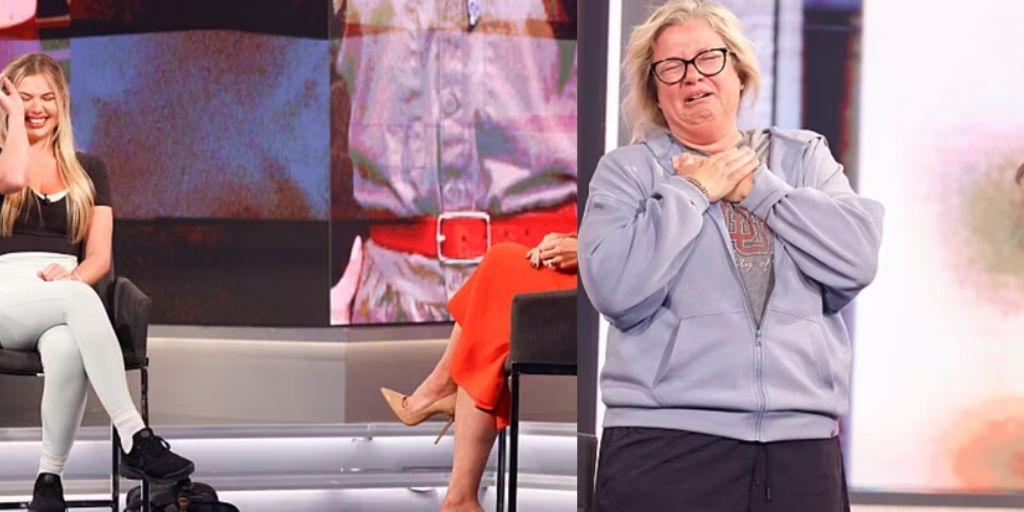
Still from Big Brother (Credit: CBS)
Where to Watch the ‘Big Brother’ Live Feeds
Paramount+ Essential is available for $7.99 a month, while Paramount+ with Showtime costs $12.99 a month. Each option allows new users to try out Paramount+ free for a week! Additionally, Pluto TV is free when you create a profile, making it a great option for fans on a budget.
Who Won Head of Household in Week 10?
After the intense cliffhanger from the live eviction episode, fans were eager to find out which Houseguest could stack the most candy pieces within the hour time limit. Thanks to her background in construction, Makensy Manbeck used her strategic thinking and skills to win the coveted title of Head of Household.
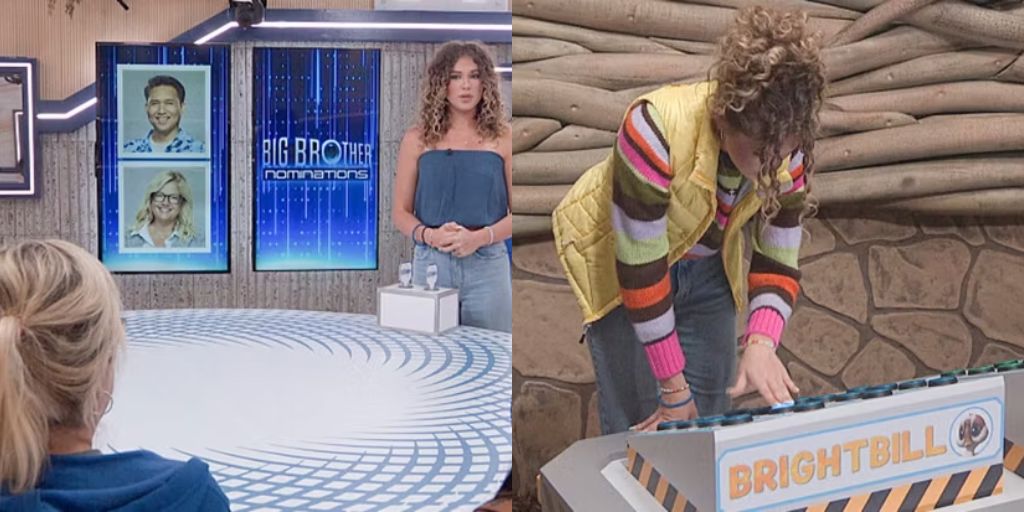
Still from Big Brother (Credit: CBS)
Following her victory, it was revealed that Ainsley had returned and essentially ended the time in Jankie World for everyone. Finally, the Houseguests were allowed to go back inside the house after spending an exhausting week in the backyard.
Who Was Nominated in Week 10?
Before the nominations were announced, the house received a special visit from Zingbot. This infamous Big Brother character is known for roasting the players in humorous yet brutal ways. After the entertaining exchange, the game quickly returned to serious business.
With Makensy back in power, her primary goal was to maintain her alliance’s hold over the game. This alliance included Cam Sullivan-Brown and Chelsie Baham. Makensy recognized that Angela Murray could pose a significant threat, so she made her the main target of the week.
As always, Makensy needed a pawn to ensure her plan worked. Knowing that T’Kor Clottey’s alliance, which included Kimo Apaka and Rubina Bernabe, was still in the game, she urged Kimo to volunteer as her pawn.
Ultimately, the two players on the chopping block were Angela Murray and Kimo Apaka. The tension in the house increased as the Houseguests prepared for the upcoming Power of Veto competition, hoping to secure their safety.
Who Won the Power of Veto?
This season features themes of AI and robots, and the Houseguests were greeted by another robot during the Power of Veto competition. For this challenge, the Houseguests participated in a Wild Robot-inspired activity where they had to decipher clues based on animal sounds.
The competition tested their focus and problem-solving skills. Continuing her impressive streak in challenges, Makensy once again maintained her power by winning the Power of Veto.
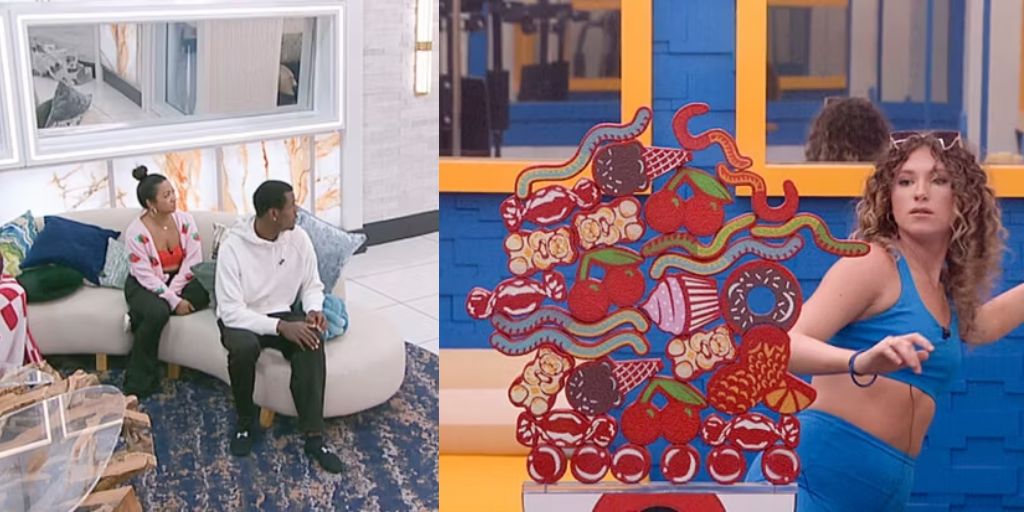
Still from Big Brother (Credit: CBS)
With the Power of Veto in her hands, Makensy began to feel a sense of unease. Chelsea was pulling strings behind the scenes, and Kimo and Rubina knew they could both be safe this week. Feeling the pressure, Makensy decided to take a bold risk.
Believing Leah Peters would not remain loyal to her, she saw Leah as a potential threat. By using the Power of Veto for the tenth straight time, Makensy removed Kimo from the nomination block and replaced him with Leah. This shocking decision left the other Houseguests speculating about Makensy’s motives.
Who Was Evicted Tenth from the ‘Big Brother’ House?
With close allies and the main targets from both alliances on the block, it was a nail-biting moment to determine who posed the bigger threat moving forward.
Before the live eviction night commenced, Ainsley returned to tell the Houseguests that two of their games were about to be betrayed. It was officially Double Eviction week, heightening the suspense.
With an entire week of Big Brother about to unfold in one short hour, the first eviction of the night began. In a surprising turn of events, Leah Peters was evicted by a unanimous vote of four, marking the first unanimous decision of the season. The tension in the house reached new heights as everyone reflected on the drastic changes happening within the game.
Who Won the Double Eviction Head of Household?
During this action-packed week, an AI avatar of Julie Chen Moonves communicated with the Houseguests, warning them about Ainsley.
Each message ended up being an important clue that led to the revelation of a Deep Fake Chenbot. The messages proved crucial as they would be the basis for a true or false Head of Household competition.
The competition turned out to be a close match, resulting in a tie-breaker round between Angela and Chelsie. In an intense showdown, Chelsie emerged victorious, winning the title of Double Eviction Head of Household. This victory positioned her to have a significant impact on the game’s next moves.
Who Was Nominated In the Double Eviction?
With limited time to make her decisions, Julie Chen Moonves prompted Chelsie to reveal her nominations for the Double Eviction.
The anticipation in the house grew as Chelsie announced that her nominees would be Kimo and Angela during the live nomination ceremony. The players braced themselves for the upcoming Power of Veto competition, knowing it would be their last chance to secure safety.
Who Won the Double Eviction Power of Veto?
The remaining Houseguests, including Kimo and Angela, faced off in a high-stakes Power of Veto competition. They had one final opportunity to save themselves from elimination. In this challenge, the players needed to roll a proton ball into the reactor core.
They had three minutes to get five proton balls into the core. The first player to do this would win the Power of Veto. If no one succeeded within five minutes, the winner would be determined by who managed to get the most balls in the shortest amount of time.
In a tense and exciting finish, Kimo emerged as the winner of the Power of Veto. This victory continued the trend of the Power of Veto being used every single week of the competition.
Once again, Kimo used his newfound power to take himself off the nomination block, forcing Chelsie to replace him with Rubina. The stakes were getting higher, and the game was becoming more unpredictable.
Who Was Evicted Eleventh from the ‘Big Brother’ House?
With Chelsie’s target now on the block, the dynamics of the game shifted dramatically. Everything was perfectly set up for Chelsie’s plan.

Still from Big Brother (Credit: CBS)
As the Houseguests cast their votes, Angela found herself on the receiving end of another unanimous vote. She was evicted from the Big Brother house by a vote of 3-0. The decision sent shockwaves through the remaining players, who realized how quickly the game could change.
What May Happen Next?
With only five Houseguests remaining in the Big Brother house, the tension continues to rise. It is a race to the finish line, and everyone is aware that every move could have major consequences. Two pairs are tightly bonded in the house, leaving Makensy in the middle, which positions her as a key player in determining who will make it to the end.
As the game progresses, the rest of the season will be dictated by who wins the next Head of Household competition. This upcoming moment of power is one of the most crucial of the season, and the players are prepared to fight fiercely for control of the house.
As the show often emphasizes, “Expect the unexpected!” This phrase rings especially true this season, as twists and surprises have kept viewers on the edge of their seats.
The remaining Houseguests must navigate their alliances carefully, strategize their moves, and consider the impact of their choices on the final outcome of the game. As the competition heats up, fans will be eager to see how relationships evolve and who will ultimately secure a spot in the finale.
Big Brother 26 continues to deliver thrilling moments, unexpected twists, and intense rivalries, all while showcasing the strategic gameplay that has made this series a staple in reality television.
As viewers gear up for the next chapter of the season, they can only wonder what surprises lie ahead in the battle for the coveted title of Big Brother champion.
