Gone Girl stands out as a masterful psychological thriller that delivers an unexpected and compelling twist, free from the typical storytelling clichés. The movie, directed by David Fincher and based on Gillian Flynn’s bestselling novel, delves deep into the dynamics of a toxic marriage between Nick (Ben Affleck) and Amy Dunne (Rosamund Pike). As the story unfolds, it becomes clear that Amy’s supposed disappearance is part of a calculated scheme to manipulate her husband, ensuring he stays trapped in their deteriorating relationship.
At first, the narrative follows the well-worn path of a domestic thriller, where the husband is the prime suspect in the disappearance of his wife. However, Gone Girl turns this familiar setup on its head with a stunning revelation: Amy is not dead but alive and has masterminded her own disappearance to frame Nick. The film’s brilliance lies in its ability to pull off this twist without resorting to the predictable tropes that often plague thrillers.
Gone Girl Ending Explained: The Mastery of David Fincher and Gillian Flynn
David Fincher’s direction and Flynn’s script promote Gone Girl as something far beyond your average crime thriller. Their collaboration brings sharpness and precision to the story, as each layer of the plot is carefully revealed. The movie stays true to the structure of Flynn’s novel, with Amy’s journal entries offering insight into her manipulative mindset. As the film reaches its conclusion, it answers crucial questions about the fate of the central characters, especially the unsettling dynamics of Nick and Amy’s marriage.
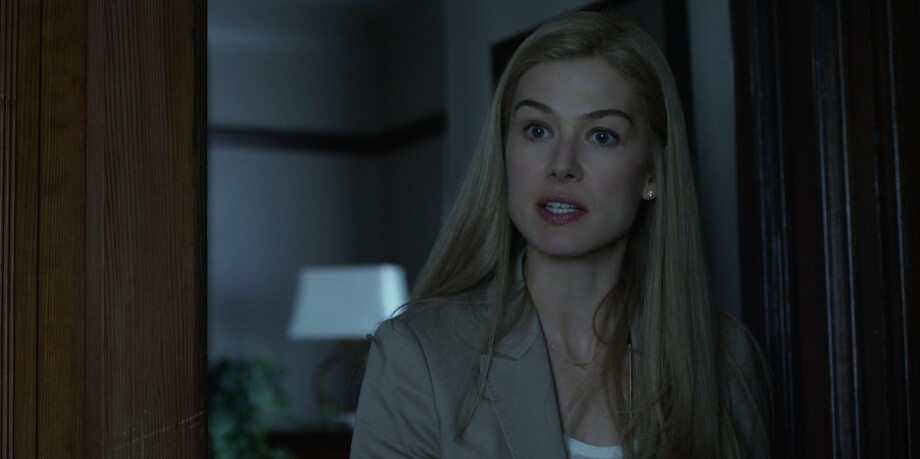
Amy Dunne (Image via Getty)
One of the most remarkable aspects of Gone Girl is its ability to depict a toxic marriage with such precision. Every interaction between Nick and Amy highlights their bitterness and deception. The film uses these character moments to explore the darker sides of human relationships, making the ending all the more impactful. The twist not only exposes Amy’s manipulation but also reveals the devastating reality that both Amy and Nick are equally responsible for the deterioration of their marriage.
Amy’s Deadly Escape Plan As the movie progresses, Amy’s meticulous plan starts to unravel, revealing cracks in her perfect setup. She had intended to escape from the clutches of her controlling husband, but her plan takes a detour when she encounters Desi Collings (Neil Patrick Harris), a man from her past. Desi, who once dated Amy, attempts to keep her locked in his home, unaware that he is playing into her hands. This moment is pivotal as it highlights Amy’s vulnerability and the one instance where she truly feels fear.
In a chilling turn of events, Amy kills Desi, staging his death to make it look like he kidnapped her. She then returns to Nick, convincing him that she has been the victim all along. This brutal act further reveals Amy’s determination to regain control of her life. While the public sees her return as a triumph, it signals the beginning of a new, twisted phase in her relationship with Nick, who remains unaware of just how deep his wife’s deception runs.
The Pregnancy as a Tool of Manipulation One of the key elements of Amy’s plan involves her pregnancy, a plot point that forces Nick to remain in the marriage. As the story progresses, it becomes clear that Amy’s pregnancy is not a mere coincidence but a calculated move to keep Nick trapped. She knows that he would be unwilling to leave her while she is expecting, using this knowledge to manipulate him further.
This twist harkens back to the beginning of the film when Amy pretends to be pregnant in order to manipulate public opinion and make Nick appear more guilty. The movie skillfully shows how Amy tests her theory that a baby can’t be ignored, proving her understanding of Nick’s weaknesses. Without the pregnancy, it’s implied that Nick might have left her, but Amy’s cunning plan ensures that he stays by her side, tied to their toxic marriage.
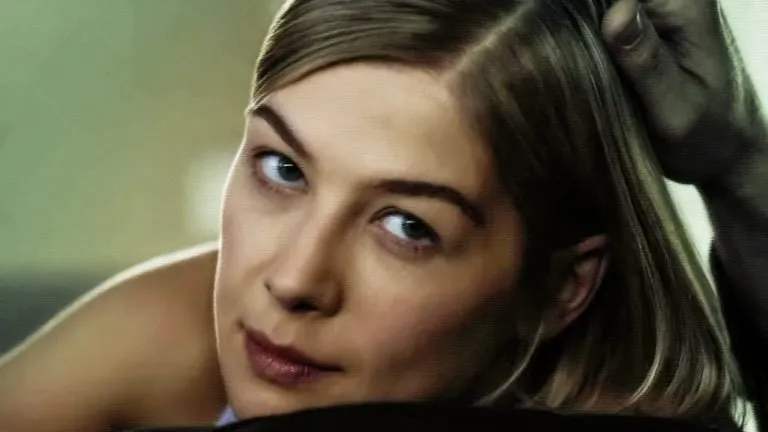
Amy Dunne (Image via Getty)
Margo’s Heartbreak and Realization Margo, Nick’s sister, played by Carrie Coon, is one of the few characters who sees through the charade. She has a close relationship with her brother, offering him support throughout the movie, but she is also the only one who truly recognizes the dangerous dynamics between Amy and Nick. Margo’s disapproval of their reunion, especially after everything that has happened, is evident. She understands that their relationship is built on lies and manipulation, but she also realizes that they are both too entrenched in their toxic bond to ever escape it.
Despite Margo’s warnings, Nick and Amy’s toxic relationship continues, and the couple’s return to their life in Missouri only highlights the emotional distance between them. Margo’s heartbreak is not only about her brother’s choices but also about the realization that the pair is incapable of letting go of their destructive love.
The Echoes of the Book’s Ending While Gone Girl’s movie adaptation stays largely faithful to the original novel, there are a few key differences, particularly in the way Nick and Amy interact during their final confrontation. One of the most notable changes is Nick’s line, “I feel sorry for you because every morning you have to wake up and be you.” This remark encapsulates the uneasy dynamic between the two characters. While Amy has won, she remains trapped in her own twisted existence.
Despite these subtle changes, the ending of the film mirrors the book’s conclusion. Nick and Amy are back together, pretending for the world that they have reconciled and are living happily. This false image of contentment becomes their new reality, as they continue to deceive everyone around them, including themselves. The final scenes show them faking a happy marriage, reinforcing the idea that appearances are everything in their world.
The Meaning Behind the Ending The ending of Gone Girl explores the dark side of human nature, showing how individuals can justify their most horrific actions. Both Amy and Nick are ruthless and self-centered, each doing whatever it takes to secure their own survival, regardless of the damage caused to others. The film presents them as two sides of the same coin, trapped in a cycle of manipulation and deceit.
In the final moments, it becomes apparent that neither character is truly innocent. Amy, who has used her pregnancy to manipulate Nick into staying, will likely continue to use him for her own gain. On the other hand, Nick may attempt to retaliate, but the nature of their marriage suggests that any future attempt at revenge will only lead to more manipulation. The eerie tone of the conclusion emphasizes the idea that neither Amy nor Nick is trustworthy, leaving the viewer with a sense of unease and uncertainty.
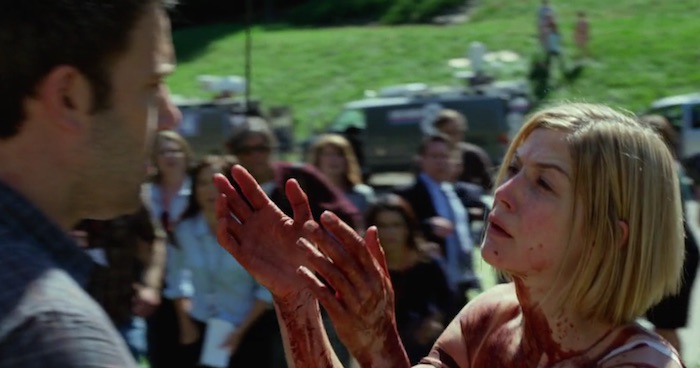
Nicholas Dunne and Amy Dunne (Image via Getty)
David Fincher’s Take on the Ending David Fincher, known for his dark and twisted storytelling, offers a unique perspective on the film’s conclusion. In interviews, Fincher revealed that the ending of Gone Girl was not initially what fans saw in the movie. The film’s script went through several revisions, with Flynn reworking the ending to fit the new vision for the story. While the core message remained the same, Fincher introduced subtle changes that shifted the tone of the film, especially in the final confrontation between Nick and Amy.
Fincher has described the movie as evolving from a mystery to an absurdist thriller, ultimately becoming a dark satire. He acknowledges that while the ending is unsettling, it is also darkly comedic in its depiction of a marriage filled with resentment and manipulation. As Fincher puts it, the ending is like watching a couple hold their anger in check, only for the consequences to come crashing down later.
Reflections from Gillian Flynn and Rosamund Pike Gillian Flynn, who wrote the original novel and adapted it for the screen, has spoken about the divisive nature of the film’s ending. While some fans wanted justice for Amy, Flynn explained that this would not have been satisfying for the story. Amy, as “Amazing Amy,” is always one step ahead, and her lack of punishment reinforces the idea that she is above the law, and always in control of the narrative.
Rosamund Pike, who portrayed Amy in the film, also shared her thoughts on the ending. She highlighted the tension between the characters and the way the story keeps viewers on edge. The final confrontation between Nick and Amy is not about truth but about power. Amy remains in control, even as she manipulates her way back into Nick’s life. This final moment leaves the audience with a chilling understanding of the lengths people will go to in order to protect their image and their sense of self.
The conclusion of American Psycho presents an unsettling ambiguity about the events in the film, particularly concerning Patrick Bateman’s crimes. The final scenes leave viewers questioning which parts of the story were real and which were simply a product of Bateman’s deranged mind. Adapted from Bret Easton Ellis’s novel, the film portrays Bateman (Christian Bale), a young, affluent Wall Street banker with a penchant for extreme violence. Throughout the movie, he commits increasingly horrific acts, all while maintaining his professional demeanor and social persona.
By the movie’s midpoint, Bateman’s erratic behavior escalates to a point where his actions can no longer be ignored. The introduction of Paul Allen (played by Jared Leto) culminates in Bateman brutally murdering him with an axe. Bateman continues his violent spree, leading to a particularly gruesome moment where he slaughters two women with a chainsaw in an apartment. However, the most perplexing part of the film comes when Bateman confesses his crimes to his lawyer (twice—once via voicemail and again in person), only for the lawyer to dismiss his claims, stating that Paul Allen isn’t dead. This revelation raises profound questions about the truth behind Bateman’s narrative.
Ending Of American Psycho Explained
The ending of American Psycho challenges the audience’s perception of Bateman’s reality. After his spree and his subsequent confession, Bateman wakes up and visits Paul Allen’s apartment to clean up the remains. Instead of finding a crime scene, Bateman is confronted by a realtor who informs him that no one named Paul Allen owns the apartment. The realtor, unaware of any violent incident, asks Bateman to leave. This unexpected twist creates further confusion and compels the audience to question the authenticity of the events they have witnessed.
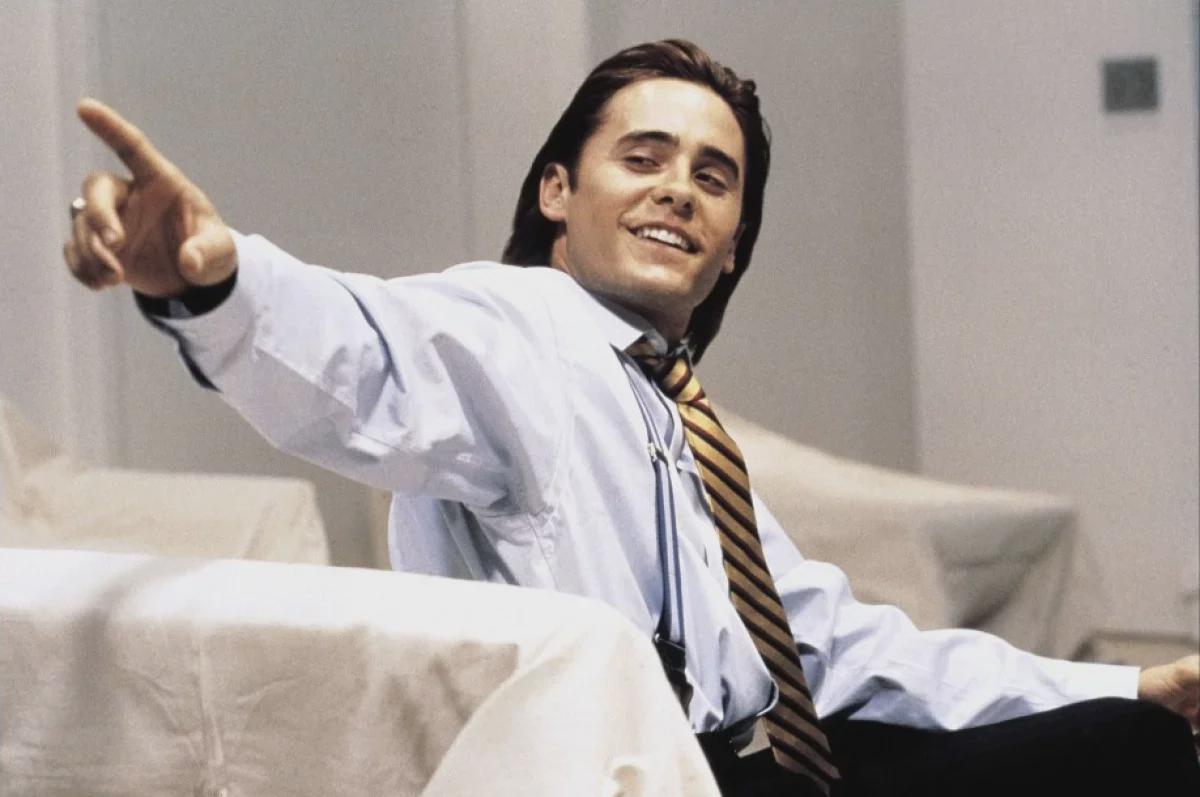
Paul Allen (Image via Getty)
Bateman goes on to meet his colleagues for lunch, and while interacting with them, he bumps into his lawyer, who mistakes him for someone else. The lawyer assumes Bateman’s voicemail was a prank, and dismisses his confessions, calling Bateman “too square” to commit such horrific acts. When Bateman persists in detailing his crimes, the lawyer, clearly uncomfortable, ends the conversation, attributing Bateman’s behavior to a twisted joke. With no evidence to prove Bateman’s accusations, and no further investigation from the authorities, Bateman’s return to work signals that life continues without consequence, mirroring the indifference and apathy of his privileged social circle.
The Director and Writer Clarify the Ending
Mary Harron, the director of American Psycho , and co-writer Guinevere Turner have both addressed the film’s ambiguous ending, which has left audiences divided. Harron has expressed frustration at how many viewers mistakenly interpret the movie’s finale as a dream sequence. In an interview, she explained that she intended for the film to maintain ambiguity, mirroring the novel’s conclusion. According to Harron, she never meant to suggest that Bateman’s actions were merely a product of his imagination. Both Harron and Turner confirm that Bateman’s murders were real, and the ambiguity is there to emphasize the broader themes of the story.
Turner has similarly defended the idea that Bateman is indeed a serial killer, despite the obvious signs of his mental unraveling. While Bateman experiences delusions and hallucinations, these distortions of reality do not invalidate the murders. Turner explained that Bateman’s perception of the world around him is increasingly skewed, which explains the disorienting nature of the film. She pointed out that his confusion and fantasies are reflected in the chaotic way he experiences his surroundings, such as the messy nature of his murders and his perception of the sex workers he encounters.
Did Patrick Bateman Really Kill Paul Allen?
One of the most significant mysteries of American Psycho revolves around whether Patrick Bateman actually killed Paul Allen. Both Mary Harron and Bret Easton Ellis have intentionally left this question unanswered, reinforcing the ambiguity of the film. Whether Bateman killed Allen or not doesn’t change the core message of the story: in a world dominated by greed and vanity, acts of violence can go unnoticed, or worse, ignored. In the cutthroat, high-society world of Wall Street, Bateman’s transgressions are inconsequential compared to the far more important concerns of wealth and status.
The idea that Paul Allen’s death could be an illusion reflects the disconnection between Bateman’s violent actions and his social environment. His colleagues remain indifferent to his eccentricities and remain unaware of his true nature. The moment when Paul Allen mistakes Bateman for another man, Marcus Halberstram, illustrates the dehumanizing effect of living in such a self-absorbed, materialistic world. Bateman’s possible murder of his colleague is not seen as a crime but as an expression of his ego and desire to assert dominance.
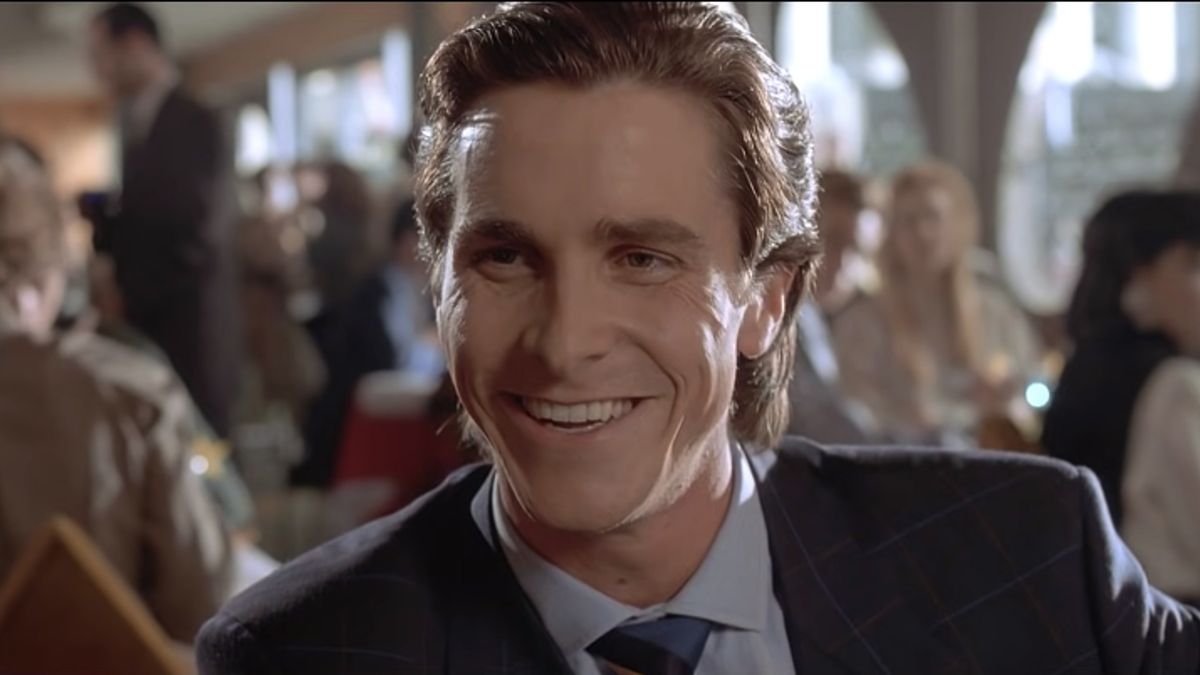
Patrick Bateman (Image via Getty)
Jared Leto’s Paul Allen and the Iconic Axe Murder Scene
Jared Leto’s portrayal of Paul Allen is short but significant in American Psycho . One of the most memorable scenes in the film is when Bateman, after engaging in an unsettling conversation with Allen, turns on the song “Hip to be Square” and brutally murders Allen with an axe. The surprise on Leto’s face, when Bateman attacks him, is not part of the script; it is an unscripted moment that results from a surprise attack. Director Mary Harron revealed that Bale deliberately held back until the scene was shot for real, catching Leto off guard. This authentic reaction was kept in the final cut, adding an extra layer of wonder to the moment.
Is American Psycho Real? The Blurring of Fantasy and Reality
Harron has criticized the notion that everything in American Psycho takes place in Patrick Bateman’s head. However, some parts of the film, particularly the murder of the homeless man, feel disturbingly plausible, reflecting the kind of real-world violence that can be swept under the rug by those in power. The scene where Bateman murders two sex workers in public is another example of violence that can be easily dismissed by a society willing to turn a blind eye.
In contrast, the murder of Paul Allen seems less believable, as Bateman’s actions would likely have been more noticeable to those around him. This contradiction between Bateman’s private life and his public persona is crucial to understanding American Psycho ‘s critique of corporate culture. The wealthy and powerful are often able to escape the consequences of their actions, using their status to shield themselves from accountability.
Why No One Believes Patrick Bateman’s Confessions
Bateman’s confessions fall on deaf ears because the people around him simply do not care. In American Psycho , appearances and status are everything, and acknowledging Bateman’s crimes would force others to confront their own complicity in a morally bankrupt society. The characters around Bateman are so absorbed in their own vanity and ambition that they are unable to see the darkness beneath his polished exterior. His lawyer laughs off Bateman’s confessions, assuming they are just part of a cruel joke. Bateman’s detachment from his actions is mirrored by the indifference of those around him.
Theories and Speculation: Was It All in Patrick Bateman’s Head?
Despite Harron’s insistence that American Psycho is not all a figment of Bateman’s imagination, the film’s ambiguity has sparked various theories. The lack of physical evidence for any of Bateman’s crimes, the fact that no bodies are found after his supposed murders, and the dismissive reactions from those around him all suggest that the film’s events could be interpreted as a product of Bateman’s unstable mind. His apparent inability to distinguish reality from delusion reinforces the idea that his perception of the world is deeply distorted.
The Paul Allen “Isn’t Dead” Theory
There’s a fascinating theory surrounding Paul Allen’s fate, suggesting that Allen never existed as a single individual. Instead, Bateman may have mistakenly believed several different colleagues were Paul Allen, and this confusion is reflected in his violent fantasies. This theory proposes that Bateman killed one of his colleagues, mistaking them for Allen, but never recognized the difference because of the interchangeable nature of his social circle.
The Meaning of American Psycho : Corporate Cynicism and Apocalyptic Nihilism
The true meaning of American Psycho is encapsulated in a conversation during the movie’s final moments, where Bateman’s colleagues discuss Ronald Reagan’s public persona. Bateman’s indifferent response to the question about the president reflects the apathy and nihilism that permeate the movie. Bateman’s disconnection from his actions and the world around him is a reflection of the societal indifference to the suffering of others, particularly when the powerful can remain untouchable.
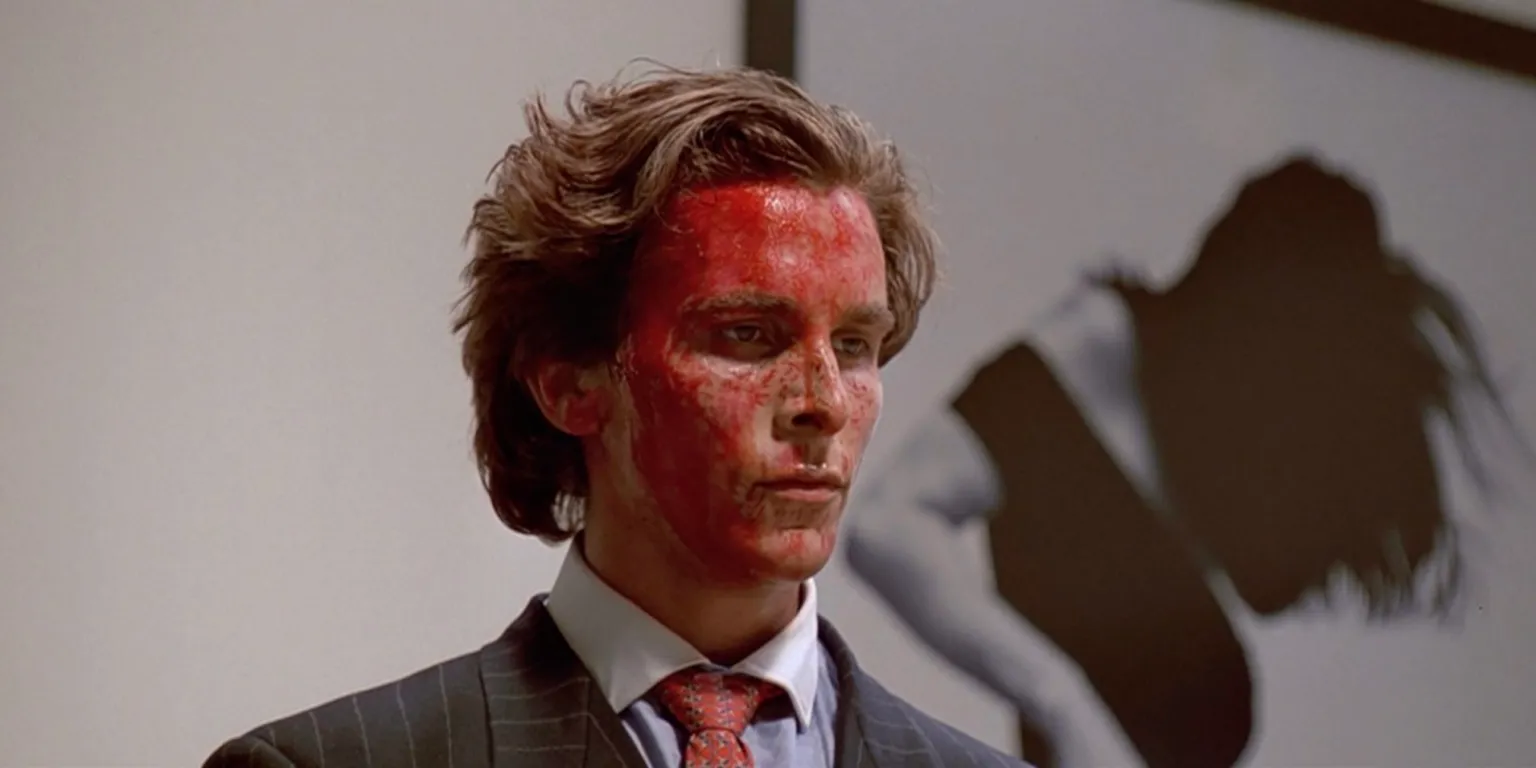
Patrick Bateman (Image via Getty)
Ultimately, American Psycho is a scathing critique of a society that values image over substance and wealth over humanity. The ambiguity of the ending serves to emphasize the point that Bateman’s actions—whether real or imagined—are inconsequential in a world where public perception is everything.
The release of American Psycho 2 undermines the film’s ambiguous ending, explicitly confirming that Patrick Bateman was a serial killer. The film’s opening, in which a young girl kills Bateman, removes the mystery that made the original movie so compelling. This not only diminishes the impact of the first film but also cheapens its central themes of vanity, power, and unchecked evil.
The Lasting Impact of American Psycho
American Psycho continues to be a subject of discussion, even years after its release. While the ending is frequently debated, the film’s broader themes of corporate greed and apathy remain as relevant as ever. It’s a movie that refuses to give easy answers, making it one of the most complex and enduring psychological thrillers of modern cinema. Despite its divisive reception, American Psycho ’s critique of society has stood the test of time, making it an enduring classic.
