The final episode of Good Girls Season 4, titled “Nevada,” serves as the unexpected series finale after the show’s cancellation. Although the episode leaves room for potential future storylines, it also provides a degree of clarity and closure for the three main characters—Beth Boland (Christina Hendricks), Ruby Hill (Retta), and Annie Marks (Mae Whitman). Their arcs come to an emotional, if open-ended, conclusion.
Good Girls Ending Explained
The episode begins with Beth winning a city council election, quickly using her new political power to expose incriminating evidence about Rio’s (Manny Montana) cousin, Nick (Ignacio Serricchio), and his involvement in criminal activities. However, despite these victories, Beth’s life remains precarious. Even though she appears to have gained some control, the underlying issues of her criminal activities persist. These victories feel like temporary solutions, merely papering over deeper problems that continue to threaten her.
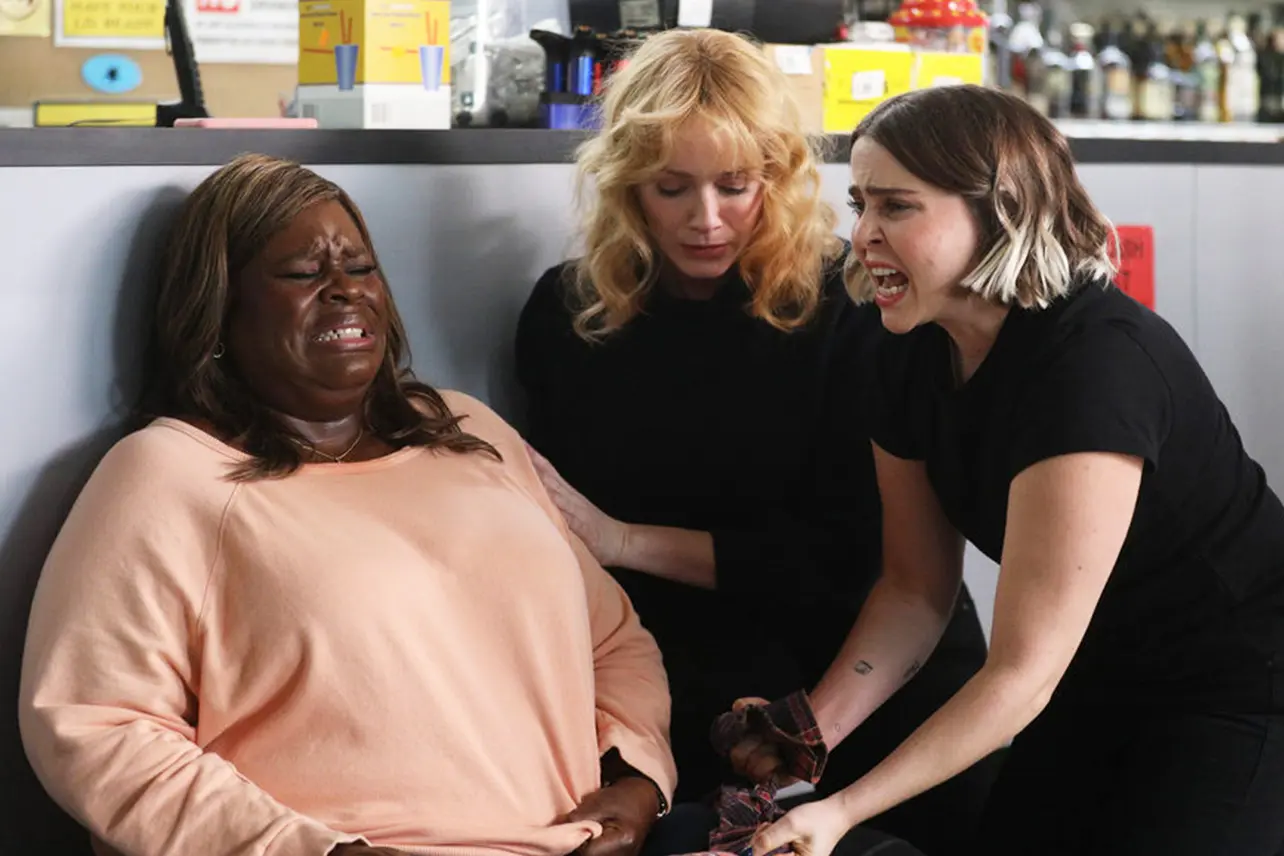
‘Good Girls’ cast (Image via Getty)
At the same time, Ruby’s husband Stan (Reno Wilson), and Beth’s husband Dean (Matthew Lillard) face their own set of issues, particularly their involvement with a dangerous pyramid scheme mastermind, Vance (Breckin Meyer). With their lives spiraling out of control, they look to Nevada as a potential escape. Hoping to start fresh, they dream of a life away from their entanglements. However, their hopes are dashed when Beth is shot by a hitman named Mick (Carlos Aviles), leading to a surprising turn in the episode’s final moments.
The Illusion of a Fresh Start in Nevada
Though Beth survives the assassination attempt, the story moves to Nevada, where the women attempt to begin their new lives. Ruby and Stan are working on a new business venture—opening a nail salon—while Annie is living with her family in an RV, trying to make a fresh start. Despite their outward appearances of happiness, cracks soon appear in their new lives. Sara’s kidney problems resurface, and Ruby finds herself unable to cover medical expenses. Meanwhile, Ben faces discrimination for being transgender, highlighting that moving away from Michigan hasn’t solved their underlying issues.
Beth’s personal transformation becomes evident when she encounters a would-be robber during a supermarket visit. She uses her criminal expertise to intimidate the amateur thief. When he threatens her life and asks if she wants to die, Beth responds with “Kinda,” signaling her realization that, despite the dangers, she has grown accustomed to—and perhaps even desires—her life of crime. This moment marks her acceptance of the chaos that has defined her existence.
Returning to Crime: The Failed Robbery
Determined to reconnect with the life she knows, Beth convinces Ruby and Annie to carry out a robbery at a local store. However, things go terribly wrong when an armed customer shoots Beth in the chest. As she fades in and out of consciousness, she realizes that her dream of a new life in Nevada is just an illusion, a brief fantasy that cannot be realized.
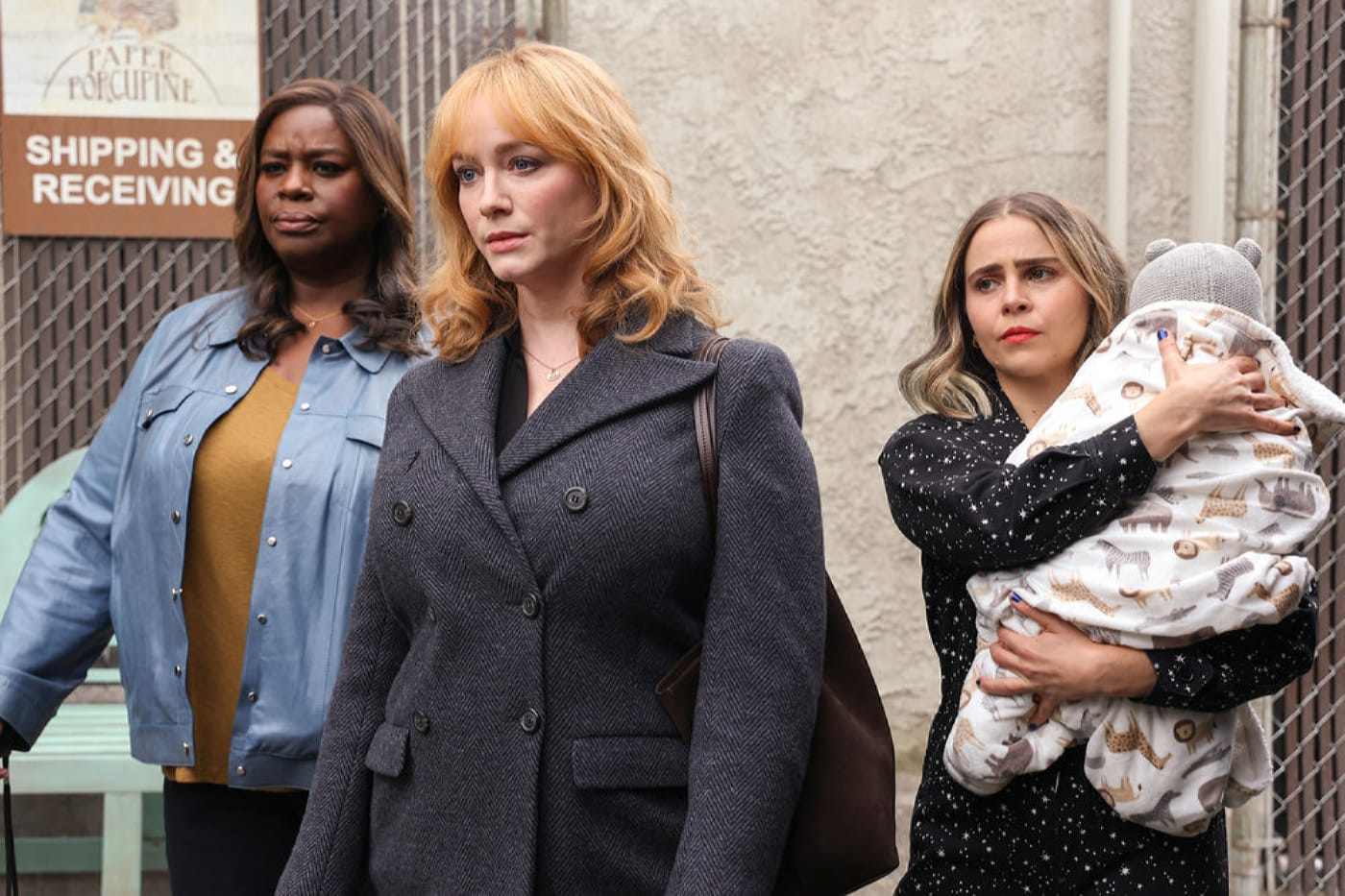
‘Good Girls’ cast (Image via Getty)
The next sequence reveals that Beth was not killed by Mick’s bullet but only injured in the shoulder. As the episode progresses, the investigation into Mick’s assassination attempt uncovers a twist. The gun used in the shooting was the same weapon used to kill Lucy (Charlyne Yi) in Season 3. This discovery leads to the assumption that Beth’s prints are on the gun, which could result in her arrest.
However, in a move that ensures Beth’s safety, Annie secretly intervened earlier in the season, convincing Mick to avoid planting Beth’s fingerprints on the weapon. She appealed to Mick’s paternal instincts by telling him that Beth was “a really good mom.” It’s implied, though not explicitly shown, that Annie arranged for her fingerprints to be placed on the gun instead. The FBI then concludes that the shooting was the result of “sibling rivalry,” suggesting that Annie is the one who shot Beth. As a result, Annie is arrested, leaving her fate uncertain.
Ruby’s Decision: Family or Loyalty?
With Annie now in custody, Ruby faces a difficult choice. Stan has already committed to their new life in Nevada, purchasing a house and planning to relocate with their daughter, Sara. Ruby, torn between her loyalty to Beth and her desire to be with her family, stands alone. The episode ends with her staring at an empty suitcase, contemplating whether to stay and support Beth or follow her family to Nevada, potentially abandoning her friends.
In contrast to the uncertainty surrounding Ruby and Annie, Beth finds herself in a position of power. The final scene shows Beth meeting with Rio on a park bench, where she reveals that she has abandoned her plans to leave Michigan. Having survived Nick’s attempt to frame her for murder, she has solidified her position on the city council. She is now in a position of real influence, and in a moment of triumph, she tells Rio, “You work for me now.” Rio responds, “You got it, boss,” signaling a shift in their relationship dynamic.
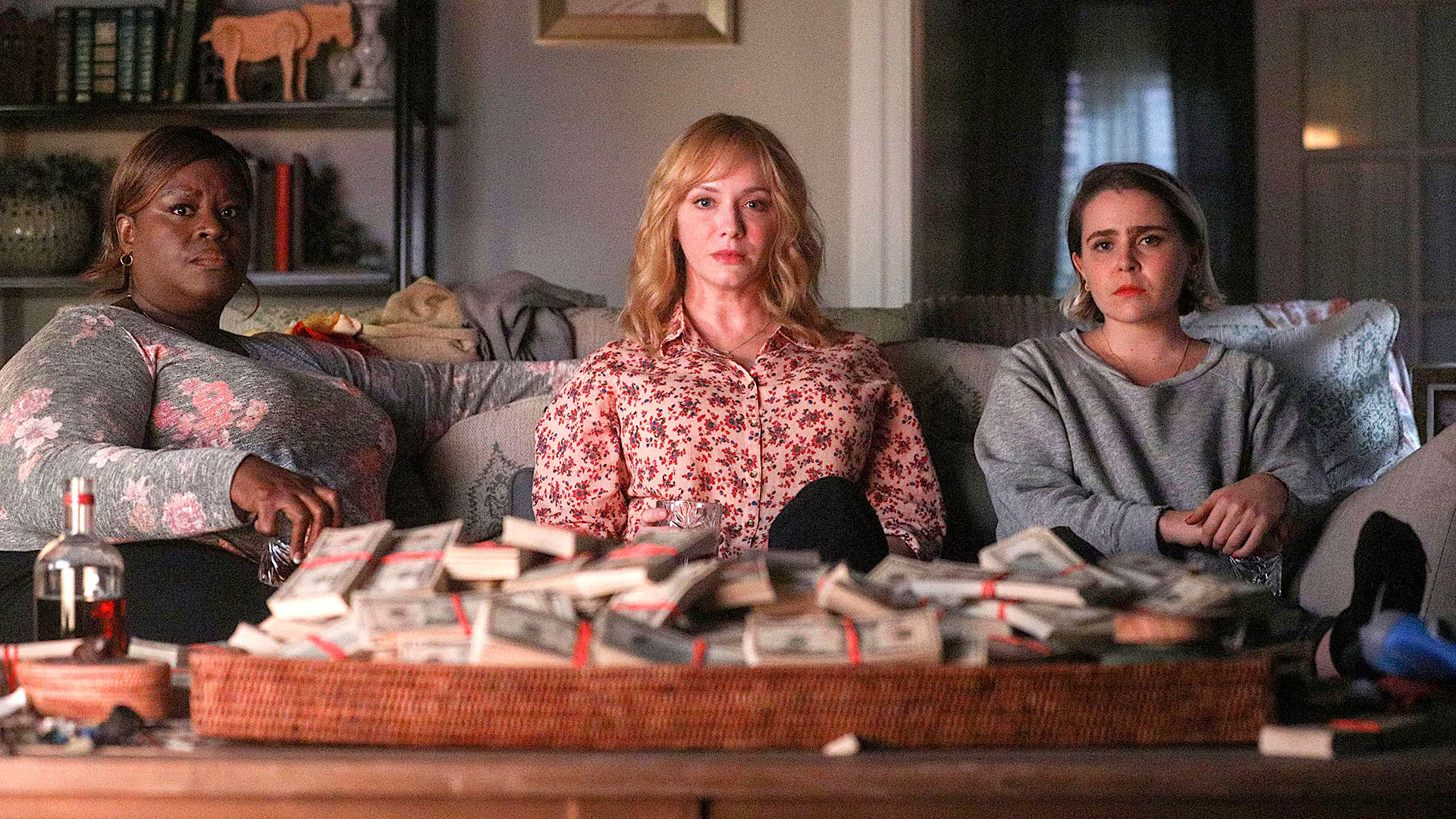
‘Good Girls’ cast (Image via Getty)
Unanswered Questions: What Happens Next?
Although the series leaves several unresolved questions—What will happen to Annie? Will Ruby follow her family or stay behind? How will Beth and Rio’s power dynamic evolve?—the ending feels fitting given the show’s themes. Good Girls began as a story about women going to extreme lengths to improve their lives and protect their families. Over time, it evolved into a narrative about how easily one can become ensnared by the criminal underworld.
Despite the characters’ efforts to control their lives, they are constantly pulled back into a cycle of crime. Every time they tried to fix their situation, a new crime or complication would arise. The money they earned was quickly lost or spent on covering up past mistakes. Throughout the series, they dreamed of escaping their criminal lives, but those dreams were always out of reach.
A Fitting Conclusion: No Clean Ending
Ultimately, Good Girls does not offer a tidy conclusion. The unresolved ending is in keeping with the show’s portrayal of its characters’ lives—messy, unpredictable, and filled with uncertainties. The women’s journeys never fully reach a clear resolution, reflecting the reality that their struggles would likely continue indefinitely. This open-ended finale, with all its unanswered questions, feels appropriate. After all, the story of Good Girls was always going to be one without a clear conclusion, and perhaps that is the best way for the show to end.
Alias Grace is a compelling mystery, and its ending reveals a complex resolution. The key question throughout the series is whether Grace Marks is responsible for the murders of her employer, Thomas Kinnear, and his housekeeper, Nancy Montgomery. The answer is both yes and no. In the final episode, Grace undergoes hypnosis, slipping into a semi-conscious state. As she speaks, a new voice emerges—one that is cruel, abrupt, and vulgar. This new voice suggests Grace suffers from multiple personality disorder. Sometimes she is the innocent maid, Grace Marks, and at other times, she becomes Mary Whitney, the vengeful spirit of Grace’s deceased friend. Ultimately, it is Mary Whitney, not Grace, who is the real murderer.
Alias Grace Ending Explained
This resolution aligns well with the themes explored in Alias Grace . Like Margaret Atwood’s original novel, the mini-series employs quilting as a metaphor to explore various concepts. These include female labor, domesticity, and patchwork images that come together to form a bigger picture. The fragmented nature of Grace’s mind mirrors this quilting theme, and it is only when we step back and view all the parts of her identity that we understand the full mystery.
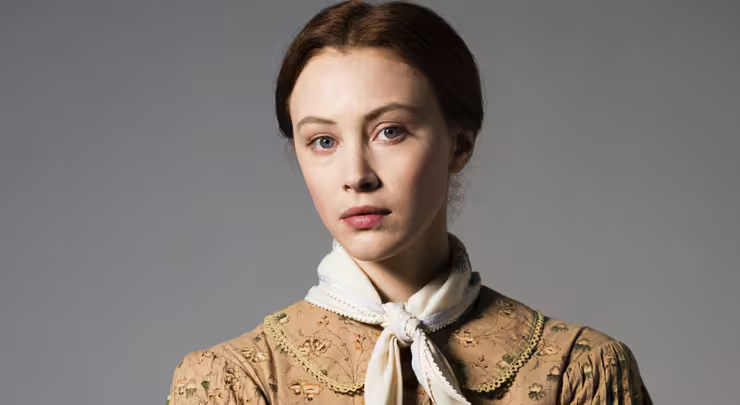
Alias Grace (Image via Getty)
There are multiple possible explanations for Grace’s behavior and her apparent split personality. It’s possible that Grace truly has multiple personalities. Maybe Mary Whitney’s soul entered Grace’s body after her death, whispering, “Let me in,” and taking over. Alternatively, Grace may suffer from amnesia and be unaware of committing the murders, or even of what happened during the gaps in her life.
The Fabrication of the Mary Whitney Story
Another intriguing possibility is that the entire Mary Whitney hypnosis performance is fabricated. Perhaps Grace and Jeremiah collaborated to create the illusion of Mary Whitney’s possession. Jeremiah’s “Dr. Jerome DuPont” identity is, after all, a sham. His involvement in mesmerism is financially motivated, as it pays more than his previous occupation as a peddler. It’s not out of the question that he and Grace staged the Mary Whitney performance to suggest Grace’s innocence and advance his career in the process.
One of the most compelling moments in the series comes when “Mary Whitney” provides a key clue about the murder. Under hypnosis, Whitney’s voice describes the crime, mentioning how Montgomery was strangled with a handkerchief—the same handkerchief that once belonged to Mary Whitney’s mother. This handkerchief was given to Grace years earlier, making it a significant piece of the puzzle. The scene is satisfying because it offers a “click” of recognition. However, it’s important to remember that the only reason we know about this handkerchief—and by extension, Mary Whitney—is because Grace Marks told us. The entire theory of Mary Whitney is based on Grace’s account.
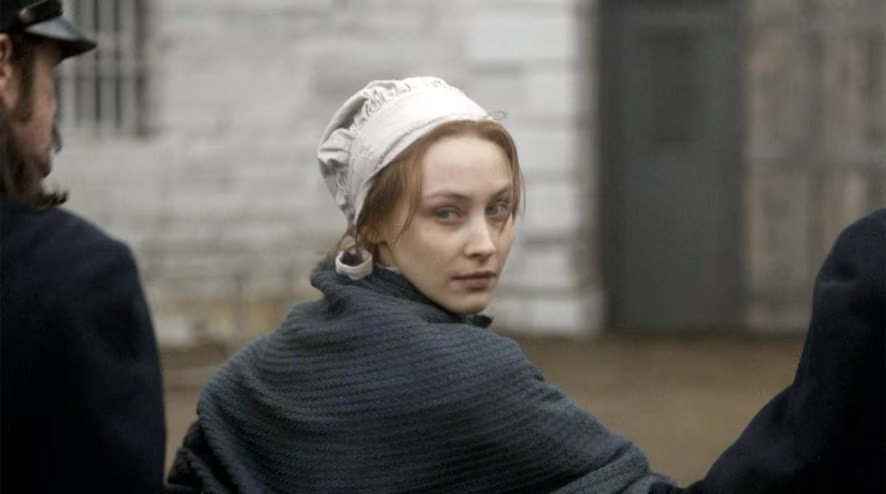
Alias Grace (Image via Getty)
Grace’s Story: Truth or Fabrication?
The mini-series primarily focuses on Grace’s life, from her childhood to the events leading up to the murders. However, it’s essential to note that this story is told through Grace’s voice-over narration. Everything we know about Grace comes from what she chooses to share with Dr. Jordan. This raises questions about the reliability of her story. How can we know if what Grace says is true? How do we know that Mary Whitney even exists, or if she’s entirely a product of Grace’s imagination? Since Mrs. Alderman Parkinson is dead, Dr. Jordan never follows up to verify Grace’s claims, leaving the door open for doubt. Who’s to say if Grace’s stories of abuse are accurate?
In Margaret Atwood’s novel, the concept of Grace as an unreliable narrator is more apparent. The first-person narrative, combined with a lack of dialogue markers, encourages readers to question the accuracy of Grace’s words. The story feels uncertain, and it’s easy to lose track of what is real and what is imagined. In the show, however, it’s harder to maintain that same level of skepticism. As viewers, we tend to trust what we see unless the narrative provides visual clues to undermine the events. Unlike other shows like Mr. Robot or Legion , Alias Grace doesn’t prompt us to actively question the reliability of the story.
Hints in the Visual Language of the Series
Nevertheless, the adaptation by Mary Harron and Sarah Polley still hints at Grace’s unreliability. The visual language of the show—interspersing pieces of Grace’s story, such as Nancy’s death and Mary Whitney’s life—suggests that we are witnessing Grace’s version of events. This is not an omniscient perspective but one shaped by Grace’s experiences and memories. For example, we see images of an apple peel falling to the floor or the unsettling image of Nancy’s forehead opening like an overripe fruit. These moments are filtered through Grace’s perspective, suggesting her subjective view of the world.

Sarah Gadon (Image via Getty)
Grace herself acknowledges her unreliability, especially in a letter she writes to Dr. Jordan after marrying Jamie Walsh. Grace reflects on her relationship with Walsh, noting that he is kind but obsessed with her past. She writes, “He likes to picture the suffering I have endured,” and says, “He listens to it all like a child listening to a fairy tale.” In order to satisfy his curiosity, Grace admits that she sometimes changes the details of her stories to suit what others want to hear. She confesses, “I may have changed some of the details of my stories to suit what I thought you wanted to hear. It did make me feel I was of some use in this world.” Grace knows she’s lying, and she’s performing for an audience. She’s fully aware of her unreliability.
Alias Grace: A Story of Performance and Perception
Despite Grace’s acknowledgment of her own unreliability, Alias Grace doesn’t suggest that we should completely doubt her. The ending of the mini-series isn’t focused on Grace’s honesty or innocence. Instead, it raises a larger question: Why do we, as viewers, find it so entertaining to watch a woman suffer? What do we want from Grace Marks? What version of her life would be most extraordinary or remarkable? How can she make herself visible to a wealthy, educated doctor, given her status as a poor, uneducated maid?
Alias Grace is a remarkable story precisely because it leaves the question of whether Grace Marks killed Thomas Kinnear and Nancy Montgomery unanswered. While the mystery remains unresolved, the mini-series delivers a poignant critique of society. It indicts us, the viewers, for our disinterest in women’s lives unless they are sensationalized or sensational. The real charge is against our voyeuristic tendencies, seeking out suffering and spectacle instead of truly understanding women’s stories. Ultimately, Alias Grace exposes the complexity of perception and the biases that shape how we view the lives of others.
