Michael Keaton has amazed audiences countless times over the years with his versatility, but one of his most notable returns was in Tim Burton’s Beetlejuice, where he reprised his iconic role as the mischievous ghost.
Despite being 73, Keaton remains timeless in his ability to transform into any role, whether it’s a comedic character or a dark, complex hero. The actor, known for his ability to fully immerse himself in characters, continues to be a favorite in Hollywood, and his recent work in the film Goodrich is no exception.
In this movie, Keaton offers yet another memorable performance, proving that he can still bring depth and heart to any role, even when the story doesn’t quite live up to his potential.
Keaton is, of course, famous for his role as Batman in Tim Burton’s Batman and his brilliant portrayal of a washed-up actor in Birdman, which earned him an Academy Award nomination. But what’s truly remarkable about Keaton is his versatility.
While he is often recognized for larger-than-life characters, he is also an accomplished dramatic actor capable of portraying ordinary people facing complex, emotional situations. This ability to be both larger than life and grounded makes him the perfect lead for a film like Goodrich, a simple, heartfelt story that deals with aging, family, and personal growth.
Goodrich, written and directed by Hallie Meyers-Shyer, is not a superhero movie or a supernatural thriller. Instead, it focuses on a man in his 70s facing the difficult realities of life, relationships, and his role as a father and husband.
The film is not a groundbreaking work of cinema, but Keaton’s performance brings depth to a story that might otherwise feel predictable. The film offers a cozy, familiar vibe, with a storyline you can see coming from a mile away. However, it’s the moments of sincerity and emotional depth, highlighted by Keaton’s performance, that give the film its heart and make it worth watching.
The Plot of Goodrich
The story of Goodrich centers on Andy Goodrich (played by Michael Keaton), an art dealer whose life seems to be falling apart. At the start of the film, Andy is woken up by a phone call from his wife, Naomi (Laura Bentani).
He is shocked to learn that she has checked herself into a 90-day rehab facility to treat a prescription pill addiction, something he had no idea she was struggling with, despite everyone else around him knowing.
Naomi also tells Andy that she wants a divorce because he hasn’t been attentive to her, which further blindsides him. This moment sets off a chain of events that forces Andy to reevaluate his life and relationships.
As the story unfolds, we learn that Andy is not only dealing with the collapse of his marriage but is also struggling with being a temporary single father.
Naomi’s time away means that Andy must take care of their nine-year-old twins, Billie (Vivien Lyra Blair) and Mose (Jacob Kopera), while trying to balance his career and personal life. The strain of taking care of his kids, while also trying to salvage his art dealership, adds further pressure on Andy, who is clearly overwhelmed.
At the same time, Andy’s relationship with his first family is also strained. His first wife, Annie (Andie MacDowell), had a daughter, Grace (Mila Kunis), with whom Andy has a distant relationship. Grace, now married and pregnant, has been affected by her father’s absence when she was younger.
However, when Andy needs help with his kids, Grace reluctantly steps in, and their relationship begins to evolve as they are forced to spend more time together. This situation grows even more complicated as Andy’s art dealership faces potential bankruptcy, adding to the already high emotional stakes of his life.
The Strengths of Goodrich
While the premise of Goodrich is not groundbreaking, it taps into themes that are relatable for many people, particularly older viewers. The film shows the idea of personal growth later in life, the consequences of neglecting relationships, and the challenges of raising children when you’ve already made many mistakes in the past.
Andy’s journey is a coming-of-age story for someone in his 70s, which makes it unique. In the final years of his life, Andy is forced to confront the choices he’s made and try to mend the relationships that have been damaged along the way. This scheme of regret, redemption, and growth gives the film emotional weight.
What really upgrades the movie is Michael Keaton’s performance. Andy is not a typical character you see in family dramedies. He is flawed, human, and often makes mistakes. However, he is also deeply loving and committed to trying his best for his family, even when it feels like everything is falling apart around him.
Keaton plays Andy with such depth that you can’t help but root for him, even when his actions sometimes frustrate you. Keaton doesn’t rely on over-the-top gestures or melodramatic speeches. Instead, he conveys Andy’s pain, love, and regret with subtlety and nuance, making his performance feel incredibly real.
The supporting cast is also excellent, with Mila Kunis bringing depth to her role as Grace. Kunis plays a daughter who is trying to find her own way while grappling with the emotional baggage of her relationship with her father.
The chemistry between Keaton and Kunis is palpable, and their scenes together are some of the most emotional in the film. The young actors who play Andy’s children, Billie and Mose, also do an excellent job, with Vivien Lyra Blair standing out as Billie, a wise-beyond-her-years little girl who isn’t afraid to speak her mind.
One of the film’s most touching moments comes during a scene between Andy and Grace. Grace is pregnant, and there’s an emotional tension between the two of them that boils over in a conversation about their past.
Andy, who has been emotionally distant for most of his life, finally opens up in a way that is both heart-wrenching and healing.
The film handles these moments of reconciliation with care, never feeling too forced or overly sentimental. It’s a testament to Keaton’s skill as an actor that he is able to play these emotional beats without feeling like he’s trying to manipulate the audience into feeling something.
The Flaws of Goodrich
Despite its strengths, Goodrich does fall into some familiar tropes of family dramedies. For example, there is an entirely predictable subplot involving a friendship that Andy forms with Pete (Michael Urie), a gay single father.
While this friendship provides some lighthearted moments and offers a chance for Andy to reflect on his own life, it sometimes feels like an easy way to move the plot forward.
Pete often serves as a sounding board for Andy to talk about his feelings, and their friendship sometimes feels more like a plot device than a fully realized relationship.
The film also leans heavily on familiar musical cues to tell the audience how they should feel. Soft piano and guitar music underscore many of the film’s most emotional moments, sometimes tipping into the territory of emotional manipulation.
While the film’s sentimentality can be effective at times, there are moments when it feels like it’s trying a bit too hard to tug at the heartstrings. The Christmas setting in the final act, complete with Christmas music, further enhances this feeling of predictability. While this may work for some viewers, it might come off as formulaic for others.
Keaton’s Timeless Appeal
One of the things that keeps Goodrich from falling into the trap of being a forgettable family dramedy is Michael Keaton’s performance. Keaton’s ability to play a character with such emotional depth is what makes the film work. He doesn’t need to rely on grand gestures or heavy-handed dialogue.
Instead, he can convey so much with just a look or a subtle change in expression. This quiet mastery of his craft is what has made Keaton a beloved actor for decades, and Goodrich is just another example of his ability to upgrade a film.
In fact, the movie might not have worked nearly as well with another actor in the lead role. Keaton’s grounded approach to the character of Andy gives the film a sense of authenticity that it wouldn’t have had otherwise.
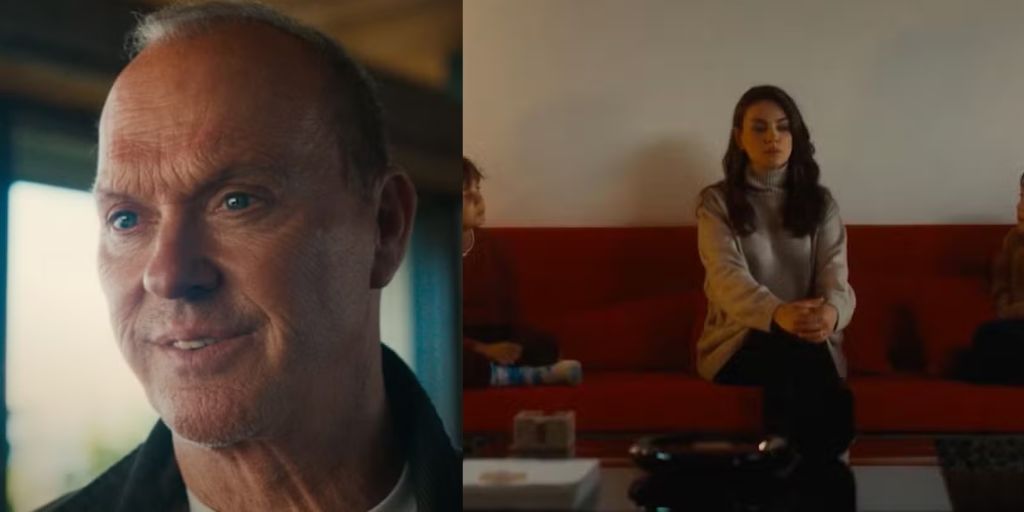
Still from Goodrich (Credit: Ketchup Entertainment)
Even though the story is predictable and filled with family drama clichés, Keaton’s performance keeps it from feeling like a paint-by-numbers story. He makes Andy’s journey feel real, and his ability to convey pain and vulnerability without resorting to melodrama is what makes Goodrich worth watching.
Conclusion
While Goodrich may not be the most groundbreaking film of the year, it is a heartfelt, sweet story that works largely because of Michael Keaton’s exceptional performance.
The film’s plot may be predictable at times, and it does rely on a few familiar tropes, but Keaton’s portrayal of a man facing the final chapters of his life gives the film a depth that makes it stand out.
If you’re looking for a feel-good movie with real emotional moments, Goodrich is worth seeing. It’s another reminder of just how lucky we are to witness an actor like Michael Keaton, who can make even the most familiar of stories feel fresh and meaningful.
The Lincoln Lawyer has always been known for its sharp courtroom drama, intense character moments, and unexpected twists. With the arrival of Season 3, the series continues to showcase the intriguing world of defense lawyer Mickey Haller.
However, despite maintaining many elements that fans have come to expect, Season 3 also faces some challenges. These include a lack of focus on important secondary characters and an underdeveloped main case that leaves something to be desired. In this season, there are moments that shine, but there are also several missed opportunities that prevent the show from reaching its full potential.
What Is ‘The Lincoln Lawyer’ Season 3 About?
The third season of The Lincoln Lawyer begins with a cliffhanger that immediately grabs attention. Mickey Haller (Manuel Garcia-Rulfo), our charming and determined protagonist, is thrust into a complicated situation when he learns that his friend, Glory Days (Fiona Rene), has been murdered.
The twist is that the primary suspect in the case is Glory’s friend, Julian La Cosse (Devon Graye). The murder puts Mickey in a difficult position. He must balance his duty as a lawyer, his personal feelings about his friend’s death, and the complexity of defending someone who might be guilty of the crime.
As the season progresses, Mickey wrestles with his feelings about Julian’s innocence, his career, his daughter, and the various ghosts from his past that continue to haunt him.
One of the recurring themes in The Lincoln Lawyer is how Mickey manages the demands of his job and his personal life. This season, like previous ones, showcases Mickey’s dedication to his daughter, Hayley (Krista Warner), and his desire to give her a stable environment despite his turbulent career.
At the same time, his struggle to face the often conflicting worlds of being a father and a lawyer adds a layer of depth to his character. While the drama of his personal life is interesting, it sometimes takes a backseat to the more pressing matters of his legal cases.
As the season progresses, it becomes clear that the case involving Julian La Cosse is central to Mickey’s journey. However, unlike the previous season, where the main case had many layers of intrigue and complexity, the case of Julian’s potential innocence feels somewhat one-dimensional.
The lack of nuance in the case makes it harder for viewers to remain invested in Julian’s fate. The mystery of whether or not Julian is guilty or innocent doesn’t have the same compelling pull as previous cases in the series.
The Weakness of the Main Case
One of the main criticisms of Season 3 is that the case involving Julian La Cosse lacks the depth and complexity that made the previous season’s case so gripping. In Season 2, viewers were kept on the edge of their seats by the mystery surrounding Lisa Trammell (Lana Parrilla), whose innocence was constantly in question.
There was an underlying layer of suspense throughout the season as viewers tried to figure out whether Lisa was guilty or whether she was being framed. This ambiguity created an emotional connection with the story and made each new development in the case feel important.

Still from The Lincoln Lawyer (Credit: Netflix)
In contrast, the case of Julian La Cosse feels far more predictable. There is very little mystery about his innocence, and at times, it seems like the show is just going through the motions of defending him without giving much insight into who he is as a person. The lack of a scheme into Julian’s background and motivations makes it difficult to connect with him as a character, and as a result, his story lacks the emotional weight it could have had.
Normally, a predictable case wouldn’t be a major issue, as The Lincoln Lawyer has always focused on character development and emotional stakes rather than just the legal drama. However, in this season, the lack of depth in the central case leaves viewers feeling disconnected from the core of the story.
The show focuses so much on Mickey’s involvement in the case that it misses the opportunity to give Julian a proper backstory, which would have helped viewers understand the gravity of his situation. As a result, the case fails to engage viewers in the way previous seasons’ mysteries have.
YaYa DaCosta: The MVP of Season 3
While the main case falters, there is one storyline that stands out and provides a much-needed emotional punch. That storyline belongs to Andrea Freeman (YaYa DaCosta), a prosecutor who takes on a case that spirals into something far beyond what she expected.
In this season, Andrea’s journey is one of the most compelling, as she struggles to maintain her composure in the face of a case that threatens to destroy her. DaCosta’s performance as Andrea is nothing short of outstanding, and she quickly becomes the standout performer of the season.
Through Andrea’s eyes, viewers can see the weight of a person who is on the brink of a breakdown, trying desperately to hold everything together.
Her quiet desperation and emotional turmoil are portrayed with such subtlety that it’s impossible not to be drawn into her story. In many ways, Andrea’s arc serves as the emotional core of the season, and her struggles feel more urgent and immediate than Mickey’s own legal battles.
However, the issue with Andrea’s storyline is that the show doesn’t give it enough attention. Despite how compelling her character is, the show largely sidelines Andrea in favor of focusing on Mickey and his case.
This is a frustrating missed opportunity, as Andrea’s character could have added a layer of complexity to the season if she had been given more screen time. It’s clear that the writers are more interested in Mickey’s journey than any other character’s, but this leaves some of the more intriguing stories underdeveloped.
Supporting Characters Deserve More Focus
Another recurring issue with Season 3 is that many of the supporting characters are underutilized. Lorna (Becki Newton), for example, is a character who has been a part of the show from the beginning.
She’s always been a source of comic relief and emotional support for Mickey, but this season, her anxiety about her bar exam could have been developed into a more powerful storyline.
Newton’s performance is great, as she skillfully switches between moments of humor and drama. However, the show treats her subplot as little more than a joke, missing the opportunity to give her a more meaningful arc.
Similarly, Hayley, Mickey’s daughter, plays a small but significant role in the season. In one episode, her involvement in one of Mickey’s cases creates tension between them, but after that, her character is largely forgotten.
The potential for a deeper father-daughter dynamic is not fully shown, and Hayley’s role in the season ends up feeling like an afterthought. The show also doesn’t take the time to check in on Izzy (Jazz Raycole), who has moved on from being Mickey’s driver to working as a paralegal. It would have been nice to see more of Izzy’s character and how she’s developing, but the show doesn’t make much effort to follow her journey.
The Over-Exposition Problem
A recurring issue with The Lincoln Lawyer that continues into Season 3 is the show’s tendency to over-explain things. In many episodes, characters reiterate plot points and discoveries, as if the show doesn’t trust the audience to keep up with the story.
This is especially frustrating when binge-watching the season, as the constant repetition of information slows down the pacing and diminishes the impact of key moments.
The show also doesn’t trust the audience to recognize when Mickey makes important discoveries during his cross-examinations or confronts witnesses on the stand.
Rather than allowing viewers to connect the dots on their own, the show spells out the significance of every little moment with exaggerated reactions from the characters. This over-explanation can be distracting and takes away from the subtlety of Mickey’s legal skills.
Still Worth Watching, Despite Its Flaws
Despite these issues, The Lincoln Lawyer Season 3 is still an enjoyable watch for fans of legal dramas and murder mysteries. While the main case lacks the complexity of previous seasons, there are still moments that stand out, particularly in the form of Andrea Freeman’s gripping storyline and YaYa DaCosta’s standout performance.
The season also benefits from strong supporting characters like Holt McCallany and the introduction of Eddie Rojas (Allyn Moriyon), who brings new energy to the series.

Still from The Lincoln Lawyer (Credit: Netflix)
Manuel Garcia-Rulfo remains a strong presence as Mickey Haller, and his performance helps carry the season through its weaker moments. Even though the show’s main case may not be as engaging as past seasons, the courtroom drama is still compelling enough to keep viewers invested.
However, the show’s biggest flaw continues to be its failure to fully show the potential of its supporting characters. Characters like Lorna, Hayley, and Izzy deserve more attention, and a deeper view into their arcs would have made the season feel more well-rounded. If the show continues, it would be beneficial to shift the focus away from Mickey Haller and give other characters the screen time they deserve.
Season 3 of The Lincoln Lawyer may not be perfect, but it still offers plenty of twists, suspense, and drama to make it worth watching. Fans of the series will find much to enjoy, even if the show falls short in certain areas. For those looking for an entertaining legal drama with memorable characters, it’s still a worthwhile investment.
You can stream all episodes of The Lincoln Lawyer on Netflix.
