Hellboy: The Crooked Man marks a new journey for one of the most beloved comic book characters. This latest film is the fourth live-action adaptation of Hellboy, a character who first became popular thanks to the two Guillermo del Toro movies and later appeared in the 2019 reboot.
Despite Hellboy’s strong legacy, The Crooked Man didn’t receive much attention and was quietly released on video on demand (VOD). Surprisingly, many fans didn’t even know this new installment existed.
This new Hellboy movie, directed by Brian Taylor, brings a different perspective to the franchise. It is based on The Crooked Man graphic novel, which is considered one of the best works by Hellboy’s creator, Mike Mignola.
With a smaller, thriller-style approach, Hellboy: The Crooked Man tries to take the character back to his darker roots and breathe new life into the series. The film may not have made it to theaters, but it still offers a fresh and bold take on the iconic hero, despite some flaws.
A Brief Overview of Hellboy’s Cinematic History
Before we get into the specifics of The Crooked Man, it’s important to understand Hellboy’s journey on the big screen. Hellboy first appeared in two films directed by the visionary Guillermo del Toro. Hellboy (2004) and Hellboy II: The Golden Army (2008) were both well-received by critics and audiences alike.
Del Toro’s style mixed dark fantasy with unique visual elements, making Hellboy a fan favorite. Actor Ron Perlman’s portrayal of Hellboy was praised for capturing both the character’s humor and toughness.
In 2019, a reboot of the series was attempted with actor David Harbour taking over the role. Unfortunately, this reboot did not resonate with fans.
The movie was criticized for its messy storytelling, lack of direction, and full disappointing execution. This left the future of the Hellboy franchise in question. So, when The Crooked Man was announced, fans were cautiously optimistic.
What Is Hellboy: The Crooked Man About?
Hellboy: The Crooked Man takes a new direction, starting over with a fresh take on the character. The film is set in 1959, moving away from the modern cities seen in previous Hellboy movies. Hellboy, now played by Jack Kesy, finds himself in the Appalachian wilderness.
Accompanied by fellow BPRD (Bureau for Paranormal Research and Defense) agent Bobbie Jo Song (Adeline Rudolph), Hellboy must face a dangerous demon known as The Crooked Man (Martin Bassindale) after their train is derailed.
They are joined by a noble local named Tom Ferrell (Jefferson White), and together, the trio uncovers a story full of demonic witchcraft.
The atmosphere is foreboding and unsettling, enhanced by the haunting rural surroundings. This film transports Hellboy into uncharted territory, shifting away from the grand urban confrontations of previous installments and immersing him in a more personal, chilling journey.
The Budget Challenges of Hellboy: The Crooked Man
From the opening scene, one of the major issues with The Crooked Man becomes apparent—its low budget. The film suffers from some poorly executed CGI, especially early on. One of the first monsters we see looks unconvincing, which might put off some viewers. Budget limitations continue to affect the movie, with certain sequences feeling underdeveloped.
Still, The Crooked Man does manage to find moments of visual creativity, particularly through its practical effects. Hellboy’s iconic look, for example, is well-executed. The Crooked Man himself is suitably creepy, with his appearance closely resembling his comic book counterpart.
However, the inconsistency between the practical and digital effects does take away from the film’s immersion at times. The movie would have benefited from a larger budget to better realize its ambitious vision.
A New Hellboy – Jack Kesy’s Performance
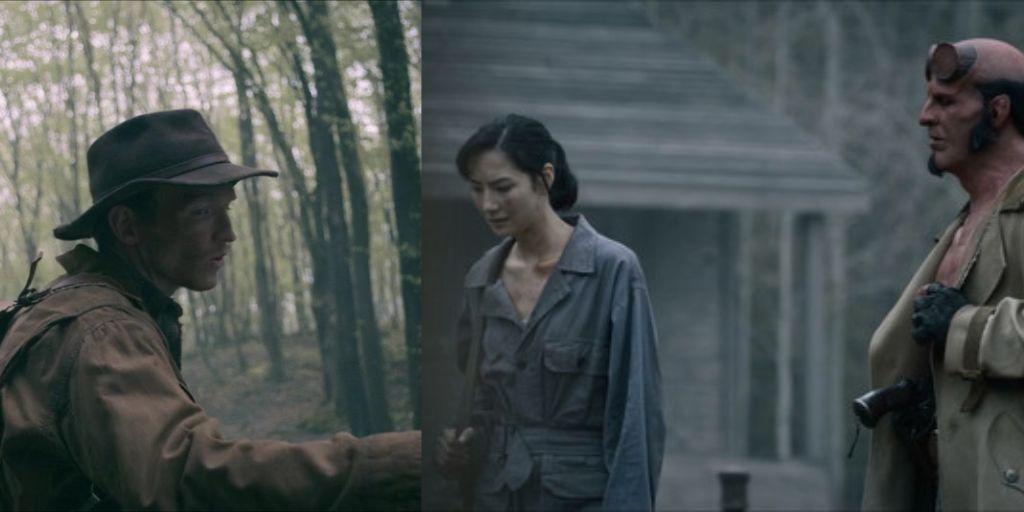
One of the standout elements of The Crooked Man is Jack Kesy’s portrayal of Hellboy. While Ron Perlman’s version of the character remains a fan favorite, Kesy brings a fresh approach to the role.
Unlike Perlman’s Hellboy, who often disrespects authority, or David Harbour’s more chaotic take, Kesy’s Hellboy is calmer and more thoughtful. He is portrayed as a noir-style detective, staying closer to Mike Mignola’s original vision of the character in the comics.
Kesy’s Hellboy is more responsible, showing maturity while still delivering the dry humor and witty one-liners fans expect.
Still from Hellboy The Crooked Man (Credit: Ketchup Entertainment)
His performance offers a nice balance between the tough, action-hero persona and the cooler, calculated side of the character. Kesy may not dethrone Perlman as the definitive Hellboy, but his version is different enough to stand on its own and deserves recognition for bringing a new layer to the character.
Supporting Cast – A Mixed Bag
In addition to Kesy, Hellboy: The Crooked Man features a solid supporting cast. Adeline Rudolph and Jefferson White both do a decent job as Hellboy’s companions.
While Rudolph’s character, Bobbie Jo, gets caught up in an unnecessary subplot in the third act, her chemistry with Kesy and White helps keep the story engaging. White’s Tom Ferrell adds a sense of nobility and heart to the otherwise dark tale.
On the villain side, Leah McNamara and Martin Bassindale bring a sense of menace as the demonic antagonists. Bassindale, in particular, shines as The Crooked Man, delivering a chilling performance.
However, it’s Joseph Marcell as Reverend Watts who steals the show among the supporting cast. His portrayal of a blind evangelical priest is one of the more entertaining parts of the film, and he brings a lot of energy to his scenes.
The Horror Vibe – Effective but Not Fully Realized
Director Brian Taylor promised that The Crooked Man would be a different kind of Hellboy movie, and in many ways, he delivered. The film leans more toward horror than its predecessors, which were more focused on action and spectacle.
The Crooked Man creates a dark and eerie atmosphere, especially with its rural Appalachian setting and the demonic storyline. At times, the film feels closer in tone to something like Constantine than the previous Hellboy movies.
However, the horror elements don’t always hit the mark. The film relies on some cheap jump scares, which feel out of place, particularly toward the end. While the dark, supernatural themes are present, the movie sometimes struggles to maintain the tension needed for a truly effective horror experience.
Still, there are moments where the horror works, particularly in some of the practical effects scenes and the unsettling atmosphere in the Appalachian woods.
Budgetary Constraints – A Major Obstacle
As previously mentioned, the budget is one of the film’s biggest challenges. While the smaller scale is part of what makes The Crooked Man interesting, the lack of resources becomes apparent in several key moments. The film’s ambition outstrips its budget, and this leads to some underwhelming effects, particularly when it comes to CGI.
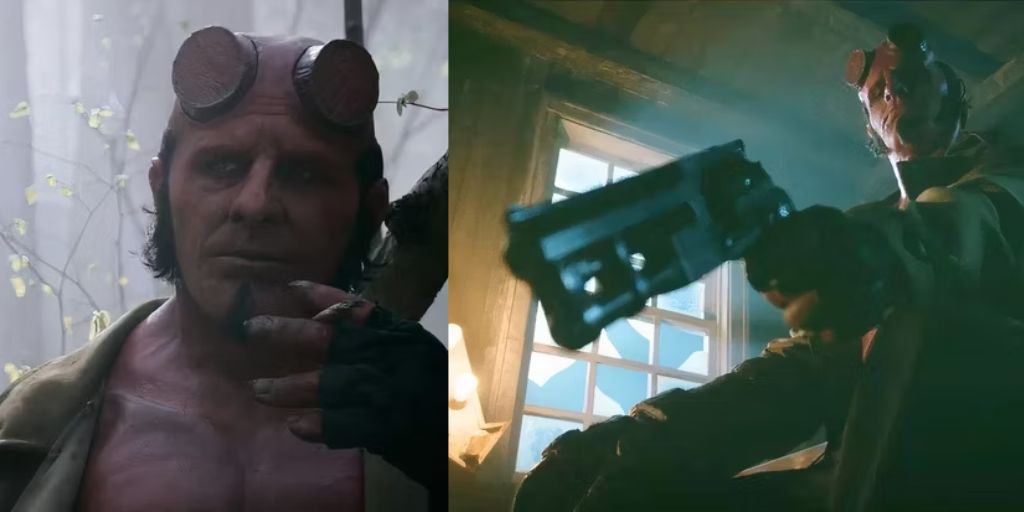
The practical effects, on the other hand, are much stronger. Hellboy’s makeup is as impressive as ever, and there are some creative practical sequences, including a memorable scene involving a skin suit.
But the digital effects, especially in the monster designs, often fall short. The contrast between the practical and digital elements creates a jarring experience, where some scenes feel immersive and others take the viewer out of the story.
A Step Forward or a Step Back?
Ultimately, Hellboy: The Crooked Man is a mixed experience. On the one hand, it offers a fresh take on Hellboy, with a new tone, setting, and a more responsible version of the character.
Jack Kesy’s performance is a highlight, and the film’s attempt to return to Hellboy’s darker, horror roots is commendable. The supporting cast does a decent job, and there are moments where the movie’s smaller scale works in its favor.
On the other hand, the low budget and inconsistent effects hold the film back. For every moment that works, there is another that feels underdeveloped or constrained by a lack of resources.
Still from Hellboy The Crooked Man (Credit: Ketchup Entertainment)
Fans of the original del Toro films may find The Crooked Man disappointing, especially since it doesn’t have the same visual flair or sense of spectacle.
For hardcore Hellboy fans, The Crooked Man offers enough to keep them engaged, especially with its fresh take on the character and darker tone. However, casual viewers or those looking for something closer to the original films may be left wanting more.
While The Crooked Man is an improvement over the 2019 reboot, it doesn’t quite reach the heights of the del Toro films. It’s a bold but flawed step in a new direction for Hellboy, and time will tell whether this new incarnation of the character will continue to develop or be left behind for another reboot in the future.
Throughout Heartstopper’s previous seasons, we’ve seen the series tackle a range of emotional and serious issues, from the struggles of coming out to dealing with emotionally abusive relationships. Though much of the show feels light and fun, filled with youthful energy, it never shies away from heavier subjects.
The first two seasons have successfully balanced moments of joy and heartache, capturing the spirit of being a teenager with its simple doodles, bright colors, and occasional confusion.
However, in Season 3, the show grows even more serious, with a stronger focus on mental health, especially Charlie’s (played by Joe Locke) mental well-being. This shift is more prominent than ever, particularly in Episode 4, which brings mental health issues to the forefront in a way we’ve never seen before.
It’s no surprise that Heartstopper’s third season earned a 100% Rotten Tomatoes score, just like the first season did. The powerful themes, moving performances, and deeper emotional narratives have resonated with audiences worldwide.
Out of all the episodes, Episode 4, titled “Journey,” stands out the most. This episode shows mental health and eating disorders in a very real, impactful way. It’s a significant moment not only for the show but also for the broader discussion of mental health and representation. Without a doubt, it’s the most powerful episode of Heartstopper so far.
What Happens in “Heartstopper” Season 3 Episode 4?
The third season of Heartstopper picks up on a story that started in Season 2. In the previous season, we saw hints of Charlie struggling with food and eating habits. While Season 2 introduced this issue, Season 3 goes into much more detail, with Episode 4 focusing deeply on how these struggles affect both Charlie and those around him.
By this point in the show, Nick (played by Kit Connor) has finally gathered the courage to talk to Charlie about his eating problems. Nick knows it’s a sensitive topic, but he can’t ignore it any longer. He wants to help Charlie, and he encourages him to have an open conversation with his parents about what’s going on.
The episode is cleverly divided into two parts. First, we see things from Nick’s perspective, and then we switch to Charlie’s. This allows us to understand how both characters are feeling and how the issue affects them differently. After seeing a doctor, Charlie is officially diagnosed with an eating disorder.
The doctor’s confirmation pushes Charlie to make a big decision—he decides to check into an inpatient facility to get treatment. Charlie isn’t very hopeful that the treatment will work, but he feels like it’s a necessary step to take.
One of the strengths of Heartstopper is its ability to show how mental health struggles affect not only the person going through them but also their loved ones. Episode 4 does a great job of portraying how Nick feels about Charlie’s eating disorder and how helpless he sometimes feels.
Still from Heartstopper (Credit: Netflix)
The script leaves room for quiet moments—long silences that highlight the emotional pain both characters are going through. There are even moments of lightheartedness between friends, but these jokes only make the empty spaces feel even more painful.
The episode doesn’t take a heavy-handed or insensitive approach; instead, it tells the story with simplicity and honesty. This straightforwardness is reflected in Charlie’s attitude toward his own experience—he sees the situation for what it is and faces it directly, even though it’s difficult.
Heartstopper also provides valuable information about eating disorders and mental health, woven into Charlie’s storyline. His recovery isn’t shown as a straight path. He has moments of progress where he starts to eat better, but there are also times when he falls back into old habits.
As the saying goes, things often get worse before they get better, and that’s certainly true for Charlie. He lashes out at Nick, his friends, and his parents. He isolates himself, giving in to his compulsions. However, he also has good days, days when he’s able to push forward and try to get better.
The show also touches on the fact that inpatient treatment facilities aren’t always helpful for everyone and that not everyone has access to them. By doing this, Heartstopper avoids making the recovery process seem too perfect or easy.
Joe Locke’s Performance Steals the Show in ‘Heartstopper’ Season 3
While the storyline in Episode 4 is incredibly powerful, much of its emotional impact comes from Joe Locke’s performance as Charlie. Locke gives one of his most heart-wrenching performances in this episode, bringing Charlie’s inner turmoil to life in a way that feels raw and genuine.
He doesn’t shy away from showing the difficult emotions that come with Charlie’s struggle. Instead, Locke embraces these moments, allowing the audience to feel Charlie’s pain, frustration, and exhaustion.
There’s one particular scene where Charlie is overwhelmed by his compulsions, and Nick’s attempts to comfort him start feeling more like nagging. In this moment, Charlie pulls away from Nick, unable to cope with both his inner struggles and the concern from those around him.
Locke portrays Charlie’s isolation with incredible depth. We can see the weariness in his eyes, the gauntness in his face, and the way he seems almost trapped inside his own mind. His body language says it all—he’s slouched, withdrawn, and completely drained from fighting against his own thoughts and feelings every day.
Even during the lighter moments in the episode, there’s always a sense that something darker is looming in the background. Charlie may smile or laugh, but Locke’s subtle acting shows us that there’s still sadness and hopelessness underneath the surface.
During the montage of Charlie’s stay at the facility, we hear his grave narration. His voice moves between sadness and faint hope, reminding us that his journey toward healing is far from easy. When Charlie’s recovery takes a more positive turn, it’s fragile, as though each step forward could fall apart at any moment.
His hidden kiss with Nick is a brief moment of victory, where Charlie reclaims a little bit of happiness. Locke perfectly captures every emotion, making Charlie’s experience feel both real and deeply moving.
Nick’s Emotional Journey in Episode 4
What makes Episode 4 even more significant is that it doesn’t just focus on Charlie’s experience—it also shows how Nick is affected by everything that’s happening. Often, when we talk about mental health, we focus on the person who’s struggling and forget about the impact on their loved ones.

Still from Heartstopper (Credit: Netflix)
However, Heartstopper acknowledges that mental health issues ripple through the entire support system, affecting everyone involved. In this case, we see how Charlie’s eating disorder deeply impacts Nick.
One of the most memorable moments from this episode is a conversation between Nick and his aunt, who is a psychiatrist. Fans of Alice Oseman’s original Heartstopper novels have been eagerly waiting for this moment. Nick confides in his aunt, sharing how he feels about Charlie’s health and how helpless he sometimes feels.
His aunt responds with a line that is both powerful and heartbreaking: “love can’t cure a mental illness.” It’s a reminder that while love and support are important, they aren’t enough to solve everything. This moment also helps Nick realize that he can’t take full responsibility for Charlie’s recovery.
Kit Connor, who plays Nick, gives an emotional performance that allows us to feel Nick’s pain and frustration. After talking to his aunt, Nick tries to approach Charlie’s situation with patience and understanding. However, it’s clear that he’s struggling too.
Connor’s body language and facial expressions reveal just how much tension and stress Nick is carrying. He’s constantly on the edge, trying to hold everything together for Charlie while also dealing with his own emotions.
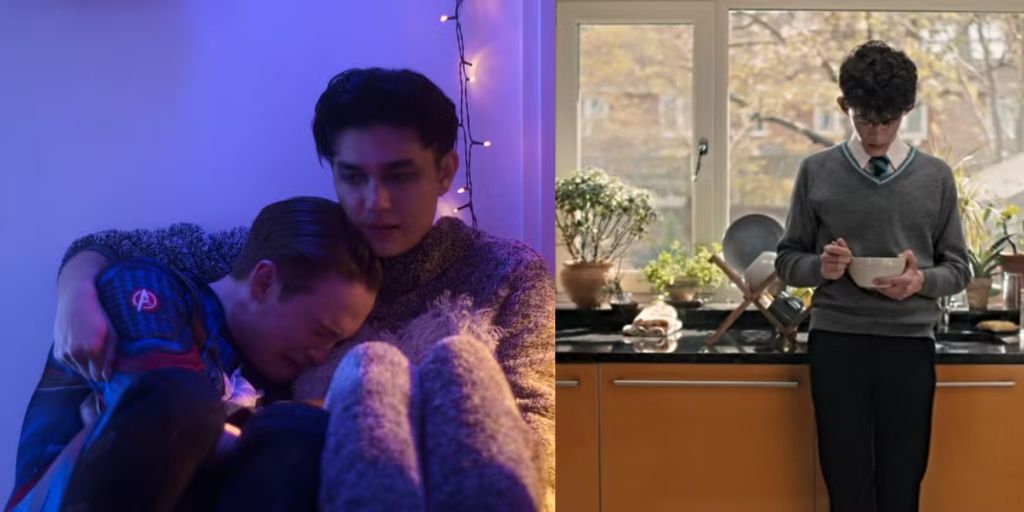
One of the most powerful scenes comes during the Halloween party. As the night goes on, Nick becomes more and more overwhelmed. The lights and movement around him blur, creating a dizzying effect that mirrors how disconnected Nick feels from everything happening around him.
At the center of all the chaos is Nick, trying to stay calm but clearly struggling. Eventually, Nick can’t take it anymore, and he breaks down in Tao’s (played by William Gao) arms. This moment is a turning point for Nick, as he finally lets himself feel the weight of everything he’s been going through.
Why “Heartstopper” Season 3 Is So Important
Eating disorders are rarely represented in media, and when they are, they are often shown in a very limited or stereotypical way. Too often, these portrayals either romanticize the illness or reduce it to a single cause, like body image. Heartstopper takes a much more nuanced approach, especially in how it addresses eating disorders in young men, a group that is often overlooked when it comes to discussions about eating disorders.
Charlie’s storyline is incredibly important because it sheds light on an issue that many people don’t talk about. In the show, Charlie is diagnosed with anorexia nervosa and OCD (obsessive-compulsive disorder).
His eating disorder isn’t just about body image; it’s tied to his compulsions and the belief that if he doesn’t follow a strict eating routine, something terrible will happen. This is a refreshing and necessary portrayal of how eating disorders can manifest in different ways, beyond the typical stereotypes.
But what makes Heartstopper even more impactful is how it shows the effect of Charlie’s illness on the people around him. It’s not just Charlie who suffers—Nick, Tao, and even Charlie’s sister, Tori, feel the weight of his struggle.
In earlier seasons, we saw how Tori supported Charlie, but her pain and concern often went unnoticed. In Episode 4, we see this dynamic play out again, but this time, the dual perspectives of Charlie and Nick bring a new layer to the story.

Still from Heartstopper (Credit: Netflix)
The episode encourages open conversations about mental health, not just for those who are struggling but for their loved ones as well. It sends a message that everyone involved needs support.
Through two standout performances from Joe Locke and Kit Connor, Heartstopper creates a delicate balance between difficult subject matter and a sense of hope.
Even in the darkest moments, the show reminds us that there is always a possibility for things to get better, even if the path isn’t straightforward. It’s a powerful message that resonates with viewers and opens up conversations about mental health, eating disorders, and the importance of support systems.
