Heretic is a psychological horror film by A24 that leaves viewers with a lot to think about, particularly regarding the themes of religion, control, and personal faith. The story is centered on two Mormon missionaries, Sister Paxton (Chloe East) and Sister Barnes (Sophie Thatcher), who find themselves trapped in a house owned by the sinister Mr. Reed (Hugh Grant).
Throughout the film, Mr. Reed forces them to confront their religious beliefs, manipulating them with strange and unsettling scenarios. However, the film does not offer a straightforward answer to the questions it raises about faith. Instead, it presents a deeper scheme of the nature of belief, control, and self-determination.
The film opens with Sister Paxton and Sister Barnes, two young missionaries, being assigned to their new post. They are enthusiastic about their faith and eager to spread their beliefs. However, things take a dark turn when they find themselves caught in Mr. Reed’s home, with no way out. Mr. Reed is an enigmatic and manipulative character, and he has a plan to break the missionaries’ faith.
Throughout the film, he forces them into a twisted game, presenting bizarre tests of faith and belief. The central theme of these tests is the idea of control—Mr. Reed argues that religion is ultimately about controlling people, and he will do everything in his power to convince Sister Paxton and Sister Barnes of this.
Mr. Reed’s Argument: Religion as a Tool of Control
The film reaches a crucial point when Mr. Reed delivers his final argument to Sister Paxton. He claims that religion is merely a tool for control, something that is used by powerful people to manipulate the masses.
He argues that all the missionaries’ faith is built on lies and that their beliefs are based on nothing more than a false sense of security. His proof lies in the so-called “prophets” that he has created, figures who have been kept in cages, malnourished, and manipulated into believing they are divine messengers.
Mr. Reed’s explanation is chilling in its simplicity. He argues that people in a weakened state are easier to control, and this applies to everyone—regardless of religion, status, or power. In his view, every belief system, whether religious or secular, is just a way for those in power to maintain control over the masses.
His argument is terrifying because it suggests that the very thing people hold most dear—their faith—can be twisted into a means of manipulation.
This perspective is reinforced through Mr. Reed’s behavior throughout the film. He does not just argue against religious beliefs; he actively works to break the missionaries down, using every trick he can to undermine their faith.
The scenes involving his “prophets” are particularly disturbing, as they show how far Mr. Reed is willing to go to prove his point. He shows the missionaries the bodies of these men, weak and emaciated, and forces them to confront the idea that the people who claim to be chosen by God are nothing more than victims of manipulation.
Mr. Reed’s final argument represents the culmination of his beliefs. It is here that he makes his most significant statement about control. He insists that religion, in all its forms, is merely a way to keep people in line.
He argues that, like the missionaries, everyone is vulnerable to the same manipulation, and that the idea of a higher power is nothing more than a fabrication to keep people from questioning their place in the world.
Sister Paxton’s Response: Faith and Personal Belief
In response to Mr. Reed’s argument, Sister Paxton stands firm in her faith, offering a powerful counterpoint to his bleak view of the world. Her argument is not just about the truth of religion, but about the importance of personal belief and the power of self-determination.
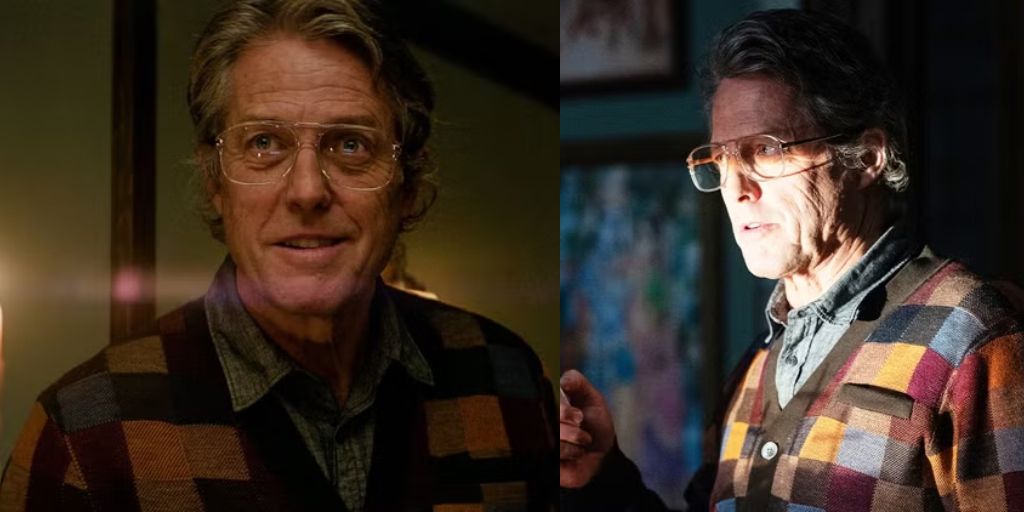
Still from Heretic (Credit: A24)
She tells Mr. Reed that her belief is about her own control, not about forcing others to accept her perspective. Her faith is something that she has chosen for herself, and it is not something that anyone, not even Mr. Reed, can take away from her.
Sister Paxton’s response to Mr. Reed’s argument is one of the most important moments in the film. She acknowledges that her prayers may not always work, but she continues to pray because it is an act of love, not a transaction with a higher power.
This statement reflects a key theme of the film—the idea that faith is not about certainty, but about choosing to believe in something beyond the self. Her belief in prayer, even when it seems ineffective, is a sign of her conviction and her refusal to be controlled by anyone, not even Mr. Reed.
Later in the film, Sister Paxton experiences a moment of symbolic significance. She has previously expressed a desire to be reincarnated as a butterfly, and when she escapes from the house, she finds a butterfly on her finger. At first, it seems like a moment of personal triumph, a sign that her beliefs are being validated.
However, the film quickly undercuts this moment by showing that the butterfly is not real and that Sister Paxton is staring at a lonely, empty finger. This moment reflects the film’s theme of belief versus reality. It suggests that, while what we believe may not always be tangible or provable, it still holds meaning and power.
In a sense, Sister Paxton’s faith is not about proving what is real or not, but about embracing the power of belief itself. Her ability to maintain her faith, even in the face of Mr. Reed’s manipulation, is a testament to the strength of her character. She does not need to convince anyone else of the truth of her beliefs—she simply needs to hold on to them for herself.
Sister Barnes’ Revenge: Shattering Mr. Reed’s Illusion of Control
The final blow to Mr. Reed’s argument comes from Sister Barnes, who seemingly returns from the dead to take revenge on her captor. The scene is dramatic and shocking, as Sister Barnes drives a nailed board into Mr. Reed’s skull, killing him and saving Sister Paxton.
Some viewers may interpret this moment as a miracle, a divine intervention that disproves Mr. Reed’s claims about the impossibility of supernatural occurrences. However, another interpretation is that Sister Barnes’ return is not a miracle, but a result of her sheer will to survive and seek justice.
In this light, Sister Barnes’ return is a powerful symbol of defiance against Mr. Reed’s control. It shows that, even in the face of death, the human spirit can fight back. Mr. Reed’s illusion of control is shattered in that moment, as he is ultimately defeated by the very people he sought to manipulate.
Sister Barnes’ revenge is not just a personal victory, but a repudiation of Mr. Reed’s worldview. It shows that, while we may not have control over everything in our lives, we do have control over how we respond to the challenges we face.
This moment also speaks to the film’s broader themes of resistance and empowerment. Throughout the story, the missionaries are forced to confront their beliefs and their sense of powerlessness in the face of Mr. Reed’s manipulations. But in the end, they prove that they are not entirely at the mercy of others.
Their actions, particularly Sister Barnes’ final act, demonstrate that they have the strength to resist, to fight back, and to reclaim their agency.
The Ending: A Reflection on Control, Belief, and Faith
The ending of Heretic is deliberately ambiguous, leaving viewers with a lot of questions about the nature of faith, control, and the supernatural. Is religion just a means of control? Are we all caught in a cycle of searching for the truth? And most importantly, is there a higher power, or is it all just an illusion?
These are some of the existential questions that Heretic raises, but the film does not provide definitive answers. Instead, it suggests that the answers to these questions may not matter as much as the choices we make in response to them.
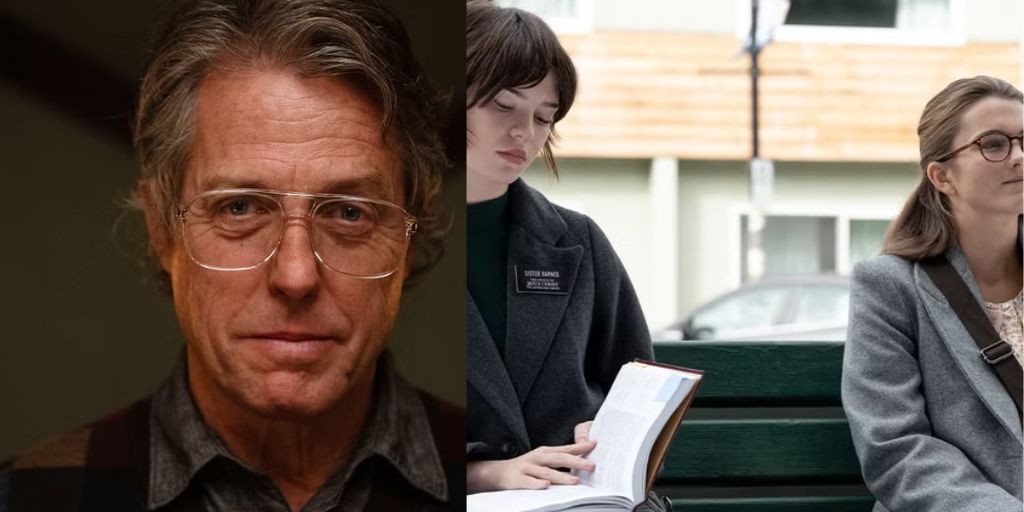
Still from Heretic (Credit: A24)
The film encourages viewers to reflect on their own beliefs and how those beliefs shape their actions. It suggests that the power of belief lies not in proving what is real or not, but in the way it empowers us to live our lives.
The missionaries in Heretic do not need to prove the truth of their faith to anyone else—they simply need to hold on to it for themselves. In doing so, they find strength, purpose, and agency in a world that often seems indifferent to their beliefs.
Heretic is now playing in theaters in the U.S.
In 1972, Jean McConville, a single mother of ten, was abducted by the Irish Republican Army (IRA) and never seen again. This tragic event altered the lives of McConville’s children, who were left searching for answers about their mother’s disappearance.
The case became a major point of interest in the United Kingdom, but it also gained a broader focus when Patrick Radden Keefe, an investigative journalist, examined it in his best-selling non-fiction book Say Nothing: A True Story of Murder and Memory in Northern Ireland.
Keefe’s investigation began after he read the obituary of Dolours Price, a woman who was the first female member of the Provisional IRA. This sparked Keefe’s interest in Price’s role in the violent IRA movement and how her life connected to McConville’s mysterious disappearance.
Keefe’s book became the basis for an adaptation by FX, titled Say Nothing. The series is an intense, nine-episode look at the lives of two women—Dolours Price and Jean McConville—and their connections to the violence of the IRA during The Troubles, a violent conflict in Northern Ireland.
The show tackles heavy themes, including morality, the justification of violence for political causes, and the personal cost of revolution. For those interested in true crime and history, Say Nothing offers a compelling narrative, bringing these complex historical events to life through its vivid storytelling.
What Is Say Nothing About?
Say Nothing opens with a chilling scene: Jean McConville (played by Judith Roddy) is captured at gunpoint by members of the IRA in front of her terrified children. This moment marks the beginning of McConville’s tragic disappearance and sets the tone for the series, which moves back and forth between McConville’s story and that of Dolours Price (Maxine Peake), a key figure in the IRA’s operations.
The show portrays Price’s transformation over time, starting with her youthful enthusiasm for the republican cause and later showing her regret and disillusionment after years of violent action.
The show opens decades after McConville’s disappearance, with an older version of Price (played by Peake) finally speaking out about her involvement in the IRA. Price reveals not only her own involvement in war crimes but also uncovers information about the killings and the mysteries surrounding McConville’s abduction.
The show’s storytelling shifts between flashbacks to Price’s younger days (with Lola Petticrew playing the role of young Dolours) and the present, where Price reflects on her actions. These flashbacks show how Dolours and her sister Marian (played by Hazel Doupe) became members of the IRA.
The Price sisters, alongside other members of the IRA, were not mere supporters—they were active fighters, taking part in bombings, sniper attacks, and other violent operations aimed at freeing Northern Ireland from British rule. They were also responsible for executing traitors within their own ranks, individuals who had betrayed the IRA to the British government.
The story of Say Nothing is not just about Dolours Price, though. As the show unfolds, we learn that McConville’s abduction and the IRA’s involvement in it are deeply connected to Price’s life. The show details how McConville was believed to have been suspected of collaborating with the British forces, a reason the IRA saw her as an enemy to be silenced.
The tragedy of McConville’s fate is wrapped up in the violence and paranoia that marked The Troubles, as both Price and the McConville family’s story become intertwined in the bloody and complex history of Northern Ireland.
A Stellar Ensemble in Say Nothing
FX’s Say Nothing is not only a story of historical events but also a powerful ensemble piece. The show presents a layered portrayal of the conflict, one that stays with the viewer long after the credits roll. It is clear that a great deal of thought was put into casting, and the actors give compelling performances that help bring the weight of these true events to life.
The first episodes of the show focus on the younger versions of the central characters, particularly Dolours Price (played by Lola Petticrew) and Marian Price (Hazel Doupe). Alongside them, the show features key characters like Gerry Adams (played by Josh Finan), the IRA leader who later became a significant political figure.
Anthony Boyle plays Brendan Hughes, a formidable IRA operator who has a major role in the series. The young cast shines in their portrayal of the characters, setting the stage for the later, more reflective moments of the series.
As the show progresses, we see these same characters as older versions of themselves, portrayed by a talented group of veteran actors. Maxine Peake’s portrayal of Dolours Price is particularly notable, capturing both the fiery spirit of the young revolutionary and the deep sense of regret that defines her later years.
The older cast members bring the full emotional range of the story to the screen, with performances that convey the complex internal struggles of individuals caught in the violent conflict of The Troubles.
The show also finds strength in how it handles each character’s story. With a large ensemble, many shows might lose focus on certain characters, but Say Nothing ensures that each of its main figures gets the time and development they deserve.
From Dolours to Gerry Adams to Brendan Hughes, the series shows the human side of these figures, making the audience both angry at their actions and sympathetic to their struggles. This balance of defiance and vulnerability is what makes Say Nothing so powerful.
The series is structured in a way that builds tension around the mystery of McConville’s disappearance. The narrative carefully places clues that suggest who might be responsible, and though the truth is eventually revealed, the discovery doesn’t feel forced or predictable.
The writers, including Joshua Zetumer, Kirsten Sheridan, and Joe Murtaugh, have done an excellent job in adapting Keefe’s book for the screen. The pacing of the story is steady and well thought-out, allowing the mystery of McConville’s abduction to develop alongside the evolving story of Dolours Price’s life.
Recreating History with Care and Precision
One of the standout features of Say Nothing is its commitment to historical accuracy. The show is based on real events, and the team behind the production has gone to great lengths to ensure that the historical context is faithfully recreated. From the wardrobe to the locations to the events themselves, Say Nothing captures the atmosphere of The Troubles with painstaking attention to detail.
The series draws on key historical moments from Northern Ireland’s history, including the 1973 Old Bailey bombing and its aftermath, where Dolours and Marian Price were arrested and sent to prison. The show doesn’t shy away from depicting these events in all their complexity, showing the painful reality of the hunger strikes that followed and the impact that these actions had on the lives of the people involved.
The story also touches on the political ramifications of the conflict, particularly the role of Gerry Adams, who would later help bring about the 1998 Good Friday Agreement, a peace agreement that aimed to end the violence in Northern Ireland.
Despite the intense focus on the IRA and the violence of the time, Say Nothing does not glorify or romanticize the acts of rebellion. Instead, the series presents a balanced view of the cost of violence, both for those who fought for a cause and for those who suffered as a result.
By focusing on Dolours Price’s journey from a young revolutionary to a disillusioned former fighter, the series presents a powerful commentary on the dangers of blind ambition and the lasting scars left by violence.
A Thought-Provoking Reflection on the Past
At its heart, Say Nothing is not just a historical recounting of The Troubles; it is a meditation on the nature of revolution, memory, and the consequences of violence. Through Dolours Price’s life, the series asks difficult questions about the cost of fighting for a cause. Is violence ever justified in the name of political change? What happens when a revolutionary cause leads to more destruction than peace?
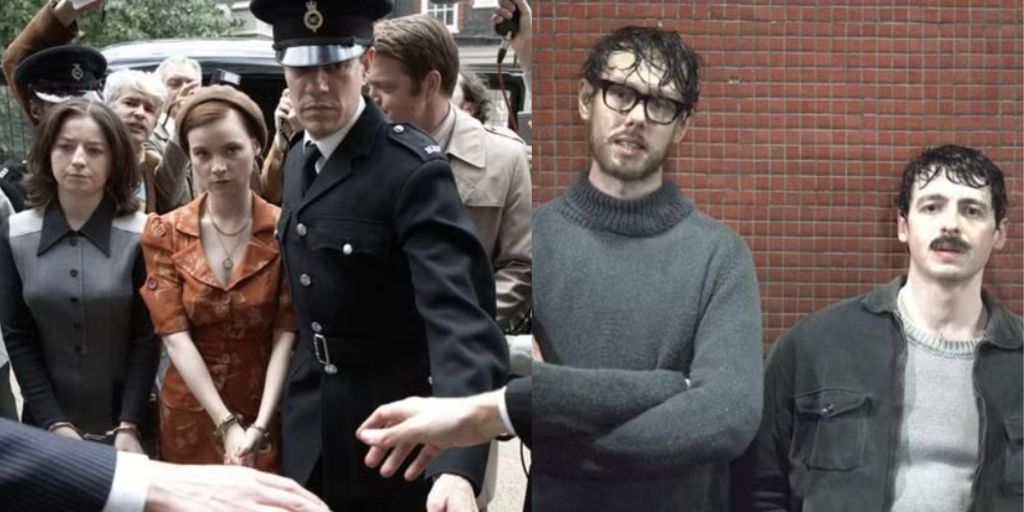
Still from Say Nothing (Credit: FX)
The show doesn’t provide easy answers to these questions. Instead, it offers a nuanced portrayal of a turbulent time and the people who lived through it. Say Nothing is not a simple true-crime drama; it is a deeply reflective work that asks viewers to reconsider the past and reflect on how history is remembered.
Final Thoughts
Say Nothing will be available for streaming on Hulu starting November 14. For those interested in true crime, history, and the complexities of political conflict, this series offers a gripping and thought-provoking experience.
With a talented ensemble cast, a well-crafted script, and a deep respect for history, Say Nothing brings the events of The Troubles to life in a way that is both powerful and unsettling. The show reminds us that history is not just about facts and dates—it is about the people who lived through it and the choices they made.
