Foodie culture has grown significantly within the entertainment industry. The viral nature of food enthusiasts across social media platforms has made food-centric shows like The Bear and movies such as The Menu very popular.
These productions capture audiences by blending the culinary world with compelling narratives, often mixing drama, suspense, and social commentary.
The Menu, for example, received praise for satirizing the fine-dining industry and examining the power dynamics between chefs and their wealthy patrons.
Now, MGM Studios and Blumhouse have teamed up for their latest horror film, House of Spoils, which is already being compared to The Menu. However, House of Spoils takes a different approach, offering a more supernatural take on the restaurant industry.
Where The Menu focuses on a working-class woman held hostage by a pretentious chef, House of Spoils flips the script by focusing on a chef herself. It details her journey into opening a high-end restaurant while being haunted by supernatural forces.
Unfortunately, House of Spoils falls short of its potential. While The Menu delivers a sharp and clever narrative, House of Spoils presents something far less engaging, leaving viewers with a bland and forgettable experience.
The Plot: A Chef with Big Dreams and a Haunted Restaurant
The main character in House of Spoils is a young woman referred to only as Chef, played by Ariana DeBose, who is known for her Academy Award-winning performance in West Side Story.
Chef has spent nearly a decade training with the best culinary minds in the world, and now she is ready to make her mark by opening her own restaurant.
She enlists the help of a smooth-talking restauranteur named Andres, played by Arian Moayed, who helps her transform an abandoned mansion into an upscale and remote dining destination.
As Chef starts preparing the mansion to become her restaurant, strange things begin to happen. She soon discovers that the mansion’s previous owner may have had connections to the occult, and some dark forces may still be lurking within the mansion’s walls.
What starts as an ambitious venture to showcase her culinary skills quickly turns into a psychological thriller as Chef is confronted with increasingly bizarre and frightening occurrences.
The film deals with themes of ambition, power, and the desire to succeed, but it does so in a way that lacks the depth and originality needed to stand out in the crowded horror genre.
The Horror: A Lack of Scares and Tension
One of the major issues with House of Spoils is that it fails to deliver on its horror premise. Blumhouse Productions is known for its expertise in the horror genre, having produced films such as The Purge, Get Out, and Paranormal Activity, which have all become staples of modern horror.
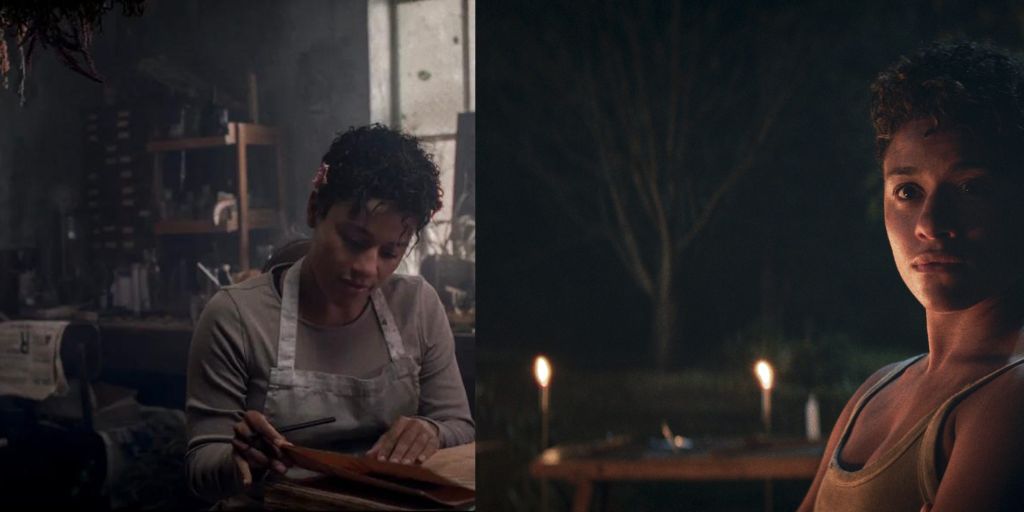
Still from the show (Prime Video)
However, House of Spoils lacks the scares, tension, and atmosphere that Blumhouse films are typically known for.
The movie feels like it wasn’t originally intended to be a horror film, and that elements of horror were added later, perhaps to fit Blumhouse’s brand. As a result, the film comes across as disjointed and lacks a cohesive identity.
The supernatural elements in House of Spoils are generic and predictable. The film relies heavily on cheap jump scares and ghostly apparitions, but none of these moments are particularly frightening.
Instead, they feel like they were added to check off a box rather than to genuinely scare the audience.
The film’s pacing also suffers, as there are long stretches where very little happens, making it difficult for viewers to stay engaged.
The suspense builds slowly, but by the time the film reaches its climax, any tension that has been created quickly dissipates due to a lackluster and confusing finale.
Missed Opportunities: The Culinary Industry as a Setting
One of the more unique aspects of House of Spoils is its setting within the culinary world. Films that focus on the food industry often have the potential to find interesting themes, such as the pressure to succeed, the role of creativity in cooking, and the relationships between chefs and their patrons.
Unfortunately, House of Spoils doesn’t fully capitalize on this setting. The film offers some commentary on the food industry, but it doesn’t say anything that hasn’t already been talked in other films and shows.
For instance, The Menu delivers a biting satire of the fine-dining world, critiquing the pretentiousness of both chefs and diners. In contrast, House of Spoils attempts to make a statement about the darker side of the culinary industry but falls short.
The film touches briefly on issues such as sexism within the culinary world, but it doesn’t go deep enough to make a significant impact.
The sexism Chef faces is mentioned, but the film doesn’t commit to finding how it affects her character or her journey. This missed opportunity leaves the film feeling shallow and incomplete.
The film’s central concept of a chef dabbling in witchcraft is intriguing, and House of Spoils deserves credit for attempting to tackle such an idea.
However, the execution leaves much to be desired. Rather than fully embracing the absurdity and fun that could come from such a premise, the film takes itself too seriously and ends up feeling lifeless.
The supernatural elements are underdeveloped, and the witchcraft aspect of the story never fully comes together in a satisfying way.
Ariana DeBose’s Performance: A Mixed Bag
Ariana DeBose is a talented actress, and her charisma is one of the few highlights of House of Spoils. She has a natural screen presence that made her stand out in West Side Story, where she won the Academy Award for Best Supporting Actress.
In House of Spoils, DeBose plays a sharp, independent character who is determined to succeed in a male-dominated industry.
The decision to only refer to her character as “Chef” suggests that she is a complex individual who has yet to earn the respect she deserves from her peers.
This could have been an interesting character study, but the film doesn’t fully find Chef’s motivations or struggles.
DeBose’s performance is uneven, particularly during the film’s horror sequences. Her reactions to the supernatural events in the mansion often come across as unconvincing.
In several scenes, where Chef is supposed to be terrified by ghostly apparitions or haunted by witches, DeBose’s screams of terror feel forced and even unintentionally humorous.
These moments undermine the film’s attempt at building suspense and make it difficult for viewers to take the horror seriously.
However, DeBose shines in the scenes where her character begins to unravel mentally. As Chef becomes more consumed by her obsession with the restaurant and the dark forces haunting the mansion, DeBose is able to bring some nuance to the role.
Her interactions with supporting characters such as Andres and Lucia, played by Barbie Ferreira, are also highlights of the film. Ferreira and Moayed bring a level of depth to their performances, even though their characters are underdeveloped.
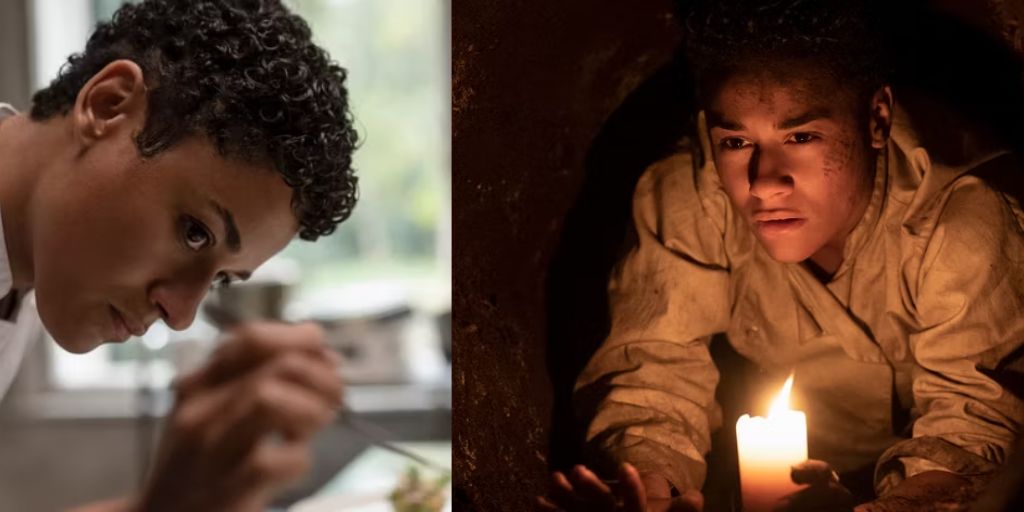
Still from the show (Prime Video)
Supporting Cast: Strong Performances but Underwritten Roles
Barbie Ferreira and Arian Moayed play important supporting roles in House of Spoils, but their characters are not given enough development to make a lasting impact.
Ferreira plays Lucia, a close confidante of Chef, while Moayed plays Andres, the slick businessman who helps Chef launch her restaurant. Both actors give strong performances, but the script doesn’t allow their characters to grow beyond the surface.
Andres, in particular, is a character who could have been much more interesting if the film had committed to finding his vulnerabilities. He starts off as a stereotypical sleazy businessman, but there are moments in the film that hint at a more complex and vulnerable character.
Unfortunately, these moments are fleeting, and the film never fully goes into who Andres really is. Similarly, Lucia feels like a one-note character who exists primarily to support Chef’s journey rather than having a story of her own.
The Disappointing Finale: A Twist That Falls Flat
The final act of House of Spoils is perhaps the most disappointing part of the entire film. Without giving too much away, the film builds toward a major twist that is meant to surprise the audience. However, the twist is poorly executed and ends up deflating any tension that had been built up throughout the film.
The result is a confusing and perplexing endthat leaves viewers with more questions than answers.
One of the early scenes in House of Spoils features Chef being forced to use pre-packaged ingredients to prepare one of her meals.
This scene is a fitting analogy for the film as a whole. Like Chef’s meal, House of Spoils feels like it is made up of pre-packaged, pre-existing elements that have been used in countless other stories.
The film is watchable and easy to digest, but it offers nothing new or innovative. Instead, it feels like a collection of tired clichés and overused storytelling devices.
A Missed Opportunity in the Horror Genre
House of Spoils had the potential to be a compelling horror film set within the unique fine dining, but it ultimately falls flat. The film lacks the scares, tension, and originality needed to stand out in the crowded horror genre.
While Ariana DeBose delivers a strong performance at times, the uneven script and underdeveloped characters prevent the film from reaching its full potential.
The culinary setting could have provided a fresh take on the genre, but House of Spoils fails to find it in a meaningful way.
Instead, it relies on tired horror tropes and a disappointing twist that leaves viewers unsatisfied. For fans of food-centric dramas or horror films, House of Spoils may be an interesting watch, but it is unlikely to leave a lasting impression.
Two years ago, people loved the first season of Ryan Murphy and Ian Brennan’s show, Monster. This season told the story of the terrible crimes committed by the famous serial killer, Jeffrey Dahmer.
He was found guilty of killing 17 young men. Most of his victims he dismembered, and some he even ate.
Evan Peters played Dahmer very well and won a Golden Globe for his acting. Niecy Nash-Betts also gave a great performance and won an Emmy.
The second season, called Monsters: The Lyle and Erik Menendez Story, just came out. It created a lot of discussion, with some people liking it and others disagreeing about how the story was shown.
Even with these mixed reviews, Ryan Murphy, Ian Brennan, and Netflix are planning a third season. This new season will focus on serial killer Ed Gein. Charlie Hunnam, known from Sons of Anarchy, will play Gein.
The series will take viewers back to Plainfield, Wisconsin, in the late 1950s. It will follow Gein’s brief murder spree and focus on his obsession with robbing graves and making things from human skin.
In a recent chat with Taylor Gates from Collider, Murphy shared some exciting details about the upcoming season. He revealed the official title, when they will start filming, and why they chose Gein as their next character.
‘Monster’ Season 3 Will Go Back to the Beginning
People who listen to a certain podcast may have heard the question, “Why do we care about true crime now?” The answer is that this interest is not new.
History shows that people have always been fascinated by dark topics. Murphy discussed the research he and Brennan did, saying:
“After we did Menendez, Ian and I were talking about it. We were interested in this idea of, ‘Where did our cultural interest in serial killers begin? Where and how did this all start?’
Based on our research, the very first one who became a celebrity at that level was Ed, who was an instant crazy celebrity from the moment he was arrested.
Nobody had ever heard of anything like that. Then we found out — he was motivated, obviously — but he was schizophrenic. How he became what he became was a very interesting story.”
People who know about Gein’s crimes understand that he inspired many popular movies over the years. Murphy promises that the next season will cover that part of the story, saying:
“The amazing thing that the show talks about is how many villains and how much pop culture is based on Ed Gein — Psycho, Silence of the Lambs, Texas Chainsaw Massacre, American Psycho, and on and on and on and on.
Ed influenced a lot of things in the past 100 years, and this season is a very interesting season to work on because it asks the question, ‘How did we get so interested in this and why? Where did it all begin?’”
‘Monster’ Season 3 Has a Special Title
The first two seasons of Monster had the names of the main subjects in their titles: Jeffrey Dahmer and Lyle and Erik Menendez. However, Season 3 will be different. “We’re calling that season The Original Monster because that’s kind of what he was,” Murphy said.
He also mentioned that filming will start on Halloween, saying, “We start shooting on Halloween, so we’re deep in it, and I’m very excited about it.”
As for casting Hunnam as Gein, Murphy credited filmmaker Max Winkler, who will direct some of the episodes. He told Collider:
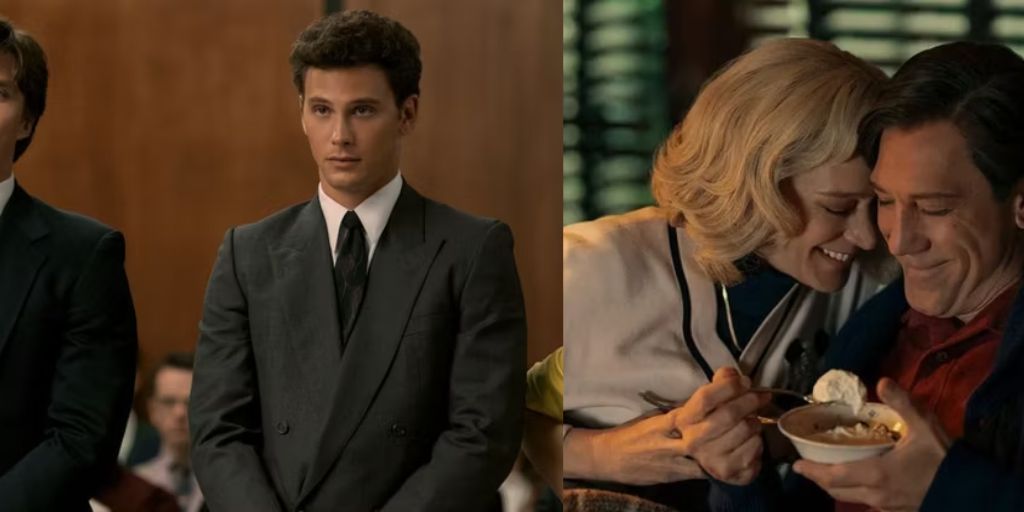
Still from Monsters The Lyle and Erik Menendez Story (Credit: Netflix)
“Max Winkler is a friend of mine. He’s directing many of [the episodes] along with Ian Brennan, my co-creator. I was talking to Max about it, and he is friends with Charlie.
He said, ‘Oh my god, Charlie. Do you love Charlie’s work?’ I was like, ‘I’ve always wanted to work with him.’
So I met with Charlie, and he’s just the most lovely person. He liked what we were doing. He liked what it’s about. Every generation gets the monster that they deserve, you know? So we’re writing about a lot of things, but he’s a wonderful guy.”
We look forward to seeing Hunnam transform into Gein since they have very different personalities. Monsters:
The Lyle and Erik Menendez Story is now available to stream on Netflix. Stay tuned at Otakukart for Gates’ complete conversation with Murphy.
