House of the Dragon made several notable changes from George R.R. Martin’s novel, Fire & Blood. Some of these changes were well-received, while others faced criticism. However, the first episode of Season 1 introduced a major change that impacts the entire Game of Thrones series.
At the end of the pilot, Viserys (played by Paddy Considine) discloses that Aegon the Conqueror had a prophetic dream about the future. In this vision, the Others rise from the dead to invade Westeros, and Aegon believes that a Targaryen must unite the Seven Kingdoms to fight this threat.
Aegon’s dream shares its name with the novel series: The Song of Ice and Fire. Although this has never been officially confirmed in the books, there are many clues suggesting that a similar revelation might appear in Martin’s upcoming novel, The Winds of Winter.
The Targaryens are the most powerful house in Westeros. They are famous for their silver hair and numerous dragons. During the time of Old Valyria, they were a minor house. However, House Targaryen was the only family to survive the Doom of Valyria.
Their survival was due to their unique ability to foresee future events. Daenys the Dreamer saw the Doom in a dream and warned her family. Her ability was passed down to some Targaryens over generations.
Aegon the Conqueror seemed to have this gift as well. His dream was passed from one king to another over time, and several important characters in the books might be aware of his vision.
Rhaegar Knew About the Prophecy
The Song of Ice and Fire novels give several hints that Rhaegar Targaryen (played by Wilf Scolding) knew about Aegon’s dream. It appears that his actions during Robert’s Rebellion were related to this prophecy.
Rhaegar was Daenerys’ (played by Emilia Clarke) older brother and was later revealed to be Jon Snow’s (played by Kit Harington) father. Evidence suggests that Rhaegar was aware of Aegon’s prophecy in A Clash of Kings. When Daenerys enters the House of the Undying, she sees visions that show the past and predict the future.
In a scene cut from Game of Thrones, Daenerys sees Oberyn’s (played by Pedro Pascal) sister, Elia Martell, giving birth to Rhaegar’s son. Rhaegar says, “He is the prince that was promised, and his is the song of ice and fire.” He adds, “There must be one more… The Dragon has three heads.”

Still from House of the Dragon (Credit: HBO)
Aegon’s prophecy often relates to the idea of a three-headed dragon. Rhaegar likely referred to his own children and was trying to match the original three Targaryens who conquered Westeros—Aegon and his sister-wives, Rhaenys and Visenya.
Rhaegar had two children with Elia, named Rhaenys and Aegon, and he probably expected another daughter, whom he would name Visenya. His plans were disrupted when it was found that Elia could not survive another childbirth, leading him to seek another way to have his third child, resulting in Jon Snow’s birth.
Rhaegar Tried To Create Azor Ahai
Another part of A Storm of Swords suggests that Rhaegar was involved in Aegon’s prophecy. Barristan Selmy (played by Ian McElhinney) recalls that “Rhaegar found something in his scrolls that changed him… the boy suddenly appeared early one morning in the yard… and said, ‘I will require a sword and armor.
It seems I must be a warrior.’” This suggests that Rhaegar not only knew about Aegon’s dream but also believed it was about himself. In A Feast For Crows, Maester Aemon (played by Peter Vaughan) explains that Rhaegar initially thought he was Azor Ahai, the prophesied hero meant to lead the fight against the Others.
“He shared my belief when he was young, but later he became persuaded that it was his own son who fulfilled the prophecy, for a comet had been seen above King’s Landing on the night Aegon was conceived, and Rhaegar was certain the bleeding star had to be a comet.” Rhaegar was mistaken.
Jon Snow’s birth changed the idea that Rhaegar would father the next three Dragonriders, especially since Jon was male. The red comet appeared again when Daenerys had her three dragons.
Rhaegar’s story is tragic. He was consumed by Aegon’s dream and spent his life trying to make that dream come true, but ultimately he failed. One important question remains—how does this connect to House of the Dragon?
House of the Dragon Confirms Rhaegar’s Theory
House of the Dragon confirms the prophecy’s validity and shows that Aegon’s dream is real. Showrunner Ryan Condal mentioned that this idea came from Martin himself.
“That actually came from [Martin]… he casually mentioned the fact that Aegon the Conqueror was a dreamer who saw a vision of the White Walkers coming across the wall … We infused that into the story.” However, the mystery of the three-headed dragon remains unsolved.
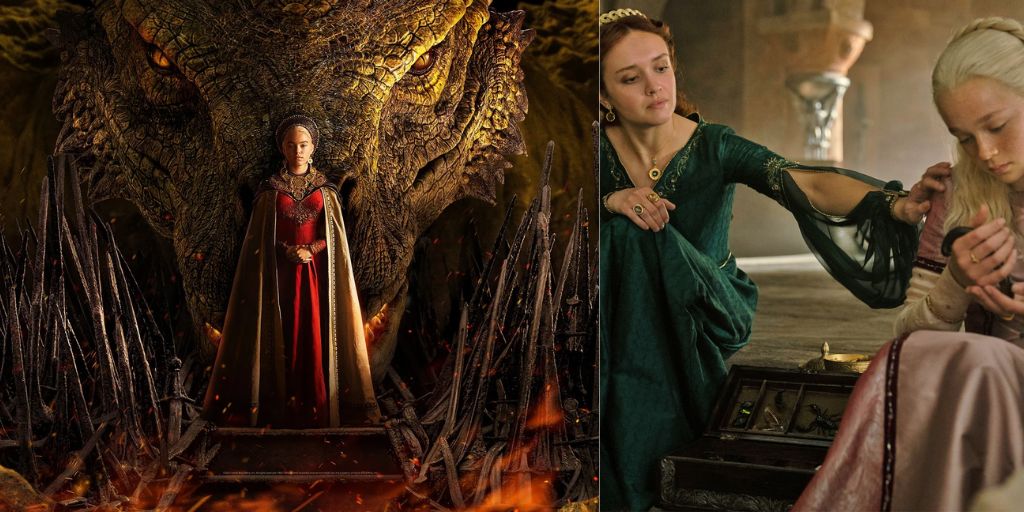
Still from House of the Dragon (Credit: HBO)
The Targaryen sigil is a key reference to this theory, and another hint appears in House of the Dragon Season 1, Episode 10. When visiting Vermithor, Daemon (played by Matt Smith) sings a song in High Valyrian. The translated lyrics provide crucial information about Rhaegar’s theory.
“Fire breather, winged leader. But two heads, to a third sing… As one we gather, and with three heads, we shall fly as we were destined.”
House of the Dragon suggests that the prophecy dates back to Old Valyria, and Aegon wasn’t the first to see this vision of the Others. There is strong evidence that Targaryens play a crucial role in the fight against the Others, and there must be three Dragonriders to win. Daenerys gives birth to three dragons but is missing two riders.
Fans have speculated about the identity of the other riders, with Jon Snow being a likely candidate. Despite Game of Thrones dismissing this theory when the Night King claimed Viserion, there is still evidence that Rhaegar knew about the prophecy, and House of the Dragon confirmed his theory almost twenty years after A Feast For Crows was published.
Aegon’s dream remains a secret in House of the Dragon. Only Rhaenyra (played by Emma D’Arcy), Jacaerys (played by Harry Collett), and Daemon know about it from his Weirwood visions at Harrenhal.
Whether this secret survives the Dance of Dragons is unknown. Even if it is lost, the books suggest that it will be revealed almost 200 years later, just in time for Daenerys to take the throne.
House of the Dragon introduces a significant shift in the Game of Thrones narrative by highlighting Aegon the Conqueror’s prophetic dream. This dream, revealing a future invasion by the Others, aligns with the series’ central theme of impending doom and the need for a unified Targaryen front.
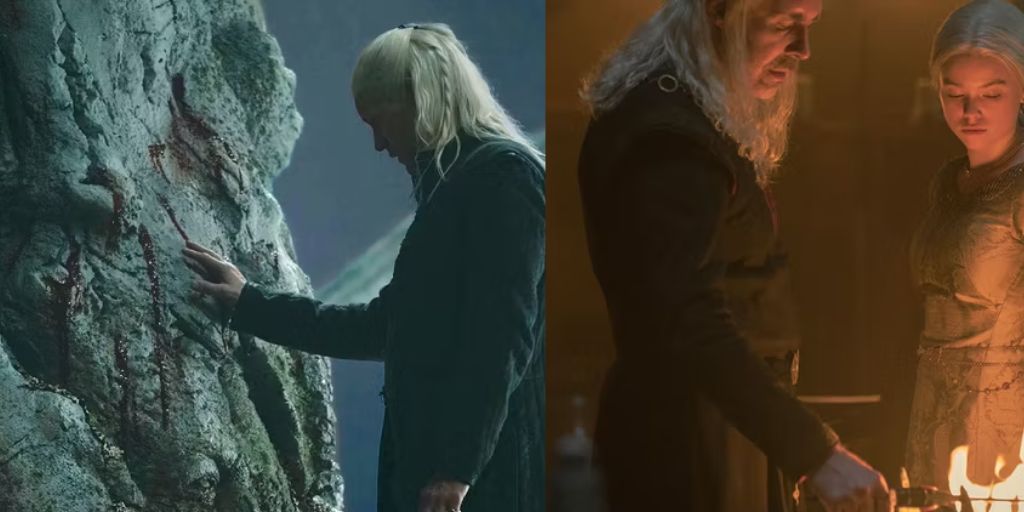
Still from House of the Dragon (Credit: HBO)
The revelation about Aegon’s vision deepens the connection between the Targaryens and their legendary role in the fight against the Others. Rhaegar Targaryen’s belief in the prophecy, and his efforts to fulfill it, underscore his tragic fate.
Despite the challenges and changes made in the adaptations, the core elements of the prophecy, including the significance of a three-headed dragon, remain a vital part of the storyline. As House of the Dragon continues, it will show whether these ancient prophecies will guide the fate of Westeros and the future of the Targaryen dynasty.
Game of Thrones and House of the Dragon are available for streaming on MAX in the U.S.
Netflix’s latest original film, Lee Daniels’ The Deliverance, is currently a hit on the platform, holding a spot in the top 10 list. The film centers on Ebony (played by Andra Day), a single mother facing numerous challenges.
As her family moves into a new house, they encounter a supernatural presence that causes severe distress. The film features a notable cast including Glenn Close as Alberta, Ebony’s devout Christian mother; Demi Singleton, Anthony B. Jenkins, and Caleb McLaughlin, known from Stranger Things, as Ebony’s children; Mo’Nique as a child services worker who seems suspicious of Ebony; and Aunjanue Ellis-Taylor as a Reverend who supports Ebony in combating the evil forces.
A Troubling Shift: From Poverty to Pro-Christian Message
While The Deliverance has moments of intrigue, it struggles with its portrayal of poverty and intergenerational trauma. The film starts by presenting the harsh realities of Ebony’s life, including financial struggles and domestic abuse, compounded by the haunting of their new home.
However, as the story progresses, it shifts its focus toward faith and a pro-Christian narrative. This transition leaves behind the earlier themes of poverty and trauma, which are only touched upon briefly.
The film’s ending, which aims to be triumphant, presents Ebony as having overcome both literal and metaphorical demons. She appears to triumph over the supernatural evil and reconcile with her children. However, this resolution is somewhat misleading.
While Ebony’s spiritual journey is highlighted, the film does not adequately address the real-life issues she continues to face. Despite the apparent victory over the demonic forces, Ebony’s financial hardships and personal struggles remain unresolved.
In the final act, the film takes an unexpected turn. The first part of the movie concentrates on the grim reality of living in severe poverty. The narrative establishes that Ebony’s issues, such as food insecurity and domestic violence, existed before the supernatural disturbances began.
The demonic presence aggravates her problems, but it is not the root cause. As the story nears its conclusion, it shifts its focus to themes of faith and redemption. Ebony’s acceptance of Christianity and the resolution of the supernatural threat are framed as a victory.
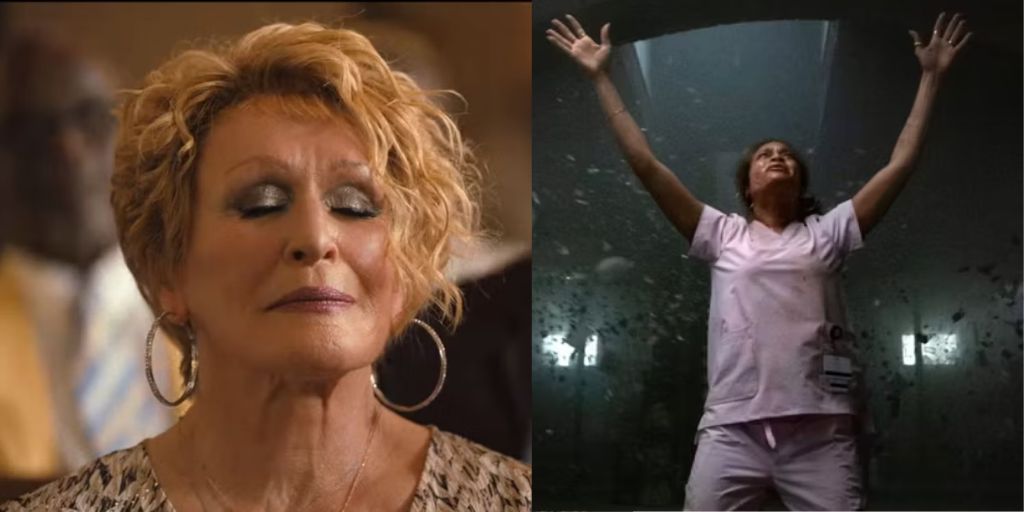
Still from The Deliverance (Credit: Netflix)
Yet, this is a superficial resolution to deeper issues. Ebony’s financial troubles, including a significant debt of $30,000, and her struggle with alcoholism are left unaddressed. The film’s portrayal of these problems as secondary to her spiritual journey is troubling.
The Problematic Portrayal of Religion and Its Characters
The film also implies that Ebony’s acceptance of Christ is supposed to bring her peace and resolve her difficulties. However, the reality is far more complex. Poverty is not easily overcome through faith alone, and the film’s narrative oversimplifies this issue.
Even with her children’s father back in her life, as suggested in the film’s final scenes, Ebony’s financial and personal issues are unlikely to improve significantly. The portrayal of her reconciliation with her estranged partner feeds into anti-divorce sentiments common in some Christian circles, adding another layer of complexity to the film’s message.
In addition to its problematic handling of poverty and faith, the film’s depiction of religious characters is also problematic. Alberta, Ebony’s mother, is portrayed as deeply religious but also highly unhelpful and judgmental.
Her response to Ebony’s financial struggles, including the dismissive comment, “The Lord don’t put anything you can’t handle,” fails to provide any practical support. Instead, Alberta’s behavior comes across as smug and unsympathetic.
The film implies that Alberta’s religious devotion makes her a good person, despite her past actions, such as allowing men to abuse Ebony as a child. Alberta’s lack of remorse and her continued harsh treatment of Ebony highlights a significant flaw in the film’s portrayal of faith and morality.
Similarly, Bernice James, the Reverend with an interest in the Jackson family’s supernatural experiences, is not depicted positively either. She confronts Ebony outside a bar and dismisses her past trauma with a comment that suggests Ebony’s suffering is her own fault.
Bernice’s remark, “I think you think that this is transactional. It’s not transactional,” is both insensitive and inaccurate. Within the film’s narrative, the supernatural suffering the Jackson family endures seems to be directly tied to Ebony’s belief in God.
The supposed transactional nature of faith is depicted as arbitrary and capricious, with God not providing protection or relief from supernatural torment. This portrayal undermines the film’s religious message and presents a skewed view of faith.
The Deliverance attempts to combine elements of supernatural horror with a religious message but ends up falling short in both areas. The film’s shift from showing poverty and trauma to focusing on faith and redemption is jarring and undermines its earlier themes.
The portrayal of religious characters as unhelpful and hypocritical adds another layer of complexity to the film’s narrative. While the film may offer moments of intrigue, its full execution of faith and poverty issues leaves much to be desired.
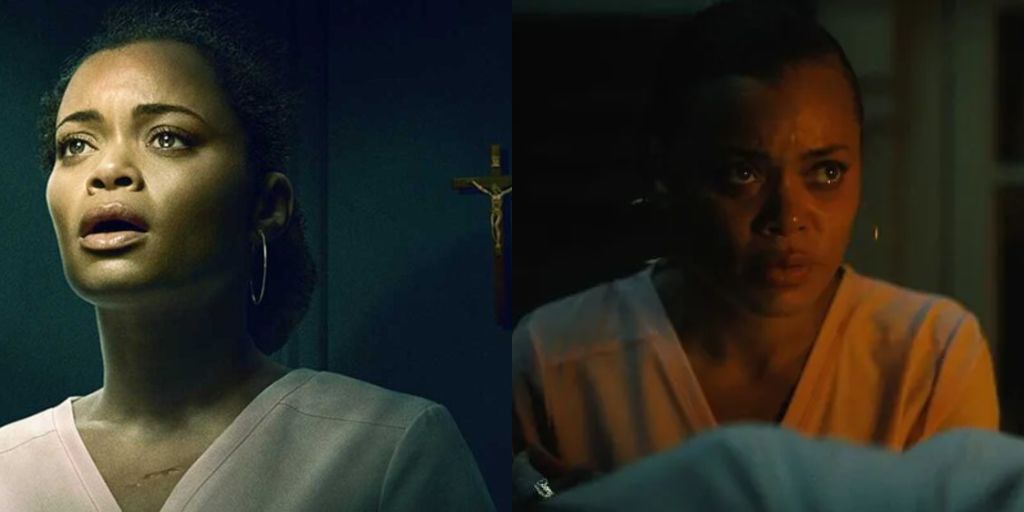
Still from The Deliverance (Credit: Netflix)
Lee Daniels’ The Deliverance is a Netflix original film that follows Ebony (Andra Day), a single mother struggling with poverty and domestic abuse, who encounters a harmful supernatural presence in her new home. Initially, the film shows these serious issues but abruptly shifts to focus on faith and a pro-Christian message.
Although Ebony seems to triumph over the supernatural evil and reconcile with her children, her real-life problems, such as significant debt and ongoing alcoholism, remain unresolved. The film’s portrayal of religious characters, including Ebony’s mother and a Reverend, is also problematic, presenting them as unhelpful and hypocritical.
Christian Themes Themselves Aren’t The Real Issue
The Deliverance incorporates Christian themes, which is not inherently problematic. Many horror films, like The Exorcist and various vampire movies, effectively use Christian symbols in their narratives.
Films such as Night of the Hunter show religious themes while addressing deeper issues like hypocrisy and personal redemption. The real problem with The Deliverance is not its Christian themes but its failure to integrate these themes with the film’s view of poverty and trauma.
Ebony’s turn to faith and church involvement could have provided genuine opportunities for positive change, considering the support systems many churches offer, such as childcare, food banks, and addiction recovery programs. However, the film does not show these potential benefits or the complexities of how churches often fail their vulnerable members.
Instead, The Deliverance presents a sanitized version of religion, avoiding the messy realities of institutional failures. Churches, especially in low-income areas, often struggle with issues like gendered abuse and economic view. The film’s superficial treatment of faith does not address these critical aspects.
While other Christian films, like Night of the Hunter, manage to balance religious themes with a critique of church shortcomings, The Deliverance fails to depict the church’s role in a meaningful way.
Despite its pro-Christian message, the film lacks depth and resolution. Ebony’s personal struggles, including her significant debt and alcoholism, remain unresolved.
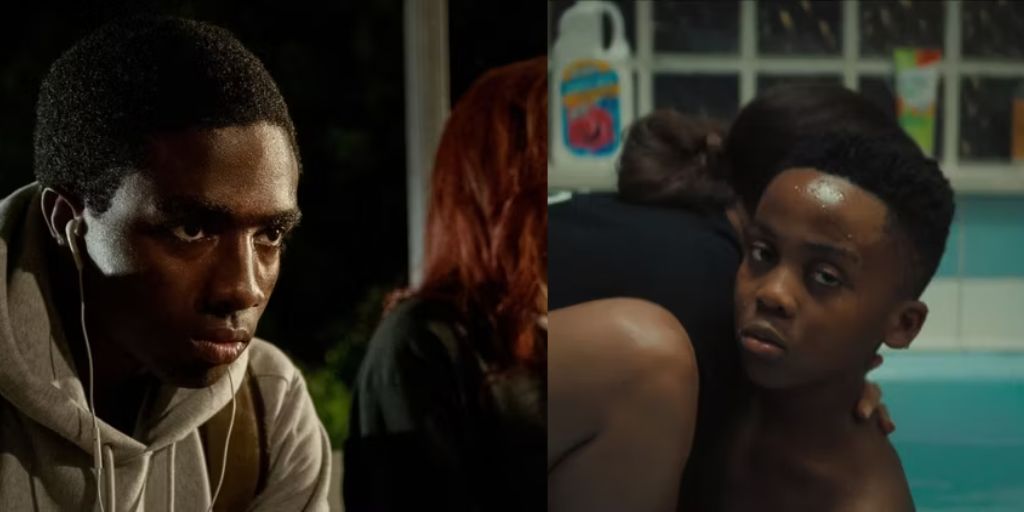
Still from The Deliverance (Credit: Netflix)
The film’s shift to a religious narrative does not provide a satisfactory conclusion to her issues, making its storytelling efforts feel incomplete. The Deliverance fails to convince or engage its audience beyond reinforcing existing beliefs, missing an opportunity to craft a nuanced and compelling story.
The Deliverance integrates Christian themes but fails in storytelling. While it shifts from addressing poverty to promoting faith, it overlooks the church’s real-world shortcomings. The film’s superficial treatment of religion leaves Ebony’s financial and personal struggles unresolved, making its narrative feel incomplete and lacking depth.
