When it comes to historical accuracy in movies and television, Taylor Sheridan’s 1883 might not be the first example that comes to mind, especially since the characters are fictional.
Still, this acclaimed prequel to Yellowstone includes several groups who moved to the frontier, such as large families like the Duttons, new German immigrants, and Civil War veterans. Although the Oregon Trail was no longer in use by the time the show is set, the journey shown is quite realistic.
The hazards faced by immigrants are depicted as more everyday problems rather than violent encounters. The series features a higher casualty rate than what was typical, which makes a sequel unlikely, but it balances the romanticized view of the West with historical reality. For those who undertook such a journey, it was often a challenging experience, but the freedom to start over made it worthwhile.
In 1883, Settlers Come From a Variety of Places
When we think about the Old West, we often picture rugged men travelling long distances on horseback through dangerous terrain.
While this image holds some truth, it doesn’t capture the full reality. Instead of individuals fleeing government control, many who moved west after the Civil War did so because of land grants given by Congress. However, 1883 does accurately show who travelled west in search of a better life.
Some settlers were indeed Civil War veterans like Shea (Sam Elliot), but many immigrants came from Europe. The series doesn’t address the many former slaves who also moved west during this time.
Another important aspect of Western travel that 1883 gets right is the mode of transportation. Contrary to our image of the West as wild and untamed, immigrants relied on railroads to reach the Great Plains. The show partially reflects this, showing people travelling in wagon groups.
However, there is a timing issue. After the Dutton family travels by train to Fort Worth, they use the Oregon Trail to reach their final destination. In reality, the completion of the Transcontinental Railroad in 1869 made wagon travel outdated, and the trip to Oregon took only days, not months.
By the time the series is set, the Oregon Trail used by the Dutton family was mostly obsolete, and the Wild West era was nearly over.
How 1883 Shows the Hardships Settlers Faced
Although 1883 is not based on real people, it effectively portrays the actual experiences of those who travelled west.
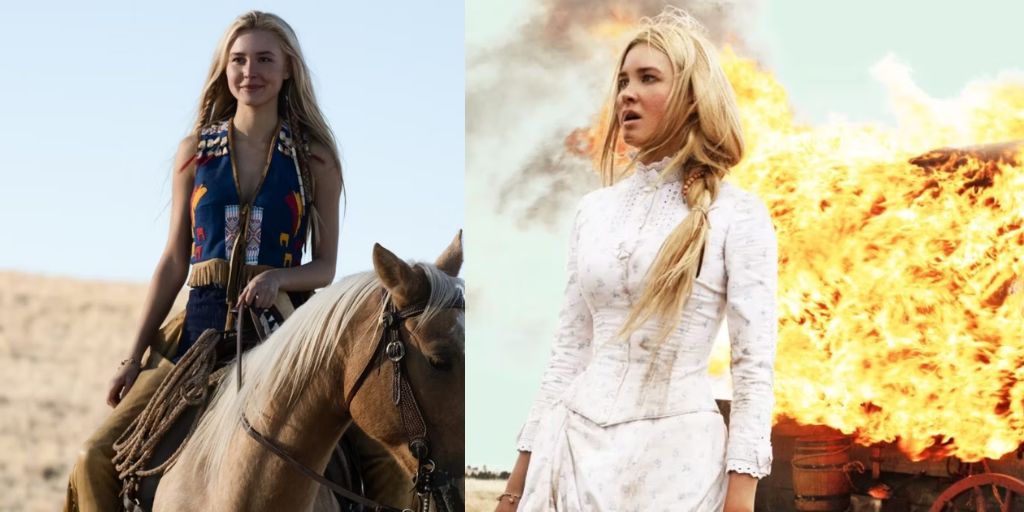
Still from 1883 (Credit: Paramount+)
Despite our view of the West as violent, the dangers settlers faced were often more mundane. Without a local government, traveling groups enforced their own rules or hired private militias for protection, like the Pinkerton Company that Shea joins.
The series shows this form of frontier justice when Shea punishes thieves by banishing them. Native attacks were rare and usually occurred during military expeditions by the US Army. However, the Comanche attack depicted in the series was a retaliatory strike against settlers whom they mistakenly believed were responsible for a massacre.
Most casualties on the Oregon Trail were due to disease, rough terrain, and wagon accidents, not violence. Although these new territories were unfamiliar, the journey could be relatively peaceful for those who were prepared and left before June.
The series shows many of these hazards through the immigrant party, who struggle with the elements, wild animals, and dangerous river crossings. For those injured, medical care was both primitive and scarce, making injuries potentially fatal.
1883 dramatizes these challenges well, such as when Elsa Dutton (Isabel May) dies after being wounded by a Comanche arrow. Josef (Marc Rissmann) undergoes a similar ordeal, losing a leg and enduring an amputation without anesthesia after the death of his wife in a riding accident.
How 1883 Reflects the Spirit of the West
Few film genres have been as romanticized as Westerns, known for their tales of rugged independence and freedom from government control. At its height in the 1940s, the Western genre shaped our modern view of the era in ways we might not fully realize.
Although 1883 is set forty years earlier, it feels more accurate than many other Westerns, capturing both the best and worst experiences of those who lived through it. While historical realism is rare in Westerns, 1883 achieves this by raising the stakes for those on the journey.
It is more than just a prequel to Yellowstone and stands out as a compelling piece of historical fiction. The few inaccuracies it has are minor, and it offers an attractive look at an era that remains a significant part of American mythology.
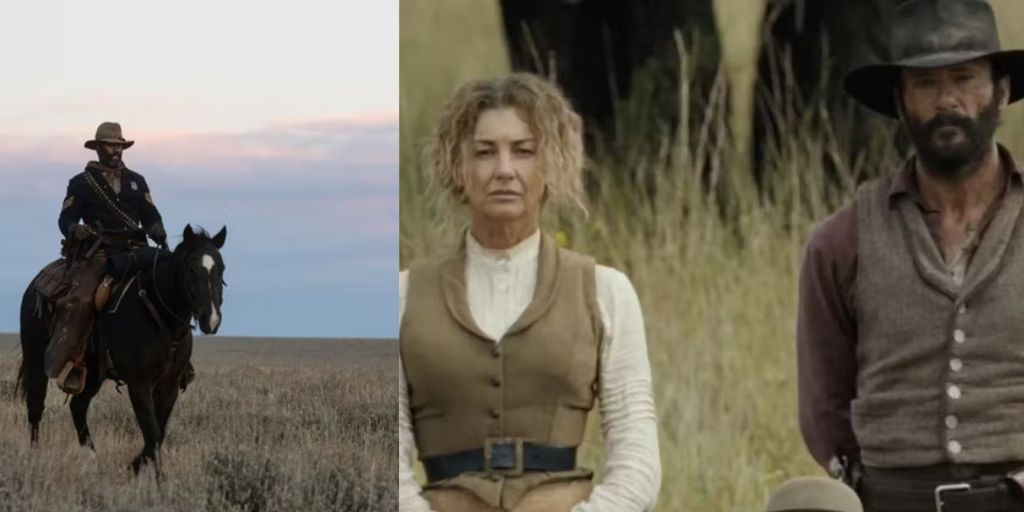
Still from 1883 (Credit: Paramount+)
Thematically, 1883 captures what makes Westerns so intriguing by acknowledging the myth of the Wild West and its impact while still showing its dangers. The world of 1883 is filled with real hazards that led to actual deaths, but it is also a place where romance can thrive on the Great Plains, echoing themes from the original series.
Despite the hardships, characters like Thomas (LaMonica Garrett) and Noemi (Gratiela Brancusi) manage to start new lives. The series finale is bittersweet but accurately reflects the spirit of the West that settlers experienced and the new world they encountered in an era where people rarely ventured beyond their home state.
One of the most accurate aspects of 1883 is its understanding that the West could be both inspiring and frightening. 1883 is available for streaming on Paramount+ in the US.
1883 provides a nuanced depiction of Westward expansion, blending historical accuracy with fiction. While the show features fictional characters, it reflects real challenges faced by settlers, including reliance on railroads and everyday hazards rather than violence. It captures both the romanticized and harsh realities of frontier life during that era.
With the end of Fire Country Season 2, Luke Leone (Michael Trucco), the current Interim Division Chief of Division 1501, has become one of the least liked characters on the show. By the end of Season 2, Luke is seen as an outcast by much of the main cast. But is Uncle Luke Leone being judged too harshly in Fire Country?
It seems so. Luke is a career bureaucrat who is not very personable and struggles to reassure the team. However, calling him a villain is a bit extreme. Let’s look at why Luke Leone is not the villain many people think he is.
Luke Leone Is Unfairly Blamed for the Three Rock Conservation Camp Shutdown
A major storyline in Season 2 is the threat of closing the Three Rock Conservation Camp. In Season 2, Episode 8, “It’s Not Over,” there is a party to save Three Rock, attended by Governor Kelly (Catherine Lough Haggquist). At the event, Governor Kelly reveals that Luke suggested closing Three Rock.
This upsets Manny Perez (Kevin Alejandro), a former inmate and the former captain of Three Rock. This is the source of much of the anger towards Luke in Season 2. However, Luke was just trying to handle a tough situation.
Luke explains that closing Three Rock was part of an effort by the California Department of Forestry and Fire Protection (CAL FIRE) to save the inmate fire program. The camp’s closure, due to budget cuts, was meant to preserve the whole program. Luke blames Manny’s leadership in the first season for the camp’s issues.
For the firefighter inmates trying to improve their lives, the camp’s shutdown was tough. Still, Luke’s choice helped keep the program running for other inmates. Manny escalated things by confronting Luke at the party. Even Vince (Robert Burke) and Sharon Leone (Diane Farr) later show some understanding of Luke’s actions.
As Luke says to Sharon, “The state’s been forcing budget cuts down my throat. You know better than anyone. Sometimes you got to make a hard call.” Sharon replies, “Don’t give me ‘hard call,’ I have had your job!”
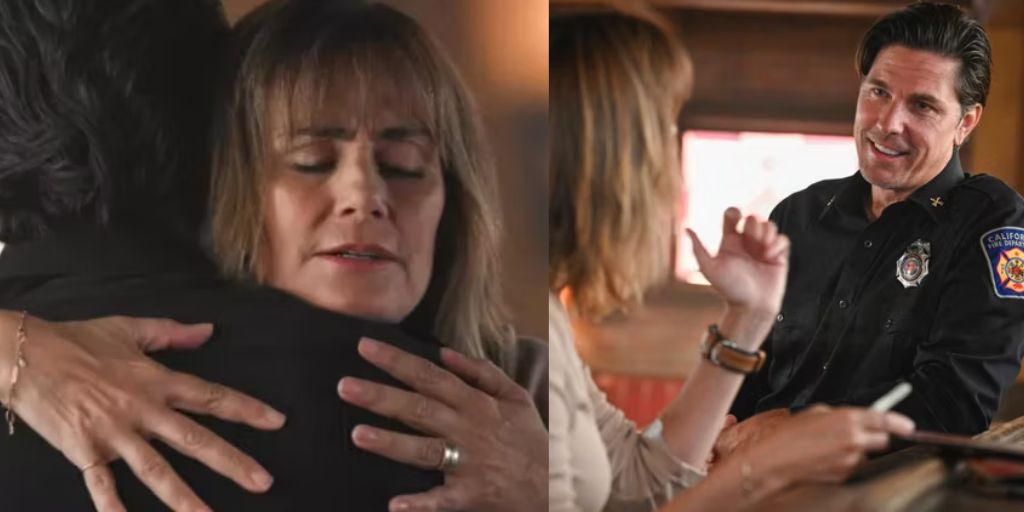
Still from Fire Country (Credit: Paramount+)
But Luke points out that if the camp had not been where Sharon’s son, Bode (Max Thieriot), was involved, she would have made the same decision. Deep down, Sharon knows Luke was right.
Luke Tries to Offer Eve a Promotion
In the Season 2 finale, “I Do,” Luke admits he made a mistake by shutting down Three Rock and tries to make things right with the camp’s acting fire captain, Eve. He offers her a position overseeing the entire inmate fire program, which would require moving to Sacramento.
This new role would give Eve the authority over all inmate fire camps in California. Eve doesn’t want to leave Edgewater, but Luke is wrongly seen as the villain for offering a promotion with a higher title and better pay.
Luke’s actions don’t seem to be driven by bad intentions. He mentions that the higher-ups want Eve for the position and that he wants credit for promoting deserving talent.
Although this is a career-focused move, it’s not necessarily underhanded. Eve turns down the offer, but it’s not Luke’s fault she didn’t want the job.
‘Fire Country’ Season 3 Hints at Major Conflict Between Sharon and Luke
The Season 2 finale sets up a possible major conflict between Sharon and Luke for the next season. Sharon wants her old job back, which Luke currently holds. Fire Country showrunner Tia Napolitano hinted in an interview that CAL FIRE might notice the main characters switching roles.
Napolitano says, “What I love about Sharon is she’s so confident that she can. [Laughs] She said to him, ‘You’re renting that title,’ so we’re going to have to see the reality of how that goes.”
She also suggested that CAL FIRE might take action in Season 3, noting, “Our people have switched titles and positions and kind of done whatever they want, and I think CAL FIRE might notice that next season. People have been swapping hats left and right!”
By the end of Season 2, Luke has alienated almost everyone, including his family, Manny Perez, Gabriela Perez (Stephanie Arcila), and Eve Edwards. However, Luke gains an unexpected ally at the end of the finale. His nephew Bode asks Luke for help becoming a firefighter.
Luke tells Bode that getting a job with CAL FIRE would be hard due to his criminal past, but he doesn’t say no. The episode ends with a hint that Luke might help Bode find a job as a firefighter.
This sets up a potential conflict for Season 3, where Bode could support Luke, while Sharon might fight to get her old job back from her brother-in-law.
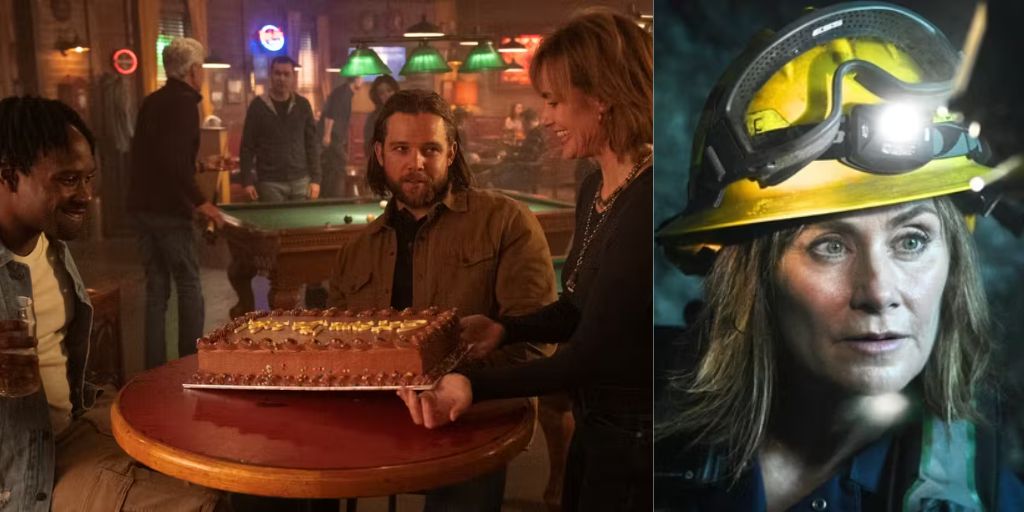
Still from Fire Country (Credit: Paramount+)
This could lead to future family conflicts. We will see if Luke becomes more of an antagonist in Season 3, but for now, many of his decisions are misunderstood and not made out of malice. Fire Country returns with Season 3 on October 18. The first two seasons are available for streaming on Paramount+ in the U.S.
In Fire Country Season 2, Luke Leone faces backlash for the closure of Three Rock Conservation Camp, though his decision aimed to save the broader inmate fire program. Despite appearing harsh, Luke’s actions were pragmatic. The Season 2 finale hints at upcoming conflicts with Sharon and potential support from his nephew Bode.
