For several seasons, 9-1-1 has kicked off each new season with dramatic and intense emergencies that often span multiple episodes. These emergencies are always high-stakes and involve the first responders from Station 118 tackling unpredictable situations.
Season 8 continued this trend with an emergency involving a massive swarm of bees. Specifically, 22 million bees created a tornado-like situation that nearly caused a plane crash, setting a chaotic tone for the beginning of the season. This “beenado,” as fans quickly nicknamed it, posed a serious threat to everyone involved and required the station’s full attention to resolve.
However, after the conclusion of the “beenado” incident, the show swiftly shifts back to its core storylines, continuing the personal and professional arcs that have attracted fans for so long.
Episode 4 of Season 8, titled “No Place Like Home,” marks a return to the established narratives from previous seasons, almost as though the bee crisis never happened. This is a familiar format for 9-1-1, as the show often begins with a major catastrophe and then settles into the ongoing struggles and developments in the lives of its main characters.
Where Season 7 Left Off
At the end of Season 7, many of the characters were left dealing with emotional and challenging situations. The final episodes introduced a lot of tension and heartbreak that left viewers with many unanswered questions.
Among these storylines were the struggles faced by Hen Wilson (played by Aisha Hinds) and her wife, Karen Wilson (played by Tracie Thoms).
Their family was thrown into turmoil when they lost their foster license, which meant they also had to part ways with their foster daughter, Mara (Askyler Bell). This was a huge blow to the couple, as they had grown incredibly attached to Mara and wanted to provide her with a stable, loving home.
Hen and Karen’s story wasn’t the only one filled with tension. Bobby Nash (played by Peter Krause), the captain of Station 118, faced his own professional crisis.
After temporarily stepping down from his position, Bobby found himself unable to return to the 118 because his role had been filled by Captain Gerrard (played by Brian Thompson).
This left Bobby in limbo, unsure of what his future would hold within the fire department. Meanwhile, Athena Grant (played by Angela Bassett), Bobby’s wife, had to cope with the devastating loss of their home, which had burned down in a tragic accident. The fire left their family reeling, adding even more stress to their already complicated lives.
These unresolved issues set the stage for what could have been a long, drawn-out journey of emotional recovery and professional redemption. However, in a welcome twist, 9-1-1 surprised viewers by resolving some of these plotlines sooner than expected.
Instead of dragging the Wilson family’s situation or Bobby’s professional struggles through multiple episodes, the show found a way to tie them together in an impactful way in the fourth episode of Season 8.
The Wilson Family’s Struggle: Can They Reunite with Mara?
The Wilson family’s troubles began late in Season 7 when a powerful political figure, Councilwoman Ortiz (played by Veronica Falcón), launched a personal vendetta against Hen. Councilwoman Ortiz held Hen responsible for the death of her son, who died during an incident that occurred in the Season 7 premiere.
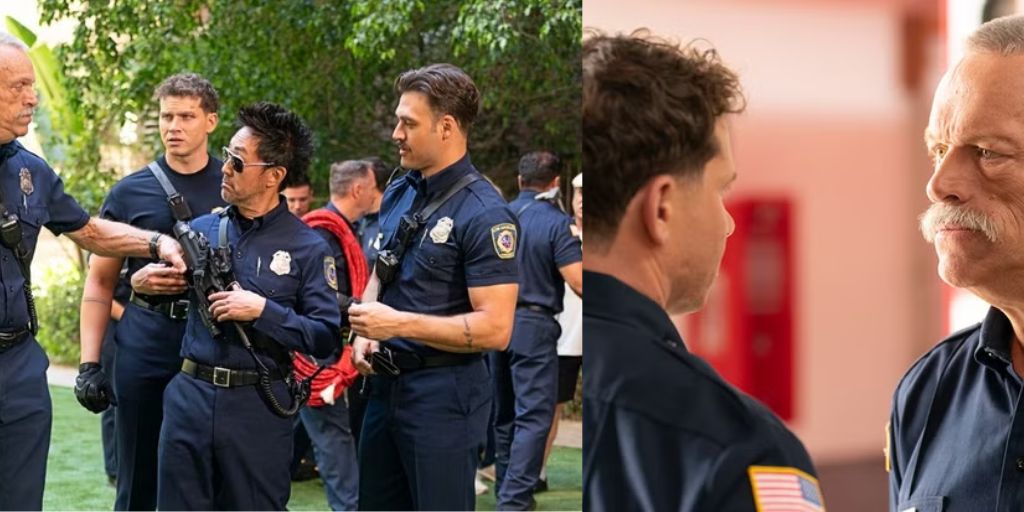
Still from 9-1-1 (Credit: ABC)
Blaming Hen for her tragic loss, Ortiz sought to punish her in any way possible, starting by attacking her family. Ortiz’s influence was significant enough to get Hen and Karen’s foster license revoked, effectively separating them from Mara.
This development was a heartbreaking blow for the Wilson family. Having to give up Mara was particularly difficult for Hen, as she had fought hard to create a stable home for her foster daughter.
Hen’s journey as a character has always been defined by her deep sense of responsibility—both in her career as a paramedic and in her personal life as a parent and spouse. Losing Mara felt like a personal failure for Hen, and it weighed heavily on her throughout the rest of Season 7.
As Season 8 begins, the Wilson family is still grappling with the consequences of Ortiz’s actions. Mara has been placed in the care of Chimney (played by Kenneth Choi) and Maddie (played by Jennifer Love Hewitt) while Hen and Karen continue to fight for the reinstatement of their foster license.
In Episode 4, Hen and Karen return to court to plead their case, hoping to be reunited with Mara. Unfortunately, the judge rules against them once again, keeping Mara out of their care and even going so far as to order no contact between the Wilsons and Mara. This decision is crushing for Hen and Karen, as it seems like they may never get their daughter back.
Despite the setback, Hen refuses to give up. She continues to fight for her family and works behind the scenes to uncover Councilwoman Ortiz’s true motivations. Hen’s determination is one of her defining traits, and she refuses to let Ortiz’s personal vendetta destroy her family.
Bobby’s Return to the 118: How Gerrard’s Betrayal Changes the Game
While Hen deals with the emotional toll of her family’s situation, Bobby Nash is focused on finding a way back to Station 118. His temporary departure from the fire department at the end of Season 7 left a power vacuum that was quickly filled by Captain Gerrard.
Gerrard’s arrival at the 118 brought tension and frustration, as many of the firefighters were loyal to Bobby and felt uncomfortable with the new leadership. However, it soon becomes clear that Gerrard’s appointment wasn’t just about filling Bobby’s shoes—it was part of Councilwoman Ortiz’s plan to hurt Hen.
In Episode 4 of Season 8, Hen confides in Bobby, explaining that Ortiz had a hand in Gerrard’s promotion. The councilwoman wanted to make Hen’s life difficult by placing one of her allies in a position of power over her.
Bobby, always protective of his team and loyal to his firefighters, decides to take matters into his own hands. He confronts Gerrard directly, meeting him on the set of the fictional TV show Hotshots, where the two engage in a tense conversation.
Bobby learns that Gerrard has been working with Ortiz to dismantle the 118 from the inside. In an effort to cut costs and weaken the fire department, Ortiz had planned to close down the 118, separating the firefighters and preventing them from working together. Gerrard, in exchange for his cooperation, hoped to gain political favor and secure a more permanent position within the department.
However, what Ortiz didn’t know was that Gerrard had his own agenda. Unbeknownst to her, Gerrard had been secretly recording their conversations, gathering evidence that could be used to take Ortiz down.
While this doesn’t necessarily redeem Gerrard as a character, it does mark a surprising turn of events. For the first time, Gerrard is willing to help rather than hinder, and his actions lead to a significant breakthrough.
At the end of the episode, it’s revealed that Bobby had convinced Gerrard to expose Ortiz’s corruption. Bobby’s ability to appeal to Gerrard’s sense of self-interest and his passion for the Hotshots TV show helps him secure Gerrard’s cooperation. As a result, Bobby is able to return to the 118, taking back his position as captain and reuniting with his team.
Meanwhile, Ortiz’s plan to close down the 118 is foiled, ensuring that the firefighters can continue working together. This victory marks a turning point for Bobby and his team, allowing them to face new challenges without the threat of Gerrard or Ortiz looming over them.
A New Chapter for Hen and the 118
With both Hen and Bobby’s problems resolved by the end of Episode 4, 9-1-1 sets the stage for the rest of Season 8. By tying up these loose ends early in the season, the show opens the door for new storylines and character arcs.
The Wilson family is finally reunited with Mara, and Hen can move forward without the constant threat of Ortiz hanging over her. This also allows Hen to focus on other aspects of her life, including her career and her relationships with her fellow firefighters.
For Bobby and the rest of the 118, the removal of Gerrard means that they can get back to doing what they do best—fighting fires and saving lives.
The close-knit team is once again under Bobby’s leadership, and they can tackle new emergencies as a united front. Bobby’s return to the 118 also signals a return to normalcy for the firehouse, as the team can now focus on their work without the distractions of internal politics.
The rest of Season 8 promises to be filled with the high-stakes emergencies and emotional drama that fans have come to expect from 9-1-1.
However, with these early plotlines resolved, the show is free to show new dynamics and challenges for its characters. Hen’s journey as a mother and a paramedic will likely continue to evolve, while Bobby’s leadership at the 118 will be put to the test in future episodes.
Conclusion
Season 8 of 9-1-1 started with a dramatic bee-related emergency that nearly caused a plane crash, but it quickly transitioned back to the show’s core storylines.
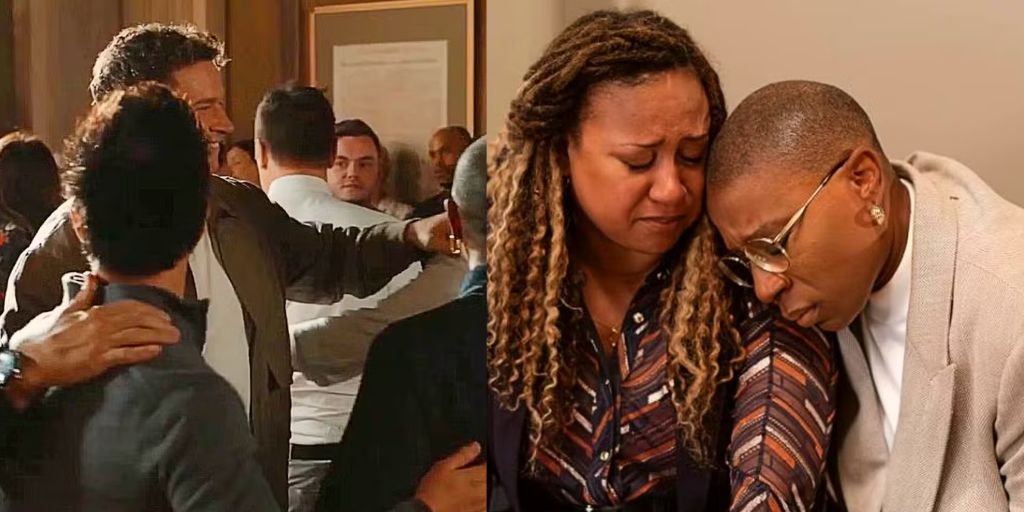
Still from 9-1-1 (Credit: ABC)
In Episode 4, “No Place Like Home,” 9-1-1 resolves two major plotlines from the previous season, reuniting the Wilson family and restoring Bobby Nash to his position at the 118. By doing so, the show sets the stage for new challenges and storylines in the remainder of the season.
9-1-1 continues to balance intense emergency situations with heartfelt personal drama, making it a fan favorite. Season 8 is shaping up to be another exciting installment in the series, with plenty of twists and turns still to come.
Pachinko is a moving drama that has attracted audiences with its rich storytelling and emotional depth. Apple TV+’s adaptation of Min Jin Lee’s novel has made waves with its second season. The finale of Season 2 brings its characters to an intense point in their journeys, filled with difficult decisions and emotional turmoil. In this season, the characters face profound moments that shape their identities and destinies.
The series follows the story of Sunja (played by Kim Min-ha), who becomes a pivotal figure in the lives of her family members. Her eldest son, Noa (played by Kang Tae Joo), is at the center of the drama.
The final episode of Season 2 reveals Noa’s struggle as he learns a painful truth about his biological father, which has significant implications for his life and his family.
This moment drives Noa to make a drastic choice: he decides to leave his studies at Waseda University to escape the reality of his situation, even bidding farewell to his beloved mother. While this moment seems monumental, the most crucial decision does not actually occur in the finale. Instead, it is a scene from Episode 4 that truly defines Noa’s journey.
Pachinko’s Biggest Moment Came Midway Through Season 2
Throughout Season 2, Noa’s character evolves, starting with his introduction as a teenager in the first episodes. The narrative sets the stage for a significant revelation in Noa’s life, one that shapes not just his arc but the overall trajectory of the season.
As the episodes unfold, we see Noa grappling with his identity, particularly after discovering the truth about his real father. The shocking revelation in the finale serves as a culmination of his character development.
However, the pivotal moment occurs in Episode 4, where Noa witnesses Hansu (played by Lee Min-ho), his biological father, committing a brutal act of violence.
This scene has a profound impact on Noa’s perception of Hansu and ultimately influences his decisions moving forward. Noa sees Hansu mercilessly beat the caretaker of the farm, and this violent display of power marks a turning point in Noa’s understanding of who his father truly is.
The Impact of Hansu’s Actions on Noa’s Perception
Initially, Noa has not interacted much with Hansu, but the violent encounter changes everything. Up until this point, Hansu was seen as a benefactor who helped Noa and his family.
However, the brutal reality of Hansu’s nature shatters that image. For Noa, Hansu transforms from a seemingly kind figure into a ruthless man who embodies everything Noa opposes.
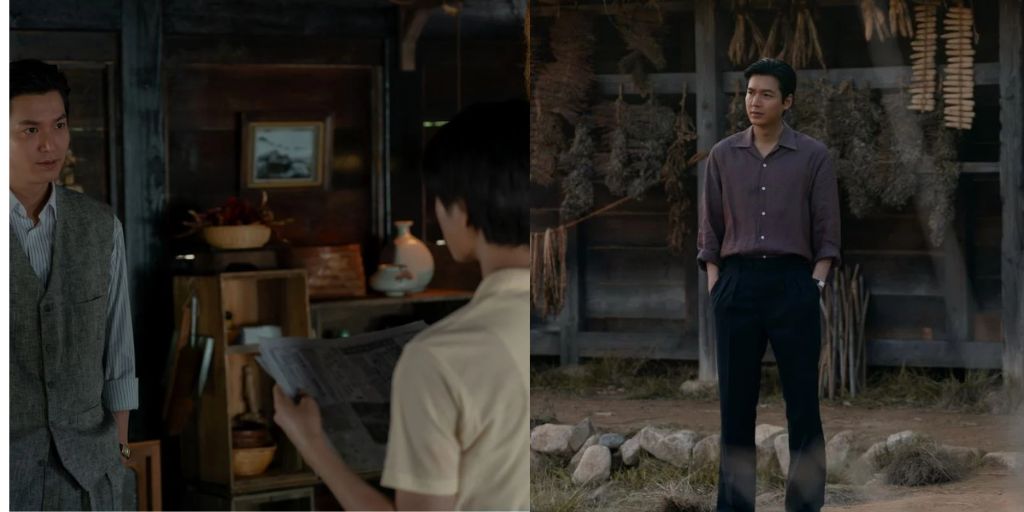
Still from the episode (Apple TV+)
Witnessing such brutality firsthand forces Noa to confront the truth about his father’s criminal background. He realizes that Hansu’s wealth and influence come from a place of cruelty.
This realization weighs heavily on Noa, who dreams of becoming a teacher and living a life defined by kindness and integrity. The contrast between Hansu’s actions and the values instilled in him by his stepfather, Baek Isak (played by Steve Sang-Hyun Noh), becomes starkly apparent.
The Lessons of Forgiveness from Baek Isak
Baek Isak plays a crucial role in Noa’s upbringing. He teaches Noa valuable lessons about forgiveness and compassion, even in the face of betrayal. In a significant scene after Isak is released from prison, he encounters a man who betrayed him to the authorities.
Despite the pain this betrayal caused, Isak chooses to forgive his former friend. This act of forgiveness is not just about Isak’s character; it sets an example for Noa.
As Noa watches his stepfather forgive someone who wronged him, he starts to understand the importance of compassion. Isak’s decision to forgive, despite the harsh realities they face, serves as a guiding light for Noa. It shows Noa that true strength lies in the ability to forgive rather than seek vengeance.
The contrast between Isak and Hansu is sharp. While Isak represents kindness and moral integrity, Hansu embodies cruelty and self-interest. This dichotomy leaves Noa in a moral quandary, torn between the love for his biological father and the lessons he learned from Isak.
Noa’s Internal Conflict
Noa’s internal conflict grows as he grapples with the truth about Hansu. He is caught between two worlds: the world of his real father, marked by violence and betrayal, and the world of his stepfather, defined by love and forgiveness. The memory of witnessing Hansu’s brutality becomes a burden too heavy for Noa to carry.
Throughout Season 2, Noa attempts to hide from this reality. Even as his girlfriend, Akiko Nakazono (played by Kilala Inori), pushes him to confront the truth, Noa struggles to accept the implications of his father’s actions. He wants to believe that Hansu is acting out of kindness, but deep down, he knows that this is a lie he tells himself to avoid facing the harsh truth.
As the season progresses, Noa’s denial becomes increasingly evident. He tries to rationalize Hansu’s behavior, but the memories of that violent night linger. Noa’s realization that he cannot ignore who Hansu truly is leads him to make a life-altering decision.
The Consequences of Noa’s Choice
The decision to leave Waseda University and his family marks a critical turning point for Noa. He believes that by distancing himself from his past and his biological father, he can forge a new identity free from the shame associated with Hansu. This choice, however, does not come without consequences.
As Noa says goodbye to his mother, the emotional weight of his decision becomes clear. He loves his mother dearly and understands the pain his departure will cause her. Yet, he feels that he cannot live under the shadow of a man like Hansu. Noa’s choice symbolizes a desperate attempt to reclaim his identity and reject the toxic legacy left by his father.
Noa’s journey throughout Season 2 illustrates the complexities of family ties and the impact of our choices. He is a young man searching for his place in a world that often feels hostile and unforgiving. The struggle between love and shame, loyalty and self-preservation, defines his character and sets the stage for his future.
The Pivotal Scene in Episode 4
The scene in Episode 4, where Noa witnesses Hansu’s brutality, stands as the most significant moment of the season. This event does not just shape Noa’s perception of his father; it reverberates through the entire narrative. Noa’s reaction to this scene highlights the depth of his internal conflict and the weight of his lineage.
After witnessing Hansu’s violent nature, Noa is thrust into a world where he must confront the truth about himself. He realizes that he cannot escape his lineage, no matter how hard he tries.
The burden of being the son of a man like Hansu becomes too great for him to bear. This pivotal moment forces Noa to confront his feelings of shame, anger, and confusion.
Noa’s Struggle with Identity and Legacy
Noa’s struggle is not just about rejecting Hansu; it is also about defining himself in opposition to his father. He grapples with questions of identity and legacy, wondering what it means to be the son of someone like Hansu. The weight of his father’s actions weighs heavily on Noa as he contemplates his future and the person he wants to become.
The decisions he makes are informed by a desire to distance himself from the violence and cruelty associated with Hansu. Noa wants to carve out a new identity based on the values he learned from Isak. He dreams of becoming a teacher, someone who can impart kindness and compassion to others. However, the shadow of his father looms large over his aspirations.
Noa’s journey reflects a universal struggle faced by many individuals who grapple with the complexities of family dynamics. He is not just fighting against the legacy of his father; he is also trying to find his place in a world that often feels overwhelming.
The Emotional Climax of Season 2
As Season 2 reaches its climax, the emotional stakes for Noa become higher than ever. The choices he makes are not just personal; they impact his entire family. The revelation of his father’s identity, coupled with the brutality he witnesses, forces Noa to make a choice that will affect everyone he loves.
The tension builds as Noa grapples with the consequences of his actions. He must show the delicate balance between loyalty to his family and the need to protect himself from the toxic influence of Hansu. This internal struggle adds depth to his character and makes his journey relatable to viewers.
In the final moments of Season 2, Noa’s decision to leave represents a powerful act of defiance. He chooses to step away from the legacy of violence and cruelty that Hansu embodies. While this choice brings him pain, it also offers the possibility of freedom and self-discovery.
The Aftermath of Noa’s Decision
The aftermath of Noa’s decision to leave is profound. As he walks away from his past, he knows he is leaving behind not just a family but also the life he has known. The emotional turmoil is palpable, and viewers can feel the weight of his choice. Noa is stepping into the unknown, uncertain of what lies ahead but determined to forge a new path.
His decision marks a pivotal moment in the series, illustrating the complexities of family bonds and the sacrifices we make in the pursuit of self-identity. Noa’s journey resonates with anyone who has ever faced the difficult task of breaking free from the expectations and legacies imposed by family.
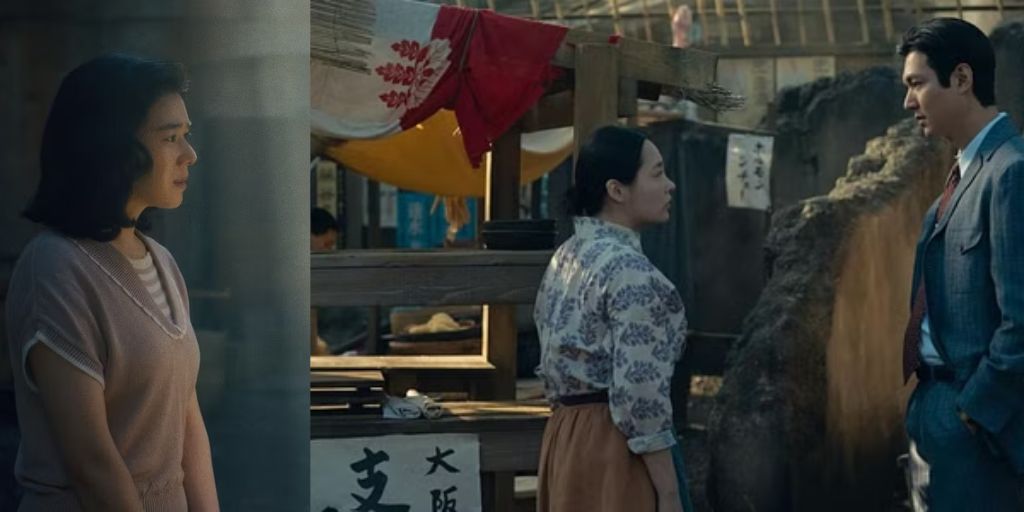
Still from the episode (Apple TV+)
As the season closes, Noa’s story leaves viewers with a sense of hope and uncertainty. He is on the brink of discovering who he truly is, unburdened by the weight of his father’s legacy. The choice to leave symbolizes not just a physical departure but also an emotional and spiritual awakening.
Conclusion: The Journey Ahead
The narrative of Pachinko Season 2 emphasizes the power of choice and the impact of family on personal identity. Noa’s struggle is a poignant reminder of the complexities of love, loyalty, and self-acceptance. His journey reflects a universal experience—one that resonates deeply with audiences.
As Pachinko continues to unfold, viewers are left to ponder the implications of Noa’s choice. Will he find the freedom and identity he seeks? Or will the shadows of his past continue to haunt him? These questions linger, creating anticipation for the next chapter in his story.
All episodes of Pachinko Season 2 are now available to stream on Apple TV+ in the U.S. The series masterfully captures the emotional journey of its characters, inviting audiences to reflect on their own choices and the legacies they carry.
