The transformation of Bruce Banner into the Hulk is one of the most iconic and compelling narratives in comic book history. The story of the Hulk is one of tragic circumstances, scientific experimentation, and the struggle between humanity and a monstrous force. Over the years, the Hulk’s origin story has been explored in various forms of media, from comic books to films. However, at its core, the Hulk’s creation stems from Bruce Banner’s own experiences, his work in gamma radiation, and the aftermath of a catastrophic experiment. This will explore Bruce Banner’s journey to becoming the Hulk and the circumstances that led to the birth of one of Marvel’s most well-known superheroes.
The Early Days of Bruce Banner
Before Bruce Banner became the Hulk, he was a brilliant scientist working at the forefront of nuclear research. Born in Dayton, Ohio, Banner grew up with a fascination for science. As an intellectual child, he excelled in his studies and pursued a career in the field of nuclear physics. His intelligence and passion for scientific discovery earned him a reputation as one of the brightest minds in his field.
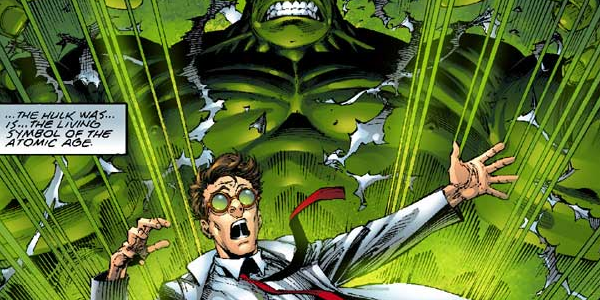
Hulk (Image via Getty)
Banner’s career as a scientist eventually led him to work on a secret government project known as the “Gamma Bomb.” This device was a weapon designed to unleash immense power by detonating a large quantity of gamma radiation. While it was intended as a weapon for military purposes, the project was also a platform for Bruce Banner to test his theories about gamma rays and their potential uses.
The Tragic Accident
The moment that would change Bruce Banner’s life forever came when he oversaw the detonation of the Gamma Bomb. During the test, a young man named Rick Jones, who was visiting the facility, accidentally drove into the blast zone. Banner, realizing the danger, made a split-second decision to save Rick. Without thinking of the consequences, he rushed out onto the testing grounds to pull Rick out of the danger zone, only to be caught in the full force of the gamma explosion.
The blast didn’t kill Banner, but it left him with an irreversible transformation. As a result of the gamma radiation exposure, his body was forever altered. Bruce Banner survived the explosion, but he soon realized that he had changed in ways he could never have anticipated. The gamma radiation, rather than killing him, gave birth to the Hulk, a monstrous alter ego that would change Banner’s life forever.
The Hulk Emerges
In the immediate aftermath of the accident, Bruce Banner’s body began to undergo significant changes. While the physical effects were alarming, it was the emotional and psychological toll of the transformation that would shape Banner’s life. At first, the changes weren’t noticeable to others, but Bruce soon realized that whenever he became angry or stressed, something inside him would change. His body would begin to grow in size and strength, his skin would turn a deep green, and his mental state would shift from a calm, intellectual scientist to a raging force of destruction.
Bruce’s first transformation into the Hulk was a traumatic experience. He couldn’t control the anger and rage that caused the transformation, nor could he control the rampage that followed. The Hulk, with his primal instincts and overwhelming strength, became a force of nature. Bruce had become a man who could no longer safely live in the world as he had once known it. Every time his emotions got out of control, the Hulk would emerge, bringing chaos and destruction in his wake.
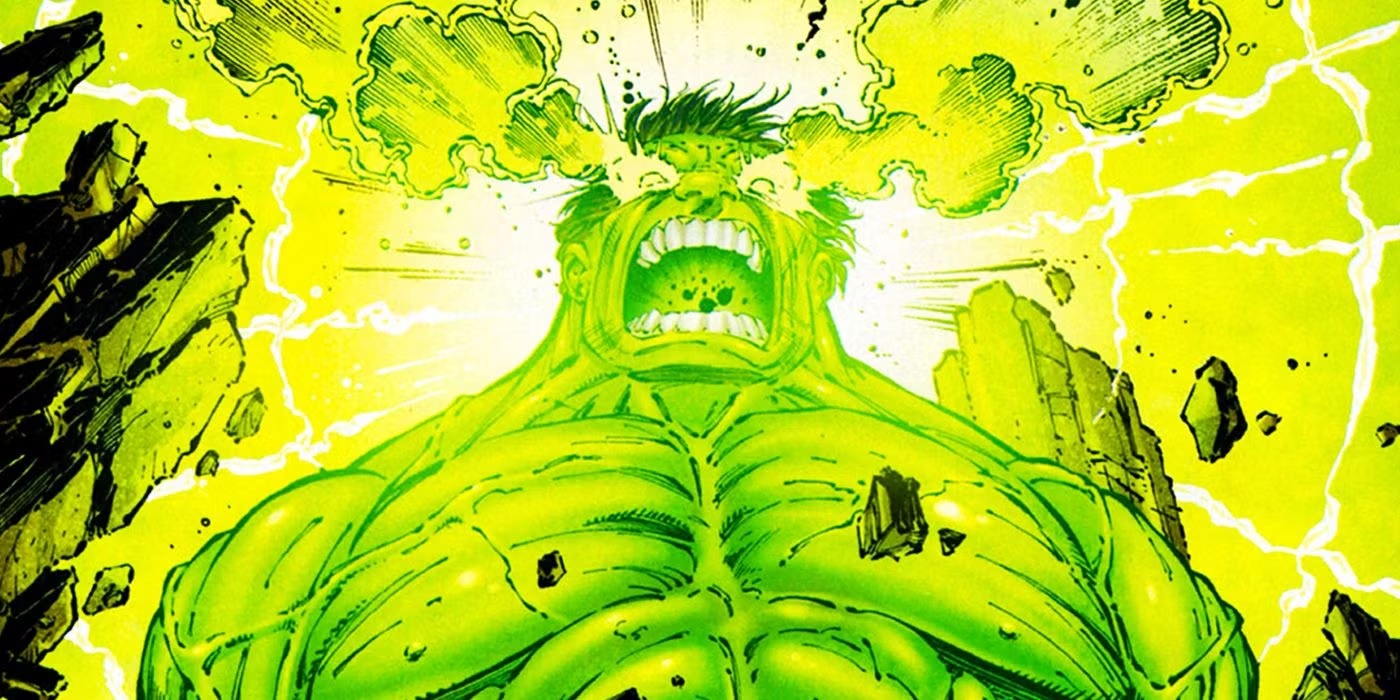
Hulk (Image via Getty)
The Struggle Between Bruce Banner and the Hulk
As Bruce Banner came to terms with his transformation into the Hulk, he realized that he was no longer able to live a normal life. The Hulk became a constant presence in his mind and in his physical existence. Every time he lost control of his emotions, he risked becoming the Hulk and wreaking havoc on the world around him.
Despite the immense power that the Hulk represented, Bruce Banner was not entirely consumed by his alter ego. He maintained a strong sense of self and constantly struggled with the duality of his existence. Bruce wanted to find a way to rid himself of the Hulk’s influence, regain control over his life, and return to his work as a scientist. However, the Hulk was an ever-present part of him, and he could never fully escape the consequences of his transformation.
Over time, Bruce realized that the Hulk wasn’t just a curse—it was also a gift. The power that the Hulk possessed could be used for good, though it was a difficult balance to maintain. Bruce’s journey was one of acceptance and self-discovery, learning to live with the Hulk’s presence and harnessing its power when necessary. Yet, even as the Hulk occasionally helped fight against villains or other threats, Bruce’s internal conflict remained. Would he ever be able to control the Hulk fully, or would the Hulk continue to control him?
The Role of the Hulk in the Marvel Universe
As the Hulk’s story unfolded in comic books, the character’s role expanded significantly. Bruce Banner and the Hulk became important members of various superhero teams, most notably the Avengers. As part of the Avengers, the Hulk proved to be a powerful ally in the battle against evil, even though his immense strength and unpredictable nature made him a difficult hero to manage.
Bruce Banner’s internal struggle became a key element of his character’s development. While the Hulk was often an unstoppable force, Banner’s humanity and intellect remained crucial to solving problems. This duality made the Hulk one of the most unique and interesting characters in Marvel Comics.
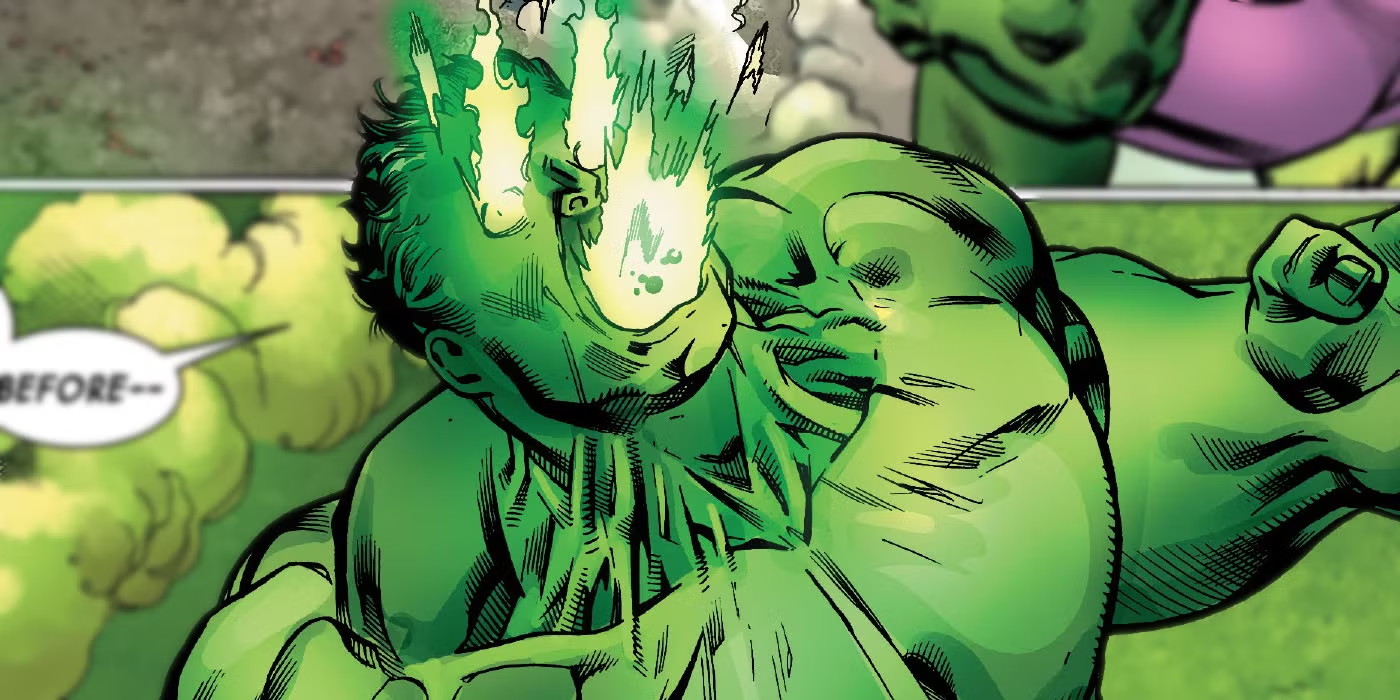
Hulk (Image via Getty)
The Legacy of the Hulk
Bruce Banner’s transformation into the Hulk is a deeply tragic and complicated origin story. It’s a tale of scientific ambition gone awry, and it reflects themes of uncontrolled power and the consequences of one’s actions. Banner’s journey of self-acceptance, as he comes to terms with the Hulk’s presence in his life, is one of the core elements of the character’s appeal.
In the decades since his creation, the Hulk has become a symbol of both strength and struggle, representing the fine line between heroism and destruction. Through countless battles and internal conflicts, Bruce Banner has come to realize that while the Hulk may be a powerful and uncontrollable force, it is also an essential part of who he is.
Ultimately, the origin of Bruce Banner’s transformation into the Hulk is a story about humanity, scientific experimentation, and the constant battle between the mind and the body. While Bruce may never fully rid himself of the Hulk, he continues to search for a way to balance the two sides of his existence, proving that even in the face of overwhelming odds, a person can fight to find peace with themselves.
Joey Jordison, the drummer known for his powerful, intricate beats that helped define Slipknot’s aggressive sound, tragically passed away on July 26, 2021, at the age of 46. His death marked a heartbreaking moment for fans of the iconic heavy metal band and the music industry at large. Jordison was not only a talented musician but also one of the founding members of Slipknot, and his contribution to the genre is immeasurable. The news of his passing left fans and fellow musicians alike in disbelief. His death was shrouded in mystery, with his cause of death only becoming known several months later.
The Rise of Joey Jordison in Slipknot
Joey Jordison was a pivotal figure in Slipknot, one of the most influential heavy metal bands of all time. Formed in 1995, Slipknot’s early success can largely be attributed to its unique sound, which blended thrash, death metal, and industrial influences. Jordison’s drumming was integral to this signature style, known for its speed, precision, and complexity. As a founding member, he was also responsible for shaping the band’s identity and image.
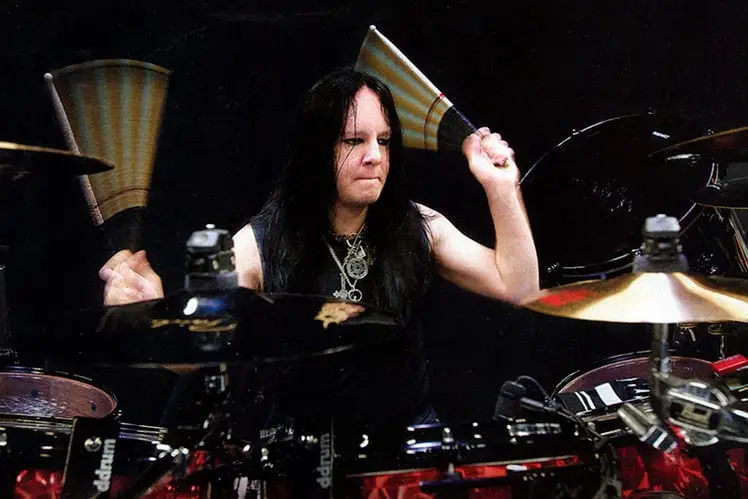
Joey Jordison (Image via Getty)
Jordison’s drumming techniques stood out, showcasing both technical proficiency and a fierce energy that matched Slipknot’s chaotic sound. His aggressive rhythms and fast double-bass pedal work were key to the band’s aggressive, heavy tone. His live performances were high-octane, full of intense headbanging, and his drumming set the stage for Slipknot’s explosive shows.
Beyond his work with Slipknot, Jordison’s influence extended across the metal world. He played in several other projects, including his own band, Murderdolls, and lent his talents to bands like Ministry and Rob Zombie. His musical versatility made him a sought-after collaborator, and his work was respected across many genres.
The News of Jordison’s Passing
When Joey Jordison passed away in 2021, the news spread quickly across the globe. At first, the cause of his death remained unclear. The lack of immediate details left many in suspense, as his fans and bandmates struggled to come to terms with his untimely passing. However, in the months following his death, more information began to surface about the health issues Jordison had faced in the years leading up to his death.
In an official statement released by his family, it was confirmed that Jordison had passed away in his sleep. His family also made it clear that he had been privately battling an illness for some time. Though they did not reveal the exact nature of this illness initially, the statement expressed the profound loss they felt, adding that he had been “one of the most talented and influential drummers in the world.”
The Battle with a Rare Neurological Disorder
Several months after his death, more details regarding Jordison’s health came to light. In an emotional statement, Jordison’s family revealed that he had been diagnosed with a rare neurological condition called Transverse Myelitis in 2010. This disorder affects the spinal cord, leading to inflammation and potentially causing severe symptoms such as muscle weakness, paralysis, and difficulty walking.
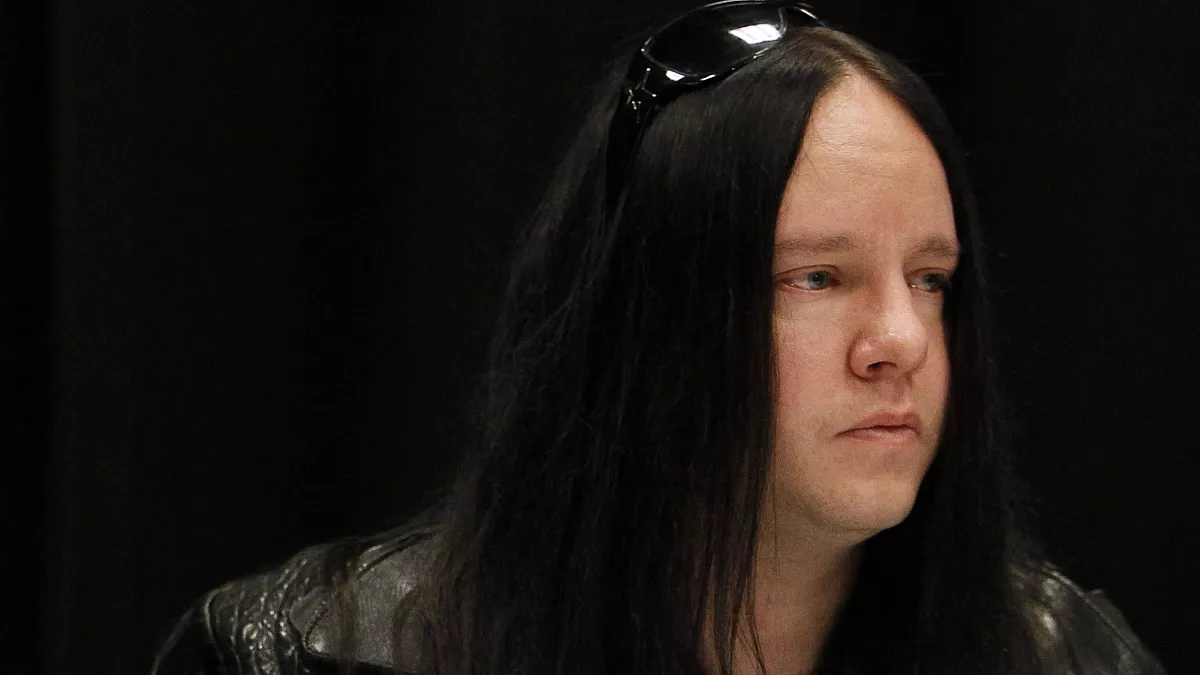
Joey Jordison (Image via Getty)
Jordison’s battle with Transverse Myelitis had a significant impact on his life, and it was revealed that the condition ultimately led to him being forced out of Slipknot in 2013. The neurological condition made it difficult for him to perform at the level required for his drumming duties, a devastating blow for a musician who had defined his career with such a physically demanding instrument. Despite this setback, Jordison remained active in music, continuing to work on other projects, including his band Scar the Martyr, and pursuing other creative endeavors. However, the struggle with his condition weighed heavily on him in the years following his diagnosis.
Joey’s family expressed that, despite the challenges posed by the condition, he never gave up on his passion for music and never let the illness define him. His determination to keep playing and creating music in the face of such adversity was a testament to his strength and dedication to his craft.
A Life of Legacy and Impact
Joey Jordison’s contributions to the music world are immeasurable, and his legacy extends far beyond his work with Slipknot. His technical proficiency, creative ideas, and tireless work ethic set a standard for drummers in metal and rock. His ability to push the boundaries of drumming was a defining feature of Slipknot’s early sound, and he remains one of the most influential drummers in modern metal.
His distinct, high-speed drumming patterns and relentless energy were a major part of what made Slipknot’s music so unique. Songs like Wait and Bleed , Spit It Out , and People = Shit were driven by his powerful drumming, which had an almost mechanical precision while maintaining raw emotional intensity. Jordison’s work was often compared to some of the greats in rock and metal drumming, with many citing his influence on a generation of drummers who admired his technical skill and explosive performance style.
Jordison’s influence stretched far beyond Slipknot’s fanbase, and musicians in a variety of genres cited him as an inspiration. His work with other bands and his collaborations with iconic figures in the rock and metal community showcased his versatility as a musician. Whether working in the industrial metal scene with Ministry or exploring different musical avenues with Murderdolls, Jordison’s drumming had a unique, unmistakable signature that resonated with a wide audience.
The Final Days and Tributes
In the wake of Jordison’s death, fans and musicians alike paid tribute to the fallen drummer. His bandmates in Slipknot, including frontman Corey Taylor, expressed their deep sorrow and admiration for Jordison. Taylor took to social media to share a heartfelt message about Jordison’s impact, calling him “one of the most important drummers in the history of metal.”
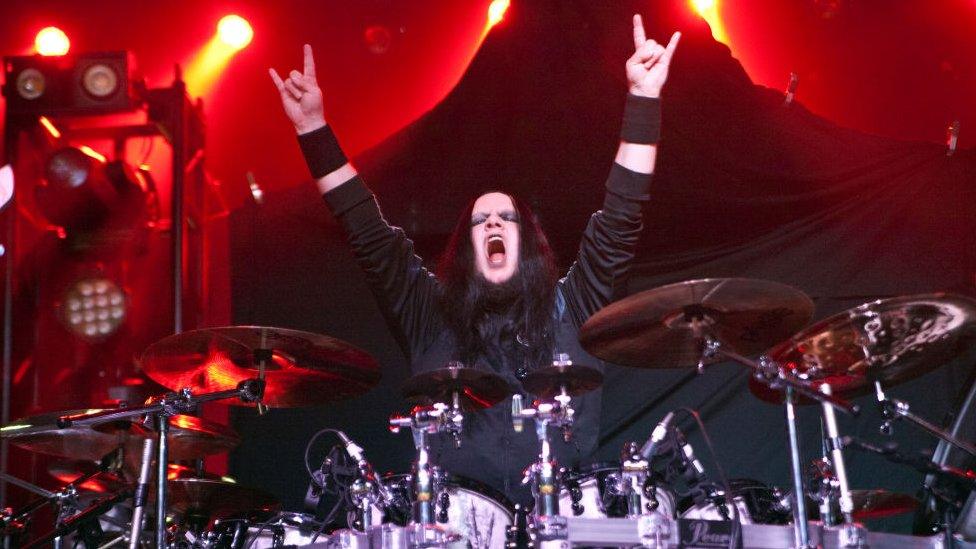
Joey Jordison (Image via Getty)
Countless fans across the world also shared tributes, expressing their gratitude for the music Jordison had given them over the years. His death was a devastating loss for the heavy metal community, but his legacy endures in the music that continues to inspire and move listeners to this day.
A Remembrance of an Icon
Joey Jordison’s death marks the end of an era for Slipknot and the metal world. His drumming not only helped define the sound of one of the most successful and influential bands of all time but also left an indelible mark on the genre itself. His talent, creativity, and passion for music were unparalleled, and while his life was cut short, his influence will never be forgotten.
Though his time with us was too brief, Jordison’s memory lives on in the music that continues to resonate with fans around the globe. He will always be remembered as a true icon of heavy metal.
