Apple TV+’s Severance has captured viewers with its unusual and complex characters. From Irving’s (John Turturro) warm yet goofy nature to Ms. Cobel’s (Patricia Arquette) piercing eyes, the show offers a mix of personalities that keep audiences engaged. At first, we believe the characters can’t get any stranger.
Then, we are introduced to Lorna, played by Gwendoline Christie in Mammalians Nurturable, who instantly assumes that Mark (Adam Scott) and Helly (Britt Lower) want to kill her just because they have arrived in her department.
Even with these eccentric figures, one character has left a lasting, unsettling effect on the audience throughout Severance’s second season: Natalie, played by Sydney Cole Alexander.
Season 1 gave us brief glimpses of Natalie, but as the show progresses into its second season, she has become a character who leaves a strong impression. In Episode 3, “Who is Alive?”, we see more of Natalie’s role, which adds a new layer to the show’s growing tension.
In this episode, Natalie delivers a “gift” from the mysterious Lumon Board to Milchick (Trammel Tillman). She also visits Devon’s (Jen Tullock) husband, Ricken (Michael Chernus), with a proposal for a new version of his book, The You You Are, aimed specifically at the “innies” in the system.
Natalie’s character is intriguing because she constantly faces a difficult relationship with the Board, which influences her every decision and action. She embodies both commitment and fear toward Lumon, making her an essential part of the series’ dramatic arc.
Sydney Cole Alexander’s Stunning Performance as Natalie
Sydney Cole Alexander’s portrayal of Natalie adds depth to the show. Her performance in Episode 3, where she interacts with Milchick and the blackface paintings from Lumon, stands out as one of her most powerful scenes. Initially, Natalie appears calm and unaffected by the Board’s “gift.”
However, her repeated blinking and strained smile suggest she may be acknowledging the uncomfortable nature of the situation. This subtle shift in her demeanor reminds us of Betty Gabriel’s performance in Get Out, where a character’s mask slips momentarily, revealing their true discomfort.
The tension between Natalie and Milchick in this scene is palpable, as they silently communicate that they are both aware the Board is always watching and listening, creating an atmosphere of constant surveillance and fear.
Natalie’s character helps to reinforce the show’s central theme: the overwhelming control that Lumon exerts over its workers. Through her, we see the fear that permeates even the most seemingly obedient employees. Despite being the closest person to the Board, Natalie remains deeply afraid of them.
This dynamic of fear, despite being in a position of relative power, is a powerful commentary on the system’s ability to control its workers without ever needing to use physical or verbal abuse. Instead, Lumon uses the threat of psychological manipulation and surveillance to maintain power, a tactic that is more terrifying because it is so subtle.
The fear that Natalie experiences, despite her role in the company, suggests that no one, no matter their position, is free from Lumon’s grasp. If only the “innies” are sent to the Break Room, one can only imagine what Natalie may have faced in the past as part of the Board’s operations.
Natalie’s Inner Conflict: The Heart of Her Struggle
While every character in Severance deals with a unique internal conflict, Natalie’s struggle seems to be the most complex. Her position requires her to carry the weight of both her loyalty to the Board and the deep fear she feels toward it. She is trapped in an emotional limbo, constantly balancing her duty and her dread.
This internal conflict is something the audience can feel in every scene she appears in. Her expressions, body language, and even her dialogues hint at the constant turmoil within her. In many ways, Natalie’s experience reflects the struggles of individuals in real-life systems of control, where people know what is happening is wrong but feel powerless to change it.
This emotional tug-of-war is similar to a statement made by Milchick in the first episode of Season 2. He shares that as a non-severed person, he must live with the guilt of knowing the harm he has done to others.
This line captures the moral tension that runs through Severance and reflects the broader question of how much individuals can be held accountable for their actions when they are part of an oppressive system.
Natalie’s internal struggle mirrors this very question: she may know that the work she does for Lumon is morally wrong, but she is stuck in a system that gives her no agency to resist.
The sense of powerlessness she feels is something that many people in real life can relate to, especially when faced with larger societal or organizational forces that feel impossible to fight.
Her constant wavering between stoicism and potential breakdowns shows just how much she is affected by the system. It mirrors how many people in our world experience similar struggles, caught between ignoring the injustices they see in order to get by, or breaking down under the weight of the truth. The emotional complexity that Natalie carries within her makes her one of the most fascinating and tragic characters on Severance.
A Shift in Perception: From Villain to Tragic Figure
When Natalie first appeared in Season 1, she was largely seen as an unlikable character. She came across as a devoted follower of Kier, deeply embedded in the company’s strange and oppressive culture.

Still from Severance (Credit: Apple TV)
Her actions and attitudes made her seem like just another cog in the machine, a character to be despised for her loyalty to the Board. However, as Season 2 progresses, this perception of her has shifted dramatically.
Through Sydney Cole Alexander’s nuanced performance, Natalie is revealed to be a far more complex figure. While she still works for Lumon, it is clear that she understands the wrongness of what she is asked to do. Her struggles with the Board show that she is not simply a mindless follower; she is a person trapped in a difficult position.
The contrast between her apparent loyalty to Lumon and her growing awareness of the system’s evils makes her one of the most sympathetic characters in the series. Natalie may be one of the most tortured souls at Lumon, caught in a moral conflict that leaves her stuck in a constant state of fear and powerlessness.
As the series moves forward, it will be interesting to see how Natalie’s character develops and whether she will find a way to break free from the system that controls her.
For now, she remains a tragic figure whose inner conflict highlights the show’s larger theme: the dehumanizing effects of a corporate system that values efficiency over individual well-being.

A sci‑fi psychological thriller set in a dystopian biotech office at Lumon Industries. Employees undergo a “severance” procedure that separates their work and personal memories, creating distinct “innies” and “outies.” Mark Scout, a severed worker in the Macrodata Refinement department, begins to uncover Lumon’s dark secrets and confront existential questions about identity and autonomy. Season 2 deepens the mystery with the innies awakening in their outie bodies and going through deeper conspiracies.
Anime, a dynamic storytelling medium, employs various elements to engage viewers. Among these, music stands out as a pivotal component, enhancing narratives and deepening emotional connections. Soundtracks in anime are meticulously crafted to resonate with audiences, amplifying the impact of pivotal scenes and character arcs.
Music in anime serves to establish the emotional atmosphere of a scene. A serene melody can evoke tranquility, while an intense composition can heighten tension. For instance, in “Neon Genesis Evangelion,” composer Shirō Sagisu’s use of classical and contemporary music underscores the series’ psychological depth, enriching the viewing experience.
Similarly, in “A Silent Voice,” the soundtrack plays a crucial role in conveying the protagonist’s internal struggles and the themes of redemption and forgiveness. The delicate compositions mirror the film’s exploration of complex human emotions and relationships.
Character Themes and Musical Motifs
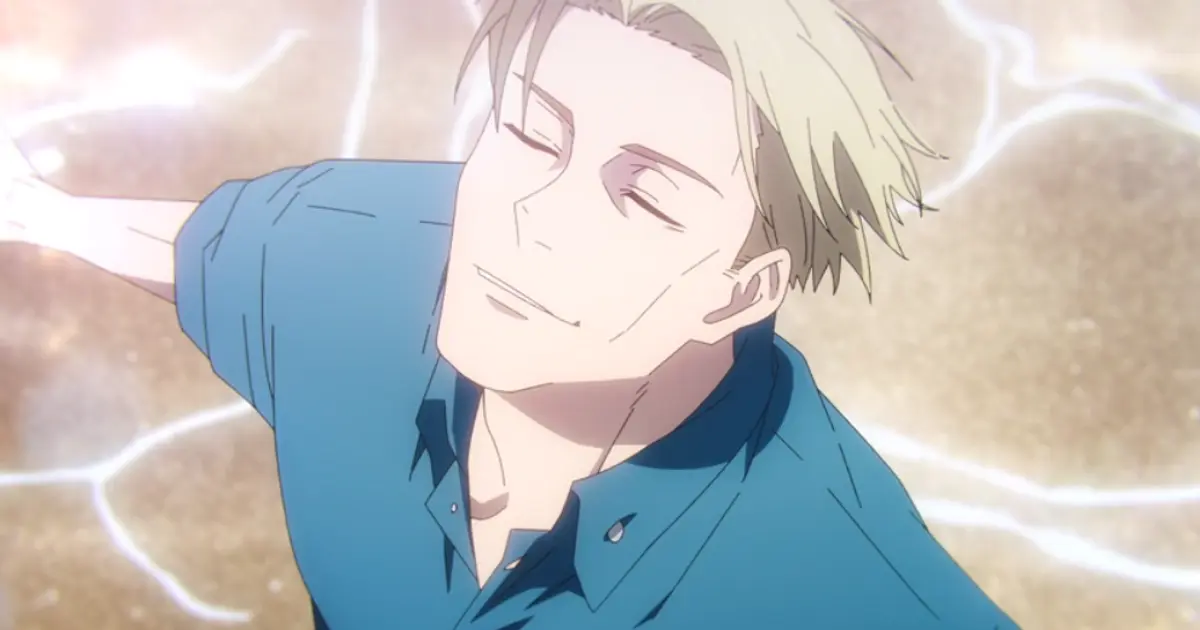
Nanami | Jujutsu Kaisen Season 2 Episode 18 (Credits: Mappa)
Assigning specific musical themes to characters is a common technique in anime. These motifs a character’s personality, journey, or relationships. In “Berserk,” composer Susumu Hirasawa’s “Guts’ Theme” reflects the protagonist’s resilience and inner turmoil, adding depth to his portrayal. EN.WIKIPEDIA.ORG
In “Re:Zero,” composer Kenichiro Suehiro utilizes distinct musical themes to represent different characters and situations. This approach not only highlights individual character arcs but also enhances the overall storytelling by reinforcing narrative elements through music. EN.WIKIPEDIA.ORG
Enhancing Narrative Through Musical Diversity

Sukuna and Luffy (Credits: Mappa/ One Piece)
Anime soundtracks often blend various musical genres to complement diverse storylines. This fusion enriches the narrative, providing a multifaceted auditory experience that aligns with the visual storytelling. The strategic use of different musical styles helps in conveying the unique atmospheres of various scenes and settings.
For example, in “Macross Plus,” the soundtrack combines orchestral pieces with electronic music, reflecting the series’ futuristic setting and complex character dynamics. This blend of musical styles enhances the storytelling by mirroring the technological and emotional themes present in the narrative.
In anime, music is more than a background element; it is integral to storytelling. Through carefully composed soundtracks, anime creators craft immersive worlds that resonate emotionally with audiences. The thoughtful integration of music elevates the art form, leaving a lasting impression on viewers.
