The year 1996 was huge for goth girls with the release of The Craft. Directed by Andrew Fleming, this cult classic focused on a group of teenage witches. Even though it came out just a year after Clueless, it had a completely different vibe.
The Craft reignited an interest in witchcraft among younger people, while also shaping the dark, gothic fashion trends of the 1990s. What most people might not know is that the movie’s set also got a little witchy, marking an important moment for Hollywood.
The story of The Craft follows Sarah (played by Robin Tunney), a high school student who moves from the Bay Area to Los Angeles. There, she becomes friends with three outcast girls: Nancy (Fairuza Balk), Rochelle (Rachel True), and Bonnie (Neve Campbell), all of whom are involved in witchcraft.
Together, the four girls form a coven and begin using magic, casting spells for love, beauty, power, and revenge. However, things take a dark turn when Nancy, who leads the group, becomes too obsessed with gaining more power. This leads to a final conflict and a rather dark ending.
Although the movie is filled with magical elements, it also touches on serious topics, particularly Nancy’s mental health. This balance between fantasy and reality helped give the film a unique feel, especially in its portrayal of witchcraft.
Fleming Brought in a Wicca Priestess to Guide the Film
The 1990s saw the release of many famous witch-related films like Hocus Pocus, The Witches, and Practical Magic. These movies usually showed witches in a lighthearted, comical way, relying on common stereotypes. Fleming, however, wanted The Craft to feel more real and closer to how witchcraft is actually practiced today.
According to TIME, Fleming hired Pat Devin, a priestess from the Gardnerian Wicca tradition, to help guide the movie’s portrayal of witchcraft. Under her advice, the cast performed actual chants and spells, which were taken directly from Wicca books.
Wicca is a religion that has been around in its modern form since the early 20th century. Despite Fleming’s efforts to be respectful of Wicca, some practicing witches were not happy with the film, pointing out the inaccuracies and the exaggerated storyline.
When the sequel The Craft: Legacy came out in 2020, director Zoe Lister-Jones took things even further. She brought on three real witches, including Bri Luna, an astrologer and tarot reader, as well as Pam Grossman, a writer and podcast host who focuses on witchcraft.
Grossman not only wrote all the spells for the sequel but also helped write the script. Despite these efforts, the sequel did not do well with critics and couldn’t match the original film’s impact.
Still, Lister-Jones’ attempt to honor actual witchcraft was important, especially considering Hollywood’s often problematic history in how it portrays women, including witches.
‘The Craft’ Broke Hollywood’s Stereotypes About Witches
Witches in movies have always been symbols of female power, capable of using it for either good or bad. However, many films rely on stereotypes instead of realistic portrayals, often leaning on negative views of witches.
Older women are often shown as ugly or evil, while younger witches are portrayed as deceitful or seductive, similar to femme fatales.
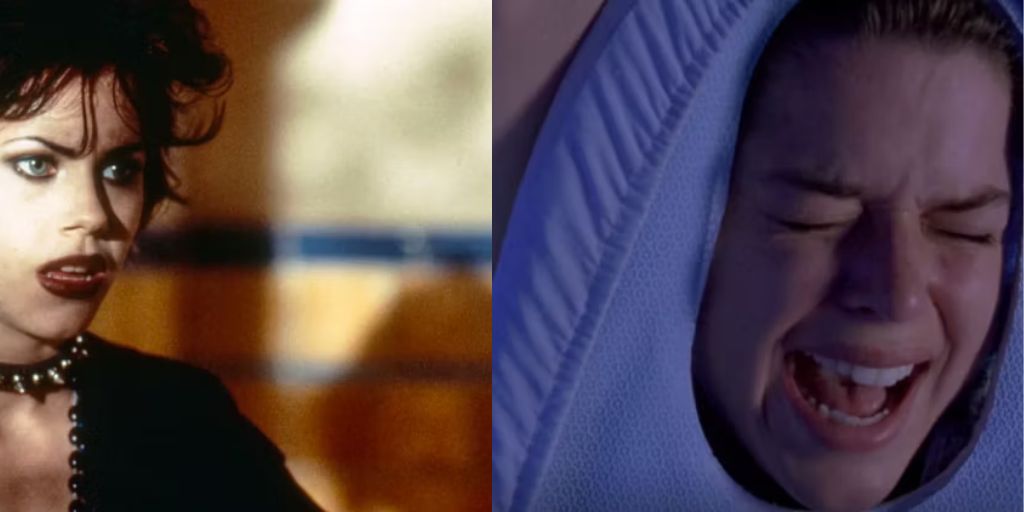
Still from The Craft (Credit: Peacock)
Since witchcraft has long been associated with female independence and control, it has been made into something taboo for these reasons. While it’s common to see a witch as a villain on screen, it’s rare to see her as a complex, well-rounded character, even today.
Although The Craft had some fantastical action scenes, particularly towards the end, it stood out for its more realistic and human performances. Fairuza Balk’s portrayal of Nancy Downs was wild, sometimes scary, but also deeply layered.
Neve Campbell’s character, Bonnie, was shy and struggling with issues around her appearance and social status. The movie’s effort to show fully developed female characters, along with its respect for real witchcraft, made The Craft a significant step forward in how Hollywood represents women on screen.
Agatha All Along has been exciting for three weeks. The show led by Kathryn Hahn has been full of surprises. It started as a spin-off of WandaVision, had a sad moment with Mrs. Hart’s death, and now confirms a couple that fans wanted to see together.
There has been tension between Agatha and Rio, played by Aubrey Plaza, since the beginning. Episode 4 suggests that they were once lovers.
This is a major advancement for Disney’s franchises, especially for the Marvel Cinematic Universe (MCU). Disney often targets a PG-13 rating, and for some unknown reason, sexual orientation has been a sensitive topic.
Although some films and shows included queer characters, this is the first time the main character identifies as part of the LGBTQIA+ community, and it truly matters to the story.
Disney Productions Have Often Disappointed with Queer Characters
Disney has a history of building up queer characters in their projects but failing to deliver real representation. There are often announcements about queer characters, followed by negative reactions from some viewers who boycott the shows.
Supporters expect to see these characters, but they are often disappointed. For example, in Star Wars: The Rise of Skywalker, there was a promise of a queer character, Commander Larma D’Acy, but her role was very small. She only had a quick kiss with her wife during a celebration.
In animated films, Pixar introduced a non-binary character in Elemental. However, besides using the correct pronouns, the character did not have much impact on the story. The show The Other Two humorously criticized shallow PR strategies that lack depth.
Recently, The Acolyte included queer characters, Mother Aniseya and Mother Koril, who are witches raising two other characters. Although there was good intention, the message got lost in the reaction from toxic fans.
This makes Agatha All Along’s reveal very important because it is not just a PR move. Agatha is the main character who identifies as queer, along with Plaza’s character.
Disney+ Has Previously Focused on Family-Friendly Content
Disney has been cautious about discussing topics like sexuality. For example, the Lizzie McGuire revival faced problems when creator Terri Minsky left the project after filming two episodes. Hilary Duff wanted a grown-up version of Lizzie, but Disney wanted a family-friendly version, and they could not agree.
Another example is Love, Victor, a spin-off of Love, Simon. Although it was set to be a Disney+ original, the show ended up on Hulu because Disney felt the scheme of Victor’s sexual orientation was not family-friendly enough. Disney could have chosen this route with Agatha All Along, but thankfully, they chose to represent queer identities correctly.
Agatha All Along Features Strong Queer Representation
From the first episode, viewers can see the strong connection between Rio and Agatha. At first, it seemed to be just the chemistry between Kathryn Hahn and Aubrey Plaza. However, Agatha’s hesitation to include Rio in the second episode suggested they had a complicated relationship.
In Episode 4, titled “If I Can’t Reach You/Let My Song Teach You,” Rio shares that she once loved someone but hurt them. Agatha quickly leaves after this, indicating deeper feelings.
Later, they embrace with great passion. Although they want to kiss, Rio feels the need to discuss Agatha’s emotional struggles. She makes it clear that Joe Locke’s character is not Agatha’s son. Agatha All Along openly accepts its main characters’ queerness.
The storyline does not just serve side characters or try to trick viewers. If Disney continues this direction, it will be a significant moment for the Marvel franchise.
Having a queer main character is a major step for the MCU and Disney, showing that their universe includes real people with various desires and sexual orientations. Allowing this freedom in storytelling should inspire the rest of Disney’s projects.
Agatha All Along is available to stream on Disney+ in the U.S.
