Television often features unrealistic elements, and one of the most noticeable is when characters with regular jobs live lavish lives. A prime example is how the characters in Friends manage their expensive New York City apartments and frequent coffee outings at Central Perk. How do the Friends characters afford such lifestyles? Let’s break down how they might have done it.
How Did Monica and Rachel Afford Their ‘Friends’ Apartment?
Monica (Courteney Cox) and Rachel (Jennifer Aniston) lived in a spacious Greenwich Village apartment, which was much larger than most apartments in that area. In reality, apartments in Greenwich Village are typically about 687 square feet, but Monica and Rachel’s apartment appeared to be around 1100 square feet on the show.
It had several bedrooms, a large living room, a good-sized kitchen, and a nice balcony. During the show’s run from 1994 to 2004, such an apartment would have cost about $2,000 to $3,000 per month in rent. Today, the cost would be around $5,000 to $8,500 per month.
So, how did Monica and Rachel manage to pay such a low rent? Monica explained in Season 4 that her grandmother was the original tenant and that the building was rent-controlled. Monica inherited the lease, which allowed them to pay only $200 a month.
Monica worked as a waitress and a chef, with an average salary of around $27,000 a year. Rachel, before becoming a fashion executive, worked as a waitress at Central Perk, earning about $12,000 a year. With their combined income, covering the low $200 rent was easily manageable.
Joey and Chandler’s Smaller Apartment on ‘Friends’
Joey (Matt LeBlanc) played Dr. Drake Ramoray but did not always have consistent acting jobs. Chandler (Matthew Perry) worked in statistical analysis and data reconfiguration, with an estimated salary of around $60,000 a year. Their apartment, though smaller than Monica and Rachel’s, still had a good amount of space.
It did not feature a large balcony, making it less expensive. The rent for their apartment was likely under $2,000 per month. With Chandler’s steady job and Joey’s occasional contributions, their combined incomes would have made the rent manageable.
Ross and Phoebe’s Rent on ‘Friends’
Ross (David Schwimmer) had a two-bedroom apartment. Despite having to pay child support, he managed to live comfortably due to his successful career as a paleontologist, earning about $134,000 a year. Ross was unique among the friends because he didn’t constantly have a roommate, making him somewhat more financially stable.
Phoebe (Lisa Kudrow) had a more challenging financial situation. She worked as a massage therapist and held various odd jobs, likely making around $10,000 a year. She mentioned splitting costs with her roommate, Denise, who was never shown on the show. Phoebe’s lifestyle seemed the least realistic, given her lower salary.
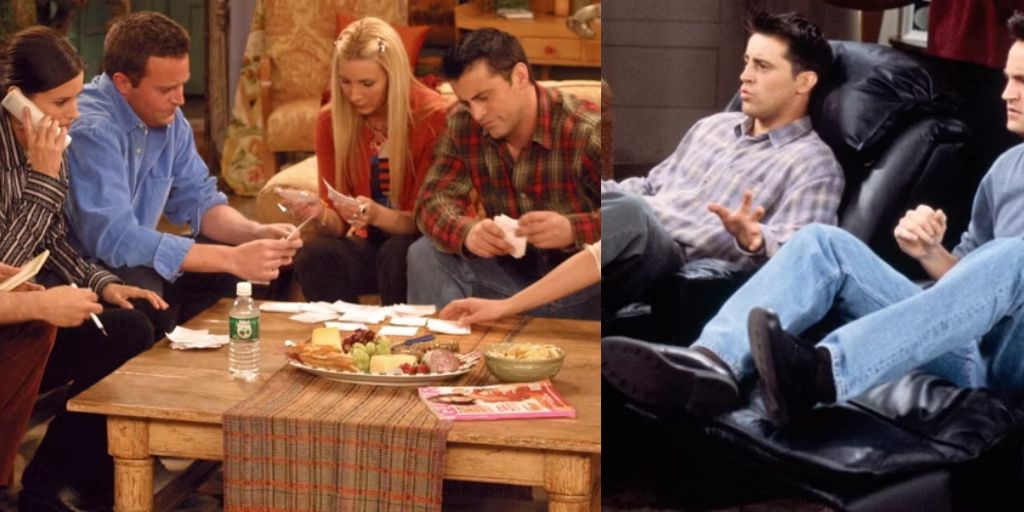
Still from Friends (Credit: Netflix)
In the 1990s, both rents and salaries were lower compared to today. This made it somewhat feasible for the characters to manage their expenses on smaller paychecks. Without the benefit of a rent-controlled apartment and the help of roommates, the Friends cast could not realistically afford their New York City lifestyles.
Although the show did not focus on financial realism, it created an aspirational image that resonated with viewers. Watching the show now may feel like stepping into a different, idealized era, but fans continue to cherish the characters and their stories.
The Friends characters’ luxurious New York City lives seem unrealistic due to their regular jobs. Monica and Rachel benefitted from a rent-controlled apartment, paying just $200 monthly. Joey and Chandler managed a smaller apartment, while Ross had a high salary, and Phoebe’s lower income made her lifestyle seem least believable.
Seasons 1-10 of Friends are available to stream on Max in the U.S.
After nine seasons of ‘Seinfeld,’ many episodes are loved by fans, but a few stand out as particularly memorable. Season 8, Episode 3, “The Bizarro Jerry,” is often considered one of the best episodes of the series.
Among these are Elaine’s (Julia Louis-Dreyfus) “Bizarro” friends, the character of Gillian (Kristin Bauer) with her notable “man-hands,” and Cosmo Kramer’s (Michael Richards) brief stint at Brandt-Leland, where he brings a mysterious briefcase. The surprise inside the briefcase? Ritz crackers, of course!
Kramer’s Fake Job Is a Highlight of the Episode
Kramer’s brief time working at Brandt-Leland adds a hilarious subplot to “The Bizarro Jerry.” Although this storyline is not the main focus of the episode, it greatly contributes to its full appeal. The plot begins when Kramer helps a Brandt-Leland employee with a malfunctioning printer.
This simple act of kindness leads to Kramer being mistaken for an actual employee. Enjoying the routine that comes with having a job, Kramer decides to continue “working” at Brandt-Leland every day, even though he is not actually being paid.
Kramer’s quirky behavior at his fake job adds a lot of humor to the episode. He brings along a briefcase filled with Ritz crackers, which he consumes throughout the day. This detail adds an extra layer of comedy, as Kramer’s actions are both bizarre and amusing.
The funniest part of this storyline is the “day in the life” sequence, where viewers see Kramer’s daily activities. He takes the subway to work, gives presentations, and spends an unusual amount of time at the water cooler. All of this happens to the tune of Sheena Easton’s “9 to 5,” creating a perfect comedic effect.
By the end of the episode, Kramer is “fired” from his fake job, but the reason he carries Ritz crackers remains one of the many delightful mysteries of his character. The fact that the reason behind the crackers is never fully explained adds to the humor and charm of Kramer.
“The Bizarro Jerry” Is a Favorite of the Writer
David Mandel, the writer of “The Bizarro Jerry,” has stated that this episode is his favorite from the ‘Seinfeld’ series. Mandel’s pitch for the Bizarro Jerry idea was well received by Jerry Seinfeld, who quickly understood and appreciated the concept.
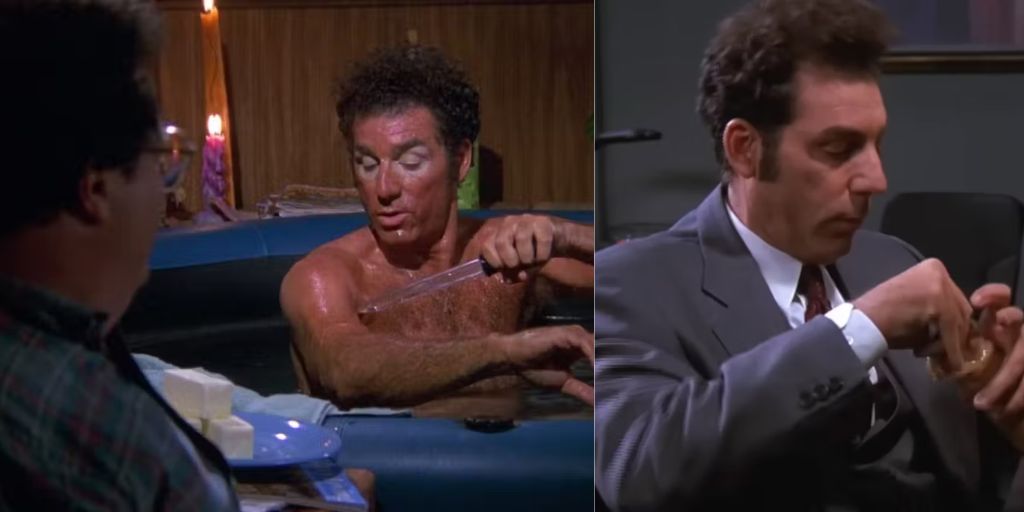
Still from Seinfeld (Credit: Netflix)
In an oral history of the episode, Mandel mentioned that Seinfeld was enthusiastic about the idea and saw why it would be funny. This episode cleverly references the Superman villain Bizarro, partly due to Seinfeld’s support.
“The Bizarro Jerry” stands out because it showcases how ‘Seinfeld’ evolved in its later seasons. After many original writers and Larry David left the show, Jerry Seinfeld sought new writers who could continue the show’s legacy. Mandel, along with other new writers, brought fresh and innovative humor to the series.
This episode, in particular, benefits from the show’s long history and Mandel’s unique comedic style. The addition of the Ritz crackers to Kramer’s character highlights the way ‘Seinfeld’ continued to surprise and entertain audiences even as it approached its final episodes.
This episode might not have worked as well early in the series, but its distinct humor and memorable moments make it a standout example of the show’s enduring charm.
“The Bizarro Jerry” is a beloved episode for its clever writing, humorous plotlines, and the unique touch that Kramer’s character brings. The episode remains a fan favorite, demonstrating the creativity and innovation that characterized the later years of ‘Seinfeld.’
